Mushroom Encyclopedia
Sparassis crispa: Cauliflower fungus Species Guide
Learn Cauliflower fungus identification, habitat, season, lookalikes, safety, food context, and cultivation limits with current taxonomy and sources.
By MushroomScope Editorial Team · · Updated
Species context
Treat profiles as reference material
Species profiles summarize documented traits, taxonomy, and lookalikes, but natural variation can be substantial.
Use the safety checklist →Decision limit
A profile cannot authenticate a specimen
Do not eat a wild mushroom from an online match, single feature, or generated image.
Read the safety disclaimer →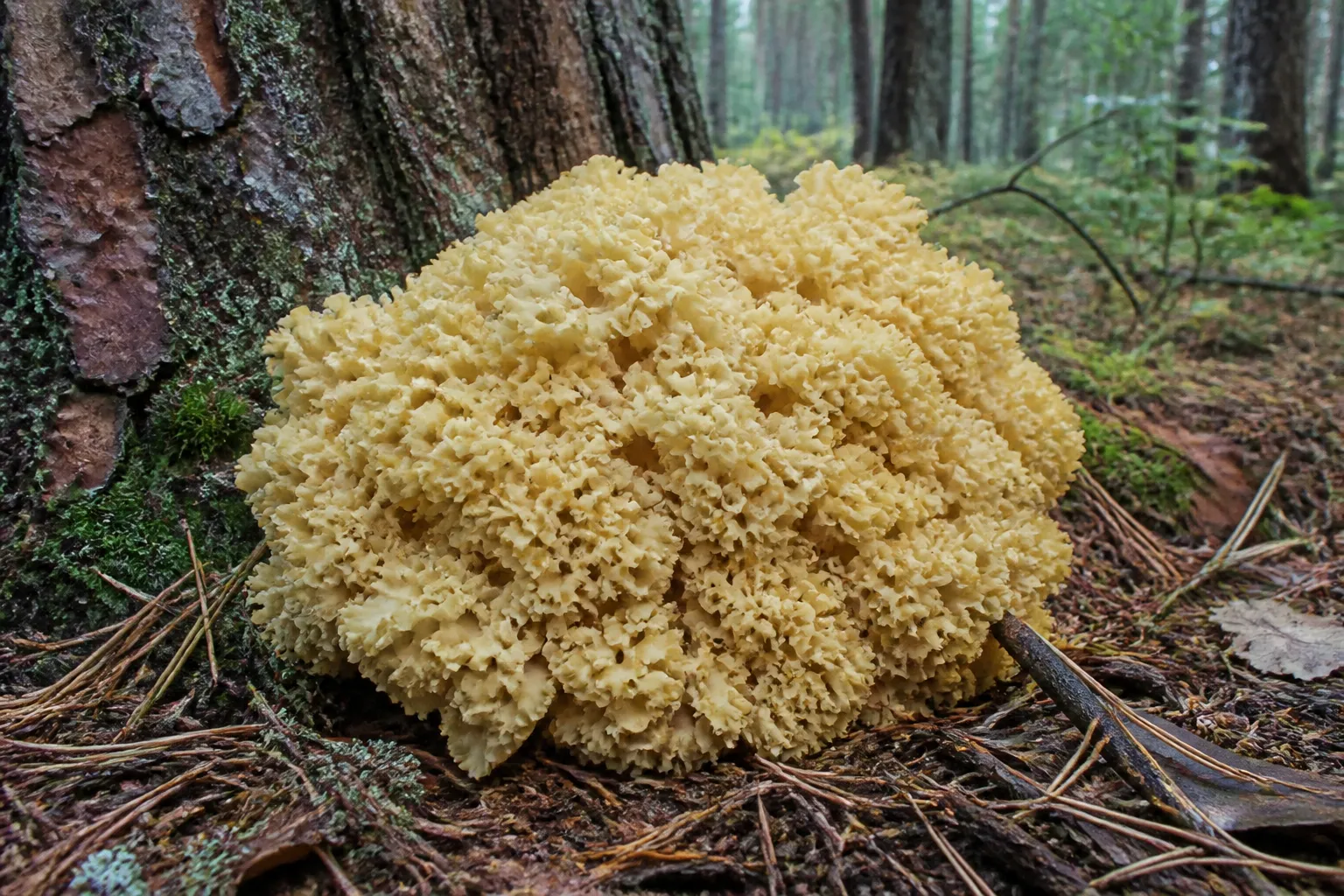
Quick facts
- Scientific name
- Sparassis crispa
- Common names
- Cauliflower fungus
- Taxonomy
- Sparassis · Sparassidaceae
- Edibility context
- Edible: This database label is context, not remote clearance of a wild specimen; identity, preparation, spoilage, contamination, and individual reaction matter.
- Spore print
- White to pale cream.
- Toxicity context
- None Known: Risk includes misidentification and individual reaction. Consult current local toxicology guidance before any food decision.
- Season
- August, September, October, November
- Growing difficulty
- Difficult
- Regions
- Europe, northern Asia
Safety limit: These labels summarize documented context; they never authenticate a wild specimen. Cooking does not make a poisonous species safe.
Identification overview
A large cream to ochre mass of flattened, tightly curled, leaf-like branches. The fertile surface covers both sides of the flattened lobes rather than forming gills. A short buried base branches repeatedly into the visible mass. White to cream, brittle-tender when young and tougher with age. Observe several ages because rain, drying, insects, and decomposition can alter color and texture. Photograph the undisturbed growth, upper surface, fertile surface, complete attachment, and a lengthwise section. A white to pale cream spore deposit is supporting evidence, never a species verdict.
Habitat and season
A root and butt-associated fungus, especially near conifers. The documented range represented here includes Europe and northern Asia. Typical substrates or settings include conifer roots and buried wood and tree bases. Fruiting records commonly occur in August, September, October, November, but latitude, elevation, rainfall, and host condition shift the calendar.
Cauliflower fungi typically appear at the base of a conifer, beside a stump, or from roots hidden beneath soil and litter. Record the host species, whether it is living or cut, the fruit body’s distance from the trunk, and whether the same point has fruited in earlier years. Do not cut roots or pry apart a living tree base to prove the connection. A ground-level rosette near pine is ecologically informative, but the complete branching form and regional Sparassis concept still require examination.
Similar species
- Sparassis radicata — a western North American species with a deep rooting base.
- Sparassis spathulata — thinner, more zoned branches and a different range.
Compare the whole architecture rather than matching the word “cauliflower.” Sparassis forms a rooted mass of many flattened, wavy, leaf-like branches with a fertile surface spread across the folds. Coral fungi generally divide into upright cylindrical or club-like branch tips, while clustered polypores resolve into individual fan-shaped caps with pores below. Color, branch width, host, geographic range, and microscopic characters separate regional Sparassis species when the macroscopic form overlaps.
Recognize the branching structure before naming it
Cauliflower fungus is a descriptive common name, not a shortcut. An intact fruiting body can look like a pale, densely folded cushion or a head of noodles at the base of a tree. Instead of searching for a conventional cap and stem, follow the flattened, repeatedly divided lobes down toward their shared, often partly buried base. Both sides of these leaf-like branches can bear the fertile surface. They are not gills, and the irregular mass should not be reduced to “a white mushroom” in a field note.
Fresh material may be cream, pale yellow, or ochre and can darken, dry, or collect forest debris with age. Note whether the branches are broad or narrow, thin or thick, tightly curled or more open, and whether the fruiting body is elastic, brittle, or tough. Photograph it before cleaning or lifting it: a view of the full mass, the tree base, the branching pattern, and the attachment area gives an identifier information that a cropped close-up cannot. A careful lengthwise section can help show the branching origin, but it is a supporting observation, not a food test.
Spore deposits are generally pale, yet a pale print alone does not resolve a Sparassis. Age, humidity, and a partly spent specimen affect whether any useful deposit is obtained. Make a record only from material that has already been photographed and labeled with its habitat. Where a regional key depends on microscopic detail, take the complete collection to a qualified local identifier rather than attempting to force a name from a print or image.
Let the tree base and region narrow the comparison
The association with roots, buried wood, and tree bases is central to a useful cauliflower-fungus observation. Record the host as carefully as possible: conifer or hardwood, living tree or stump, exposed roots or apparently bare soil, plus any buried wood that becomes visible. “Growing on the ground” may hide a root or butt relationship. Season is likewise contextual. Late-summer through autumn records are common in the site’s broad profile, but local climate, elevation, and host condition change timing.
The name Sparassis crispa is used widely, but regional species boundaries matter. In western North America, Sparassis radicata may have a notably deep rooting base; other Sparassis names, including S. spathulata, require a current regional key and may differ in branch form or distribution. The GBIF record is a taxonomic and occurrence reference, not proof that one photographed specimen belongs to the same taxon. Treat location and host as questions to document, not facts to assume.
Other pale, folded fungi and wood-associated growths can create a misleading first impression. Texture, repeated branching, attachment, and whole growth form are more reliable than a cauliflower-like outline in a single image. Do not pull apart an uncertain fruiting body just to mimic a web photograph; such handling destroys the habitat information that an expert may need. If the comparison set remains uncertain, preserve the record and leave the food decision unresolved.
Food handling starts with a confirmed collection
Cauliflower fungus has a food-use reputation only in the context of correctly identified, fresh material. Its folds can trap soil, needles, insects, and debris, so a confirmed collection is commonly separated into manageable pieces and inspected carefully before normal food preparation. That practical cleaning issue is not an invitation to harvest first and identify later. Keep uncertain material separate from familiar edible mushrooms, and do not rely on cooking to correct a mistaken name.
Choose only material that is firm enough to inspect and free from visible mold, slime, pronounced decay, or an abnormal persistent odor. Clean with the least water needed, drain well, and cook promptly or refrigerate according to ordinary food-safety practice. The FDA’s produce-handling guidance is relevant to clean preparation surfaces and avoiding cross-contamination, but it does not authenticate a wild mushroom. Allergic or gastrointestinal reactions are possible even with correctly identified food; food reputation is not a personal medical guarantee.
If an unidentified wild fungus has been eaten and symptoms develop, retain leftovers, uncooked pieces, photos, and meal timing. Contact local emergency services or a poison center rather than waiting for an online answer. NAMA’s poisoning information explains why the specimen and timeline are useful to professionals. The safest default for a disputed collection is to not serve it.
Record a specimen so another person can review it
Start at a distance: photograph the fungus in relation to the tree base and the surrounding forest floor. Then add close views of the outer lobes, the junctions where they split, the lowest visible base, and one broken or cut edge only if collecting is permitted. Include a ruler or another scale in at least one frame. Write down the date, general location, weather, nearby tree species, whether roots or wood were visible, and the apparent size of the whole mass.
Avoid publishing a sensitive collecting site or entering private land without permission. A local mycological club can help turn this record into a regional identification, and a herbarium-quality record may require details this general guide cannot provide. Use this site’s identification guide, safety checklist, and habitat guide to keep the observations distinct from the conclusion.
For comparison learning, dryad’s saddle is a useful reminder that large pale or tan wood-associated fungi can have entirely different structures. It should not be treated as an exhaustive lookalike list. The purpose of a comparison is to ask better questions about attachment and fertile surface, not to award an identification from appearance alone.
Frequently asked questions
Does cauliflower fungus have gills?
No conventional gills. The visible mass consists of flattened, repeatedly divided lobes, and both sides can be fertile. That character must be considered together with the base, habitat, season, and regional species.
Why is the tree association important?
The fungus is often associated with roots, buried wood, or the butt of a tree, especially conifers. Recording the host and whether wood is visible helps distinguish a meaningful ecology observation from a guess based on the forest floor.
Can a photograph confirm cauliflower fungus?
No. A photograph may show a useful form, but it cannot provide the full attachment, texture, habitat, regional comparison set, or microscopic characters needed in difficult cases. Seek in-person local expertise before any food use.
Is a pale spore print decisive?
No. A pale deposit can support a documented identification but overlaps with other fungi and is affected by specimen condition. It never substitutes for the whole specimen and an appropriate regional key.
What is the safest action with an uncertain collection?
Keep it separate, document the habitat and every surface, do not serve it, and ask a qualified local identifier. Seek urgent professional advice if an unidentified mushroom has already been eaten and symptoms occur.
Food and safety context
Cauliflower fungus has a documented food-use context when the organism is correctly identified and the material is fresh, clean, and cooked. That reputation does not transfer to a wild specimen identified online. Individual allergy, gastrointestinal intolerance, spoilage, environmental contamination, and cross-contamination remain possible. Cooking does not make a poisonous species safe.
If symptoms follow a wild rosette or coral-like mushroom meal, contact the local poison center or emergency service promptly. Preserve an intact branch section including its lower attachment, uncooked material, trimmings, photographs beside the host, and meal timing. The dense folds can also retain grit, insects, degraded tissue, and cleaning chemicals, so report both the identification uncertainty and how the specimen was stored and prepared.
Cultivation context
Commercial Sparassis production exists, but it is not equivalent to placing an unidentified wild fragment on a generic sawdust block. Culture selection, conifer-derived substrate formulations, sterilization, long colonization, and controlled fruit-body development are strain- and facility-dependent. Home growers seeking a predictable first crop are better served by a traceable oyster block. Do not clone a wild collection for food, and discard a production unit with unverified culture identity, colored contamination, sour odor, insects, or soft decay rather than judging it by a cauliflower-like outline.
How to document a find
- Photograph the habitat and growth habit before moving anything.
- Record location, date, weather, substrate, nearby trees, and odor without tasting.
- Photograph the cap, fertile surface, stem or attachment, and base in natural light.
- Measure several mature specimens and make a spore deposit when appropriate.
- Compare the complete record with a current regional key and qualified local expertise.
References
- Global Biodiversity Information Facility. Sparassis crispa species record. Taxonomic backbone and occurrence context.
- National Center for Biotechnology Information. NCBI Taxonomy Browser. Independent lineage and nomenclature checkpoint.
- North American Mycological Association. Mushroom Poisoning Syndromes. Poisoning response and syndrome context.
- U.S. Food and Drug Administration. Selecting and Serving Produce Safely. General handling guidance for mushrooms used as food.
Editorial review: September 27, 2026. Regional Sparassis boundaries, conifer-host evidence, production limits, and poison-response contacts were rechecked editorially; no named mycologist or clinician reviewed this page.
Source quality notes
MushroomScope cites sources that match the page scope, such as taxonomic databases, extension guidance, food-safety agencies, food-composition databases, and peer-reviewed or institutional health references. Sources support context and uncertainty; they do not turn an online page into specimen identification, medical advice, or a tested recipe record.
Frequently asked questions
Can Cauliflower fungus be identified from one photograph?
No. Identification requires the complete specimen, fertile surface, attachment, substrate, habitat, region, developmental stage, and sometimes microscopy or DNA.
Is wild Cauliflower fungus safe to eat?
This page cannot clear a wild specimen for food. Obtain in-person confirmation from a qualified local identifier and follow local guidance; cooking cannot make a poisonous lookalike safe.
Where does Cauliflower fungus grow?
A root and butt-associated fungus, especially near conifers. Regional records and host associations should be checked before applying this summary to a local collection.
What is the spore print of Cauliflower fungus?
The expected deposit is white to pale cream, but print color overlaps among fungi and cannot confirm this species by itself.
Can Cauliflower fungus be cultivated at home?
It is not a simple beginner crop; use authenticated commercial material and species-specific professional guidance rather than wild tissue.
Related guides
identification
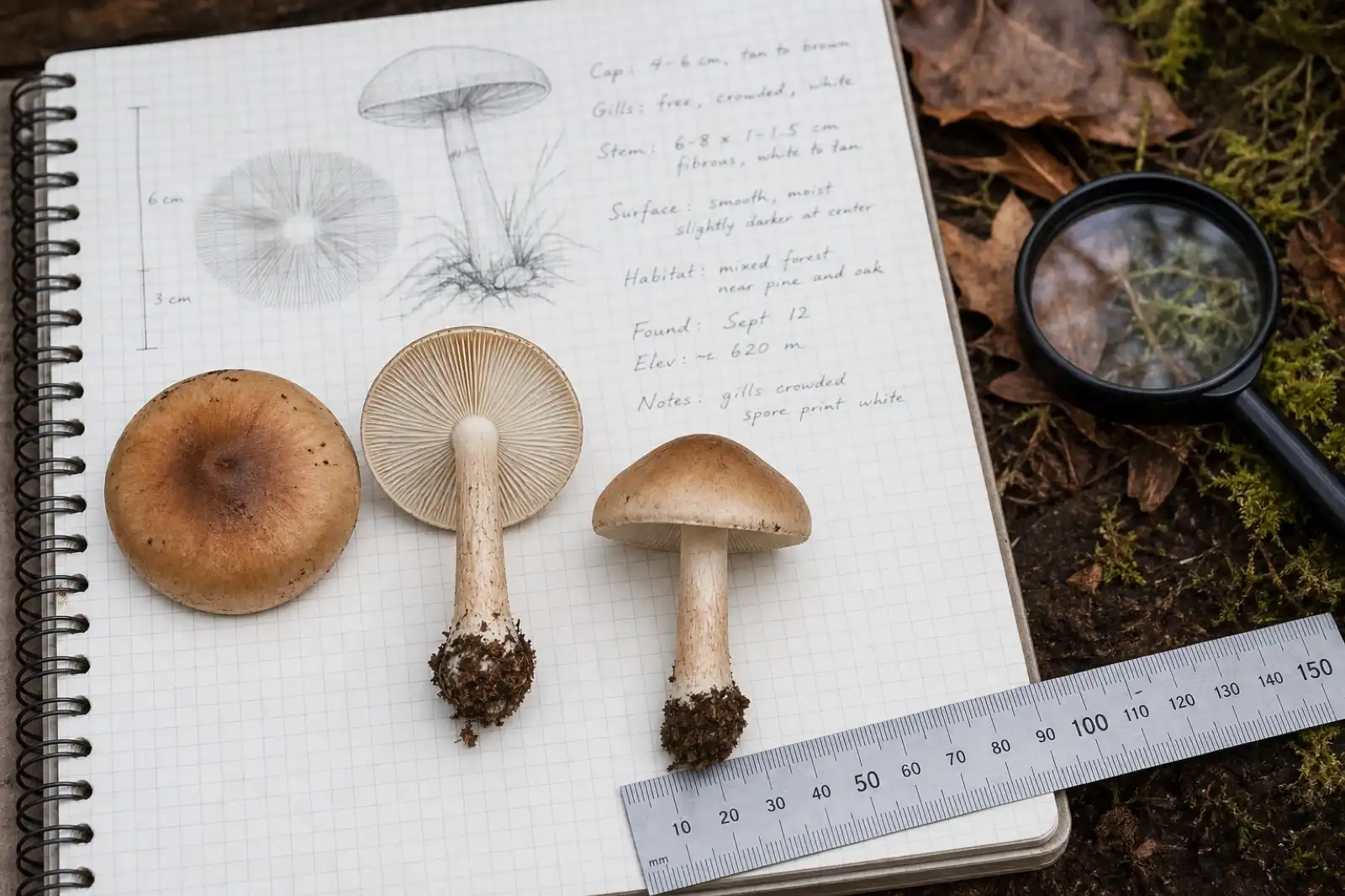
How to Identify Mushrooms: A Beginner's Field Guide
Build an identification from the whole specimen, substrate, habitat, spore deposit, and location—not from a single photograph.
identification
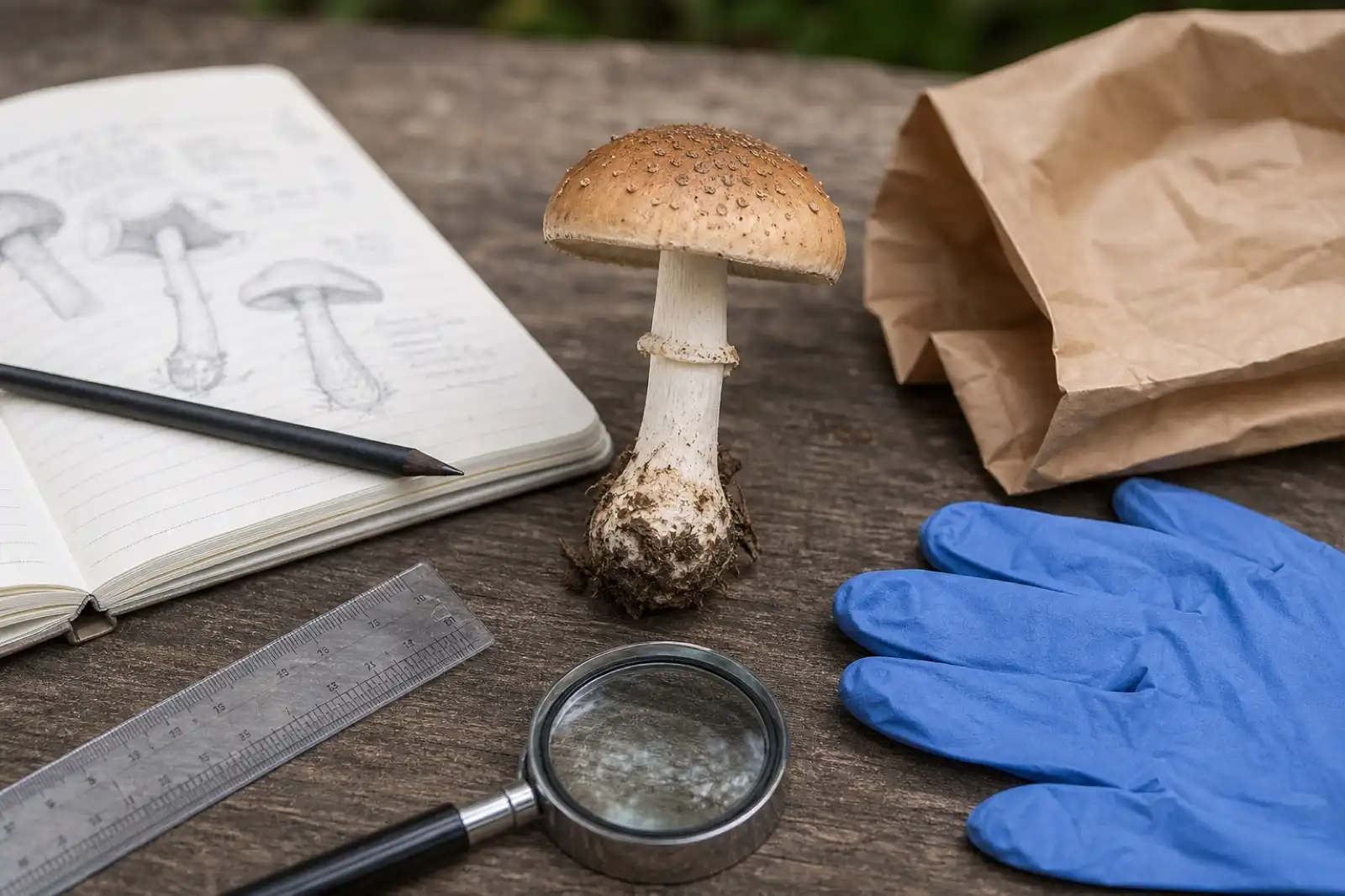
Mushroom Identification Safety Checklist
Use a conservative checklist before handling, documenting, or discussing any wild mushroom, especially when edibility is being considered.
identification
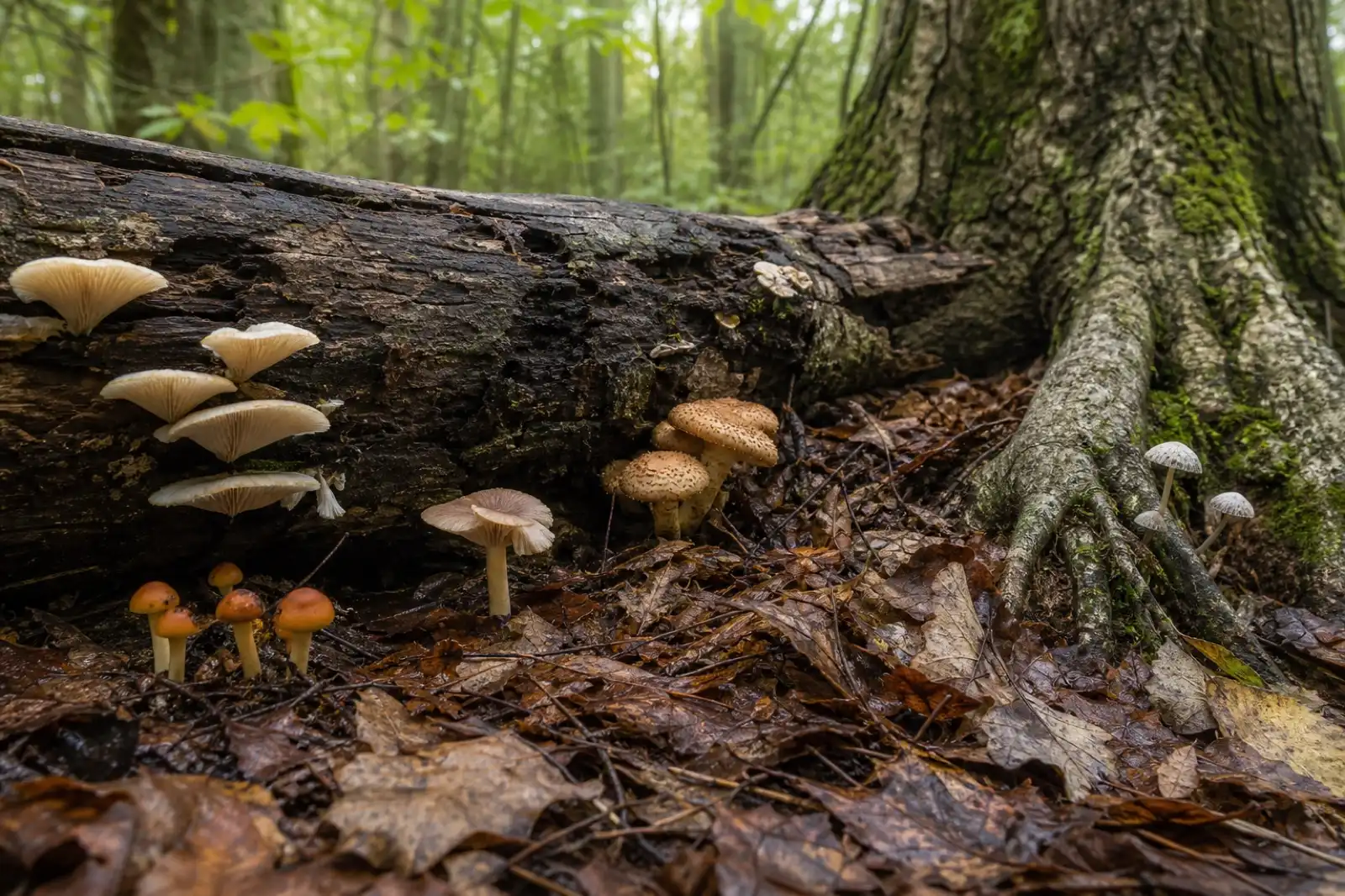
Using Habitat to Identify Mushrooms
Record substrate, associated plants, soil, wood type, moisture, elevation, and fruiting pattern as identification evidence.
Continue exploring
Browse more practical guides in Mushroom Encyclopedia or visit the mushroom encyclopedia.