Mushroom Encyclopedia
Black Elfin Saddle: Ribbed Stem and Folded Cap Guide
Document black elfin saddle through its folded dark cap, deeply ribbed chambered stem, woodland habitat, microscopy, lookalikes, and safety limits.
By MushroomScope Editorial Team · · Updated
Species context
Treat profiles as reference material
Species profiles summarize documented traits, taxonomy, and lookalikes, but natural variation can be substantial.
Use the safety checklist →Decision limit
A profile cannot authenticate a specimen
Do not eat a wild mushroom from an online match, single feature, or generated image.
Read the safety disclaimer →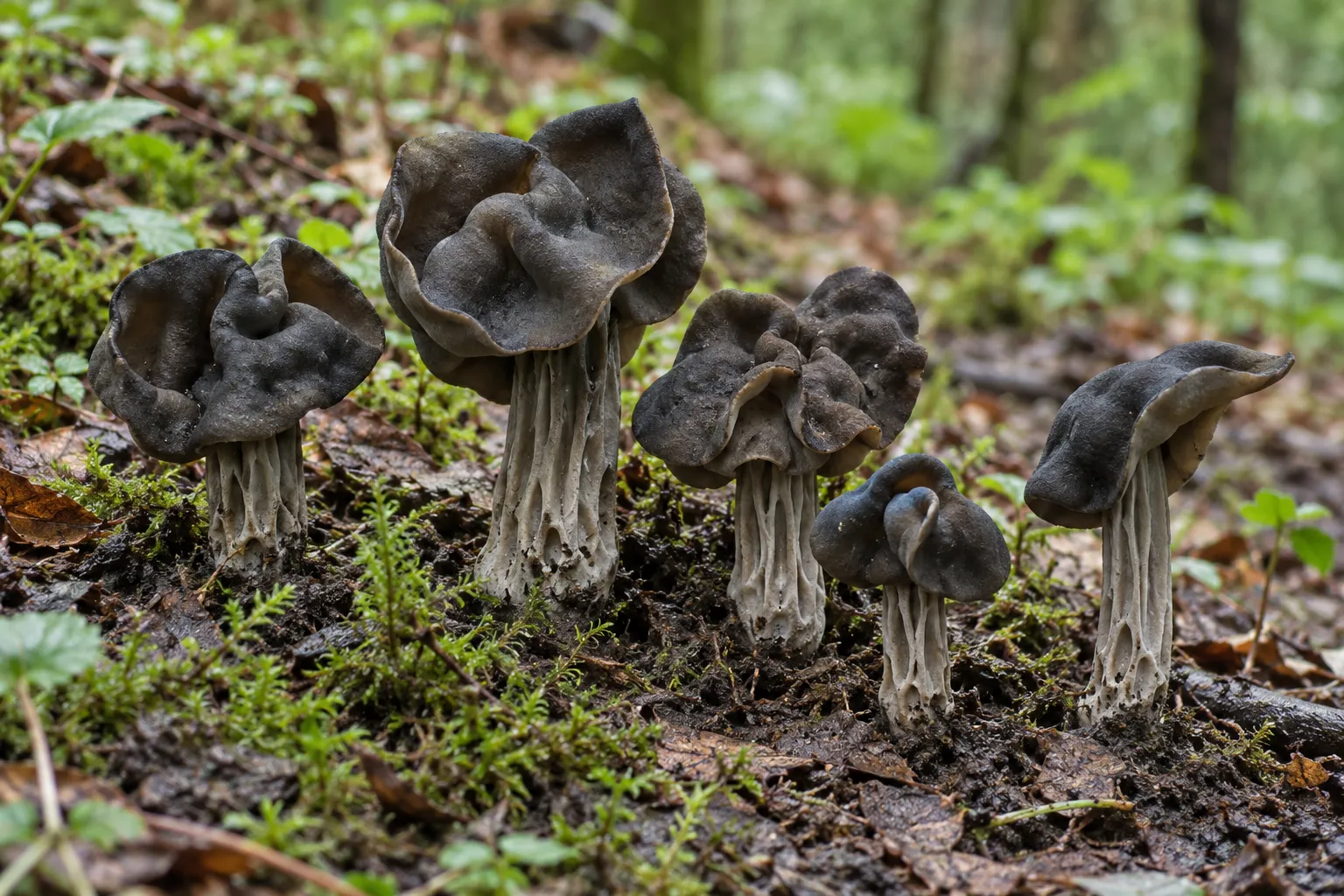
Quick facts
- Scientific name
- Helvella lacunosa
- Afzel.
- Common names
- black elfin saddle, slate grey saddle, fluted black elfin saddle
- Taxonomy
- Helvella · Helvellaceae
- Edibility context
- Inedible: Not recommended for food use because field identification is uncertain and Helvella food-safety claims are inconsistent across regions and preparation traditions.
- Spore print
- White in mass; microscopic ascospores and tissue characters are more informative than deposit color alone.
- Toxicity context
- Moderate: Some Helvella have been associated with toxic compounds or illness; this page takes the conservative position that cooking and online identification cannot establish safety.
- Season
- August, September, October, November
- Growing difficulty
- Expert
- Regions
- Europe, North America under regional species concepts, temperate Northern Hemisphere records
Safety limit: These labels summarize documented context; they never authenticate a wild specimen. Cooking does not make a poisonous species safe.
Read the whole fruit body, not a black silhouette
Black elfin saddle, Helvella lacunosa, attracts attention because its cap looks folded, lobed, or saddle-like rather than conventionally mushroom-shaped. The dark upper surface can be nearly black in wet shade, but it may also be charcoal, gray-brown, or unevenly faded. That silhouette is useful for finding a candidate. It is not enough for naming one. Several Helvella species share dark folds, and modern work has shown that older broad names can conceal regional lineages.
Begin with the undisturbed group. Photograph the fruit bodies at ground level and include the soil, moss, litter, path edge, and nearby woody plants. Record whether they are scattered, loosely grouped, or emerging from recently disturbed ground. A close crop that removes the attachment point also removes evidence about whether the fungus is terrestrial, connected to buried wood, or staged after collection.
Use the cap-shapes guide only as a vocabulary aid. A saddle, cup, and irregular fold can occur in a developmental sequence. Assign each photographed fruit body a number so the cap view, stem view, section, measurements, and any microscopy remain linked to the same specimen.
Follow the cap through development
Young caps may show two dominant lobes with a narrow saddle between them. Older caps can become more contorted, with several peaks, pockets, and attached margins. Measure width and height on at least three ages. Note where the cap margin is free and where it joins the stem. These attachments can be hidden inside folds, so rotate the specimen rather than assuming a single front view represents the whole geometry.
The darker exposed upper surface is the hymenium: the fertile surface where microscopic asci develop. The underside or outer sterile surface is often paler gray-brown and smoother. Photograph both surfaces under neutral light. This contrast helps explain why the organism is not a dark-gilled mushroom. Dirt lodged in a fold, water sheen, and phone sharpening can imitate texture, so keep an unprocessed original image.
Color is especially unstable. A wet fruit body may look saturated black, while drying reveals brown or gray zones. Make a color record in open shade with a neutral reference and include a note about surface moisture. Do not use color alone to separate H. lacunosa from H. atra, pale forms, or regionally segregated dark Helvella.
Map every rib and chamber on the stem
The stem supplies the most recognizable structural evidence. In a strong candidate it is conspicuously lacunose: deep lengthwise channels are divided by sharp ribs that branch, merge, or run into the cap. The stem may be pale gray at the base and darker above. Soil often hides the lowest part, so loosen the surrounding ground carefully and retain the complete base when collection is legal and scientifically justified.
Photograph the stem from four sides. Count the major ribs at mid-height, note where they connect, and record the depth of the widest furrow. A flat frontal photograph can make a rounded stem look ribbed through shadow, while a genuinely fluted stem shows relief as it is rotated. Scale is essential; tiny dark cup fungi can appear deceptively robust in macro images.
A single longitudinal section can show internal chambers rather than a uniformly solid stem. Section only one documented representative and keep both halves with its field code. Record whether the chambers continue into the cap and whether insects or decay have altered them. The section is supporting evidence, not a universal shortcut: damaged stems and collapsed tissue can create false cavities.
Treat woodland context as a measured variable
Records describe H. lacunosa on leaf litter, bare soil, mossy patches, grassy woodland openings, and path margins. Those labels are broad. Improve them by recording canopy composition, the nearest trees, the distance to the path, slope, drainage, soil disturbance, and whether the fruit bodies emerge from mineral soil or accumulated litter. The habitat-identification guide explains how to distinguish direct substrate evidence from nearby vegetation.
Do not claim a mycorrhizal partner from proximity alone. Roots cross underground, and a birch beside the photograph may not be the relevant plant. Use phrasing such as “under mixed beech and conifer canopy” unless a study or repeated, mapped association supports something narrower. Geographic labels also require care because the name has historically been applied broadly outside Europe.
Return after rain if the site can be revisited without damage. Record the same cluster’s expansion, collapse, and color change. A timed sequence can reveal whether apparent cap differences are developmental rather than taxonomic. It also creates phenology data that a single aesthetically composed image cannot provide.
Separate lookalikes by evidence class
Pale Helvella crispa usually contrasts strongly with a dark candidate, but dirty, aged, or shadowed specimens can reduce that difference. Compare cap color on both surfaces, stem color, rib pattern, and microscopy. Helvella atra and other dark saddles demand closer work; stature, cap attachment, exterior texture, stem fluting, spore measurements, and geography all contribute.
Western North American names deserve special caution. Molecular studies have changed the interpretation of collections once filed broadly as H. lacunosa. A field guide written for Europe cannot automatically resolve a dark saddle in Oregon or California. Preserve a voucher when permitted, use a current regional key, and record the database or publication version used for the determination.
Other black woodland fungi can mislead a top-view search. Dead man’s fingers forms firm club-like stromata on buried or decaying wood rather than a folded fertile cap on a ribbed stem. Earthfans form fan or rosette structures with different attachment and fertile-surface organization. Contradictions in body plan are more dependable than a shared dark color.
Use microscopy as a specimen-linked test
A white deposit does little by itself because many ascomycetes release pale spores. Microscopy can assess ascospore length, width, shape, oil droplets, ascus dimensions, paraphyses, and tissues of the cap exterior. Published descriptions report ranges, not a single magic number. Measure a meaningful sample from mature material, state the mounting medium and calibration, and report the full observed range.
Maturity matters. An immature cap may contain few released spores, while an old waterlogged cap may have distorted tissues. Select material from a documented developmental series and keep the micrographs linked to the same voucher. If measurements fall outside the chosen key or the cap exterior disagrees, retain a genus-level name rather than averaging away the contradiction.
DNA evidence can be appropriate where species boundaries remain unresolved. A sequence without a clean voucher, chromatogram review, and trustworthy reference comparison is not automatically decisive. The practical goal is an auditable record, not the most specific label available in a drop-down menu.
Convert stem fluting into a rib-junction map
Photograph a numbered stem at four quarter turns before sectioning. On a simple outline, mark every rib that branches, reconnects, ends freely, or encloses a chamber. Measure the deepest furrows at the upper, middle, and basal thirds and record whether cap folds continue into particular ribs.
This map captures architecture that “strongly fluted” loses. Repeat it on several developmental stages from the same patch. Compression, soil removal, and insect damage must be marked separately; a broken edge should not become an invented rib junction. The goal is a comparable network, not a prettier specimen.
Match disturbed and undisturbed ground plots
Set equal-area plots along the same slope and canopy: one beside a path or recent soil disturbance and one in intact litter. Record exposed mineral soil, litter depth, compaction, drainage, nearest woody plants, and counts of fruit bodies by stage. Use more than one pair where the site permits observation without trampling.
A concentration along the path is an association, not proof that disturbance created the fungus. Paths also alter water flow, visibility, temperature, and observer access. Report zero counts and revisit after comparable rainfall so a memorable cluster is not mistaken for a complete habitat rule.
Track cap attachment across development
For several intact bodies, photograph the cap from above, below, and in profile. Estimate what proportion of the folded margin is attached to the stem and map free lobes, fused lobes, and points where folds cross. Repeat on the same numbered bodies as they expand when non-destructive revisits are possible.
Cap attachment can help a regional key, but it is difficult to interpret from a single collapsed specimen. Keep attachment, lobe count, color, exterior texture, rib map, and microscopy as separate observations. If the combination contradicts the selected concept, retain “dark Helvella” instead of forcing the broad historical name.
Keep food claims outside the identification shortcut
Older books and regional traditions disagree about eating Helvella. Some discuss cooking practices, while toxicological sources warn about compounds reported from the genus and illnesses associated with related species. These disagreements are not a recipe to test at home. Species uncertainty, variable chemistry, preparation, dose, and individual susceptibility remain separate problems.
MushroomScope therefore treats black elfin saddle as inedible for practical guidance. Do not taste an uncertain specimen, and do not assume boiling turns a questionable identification into safe food. A photograph cannot establish species, freshness, contamination, dose, or personal risk.
If illness follows any wild-mushroom ingestion, contact the relevant poison center or emergency medical service promptly. Preserve uncooked material, meal remnants, photographs, location, and timing. Do not induce vomiting unless a medical professional instructs you to do so.
Build a reviewable black elfin saddle record
Before assigning a name, run a contradiction audit. Check whether the fertile surface is truly on top of the folded cap, whether the exterior is smooth rather than hairy, whether the stem ribs form deep connected furrows, and whether the body arises from soil. A gilled underside, a uniformly solid round stem, direct growth from visible wood, or a densely hairy outer cup surface redirects the key. Record the contradiction instead of cropping it out.
Summarize measurements as ranges with specimen counts: cap width and height, stem height and width, number of dominant lobes, and depth of the largest furrow. Add the proportion of the cap margin attached to the stem if that character is visible. These values let a reviewer compare body plans without inferring scale from moss or leaves.
Finally, separate identification confidence from observation quality. A thoroughly documented “dark Helvella” can be high-quality evidence even when species confidence is moderate. Conversely, a confident name attached to one top-down photograph is weak evidence. State which result would change the determination—microscopy, a regional revision, or sequence comparison—and preserve the material needed for that next step.
A publication-ready observation includes date, region at a responsible privacy level, canopy and ground description, disturbance context, group arrangement, measurements from several ages, upper and lower cap surfaces, every side of the ribbed stem, complete base, one restrained section, and any microscopy. State which regional key and taxonomic source were consulted.
List unresolved points explicitly. “Dark Helvella with a strongly lacunose stem” can be a more accurate result than a forced species name. Preserve original photographs and a legal voucher where expert review is realistic. That workflow turns a dramatic silhouette into evidence without pretending that appearance alone settles a difficult genus.
References
Pale folded material follows a different comparison path. The white saddle fungus guide focuses on ivory lobes, a deeply fluted pale stem, cap attachment, and the regional limits of the name Helvella crispa.
The sources in the page record support the accepted name, detailed morphology, regional key characters, and conservative poisoning response. They do not authenticate a reader’s specimen or establish food safety.
Source quality notes
MushroomScope cites sources that match the page scope, such as taxonomic databases, extension guidance, food-safety agencies, food-composition databases, and peer-reviewed or institutional health references. Sources support context and uncertainty; they do not turn an online page into specimen identification, medical advice, or a tested recipe record.
Frequently asked questions
Does a dark saddle-shaped cap identify Helvella lacunosa?
No. Cap shape and color vary across several Helvella species. A defensible record also needs the cap exterior, rib pattern, complete stem, substrate, region, season, and often microscopic or DNA evidence.
Why is the stem of black elfin saddle important?
The stem typically has deep longitudinal furrows, sharp branching ribs, and internal chambers. Photographing a complete stem from several angles provides more useful evidence than a top view of the dark cap alone.
Are black elfin saddles mushrooms with gills?
No. Helvella is an ascomycete. Its fertile surface lies on the exposed upper surface of the folded cap, and spores develop in microscopic sacs called asci rather than on gills.
Can black elfin saddle be identified from a photograph?
A photograph may support a genus-level hypothesis, but species limits in Helvella can require microscopy, a current regional key, voucher material, and sometimes DNA data.
Is black elfin saddle safe to eat?
This guide does not recommend eating Helvella. Identification uncertainty, reported toxins in the genus, preparation differences, and individual reactions make remote food clearance inappropriate.
Related guides
identification
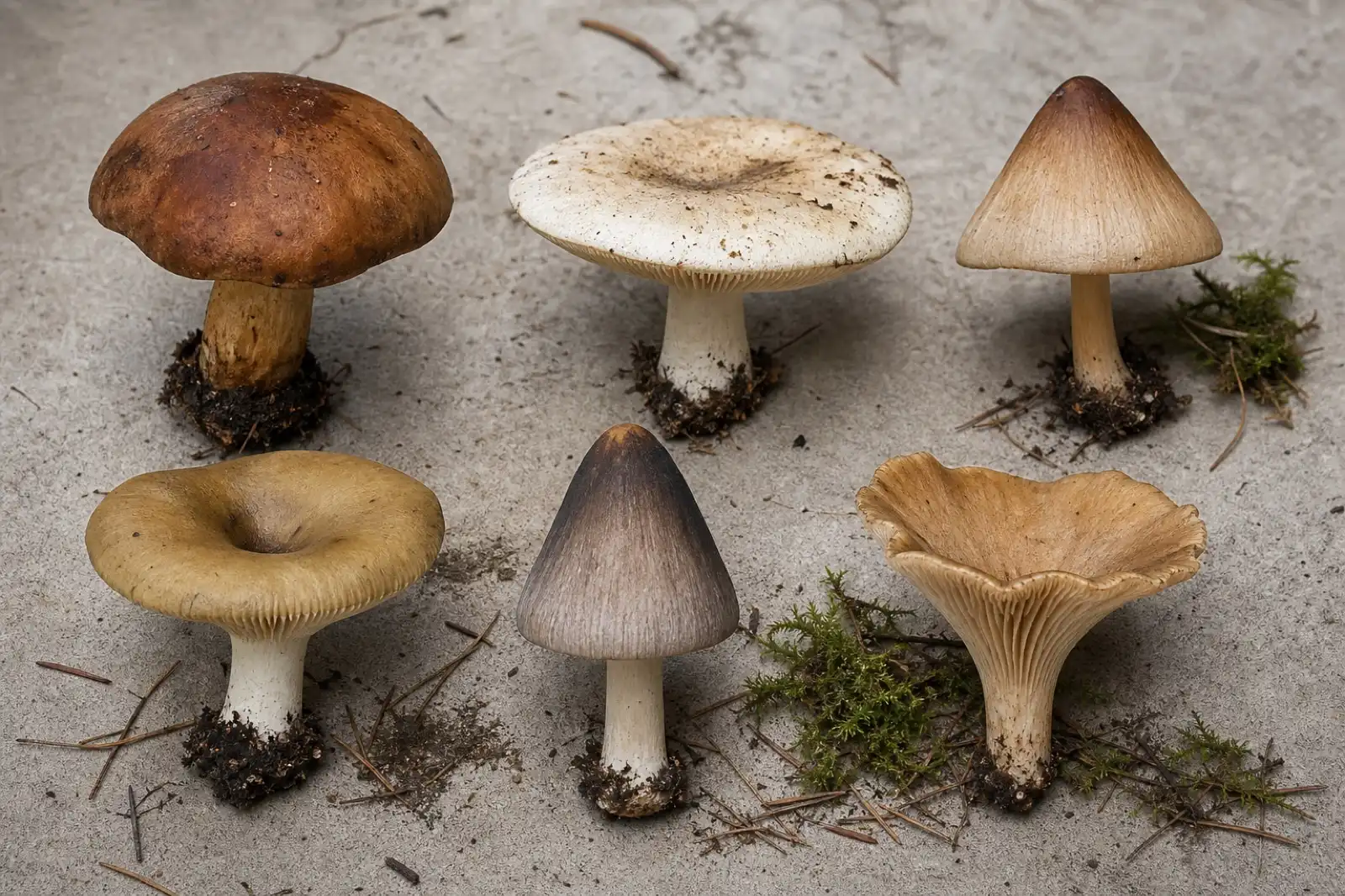
Mushroom Cap Shapes: A Practical Identification Guide
Compare mushroom cap shapes from convex and bell-shaped to flat, depressed, funnel-shaped, and uplifted, while recording age, margin, surface, and profile.
identification
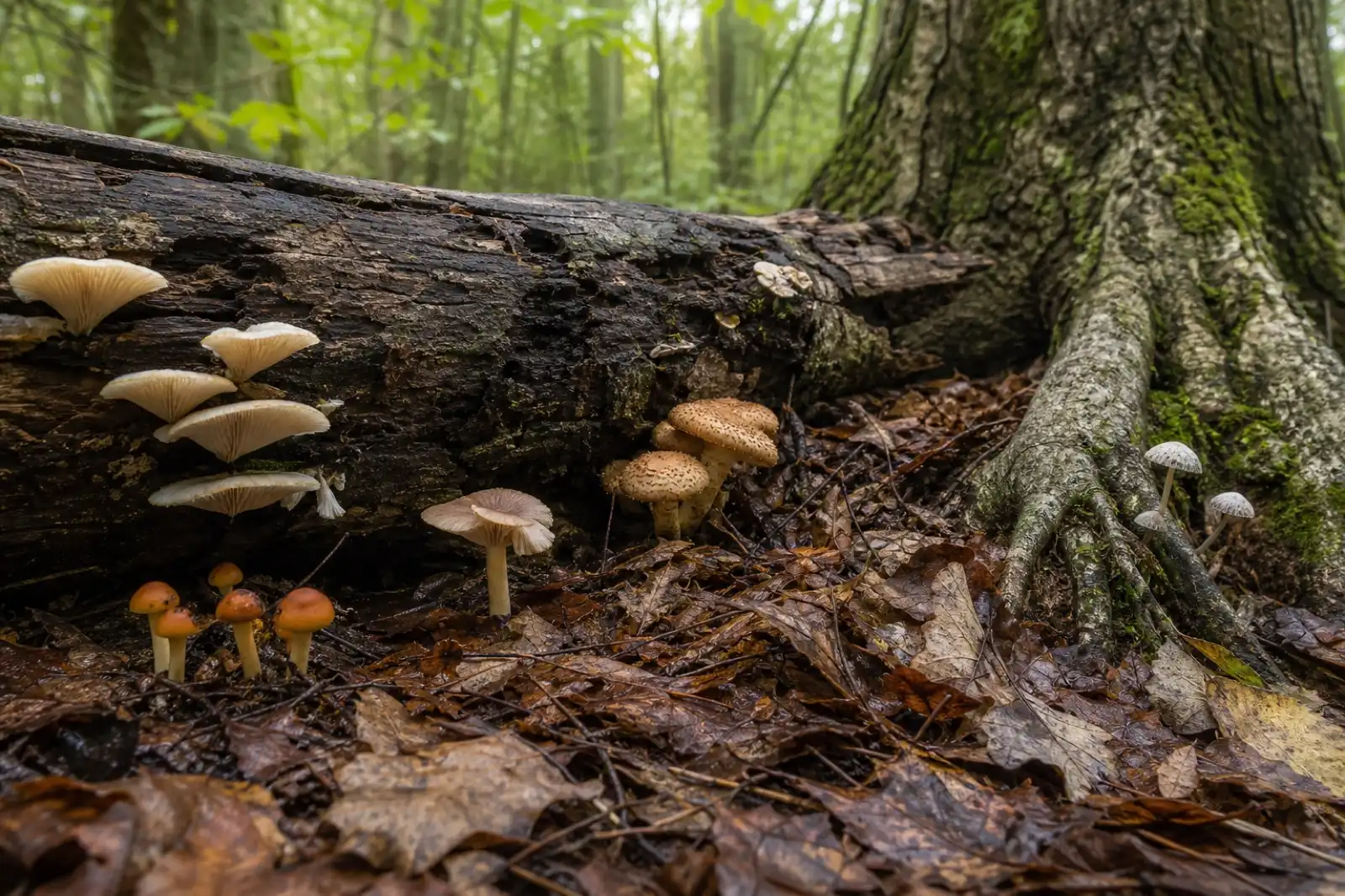
Using Habitat to Identify Mushrooms
Record substrate, associated plants, soil, wood type, moisture, elevation, and fruiting pattern as identification evidence.
mushrooms
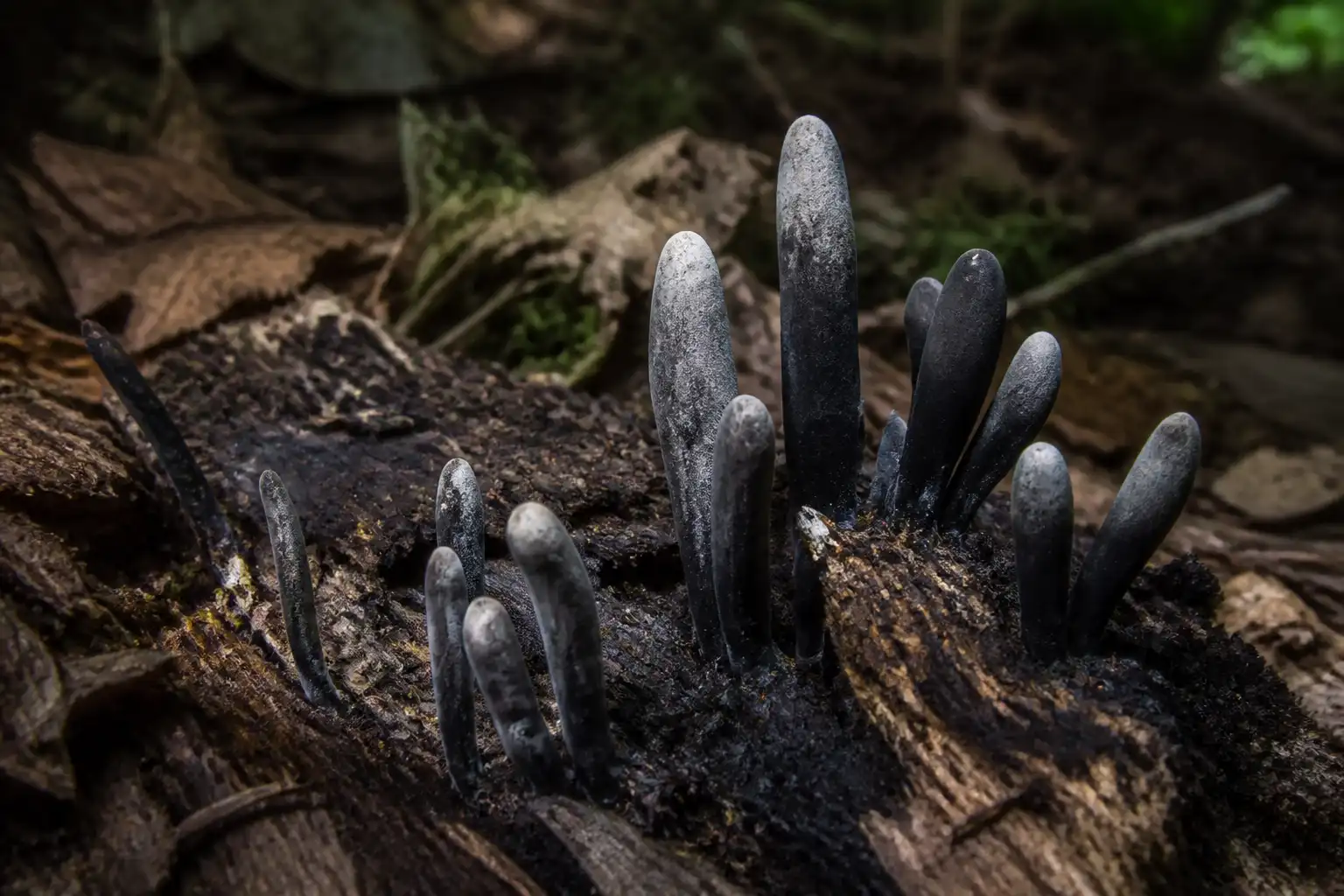
Dead Man's Fingers Fungus: Xylaria Stromata and Wood Decay
Document Xylaria polymorpha by club-shaped stromata, gray conidial bloom, black mature surface, perithecia, hardwood origin, development, and lookalikes.
Continue exploring
Browse more practical guides in Mushroom Encyclopedia or visit the mushroom encyclopedia.