Mushroom Encyclopedia
Butter Waxcap: Hygrocybe ceracea Field Guide
Document butter waxcap through its small yellow waxy cap, thick gills, slender stem, grassland ecology, lookalikes, and repeatable field records.
By MushroomScope Editorial Team · · Updated
Species context
Treat profiles as reference material
Species profiles summarize documented traits, taxonomy, and lookalikes, but natural variation can be substantial.
Use the safety checklist →Decision limit
A profile cannot authenticate a specimen
Do not eat a wild mushroom from an online match, single feature, or generated image.
Read the safety disclaimer →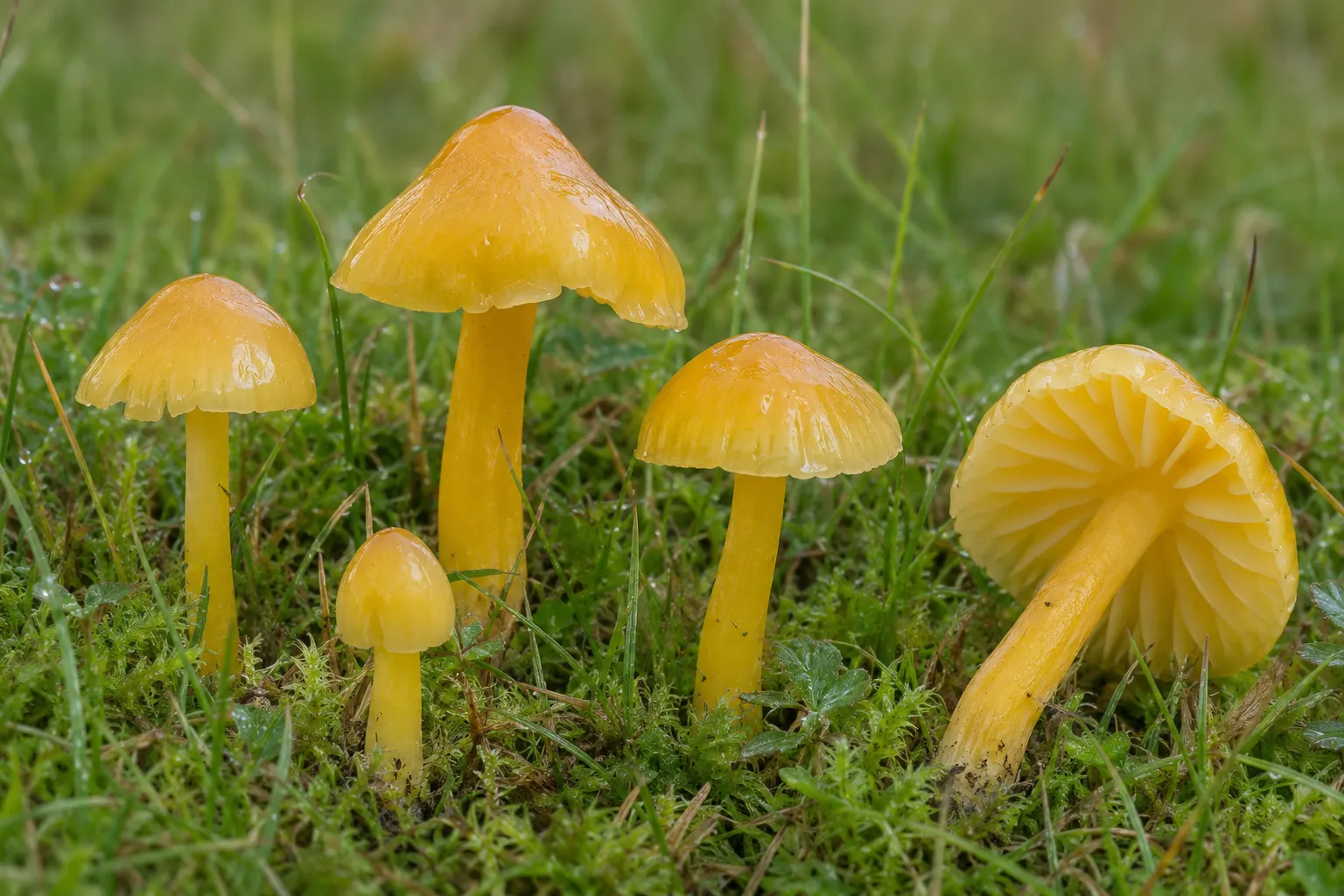
Quick facts
- Scientific name
- Hygrocybe ceracea
- Common names
- Butter waxcap, Butter waxycap
- Taxonomy
- Hygrocybe · Hygrophoraceae
- Edibility context
- Unknown: No food recommendation is made; remote identification cannot exclude similar small grassland fungi or assess contamination.
- Spore print
- White.
- Toxicity context
- Unknown: Treat an uncertain collection as inedible and seek professional guidance after any suspected poisoning.
- Season
- August, September, October, November, December
- Growing difficulty
- Expert
- Regions
- Europe, temperate regions represented by verified records
Safety limit: These labels summarize documented context; they never authenticate a wild specimen. Cooking does not make a poisonous species safe.
Butter waxcap is a small grassland fungus whose useful evidence lies in proportions and context rather than yellow color alone. Hygrocybe ceracea typically combines a moist yellow cap, thick widely spaced gills, a slender smooth stem, a white spore deposit, and fruiting among short grass or moss. Yellow fades, wet caps shine, and several related species overlap, so a defensible record follows development and preserves the site data.
This page covers the species-level question. The habitat identification guide explains how to separate observed substrate from inferred ecology, while the scarlet waxcap guide provides a contrasting red waxcap record. Neither a photograph nor this guide can authenticate a mushroom for food.
Establish scale before naming the color
Place a ruler beside, not on, several fruit bodies and photograph the group under neutral light. Record cap width, stem length, stem width, and developmental stage. Butter waxcap is normally a small, lightly built waxcap; an isolated close-up can erase that scale and make a two-centimeter cap look like a much larger golden waxcap.
Describe color from an unedited file with a neutral reference in the frame. Use yellow, lemon-yellow, golden-yellow, or orange-yellow only where those terms match the specimen. Do not raise saturation to recover the color remembered in the field. Note whether the margin is paler, translucent-striate, or scalloped, and repeat the observation after the surface has begun to dry.
Read moisture without confusing rain with structure
The cap may be moist, greasy, or waxy-looking, especially after rain. Surface water can make almost any cap glossy. Photograph an untouched wet cap, then shelter another fruit body briefly without wiping it and record which sheen persists. A persistent waxy surface supports the description; beads of rain alone do not.
Track one marked cap over several hours where access rules permit. Young caps can be convex or bell-shaped, then broaden while retaining a low central profile. Drying may intensify translucency at the margin or make the surface look duller. Those changes explain apparent disagreement between photographs better than forcing each appearance into a different species.
Document the thick, separated gills
Use a mirror or gently angle one mature specimen so the underside remains attached. The gills should look thick and waxy rather than thin and papery, with noticeably open spacing and shorter gills between full-length ones. Record their color, edge, branching, and exact attachment to the stem. “Yellow gills” is too broad to separate the species.
Make a radial section through cap and stem. This reveals whether the gills meet the stem broadly, narrowly, or with a slight notch, and it prevents camera angle from inventing an attachment. Photograph the cut face promptly because thin flesh dehydrates quickly. The editorial cover illustrates an underside but is not a substitute for this specimen-linked view.
Keep the entire stem and base in the record
The stem is slender, smooth, and generally yellow to orange-yellow, sometimes paling toward the base. Excavate one lawful representative with surrounding turf left largely intact. Confirm the absence of a ring and volva, note any longitudinal compression, and check whether the base is simply pale or carries attached moss and soil.
Measure at top, middle, and base. A stem distorted by grass pressure should be described rather than idealized. Do not wash away the base before the attachment photograph; do not interpret white adhering mycelium as a cup. Return loose turf carefully and avoid repeated collection from a small colony.
Separate fruiting substrate from grassland condition
Write “fruiting from soil among moss and short grass,” not “growing on grass.” Photograph a one-meter context, vegetation height, moss cover, bare soil, recent mowing, fertilizer indicators, paths, and nearby trees. A churchyard, lawn, heath, or pasture label alone says little about nutrient history.
Waxcaps are often associated with long-established, low-nutrient grasslands, and diverse waxcap assemblages can have conservation importance. One butter waxcap does not prove a site is ancient or unimproved. Repeat surveys, management history, plant community, soil context, and the wider grassland-fungus assemblage are stronger than a single fruiting event. Avoid trampling or removing a whole small population.
Build a hydration and development series
Choose three fruit bodies at button, expanding, and mature stages. Without picking them, record cap diameter, margin profile, surface sheen, gill exposure, and stem proportion after rain and again during drying. Keep camera position, white balance, and scale constant.
This series tests whether a darker orange center, translucent margin, or apparent cap striation is developmental. It also prevents selecting the brightest cap as the “typical” individual. Note slug damage and frost separately; damaged margins can mimic a naturally lobed cap, while cold can make the surface watery.
Use a clean white-spore protocol
Take a deposit only from a mature, correctly linked cap. Place it across dark and transparent nonabsorbent surfaces, cover against drafts, and label the setup with specimen code and time. A white deposit is expected, but it is shared by many waxcaps. A faint or absent deposit is not a different color.
For microscopy, report mounting medium, calibration, number of spores measured, full range, and whether measurements came from the deposit or gill tissue. Spore dimensions copied from a guide cannot be assigned to a field collection. Preserve a lawful dried voucher if regional verification is important.
Compare the regional yellow waxcaps
Golden waxcap, Hygrocybe chlorophana, can be yellow and strongly viscid, commonly with a larger, more robust build. Butter waxcap should not be diagnosed simply by being the smaller yellow cap in a mixed photograph. Compare measured ranges, gill spacing and attachment, stem viscosity, spores, and the current regional key.
Oily waxcap, H. quieta, is often more orange and may produce a characteristic odor, while honey waxcap, H. reidii, can develop a honey-like smell when rubbed. Odor varies with age, temperature, and observer. Record it without tasting, after smelling unhandled controls such as grass and soil, and never use it to overrule contradictory anatomy.
The meadow waxcap guide covers a more robust buff to apricot grassland species. Its decurrent gills and heavier stature define a different intent from this small bright-yellow waxcap. Where features remain intermediate, report Hygrocybe sp. rather than manufacturing certainty.
Map a colony without inflating abundance
Set a fixed transect through the patch and count fruit bodies by developmental stage. Record search width, weather, mowing date, and whether each point is new or persists from the prior visit. A flush count is not a count of individual underground organisms, and adjacent caps may share or not share a mycelium.
Repeat the same effort after suitable rain across several seasons. Record absences as “no fruit bodies detected under this search protocol,” not proof of biological absence. This method can show whether fruiting follows a mossy strip, slope, compaction edge, or management boundary without digging into the turf.
Keep food and conservation decisions separate
This page makes no eating recommendation. Small yellow mushrooms can be confused, internet photographs cannot authenticate a collection, and even a correct name does not assess pesticides, dog fouling, roadside contamination, spoilage, or individual sensitivity. Conservation rules may also prohibit collecting from waxcap-rich grassland.
If symptoms occur after any wild mushroom, contact local poison or emergency services promptly. Preserve uncooked material, trimmings, photographs, location, estimated amount, and meal timing when safe. Do not wait for a symptom pattern to match a webpage and do not test another portion.
Preserve uncertainty in a field label
A useful label separates observation from interpretation. Record “cap 24 mm, yellow with orange disc, moist after rain; gills thick and separated; stem 41 × 3 mm; white deposit” before writing a name. Add the key used, geographic scope, date, examiner, and confidence. If microscopy was unavailable or the specimen was immature, state that limitation plainly.
Upload platforms can detach a photograph from its specimen and site notes. Keep original filenames, specimen codes, scale images, and an unedited context frame together. When another observer proposes a different yellow waxcap, compare the disputed character rather than choosing the most popular label. A record left at Hygrocybe is more reusable than a species name supported only by color.
Frequently asked questions in context
Does a bright yellow cap make the image reliable?
No. Camera processing and wet surfaces exaggerate yellow. Scale, gill structure, stem texture, site context, deposit, and regional microscopy must remain tied to the same collection.
Should I pick every cap to check the gills?
No. Photograph most fruit bodies in place and take at most a lawful representative when necessary. A mirror and low-angle camera can document many undersides without stripping a small colony.
Can fertilizer make butter waxcap appear?
One observation cannot establish that relationship. Record management and repeat fruiting; waxcap-rich communities are generally associated with low nutrient input, so avoid speculative causal claims from a single lawn.
References
- Global Biodiversity Information Facility. Hygrocybe ceracea species record. Taxonomic backbone and occurrence context.
- First Nature. Hygrocybe ceracea, Butter Waxcap. Field characters, habitat, and comparison context.
- Natural England. Grassland fungi and waxcap habitat resources. Survey, grassland ecology, and conservation context.
- North American Mycological Association. Mushroom Poisoning Syndromes. Conservative poisoning-response guidance.
Editorial review: November 26, 2026. This article has editorial review only and no named mycologist or clinician review. Taxonomy, grassland ecology, regional species limits, and poison-response contacts should be rechecked at every substantive update.
Source quality notes
MushroomScope cites sources that match the page scope, such as taxonomic databases, extension guidance, food-safety agencies, food-composition databases, and peer-reviewed or institutional health references. Sources support context and uncertainty; they do not turn an online page into specimen identification, medical advice, or a tested recipe record.
Frequently asked questions
What supports a butter waxcap record?
Combine the small yellow to orange-yellow waxy cap, thick widely spaced pale-yellow gills, slender similarly colored stem, white deposit, unimproved-grassland setting, and regional microscopy. No single feature confirms the species.
Does every small yellow waxcap belong to Hygrocybe ceracea?
No. Several waxcaps overlap in color and size, while weather changes translucency and surface texture. Compare gill attachment, cap profile, stem texture, spores, ecology, and the regional species set.
Why does the grassland history matter?
Waxcap-rich sites often have long continuity with low nutrient input, but one fruit body cannot prove a site's management history. Record vegetation, mowing, fertilizer clues, soil disturbance, and repeat fruiting.
Can a photo confirm butter waxcap?
No. A photo can document visible characters, but confirmation may require the complete specimen, spore deposit, calibrated microscopy, locality, and a current regional key.
Is butter waxcap edible?
This guide does not clear wild mushrooms for food. Small yellow grassland fungi include confusing species, and identity, contamination, local rules, and individual reaction all require separate assessment.
Related guides
mushrooms
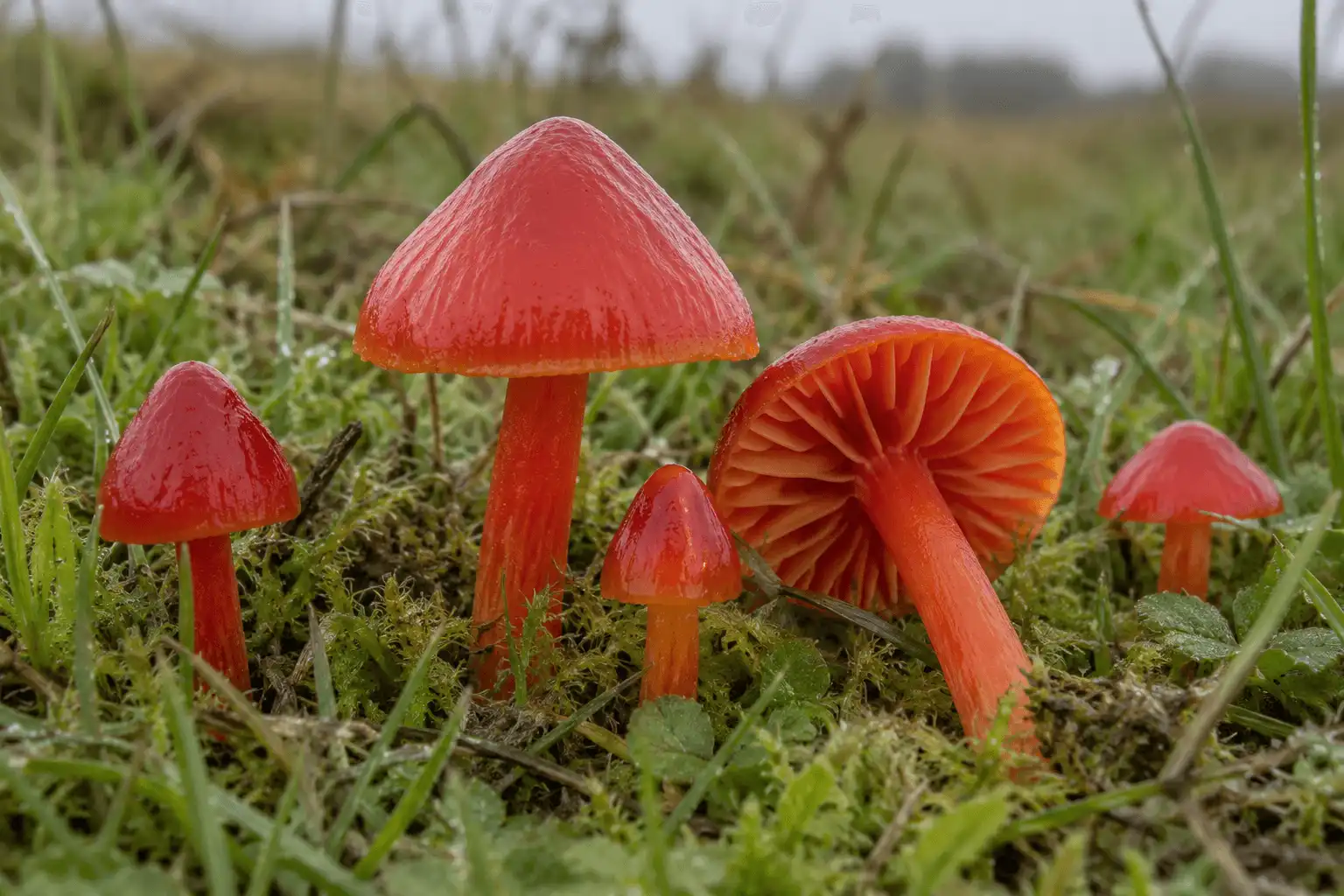
Scarlet Waxcap: Grassland Ecology and Identification
Document scarlet waxcaps by waxy red caps, thick spaced gills, slender stems, unimproved grassland ecology, regional limits, and close lookalikes.
mushrooms
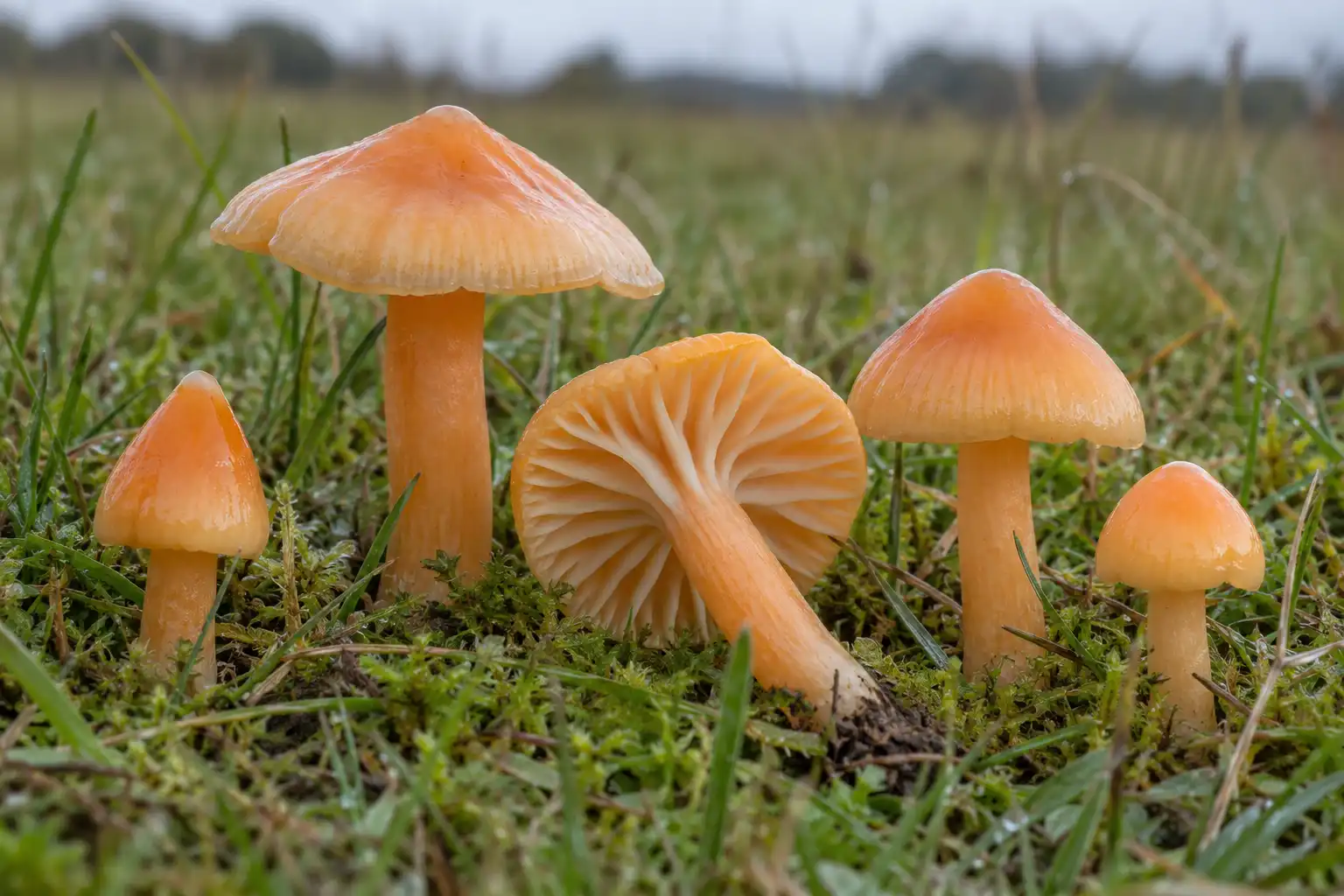
Meadow Waxcap: Cuphophyllus pratensis Grassland Guide
Identify meadow waxcap through dry apricot caps, thick decurrent gills, old-grassland ecology, regional lookalikes, recording methods, and safety limits.
identification
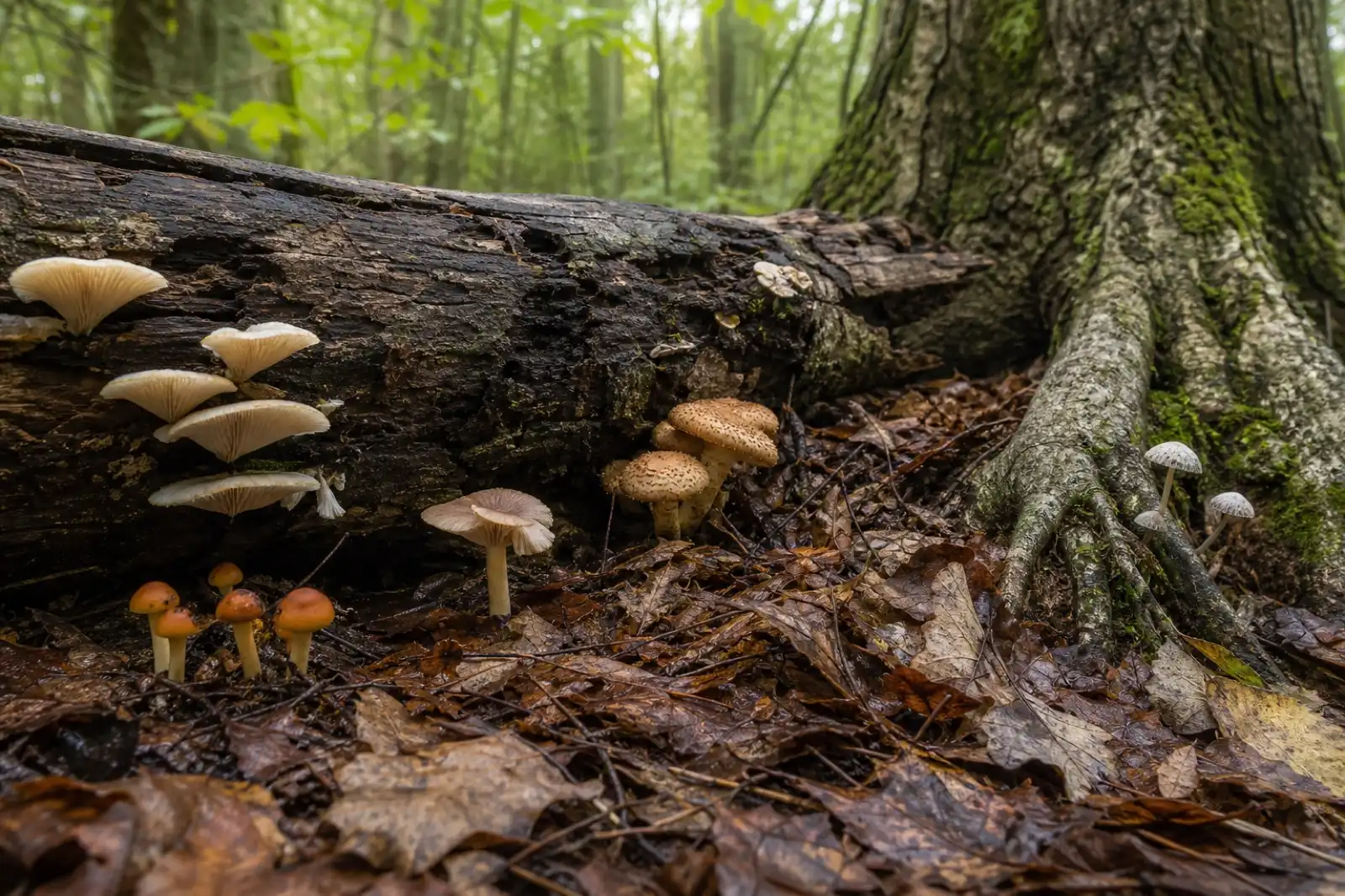
Using Habitat to Identify Mushrooms
Record substrate, associated plants, soil, wood type, moisture, elevation, and fruiting pattern as identification evidence.
Continue exploring
Browse more practical guides in Mushroom Encyclopedia or visit the mushroom encyclopedia.