Mushroom Encyclopedia
Meadow Waxcap: Cuphophyllus pratensis Grassland Guide
Identify meadow waxcap through dry apricot caps, thick decurrent gills, old-grassland ecology, regional lookalikes, recording methods, and safety limits.
By MushroomScope Editorial Team · · Updated
Species context
Treat profiles as reference material
Species profiles summarize documented traits, taxonomy, and lookalikes, but natural variation can be substantial.
Use the safety checklist →Decision limit
A profile cannot authenticate a specimen
Do not eat a wild mushroom from an online match, single feature, or generated image.
Read the safety disclaimer →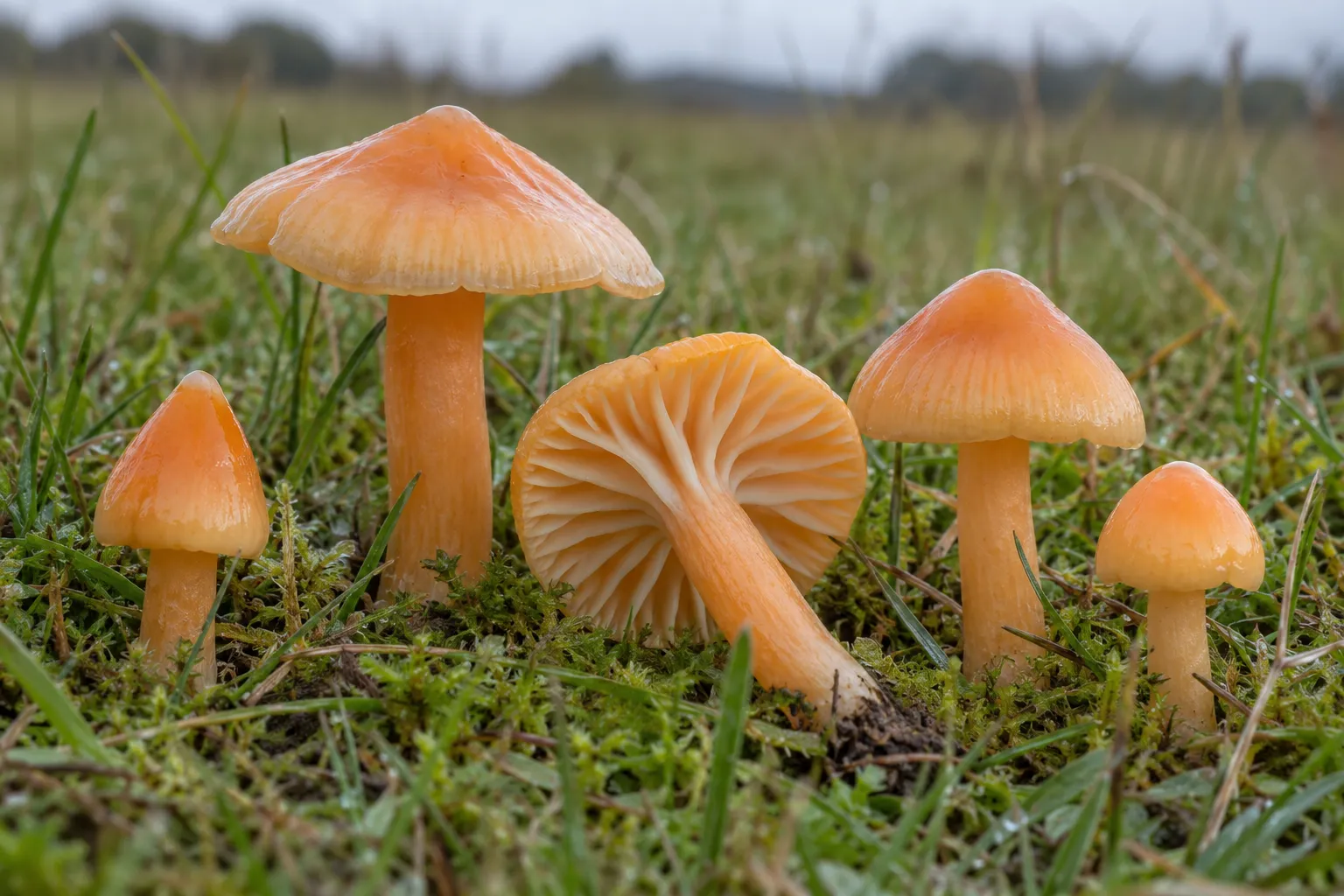
Quick facts
- Scientific name
- Cuphophyllus pratensis
- Common names
- Meadow waxcap, Buffcap
- Taxonomy
- Cuphophyllus · Hygrophoraceae
- Edibility context
- Unknown: This page does not recommend wild collection for food; identity, local conservation, contamination, and individual reaction must be resolved locally.
- Spore print
- White.
- Toxicity context
- None Known: Absence of a known syndrome is not a food clearance, and mixed or mistaken collections remain possible.
- Season
- August, September, October, November, December
- Growing difficulty
- Not Cultivated
- Regions
- Europe, North America, other temperate regions in the broad species concept
Safety limit: These labels summarize documented context; they never authenticate a wild specimen. Cooking does not make a poisonous species safe.
Meadow waxcap is a grassland species concept, not merely an orange mushroom with broad gills. A useful record combines cap texture, gill thickness and spacing, gill attachment, complete stem, substrate, management history, season, geography, and the other grassland fungi present. The page therefore answers a field-recording intent: how to recognize and document Cuphophyllus pratensis without treating a photograph as food clearance.
Start with the dry cap and thick descending gills
Young caps are rounded to convex and usually buff, tan, ochre, or apricot. They expand broadly and may develop a shallow central depression or irregular margin. Unlike many brightly colored waxcaps, the surface is normally dry rather than conspicuously slimy. Rain can still make any cap wet, so record texture after surface water has drained and compare several specimens.
Turn one fruit body without detaching it. The gills should be thick, waxy-looking, widely spaced, and distinctly decurrent: they continue down the upper stem rather than meeting it squarely. Photograph the side profile with a scale. “Broad gills” alone is too vague; count complete gills reaching the stem across a known arc and record shorter intervening gills.
Preserve the complete stem and meadow context
The stem is relatively stout, dry, and often close to the cap color or slightly paler. It lacks a ring and volva. Photograph the base in place before lifting anything because grass, moss, buried wood, and soil contact can be lost during collection. A mushroom apparently growing in grass may still arise from buried woody material, so show the attachment and immediate substrate.
The habitat identification guide explains how to keep substrate evidence attached to a record. Note turf height, moss cover, slope, shade, drainage, grazing or mowing, fertilizer history if known, and nearby trees. Do not infer “ancient meadow” solely from one fruiting.
Treat grassland history as evidence, not a shortcut
Waxcap-rich grasslands often have long continuity and relatively low nutrient inputs, but fruit bodies respond to weather and survey timing. A recently fertilized lawn can retain a few fungi; a high-quality site can appear empty during a dry visit. Record management statements as sourced history, separate from observations made on the day.
Survey along a repeatable route and map each cluster rather than collecting every cap. Revisit after rain and across more than one season. Record other waxcaps, earthtongues, clubs, corals, and pinkgills only when they can be identified responsibly. Assemblage evidence is stronger than converting one attractive mushroom into a habitat score.
Separate meadow waxcap from smaller bright waxcaps
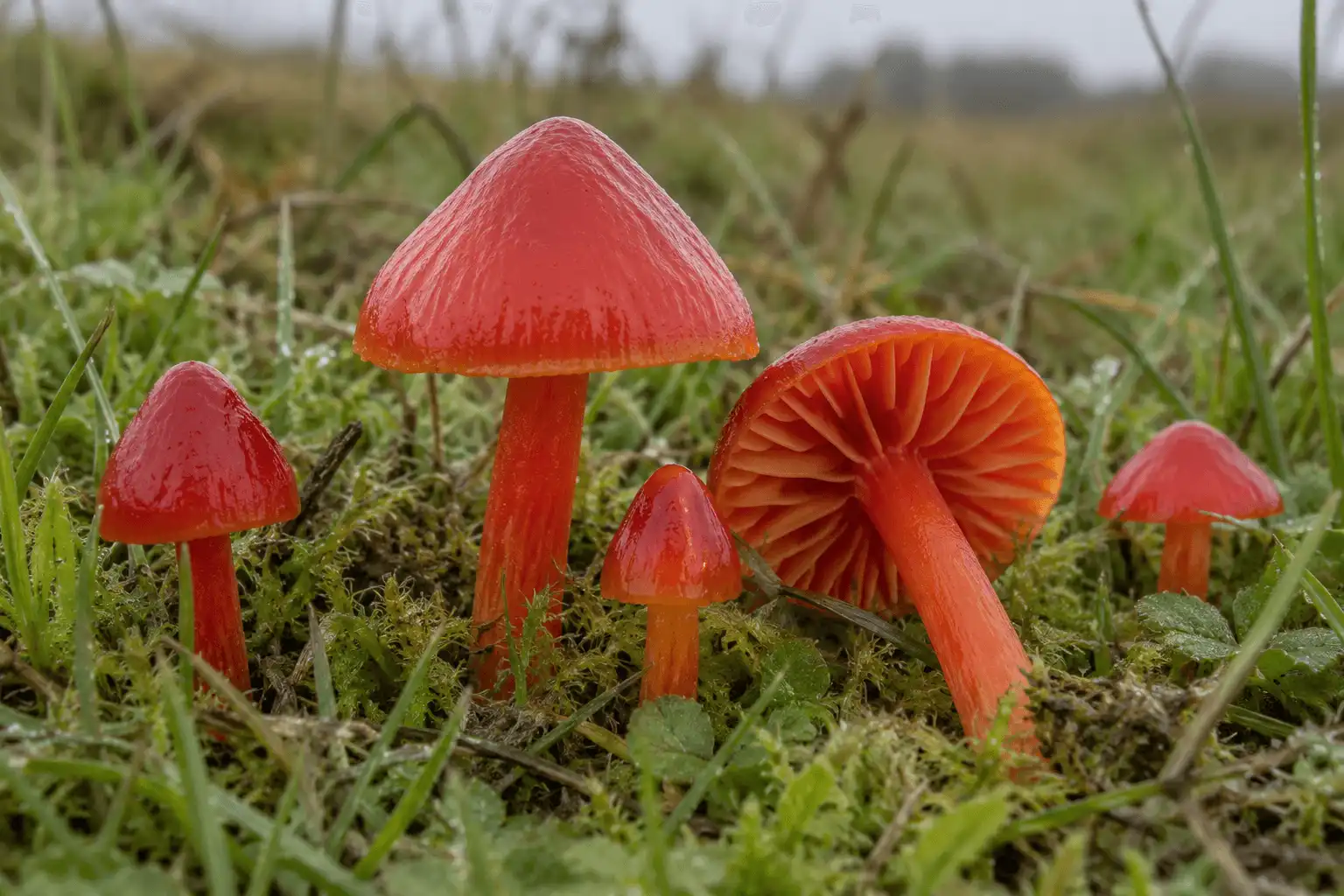
The scarlet waxcap guide provides a contrast with a smaller, vivid red species concept. Color overlaps after fading, frost, rain, or age, so the stronger difference is a combination: meadow waxcap’s robust build, dry buff-apricot surface, and thick pale widely spaced gills descending the stem.
White Cuphophyllus virgineus can be similar in structure but is normally ivory to white and often smaller. Other buff grassland agarics may have thinner, crowded gills or a different attachment. If a collection affects a conservation record, use a current regional key and retain a lawful voucher for microscopy or sequencing.
The dedicated snowy waxcap guide separates that ivory-white field concept through cap color controls, thick descending gills, complete-base checks, white-spore evidence, and pale grassland lookalikes.
Record color without letting a camera invent it
Photograph in open shade or diffuse daylight with a neutral reference in one frame. Automatic white balance can push apricot caps toward neon orange or dull gray. Keep an unedited original, note whether the cap was wet, and avoid using saturation to “restore” a remembered color.
Record variation across the colony. A young cap, mature cap, underside, side profile, and complete base provide more information than five identical top views. The AI-generated cover illustrates the requested structures but is not a specimen, locality, or source for morphology.
Measure a colony without stripping it
Assign numbers to representative fruit bodies. Measure cap diameter, stem length and width, and the point to which gills descend. Note cap shape, surface condition, gill spacing, damage, and maturity for each number. A white spore deposit can support placement but does not identify the species by itself.
Where rules allow limited collection, choose the minimum material needed and avoid taking an entire small colony. Keep habitat photographs, measurements, locality precision, collector, date, preliminary identification, and later determination under one record number. Sensitive grassland locality data should follow the policy of the relevant recording scheme.
Keep identification separate from food decisions
This page cannot establish that a collected mushroom is edible. Common-name use, an image match, and the absence of a known poisoning syndrome do not resolve identity, contamination, spoilage, individual allergy, or local conservation rules. Do not taste an unresolved waxcap.
If symptoms follow any wild mushroom exposure, contact the local poison center or emergency service promptly. Preserve uncooked material, trimmings, meal details, photographs, location, and timing. The identification safety checklist explains why remote resemblance is not a consumption decision.
Do not turn habitat interest into a cultivation recipe
Meadow waxcap is not presented as a home crop. Its grassland association involves soil history, plant community, microbes, management, and climate; a tray of generic compost does not reproduce that system. Moving turf or fruit bodies can damage the site and does not establish a traceable culture.
Research cultivation would require authenticated material, aseptic isolation, vouchers, defined media, controls, and a clear distinction between mycelial growth and verified fruiting. This page makes no performance claim and does not recommend collecting wild tissue.
Build a checkable field sheet
Use one row per fruit body and one header for the site. The site header should record coordinates at appropriate precision, date, recent weather, elevation, aspect, turf height, moss cover, management, and permissions. Each specimen row can record cap diameter and color, dryness, gill spacing and attachment, stem measurements, damage, and photo numbers.
Add a confidence field that states what remains unresolved. “Probable C. pratensis; microscopy not completed” is more useful than a forced certainty. Corrections should preserve the earlier determination and explain what new evidence changed it.
Understand what this page does not prove
Taxonomic databases provide accepted-name and occurrence context; they do not authenticate a reader’s mushroom. Conservation organizations explain the value of grassland-fungi assemblages; they do not make one fruit body a site verdict. Poisoning guidance supports response after exposure; it does not imply that species without a listed syndrome are suitable food.
Editorial review is provided by the MushroomScope team. No named mycologist, conservation officer, clinician, or toxicologist reviewed this page. Readers should use current regional keys, local recording schemes, landowner permission, and professional help when a decision has safety or conservation consequences.
Revisit the same route instead of chasing a single peak day
Mark a fixed route with repeatable start and end points, then record survey duration, observers, temperature, rainfall history, wind, and ground moisture. Walk it at a similar pace on each visit. A map of fruiting positions helps distinguish a persistent colony from different mushrooms appearing in the same broad field. Photograph landmarks without exposing sensitive coordinates publicly.
Absence needs context. A dry visit, recent mowing, heavy grazing, frost, or a short search cannot demonstrate that the fungus is absent. Record zero observations with the same effort fields used for successful visits. Over several seasons, this produces a useful phenology record without turning fruit-body counts into a direct measurement of underground abundance.
Separate conservation observations from management prescriptions
Fruit-body records can inform a site assessment, but changes to grazing, mowing, scrub, drainage, fertilizer, or public access affect more than one species. Do not prescribe management from this page alone. Provide the verified species list, survey dates, mapped compartments, known land-use history, and uncertainty to the responsible land manager or conservation adviser.
If a site is threatened, preserve evidence before making public claims: original photographs, recorder names, determination history, permissions, and any accepted local-recording submission. A corrected identification should update the assessment rather than remain hidden because the earlier name was more compelling.
Use microscopy only after the field record is coherent
Microscopy is most useful when material is mature, traceable, and linked to photographs. Record mount medium, calibration, number of spores measured, range, and how measurements were selected. A few uncalibrated spores cannot compensate for a missing base, unknown habitat, or mixed collection.
When DNA is considered, preserve voucher identity and laboratory provenance. A sequence label without a checkable specimen can repeat a database error. Field morphology, ecology, microscopy, and sequence evidence should be reconciled, with disagreements reported rather than averaged away.
For a pointed yellow-to-red waxcap that develops pervasive gray-black tissue changes, compare the timed reaction and nearly free gills in the blackening waxcap guide rather than treating all bright grassland waxcaps as one variable species.
Compare the robust buff-apricot build here with the butter waxcap guide, which documents a much smaller bright-yellow waxcap through measured scale, gill spacing, hydration, and grassland history.
References
- Global Biodiversity Information Facility. Cuphophyllus pratensis species record. Taxonomic backbone and mapped occurrence context.
- National Center for Biotechnology Information. Cuphophyllus pratensis taxonomy search. Independent nomenclatural and sequence-linked context.
- Plantlife. Grassland fungi conservation resources. Habitat-management and waxcap-grassland context; apply the relevant regional guidance.
- North American Mycological Association. Mushroom Poisoning Syndromes. General syndrome and response context.
Editorial status: substantive MushroomScope editorial review on November 2, 2026; no named expert review. The original AI image is licensed as MushroomScope original editorial work and is explicitly not identification evidence.
Source quality notes
MushroomScope cites sources that match the page scope, such as taxonomic databases, extension guidance, food-safety agencies, food-composition databases, and peer-reviewed or institutional health references. Sources support context and uncertainty; they do not turn an online page into specimen identification, medical advice, or a tested recipe record.
Frequently asked questions
What are the strongest meadow waxcap features?
Use the dry buff-apricot cap, thick waxy widely spaced gills running down the stem, stout dry stem, grassland substrate, season, and regional range together.
Does one meadow waxcap prove a high-quality grassland?
No. A verified assemblage recorded across seasons is more informative than one fruit body; management, soil history, weather, and survey effort all affect observations.
How does meadow waxcap differ from scarlet waxcap?
Meadow waxcap is usually buff to apricot and dry, with thick pale decurrent gills; scarlet waxcap is smaller, vividly red, and typically has more brightly colored tissue.
Can this page confirm that a meadow waxcap is edible?
No. A webpage and AI image cannot authenticate a wild mushroom or clear it for food. Use qualified local identification and current local guidance.
Should meadow waxcaps be collected for identification?
Photograph and measure in place first. Where collection is legal and genuinely needed, take the minimum representative material and retain habitat evidence.
Related guides
mushrooms
Scarlet Waxcap: Grassland Ecology and Identification
Document scarlet waxcaps by waxy red caps, thick spaced gills, slender stems, unimproved grassland ecology, regional limits, and close lookalikes.
identification
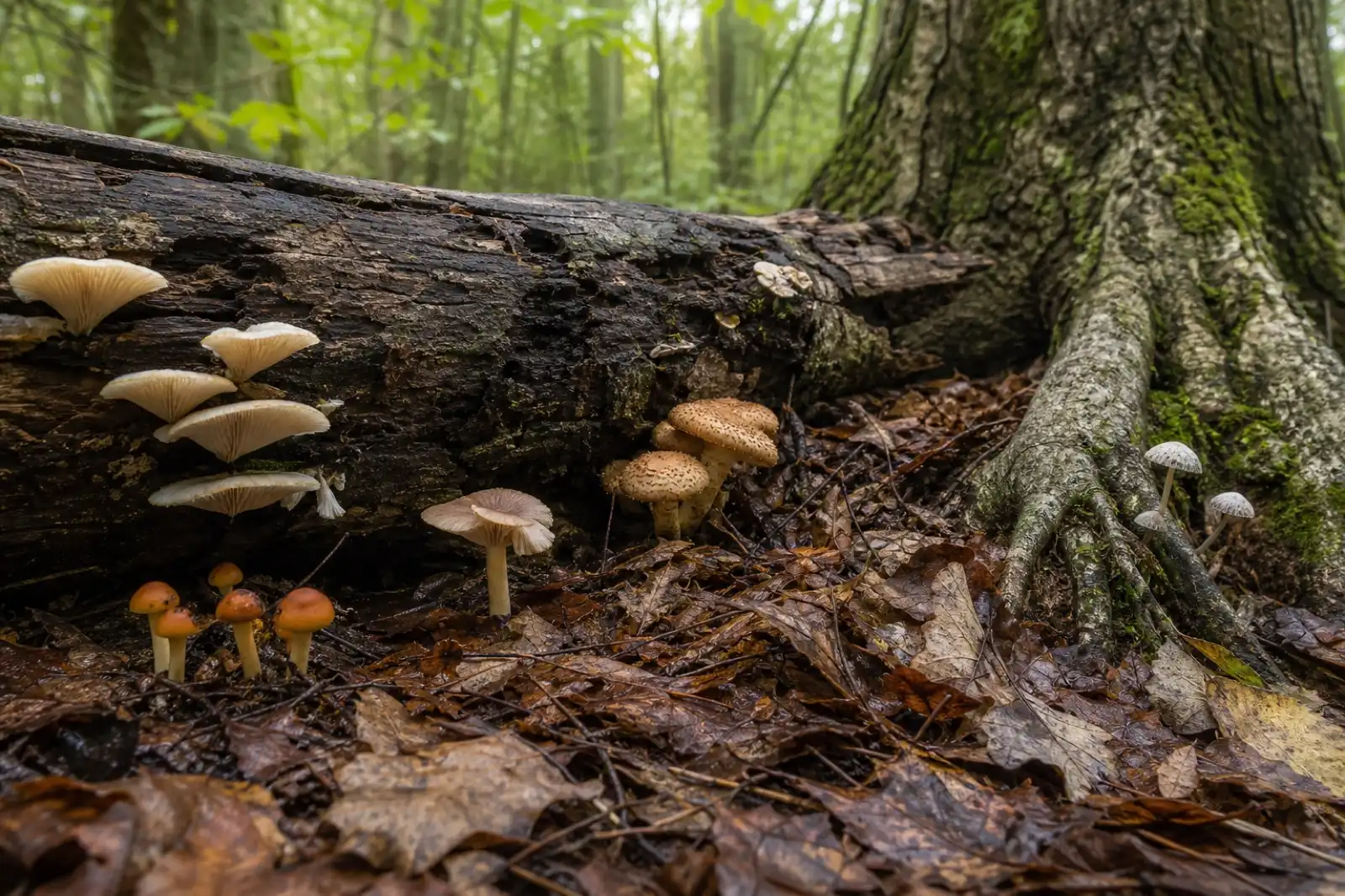
Using Habitat to Identify Mushrooms
Record substrate, associated plants, soil, wood type, moisture, elevation, and fruiting pattern as identification evidence.
identification
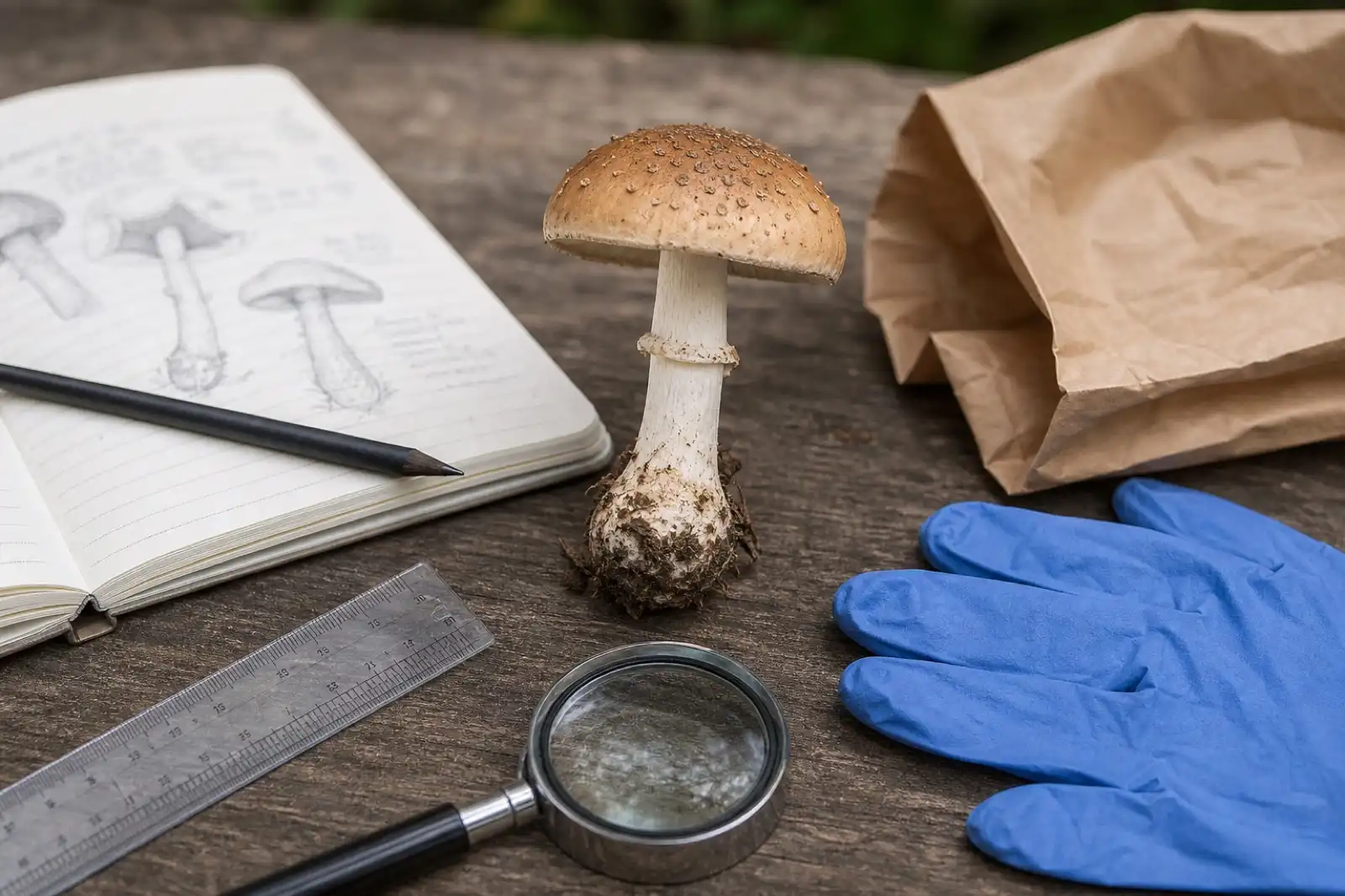
Mushroom Identification Safety Checklist
Use a conservative checklist before handling, documenting, or discussing any wild mushroom, especially when edibility is being considered.
Continue exploring
Browse more practical guides in Mushroom Encyclopedia or visit the mushroom encyclopedia.