Mushroom Encyclopedia
Snowy Waxcap: Cuphophyllus virgineus Field Guide
Record snowy waxcap through ivory caps, thick descending gills, short-grass ecology, white lookalikes, conservation context, and careful field methods.
By MushroomScope Editorial Team · · Updated
Species context
Treat profiles as reference material
Species profiles summarize documented traits, taxonomy, and lookalikes, but natural variation can be substantial.
Use the safety checklist →Decision limit
A profile cannot authenticate a specimen
Do not eat a wild mushroom from an online match, single feature, or generated image.
Read the safety disclaimer →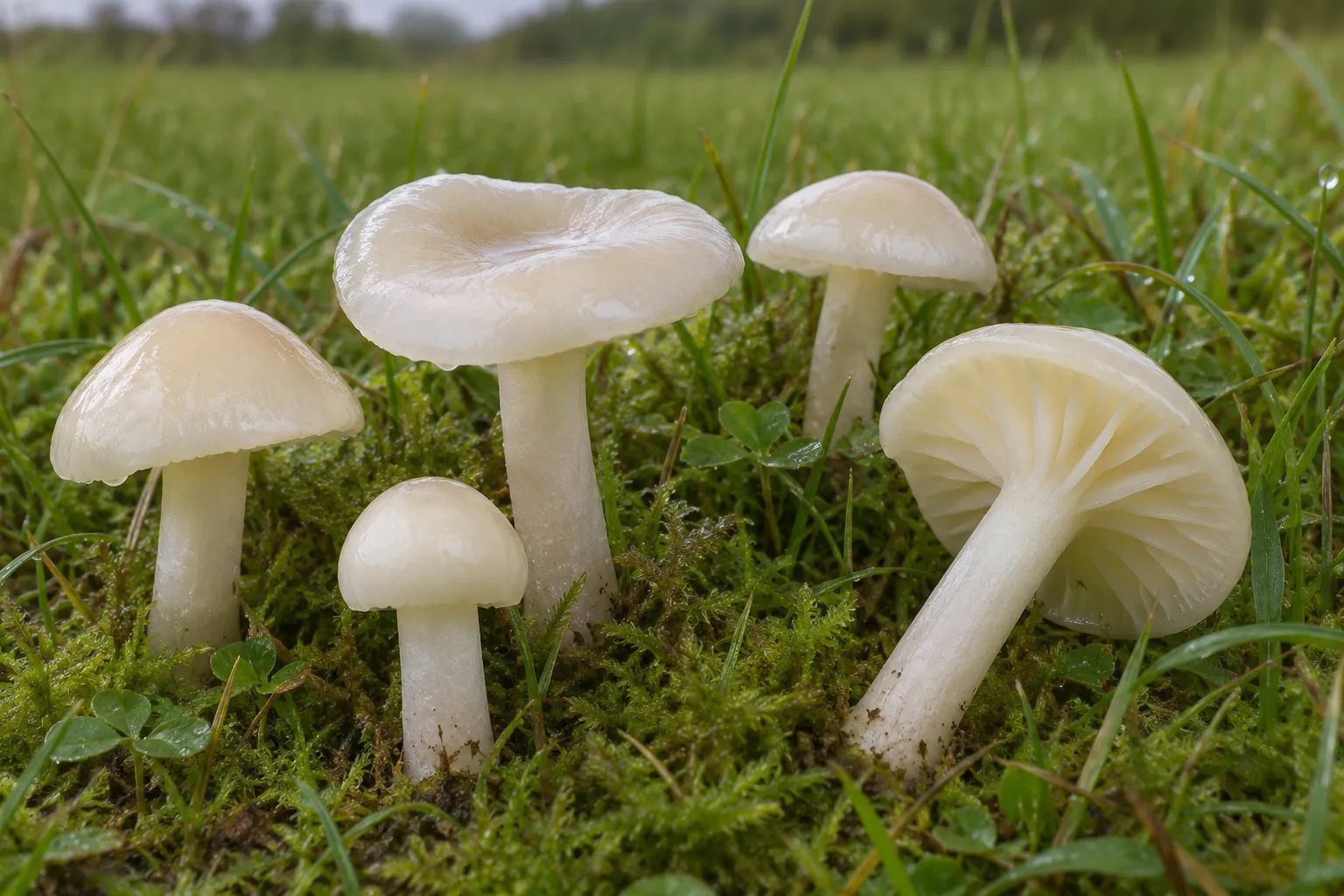
Quick facts
- Scientific name
- Cuphophyllus virgineus
- Common names
- Snowy waxcap, Snowy hygrophorus
- Taxonomy
- Cuphophyllus · Hygrophoraceae
- Edibility context
- Unknown: This guide does not recommend wild collection for food; high-consequence white lookalikes and local conservation priorities require expert, regional decisions.
- Spore print
- White.
- Toxicity context
- None Known: Absence of a named syndrome is not a consumption clearance, and mistaken or mixed collections can be dangerous.
- Season
- August, September, October, November, December, January
- Growing difficulty
- Not Cultivated
- Regions
- Europe, North America, other temperate regions represented by verified records
Safety limit: These labels summarize documented context; they never authenticate a wild specimen. Cooking does not make a poisonous species safe.
Snowy waxcap is a lesson in documenting pale mushrooms without letting “small, white, and in grass” become an identification. Cuphophyllus virgineus is generally ivory-white, with thick widely spaced gills that run down the stem, a smooth pale stem, white spores, and a short-grass context. Those characters overlap with other waxcaps and with unrelated white agarics, including high-consequence lookalikes.
This page owns the species-level field-record intent. The meadow waxcap guide covers a larger buff-apricot relative, while the identification safety checklist explains why an image cannot clear any wild mushroom for food.
Read ivory color across weather and age
Fresh caps range from clean white to ivory or pale cream. Young caps are convex; mature ones broaden and may become shallowly depressed or irregular. The surface can look moist, waxy, or slightly greasy after rain. Drying may leave the center warmer than the margin, while reflected grass can introduce a false green cast in photographs.
Record color in diffuse daylight with a neutral reference. Photograph the same cap wet and after surface water has drained, without heating or damaging it. Keep an unedited original. “Snow white” is not enough: note cream zones, translucency at the margin, soil staining, and whether a color difference belongs to the cap skin or reflected surroundings.
Do not use whiteness as a safety signal. Many unrelated mushrooms are white, and exposure can bleach colored species. The gill construction, stem, base, spore deposit, odor, habitat, and regional species set must agree.
Confirm thick gills that descend the stem
The underside carries thick, waxy-looking gills spaced farther apart than the thin crowded blades of many agarics. They run down the upper stem rather than meeting it in a narrow notch. Shorter gills can occur between those that reach the stem.
Take a side profile with a ruler. Count full-length gills across a measured quarter of the cap and note the number of shorter tiers. Photograph attachment at two points because a tilted cap can hide the true junction. Avoid flattening the gills; pressure changes their spacing and can make thick plates look fused.
“Decurrent white gills” still does not prove the species. Pale funnels and other grassland mushrooms may also have descending gills. Compare thickness, spacing, cap texture, stem surface, odor, spores, and the whole ecological record.
Preserve the base and rule out hidden structures
The stem is smooth, white to ivory, and usually slender. It has no ring or volva. Grass and moss can conceal the lowest portion, so photograph the fruit body in place, then excavate one lawful representative with surrounding soil rather than pulling or cutting it.
Clean the base gently and photograph all sides. A buried cup, bulb, rooting extension, attached wood, or ring zone changes the comparison set. Do not merge the clean cap of one specimen with the complete base of another in the notes. Every structure should remain linked to a numbered individual.
Measure stem length and width at the apex, middle, and base. Record whether it is dry, greasy, hollow, compressed, or longitudinally split. Those observations are more reviewable than “typical waxcap stem.”
Test a white spore deposit correctly
Use a mature, hydrated cap and place it across both dark and light nonabsorbent surfaces. Cover it against drafts and label the setup. A snowy waxcap should produce a white deposit. The dark half helps reveal it; the light half helps expose colored contamination or substrate dust.
A cap that releases nothing has produced a failed print, not a white one. Photograph the deposit in neutral light, retain a small sample, and link it to the specimen. White spores narrow the field but do not identify the species, because many grassland agarics share them.
Microscopy can add spore dimensions, basidia, and tissue characters. Report calibration, mounting medium, the number measured, and a range. Values copied from literature belong in the comparison notes, not in the observation field for the specimen.
Survey the turf as carefully as the mushroom
Record turf height, moss cover, slope, aspect, moisture, shade, grazing or mowing, visible fertilizer effects, and nearby woody plants. Show the immediate attachment so a cap emerging through grass is not automatically described as soil-fruiting if buried wood is present.
The habitat identification guide helps separate direct observations from site history. “Short mossy turf, recently mown, no buried wood seen” is an observation. “Ancient unfertilized grassland” requires documentary or land-management evidence.
Snowy waxcap can occur in lawns and pastures as well as species-rich semi-natural grasslands. One record cannot grade the site. Survey a fixed route repeatedly and document the larger assemblage—waxcaps, earthtongues, clubs, corals, and pinkgills—only to the level supported by evidence.
Separate fruiting weather from habitat quality
Waxcap fruit bodies respond sharply to rain, temperature, mowing, grazing, and frost. A strong flush after autumn rain does not prove that the underground community appeared that week. An empty visit during drought does not prove its absence.
Use equal search time, the same route, and repeat dates. Record recent rainfall and minimum temperature, then map each cluster without trampling the turf. Multi-year detection histories make better conservation evidence than a single peak count.
If management changes, document the timing. Mowing height, cut removal, grazing intensity, compaction, drainage, and nutrient inputs may affect what is visible. Do not attribute a change to one cause when weather and observation effort also changed.
Compare meadow waxcap by structure before color
Cuphophyllus pratensis is usually more robust, with a thicker stem and a buff, tan, or apricot cap. Its gills are likewise thick and decurrent, which is why structure alone cannot separate it. Compare a whole colony across ages and record whether pale individuals sit within an otherwise apricot population.
The meadow waxcap guide owns that robust buff species intent. Snowy waxcap should remain tied to an ivory-white, generally smaller field concept. Bleached or overexposed photographs are not evidence of genuine white pigmentation.
Use odor cautiously for pale Cuphophyllus comparisons
Cuphophyllus russocoriaceus may be separated partly by a persistent odor compared with cedarwood or Russian leather. Odor language is subjective, and cold, wet, or very young fruit bodies may be weak. Never inhale an unknown mushroom at close range or taste it.
Use a clean ventilated container briefly, record the observer and temperature, and compare multiple specimens. Write the actual description before choosing a species name. If the odor is absent or disputed, retain the uncertainty and use microscopic or sequence evidence where the record matters.
Exclude dangerous white funnels rather than matching silhouettes
Small white Clitocybe-like mushrooms can grow in lawns and pasture, and some contain medically important toxins. They may show thinner, more crowded gills, a different cap texture, or different spores, but field overlap makes casual image matching unsafe.
Preserve the complete base, make a spore deposit, document odor without tasting, and use a current regional key. A local expert needs the actual specimen, not only a top-view photograph. The absence of a ring does not make a white grassland mushroom safe.
Keep taxonomy and geography explicit
The name has appeared in older literature under combinations including Hygrocybe virginea and Hygrophorus virgineus. Preserve the name used by the source and the determination date. A modern database name should not be silently projected backward onto every historical record.
Regional concepts and pale varieties can differ. Record geography, habitat, morphology, microscopy, identifier, and evidence type. If the collection does not fit the local key cleanly, use Cuphophyllus sp. or a species group rather than exporting a European concept by confidence alone.
Occurrence maps need record-level checking. Coordinates can be generalized, names can reflect an older concept, and observations can lack vouchers. Use map points to locate literature and collections, not as proof that a photograph is within a settled range.
Build a conservation-safe record
- Photograph the colony and a wide habitat frame before touching it.
- Number representative fruit bodies at different stages.
- Record cap, gill, and stem measurements with neutral-color images.
- Preserve one complete base only where collection is lawful and needed.
- Make a linked white spore deposit from mature material.
- Compare with a current regional key and document uncertainty.
- Share sensitive location data according to the recording scheme’s policy.
Avoid removing a small colony to fill a display box. In many routine records, in-place measurements plus one minimal voucher are sufficient. A complete evidence trail is more valuable than specimen quantity.
Keep food decisions outside the identification page
This guide does not approve snowy waxcap for consumption. Even if a field name is correct, conservation rules, contamination, spoilage, allergies, and individual reactions remain. More importantly, a mistake among small white grassland mushrooms can have serious consequences.
Do not taste an unresolved specimen. If symptoms follow any wild mushroom exposure, contact the local poison center or emergency service promptly. Preserve uncooked material, trimmings, photographs, site details, and the timing and quantity consumed.
Frequently asked questions in context
Why can the cap look cream rather than white?
Age, surface moisture, soil, reflected grass, and camera white balance can warm the color. Document several specimens in neutral light rather than correcting the image toward an expected white.
Is a waxy surface enough to call it a waxcap?
No. “Waxy” is a human texture description shared by unrelated fungi. Gill architecture, spores, stem, habitat, taxonomy, and regional comparison remain necessary.
Can snowy waxcap be cultivated in a pot?
There is no responsible generic pot recipe in this guide. Its grassland association involves ecological conditions that a bag of ordinary substrate does not reproduce.
References
- Global Biodiversity Information Facility. Cuphophyllus virgineus taxon record. Nomenclature, classification, and occurrence context.
- Crous et al. Fungal Planet description sheets 1614–1696. Peer-reviewed comparative morphology and phylogenetic context including C. virgineus.
- Plantlife. Grassland fungi conservation resources. Habitat-management and assemblage context.
- North American Mycological Association. Mushroom Poisoning Syndromes. Conservative poisoning-response context.
Editorial review: November 25, 2026. This article has editorial review only and no named mycologist or clinician review. Taxonomy, regional lookalikes, conservation guidance, and poison-response contacts should be rechecked at every substantive update.
Source quality notes
MushroomScope cites sources that match the page scope, such as taxonomic databases, extension guidance, food-safety agencies, food-composition databases, and peer-reviewed or institutional health references. Sources support context and uncertainty; they do not turn an online page into specimen identification, medical advice, or a tested recipe record.
Frequently asked questions
What features support a snowy waxcap record?
Use the ivory-white cap, thick widely spaced waxy gills running down the stem, smooth pale stem, white spore deposit, short-grass habitat, season, and regional range together.
Is every small white mushroom in grass a snowy waxcap?
No. White Clitocybe-like fungi, pale waxcaps, and other grassland agarics can overlap. Preserve the base and compare gill thickness, attachment, cap texture, odor, spores, ecology, and a regional key.
Does snowy waxcap prove that grassland is ancient?
No. One fruit body is not a habitat certificate. A repeatable survey of the wider waxcap, earthtongue, club, coral, and pinkgill assemblage plus management history is more informative.
Can this page confirm snowy waxcap edibility?
No. A page or photo cannot authenticate a wild mushroom or exclude dangerous white lookalikes, contamination, spoilage, or individual sensitivity.
Should a snowy waxcap colony be collected?
Photograph and measure it in place first. Where collection is lawful and needed for verification, take the minimum representative material and retain habitat evidence.
Related guides
mushrooms
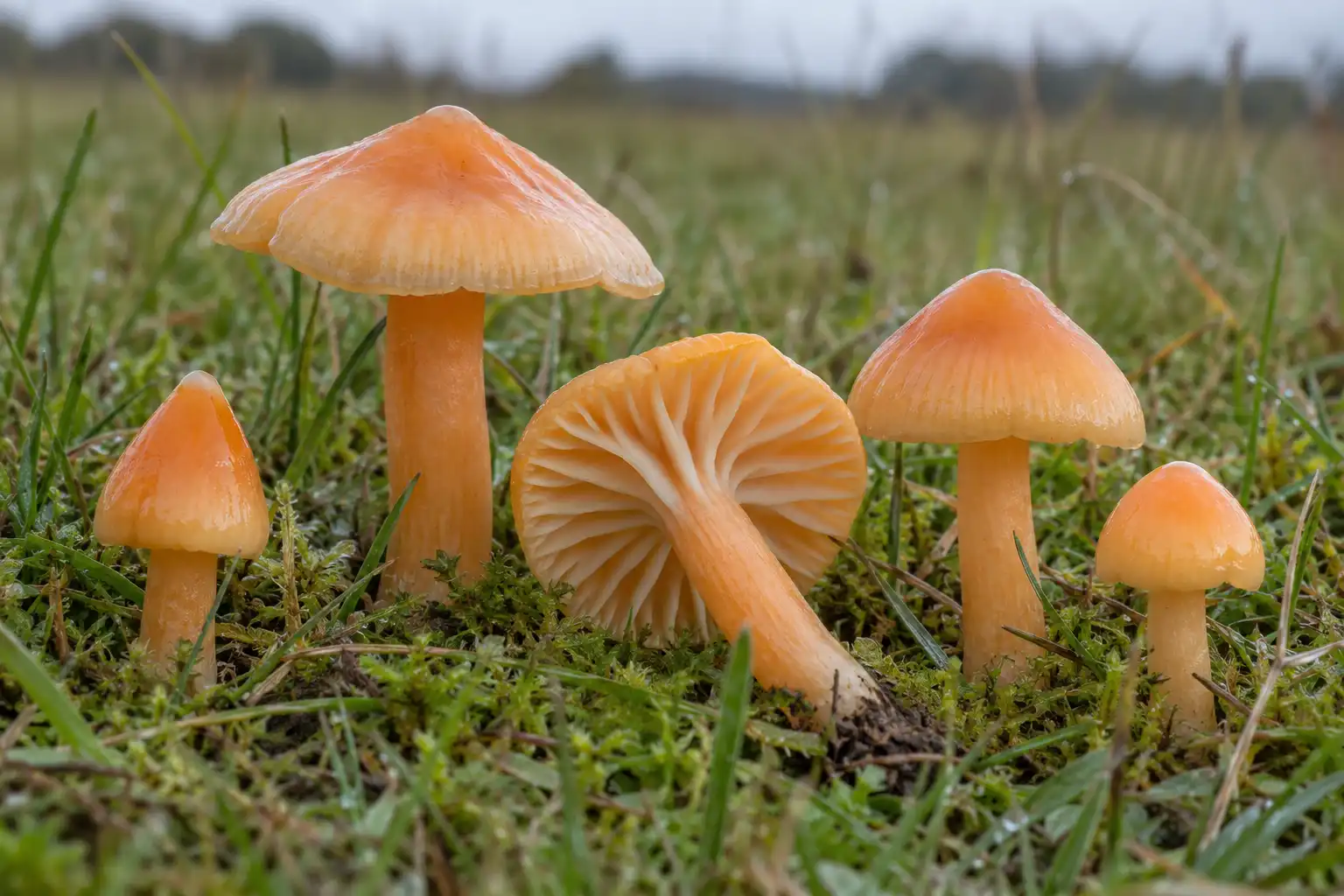
Meadow Waxcap: Cuphophyllus pratensis Grassland Guide
Identify meadow waxcap through dry apricot caps, thick decurrent gills, old-grassland ecology, regional lookalikes, recording methods, and safety limits.
mushrooms
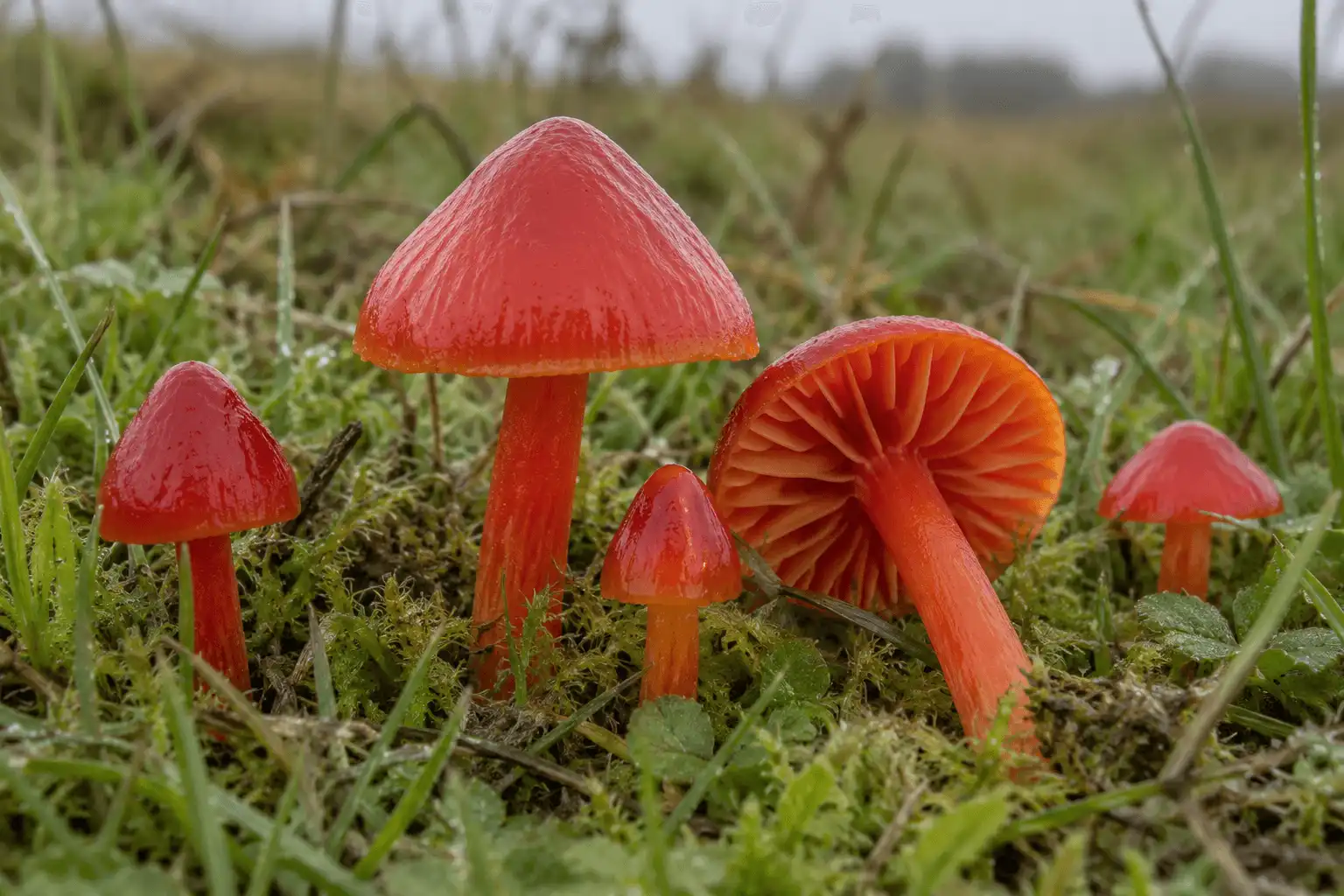
Scarlet Waxcap: Grassland Ecology and Identification
Document scarlet waxcaps by waxy red caps, thick spaced gills, slender stems, unimproved grassland ecology, regional limits, and close lookalikes.
identification
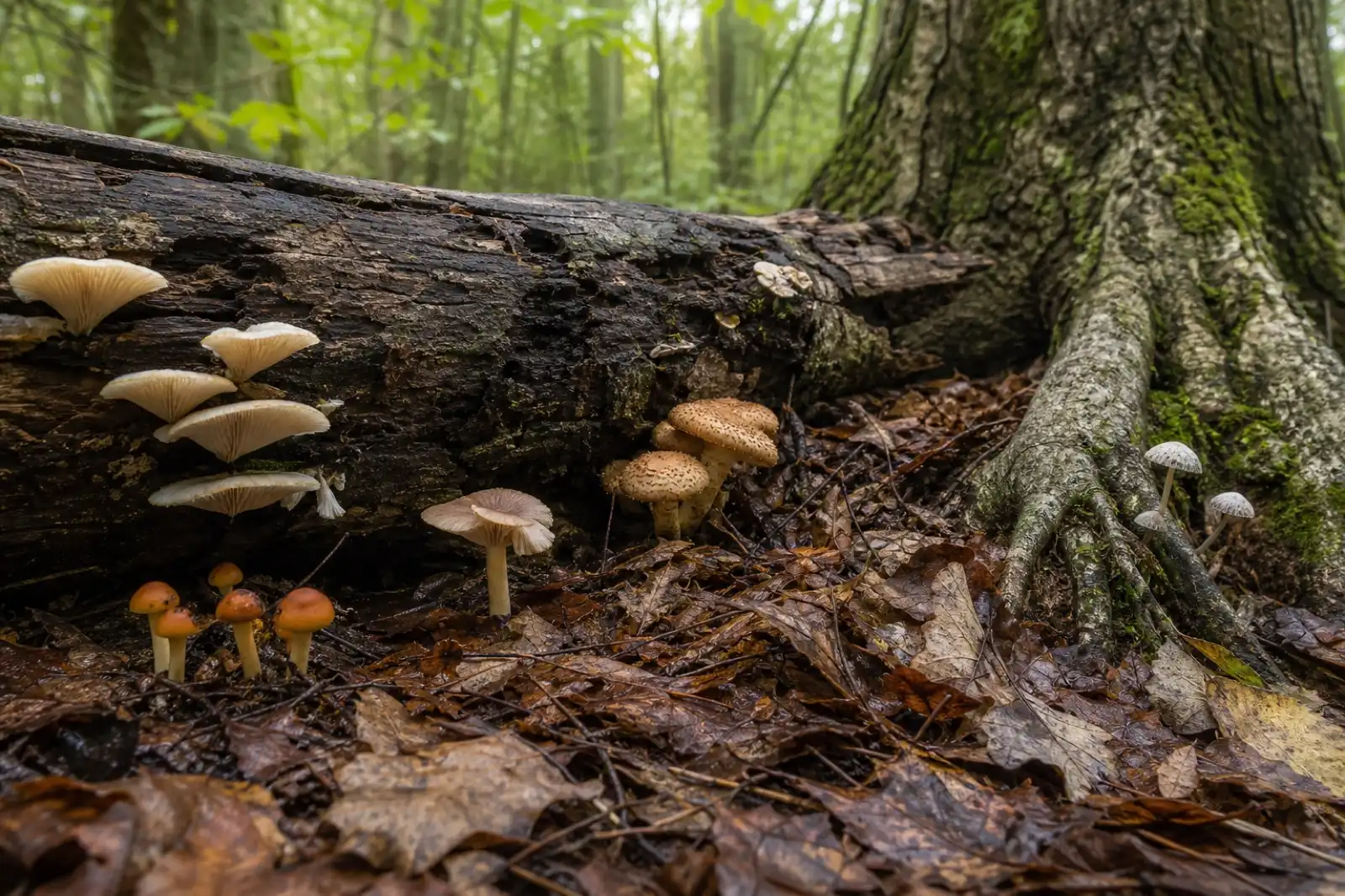
Using Habitat to Identify Mushrooms
Record substrate, associated plants, soil, wood type, moisture, elevation, and fruiting pattern as identification evidence.
Continue exploring
Browse more practical guides in Mushroom Encyclopedia or visit the mushroom encyclopedia.