Mushroom Encyclopedia
Cloud Ear Fungus: Auricularia cornea, Market Names, and Uses
Understand cloud ear through Auricularia cornea taxonomy, pale hairy fruit bodies, tropical hardwood ecology, market-name limits, cultivation, and cooking.
Species context
Treat profiles as reference material
Species profiles summarize documented traits, taxonomy, and lookalikes, but natural variation can be substantial.
Use the safety checklist →Decision limit
A profile cannot authenticate a specimen
Do not eat a wild mushroom from an online match, single feature, or generated image.
Read the safety disclaimer →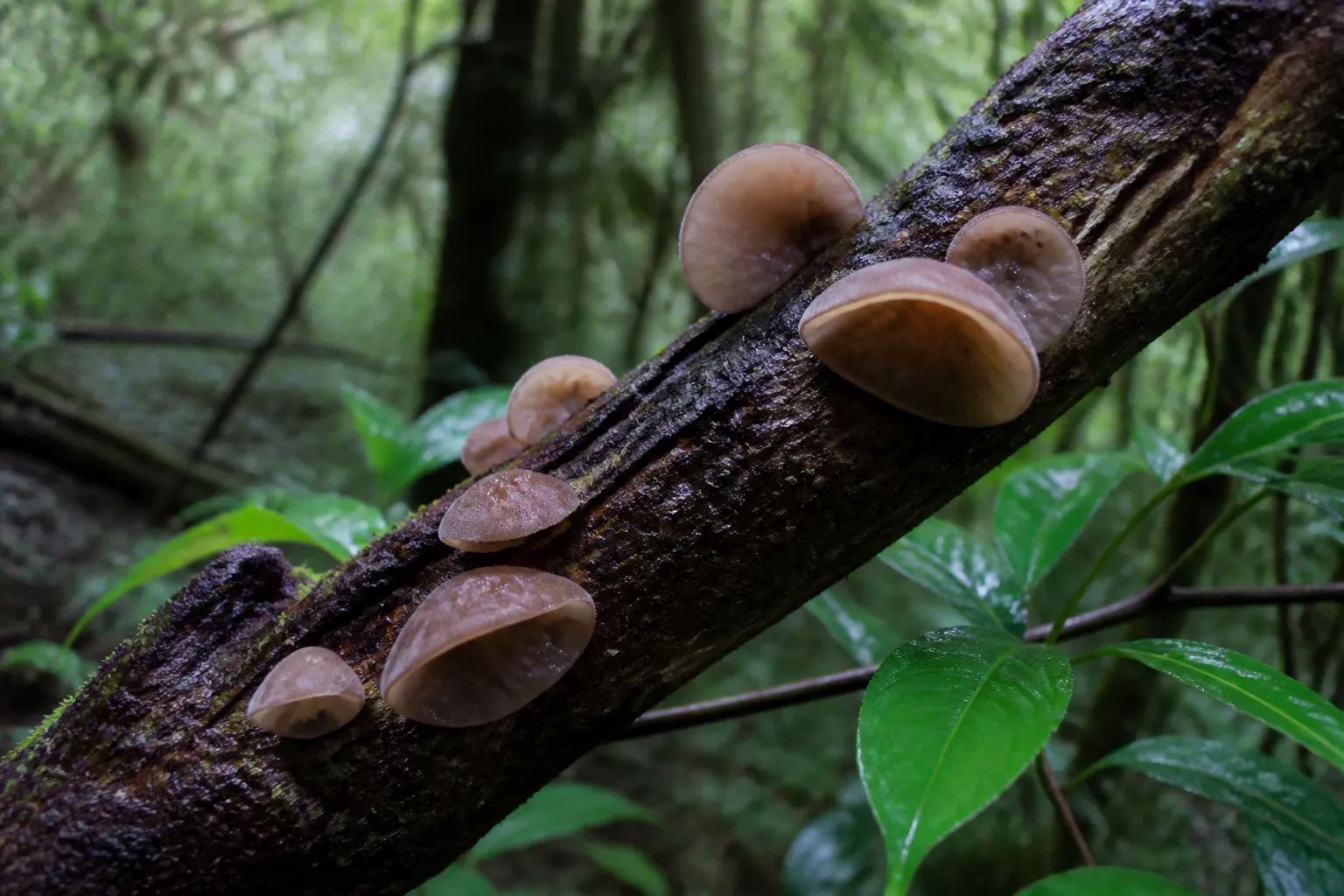
Quick facts
- Scientific name
- Auricularia cornea
- Common names
- Cloud ear, Hairy wood ear, Wood ear
- Taxonomy
- Auricularia · Auriculariaceae
- Edibility context
- Edible: Documented food use applies to authenticated, clean, properly handled and cooked product, not to a wild jelly fungus identified online.
- Spore print
- White, usually difficult to obtain and insufficient alone.
- Toxicity context
- None Known: No known general toxicity removes risks from misidentification, substrate contamination, spoilage, allergy, choking, or individual intolerance.
- Season
- April, May, June, July, August, September, October
- Growing difficulty
- Moderate
- Regions
- tropical Asia, Pacific regions, Africa, other verified tropical and subtropical records, cultivation elsewhere
Safety limit: These labels summarize documented context; they never authenticate a wild specimen. Cooking does not make a poisonous species safe.
Cloud ear is a useful example of why a market name and a species name are not interchangeable. Packages labeled cloud ear, wood ear, black fungus, or hairy wood ear may contain different Auricularia species depending on region and supply chain. This guide focuses on Auricularia cornea, not every product sold under those names.
The page’s independent intent is species and market-boundary clarification. The wood ear guide covers the separate Auricularia heimuer concept. Neither page should be used to relabel a package whose supplier has not identified the species.
The cloud ear field profile
Fresh A. cornea forms pale tan to gray-brown gelatinous lobes on hardwood. Shapes range from ears to shallow cups or irregular overlapping shelves. The outer, nonfertile surface is finely hairy or velvety, while the inner fertile face is smoother and may wrinkle.
There are no gills, teeth, or pores and usually no true stem. The fruit body attaches laterally or through a narrowed point to wood. Thin margins may look slightly translucent under natural light.
Examine both sides of each lobe
A top-only photograph misses the surface contrast. Photograph the matte hairy exterior and the smoother fertile interior, then show the attachment. Use oblique side light to reveal fine hairs without artificial oversharpening.
Rain can make the outer face look glossy, and handling can flatten hairs. Compare protected folds or younger lobes. A magnifier may help, but microscopic hair structure and spores are more reliable when close species must be separated.
Shape changes with water and crowding
Fresh lobes expand after rain and shrink during dry weather. Closely packed fruit bodies press into cups, waves, or overlapping tiers. A solitary specimen may be more distinctly ear-shaped.
Shape therefore describes a range rather than a silhouette. A perfectly human-ear outline is not required, and an irregular jelly mass should not be assigned to Auricularia without checking surface, attachment, and microscopic traits.
Fresh, dry, and rehydrated material look different
Fresh tissue is flexible, rubbery, and gelatinous. Drying makes it thin, hard, dark, and curled. Rehydration restores volume and flexibility but does not reconstruct every original diagnostic detail.
This transformation is useful in cooking and difficult in identification. A dried retail fragment has lost ecology, attachment, fresh color, and much surface texture. Supplier traceability is more meaningful than visual confidence from one rehydrated piece.
Hardwood attachment is central
Wild fruit bodies occur on dead or weakened hardwood, fallen branches, logs, and stumps in humid tropical and subtropical settings. Record whether wood is living or dead, standing or fallen, and identifiable to host where possible.
A jelly fungus on conifer wood or soil changes the comparison set. So does an apparently wood-free specimen whose branch is buried. Include a wide habitat photograph as well as macro images.
Climate and moisture drive fruiting
Warmth and rainfall can produce repeated flushes through broad parts of the year. A fixed Northern Hemisphere autumn calendar is less useful for a tropical species. Local rain pattern, elevation, monsoon timing, and wood moisture matter.
Record whether fruit bodies are fully hydrated after rain, partly dried, or re-expanding. That condition explains thickness and translucency better than assuming all differences are taxonomic.
Geographic records need verification
GBIF supports taxonomic and occurrence context, but occurrence records vary in identification method and may preserve historical names. Use verified regional checklists and specimen-backed records before stating that A. cornea is established in a new area.
Cultivation and trade also move products far beyond natural fruiting ranges. A package sold in Europe or North America does not show that the species was grown or collected locally.
Cloud ear versus A. heimuer wood ear
Both are cultivated foods and share overlapping common names. A. cornea is often described as paler, thicker, and hairier, while A. heimuer may be sold as darker black wood ear. Those tendencies are not a dependable package-level key because strain, growing conditions, maturity, processing, and drying change appearance.
For a scientific determination, combine origin, fresh morphology, hair structure, spore measurements, culture records, and molecular evidence where needed. For cooking, rely on an authenticated supplier label rather than trying to reverse-engineer a species from dried pieces.
Other regional Auricularia species
Names such as A. auricula-judae occur in literature and commerce, and multiple regional species may resemble one another. Historical books sometimes applied a familiar European name broadly to specimens elsewhere.
Modern revisions mean old occurrence and recipe names require interpretation. Preserve the exact scientific name and source date used by a publication instead of silently updating every “wood ear” mention to A. cornea.
Exidia and other jelly fungi
Many Exidia species form dark, amber, or translucent jelly cushions and brain-like masses on wood. They may lack the clear distinction between a hairy outer face and smoother ear interior. Some coalesce into broad patches rather than discrete ears.
Other jelly fungi can be leaf-like, spatula-shaped, or gelatinous crusts. Color and texture alone do not establish edibility. Substrate, fruit-body architecture, microscopic structures, and region remain necessary.
A defensible field record
- Photograph the branch or log and surrounding habitat.
- Record region, date, rainfall, host condition, and wood identity if known.
- Photograph hydrated and partly dry fruit bodies when both occur.
- Capture outer hairs, inner fertile face, thickness, margin, and attachment.
- Measure multiple lobes without selecting only the largest.
- Make a spore deposit or collect microscopic evidence where appropriate.
- Compare with a current regional Auricularia treatment and qualified expertise.
The complete identification workflow helps keep ecology attached to morphology.
Market labels and traceability
A useful retail label identifies the product, country or producer, lot, dried or fresh form, storage instructions, and allergen or facility information where applicable. “Black fungus” alone does not establish a species.
Keep packaging until the product is used. Traceability matters if quality is poor or an adverse event occurs. Do not mix an unlabeled wild collection with a commercial dried product and assume cooking makes them equivalent.
Culinary texture is the principal mechanism
Authenticated cloud ear is valued more for crisp-gel texture than strong aroma. Rehydrated pieces retain resilience in soups, stir-fries, and salads that are subsequently cooked according to product guidance. Thin margins soften faster than thick bases, so size pieces consistently.
The cooked-versus-raw guide explains the broader safety distinction. This species guide does not endorse raw service or a universal rehydration time; follow the package and applicable food-safety guidance.
Rehydrating a verified dried product
Use clean potable water and a clean covered container. Keep rehydration under temperature control specified by the supplier or local food-safety guidance; do not leave a perishable soaked product at room temperature for an extended period. Drain, rinse under running water if directed, and trim hard attachment points.
Discard product with abnormal odor, colored mold, damaged packaging, pests, or unexpected slime. Rehydration water can contain debris and is not automatically suitable as stock.
Cooking and cross-contamination
Cook thoroughly using a method appropriate to the dish and product. Keep mushrooms separate from raw meat utensils and wash hands and work surfaces. FDA advises cleaning produce with running water rather than soap and refrigerating perishable mushrooms at 40°F or below.
Texture remains firm even when cooked; firmness alone should not be mistaken for rawness or spoilage. Use time, temperature, supplier instructions, and overall condition together.
Nutrition and health-claim limits
Nutrient composition depends on species, strain, substrate, water content, fresh versus dried form, serving size, and preparation. A value for “wood ear, dried” cannot automatically be assigned to fresh A. cornea.
Traditional-use or laboratory claims do not establish prevention or treatment of disease. This page makes no blood-pressure, cancer, cardiovascular, anticoagulant, or immune claim. Health decisions require product-specific evidence and qualified clinical advice.
Cultivation context
Commercial cultivation uses authenticated cultures and prepared hardwood logs or sawdust-based substrates. Clean inoculation, substrate formula, temperature, humidity, fresh air, light, and harvest timing are controlled by strain and production system.
The species is more approachable than a mycorrhizal mushroom but is not a generic beginner block. Importing oyster-mushroom parameters without a species-specific method can produce poor form or contamination. Wild tissue also carries identity and contaminant uncertainty.
Responsible observation
Take only enough material for a legitimate record where collection is legal. Jelly fungi support decomposer communities and invertebrates. Photograph repeated wet-dry cycles rather than stripping a branch.
Avoid damaging living trees to obtain a close-up. A telephoto or careful angle often documents the attachment without cutting bark.
Image and evidence limits
The cover is an original AI editorial illustration checked for pale gelatinous ear-like lobes, hardwood attachment, tropical environment, natural light, clarity, and distinction from the site’s darker wood ear image. It is not a field photograph or voucher and cannot resolve species.
Review is editorial. No named clinician, taxonomist, or cultivation specialist reviewed this draft, and the page does not provide medical or food clearance.
Frequently asked questions
Is cloud ear always pale?
No. Hydration, maturity, strain, light, and processing change color. Paleness is only one supporting tendency.
Does the hairy surface prove A. cornea?
No. Hair structure is useful, but related Auricularia also require geography, spores, microscopy, and sometimes DNA.
Can a wood ear package contain mixed species?
Market naming and supply chains vary. Use producer documentation rather than assuming one species from a common name.
Can cloud ear grow on a home fruiting block?
Commercial methods exist, but authenticated culture and species-specific substrate and climate control are required.
Is rehydration water safe to drink?
Do not assume so. It may contain debris or contaminants; follow the product’s preparation instructions.
Separate outer hairs from the fertile inner surface
An ear-shaped lobe has two non-equivalent faces. The outer, sterile face of Auricularia cornea can be finely hairy or velvety, while the inward-facing fertile surface is smoother to wrinkled. Photograph both at the same magnification and include the rolled margin connecting them. Backlighting may show translucency but can hide hairs, so add an oblique-light frame that reveals surface relief.
Hair length and density can matter in species work, yet they are difficult to judge from a phone photograph and may require microscopy. Water, abrasion, maturity, and drying alter their appearance. Spore dimensions, basidia, internal hyphae, geography, and molecular evidence may be needed when cultivated or traded material lacks reliable origin. The field name should remain at genus level when the evidence does not support A. cornea.
Commercial traceability begins before rehydration. Retain the package, lot, country of origin, scientific name if supplied, ingredient list, best-by date, and seller. Photograph a representative dry piece, weigh the portion, note soak time and water temperature, and photograph the expanded material. These records describe product behavior and handling; they do not independently authenticate the species or support medical claims.
References
GBIF and NCBI support taxonomy and occurrence context. FDA supports verified-product handling. NAMA supports conservative response to unknown mushroom exposures. The guide separates scientific species identity from overlapping commerce terms and avoids unsupported health claims.
Draft editorial review: August 30, 2026. Recheck current Auricularia taxonomy, market labeling, and food-safety links before publication.
Source quality notes
MushroomScope cites sources that match the page scope, such as taxonomic databases, extension guidance, food-safety agencies, food-composition databases, and peer-reviewed or institutional health references. Sources support context and uncertainty; they do not turn an online page into specimen identification, medical advice, or a tested recipe record.
Frequently asked questions
Is cloud ear the same species as wood ear?
Not necessarily. Market names overlap across Auricularia species; this guide focuses on Auricularia cornea, while products called wood ear may be A. heimuer or another species.
What features support Auricularia cornea identification?
Pale tan to gray-brown ear- or cup-shaped gelatinous fruit bodies, a finely hairy outer surface, smoother fertile interior, lateral hardwood attachment, tropical context, and microscopic evidence support the name.
Can dried cloud ear be identified from appearance alone?
Usually not to species. Drying collapses color, thickness, texture, hairs, and shape, while commercial sorting and shared names further reduce diagnostic value.
How does cloud ear change when dried and rehydrated?
Fresh gelatinous tissue becomes hard and shrunken when dry, then expands and regains a flexible crisp-gel texture in water, although quality depends on product and storage.
Can wild cloud ear be approved for food online?
No. Identity, substrate, contamination, region, spoilage, and individual reactions require qualified local confirmation and verified food handling.
Related guides
mushrooms
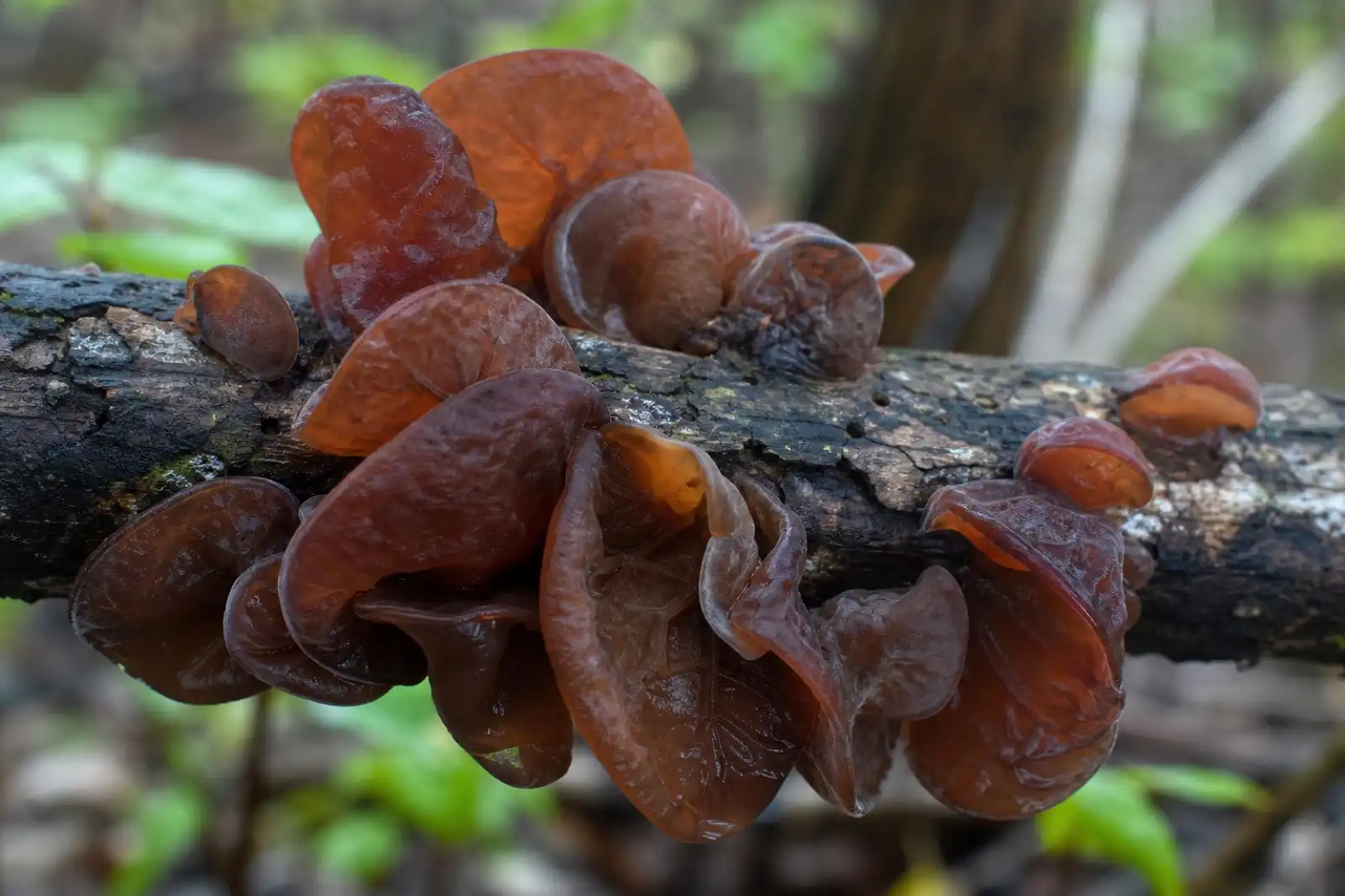
Auricularia heimuer: Wood Ear Mushroom Species Guide
A practical guide to Auricularia heimuer identification, wood-decay ecology, log and bag cultivation, nutrition, rehydration safety, and FAQs.
identification
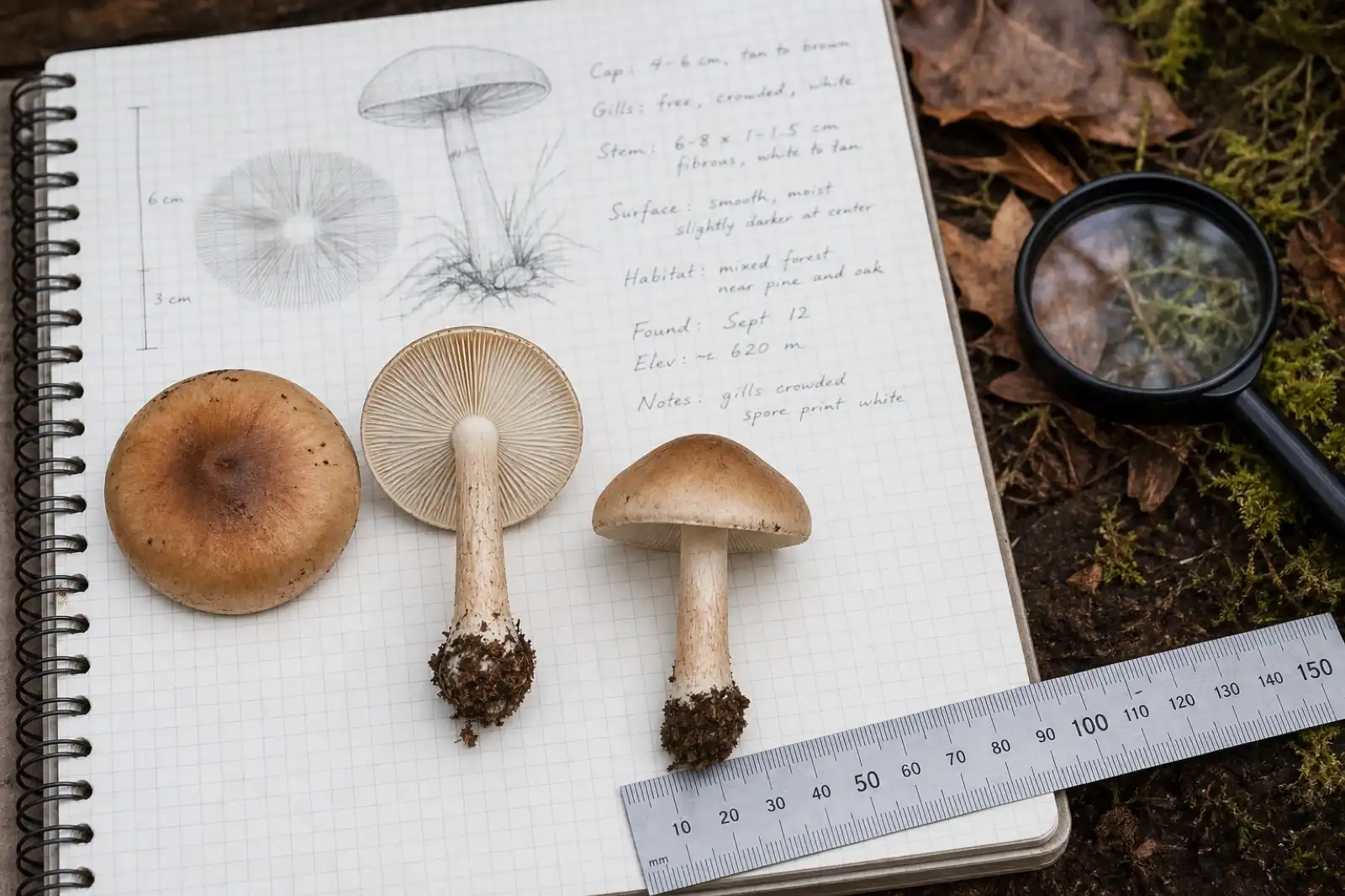
How to Identify Mushrooms: A Beginner's Field Guide
Build an identification from the whole specimen, substrate, habitat, spore deposit, and location—not from a single photograph.
health
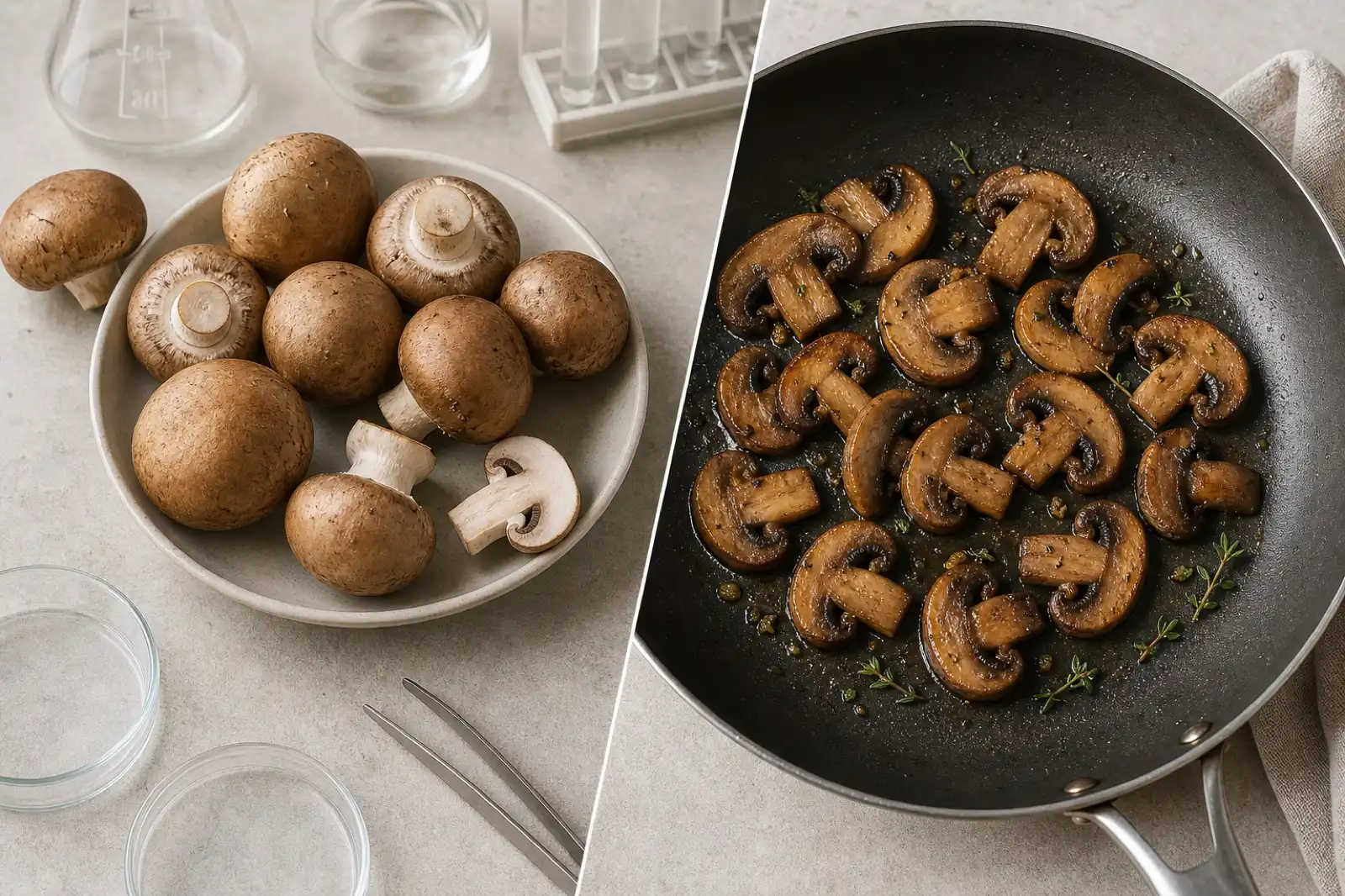
Cooked vs. Raw Mushrooms: Nutrition and Safety
Cooking changes water content, texture, digestibility, and measured nutrient concentration; it also supports safer produce handling.
Continue exploring
Browse more practical guides in Mushroom Encyclopedia or visit the mushroom encyclopedia.