Mushroom Encyclopedia
Common Puffball: Spines, Interior, Spores, and Lookalikes
Document common puffballs through pear shape, detachable spines, sterile base, interior changes, apical pore, woodland ecology, and lookalike limits.
By MushroomScope Editorial Team · · Updated
Species context
Treat profiles as reference material
Species profiles summarize documented traits, taxonomy, and lookalikes, but natural variation can be substantial.
Use the safety checklist →Decision limit
A profile cannot authenticate a specimen
Do not eat a wild mushroom from an online match, single feature, or generated image.
Read the safety disclaimer →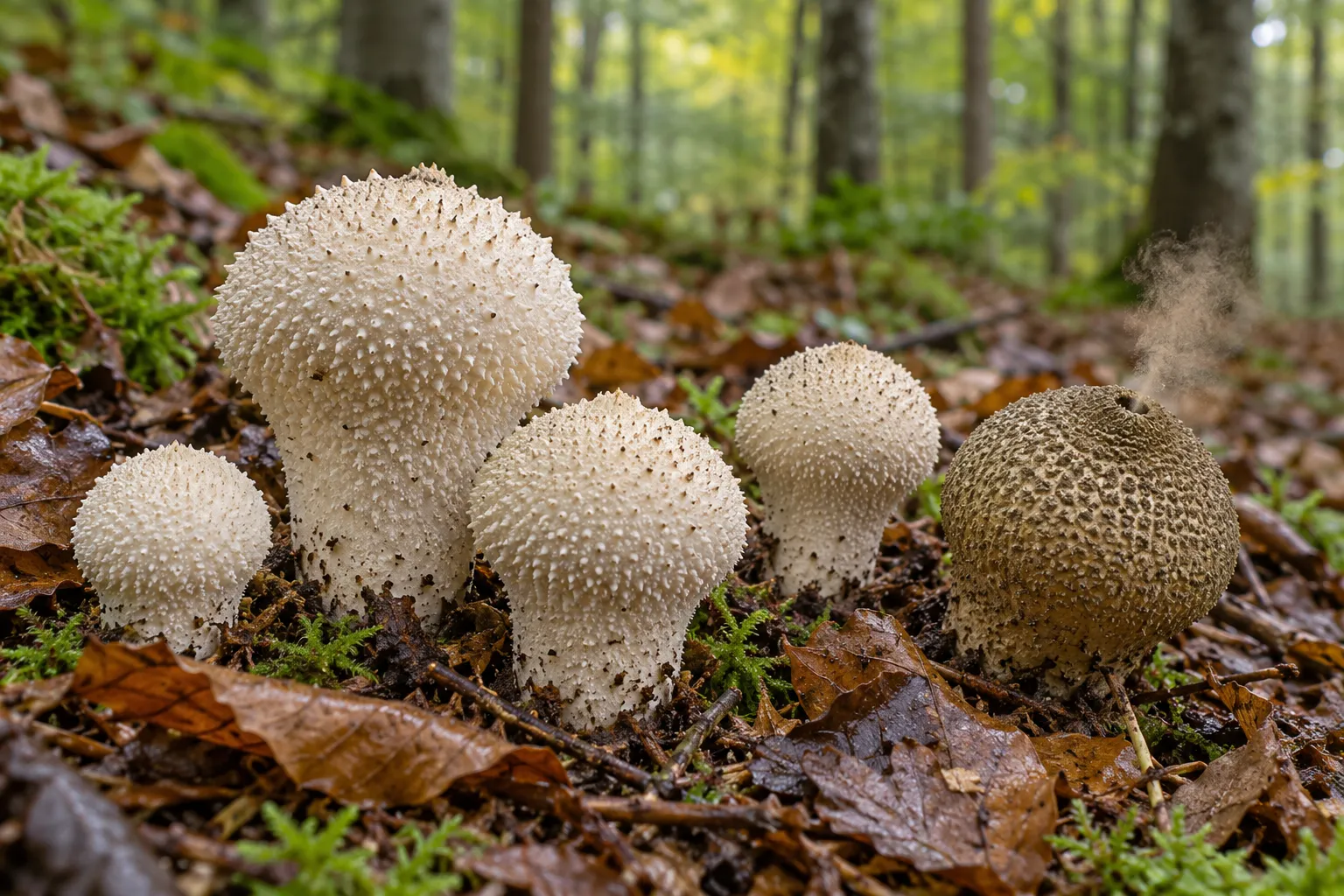
Quick facts
- Scientific name
- Lycoperdon perlatum
- Common names
- Common puffball, Gem-studded puffball, Devil's snuffbox
- Taxonomy
- Lycoperdon · Lycoperdaceae
- Edibility context
- Conditional: Some regions record food use only for correctly identified, uniformly white immature material; this page cannot clear any collection for consumption.
- Spore print
- Olive brown spores disperse through an apical pore rather than forming an ordinary cap print.
- Toxicity context
- Low: Misidentification, inhaled mature spores, spoilage, contamination, and individual reactions remain material risks.
- Season
- July, August, September, October, November
- Growing difficulty
- Expert
- Regions
- Europe, North America, temperate Asia, other regions represented by verified records
Safety limit: These labels summarize documented context; they never authenticate a wild specimen. Cooking does not make a poisonous species safe.
Common puffball is recognizable only when its outside, inside, base, maturity, and setting agree. Lycoperdon perlatum typically forms a small pear-shaped fruit body covered by fine conical spines. Those spines can rub away and leave a netlike pattern, while the lower sterile portion narrows toward the substrate. As the interior matures, it changes from firm white tissue to an olive-brown powder released through a pore at the top.
That sequence explains both the value and the limit of a photograph. A young fruit body lacks the mature pore; an old one has lost many spines; a detached specimen conceals its base and substrate. Use the broader puffball identification guide to establish the enclosed-body pattern, then keep the species hypothesis provisional until the section, surface, habitat, and regional comparison all support it.
Confirm an enclosed fruit body before naming a puffball
Cut one permitted specimen lengthwise from top through the attachment. A true puffball has no developing cap, gills, conventional stem, or separate veil structures inside. Young tissue should be continuous, firm, and white, although the sterile base can show small chambers or a different texture. Photograph the fresh section immediately because oxidation and drying change its appearance.
This cut is a safety boundary, not an edibility test. A button-stage Amanita can be enclosed by a universal veil yet reveal the outline of a cap and gills when sectioned. Any internal mushroom architecture closes the puffball comparison. Likewise, yellow, olive, brown, watery, insect-damaged, or powdery tissue records maturity or deterioration and cannot be converted back to an immature condition by trimming.
Read the pear shape and sterile base as one structure
Common puffballs are often broader above and narrowed below, producing a pear or inverted-pestle outline. The lower portion is not a detachable conventional stem. It is a sterile continuation of the fruit body and may contain small internal chambers. Excavate carefully enough to show its full length and whether mycelial cords, soil, humus, or decayed wood remain attached.
Measure height, maximum width, and base width across several fruit bodies. Crowding can distort the outline, while buried woody debris can make a soil-level cluster appear terrestrial. A single nearly spherical specimen should not be forced into the common-puffball name when its base was broken off or never photographed.
Examine spines before handling removes them
Fresh young surfaces carry many short whitish to cream conical spines, often surrounded by smaller granules. The larger spines detach with weather or contact. Their departure can leave small polygonal or netlike scars, giving an older surface a patterned appearance rather than the original gem-studded texture.
Photograph the untouched surface in side light before picking it. Include a scale and a close view of the spine tips, their spacing, and the scars between them. Avoid describing every textured puffball as “spiny”: pyramidal warts, clustered spines, fine granules, and a coarse cracked rind have different taxonomic value. Surface texture also must be paired with internal structure and the sterile base.
Follow the interior from white tissue to spore mass
The fertile upper tissue, or gleba, begins white and solid. With maturation it passes through yellowish or olive stages and eventually becomes a dry brown spore mass. A boundary between fertile head and sterile base may become clearer during this transition. Record color under neutral light and do not rely on a camera’s automatic white balance.
Developmental change is not decay in every case, but it changes what can be measured and how the organism disperses. A mature powdery interior may be biologically normal while an unpleasant odor, wet collapse, mold, larvae, or contaminated substrate indicates a separate condition problem. Keep maturity and condition as distinct fields in the record.
Document the apical pore without making a spore cloud
At maturity a small opening forms at the top. Raindrop impact, animal contact, or pressure changes can push spores through that pore. Observe it without squeezing fruit bodies toward faces or creating an artificial cloud. Mature spores can irritate airways, and inhaling concentrated spores has no identification value.
An apical pore supports a mature puffball record but is not exclusive to one species. Photograph its shape, surrounding surface, and the fruit body’s relationship to the base. If microscopy is needed, record mounting method, calibration, number of spores measured, dimensions, ornamentation, and whether the sample came from the same numbered specimen.
Separate common puffball from earthballs
Common earthball usually has a thicker and tougher outer wall, often yellow-brown with coarse scales or cracked patches. Its interior becomes very dark purple-brown to nearly black, sometimes while the rind remains intact. The common puffball normally shows finer detachable spines, patterned scars, a more distinct narrowed sterile base, and an olive-brown mature spore mass.
For a taller comparison, the pestle puffball guide documents the elongated sterile base and the need to measure the fertile head and persistent lower structure separately.
These are compound differences, not a one-character shortcut. Weathered puffballs lose spines; young earthballs may not yet be fully dark; mud can conceal rind texture. Compare the complete section and attachment with the common earthball guide and leave ambiguous material unresolved.
Distinguish this species from other small puffballs
Several Lycoperdon and related puffballs share pale enclosed fruit bodies and apical pores. Useful differences include spine shape and grouping, scars after spine loss, sterile-base size, rooting cords, substrate, maximum dimensions, and microscopic spore ornamentation. Names used broadly in older field guides may conceal regional species limits.
Build comparisons from a local key rather than an image gallery. Retain photographs of several developmental stages and, when lawful and necessary, a dried numbered voucher. Database occurrence maps show where records have been submitted, not where every record has been recently re-identified under the same modern species concept.
Record woodland substrate precisely
Common puffballs are saprotrophic. They use dead organic material rather than forming the root partnership typical of many woodland cap-and-stem mushrooms. Fruit bodies can appear on humus-rich soil, litter, rotten stumps, logs, or wood so decomposed that it is hidden beneath the surface.
Move litter gently around one specimen and document the attachment. Note tree community, but do not call the nearest tree a fungal host. Record whether the apparent ground contains buried wood, wood chips, compacted path margins, or recent disturbance. Repeated visits can reveal whether fruiting follows the same decomposing log line or shifts with moisture.
The species is widely reported across temperate regions, but a map point has limits. Check record precision, date, identifier, voucher status, and name history before making a country or habitat claim. The habitat documentation guide helps separate observed substrate from inferred ecology.
Keep food history behind a complete identification
Some guides describe food use for young, correctly identified puffballs whose interiors are uniformly white. That history does not make “white inside” a sufficient test. Species identity, complete section, maturity, freshness, contamination, legal collection, preparation, and individual tolerance remain separate decisions. An online image or editorial illustration cannot evaluate them.
Never use an old or powdery specimen as food, and avoid breathing the spores. Commercially sourced food and an independently confirmed wild collection are different evidence situations. If symptoms follow mushroom exposure, contact local emergency or poison services promptly and preserve uncooked material, trimmings, photographs, location, and meal timing.
Build a collection record that another person can audit
- Photograph the undisturbed group, substrate, and surrounding habitat.
- Show an intact fruit body from top through the excavated sterile base.
- Measure several ages and photograph surface spines before handling.
- Section one specimen vertically and record all internal structures and colors.
- Keep mature pore and spore observations tied to the same specimen code.
- Compare earthballs, enclosed agaric buttons, and regional small puffballs explicitly.
- State the confidence level and missing evidence rather than forcing a species name.
Do not combine the white section of one specimen with the spines or base of another. Mixed evidence creates an organism that was never observed. A coherent series may remain at genus level and still provide more scientific value than a confident caption built from disconnected parts.
Frequently asked questions in context
Why are some common puffballs smooth?
Rain, abrasion, age, and handling can remove the detachable spines. Look for their patterned scars and use the base, section, maturity, substrate, and regional comparison rather than treating smoothness alone as exclusion.
Is the smoke from a puffball actual smoke?
No. The visible cloud is a mass of microscopic spores expelled from the mature dry interior. Do not deliberately inhale it or squeeze mature fruit bodies near people.
Can this puffball be grown on a household block?
Its saprotrophic ecology makes culture conceivable, but a credible claim needs authenticated material, a documented substrate and treatment, contamination controls, and verified fruit bodies. Wild tissue plus white growth in a bag does not prove identity.
References
- Global Biodiversity Information Facility. Lycoperdon perlatum species record. Taxonomic backbone and occurrence context.
- National Center for Biotechnology Information. NCBI Taxonomy Browser — Lycoperdon perlatum. Independent nomenclature checkpoint.
- North American Mycological Association. Mushroom Poisoning Syndromes. Conservative poisoning-response context.
- U.S. Food and Drug Administration. Selecting and Serving Produce Safely. General handling guidance for verified foods.
Editorial review: October 21, 2026. This page has editorial review only and no named mycologist, toxicologist, or clinician review. Taxonomy, range, lookalikes, and poison-response contacts should be rechecked at every substantive update.
Quantify spine loss across one fruit body
Choose a fresh intact puffball and divide its surface into apex, shoulder, mid-body, and basal zones. Photograph each zone at the same magnification under raking light, then count complete spines, broken tips, and bare reticulate scars within a measured square. Repeat on a mature body from the same group. This distinguishes a patterned loss of detachable spines from a uniformly warted or cracked surface and records how age changes the familiar pearly texture.
Do not scrub or roll the specimen before the first photographs. Rain, handling, slugs, and soil abrasion can remove ornaments, so note exposure and damage. A nearly smooth old body should not be compared with an ideal young photograph without its maturity evidence.
Build an interior maturity grid
Section one legally collected representative from apex through the complete sterile base. Before cutting, assign it a specimen number and record external dimensions. On the fresh section, divide the fertile upper tissue into a three-by-three grid and note color, uniformity, moisture, odor, cavities, insect feeding, and any developing structures in every cell. Photograph within minutes because oxidation and drying change the surface.
The grid is designed to catch local discoloration that a single central glance can miss. Uniform white internal tissue is only one checkpoint in a larger identification; any yellow, olive, brown, purple, patterned, chambered, gilled, or cap-like interior ends a casual food decision. The general puffball guide covers the enclosed-structure test, and the earthball guide shows why a thick rind and darkening gleba belong on a different path.
Link the pore to measured spore release
For a mature, non-food specimen, photograph the apical pore before disturbance. Place it over a clean dark card outdoors and use one gentle standardized compression while wearing appropriate protection and avoiding inhalation. Record the pore diameter, mass before and after, wind, and the deposit footprint. Do not generate airborne clouds for entertainment; mature spores are an exposure, not a visual identification trick.
Source quality notes
MushroomScope cites sources that match the page scope, such as taxonomic databases, extension guidance, food-safety agencies, food-composition databases, and peer-reviewed or institutional health references. Sources support context and uncertainty; they do not turn an online page into specimen identification, medical advice, or a tested recipe record.
Frequently asked questions
What characters support a common puffball identification?
A small pear-shaped fruit body, short sterile base, detachable conical spines that leave a netlike pattern, and a mature apical pore support the hypothesis. A complete section and regional comparison are still required.
Does a white interior prove a puffball is safe to eat?
No. A section can reveal gills, a developing cap, discoloration, or a thick earthball rind, but white tissue alone cannot establish species identity, condition, or individual safety.
How does common puffball differ from common earthball?
Common earthball usually has a thicker, tougher, coarsely cracked rind and darkens internally early. Common puffball has finer detachable spines and a clearer sterile base, but uncertain specimens require local expertise.
Why does a mature common puffball release dust?
Its internal spore mass becomes dry and powdery. Raindrops or pressure can force spores through a pore at the top; that mature stage is not equivalent to the firm white immature interior.
Where does Lycoperdon perlatum grow?
It is recorded on woodland soil, humus, litter, and decaying woody debris in many temperate regions. Substrate, forest type, locality, and developmental stage should be recorded together.
Related guides
mushrooms
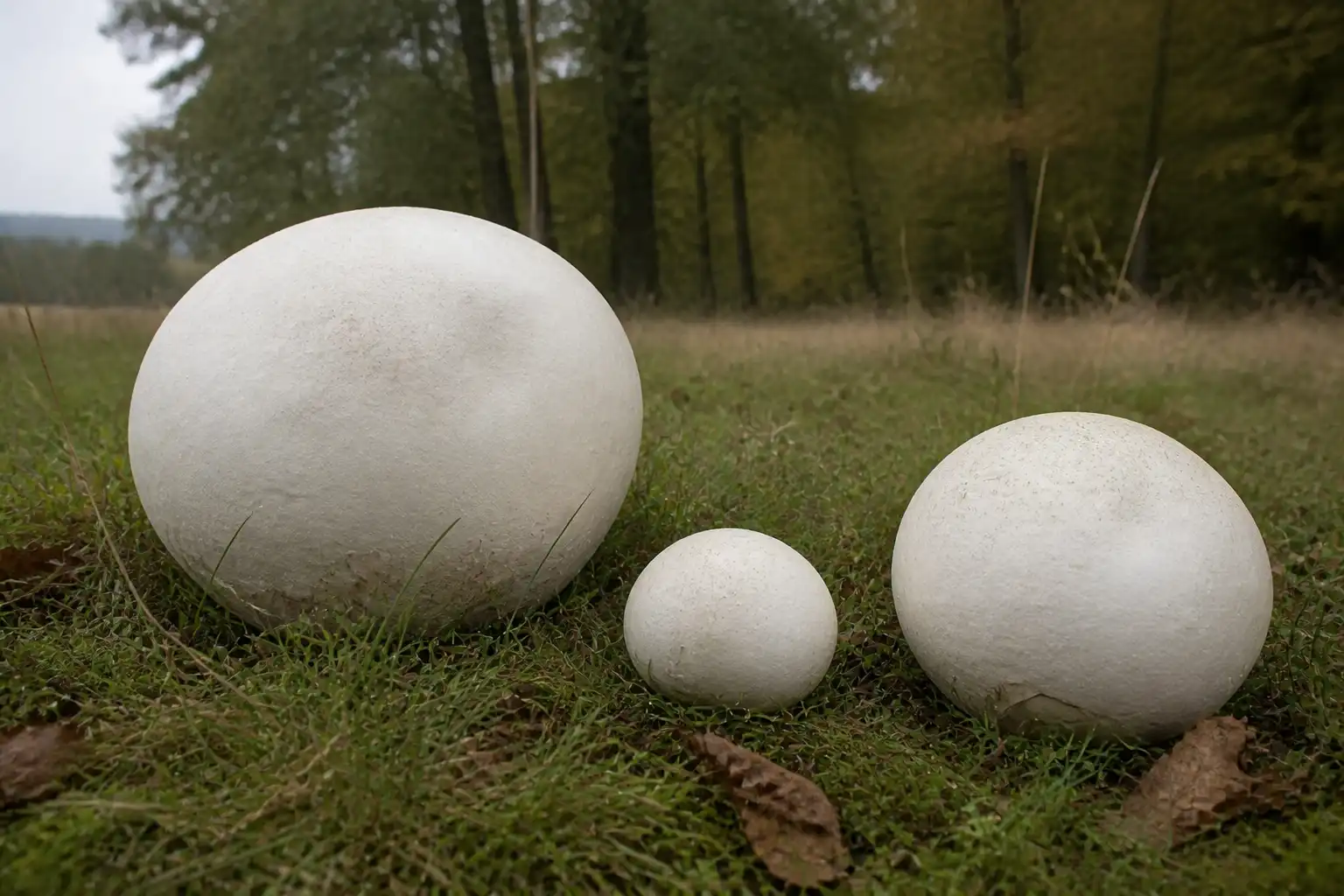
Giant Puffball (Calvatia gigantea): Identification and Safety
Learn giant puffball identification, white interior checks, dangerous lookalikes, habitat, maturity, and conservative food-safety limits.
mushrooms
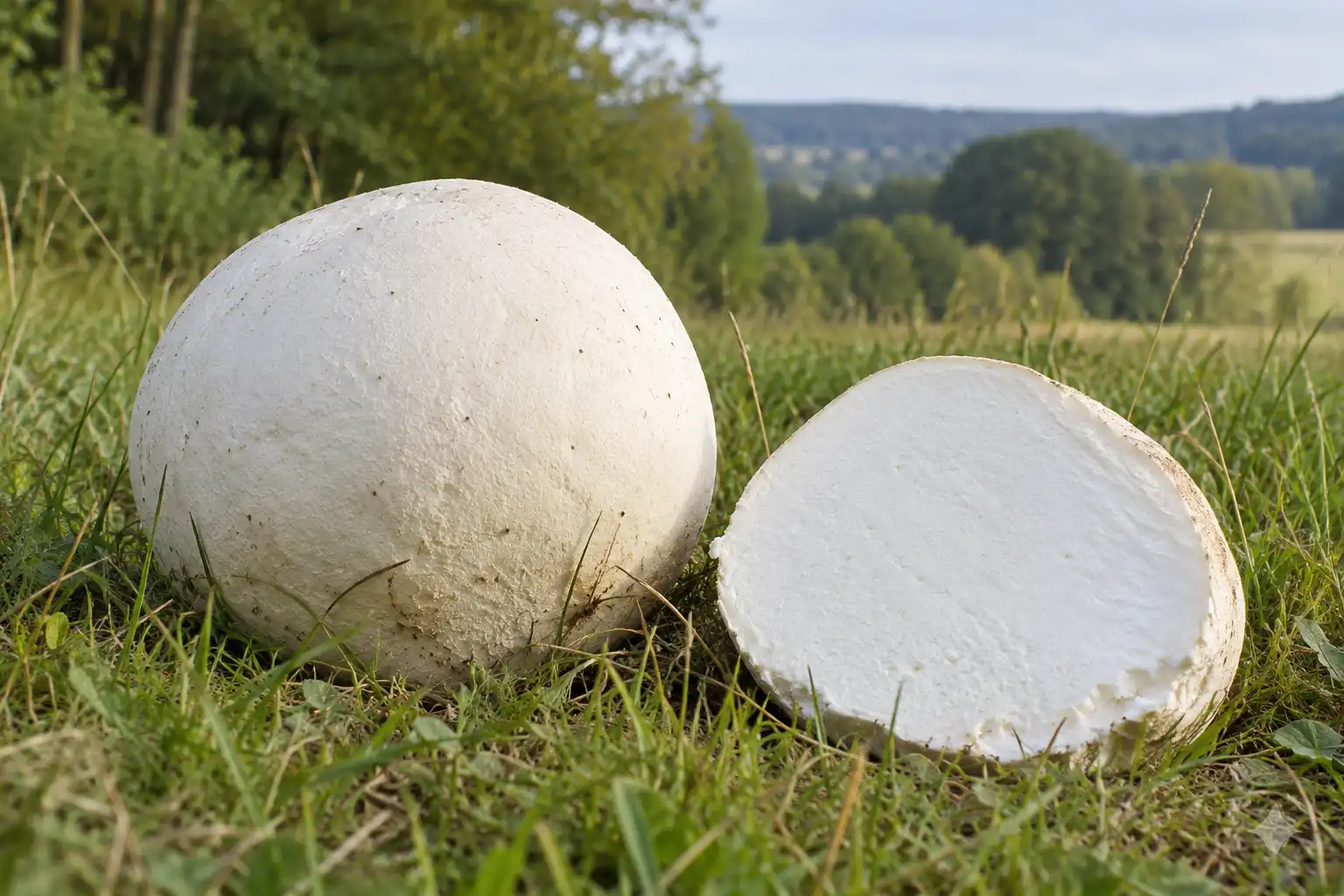
Giant Puffball: Interior, Maturity, and Lookalikes
Document giant puffballs by intact base, uniformly white interior, meadow ecology, maturity changes, spores, and high-consequence lookalike exclusions.
mushrooms
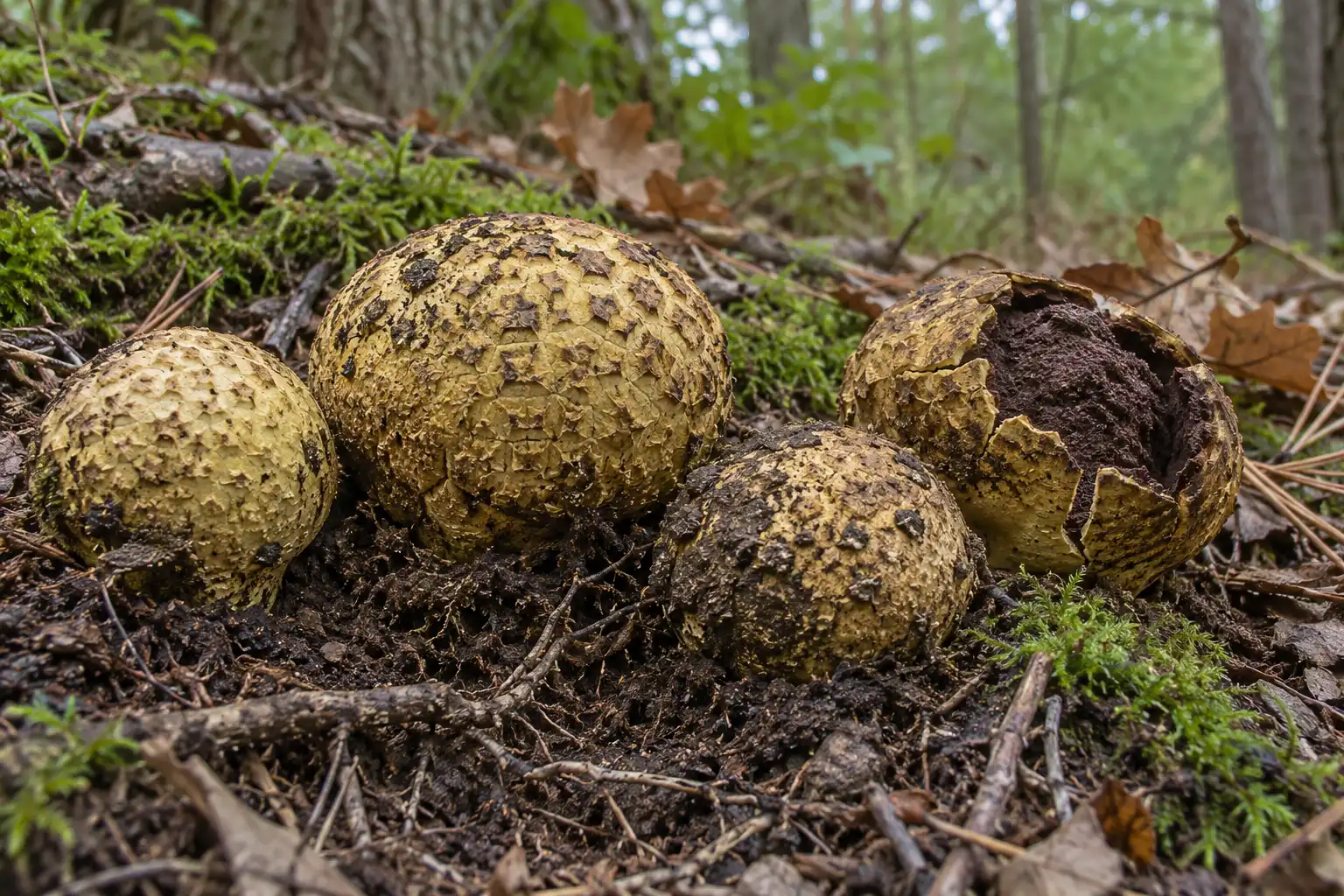
Common earthball: Field Identification, Lookalikes, and Safety
Document common earthball by its scaly rind, soil attachment, dark maturing gleba, woodland ecology, puffball differences, and toxicity.
Continue exploring
Browse more practical guides in Mushroom Encyclopedia or visit the mushroom encyclopedia.