Mushroom Encyclopedia
Pestle Puffball: Lycoperdon excipuliforme Field Guide
Document pestle puffballs by their tall sterile base, granular spore sac, maturity changes, grassland ecology, internal gleba, spores, and lookalikes.
Species context
Treat profiles as reference material
Species profiles summarize documented traits, taxonomy, and lookalikes, but natural variation can be substantial.
Use the safety checklist →Decision limit
A profile cannot authenticate a specimen
Do not eat a wild mushroom from an online match, single feature, or generated image.
Read the safety disclaimer →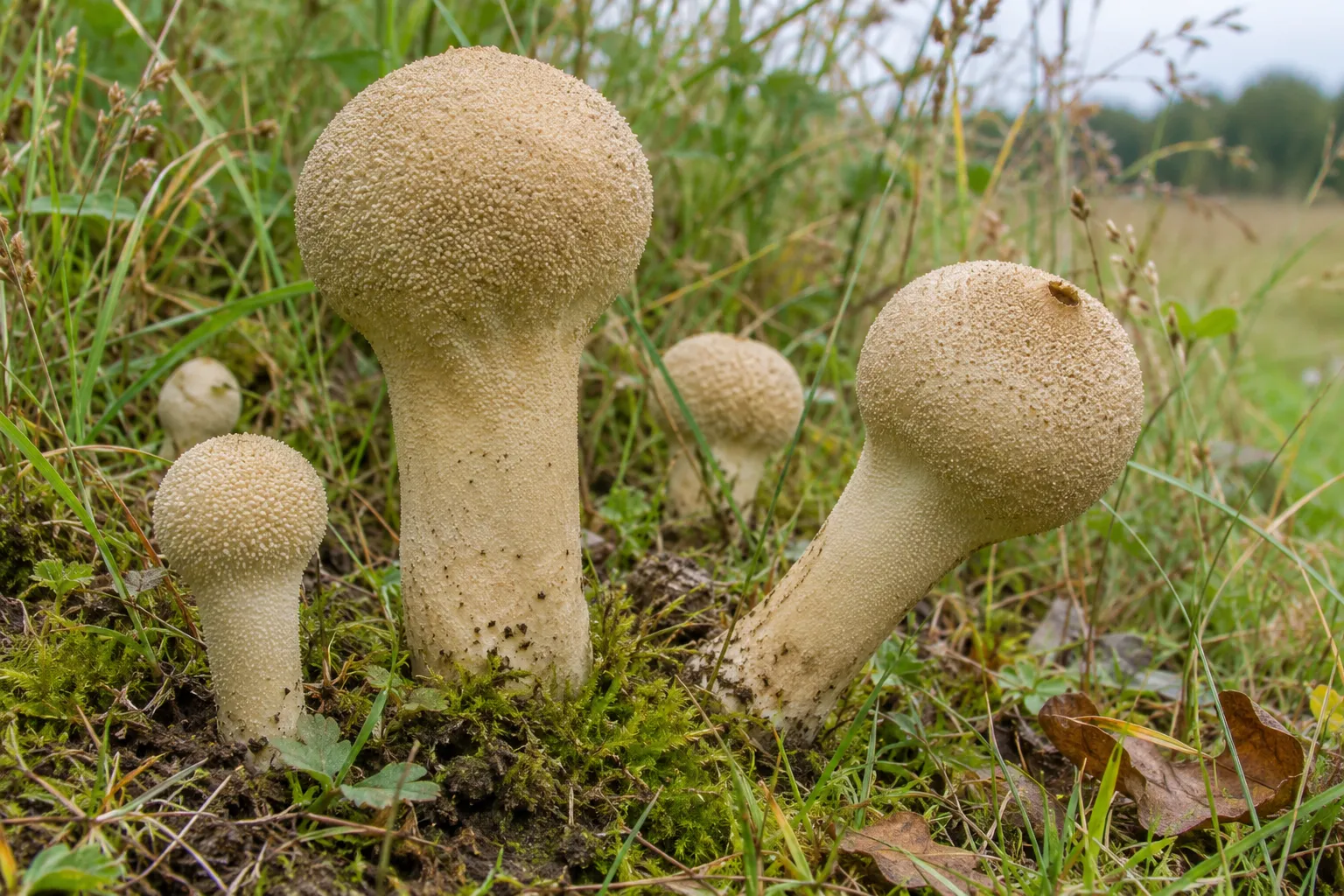
Quick facts
- Scientific name
- Lycoperdon excipuliforme
- Common names
- Pestle puffball, Long-stemmed puffball
- Taxonomy
- Lycoperdon · Agaricaceae
- Edibility context
- Conditional: Food use is sometimes reported only for correctly identified, uniformly white immature material; this page does not recommend a wild collection.
- Spore print
- Brown spores are released as a powder from the mature upper sac; microscopy and ornamentation support exact identification.
- Toxicity context
- Unknown: Earthballs and enclosed young gilled mushrooms create serious identification risk; yellow, olive, brown, structured, or powdery interiors are not food material.
- Season
- August, September, October, November
- Growing difficulty
- Expert
- Regions
- Europe, temperate Asia, reported temperate regions requiring local verification
Safety limit: These labels summarize documented context; they never authenticate a wild specimen. Cooking does not make a poisonous species safe.
The pestle puffball is built on a proportion that ordinary “round puffball” descriptions miss: a fertile spore sac sits above a long sterile base, and the lower structure may remain after the head has weathered away. That architecture makes Lycoperdon excipuliforme a useful field hypothesis, but outline alone cannot establish the name or support a food decision.
Use this guide to build an auditable record. Photograph the whole fruit body in place, measure the head and base separately, document the surface at more than one age, and make a clean longitudinal section of a lawful representative specimen. Preserve uncertainty when the inside, base, habitat, or local taxonomy is unavailable.
Establish the head-to-base proportion in place
Begin at ground level so the complete attachment is visible. Measure total height, maximum width of the spore sac, and the length and width of the sterile base. A mature specimen may look like a club, pestle, or oversized bottle, but crowding and weather can produce bent or irregular examples. Record a group rather than selecting the most symmetrical fruit body.
Do not pull the specimen before photographing the surrounding moss, grass, litter, and soil. The habitat documentation guide helps separate a real terrestrial attachment from buried wood or a displaced fruit body. Note recent mowing, grazing, fertilizer, and disturbance because these variables help interpret grassland observations.
Read the outer surface across maturity
Young fertile heads are pale and covered with fine granules or short fragile spines. These ornaments abrade with rain, handling, and age, leaving a smoother ochre or buff surface. Photograph one untouched close-up with side light and a scale; a phone’s sharpening can exaggerate the granules, while a wet surface can suppress them.
The lower sterile base may be less densely ornamented and often becomes wrinkled or chambered. Record whether the transition between head and base is gradual or constricted. Avoid describing every tall granular puffball as this species until internal structure and regional comparisons agree.
Section the fruit body from apex to attachment
A full longitudinal cut is the most informative single action. In a young specimen, the upper gleba should be uniformly white and homogeneous, while the lower sterile base has a different, chambered texture. Draw or photograph the boundary. Any outline resembling gills, a cap, a stem, or a developing mushroom inside requires an Amanita or other enclosed agaric pathway rather than a puffball assumption.
Age changes the upper tissue from white to yellowish or olive and finally to a dry brown spore powder. Do not trim away discolored zones before recording them. A partly mature head is valuable ecological evidence even though it is outside any conservative food discussion.
Follow spore release instead of calling every opening a pore
The mature head opens at the apex or breaks irregularly, allowing brown spores to escape when rain, animals, or touch compress the wall. Photograph the opening shape, remaining wall, and powder without deliberately kicking or squeezing an intact colony. A ragged weather break carries different information from a defined apical opening.
Keep mature spores in a sealed paper packet only when microscopy is justified and local collecting rules allow it. Record specimen number, date, and source fruit body. Brown powder on its own cannot separate this species from other mature puffballs.
Test the persistent base as a diagnostic structure
After the fertile tissue disperses, a sterile cup or column may persist. Cut the base to show its internal chambers and note whether it remains firm, corky, fibrous, or brittle. Old bases are often overlooked or misreported as a different fungus; pairing fresh and senescent stages at one mapped site reveals the life cycle more clearly.
Do not infer that two stages belong together merely because they stand nearby. Map positions or revisit the same marked fruit bodies. Grassland can host several puffball species in a small area, and mixed collections weaken every later comparison.
Separate common puffballs by proportions and ornament
The common puffball guide covers Lycoperdon perlatum, which is commonly shorter and pear-shaped. Its young surface often carries more conspicuous conical spines that leave a reticulate pattern when detached. Pestle puffball tends toward a much longer sterile base, but proportions overlap and damaged specimens lose surface clues.
Compare head-to-base ratio, ornament form, mature opening, chambered base, spores, and habitat together. A size claim without a measured base is weak; a granular surface without a section is equally incomplete.
Exclude earthballs and enclosed gilled mushrooms
Earthballs commonly have a thick, firm rind and develop a dark internal mass while still comparatively young. They do not need to resemble a textbook sphere. Cut vertically and inspect texture, color, and internal organization. The lookalikes guide explains why multiple independent characters are required.
Young Amanita and other gilled mushrooms can be enclosed by universal tissue and resemble a white ball externally. A section reveals the folded cap, gills, and stem within. A missing section means the collection is not cleared; cooking cannot correct a mistaken identity.
Use microscopy and current regional names
Exact work can require spore dimensions, ornamentation, capillitium, wall structure, and characters of the sterile base. Report reagent, mount, calibration, magnification, number measured, and observed range. Do not copy a measurement range from a website and present it as if it came from the specimen.
Database records vary in evidence strength and may preserve older combinations. GBIF helps locate source occurrences; NCBI provides taxonomic and sequence-linked context. A defensible regional record still needs a voucher, location-appropriate literature, and review when the observation expands a known range.
Interpret grassland ecology without overclaiming rarity
Record vegetation height, moss cover, slope, soil moisture, grazing, mowing, fertilizer, and surrounding woodland. These observations can make a revisit useful even when the species name remains provisional. Avoid translating a sparse online map directly into “rare”: collecting effort, data sharing, name changes, and land access all affect apparent distribution.
Leave most fruit bodies in place. The mature spore stage is part of reproduction, while the hollowing bases provide microhabitat. Where a site is protected, photograph without collecting and submit the record through the land manager’s preferred route.
Keep food language behind the identification boundary
Some references discuss young puffballs as food when the interior is uniformly white, the species is confirmed, and the site and condition are suitable. That history does not make an online image a safety test. This page cannot assess the complete specimen, contamination, storage, individual tolerance, or local expert confirmation.
Reject yellowing, olive, brown, powdery, structured, waterlogged, moldy, or insect-damaged interiors from any food conversation. If illness follows mushroom ingestion, contact local emergency services or a poison center promptly and retain uncooked material, meal leftovers, photographs, timing, and location.
Audit the editorial image against field evidence
The cover is an original AI editorial image, not a voucher. It was compared with the site’s Scarlet Waxcap and Purple Brittlegill natural-light baselines for soft daylight, environmental scale, complete attachments, realistic surface texture, restrained color, and moderate depth of field. At 1536 by 1024 pixels it remains sharp at responsive display sizes and contains no text, watermark, branding, or obvious duplicated fruit bodies.
The image correctly emphasizes the pestle proportion, granular surface, grassland context, and one mature apical opening. Exact ornament, measurements, internal tissue, spores, and species identity remain illustrative and must be established from real specimens.
Build a reviewable pestle-puffball record
- Photograph the undisturbed group and its grassland or woodland-edge setting.
- Measure total height, head width, and sterile-base dimensions separately.
- Record fine ornament in neutral natural light before handling.
- Make a full longitudinal section from apex through attachment.
- Separate white gleba, mature spore mass, and chambered sterile tissue.
- Compare common puffballs, earthballs, and enclosed gilled mushrooms.
- Document microscopy and a regional key when an exact name matters.
- Preserve the observation as uncertain if any decisive structure is missing.
This workflow protects both scientific value and safety. A pestle-shaped puffball is a starting hypothesis; a connected record of anatomy, maturity, ecology, and regional evidence is the result.
Revisit one marked group through senescence
A repeat visit can resolve questions that one collection cannot. Mark positions on a sketch rather than altering the ground, then record the same fruit bodies after rain and again as the gleba becomes powdery. Note whether the upper wall opens cleanly, collapses, or erodes, and whether the sterile base persists after the spore sac disappears. This sequence separates normal development from damage and creates a more useful record than several unrelated snapshots.
Keep weather and camera settings with the observations. Apparent surface color, granule density, and opening size can change dramatically between wet and dry days. A chronological series should therefore describe real changes rather than treating every visual difference as taxonomic. If a specimen vanishes, record removal, grazing, trampling, or uncertainty instead of reconstructing a life stage from memory.
References
- GBIF species search: Lycoperdon excipuliforme — occurrence and taxonomic source records.
- NCBI Taxonomy Browser: Lycoperdon excipuliforme — taxonomic and sequence-linked context.
- First Nature: Lycoperdon excipuliforme — morphology, habitat, season, and comparison notes.
- North American Mycological Association: poisoning syndromes — conservative response guidance for suspected poisoning.
Source quality notes
MushroomScope cites sources that match the page scope, such as taxonomic databases, extension guidance, food-safety agencies, food-composition databases, and peer-reviewed or institutional health references. Sources support context and uncertainty; they do not turn an online page into specimen identification, medical advice, or a tested recipe record.
Frequently asked questions
Why is it called a pestle puffball?
The mature fruit body often has a rounded spore-bearing head above a long, persistent sterile base, creating a pestle-like outline. Shape varies, so the internal tissue and surface must also be checked.
Where do pestle puffballs grow?
They are recorded in grassland, pasture edges, woodland clearings, and other open ground, often among moss or short vegetation. Substrate and land management should be documented.
How does the pestle puffball release spores?
The upper spore sac matures from white flesh to powdery brown spores and opens at the top or breaks irregularly. The sterile base may remain after the head has dispersed.
Can a pestle puffball be identified from its outline?
No. Similar puffballs and earthballs can overlap in outline. A complete record needs the surface, longitudinal section, maturity, spore mass, base, habitat, and regional evidence.
Is the pestle puffball edible?
This guide does not clear wild material for food. Puffball food decisions require expert confirmation, a uniformly white immature interior, exclusion of poisonous earthballs and enclosed young gilled mushrooms, and assessment of condition and site.
Related guides
mushrooms
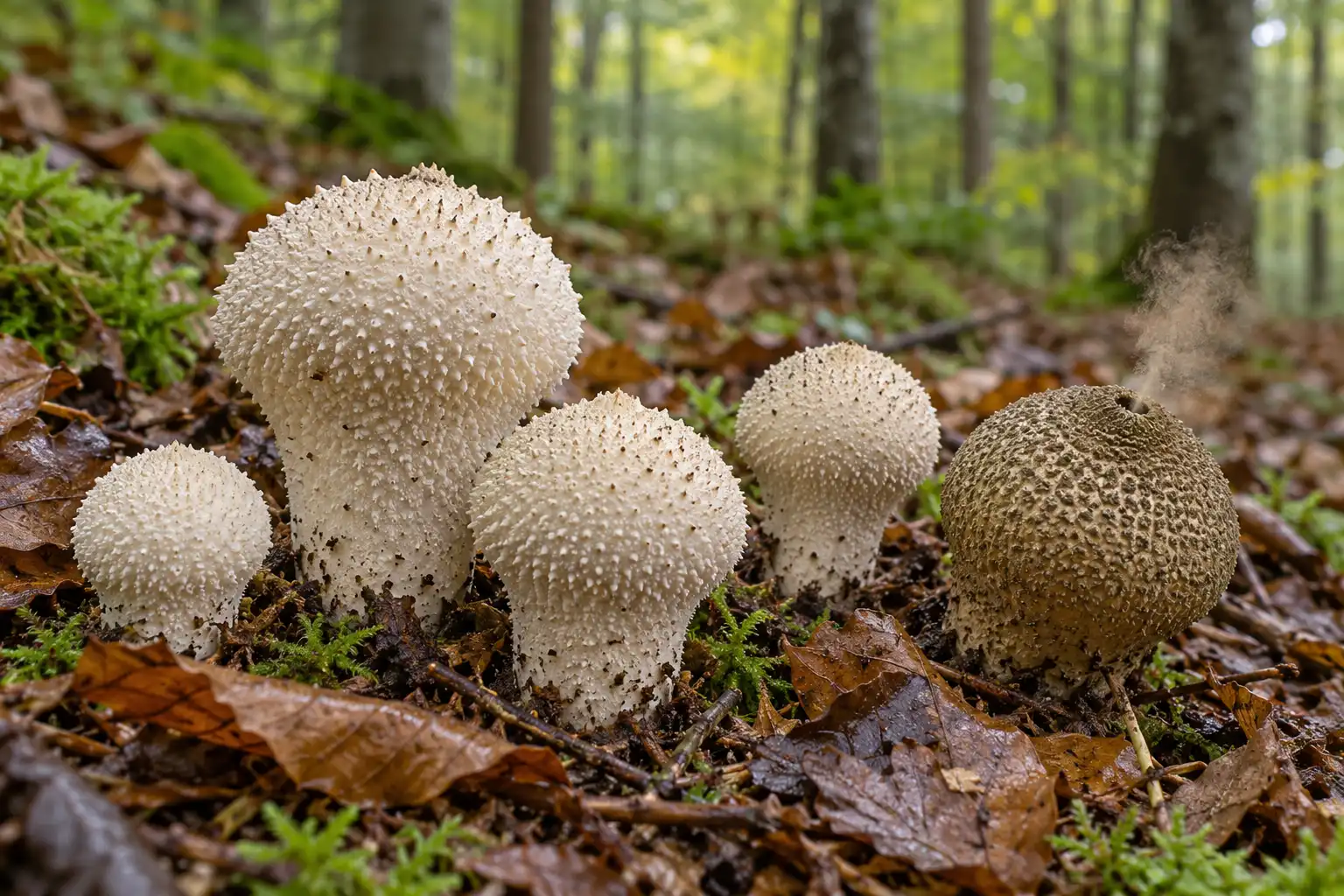
Common Puffball: Spines, Interior, Spores, and Lookalikes
Document common puffballs through pear shape, detachable spines, sterile base, interior changes, apical pore, woodland ecology, and lookalike limits.
mushrooms
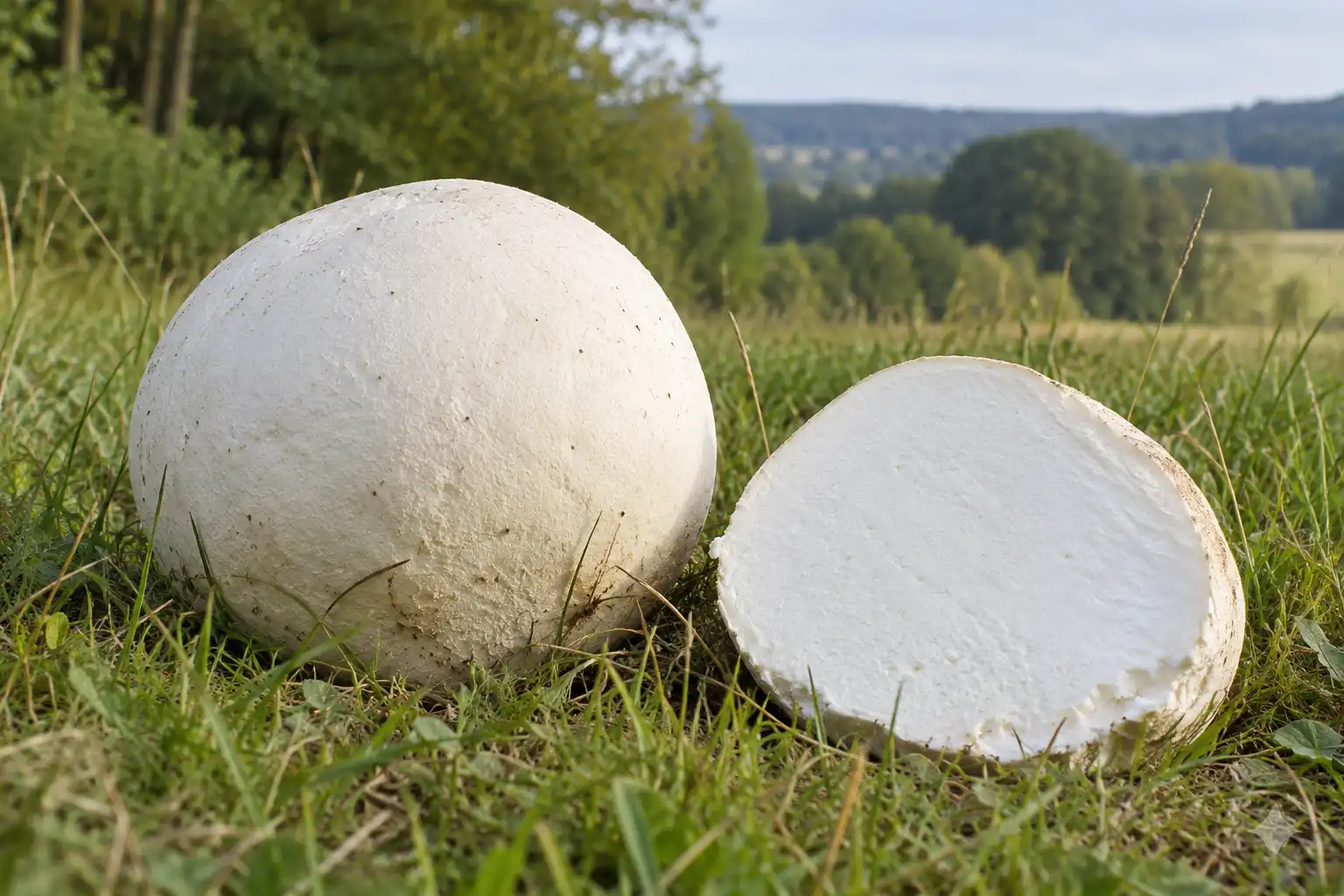
Giant Puffball: Interior, Maturity, and Lookalikes
Document giant puffballs by intact base, uniformly white interior, meadow ecology, maturity changes, spores, and high-consequence lookalike exclusions.
identification
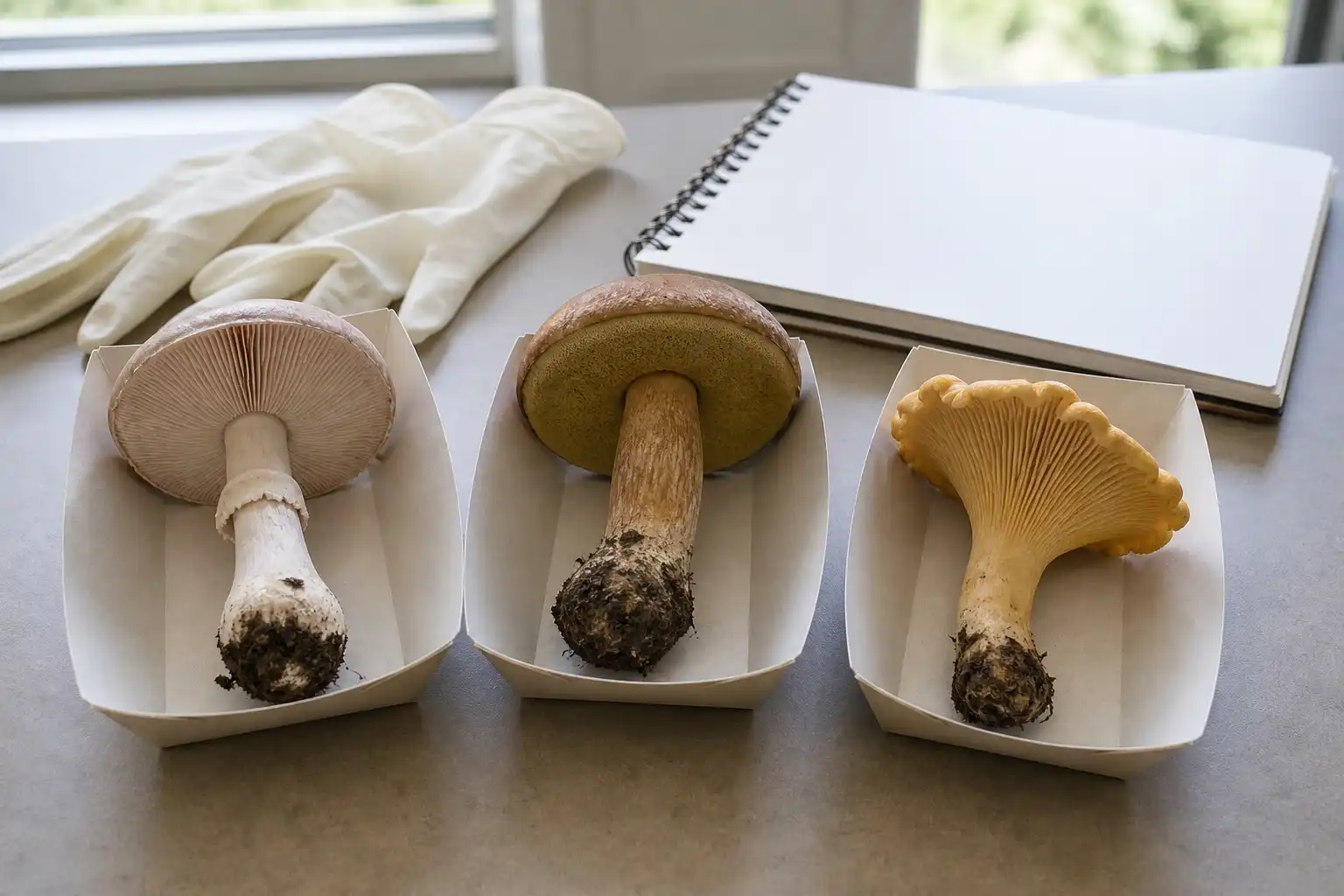
Edible Mushroom Lookalikes: A Safer Comparison Method
Compare edible mushroom lookalikes by complete structure, habitat, development, and regional evidence without treating a web page as eating clearance.
Continue exploring
Browse more practical guides in Mushroom Encyclopedia or visit the mushroom encyclopedia.