Mushroom Encyclopedia
Giant Puffball (Calvatia gigantea): Identification and Safety
Learn giant puffball identification, white interior checks, dangerous lookalikes, habitat, maturity, and conservative food-safety limits.
By MushroomScope Editorial Team · · Updated
Species context
Treat profiles as reference material
Species profiles summarize documented traits, taxonomy, and lookalikes, but natural variation can be substantial.
Use the safety checklist →Decision limit
A profile cannot authenticate a specimen
Do not eat a wild mushroom from an online match, single feature, or generated image.
Read the safety disclaimer →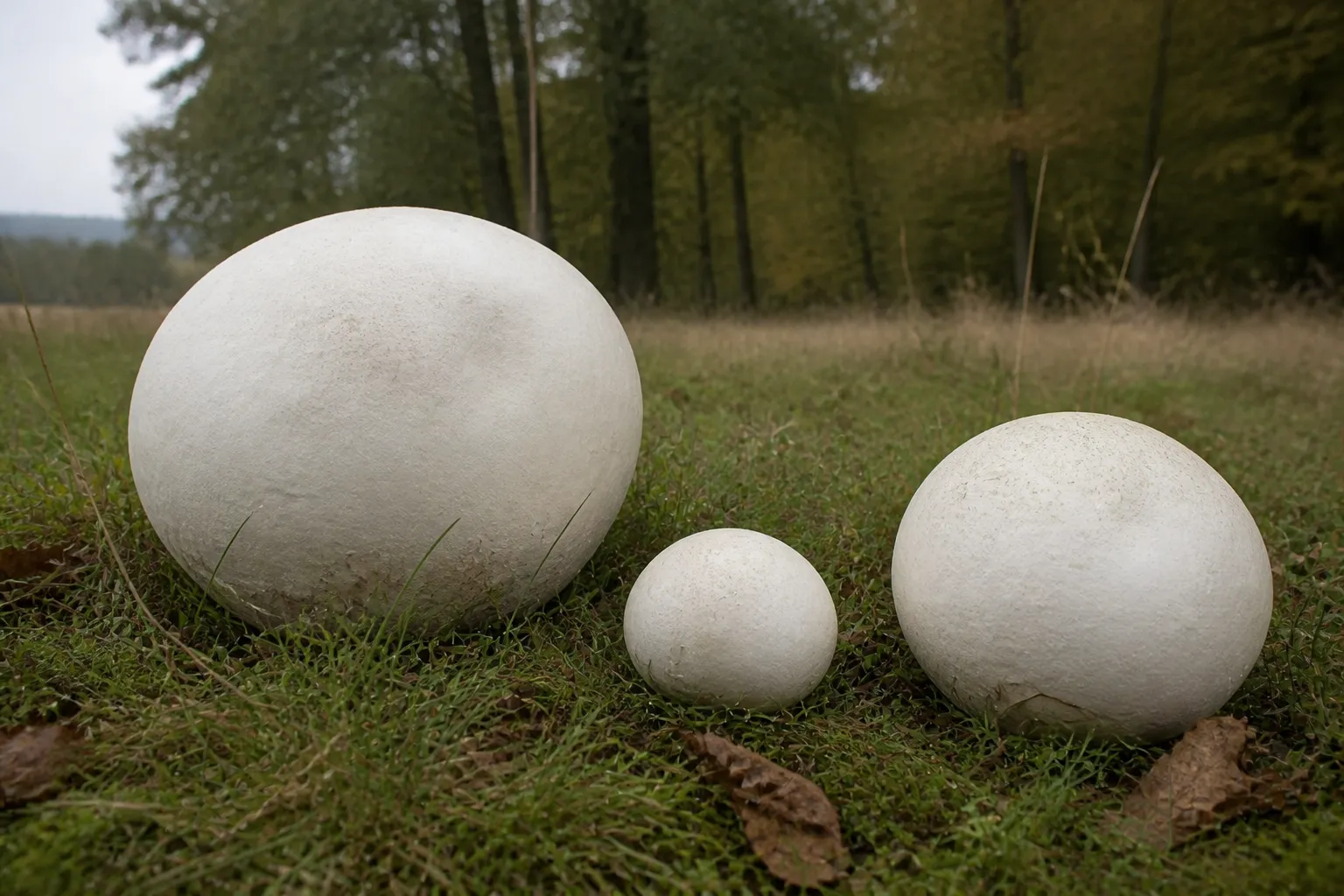
Quick facts
- Scientific name
- Calvatia gigantea
- Common names
- giant puffball
- Taxonomy
- Calvatia · Agaricaceae
- Edibility context
- Conditional: Food use is discussed only for expert-confirmed, immature specimens uniformly white throughout; this page cannot clear a collection for eating.
- Spore print
- Mature internal spores become olive-brown to brown.
- Toxicity context
- High: The main hazard is confusing an uncut young Amanita or another rounded fungus with a puffball. Every specimen requires a complete vertical cut and qualified confirmation.
- Season
- June, July, August, September, October, November
- Growing difficulty
- Difficult
- Regions
- North America, Europe, temperate regions
Safety limit: These labels summarize documented context; they never authenticate a wild specimen. Cooking does not make a poisonous species safe.
Confirm the whole puffball pattern
“Puffball” describes a growth form shared by numerous fungi, not one automatically interchangeable species. This guide focuses on the giant puffball, Calvatia gigantea. A typical young specimen is a very large, rounded or irregularly globe-shaped fruit body growing from soil. It lacks the separate cap and stem expected in an ordinary mushroom, and its exterior is white and relatively smooth before age and weather change it.
Begin with the intact fruit body. Photograph its size, surface, base, and surroundings before cutting. Giant puffballs can become much larger than a person’s hand, but size alone is unreliable. Young specimens may be smaller, damaged specimens may be misshapen, and other rounded fungi can overlap in size. Record a scale beside the mushroom without pressing it into the surface.
The exterior should be assessed for color, texture, cracks, bruising, insect damage, and attached soil. Fresh young giant puffballs are white, although handling can discolor them. A thick, strongly warty or patterned rind should prompt comparison with earthballs and other puffballs. An opening already releasing brown dust indicates mature spores, not a young solid specimen.
There are no exposed gills, pores, or conventional cap. That absence matters, but it cannot be established from an exterior photograph alone. A young gilled mushroom can be enclosed in tissue and hide its organized parts. Use the mushroom identification guide to record structure, substrate, age, and contradictions rather than matching only a white round silhouette.
Cut every specimen from top through the base
A full vertical cut is the critical structural check for a possible puffball. Slice the individual from its highest point through the center and all the way through the attachment at the base. Do not rely on a small side nick, a bite-like break, or the appearance of another mushroom collected nearby. Every fruit body must be checked because mixed collections occur.
An immature giant puffball should be uniformly solid and pure white inside. The tissue may have a fine, even texture, but it should not contain the outline of a cap, radiating gills, a stem, a cup, separate chambers, or a differently colored central mass. Any organized mushroom structure contradicts the puffball profile and may indicate a young Amanita or another gilled species enclosed by veil tissue.
Color and condition also matter. Yellow, greenish, olive, brown, gray, watery, powdery, or marbled interiors indicate maturity, decay, another fungus, or uncertainty. A brown spore mass is normal for an old puffball’s life cycle, but it is not the white immature stage described in traditional food accounts. Cutting away a colored center does not restore freshness or resolve identity.
Photograph the entire cut face in natural light. Camera exposure can make cream tissue appear white, so describe the observed color in notes and compare it with a real white reference if necessary. The identification safety checklist helps confirm that no specimen escaped the cut test and no contradictory feature was ignored.
Separate dangerous lookalikes by internal structure
The most serious comparison is a young Amanita. Some Amanita species produce deadly toxins, and their buttons can be enclosed in a universal veil that creates an egg-like exterior. When cut lengthwise, the developing cap, gills, stem, and sometimes basal cup may be visible as organized structures. Never assume that a white ball is a puffball because the outer layer looks continuous.
Earthballs in the genus Scleroderma are another important comparison. They often have a firm, thick, leathery rind that may be rough, cracked, or scaly. Their interiors mature dark purple-brown to black, commonly with a pale vein-like pattern, rather than remaining an even white mass. Young examples can still create uncertainty; do not use firmness or habitat alone to resolve them.
Other true puffballs vary in size, surface ornament, sterile base, opening mechanism, and microscopic characters. A small puffball is not simply a miniature giant puffball. Regional identification may require a key and examination of spores or outer-wall features. The page on mushroom cap shapes helps distinguish a genuine rounded spore case from an unopened cap, but an in-person expert should review any collection considered for food.
Reject rather than rationalize contradictions. A hidden stem, developing gills, dark center, thick patterned rind, colored flesh, chemical contamination, advanced decay, or uncertainty about the base is enough to stop. The poisonous mushroom warning-signs guide explains why no folk rule—animal feeding, silver discoloration, peeling skin, or cooking method—can demonstrate safety.
Record habitat, season, and maturity
Giant puffballs grow from soil rather than directly from visible wood. Records include lawns, meadows, pastures, open woods, woodland margins, and other grassy places. They may appear singly, in loose groups, or sometimes in arcs. A lawn setting does not make a specimen harmless: pesticide use, roadside pollution, pet waste, and other contamination can make a site unsuitable even when identity is correct.
Penn State Extension describes the species as a conspicuous late-summer and fall fungus in its region, while the Missouri guide gives regional context for puffballs. These observations should not be turned into a worldwide calendar. Rainfall, soil moisture, temperature, latitude, elevation, and local climate shift fruiting dates. Season is supporting evidence, never proof.
Age changes the specimen dramatically. The young white interior gradually transforms into a colored mass of microscopic spores. The outer wall eventually cracks or ruptures, and wind, raindrops, animals, or pressure release spores. Avoid kicking or squeezing mature puffballs, particularly near people with respiratory sensitivity. Large clouds of spores should not be deliberately inhaled.
For a useful observation, record dimensions, exterior texture, complete cut surface, attachment, habitat, surrounding vegetation, date, recent rain, and condition. Check local rules before collecting in parks or protected land. Leave mature or unnecessary specimens in place so their ecological cycle can continue.
Keep food decisions conservative
Giant puffballs have a food-use history when young, uniformly white, fresh, and correctly identified. That reputation is not a recommendation to eat a specimen found through this page. Obtain confirmation from a qualified local mycologist or mushroom group, especially where dangerous Amanita species occur. An app, social-media vote, or photograph cannot examine every internal structure and specimen condition.
Identity and freshness are separate gates. Even a correctly identified puffball should be rejected when yellowing, wet, sour-smelling, insect-riddled, moldy, chemically exposed, or collected from a polluted site. Keep each specimen separate until it has been cut completely. Do not combine uncertain pieces with a confirmed batch, and never serve a wild mushroom to someone who has not knowingly accepted the risk.
If qualified local guidance approves food use, clean hands, tools, prompt refrigeration, and protection from cross-contamination still matter. Cook authenticated material according to trusted local advice; cooking cannot make a toxic lookalike safe. First-time portions should be small because individual intolerance can occur even with edible species.
If illness follows mushroom consumption, contact emergency services, a poison center, or a healthcare professional promptly. Preserve uncooked specimens, trimmings, leftovers, photographs, collection details, preparation method, and symptom timing. NAMA’s poisoning-syndrome resource provides response context, but repeated vomiting, severe diarrhea, confusion, breathing difficulty, seizure, jaundice, or collapse requires immediate professional care.
Build a repeatable field record
- Photograph the whole fruit body, base, habitat, and a scale before cutting.
- Cut every specimen vertically through the center and base.
- Confirm an evenly solid white interior with no cap, gills, stem, cup, or colored spore tissue.
- Record surface texture, dimensions, condition, habitat, date, region, weather, and contamination concerns.
- Compare with a current regional key and obtain qualified local confirmation before any food decision.
The sequence exposes contradictions early. It does not convert an online description into edible clearance. A specimen that cannot be cut fully, documented clearly, or reviewed locally should remain unidentified and uneaten.
Giant puffball questions
Why is a complete vertical cut necessary?
An exterior view can hide a developing gilled mushroom. Cutting from top through the base exposes the entire internal organization and may reveal a cap, gills, stem, cup, colored center, or other contradiction that a shallow cut misses.
Can a giant puffball have a stem?
It does not have a distinct cap-and-stem construction, although the lower portion may narrow into a sterile attachment. A clearly organized stem inside points away from the giant-puffball profile.
What does a mature giant puffball look like inside?
The white interior turns yellowish, olive, then brown as spores mature, eventually becoming powdery. That is normal biology but no longer matches the young white stage discussed for food use.
Are spores dangerous to touch?
Ordinary outdoor contact is different from deliberately creating and inhaling a dense spore cloud. Avoid kicking mature fruit bodies, minimize dust exposure, wash hands after handling, and seek medical advice for concerning respiratory symptoms.
Cut every candidate through the center
A complete vertical section should show a uniformly solid interior in a sound young puffball and must reveal any developing cap, gills, stem, or internal outline of another mushroom. Photograph the section immediately in neutral light. Yellowing, browning, softness, odor, or an internal mushroom structure excludes the specimen from a food discussion.
References
- Global Biodiversity Information Facility. Calvatia gigantea species record. Taxonomic placement and nomenclature.
- Missouri Department of Conservation. A Guide to Missouri’s Edible and Poisonous Mushrooms. Regional identification and lookalike context.
- Penn State Extension. Giant Puffball. Morphology, habitat, and life-cycle context.
- North American Mycological Association. Mushroom Poisoning Syndromes. Poison-response context.
Editorial review: August 23, 2026. Regional taxonomy, fruiting records, safety guidance, and poison-response contacts should be rechecked at each substantive update.
Source quality notes
MushroomScope cites sources that match the page scope, such as taxonomic databases, extension guidance, food-safety agencies, food-composition databases, and peer-reviewed or institutional health references. Sources support context and uncertainty; they do not turn an online page into specimen identification, medical advice, or a tested recipe record.
Frequently asked questions
How do you check the inside of a possible giant puffball?
Cut every specimen vertically from top through the base. A young giant puffball should be uniformly solid and white inside, with no developing cap, gills, stem, cup, or colored spore mass. This check supports identification but does not replace local expert review.
Can an Amanita button look like a puffball?
Yes. A young Amanita can be enclosed in universal-veil tissue and appear rounded. A lengthwise cut may reveal an organized cap, gills, stem, or basal structures inside.
Are yellow or brown puffballs suitable for food?
No food decision should be based on this page. Yellow, olive, brown, powdery, watery, or structured interiors do not meet the young white giant-puffball profile.
Where do giant puffballs grow?
They commonly fruit on soil in lawns, meadows, pastures, open woods, and woodland edges. Habitat supports an identification but cannot establish it alone.
Does large size prove a mushroom is a giant puffball?
No. Rounded fungi include other puffballs and earthballs. Surface, attachment, complete internal structure, maturity, habitat, and regional expertise must agree.
Related guides
identification
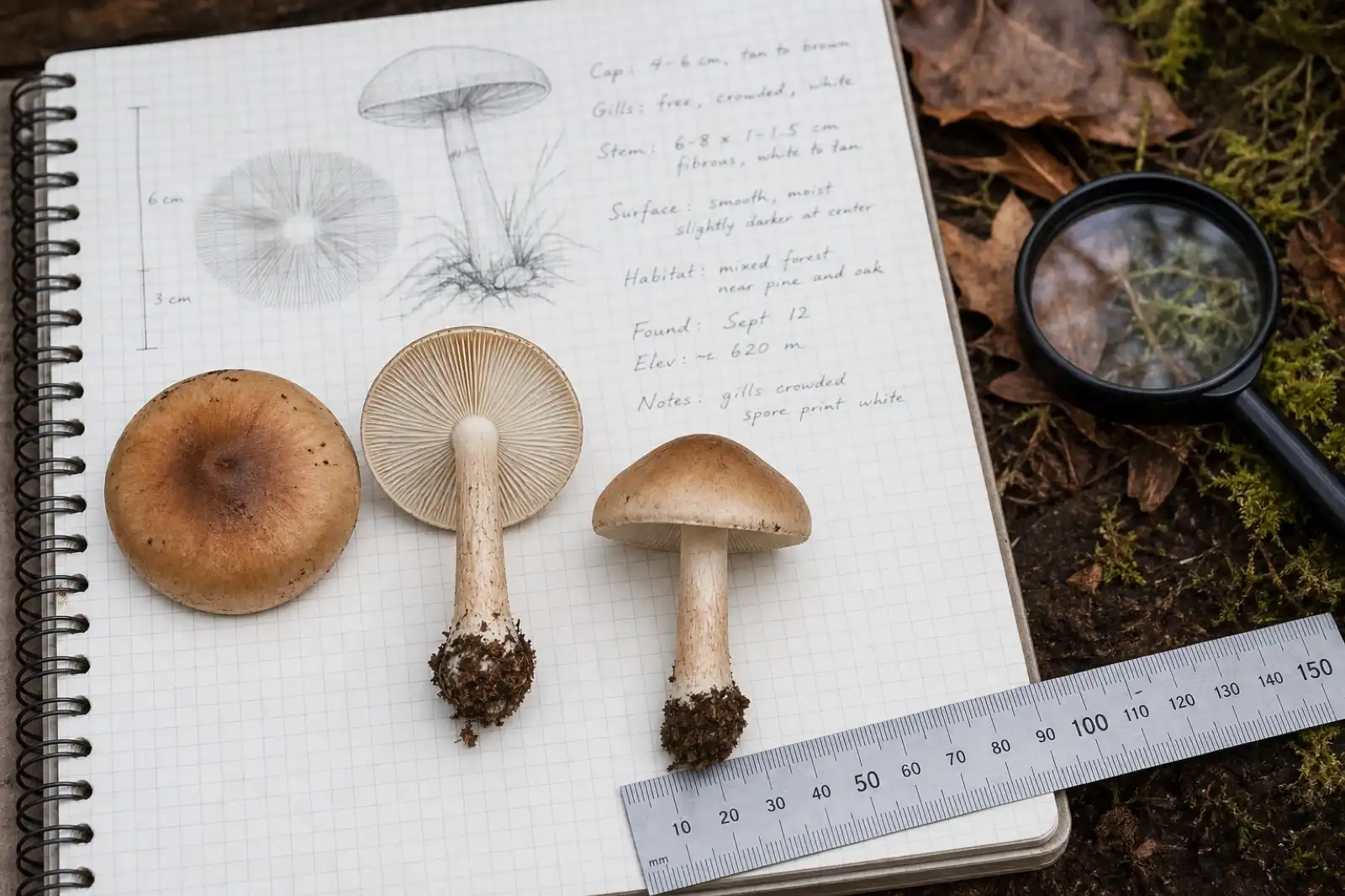
How to Identify Mushrooms: A Beginner's Field Guide
Build an identification from the whole specimen, substrate, habitat, spore deposit, and location—not from a single photograph.
identification
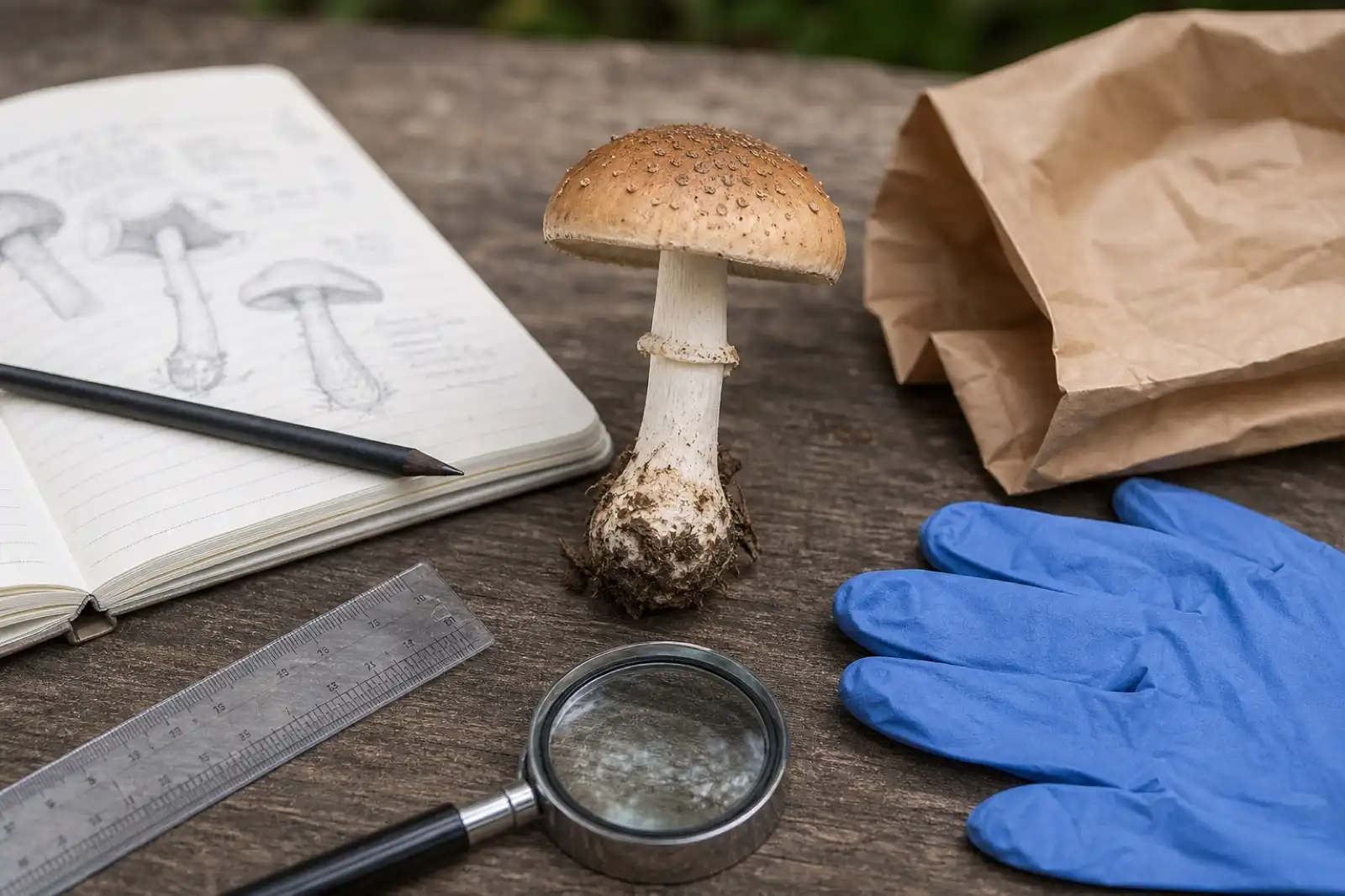
Mushroom Identification Safety Checklist
Use a conservative checklist before handling, documenting, or discussing any wild mushroom, especially when edibility is being considered.
identification
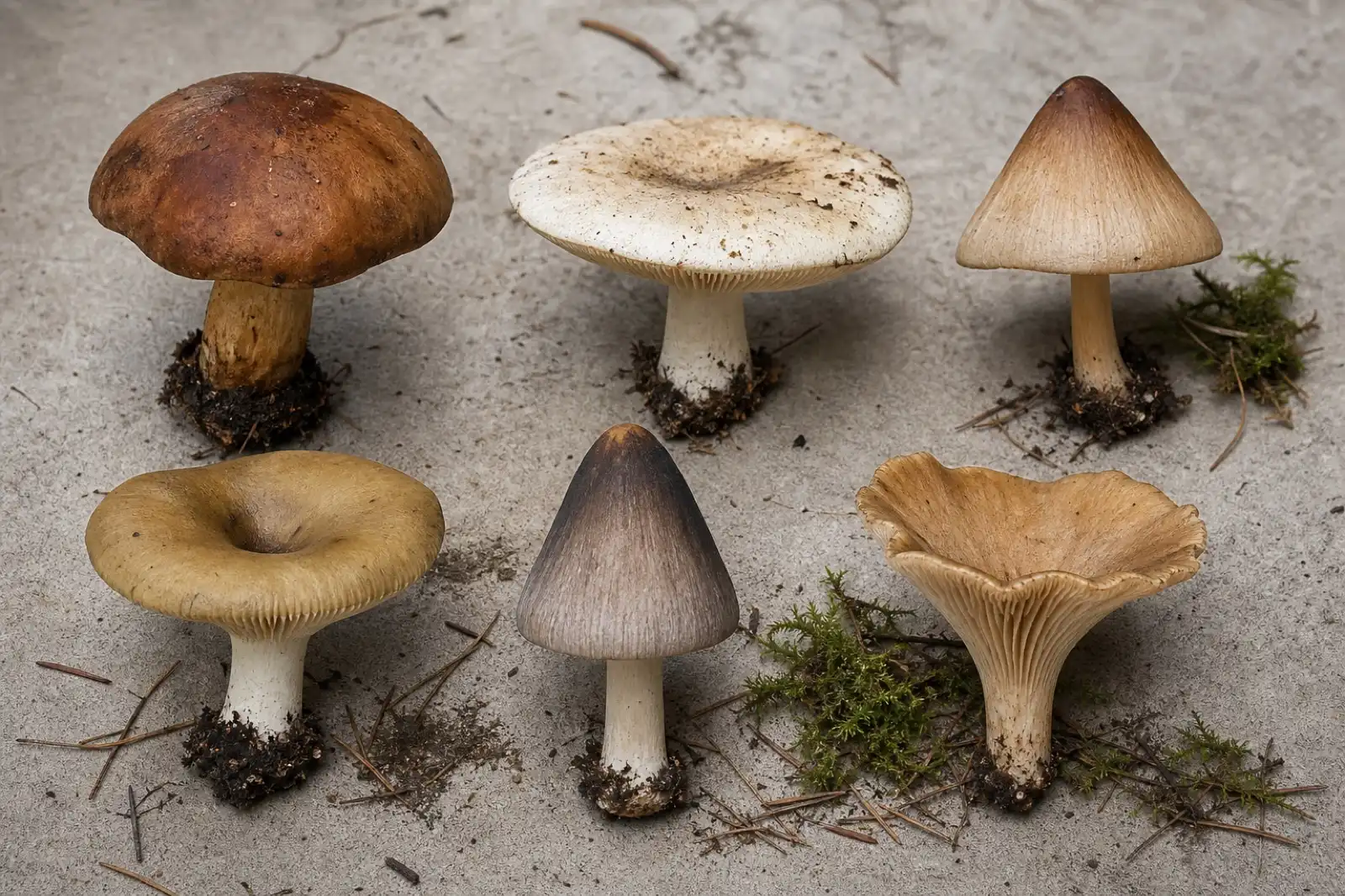
Mushroom Cap Shapes: A Practical Identification Guide
Compare mushroom cap shapes from convex and bell-shaped to flat, depressed, funnel-shaped, and uplifted, while recording age, margin, surface, and profile.
Continue exploring
Browse more practical guides in Mushroom Encyclopedia or visit the mushroom encyclopedia.