Mushroom Encyclopedia
Deceiver Mushroom: Laccaria laccata Field Guide
Document Laccaria laccata by its variable hygrophanous cap, thick distant gills, fibrous stem, white spores, woodland ecology, microscopy, and lookalikes.
Species context
Treat profiles as reference material
Species profiles summarize documented traits, taxonomy, and lookalikes, but natural variation can be substantial.
Use the safety checklist →Decision limit
A profile cannot authenticate a specimen
Do not eat a wild mushroom from an online match, single feature, or generated image.
Read the safety disclaimer →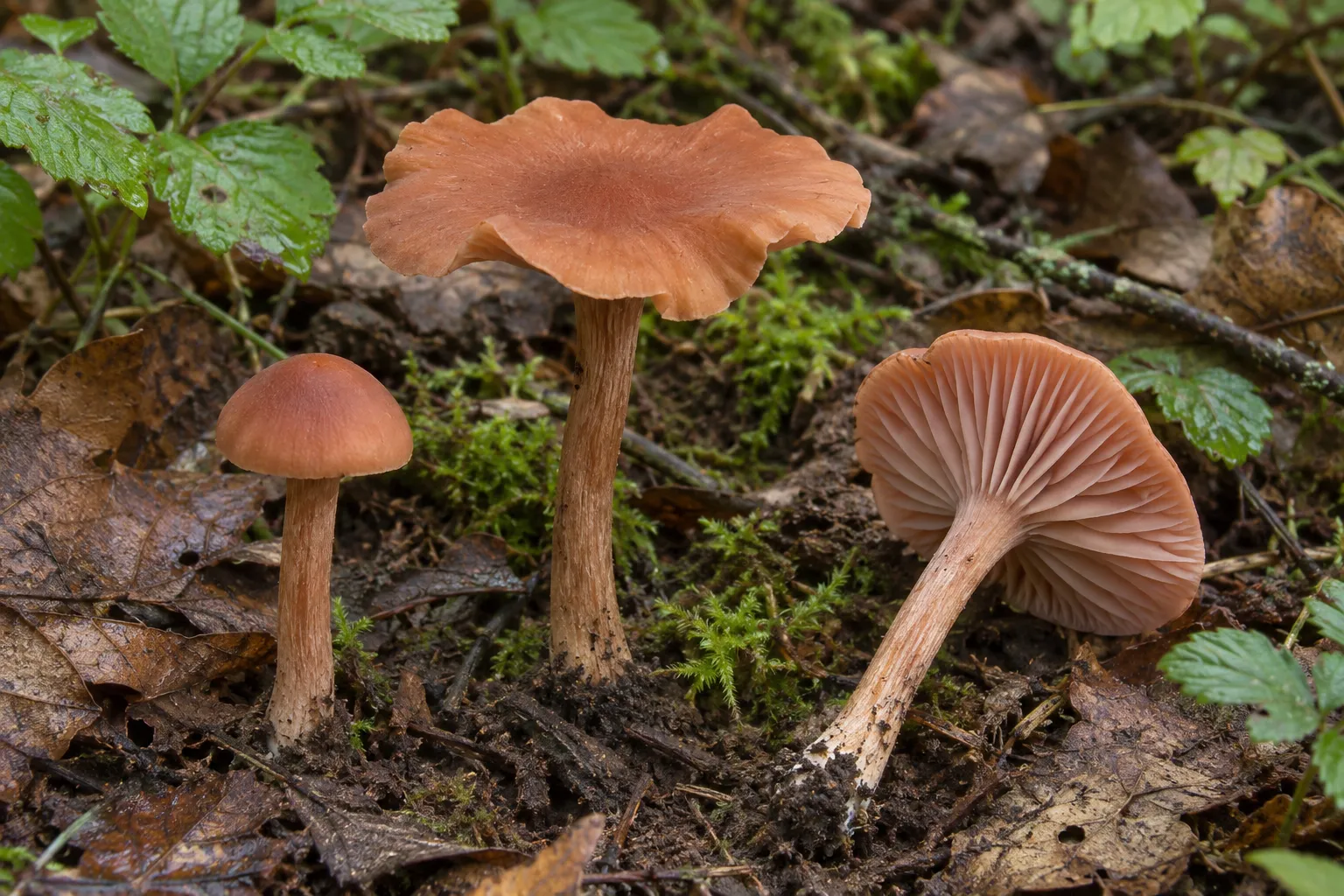
Quick facts
- Scientific name
- Laccaria laccata
- Common names
- Deceiver, Common deceiver, Waxy laccaria
- Taxonomy
- Laccaria · Hydnangiaceae
- Edibility context
- Conditional: A food-use history exists, but this page does not verify specimens or recommend collecting them for food.
- Spore print
- White; mature spores are ornamented and microscopic characters can be necessary for species separation.
- Toxicity context
- Low: No major intrinsic syndrome is emphasized for correctly identified material; mistaken identity, site contamination, spoilage, and individual reaction remain relevant.
- Season
- July, August, September, October, November
- Growing difficulty
- Expert
- Regions
- Europe, North America, temperate records worldwide that require taxonomic review
Safety limit: These labels summarize documented context; they never authenticate a wild specimen. Cooking does not make a poisonous species safe.
The deceiver earns its name by changing in front of the observer. A rain-darkened fruit body can be reddish brown and translucent at the margin; the same cap may dry to pale buff, flatten, wave, and look like another species. A useful identification therefore follows water state, gill architecture, stem texture, spores, habitat, and microscopic limits rather than trying to memorize one portrait.
This page uses Laccaria laccata for a common field concept, but regional species boundaries can be narrower than older guidebooks suggest. When evidence is incomplete, record Laccaria or the deceiver group instead of forcing an exact name.
Photograph wet and dry states
Begin with several fruit bodies in place. Record recent rain, apparent surface moisture, shade, air conditions, and whether caps occur in both dark and pale states. Photograph matched caps in diffuse natural light with a neutral reference; automatic phone processing can exaggerate orange and erase subtle pink.
If a revisit is possible, photograph the same numbered mushrooms as they dry naturally. Do not soak or heat specimens to manufacture a color change. A time series makes the hygrophanous pattern reviewable and prevents moisture-driven variation from being mistaken for several taxa.
Measure cap shape across development
Young caps are often convex. Expanding caps flatten, and older ones may become shallowly depressed, wavy, or irregular. Measure width and height for several stages. Record whether a small central depression or low bump is present instead of assuming one outline defines the species.
The thin margin may show translucent radial striations when wet because the gills beneath influence its appearance. Drying can make the margin paler and less transparent. Photograph from directly above and at soil level so shape and thickness remain separate observations.
Use gill architecture as the anchor
The gills are relatively thick and widely spaced, with shorter gills between those that reach the stem. Their pale flesh-pink to dull pinkish-buff color can contrast with a drying cap. Photograph the underside under neutral light, recording attachment, spacing, thickness, edges, branching, and any cross-veins.
Use the gill-types guide for consistent terminology. Thick distant gills strongly support a Laccaria pathway, but they do not finish species identification because related deceivers share the pattern.
Trace attachment at the stem
Gills may be attached broadly and can run slightly down the upper stem. Make a sharp side-on close-up at the junction. A tilted photograph can make attached gills appear free or strongly decurrent, so capture more than one rotation.
Record changes across ages. A cap that expands and turns upward alters the apparent gill angle even when the underlying attachment remains the same.
Read the fibrous ringless stem
The stem is slender, tough, and longitudinally fibrous, usually tawny, pinkish brown, or paler than the wet cap. Photograph it dry enough to show fibers but before cleaning away the base. Note twisting, flattening, basal white mycelium, bruising, and internal texture in a lawful longitudinal section.
There should be no ring and no volva. Those negative characters are useful only when the complete stem and base are visible. A cropped stem cannot support them.
Make a controlled spore deposit
A white deposit is expected. Place a mature numbered cap across dark and clear surfaces, protect it from drafts, and record duration and humidity. A sparse deposit can disappear on white paper, while condensation may be mistaken for spores.
Spore color separates the deceiver pathway from many rusty- or brown-spored small mushrooms, but white spores occur in numerous unrelated groups. Keep the result connected to the exact fruit body used for microscopy.
Examine ornamented spores responsibly
Mature Laccaria spores bear ornamentation visible microscopically with an appropriate preparation. Species work may also consider spore dimensions, ornament height and pattern, basidia, cystidia, and other characters specified by a current key. Report medium, calibration, magnification, sample size, and measurement range.
Do not infer ornamentation from a low-resolution image or copy a reference range into a field record. Immature tissue and mixed collections can produce misleading measurements.
Compare the amethyst deceiver
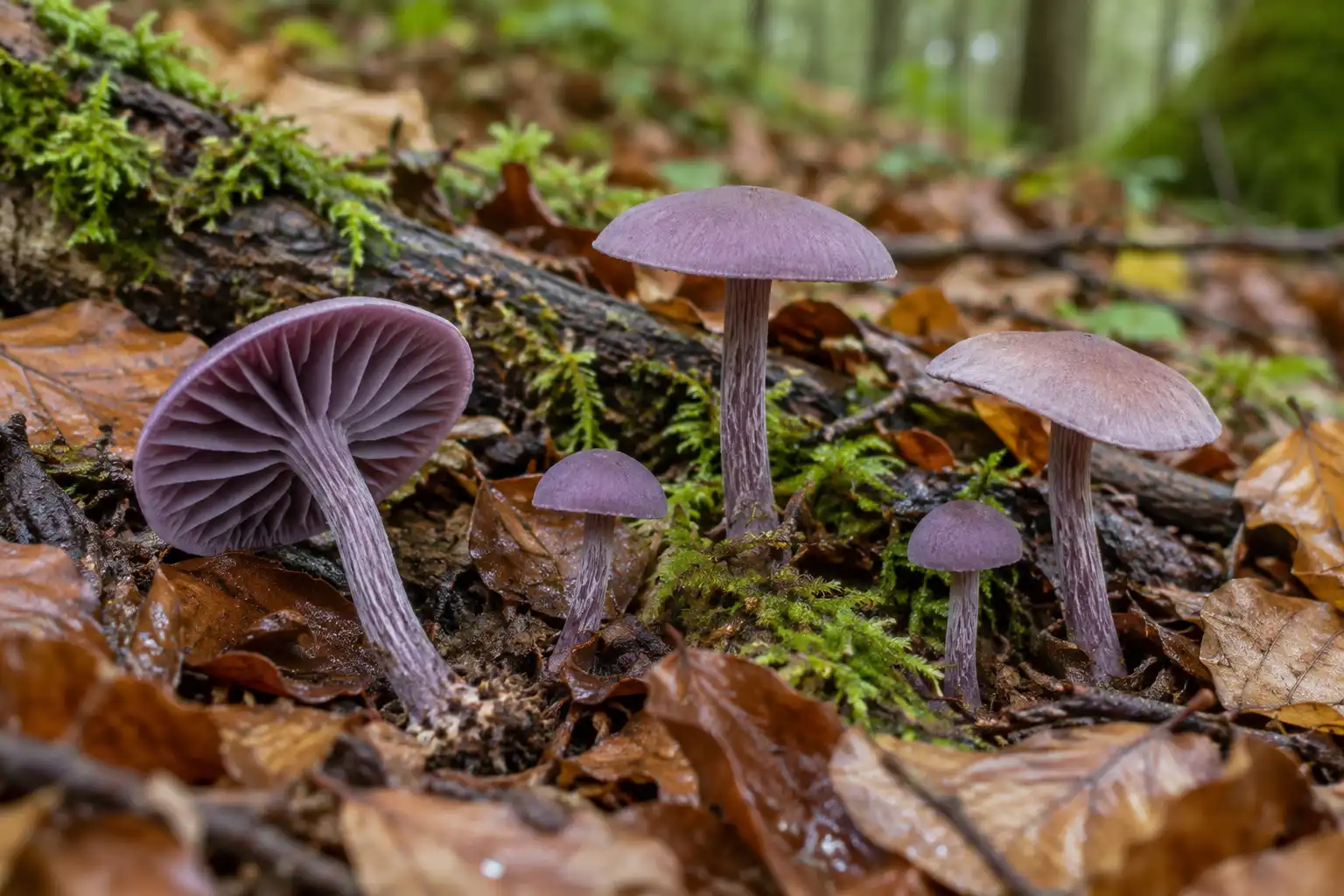
The amethyst deceiver guide covers a related species that is violet to purple when fresh. Old, sun-exposed, or rain-washed fruit bodies can fade toward buff, so purple versus brown is not a complete key.
Compare the full set: wet and dry cap, gills, stem fibers, basal tissue, spores, habitat, region, and maturity. Keep mixed color forms as separate numbered collections until evidence shows that they belong together.
Keep other brown Laccaria open
Several brownish Laccaria species can overlap in cap size and color. Some differ in scaly versus smooth cap surface, gill tone, stem structure, host pattern, or microscopic characters. Older records under a broad L. laccata concept may not match a modern local treatment.
Search the accepted name and synonyms, retain the key version and date used, and preserve a voucher when exact identification matters. A database name without specimen evidence is not a taxonomic conclusion.
Exclude rusty-spored small brown mushrooms
Small Cortinarius, Inocybe, and related mushrooms may occupy similar woodland ground. Some are toxic. Mature gill color, veil remnants, odor, stem base, cap fibers, and a rusty to brown deposit can redirect the identification, but no one character clears an unknown collection.
Do not mix mushrooms from adjacent patches. A woodland path can hold several small brown species within a few meters, and a combined spore deposit or photo series destroys the separation needed for review.
Document the living-tree context
Deceivers are mycorrhizal rather than ordinary litter decomposers. Record nearby tree species, distance to trunks, plantation history, soil exposure, moss, litter depth, slope, drainage, and disturbance. The habitat identification guide provides a consistent record structure.
A nearby tree supports a hypothesis but does not prove the individual fungal partner. Roots cross, seedlings hide, and several hosts can occupy one plot. Avoid turning proximity into certainty without appropriate ecological evidence.
Map a patch instead of choosing one portrait
Lay out a small transect and record each fruit body’s cap diameter, moisture state, color, gill tone, and distance to the nearest tree or path edge. This reveals whether dark and pale forms intergrade across moisture or represent separate clusters.
Revisit after rainfall and drying. The aim is not to claim causation from one patch, but to connect visible variation with recorded conditions. That is the practical antidote to the “deceiver” problem.
Preserve a voucher with color notes
Where collection is lawful, photograph fresh colors before drying, then dry one mature representative promptly with its complete base and field number. Dried material loses much of the color and shape that structured the field hypothesis, so habitat images and fresh notes remain essential.
Keep spore deposit, microscopy, image filenames, tree record, coordinates at an appropriate privacy level, and the regional key with the voucher. A later revision can reinterpret good evidence; it cannot reconstruct a missing underside.
Keep food use outside identification
Some sources describe the deceiver as edible, while its small size and variable appearance make it a poor target for casual collection. A historical label does not verify an individual mushroom, exclude toxic neighbors, or assess roadside contamination, pesticides, decay, and personal intolerance.
This guide does not recommend eating wild Laccaria. Never use a taste test to identify a small brown mushroom. If illness follows mushroom consumption, contact local emergency services or a poison center and retain specimens, leftovers, photographs, site details, and timing.
Understand cultivation limits
Because the fungus forms a relationship with living plants, ordinary indoor block methods used for saprotrophic oyster mushrooms do not transfer directly. Research culture or seedling inoculation requires authenticated material, host controls, containment, and a defined scientific question.
Do not release cultures or colonized material into parks or woodland. A fruit body near an inoculated seedling would still need verified identity and evidence that the intended symbiosis formed.
Audit the editorial image
The cover is an original AI editorial image, not a voucher. It was checked against natural-light site baselines for muted woodland color, recognizable litter, complete ringless stems, variable caps, thick distant gills, realistic crop, and absence of text or watermarks. It deliberately shows several views to suggest a documentation set.
The gill count, cap outline, plant community, and exact colors are illustrative. Generated imagery cannot supply spores, host evidence, regional range, or a safe food identification.
Build a repeatable field record
- Photograph the patch, trees, litter, and path context.
- Number and measure several wet and dry developmental stages.
- Capture cap surface, thin margin, thick gills, attachment, stem fibers, and complete base.
- Make a white spore deposit from a mature numbered specimen.
- Measure mature microscopic structures using a stated method.
- Compare other brown Laccaria and rusty-spored small mushrooms.
- Report the strongest defensible level and keep food use separate.
The result remains useful even if the label stops at Laccaria. A transparent uncertainty record has more scientific value than a confident name built from color alone.
Frequently asked field questions
Why can one patch contain several colors?
Cap tissue gains and loses water, while age, exposure, and damage also change appearance. Map and revisit individuals before deciding whether color forms represent one taxon.
Are distant gills enough to identify the deceiver?
No. They support Laccaria, but related species share them. Stem, spores, cap surface, ecology, region, and microscopy still matter.
Does a white spore deposit prove Laccaria?
No. It excludes some brown-spored alternatives but overlaps with many unrelated mushrooms. Treat it as one independent character.
Is the deceiver associated with one tree species?
It is reported with multiple broadleaf and conifer hosts. Record local trees carefully and avoid assigning a partner from proximity alone.
What should be reported without microscopy?
Use Laccaria species or deceiver group when that matches the visible evidence, retain complete photographs, and seek regional expert review for an exact name.
References
- GBIF species search — Laccaria laccata. Taxonomic and occurrence records requiring region and dataset review.
- NCBI Taxonomy Browser — Laccaria laccata. Independent lineage and nomenclature checkpoint.
- First Nature — Laccaria laccata. European morphology, habitat, season, and comparison context.
- North American Mycological Association — Mushroom Poisoning Syndromes. Conservative poisoning-response context.
Editorial review: November 6, 2026. This page has no named mycologist, toxicologist, clinician, or food-safety expert reviewer. Corrections should identify the claim, region, specimen evidence, and source so the record can be updated transparently.
Source quality notes
MushroomScope cites sources that match the page scope, such as taxonomic databases, extension guidance, food-safety agencies, food-composition databases, and peer-reviewed or institutional health references. Sources support context and uncertainty; they do not turn an online page into specimen identification, medical advice, or a tested recipe record.
Frequently asked questions
Why is Laccaria laccata called the deceiver?
Its cap changes color, translucency, and shape as it gains or loses water, so specimens from one patch can look unrelated unless gills, stem, spores, and habitat are compared.
What do deceiver gills look like?
They are relatively thick, widely spaced, and pale flesh-pink to dull pinkish buff, with shorter gills between full-length ones.
Is the deceiver always orange-brown?
No. Moist caps can be deeper reddish brown, while drying makes them paler buff and often two-toned. Color alone is unreliable.
How does the deceiver differ from amethyst deceiver?
Amethyst deceiver has violet to purple tissue when fresh, though it can fade. Structure, spores, habitat, maturity, and regional taxonomy still need review.
Can this guide confirm a deceiver is edible?
No. A web page cannot verify a collection, exclude every lookalike, assess pollution or condition, or account for individual reactions.
Related guides
mushrooms
Amethyst Deceiver: Gills, Color Fading, and Habitat
Document Laccaria amethystina through widely spaced gills, fibrous violet stem, fading cap, beech-oak habitat, white spores, and regional lookalikes.
identification
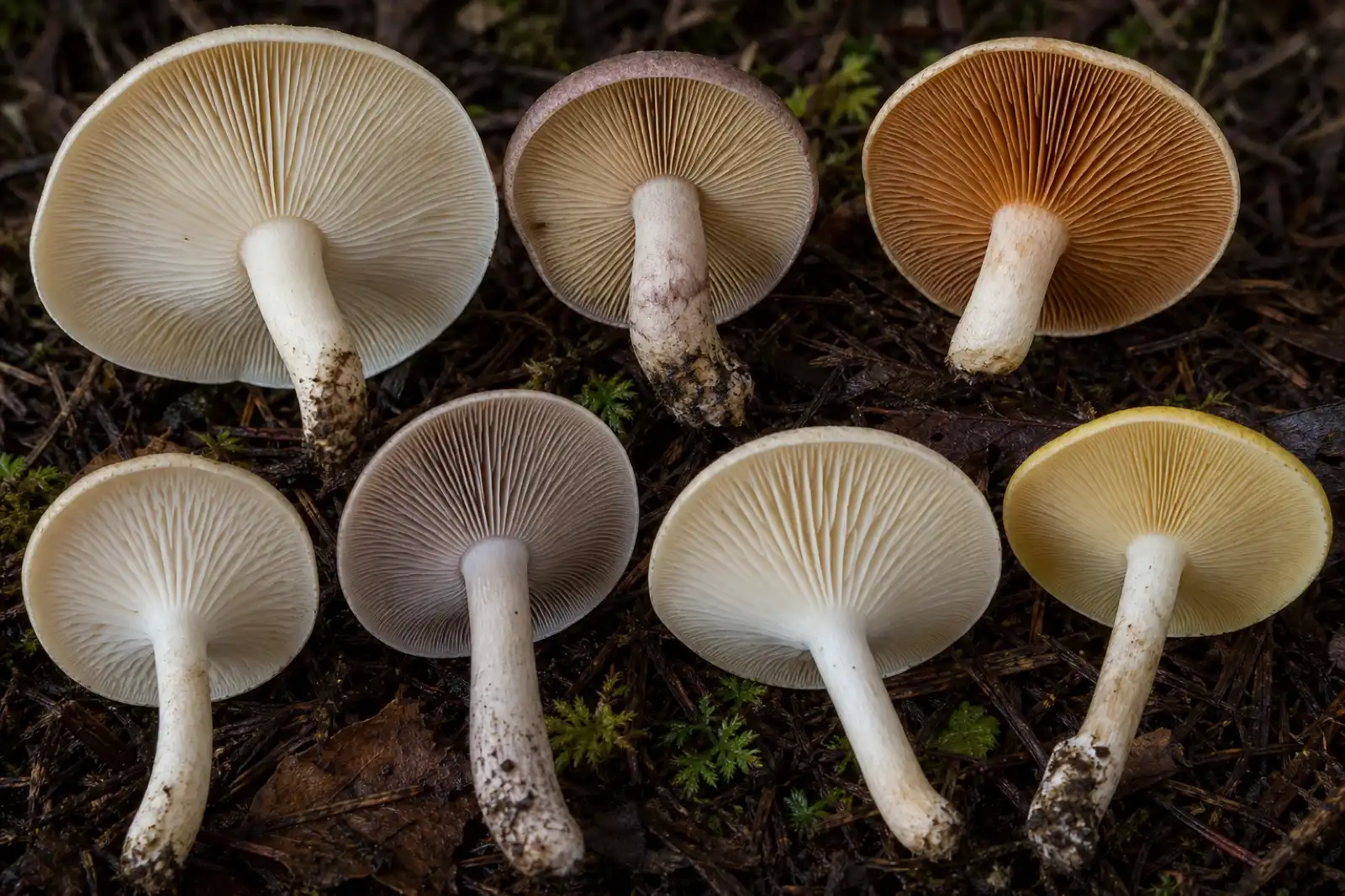
Mushroom Gill Types: Attachment, Spacing, and Color
Compare free, attached, notched, adnate, and decurrent mushroom gills while recording spacing, short gills, edge details, bruising, and color changes.
identification
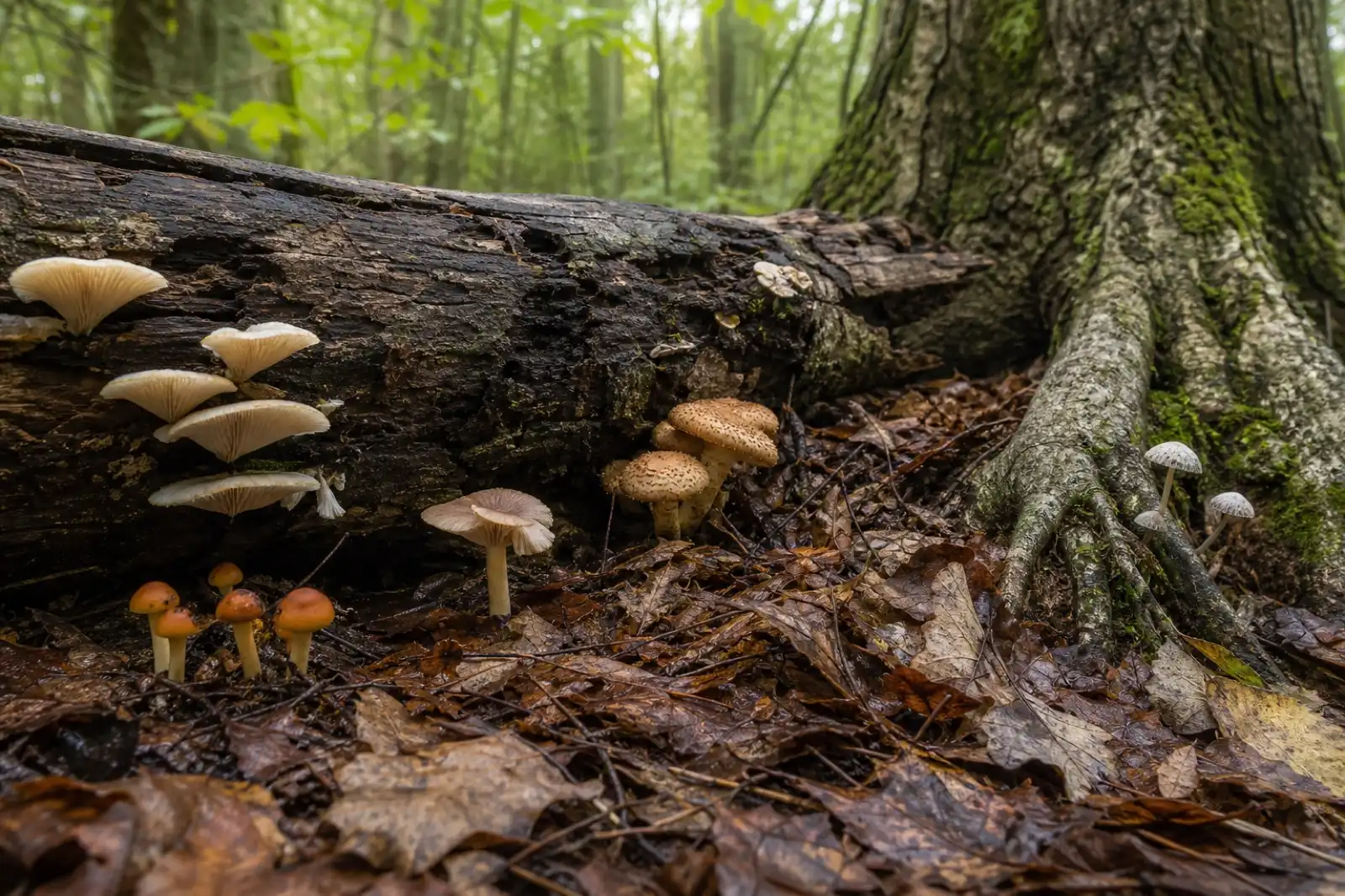
Using Habitat to Identify Mushrooms
Record substrate, associated plants, soil, wood type, moisture, elevation, and fruiting pattern as identification evidence.
Continue exploring
Browse more practical guides in Mushroom Encyclopedia or visit the mushroom encyclopedia.