Mushroom Encyclopedia
Lactarius indigo: Indigo Milk Cap Species Guide
Learn indigo milk cap field characters: blue latex, green staining, brittle flesh, forest habitat, lookalikes, and why wild finds require local verification.
By MushroomScope Editorial Team · · Updated
Species context
Treat profiles as reference material
Species profiles summarize documented traits, taxonomy, and lookalikes, but natural variation can be substantial.
Use the safety checklist →Decision limit
A profile cannot authenticate a specimen
Do not eat a wild mushroom from an online match, single feature, or generated image.
Read the safety disclaimer →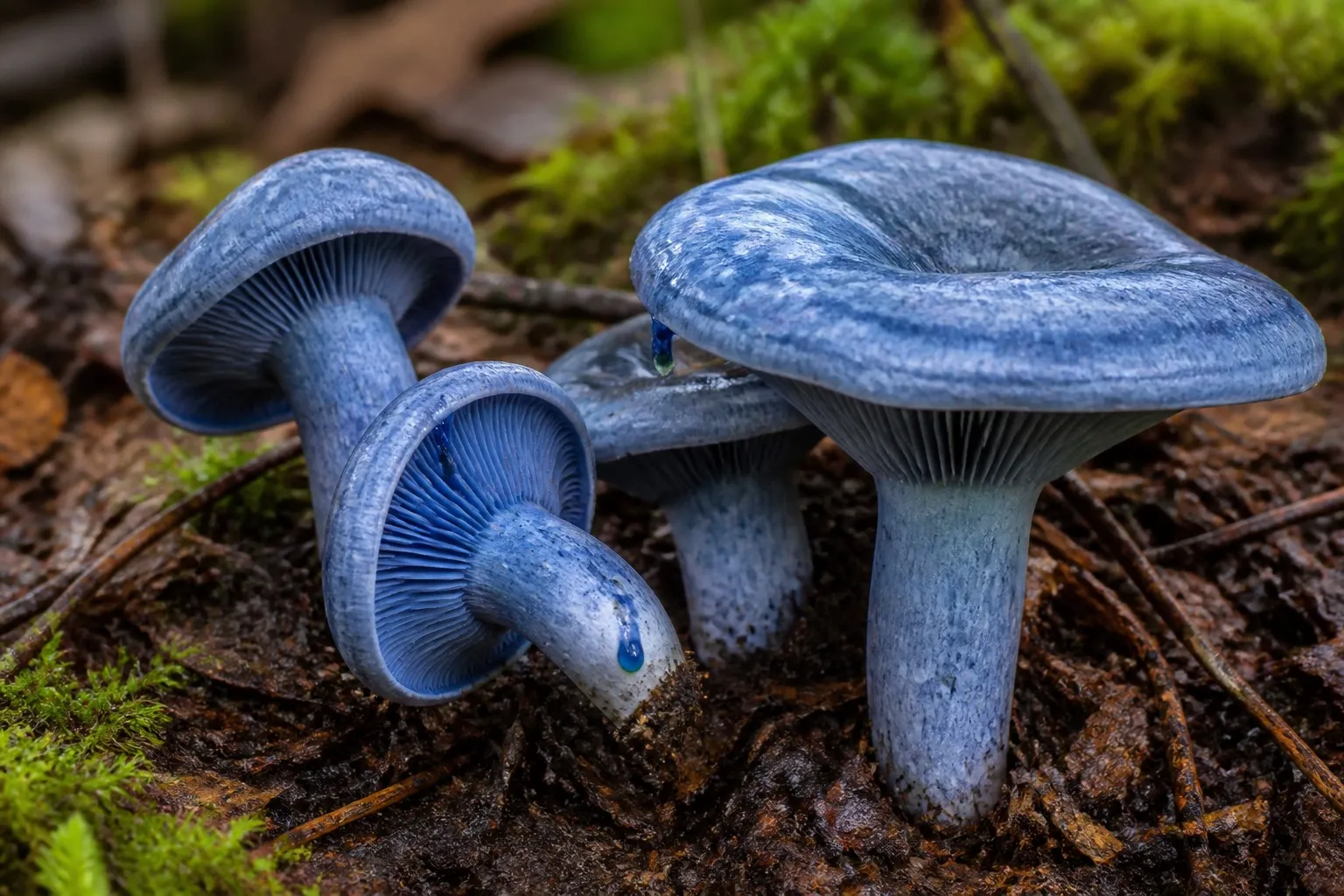
Quick facts
- Scientific name
- Lactarius indigo
- (Schwein.) Fr.
- Common names
- Indigo milk cap, indigo lactarius, blue milk mushroom
- Taxonomy
- Lactarius · Russulaceae
- Edibility context
- Conditional: This species has a culinary reputation in some regions only after correct local identification. That reputation does not transfer to a specimen identified from a photo or a blue color alone.
- Spore print
- Cream; spore-print color overlaps among species and is only one part of a complete identification.
- Toxicity context
- Unknown: Misidentification, site contamination, spoilage, and individual intolerance remain possible. Cooking does not make a poisonous lookalike safe.
- Season
- July, August, September, October
- Growing difficulty
- Expert
- Regions
- eastern North America, Central America, parts of East Asia
Safety limit: These labels summarize documented context; they never authenticate a wild specimen. Cooking does not make a poisonous species safe.
A striking color is the beginning, not the answer
Lactarius indigo is one of the mushrooms most likely to be named from a photograph because the blue cap and blue “milk” look memorable. That is exactly why it deserves a slow process. Blue pixels in an image can be intensified by shade, white balance, saturation, or age-related green staining. A usable identification record needs fresh anatomy and ecology as well as color.
The name belongs to a milk cap: members of Lactarius produce latex when fresh tissues are cut or damaged. The Iowa State University Ada Hayden Herbarium profile describes L. indigo as a forest-soil, ectomycorrhizal mushroom with blue latex that becomes dark green on exposure, green bruising, a cream spore print, and brittle flesh. Those are mutually reinforcing observations, not a single test. The GBIF taxonomic record places the species in Lactarius, Russulaceae.
This page is for learning and documentation. It cannot establish that a wild mushroom is edible. Do not taste, cook, or serve a collection because an app, search result, or blue color suggests this name.
What to document in the field
Look at the collection in natural light before disturbing it. A fresh Indigo milk cap can have a blue to blue-gray cap, often with darker zones. The cap may be convex when young and become flatter or depressed in the middle as it matures. The gills are blue and typically run down the stem. The stem can be blue-gray with darker pits or spots. Age, rain, sun, and handling can weaken the blue or move it toward dull green, so write down the fresh color before cutting.
When lawful and appropriate, make a clean cut through a gill or the flesh and observe the latex immediately. Record its initial color, amount, and any change over several minutes. “No latex” on a dry, old, or insect-damaged mushroom is less informative than “fresh blue latex became dark green on exposure.” Do not taste latex. Photograph the complete stem base, cap top, gills, cut surface, and nearby trees; the mushroom gill types guide can help describe attachment without treating it as a verdict.
Use a notebook or photo caption to answer these questions:
- Did the mushroom arise from soil, leaf litter, buried wood, or a visible log?
- Which trees were close enough to be plausible hosts, and were they oak, pine, or something else?
- Were blue gills and an intact stem visible, or is color being inferred from a cropped cap photo?
- What was the latex color immediately after cutting, and what changed with exposure?
- Is the flesh brittle in the way expected of a milk cap, and was a cream spore deposit obtained if needed?
An observation with several unanswered questions should remain “blue mushroom, possibly a milk cap,” not become a food label.
Habitat: why tree context belongs in the name check
The Iowa State record describes the species as ectomycorrhizal and occurring on soil in deciduous and coniferous woods. Ectomycorrhizal fungi form associations with living tree roots, so soil and host context are useful evidence. They are not proof: a mushroom can emerge through leaf litter above buried wood, and a nearby tree may not be its host. Photograph the broader habitat and record several possible tree species instead of assigning a host by proximity alone.
The University of Michigan Herbarium holds a catalogued Lactarius indigo collection from Indiana recorded on humus under Quercus. A single specimen record does not define the full range or every host association, but it demonstrates the kind of precise locality and habitat observation that makes a collection scientifically useful. Preserve those details in a personal field note. Broad claims such as “found everywhere under oak” are less defensible than a dated local record.
Fruiting is often associated with warm, wet periods from summer into autumn in parts of the range. It shifts with latitude, elevation, rainfall, soil, and compatible trees. Check recent local mycological records rather than expecting a particular month to produce the species.
Similar mushrooms and useful contradictions
The blue color of a cap is a clue, not an endpoint. Other Lactarius species can be blue, gray-blue, greenish, or change color after bruising. Some can differ in latex color, taste, gill appearance, spore ornamentation, or host association. A regional key may also use a different taxonomic treatment from a popular website. Preserve the evidence necessary for an expert to evaluate the name: fresh latex, a complete specimen, gills, cap surface, stem base, habitat, date, and region.
One useful contradiction is a missing milk-cap character. A mushroom with blue pigment but no latex from fresh cut tissue may not belong in the comparison set at all. Another is substrate: a dense cluster directly from a stump requires a different investigation from a solitary mushroom in leaf litter under trees. Still, absence of one expected feature in an old or damaged specimen is not a safe reason to exclude alternatives. It is a reason to stop and seek a fresher specimen or local help.
Online photographs often hide the key evidence. A camera can make a pale gray cap look saturated blue, and a single image cannot show whether the latex changed over time. The how to identify mushrooms guide provides a broader workflow for gathering these missing observations.
Edibility and exposure safety
Indigo milk cap has a culinary reputation in some places when it is correctly identified, fresh, and legally collected. That reputation does not clear a wild collection in a different region or with incomplete evidence. Edibility labels do not control the risks from similar species, site contamination, age, storage, preparation, or individual intolerance. Never use a species page to identify a mushroom for another person.
If a collection is positively identified in person by an experienced qualified local identifier, keep it separate from uncertain mushrooms and inspect every piece for deterioration. Do not collect from polluted sites, treated ground, road verges, or places with uncertain access rules. A first serving of any new correctly identified wild food should be modest, but “start small” is not a substitute for identification.
Poison Control advises that wild mushrooms should not be eaten without expert identification and that cooking cannot make a poisonous mushroom safe. After an unknown mushroom exposure, contact a poison center or emergency service promptly. Keep leftovers, uncooked material, trimmings, photographs, and information about the time and amount eaten. Do not wait for comments online and do not induce vomiting unless a medical professional gives that instruction.
Why this is not a home cultivation target
Because L. indigo is ectomycorrhizal, it is connected to living trees and a larger soil ecosystem. That is fundamentally different from growing oyster mushrooms on a prepared indoor block. A quick “indigo milk cap kit” deserves careful scrutiny unless its producer documents the culture, host, method, and reliable fruiting evidence. Do not attempt to transplant forest soil, dig up roots, or clone a wild find for food.
For beginners, the useful lesson is ecological rather than culinary: an attractive fruiting body can be evidence of a hidden relationship between fungus, tree, soil, weather, and time. A careful observation record is a safer and more durable contribution than a rushed collection.
A short field-review protocol
Before sharing a proposed identification, review the observation in a fixed order. First, separate fresh features from recollection: write the cap and gill colors before looking at online photos, then document latex immediately after cutting. Second, distinguish direct evidence from inference. “The mushrooms arose from soil near oak and pine” is direct evidence; “the oak is the host” is a hypothesis. Third, preserve disconfirming details. If the gills are not clearly decurrent, the latex is white or absent on fresh tissue, the flesh is flexible rather than brittle, or the mushroom is growing in a tight cluster from wood, do not smooth those facts into an Indigo milk cap description.
Complete the record with a top view, underside, intact stem base, cross-section, and a habitat photograph. Include a scale and avoid intense flash that can shift blue tones. Note whether the specimen is fresh, waterlogged, sun-faded, insect-damaged, or old. If a spore print is relevant, treat its cream color as support rather than proof. A qualified identifier can work with that information; a single close crop of a blue cap rarely contains enough evidence.
Finally, keep identification and use as separate decisions. A specimen can be a valuable identification exercise even when the evidence is incomplete or collection is not permitted. It can be a likely Lactarius without being safely named to species, and it can be accurately named without being suitable to eat. That restraint is not a gap in the guide; it is the responsible endpoint of a web-based field reference.
For an orange-latex comparison where color changes must be timed rather than guessed, see the saffron milk cap guide.
References
- Global Biodiversity Information Facility. Lactarius indigo (Schwein.) Fr.. Taxonomic backbone, accepted name, and occurrence context.
- Iowa State University Ada Hayden Herbarium. Lactarius indigo (Schw.) Fr.. Latex, green staining, spore-print, microscopic, substrate, and habitat observations.
- University of Michigan Herbarium. Lactarius indigo var. indigo specimen 24072. Catalogued Indiana collection on humus under Quercus.
- Poison Control. Mushroom poisoning: don’t invite the death angel to dinner. Expert-identification and exposure-response guidance.
Last editorial review: August 17, 2026. Confirm local taxonomy, host associations, land-access rules, and poison-response contacts before acting on any field observation.
Source quality notes
MushroomScope cites sources that match the page scope, such as taxonomic databases, extension guidance, food-safety agencies, food-composition databases, and peer-reviewed or institutional health references. Sources support context and uncertainty; they do not turn an online page into specimen identification, medical advice, or a tested recipe record.
Frequently asked questions
Does blue color alone identify Indigo milk cap?
No. A credible observation also records latex color and change, gill attachment, brittle flesh, the complete stem, forest habitat, host trees, and region. Camera processing can alter blue tones.
What color is the latex of Lactarius indigo?
Fresh latex is described as indigo blue and can turn dark green after exposure. Latex quantity and color can be reduced or altered in old, dry, or damaged mushrooms, so it is supporting rather than conclusive evidence.
Where does Indigo milk cap grow?
It is an ectomycorrhizal forest mushroom found on soil in deciduous and coniferous woods in parts of its range. A complete local host and habitat record is more useful than a broad range label.
Is Indigo milk cap safe to eat?
It has a culinary reputation when correctly identified in suitable regions, but an online page cannot clear a wild mushroom for food. Local expert confirmation, freshness, legal collection, contamination, and individual tolerance are essential.
What should happen after an unknown mushroom exposure?
Contact a poison center or emergency service promptly. Preserve leftovers, trimmings, photographs, and details of when and how much was eaten; do not rely on a web identification after exposure.
Related guides
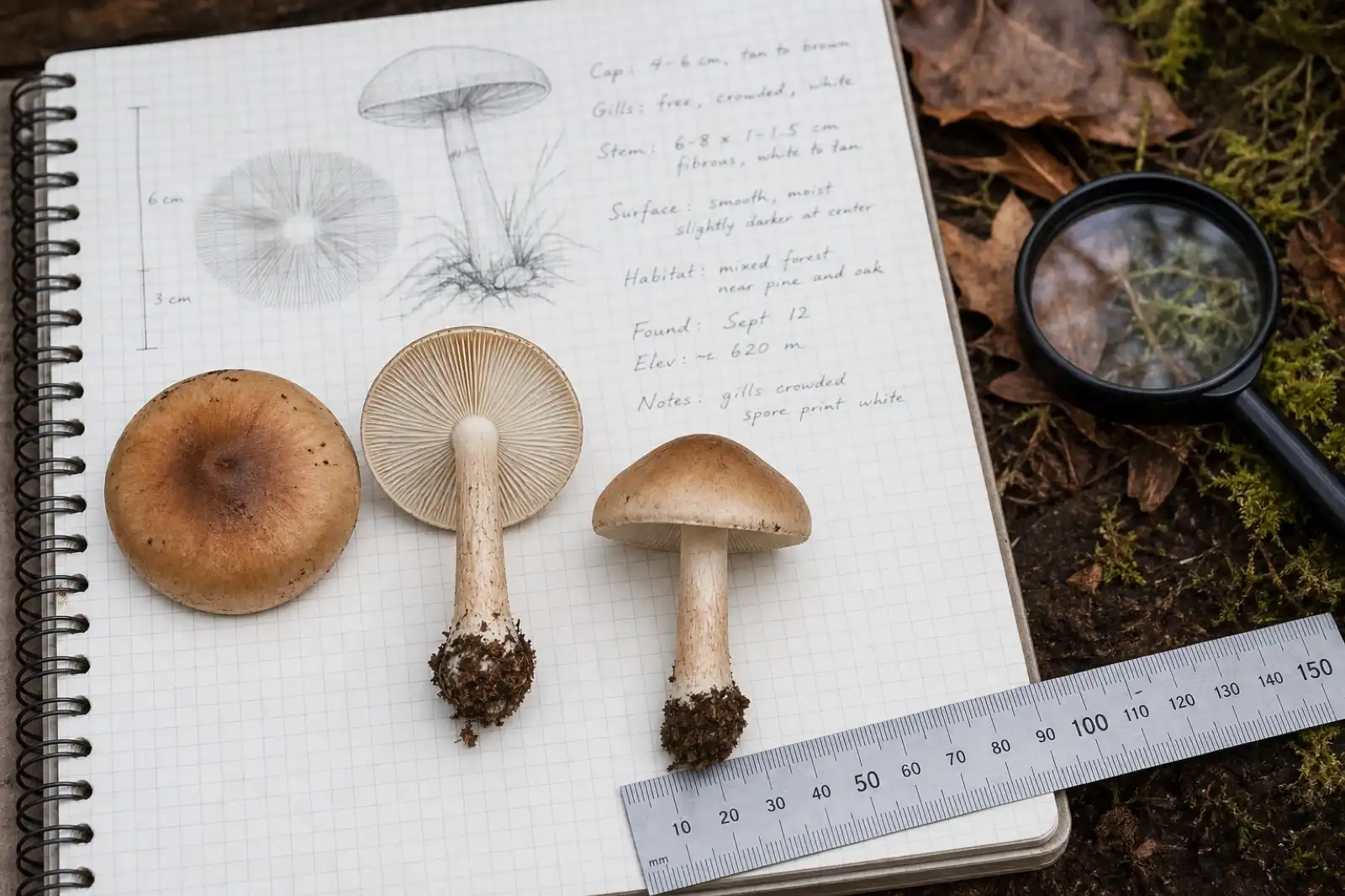
identification
How to Identify Mushrooms: A Beginner's Field Guide
Build an identification from the whole specimen, substrate, habitat, spore deposit, and location—not from a single photograph.
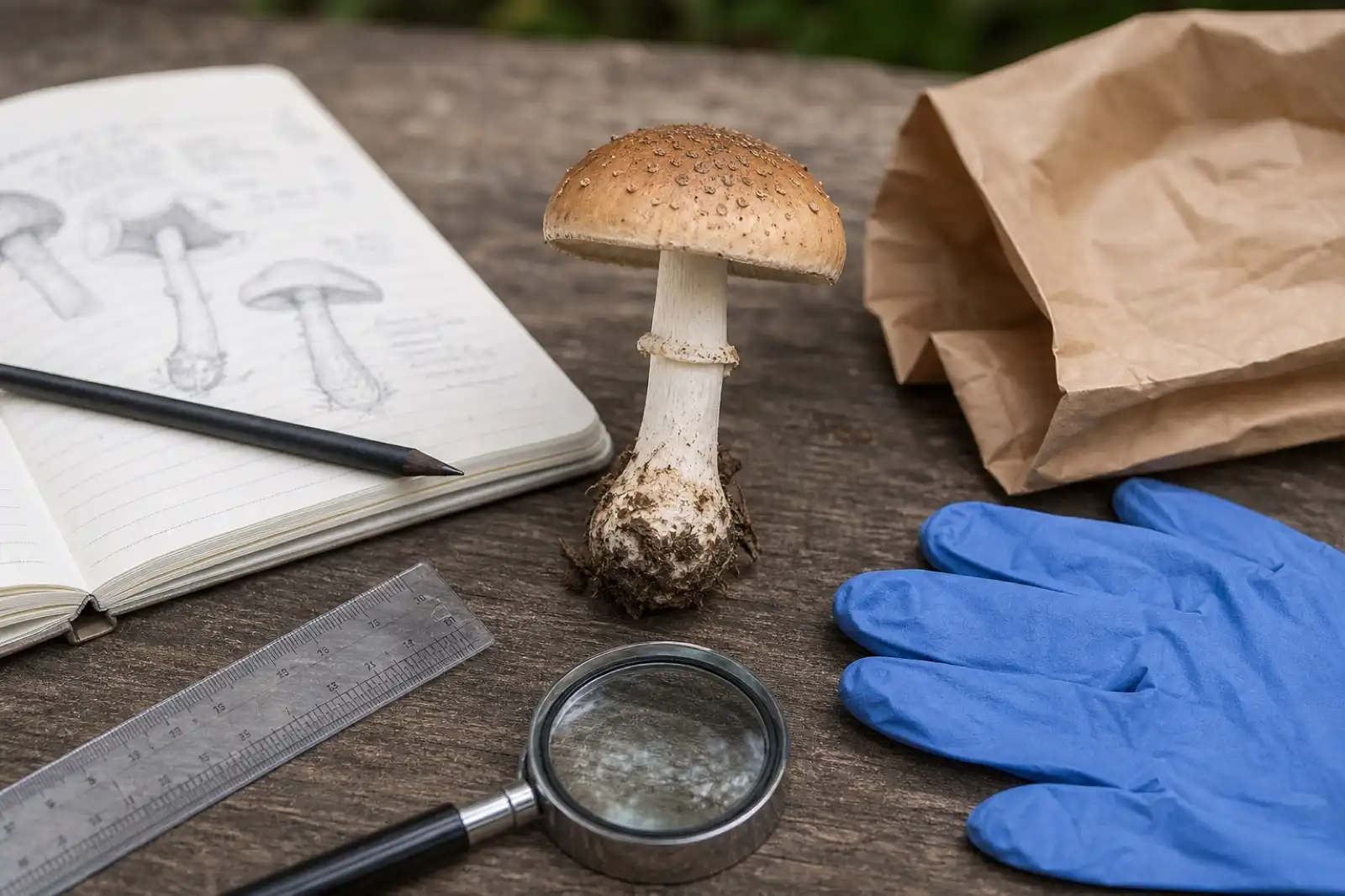
identification
Mushroom Identification Safety Checklist
Use a conservative checklist before handling, documenting, or discussing any wild mushroom, especially when edibility is being considered.
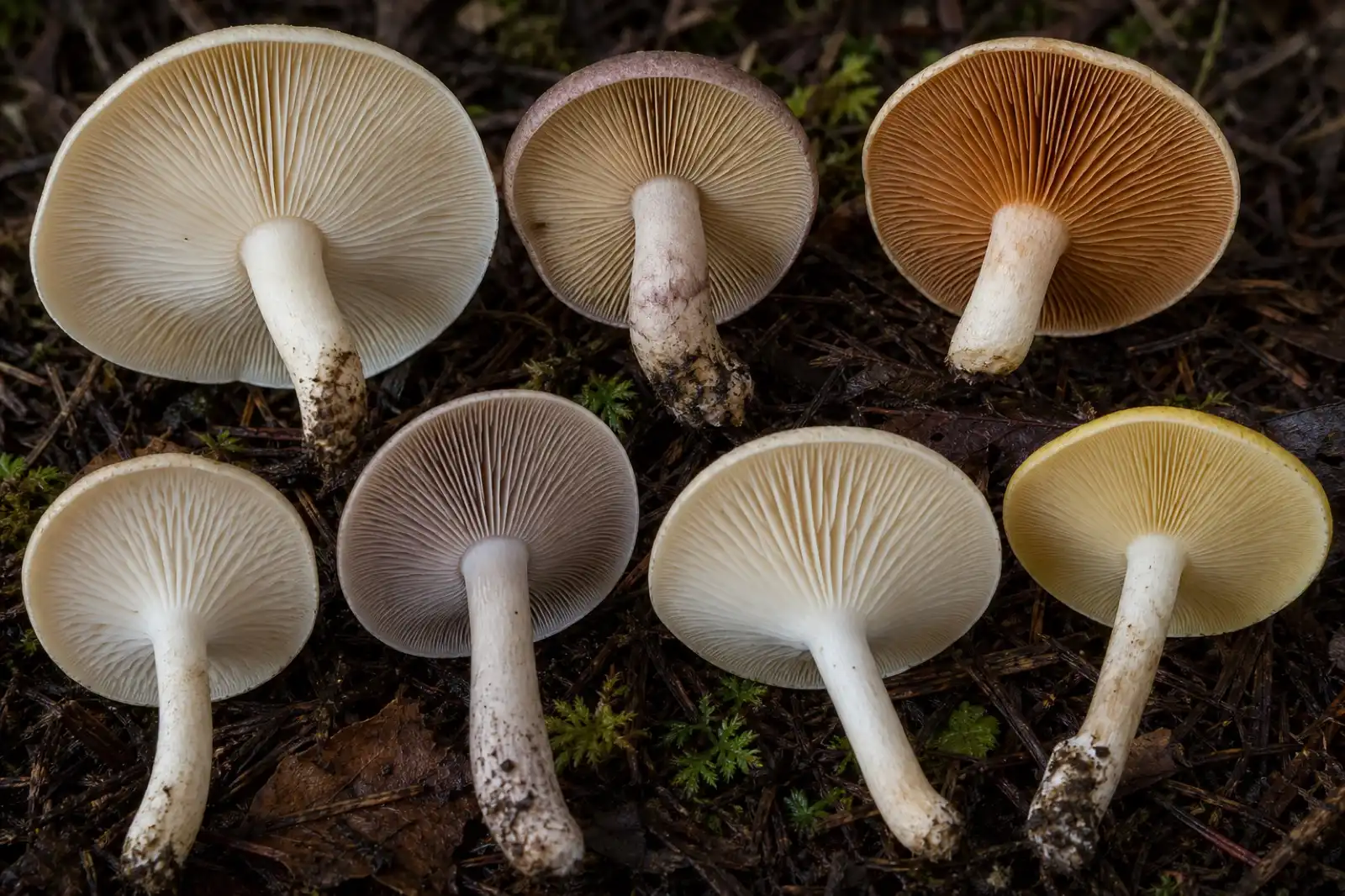
identification
Mushroom Gill Types: Attachment, Spacing, and Color
Compare free, attached, notched, adnate, and decurrent mushroom gills while recording spacing, short gills, edge details, bruising, and color changes.
Continue exploring
Browse more practical guides in Mushroom Encyclopedia or visit the mushroom encyclopedia.