Mushroom Encyclopedia
Lobster Mushroom (Hypomyces lactifluorum): Identification and Safety
Learn how lobster mushrooms form, their orange crust and altered gills, woodland habitat, lookalikes, host uncertainty, and food-safety limits.
By MushroomScope Editorial Team · · Updated
Species context
Treat profiles as reference material
Species profiles summarize documented traits, taxonomy, and lookalikes, but natural variation can be substantial.
Use the safety checklist →Decision limit
A profile cannot authenticate a specimen
Do not eat a wild mushroom from an online match, single feature, or generated image.
Read the safety disclaimer →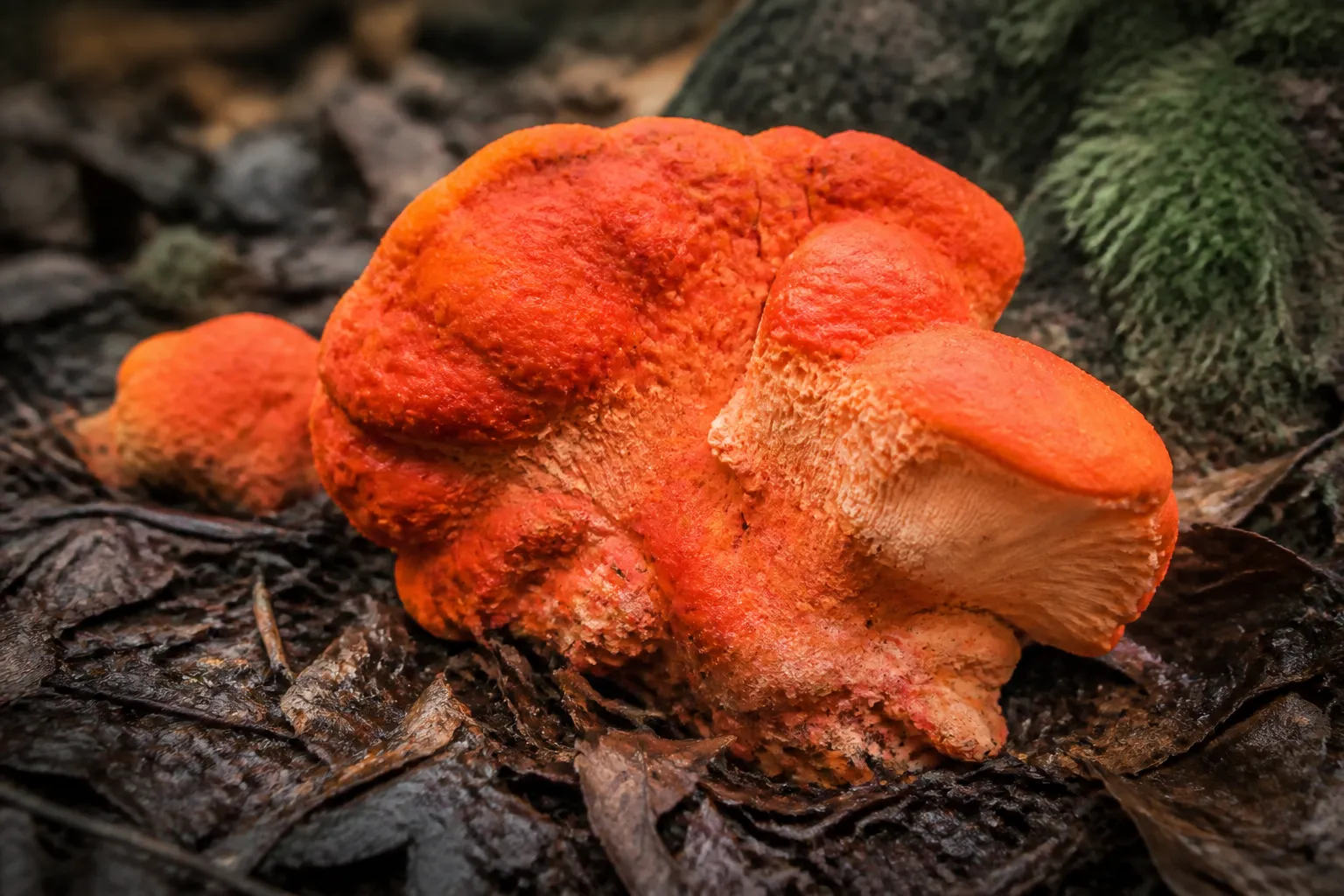
Quick facts
- Scientific name
- Hypomyces lactifluorum
- Common names
- lobster mushroom
- Taxonomy
- Hypomyces · Hypocreaceae
- Edibility context
- Conditional: Commercial and culinary use is documented, but only fresh, fully colonized, expertly confirmed material should enter a food decision; this page cannot approve a collection.
- Spore print
- Not a practical standalone field character because the parasite covers and modifies the host.
- Toxicity context
- Moderate: Hazards include an uncertain or partially colonized host, misidentification, spoilage, contamination, and individual reaction. Cooking does not resolve identity.
- Season
- July, August, September, October, November
- Growing difficulty
- Difficult
- Regions
- North America, temperate forests
Safety limit: These labels summarize documented context; they never authenticate a wild specimen. Cooking does not make a poisonous species safe.
Understand the parasite-host combination
A lobster mushroom is not an ordinary mushroom that naturally develops a red cap. It is the transformed fruit body of another fungus after colonization by the ascomycete Hypomyces lactifluorum. The parasite spreads over a host, commonly reported from Russula or Lactarius relatives, and changes its color, texture, shape, and spore-bearing surface. Identification therefore concerns a biological combination rather than a single untouched host.
The result is usually dense, irregular, and conspicuously orange to red-orange. A hard, finely bumpy crust covers most of the visible surface. The host’s original cap and stem may remain broadly recognizable, but they are thickened, twisted, or fused into lobes. The underside commonly shows blunt wrinkles or shallow ridges where ordinary gills have been suppressed.
This transformation explains both the useful field pattern and a major limitation: the original host may be difficult or impossible to establish from appearance. Never invent a host name when the evidence has been erased. Record “host uncertain” and seek regional expertise. The National Park Service specifically presents its fungal material as educational rather than a field-identification substitute, a sound limitation for this page as well.
Photograph the mushroom in place before removal. Include the whole shape, underside, base, surrounding trees, and forest floor. The site’s mushroom identification guide shows how to separate direct observations from a conclusion. Orange color is an observation; “lobster mushroom” remains a hypothesis until crust, altered anatomy, habitat, maturity, and regional comparison agree.
Examine the crust and altered underside
Fresh H. lactifluorum typically creates a firm orange-red coating rather than a thin removable stain. Inspect the surface in natural light for fine pimples, roughness, cracks, bruising, dirt, mold, and areas where host tissue remains exposed. Color can range from yellow-orange to deep reddish orange, but camera saturation and wet surfaces can exaggerate it. A precise color match from a screen cannot establish identity.
Turn the specimen without destroying its base. The underside is often one of the most informative areas. Instead of thin, separate, blade-like gills, a well-colonized lobster mushroom usually shows low, blunt ridges or a wrinkled surface beneath the crust. Normal exposed gills over a large area may mean incomplete colonization, a different parasite, or simply another orange mushroom.
Cut one specimen lengthwise only after documenting it. The interior is generally firm and pale to white beneath the colored exterior. Yellowing, brown decay, watery tissue, tunnels, larvae, mold, or an unpleasant spoilage odor changes the condition assessment even if the outer pattern appears typical. A clean cross-section also helps show how extensively the coating has altered the host.
Do not use smell as a decisive test. Descriptions often compare the odor with seafood, but odor perception varies with age, moisture, temperature, and observer. Close inhalation of an unknown or moldy fungus is unnecessary. The identification safety checklist helps ensure that underside, interior, base, habitat, and contradictions receive the same attention as color.
Compare partial infections and orange lookalikes
Incomplete colonization deserves special caution. A specimen may show an orange patch while much of the host remains recognizable, or several differently altered mushrooms may grow together. Do not assume the parasite has made an unknown host harmless, and do not combine partially coated pieces with a well-documented collection. Parasite coverage, host uncertainty, and freshness are separate questions.
Uninfected Russula and Lactarius species can have orange, red, or cream caps. They retain conventional gills and lack the continuous hard crust and extensive deformation expected here. Some milk caps release latex when damaged, but latex alone cannot establish either host identity or suitability for food. The related saffron milk cap guide illustrates why gill attachment, latex change, bruising, tree association, and regional species concepts matter in a superficially orange mushroom.
Other Hypomyces fungi colonize boletes and gilled mushrooms. Some begin white and become yellow or brown and powdery as spores develop. A powder-covered bolete is not a red-orange lobster mushroom, and an infection should never be treated as a shortcut to identifying its host. Regional keys may require microscopy to distinguish parasites.
Orange waxcaps, jack-o’-lantern mushrooms, chanterelles, and various decaying fruit bodies can enter a casual photo comparison, yet their structures differ. True blade-like gills, clustered growth from wood, a thin symmetrical cap, forked folds without a parasitic crust, or bioluminescent claims point to different questions. Reject contradictions instead of forcing an orange specimen into the most familiar name.
Record forest habitat and fruiting context
Lobster mushrooms arise from the ground where suitable host fungi are already connected with trees. Conifer forests and mixed woods are frequent settings in North American accounts. Document dominant nearby trees, but do not name a mycorrhizal partner from proximity alone. Roots overlap underground, and the nearest trunk may not be the relevant tree.
Use the habitat identification guide to record soil, litter, slope, elevation, moisture, forest type, and whether the mushroom is truly terrestrial. USDA Forest Service publications on commercially harvested forest mushrooms provide useful regional context for habitat, harvest, and management, but local populations and regulations vary.
Summer through autumn is a broad fruiting window in many regions. The actual date depends on rainfall, temperature, elevation, latitude, forest moisture, and host activity. A correct month cannot compensate for the wrong anatomy. Repeated observations at the same site can be valuable, provided they do not encourage trampling or unauthorized harvest.
Map separate fruit bodies rather than treating a patch as one uniform organism. Colonization may differ across mushrooms only a few centimeters apart, and the visible orange bodies may represent different hosts or stages. Wide habitat photographs preserve spacing and tree context, while close views document crust coverage. That combination is more useful than a tightly cropped image with no ecological context.
Check ownership and collecting rules. National parks commonly prohibit collecting natural resources, and other public lands may require permits or impose quantity limits. Commercial demand does not override conservation rules. Photographing a representative specimen and leaving others undisturbed may provide a better record than removing a whole patch.
Keep culinary use behind expert confirmation
Lobster mushrooms are commercially harvested and have an established culinary reputation, but that fact does not clear an unknown specimen. The parasite can obscure its host, partial infections complicate interpretation, and old fruit bodies deteriorate. Obtain in-person confirmation from a qualified local identifier who understands regional hosts and parasitic fungi.
Freshness is a separate gate. Reject soft, sour, waterlogged, moldy, heavily insect-damaged, or discolored interiors. Avoid roadsides, chemically treated areas, contaminated soil, and sites affected by animal waste. Keep separate collections and partially colonized specimens apart so uncertainty is not lost during cleaning.
If expert local guidance approves food use, clean hands and tools, remove soil without soaking damaged tissue, refrigerate promptly, and cook thoroughly according to trusted guidance. Cooking cannot identify a fungus, neutralize every toxin, or repair spoilage. Try a small portion when individual tolerance is unknown, and do not serve wild mushrooms to anyone without informed agreement.
If symptoms follow consumption, contact emergency services, a poison center, or a healthcare professional promptly. Keep uncooked material, trimmings, leftovers, photographs, collection location, preparation details, and symptom timing. NAMA’s poisoning-syndrome resource gives general response context, while severe vomiting, persistent diarrhea, confusion, breathing difficulty, seizure, jaundice, or collapse requires urgent care.
Use a consistent documentation sequence
- Photograph the complete mushroom, base, underside, habitat, and nearby trees before handling.
- Record the orange-red crust, degree of coverage, deformation, and whether normal gills remain.
- Cut a representative specimen to document white interior, decay, insects, and parasite coverage.
- Note date, region, elevation, forest type, recent rain, freshness, and contamination concerns.
- Compare with a current regional key and qualified local expertise before any food discussion.
This sequence produces a record that another person can audit. It is not edible clearance. When host identity, parasite coverage, condition, legality, or regional interpretation remains uncertain, leave the specimen uneaten.
Lobster mushroom questions
Why are the gills usually hard to see?
The parasite coats and modifies the host’s spore-bearing surface. Original blade-like gills are often reduced to shallow, blunt ridges. Extensive normal gills are therefore a reason to pause and investigate incomplete colonization or another fungus.
Is the orange coating mold?
It is a parasitic fungus growing over another fungus. “Mold” is too broad to identify it, and many unrelated fungal infections have different colors, textures, hosts, and risks.
Can the host be identified after colonization?
Sometimes broad host features remain, but heavy transformation can erase decisive characters. A responsible record acknowledges uncertainty instead of assigning a species from assumptions.
Are lobster mushrooms found outside forests?
They depend on compatible host mushrooms associated with trees, so woodland soil is the typical context. A market, garden mulch, or landscaped setting removes ecological evidence and requires source verification.
References
Separate parasite coverage from host condition
Record coverage as a visible proportion rather than calling every orange mushroom “fully parasitized.” Photograph the cap, underside, stem base, a clean section, and any area where the original host surface remains. Firm white interior and a continuous orange-red crust describe a different collection from a soft specimen with uncovered gills, insect tunnels, dark wet pockets, or an unidentified second mold. This record does not establish edibility, but it prevents parasite identity, host identity, and spoilage from collapsing into one decision.
Market material needs traceability too. Keep the seller or harvester, harvest region, lot or purchase date, storage temperature, and condition on arrival with the record. The common name may cover regional host–parasite combinations that are not interchangeable. When the underlying host cannot be resolved, state that limit rather than inventing a host species from the transformed shape.
- Missouri Department of Conservation. Lobster Mushroom. Regional morphology, habitat, season, and food-use context.
- National Park Service. Parasitic Fungi. Parasite-host biology and educational safety limitation.
- USDA Forest Service. Ecology and Management of Commercially Harvested Chanterelle Mushrooms. Regional commercial-forest mushroom ecology and management context, including associated harvest discussions.
- North American Mycological Association. Mushroom Poisoning Syndromes. Poison-response context.
Editorial review: August 23, 2026. Host records, regional taxonomy, harvest rules, safety guidance, and poison-response contacts should be rechecked at each substantive update.
Source quality notes
MushroomScope cites sources that match the page scope, such as taxonomic databases, extension guidance, food-safety agencies, food-composition databases, and peer-reviewed or institutional health references. Sources support context and uncertainty; they do not turn an online page into specimen identification, medical advice, or a tested recipe record.
Frequently asked questions
Is a lobster mushroom one species of ordinary mushroom?
It is a parasitized fruit body. Hypomyces lactifluorum grows over and alters a host mushroom, usually reported from Russula or Lactarius relatives, producing the orange-red crust and distorted form.
Should a lobster mushroom have normal gills?
The parasite usually reduces the host gills to blunt, shallow folds or ridges. Clear, normal blade-like gills, incomplete orange coverage, or an unchanged host requires caution and local expert review.
Can the original host always be identified?
No. Heavy colonization can obscure host characters. Host uncertainty is one reason an online page cannot clear a found specimen for food.
Where do lobster mushrooms grow?
They fruit on the ground in forests where suitable host mushrooms occur, often among conifers or mixed woods. Region, host ecology, moisture, and season all matter.
Does bright orange color prove a mushroom is a lobster mushroom?
No. Color must agree with the hardened crust, distorted host form, altered underside, white interior, woodland habitat, freshness, and qualified regional identification.
Related guides
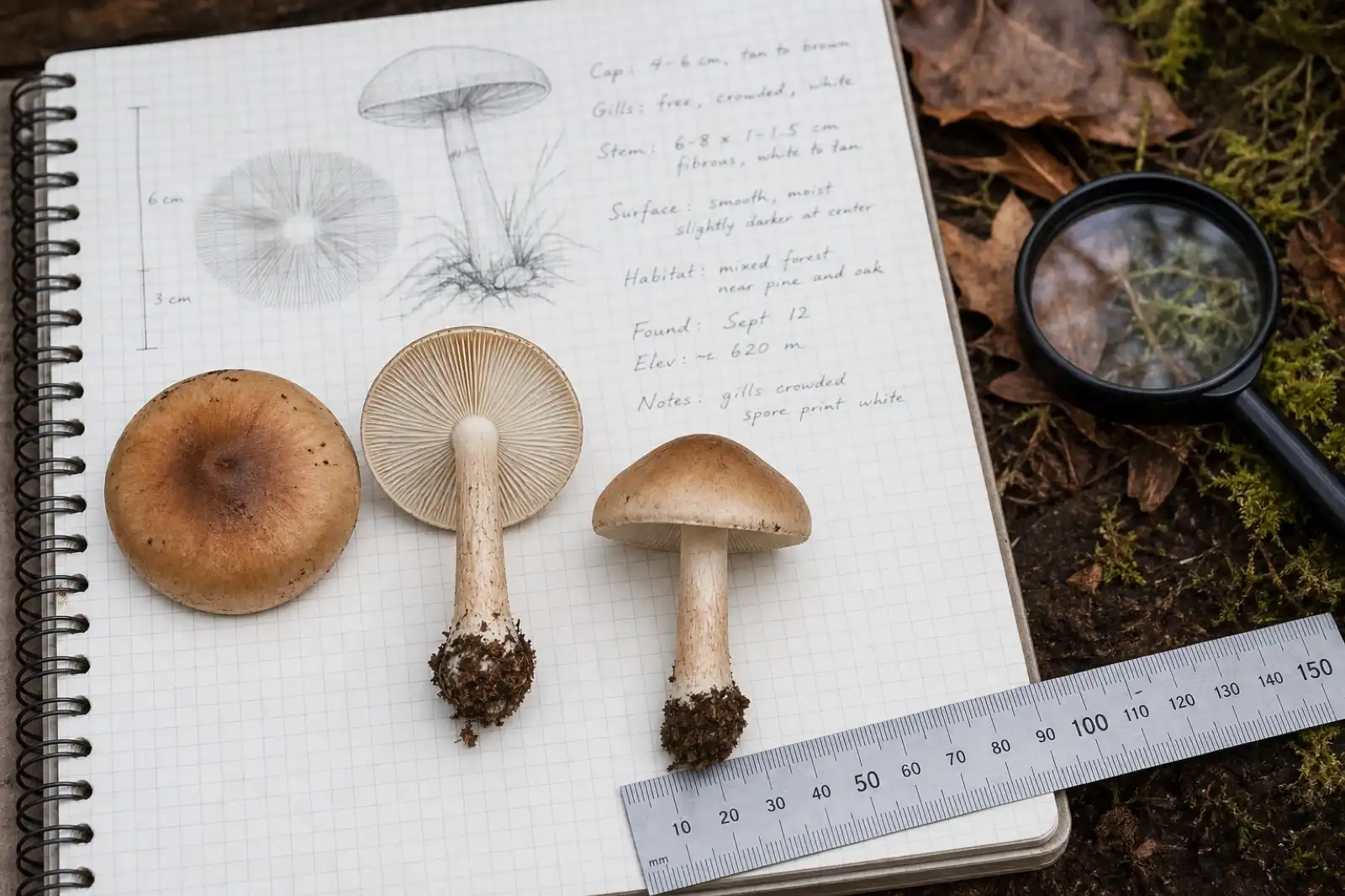
identification
How to Identify Mushrooms: A Beginner's Field Guide
Build an identification from the whole specimen, substrate, habitat, spore deposit, and location—not from a single photograph.
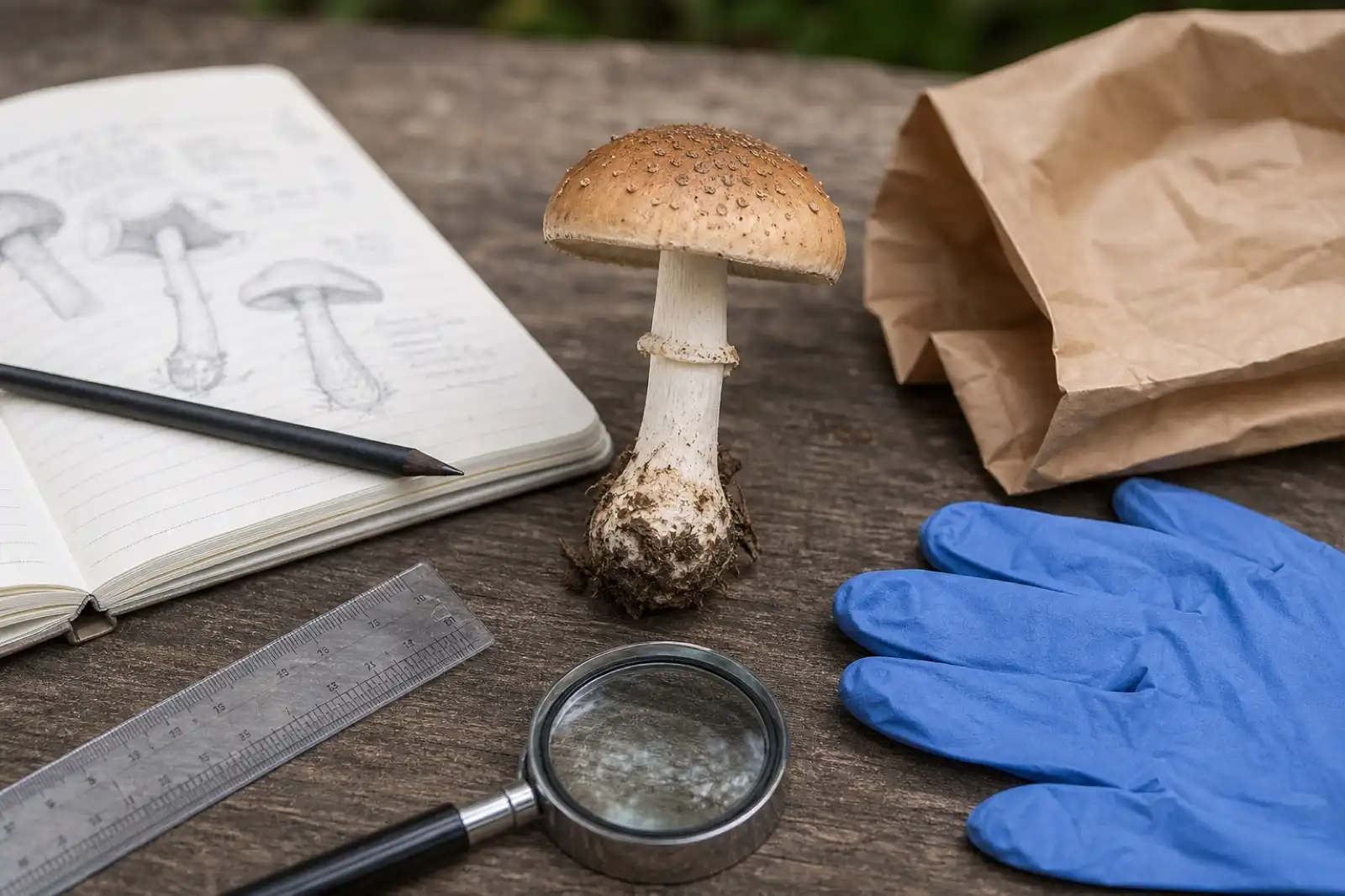
identification
Mushroom Identification Safety Checklist
Use a conservative checklist before handling, documenting, or discussing any wild mushroom, especially when edibility is being considered.
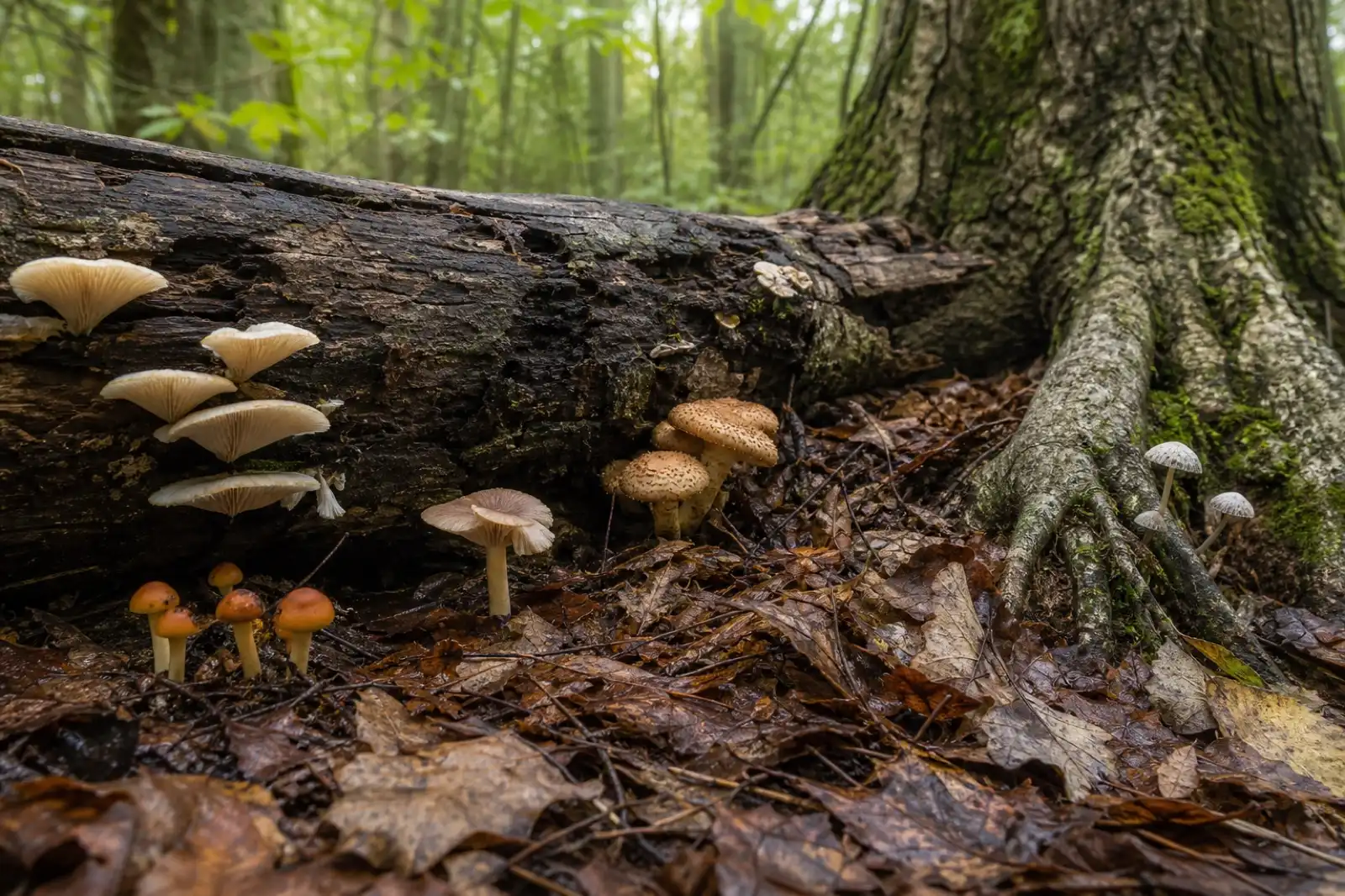
identification
Using Habitat to Identify Mushrooms
Record substrate, associated plants, soil, wood type, moisture, elevation, and fruiting pattern as identification evidence.
Continue exploring
Browse more practical guides in Mushroom Encyclopedia or visit the mushroom encyclopedia.