Mushroom Encyclopedia
Nameko Mushroom: Taxonomy, Cultivation, Texture, and Safety
Understand nameko taxonomy, glossy cap texture, East Asian hardwood ecology, controlled cultivation, cooking behavior, lookalikes, and food safety.
By MushroomScope Editorial Team · · Updated
Species context
Treat profiles as reference material
Species profiles summarize documented traits, taxonomy, and lookalikes, but natural variation can be substantial.
Use the safety checklist →Decision limit
A profile cannot authenticate a specimen
Do not eat a wild mushroom from an online match, single feature, or generated image.
Read the safety disclaimer →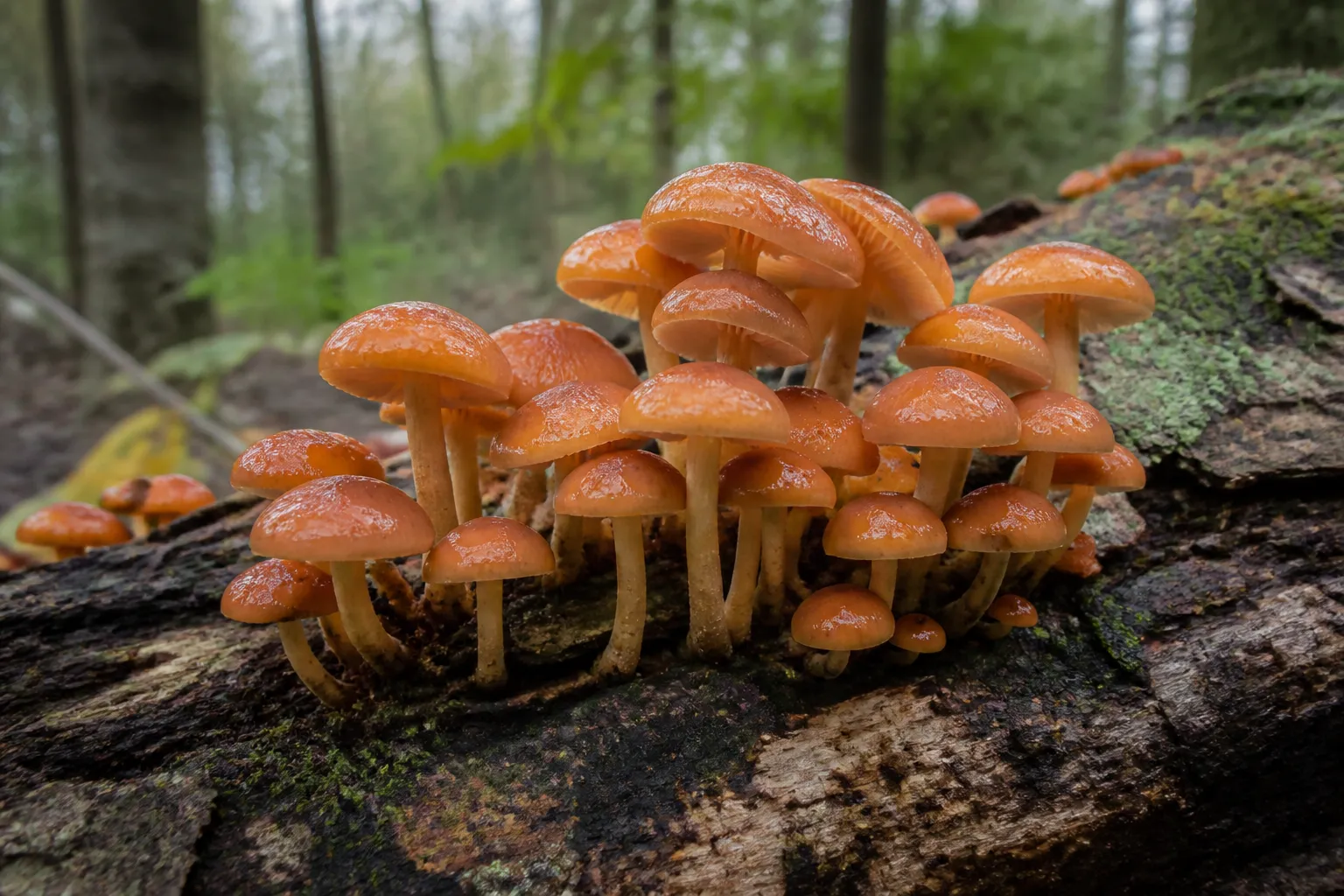
Quick facts
- Scientific name
- Pholiota microspora
- Common names
- Nameko
- Taxonomy
- Pholiota · Strophariaceae
- Edibility context
- Edible: This database label is context, not remote clearance of a wild specimen; identity, preparation, spoilage, contamination, and individual reaction matter.
- Spore print
- Rusty brown.
- Toxicity context
- None Known: Risk includes misidentification and individual reaction. Consult current local toxicology guidance before any food decision.
- Season
- September, October, November
- Growing difficulty
- Moderate
- Regions
- East Asia, cultivated worldwide
Safety limit: These labels summarize documented context; they never authenticate a wild specimen. Cooking does not make a poisonous species safe.
Identification overview
Small amber-brown caps with a conspicuously gelatinous surface, pale gills that brown, and clustered growth. Attached gills progress from pale yellowish to brown. Pale stem with a temporary veil zone; clustered from wood. Pale flesh beneath a slippery cap surface. Observe several ages because rain, drying, insects, and decomposition can alter color and texture. Photograph the undisturbed growth, upper surface, fertile surface, complete attachment, and a lengthwise section. A rusty brown. spore deposit is supporting evidence, never a species verdict.
Habitat and season
Cultivated on hardwood sawdust and naturally associated with hardwood. The documented range represented here includes East Asia and cultivated worldwide. Typical substrates or settings include hardwood sawdust and hardwood logs. Fruiting records commonly occur in September, October, November, but latitude, elevation, rainfall, and host condition shift the calendar.
Nameko records should connect each cluster to hardwood rather than merely noting trees in the background. Photograph the point where stems join a log, stump, buried root, or production substrate; retain bark, grain, and decay-stage evidence. In commerce, supplier identity and a lot label are stronger evidence than resemblance to a wild cluster. In the field, the Japanese cultivation name must not be projected onto every amber, viscid Pholiota found on wood.
Similar species
- Galerina marginata — potentially deadly and never ruled out by cap color alone.
- Other Pholiota species — many are scaly or bitter and require expert separation.
The important lookalike boundary is the broader set of brown-spored wood mushrooms. Record the cap before it dries, gill color through maturity, veil remnants, stem surface, spore deposit, host, and region. Galerina marginata is a high-consequence exclusion because it contains amatoxins; cap slime, color, or clustering cannot exclude it. Other Pholiota species can require microscopic or DNA evidence, so an uncertain wild collection stays out of food.
Food and safety context
Nameko has a documented food-use context when the organism is correctly identified and the material is fresh, clean, and cooked. That reputation does not transfer to a wild specimen identified online. Individual allergy, gastrointestinal intolerance, spoilage, environmental contamination, and cross-contamination remain possible. Cooking does not make a poisonous species safe.
For severe vomiting, persistent diarrhea, confusion, jaundice, breathing difficulty, or any symptoms after an unidentified wild mushroom, contact emergency services or a poison center promptly. Keep uncooked material, trimmings, photographs, and meal details for professional identification.
Cultivation context
Nameko production should begin with an authenticated strain and a supplier-compatible hardwood-sawdust method. Record culture lot, substrate formula, moisture, container, heat treatment, inoculation rate, incubation temperature, surface treatment, fruiting temperature, humidity, fresh air, and harvest timing. The gelatinous cap surface changes rapidly with humidity and refrigeration, so log its condition at harvest rather than diagnosing it later from a dried sample. Quarantine abnormal blocks instead of mixing them into a food lot.
Separate the market name from the scientific record
“Nameko” is a food and trade name, while Pholiota microspora is the current name used by NCBI for the organism treated here. Older cultivation papers and catalogs often use Pholiota nameko. NCBI lists that name as a heterotypic synonym, so a careful reader should search both names and preserve the name that each source actually used. This is more than clerical housekeeping: a package label, culture-bank accession, herbarium voucher, and DNA record can otherwise appear to describe different organisms when they are part of the same nomenclatural history.
That synonymy does not make every glossy brown Pholiota a nameko. A Korean study of the genus found that cap color, scales, slime, and brown spores were not sufficient to separate all species; the researchers combined morphology with ITS sequence evidence. For a wild record, retain a voucher where collection is lawful, photograph several ages, document the wood, and use a current regional key. A supermarket punnet from a traceable producer answers a food-provenance question, not the identity of a similar wild cluster.
Read the cap surface as a changing character
Fresh nameko caps are notable for a gelatinous surface that gives the cultivated mushroom its slippery feel. The character changes with humidity, handling, refrigeration, and age. A wet cap can look brilliantly lacquered; a dried or chilled cap may look merely smooth. Young caps are convex and compact, while expanding caps expose more of the attached gills. The gills darken as brown spores mature, and remnants of a temporary veil may persist around the upper stem.
Record those characters as a sequence instead of a checklist detached from time. Photograph an untouched cluster, then one cap from above, the gill attachment, the full stem base, and a lengthwise section. Note whether the surface was naturally moist before handling. A rusty-brown deposit supports placement among brown-spored agarics but does not rule out dangerous wood-growing genera. The nameko cover on this page is an original AI editorial image; it illustrates growth form and habitat context, not a specimen or diagnostic standard.
Use wood, region, and provenance together
The cultivation and population literature describes P. microspora as a white-rot fungus of dead or decaying trees in cool-temperate deciduous forests of East Asia, with wild material represented from areas extending from the Himalayas and China to Japan. Commercial cultivation has carried authenticated strains far beyond that native ecological context. A fruiting block in North America therefore cannot be used as evidence that a nearby wild brown mushroom belongs to the same species.
For a field observation, record whether the wood is standing or fallen, visibly dead or still attached to a living tree, and identifiable as hardwood. Photograph bark, exposed wood, and nearby leaves without claiming a host from proximity alone. For cultivated material, record the supplier, culture or strain designation, substrate recipe, inoculation date, and lot. These two evidence paths should remain separate: landscape ecology supports a wild identification, while chain of custody supports a cultivated crop.
How sawdust cultivation changes the practical questions
Hirao and colleagues compared 50 cultivars with 73 wild strains from Japan and found substantially lower genetic diversity among the sawdust-cultivated material they sampled. Their result supports a severe founder bottleneck in that commercial population; it does not show that every nameko strain worldwide is genetically identical. For growers, the useful lesson is to record the exact culture rather than assuming that a species name predicts colonization speed, yield, cap color, or fruiting response.
A controlled nameko project begins with authenticated spawn and a documented supplier method. Hardwood sawdust is the established commercial base described in the population study, but moisture, supplementation, container geometry, heat treatment, inoculation rate, incubation temperature, and fruiting conditions form one system. Copying a single temperature from an unrelated strain can be less reproducible than following the complete instructions supplied with the culture. The broader mushroom substrate guide explains why water availability and particle structure must be considered together.
Keep a batch sheet with dry substrate weights, added water, treatment time, inoculation lot, dates, observations, and harvest mass. Compare only batches that differ in one planned variable. Unexpected green, black, pink, or orange growth; sour or putrid odor; unplanned insects; or fruit bodies that do not match the supplied culture are stop signals. Seal and remove a suspect unit instead of opening it over healthy blocks, and use the contamination guide to document rather than rationalize abnormalities.
Harvest for cap condition, not maximum size
Nameko’s viscous cap is part of its culinary identity, so quality decisions differ from those for a dry-capped mushroom. Harvest clusters while caps are sound and stems are still tender rather than waiting for every cap to flatten. Use clean tools, avoid soaking the block, cool the crop promptly, and keep it in breathable food-safe packaging. Condensation trapped around damaged mushrooms accelerates quality loss; dryness, however, also changes the surface that cooks value.
Never treat slime alone as proof of spoilage, because a naturally gelatinous surface is expected. Instead assess provenance, elapsed storage time, odor, tissue integrity, discoloration, and package condition together. Discard mushrooms with unexplained foul odor, leaking decay, extensive tissue collapse, or a recall connection. If a retailer supplies handling instructions, those take precedence over generic storage advice.
Cook nameko by managing its soluble coating
Nameko is commonly valued in soups and other moist dishes because the cap coating can thicken the surrounding liquid and create a silky texture. That behavior is not the same as raw spoilage slime. Rinsing briefly removes debris while preserving more of the surface character; prolonged soaking can dilute flavor and waterlog the cluster. Separate tightly joined stems so grit at the base can be removed, then cook the mushrooms thoroughly in a clean pan or simmering broth.
For soup, add nameko when the broth is ready and simmer until the caps and stems are tender; vigorous reduction concentrates the liquid, so season after observing the final thickness. For a drier sauté, use a broad hot pan in small batches. Surface water must evaporate before browning can occur, and crowding turns the method into steaming. A small amount of oil can carry aroma, but very high heat may scorch sugars before the cap coating releases cleanly.
Nameko should not be substituted mechanically for every mushroom in a recipe. Its compact size and slippery texture work differently from the broad, meaty caps described in the shiitake species guide. Use the intended texture as the decision: broth and glossy sauces benefit from the coating, while a crisp preparation needs more drainage, surface area, and heat management.
Define the lookalike safety boundary
The highest-consequence comparison is not a convenient visual twin but any brown-spored wood-growing mushroom that could be mistaken for nameko by an inexperienced collector. Galerina marginata contains amatoxins and cannot be excluded by cap color, clustering, or a photograph. Other Pholiota species also overlap in brown color, scales, wood habitat, and spore deposit. Regional species sets differ, and diagnostic microscopy or DNA may be required.
Do not taste a wild specimen, and do not use the existence of cultivated edible nameko as evidence that a wild cluster is edible. Apply the site’s identification safety checklist, retain complete specimens, and obtain in-person assessment from a qualified local identifier. If anyone develops symptoms after eating a wild mushroom, contact emergency services or the relevant poison center promptly and retain uncooked material, photographs, and meal details.
Evidence limits and editorial status
This page was reviewed editorially against the cited taxonomy, cultivation, taxonomic-study, poison-response, and food-handling sources. It has not been reviewed by a named mycologist, clinician, or food-safety professional. The cultivation paper supports claims about the sampled Japanese populations and production history; it does not establish universal strain performance. Laboratory or compositional research on nameko should not be converted into prevention or treatment claims.
Corrections are logged through substantive updates to the page. Readers who find a nomenclatural change, inaccessible source, or unsafe ambiguity should provide the exact passage and a primary or professional reference. The editorial team will preserve the original publication date and change the update date only when the evidence, structure, or practical value is materially revised.
How to document a find
- Photograph the untouched cluster and its precise hardwood or cultivation-substrate attachment.
- Record whether the cap was naturally wet, tacky, or drying before handling, then photograph young and expanded caps.
- Document gill maturation, veil remnants, complete stems, and a measured rusty-brown spore deposit when appropriate.
- Preserve cultivated package, supplier, culture, and lot information separately from any wild comparison.
- Do not taste or clone a wild brown-spored wood mushroom while its identity remains unresolved.
References
- Global Biodiversity Information Facility. Pholiota microspora species record. Taxonomic backbone and occurrence context.
- National Center for Biotechnology Information. Taxonomy Browser: Pholiota microspora. Current-name, synonym, lineage, and nomenclature checkpoint.
- Hirao AS, et al. Japanese nameko mushrooms produced via sawdust cultivation exhibit a severe genetic bottleneck. Mycoscience. 2022;63(3):79–87. Cultivation history, population sampling, and wild-versus-cultivated diversity evidence.
- Lee H, et al. Taxonomic study of the genus Pholiota in Korea. Mycobiology. 2020. Morphological overlap and ITS-supported separation context.
- North American Mycological Association. Mushroom Poisoning Syndromes. Poisoning response and syndrome context.
- U.S. Food and Drug Administration. Selecting and Serving Produce Safely. General handling guidance for mushrooms used as food.
Editorial review: August 30, 2026. No named expert review was performed. Taxonomy, regional range, and poison-response contacts should be rechecked at every substantive update.
Source quality notes
MushroomScope cites sources that match the page scope, such as taxonomic databases, extension guidance, food-safety agencies, food-composition databases, and peer-reviewed or institutional health references. Sources support context and uncertainty; they do not turn an online page into specimen identification, medical advice, or a tested recipe record.
Frequently asked questions
Can Nameko be identified from one photograph?
No. Identification requires the complete specimen, fertile surface, attachment, substrate, habitat, region, developmental stage, and sometimes microscopy or DNA.
Is wild Nameko safe to eat?
This page cannot clear a wild specimen for food. Obtain in-person confirmation from a qualified local identifier and follow local guidance; cooking cannot make a poisonous lookalike safe.
Where does Nameko grow?
Cultivated on hardwood sawdust and naturally associated with hardwood. Regional records and host associations should be checked before applying this summary to a local collection.
What is the spore print of Nameko?
The expected deposit is rusty to cinnamon brown, but print color overlaps among wood-growing brown-spored fungi and cannot confirm the species by itself.
Can Nameko be cultivated at home?
Yes, with authenticated commercial culture and a supplier-specific hardwood-sawdust or log method. Do not clone unidentified wild material for food production.
Related guides
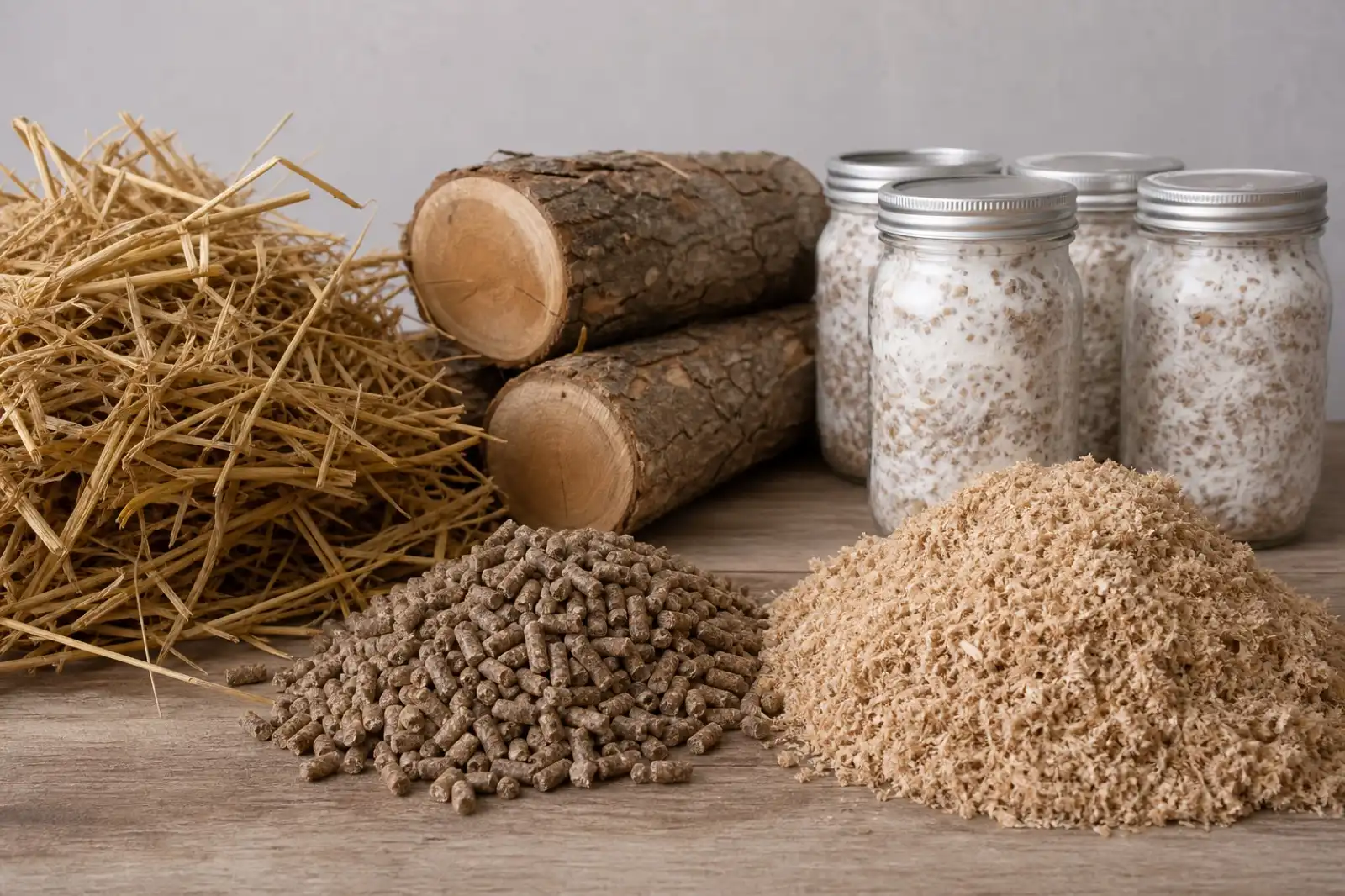
growing
Mushroom Substrate Guide: Match Species to Method
Choose a mushroom-growing substrate by matching a labeled culture to a documented production method, site, and food-safety boundary.
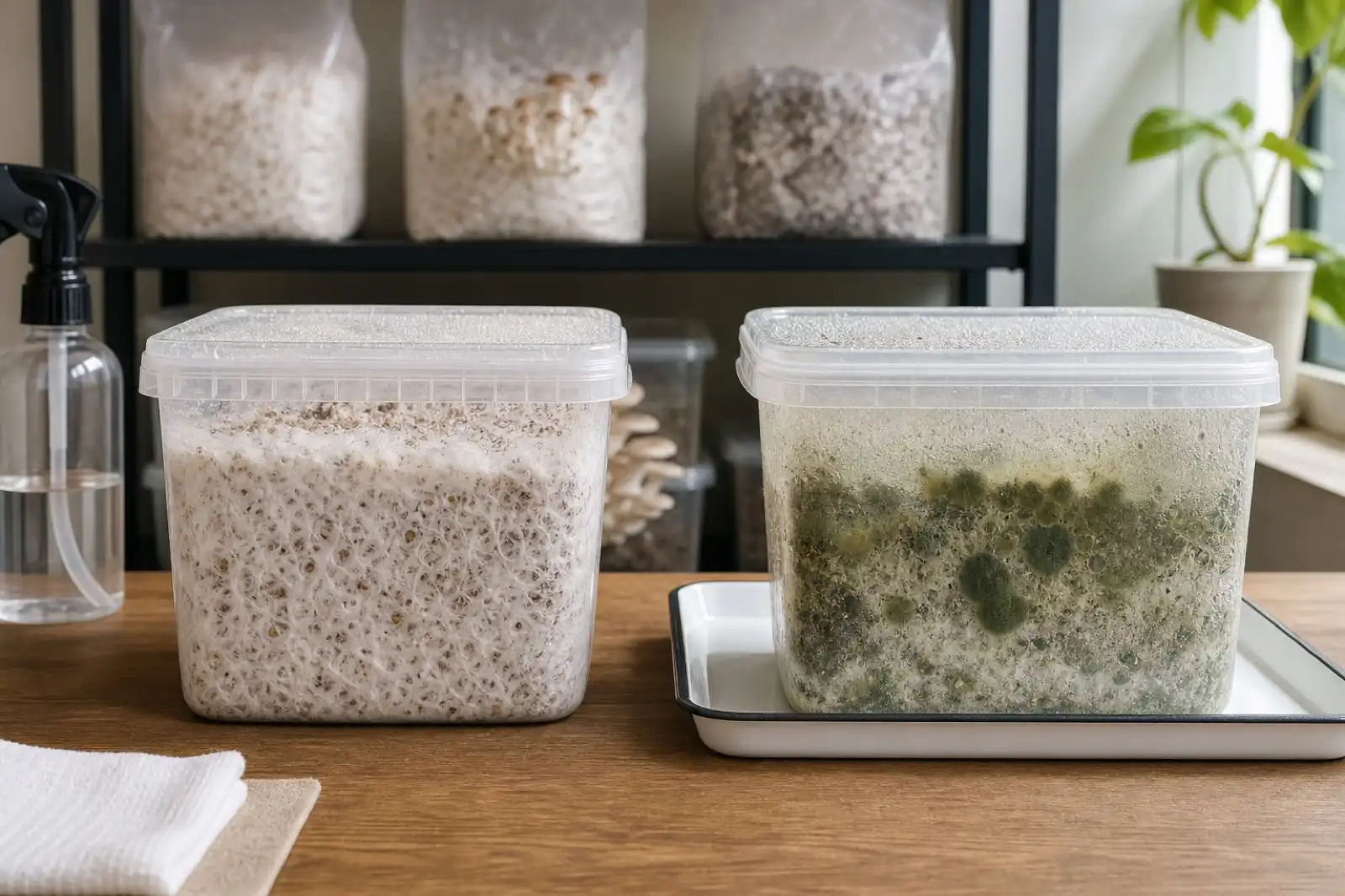
growing
Mushroom Contamination: Isolate, Record, and Prevent Repeat Problems
Recognize mushroom contamination without relying on color alone; isolate suspect batches, avoid food salvage, document the workflow, and prevent repeat issues.
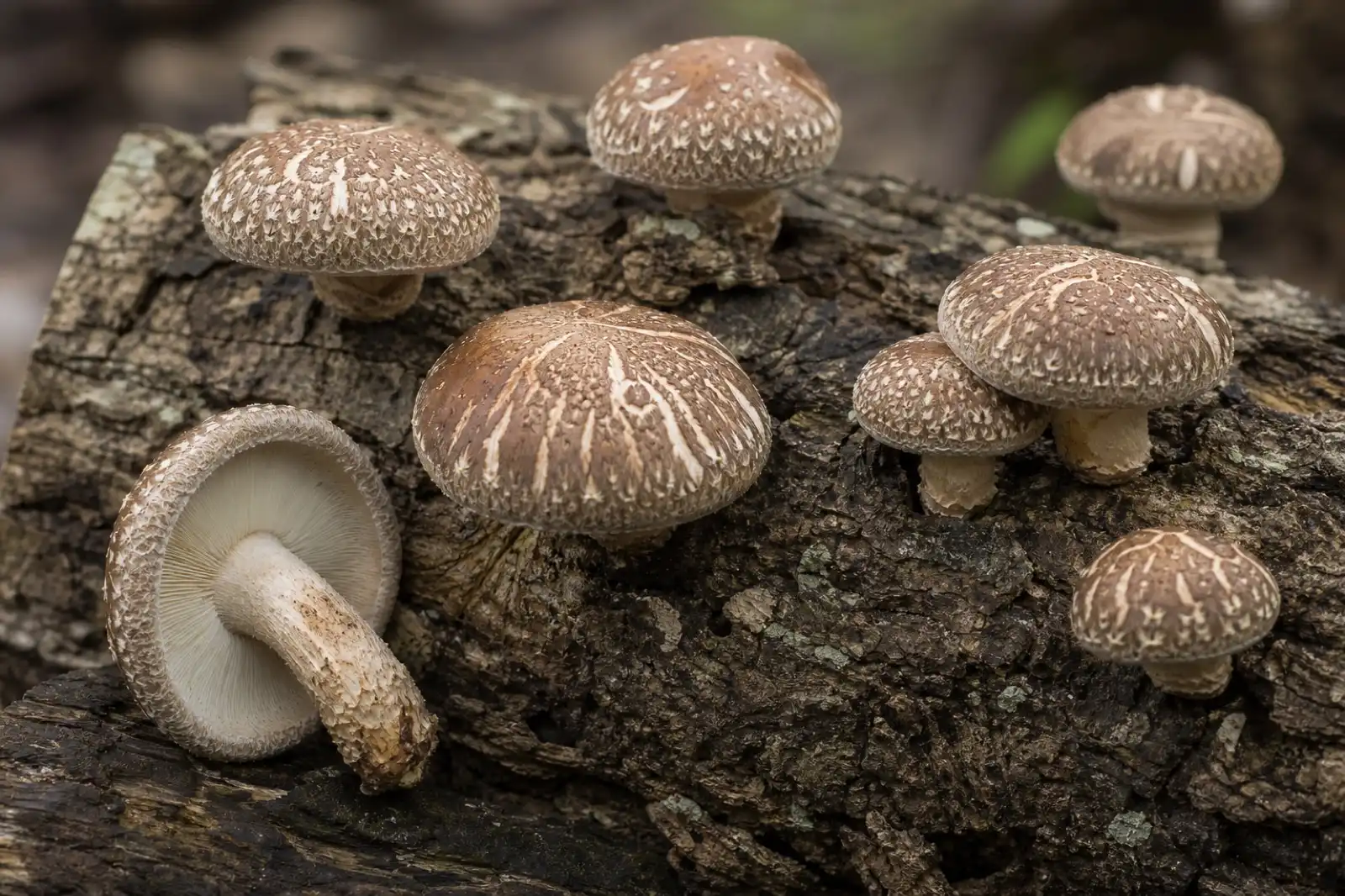
mushrooms
Lentinula edodes: Shiitake Mushroom Identification and Cultivation
An evidence-aware guide to shiitake identification, hardwood cultivation, nutrition, dermatitis risk, safe cooking, classification, and FAQs.
Continue exploring
Browse more practical guides in Mushroom Encyclopedia or visit the mushroom encyclopedia.