Mushroom Encyclopedia
Orange Birch Bolete: Leccinum versipelle Field Guide
Document orange birch bolete by its orange cap, pale pores, dark stem scabers, birch partnership, staining sequence, lookalikes, and regional taxonomy.
Species context
Treat profiles as reference material
Species profiles summarize documented traits, taxonomy, and lookalikes, but natural variation can be substantial.
Use the safety checklist →Decision limit
A profile cannot authenticate a specimen
Do not eat a wild mushroom from an online match, single feature, or generated image.
Read the safety disclaimer →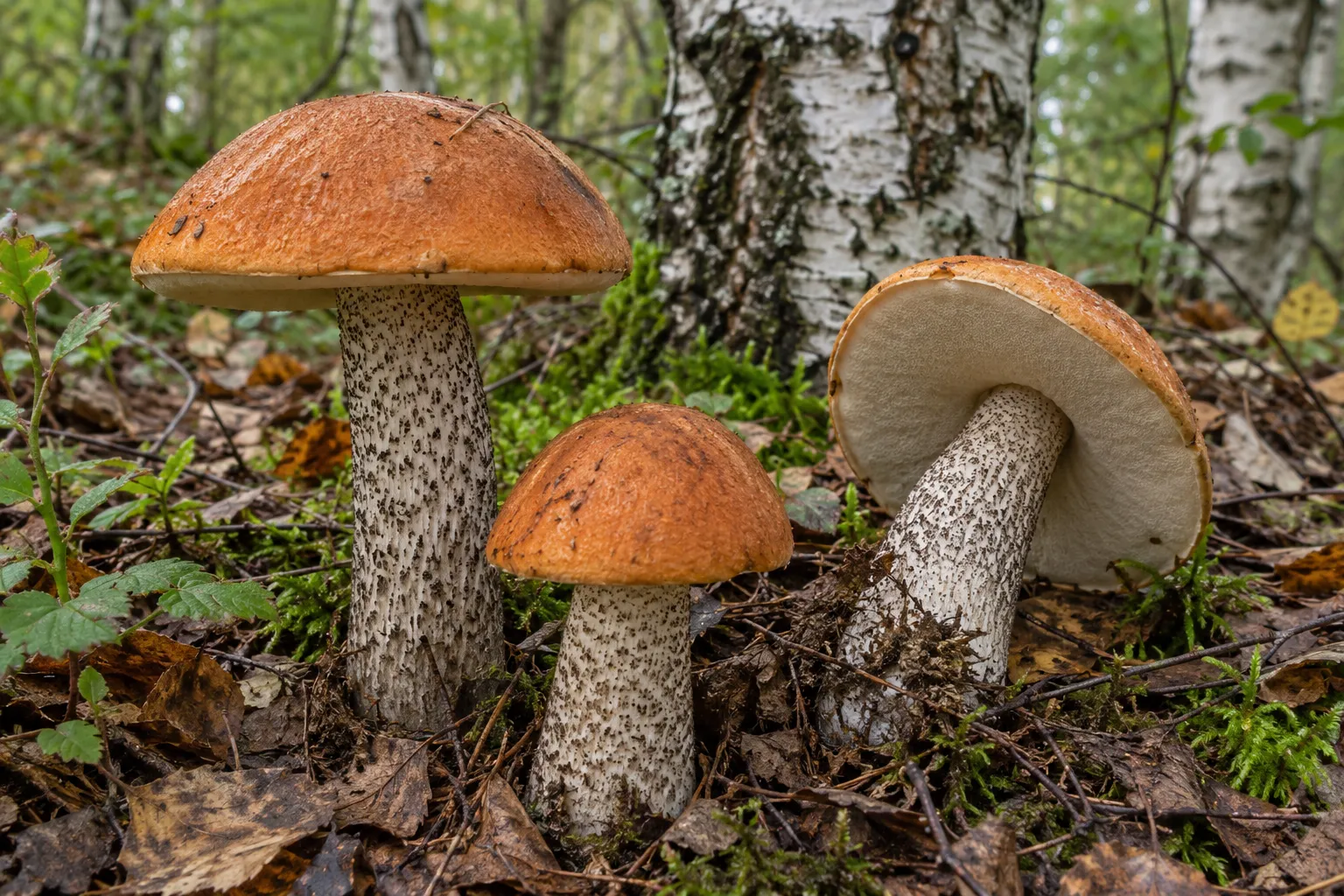
Quick facts
- Scientific name
- Leccinum versipelle
- Common names
- Orange birch bolete, Orange-cap birch bolete
- Taxonomy
- Leccinum · Boletaceae
- Edibility context
- Conditional: Do not infer food safety from the genus or common name; identification, local guidance, condition, cooking, and individual tolerance all require separate review.
- Spore print
- Olive-brown to brown.
- Toxicity context
- Moderate: Illness has been reported from Leccinum-group meals; uncertain, raw, undercooked, old, or poorly documented material should not be eaten.
- Season
- July, August, September, October
- Growing difficulty
- Expert
- Regions
- Europe and northern Eurasia under the traditional concept, birch regions requiring current local keys, boreal and temperate habitats
Safety limit: These labels summarize documented context; they never authenticate a wild specimen. Cooking does not make a poisonous species safe.
Orange birch bolete is a host-linked identification problem, not simply an orange cap. The useful field concept combines a pore surface, a stem covered in discrete rough scabers, living birch roots, and a carefully timed section reaction. Several orange-capped Leccinum taxa overlap in appearance, and names used in European literature cannot automatically be transferred to another continent or host setting.
This guide uses Leccinum versipelle for a traditional northern Eurasian concept. It does not approve a wild bolete for food. The cover is an original AI editorial image and cannot replace real underside, stem, base, host, and section evidence.
Confirm pores before reading cap color
Photograph the underside square-on before handling. A bolete has a sponge-like tube layer ending in pores, not blade-like gills. Record pore color, pore density over a measured five-millimeter span, tube depth at the cap center and margin, and any bruising after light pressure. Pale young pores may become grayer or buff with age, while dirt and shadow can change their apparent color.
Measure cap width and profile. Note whether the surface is dry, finely textured, sticky after rain, cracked, faded, or damaged by slugs. Photograph the margin from the side to show whether cap skin projects beyond the tube layer. Orange, ochre, and brick tones are supporting observations, not final characters; camera white balance and wet surfaces can shift them substantially.
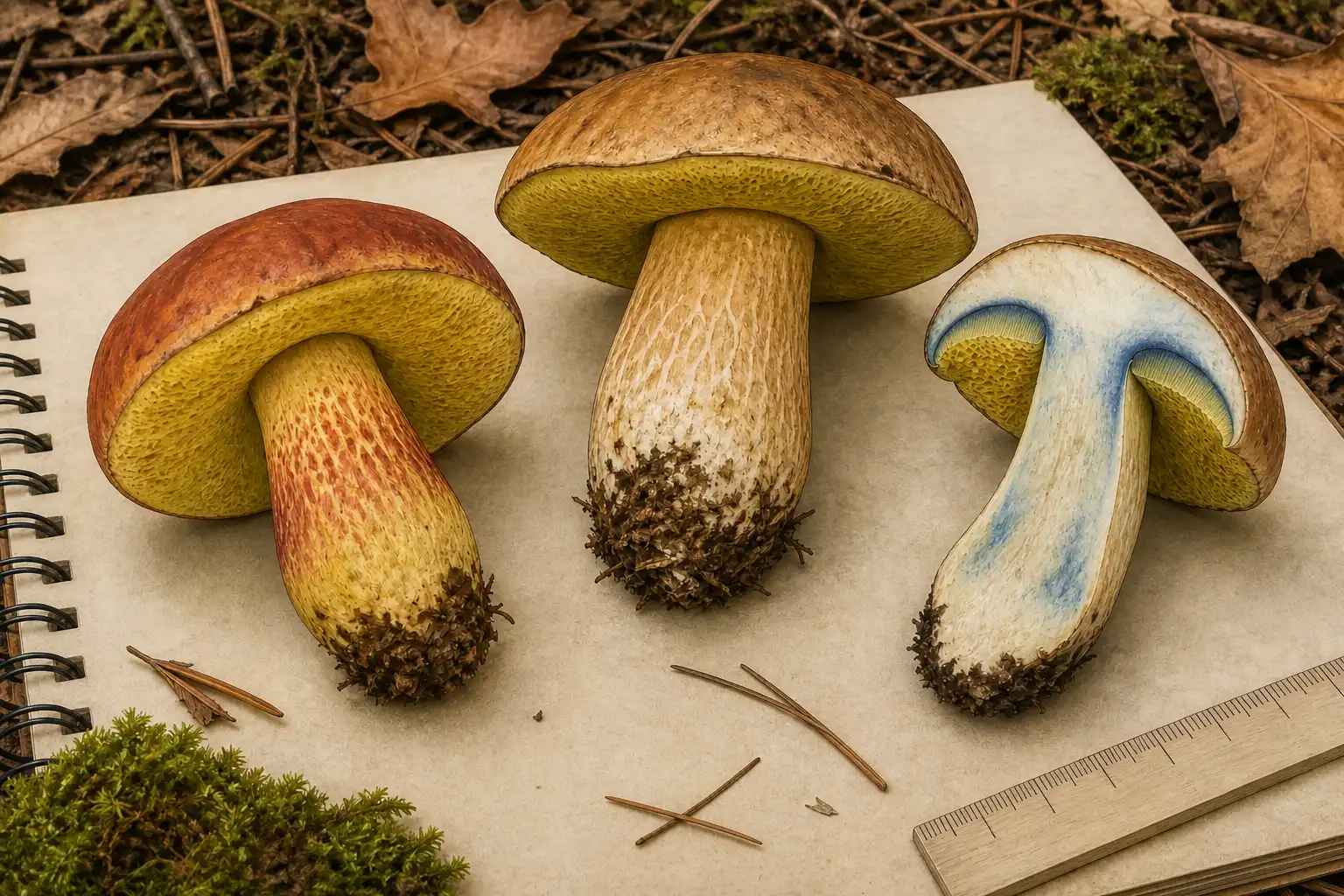
The bolete identification guide provides a workflow for separating pores, reticulation, scabers, staining, and host evidence. Use it before applying any common name.
Distinguish scabers from a stem net
Scabers are discrete rough projections on the stem surface. Photograph them with side lighting and a scale at the upper, middle, and lower stem. Record their density, color, length, and whether they become darker toward the base or with maturity. Do not scrub the stem before documentation; cleaning can remove surface structure.
A reticulate stem carries intersecting raised ridges that form a net. Dirt streaks, insect tracks, and elongated scabers can imitate part of that pattern in a flat photograph, so inspect the surface from several angles. Also record whether a ring, ring zone, or volva is absent. Those absences help define the evidence set but do not name the mushroom alone.
Excavate the complete base where collection is lawful. Measure the stem at the apex, middle, and base, then cut it lengthwise with the cap. Keep every view tied to one specimen number.
Run a timed cap-to-base staining series
Make a clean longitudinal section and photograph it immediately in neutral light. Mark four zones: cap flesh, tube layer, upper stem, and stem base. Photograph the same surface at two, five, fifteen, and thirty minutes. Describe each zone independently rather than collapsing gray, pink, violet, blue, or black changes into “bruising.”
Use an uncut specimen from the same fruiting as a control. Old tunnels, oxidized knife residue, pressure injury, waterlogging, and previous cuts can create misleading color. If no reaction occurs, record the temperature, age, moisture condition, and observation duration; “no change in thirty minutes” is stronger than “does not stain.”
Staining supports a comparison only when a current key defines the tissue and timing. It is not an edibility test. Some toxic boletes stain, some do not, and reactions within Leccinum can be complex.
Prove the birch association instead of assuming it
Orange birch bolete is ectomycorrhizal, exchanging resources with living birch roots. Photograph surrounding trunks, bark, leaves, and the fruit body’s distance from plausible hosts. Roots extend beyond the canopy and across paths, so the nearest visible tree is not automatically the partner.
Survey a small radius for other trees. Aspen, oak, pine, spruce, and planted ornamentals may change the candidate set. Record mixed woodland honestly, and use “birch present within root range” when the partner cannot be isolated. The habitat guide shows how to preserve host uncertainty without discarding useful context.
Fruiting from soil distinguishes this ecology from boletes apparently attached to buried wood, but leaf litter can hide both root and substrate evidence. Do not damage living roots to demonstrate an invisible mycorrhizal connection.
Keep regional orange-cap species separate
Orange-capped scaber-stalks have a history of broad names, split concepts, and regional substitutions. Begin with the region and a current local key. Compare birch, aspen, oak, and conifer associations; cap-margin overhang; scaber color and development; pore bruising; section reactions; and spore measurements. Where those data conflict, a group-level label is more defensible than forcing L. versipelle.
Cap color has especially weak resolution. Sun exposure, age, rain, frost, and image processing can move one fruit body across several color descriptions. Host also needs corroboration because mixed stands place multiple root systems under the same patch of soil.
For difficult records, retain a lawful dried voucher. Molecular results are most useful when linked to complete photographs, habitat, microscopy, and an interpretable reference sequence; a percentage match without curation does not resolve a changing species complex.
Make microscopy specimen-specific
Obtain an olive-brown to brown deposit from a mature, firm cap over dark and light nonabsorbent surfaces. Protect it from drafts and label it with the same number used for the habitat and section series. A deposit supports bolete placement but overlaps widely.
Measure spores using the medium and structures required by the selected key. Record length, width, shape, sample size, calibration, and whether measurements came from a deposit or tube mount. Cap cuticle structure and tissues associated with scabers may be relevant in specialist treatments. Retain scale-bar images and avoid mixing measurements from separate fruit bodies.
If the specimen is too old, moldy, or larva-damaged for interpretable microscopy, say so. Apparent precision from degraded tissue adds less value than a clear limitation.
Treat food use as a separate evidence chain
Regional traditions discuss several Leccinum species as food, but that reputation is not transferable to an unidentified orange bolete. Reports of gastrointestinal or more serious illness in the broader group, difficult species boundaries, undercooking, old material, and individual sensitivity support a conservative approach.
Do not eat raw or merely warmed wild boletes. Do not combine uncertain species in one meal, and do not treat removal of a dark-staining portion as detoxification. Even after qualified local identification and local advice, reject old, waterlogged, moldy, insect-riddled, roadside, or contaminated-site material. A small first portion does not correct a wrong identification; it only limits exposure after every earlier gate has passed.
If illness follows a mushroom meal, preserve uncooked pieces, leftovers, photographs, location, preparation method, amount, timing, and symptom history. Contact local poison-control or medical services promptly. The identification safety checklist separates identity, condition, preparation, contamination, and personal risk.
Build a reviewable orange birch bolete record
Use one row per specimen:
- Date, region, coordinates at an appropriate privacy level, weather, elevation, and fruiting pattern.
- Cap dimensions, profile, color under neutral light, surface condition, and margin overhang.
- Pore color and density, tube depth, touch-bruising result, and clean spore-deposit result.
- Stem dimensions plus scaber color, density, distribution, and close photographs at three heights.
- Full timed section sequence for cap, tubes, upper stem, and base.
- Birch evidence, competing trees, current regional key, microscopy, alternatives, voucher, and confidence.
Keep observation separate from interpretation. “Dark projections 0.5–1.5 mm long over a pale stem; birch and aspen both within ten meters” is reviewable. “Typical orange birch bolete” is a conclusion that conceals uncertainty. A disciplined record remains useful even if a specialist later changes the species name.
Revisit the patch across weather and age
A repeat visit can show whether cap color fades, pores gray, scabers darken, and section reactions change with maturity. Photograph from the same compass direction, use the same scale, and note rain, frost, heat, and soil moisture. Do not mark living trees or disturb the root zone merely to relocate a fruiting.
Compare at least one young, one expanded, and one naturally aging specimen when the population can support observation. Leave enough fruit bodies to mature and release spores. A developmental series prevents the youngest pale pores and the oldest gray tissues from being misread as separate species, while also showing which characters remain stable.
Occurrence photographs should retain original files and metadata. Heavy color grading can exaggerate orange caps or obscure subtle tissue changes. Generated images, including this page’s cover, are useful editorial context only; they are not occurrence evidence.
Separate weather damage from diagnostic surface change
After heavy rain, caps may look darker, smoother, and more saturated while scabers collect water and soil. After dry wind, the same cap can fade or crack and the tube layer may shrink away from the margin. Record these conditions before treating texture or color as stable taxonomy. Compare sheltered and exposed specimens within the same fruiting, but keep their measurements separate.
Insect entry also changes the evidence. Larvae can hollow the stem, introduce brown tracks, and accelerate discoloration that does not match a clean section. Mark damaged zones on photographs and make the timed cut through intact tissue. When no intact tissue remains, condition limits the record and the specimen should not enter a food decision.
References
- GBIF. Leccinum versipelle species record. Name and occurrence context; individual mapped records require verification.
- NCBI. Taxonomy Browser: Leccinum versipelle. Taxonomic and linked sequence context.
- Index Fungorum. Fungal name database. Nomenclatural checkpoint for current literature searches.
- North American Mycological Association. Mushroom poisoning syndromes. Conservative exposure-response context.
- U.S. Food and Drug Administration. Selecting and serving produce safely. General handling boundaries after identification.
Editorial review: October 16, 2026. This page has no named expert or clinical reviewer; check regional taxonomy and food or exposure decisions with qualified local professionals.
Source quality notes
MushroomScope cites sources that match the page scope, such as taxonomic databases, extension guidance, food-safety agencies, food-composition databases, and peer-reviewed or institutional health references. Sources support context and uncertainty; they do not turn an online page into specimen identification, medical advice, or a tested recipe record.
Frequently asked questions
What identifies an orange birch bolete?
The working combination is an orange to brick-orange cap, pale pores rather than gills, a whitish stem densely marked with dark rough scabers, a birch root association, and a documented staining pattern. Regional keys and microscopy may still be needed.
Does every orange bolete under birch belong to Leccinum versipelle?
No. Several orange-capped Leccinum concepts overlap in color, host, and staining. Geography, cap overhang, scaber development, section reactions, spores, and current regional literature matter.
What are scabers on a bolete stem?
Scabers are small, rough, projecting dots or scales on the stem surface. Record their color, density, arrangement, and change with age; they are not the netlike reticulation seen in some other boletes.
Can this guide confirm an orange birch bolete is edible?
No. A webpage or photograph cannot clear a wild bolete for food. Leccinum identifications can be difficult, reports of illness exist in the broader group, and condition, cooking, contamination, and individual tolerance remain separate issues.
Why should staining be timed?
Freshly cut flesh can change through several colors at different rates. A sequence photographed immediately and at fixed intervals is more useful than a final note that the mushroom simply turned dark.
Related guides
identification
Bolete Identification: Pores, Staining, and Lookalikes
Learn how to document a bolete's pores, flesh staining, stem, habitat, and lookalikes without treating any one feature as an edibility test.
identification
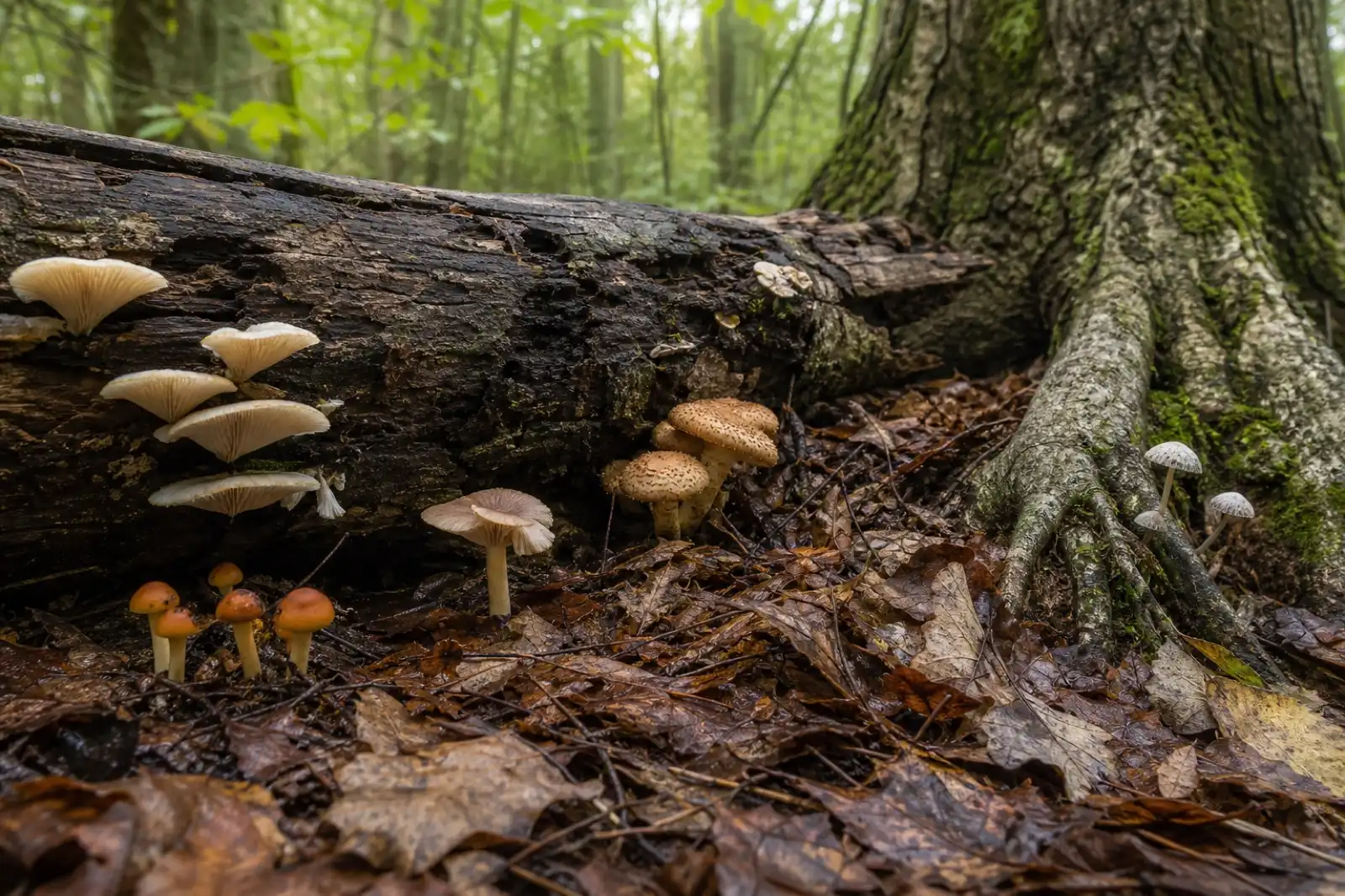
Using Habitat to Identify Mushrooms
Record substrate, associated plants, soil, wood type, moisture, elevation, and fruiting pattern as identification evidence.
mushrooms
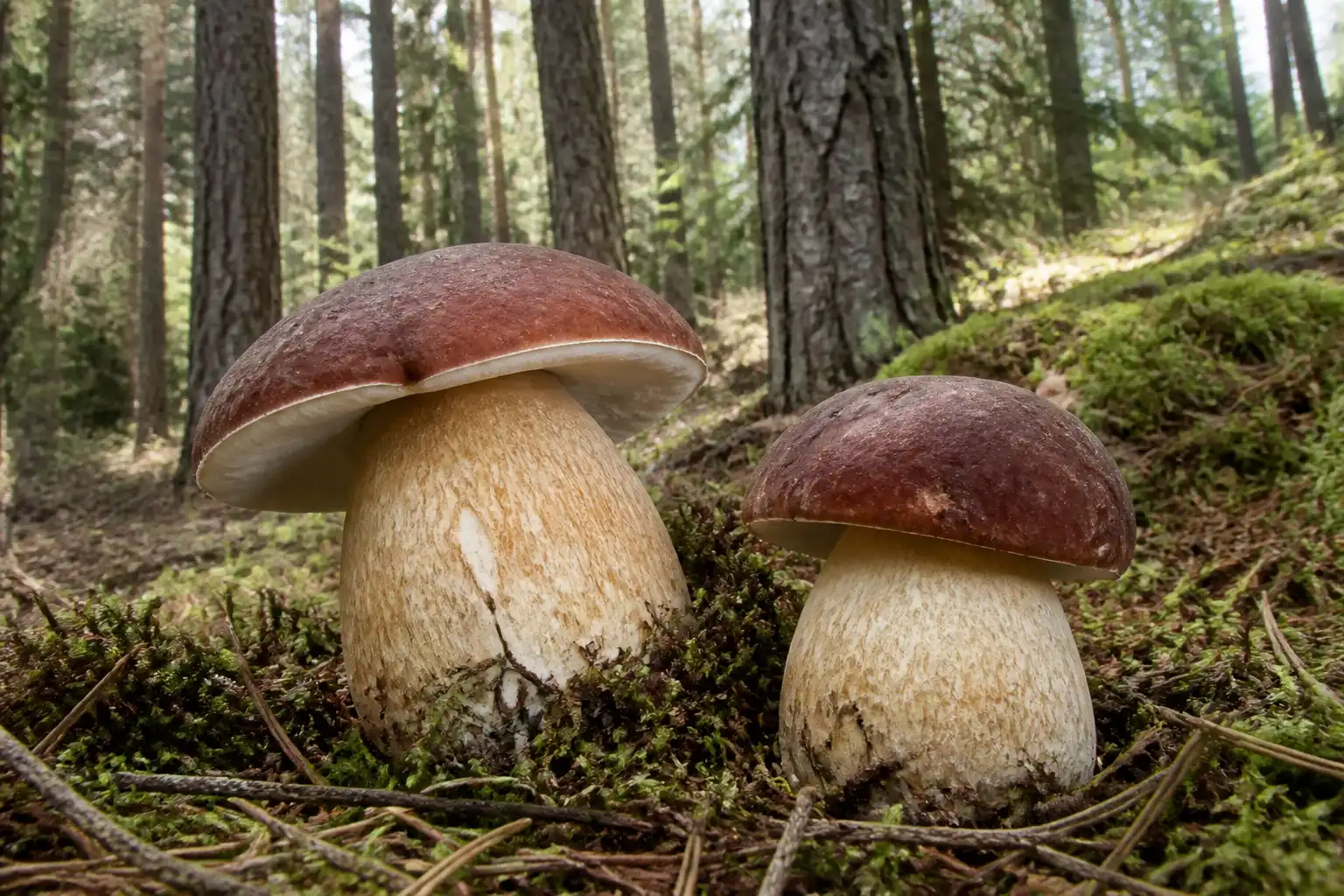
Pine Bolete: Red-Brown Cap, Pine Ecology, and Lookalikes
Document pine bolete caps, pores, stem reticulation, pine-associated ecology, regional lookalikes, food-safety limits, and why cultivation is difficult.
Continue exploring
Browse more practical guides in Mushroom Encyclopedia or visit the mushroom encyclopedia.