Mushroom Encyclopedia
Pioppino Mushroom Guide: Taxonomy, Cultivation, and Cooking
A sourced Pioppino guide covering Cyclocybe aegerita taxonomy, wood-decay ecology, cultivated form, food safety, cooking, and lookalike limits.
By MushroomScope Editorial Team · · Updated
Species context
Treat profiles as reference material
Species profiles summarize documented traits, taxonomy, and lookalikes, but natural variation can be substantial.
Use the safety checklist →Decision limit
A profile cannot authenticate a specimen
Do not eat a wild mushroom from an online match, single feature, or generated image.
Read the safety disclaimer →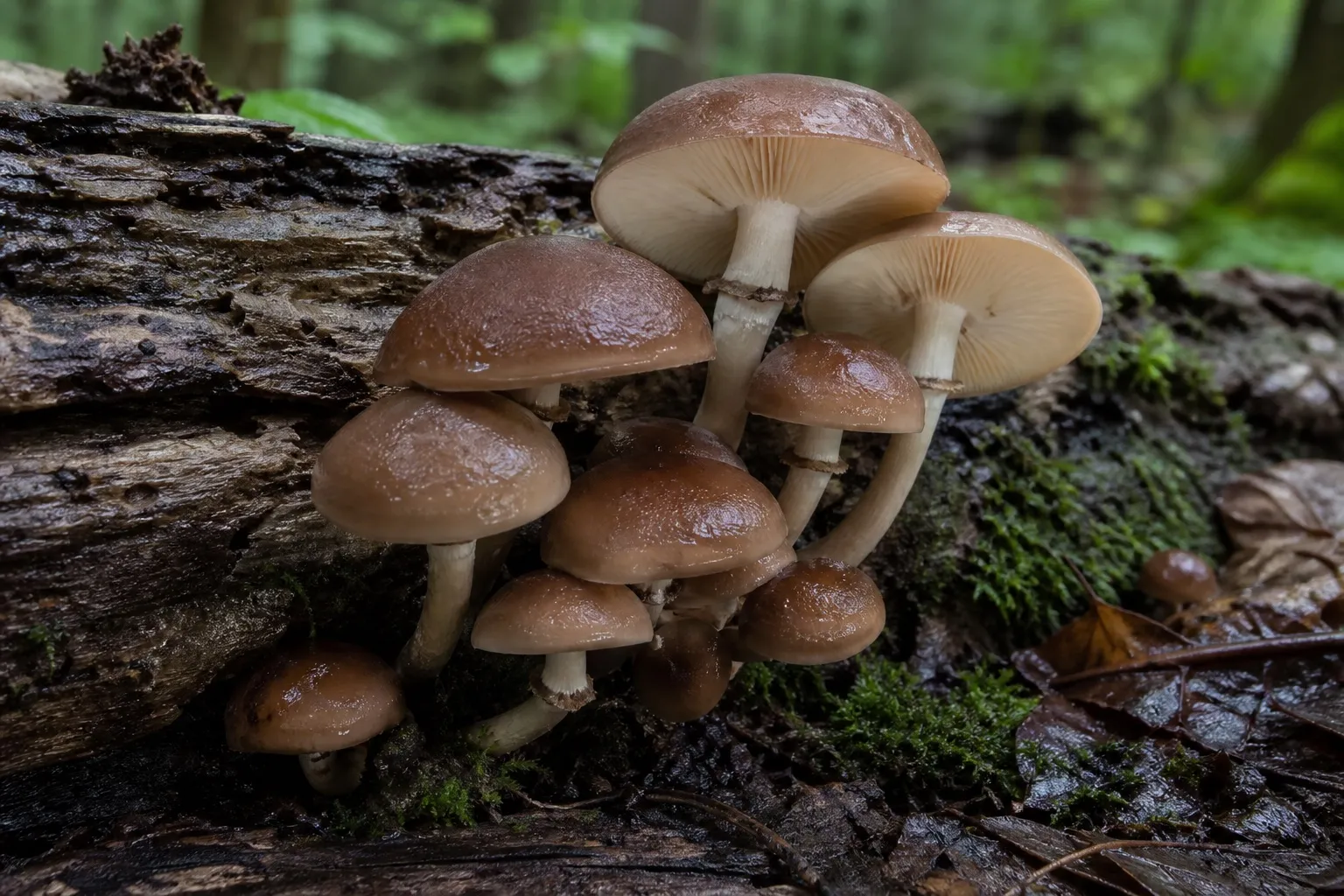
Quick facts
- Scientific name
- Cyclocybe aegerita
- Common names
- Pioppino
- Taxonomy
- Cyclocybe · Tubariaceae
- Edibility context
- Edible: This database label is context, not remote clearance of a wild specimen; identity, preparation, spoilage, contamination, and individual reaction matter.
- Spore print
- Brown.
- Toxicity context
- None Known: Risk includes misidentification and individual reaction. Consult current local toxicology guidance before any food decision.
- Season
- April, May, September, October, November
- Growing difficulty
- Moderate
- Regions
- Europe, Mediterranean region, cultivated worldwide
Safety limit: These labels summarize documented context; they never authenticate a wild specimen. Cooking does not make a poisonous species safe.
Identification overview
Tan to brown convex caps, pale gills, and clustered pale stems with a ring. Crowded pale gills darken toward tobacco brown as spores mature. Slender to firm, pale, ringed stems often arising in clusters. White, firm flesh with a mild nutty aroma. Observe several ages because rain, drying, insects, and decomposition can alter color and texture. Photograph the undisturbed growth, upper surface, fertile surface, complete attachment, and a lengthwise section. A brown. spore deposit is supporting evidence, never a species verdict.
Habitat and season
A wood-decayer associated with poplar, willow, and other hardwoods; widely cultivated. The documented range represented here includes Europe and Mediterranean region and cultivated worldwide. Typical substrates or settings include hardwood logs and supplemented sawdust and dead hardwood. Fruiting records commonly occur in April, May, September, October, November, but latitude, elevation, rainfall, and host condition shift the calendar.
Pioppino is associated with hardwood, especially poplar and related hosts in its traditional range, but fruit bodies can appear terrestrial when they arise from buried roots or wood. Trace the cluster to its substrate and photograph bark, cut grain, stump form, or buried attachment. Record whether the wood is living, recently cut, or well decayed. That evidence supports a Cyclocybe aegerita hypothesis; it does not turn every brown cluster near a poplar into pioppino.
Similar species
- Galerina marginata — a deadly wood-growing species; rusty spores and other features differ.
- Agrocybe praecox group — similar brown-spored mushrooms on wood debris.
Compare pioppino with the brown-spored wood fungi actually present in the region, including Pholiota, Agrocybe sensu lato, and dangerous small brown mushrooms such as Galerina. Document cap cracking, veil and ring development, gill color from young to mature, stem texture, spore-deposit color, and complete attachment. Brown caps and clustered growth are weak characters; difficult collections need a regional key, microscopy, or sequence evidence.
Food and safety context
Pioppino has a documented food-use context when the organism is correctly identified and the material is fresh, clean, and cooked. That reputation does not transfer to a wild specimen identified online. Individual allergy, gastrointestinal intolerance, spoilage, environmental contamination, and cross-contamination remain possible. Cooking does not make a poisonous species safe.
For severe vomiting, persistent diarrhea, confusion, jaundice, breathing difficulty, or any symptoms after an unidentified wild mushroom, contact emergency services or a poison center promptly. Keep uncooked material, trimmings, photographs, and meal details for professional identification.
Cultivation context
An authenticated pioppino culture can be produced on supplemented hardwood substrate, but the result depends on more than a species label. Log dry substrate mass, water addition, supplement percentage, container geometry, heat-treatment cycle, inoculation rate, incubation temperature, days to primordia, fruiting temperature, fresh-air strategy, and harvest mass. Cap cracking can reflect development and surface conditions; investigate it against the batch record instead of applying an unlogged change.
Why the cultivated crop can look different
Pioppino is sold from managed hardwood-based cultivation, where strain, carbon dioxide, light, humidity, temperature, and harvest timing shape the cluster. Young cultivated caps may be compact and dark brown; expanding caps often become paler toward the margin. Long stems or undersized caps can reflect the fruiting environment rather than a different species. That plasticity is useful to a grower diagnosing a crop, but dangerous when treated as a shortcut for identifying a wild mushroom.
The crop is a wood decomposer, so the useful question is not simply whether a block contains “sawdust.” Hardwood species, particle size, supplements, water availability, heat treatment, inoculation rate, bag geometry, and gas exchange form one production system. Copying a temperature or humidity number without the rest of the method can produce poor results. For a first attempt, a labeled fruiting block is more informative than building a sterilized supplemented-sawdust process from scratch. The broader beginner mushroom-growing guide explains how to separate clean inoculation from fruiting work.
Record the variables that explain a flush
Useful crop notes include the culture supplier and lot, substrate recipe, wet and dry mass, treatment method, inoculation date, colonization temperature, bag-opening date, fruiting-room conditions, first pin date, harvest date, and fresh yield. Photograph abnormalities before discarding them. These records allow one variable to be changed at a time; an undocumented “success” is difficult to reproduce.
Do not diagnose contamination from color alone. Metabolites, bruising, uncolonized substrate, bacteria, molds, insects, and drying can overlap visually. A persistent foul odor, spreading pigmented growth, slime, or an unexpected fruit body is a reason to isolate and discard a food crop rather than taste-test it. The substrate guide provides the process-level distinction between substrate selection and fruiting conditions.
Pioppino taxonomy and name boundaries
The accepted name used here is Cyclocybe aegerita. Older field guides, recipes, culture catalogs, and papers may place the same name combination under Agrocybe aegerita. That synonym history is not trivia: a search limited to one genus can miss older cultivation work, while a market label such as “black poplar mushroom” may omit a scientific name entirely. A reliable record preserves the exact name used by its source and separately notes the currently accepted placement.
Common names also travel more freely than species. Pioppino, pioppini, velvet pioppini, and black poplar mushroom may be used for commercial products, but a package name does not establish the identity of a wild collection. GBIF occurrence records help map documented observations, yet they are not a local identification key and individual records can carry varying levels of verification. Kew and NCBI are useful nomenclatural checkpoints; regional monographs and microscopy remain necessary for difficult specimens.
The species belongs to a brown-spored group with a partial veil that may leave a ring. Those traits narrow a comparison set but do not uniquely diagnose it. Cap color changes with hydration and age, rings can collapse or disappear, and clustered growth on buried wood can appear terrestrial. Record the physical connection to wood wherever possible rather than inferring it from nearby trees.
Ecology: host wood is evidence, not proof
The species is strongly associated in cultivation and literature with poplar, but Pioppino is not defined by a single tree label. Reports include other hardwoods, and wood may be buried or too decayed for field recognition. Note whether a trunk, stump, root, or branch is living, dead, standing, or fallen. Photograph bark, end grain, leaves, and nearby vegetation separately; do not force a host identification from one decayed surface.
As a decomposer, the fungus participates in breaking down lignocellulosic wood. Fruiting marks a reproductive stage, not the full boundary of the organism in the substrate. Rain and temperature can synchronize clusters, while irrigation and climate control can produce crops outside a wild regional season. This is why a global month list should never be read as a local guarantee.
If a cluster appears at the base of a living landscape tree, avoid turning a mushroom observation into a tree-risk diagnosis. Fungal fruiting can indicate colonized wood, but tree stability depends on the organism, decay extent, tree architecture, defects, exposure, and site use. Where people or property could be struck, consult a qualified arborist rather than cutting into roots or relying on a mushroom photograph.
Lookalikes require a complete comparison
The highest-consequence comparison is not “another edible brown mushroom,” but any small-to-medium brown-spored or rusty-spored mushroom fruiting from wood. Deadly Galerina marginata is one reason a remote food verdict is inappropriate. Its presence in the comparison set does not mean every specimen is readily separable by a single ring, cap shade, or season. Collectors need the entire stem and base, mature gills, a measured spore deposit, substrate, geography, and often microscopic characters.
Members of the Agrocybe praecox complex can also overlap in brown caps, veil remnants, and wood-rich habitats. Mulch, buried chips, and roots blur the casual distinction between “on soil” and “on wood.” Several developmental stages are more informative than one perfect-looking cap because gill color and veil condition change as spores mature.
A phone image may omit the attachment and distort warm browns under automatic white balance. The site’s identification safety checklist is designed to improve documentation, not to certify edibility. If the record is incomplete, “unresolved” is the accurate conclusion.
Cooking cultivated Pioppino by texture
For a labeled cultivated crop, the culinary distinction is between the tender cap and firmer stem rather than between “edible” and “medicinal.” Trim only the dry substrate-bearing base, separate oversized clusters, and keep sound stems. A crowded wet pan steams the mushrooms and delays browning. A broad preheated pan, moderate batch size, and enough time for released water to evaporate produce better surface color while retaining the stem’s bite.
Salt timing is flexible when the cook understands moisture: early salt draws water quickly and can help an even sauté if the pan has capacity; later salt favors faster initial browning in a crowded home pan. Aromatic garlic and delicate herbs usually enter after the mushrooms have shed most of their water so they do not burn during the long evaporation phase. The sautéed mushrooms technique explains these cues without claiming one universal minute count.
Refrigerate fresh cultivated clusters promptly in breathable packaging and use them while firm and clean. Do not wash them far in advance, and discard material with slime, sour or putrid odor, visible mold, or compromised packaging. Cook thoroughly, especially for people who are sensitive to mushrooms, and introduce a modest portion the first time. A food-use history is not a guarantee against allergy or individual gastrointestinal response.
What this guide can and cannot establish
This page can explain the accepted name, the evidence worth recording, the cultivation system, and conservative food handling. It cannot authenticate a culture lot, inspect a wild specimen, assess a damaged tree, or clear a meal. Those decisions require physical material, local expertise, and—when consequences are high—microscopy, sequencing, a professional arboricultural assessment, or medical advice.
The editorial team has checked the page’s claims against the listed taxonomic, biodiversity, poison-response, and food-safety sources. No named clinician or mycologist has reviewed this article. Corrections that change taxonomy, safety advice, or cultivation interpretation are recorded through the page’s updated date rather than silently presented as original publication knowledge.
How to document a find
- Photograph the full cluster, including where stems converge at hardwood or buried wood.
- Record cap diameter, cracking pattern, gill color, ring persistence, and stem texture at two or more ages.
- Make a spore deposit only as one controlled observation and keep it away from food surfaces.
- For cultivated material, preserve the supplier label and batch code alongside substrate and fruiting records.
- Treat a wild collection as unresolved until a qualified local identifier has evaluated the complete comparison set.
References
- Global Biodiversity Information Facility. Cyclocybe aegerita species record. Taxonomic backbone and occurrence context.
- National Center for Biotechnology Information. NCBI Taxonomy Browser. Independent lineage and nomenclature checkpoint.
- North American Mycological Association. Mushroom Poisoning Syndromes. Poisoning response and syndrome context.
- U.S. Food and Drug Administration. Selecting and Serving Produce Safely. General handling guidance for mushrooms used as food.
- Royal Botanic Gardens, Kew. Plants of the World Online. Nomenclatural checkpoint used alongside GBIF and NCBI; database scope does not replace regional identification literature.
Editorial review: August 27, 2026. This article received editorial, not named-expert or clinical, review. Taxonomy, regional range, and poison-response contacts should be rechecked at every substantive update.
Source quality notes
MushroomScope cites sources that match the page scope, such as taxonomic databases, extension guidance, food-safety agencies, food-composition databases, and peer-reviewed or institutional health references. Sources support context and uncertainty; they do not turn an online page into specimen identification, medical advice, or a tested recipe record.
Frequently asked questions
Can Pioppino be identified from one photograph?
No. Identification requires the complete specimen, fertile surface, attachment, substrate, habitat, region, developmental stage, and sometimes microscopy or DNA.
Is wild Pioppino safe to eat?
This page cannot clear a wild specimen for food. Obtain in-person confirmation from a qualified local identifier and follow local guidance; cooking cannot make a poisonous lookalike safe.
Where does Pioppino grow?
A wood-decayer associated with poplar, willow, and other hardwoods; widely cultivated. Regional records and host associations should be checked before applying this summary to a local collection.
What is the spore print of Pioppino?
The expected deposit is brown, but print color overlaps among fungi and cannot confirm this species by itself.
Can Pioppino be cultivated at home?
It is a moderate controlled crop. Beginners should use authenticated spawn or a ready-to-fruit block and follow the supplier's strain-specific parameters rather than cloning wild tissue.
Related guides
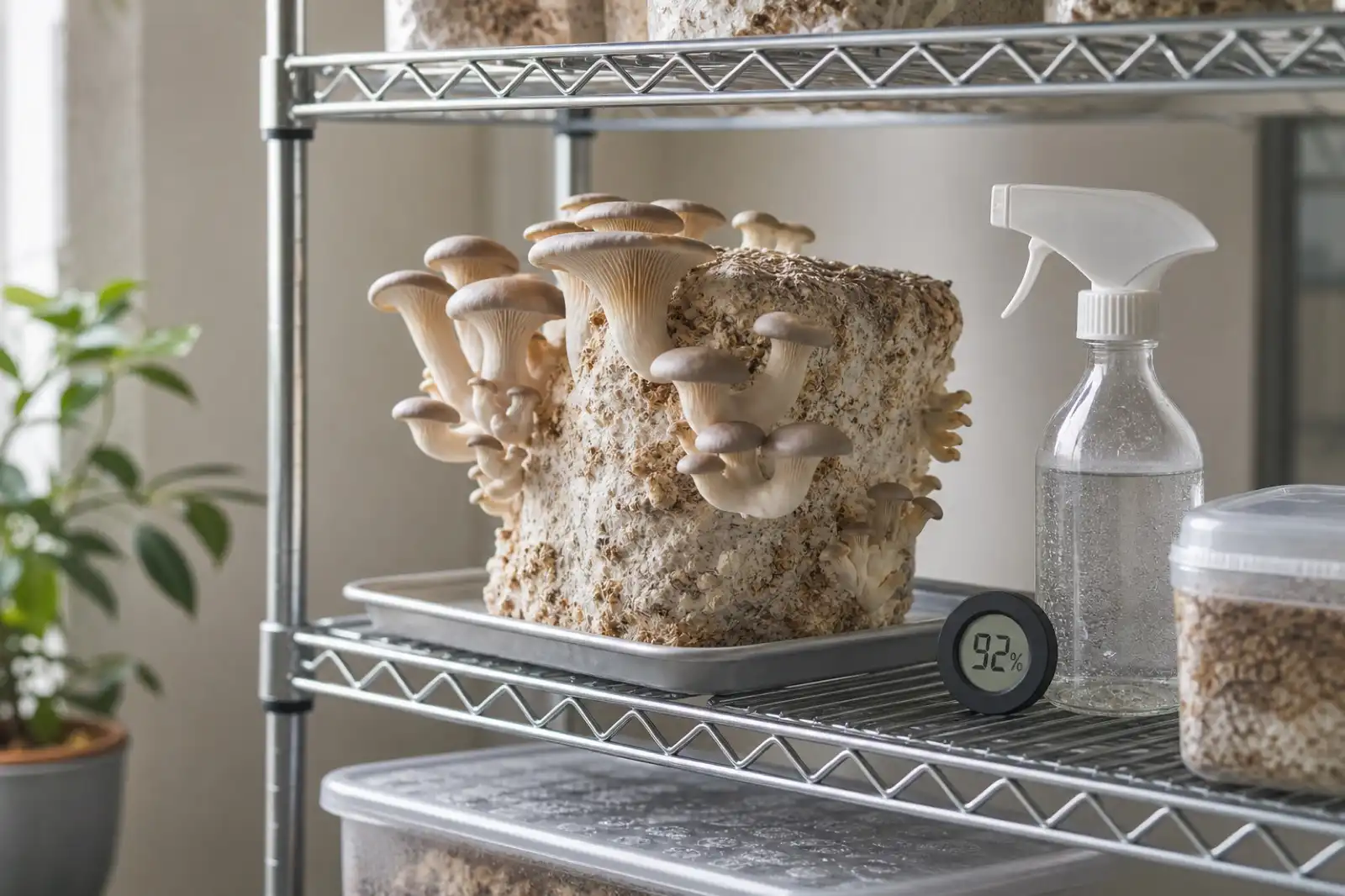
growing
Beginner's Guide to Growing Mushrooms at Home
Choose a low-complexity first mushroom grow, set a written decision boundary, and keep food safety separate from yield troubleshooting.
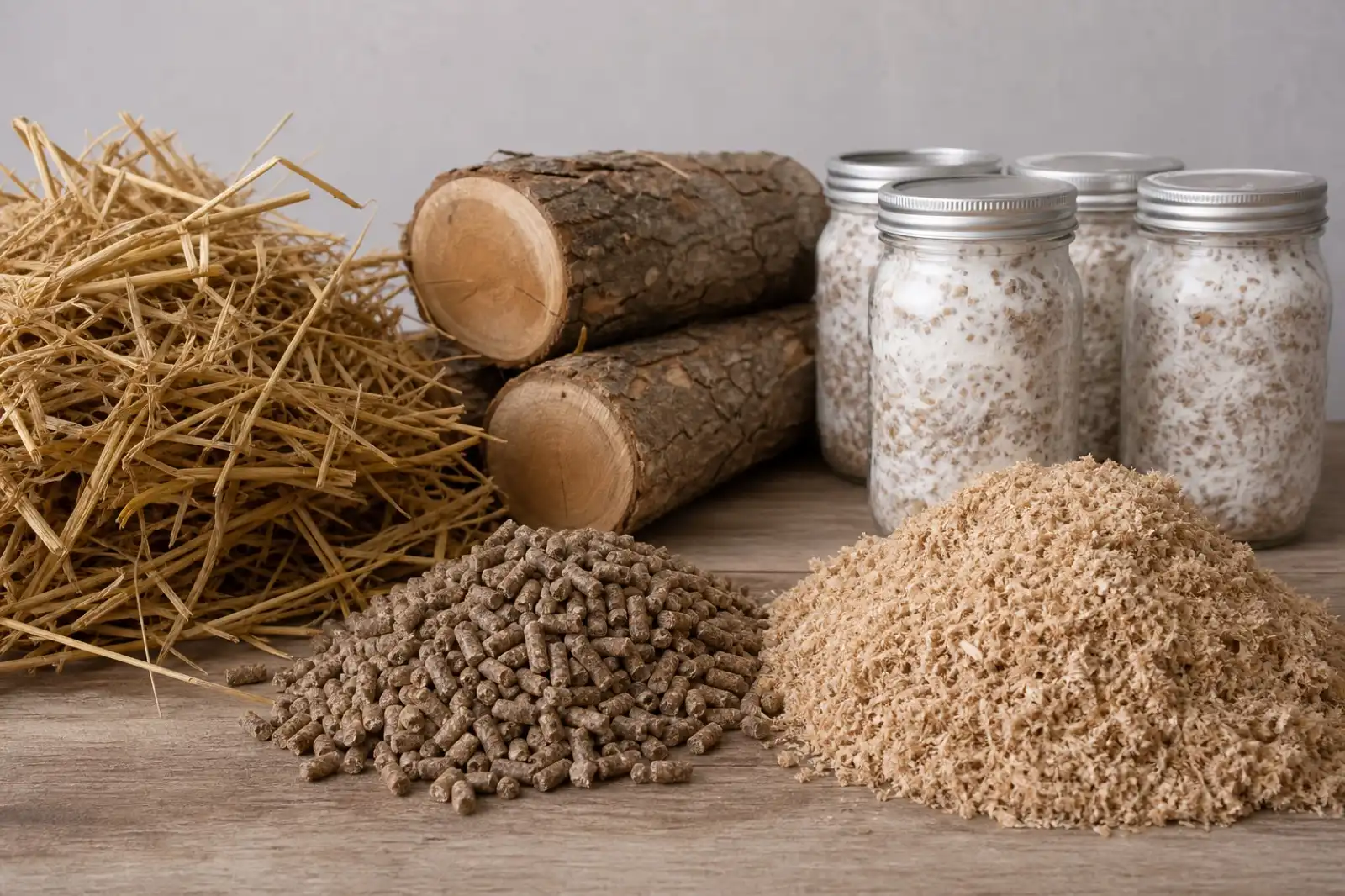
growing
Mushroom Substrate Guide: Match Species to Method
Choose a mushroom-growing substrate by matching a labeled culture to a documented production method, site, and food-safety boundary.
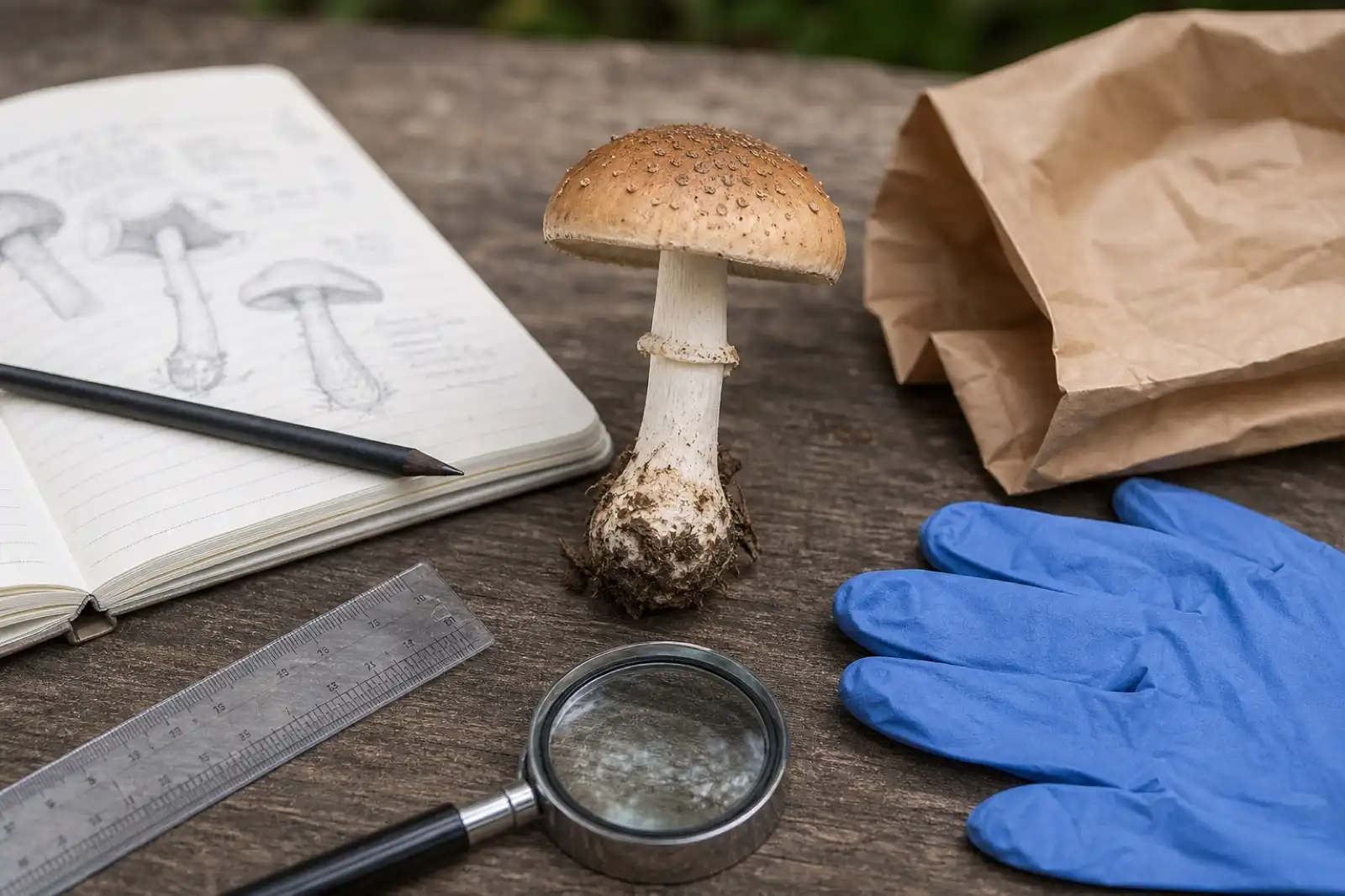
identification
Mushroom Identification Safety Checklist
Use a conservative checklist before handling, documenting, or discussing any wild mushroom, especially when edibility is being considered.
Continue exploring
Browse more practical guides in Mushroom Encyclopedia or visit the mushroom encyclopedia.