Mushroom Encyclopedia
Porcini Mushrooms: Bolete Features, Tree Partners, and Safety
Understand porcini through Boletus edulis pores, reticulate stems, tree partnerships, regional species limits, lookalikes, cooking, and safety.
By MushroomScope Editorial Team · · Updated
Species context
Treat profiles as reference material
Species profiles summarize documented traits, taxonomy, and lookalikes, but natural variation can be substantial.
Use the safety checklist →Decision limit
A profile cannot authenticate a specimen
Do not eat a wild mushroom from an online match, single feature, or generated image.
Read the safety disclaimer →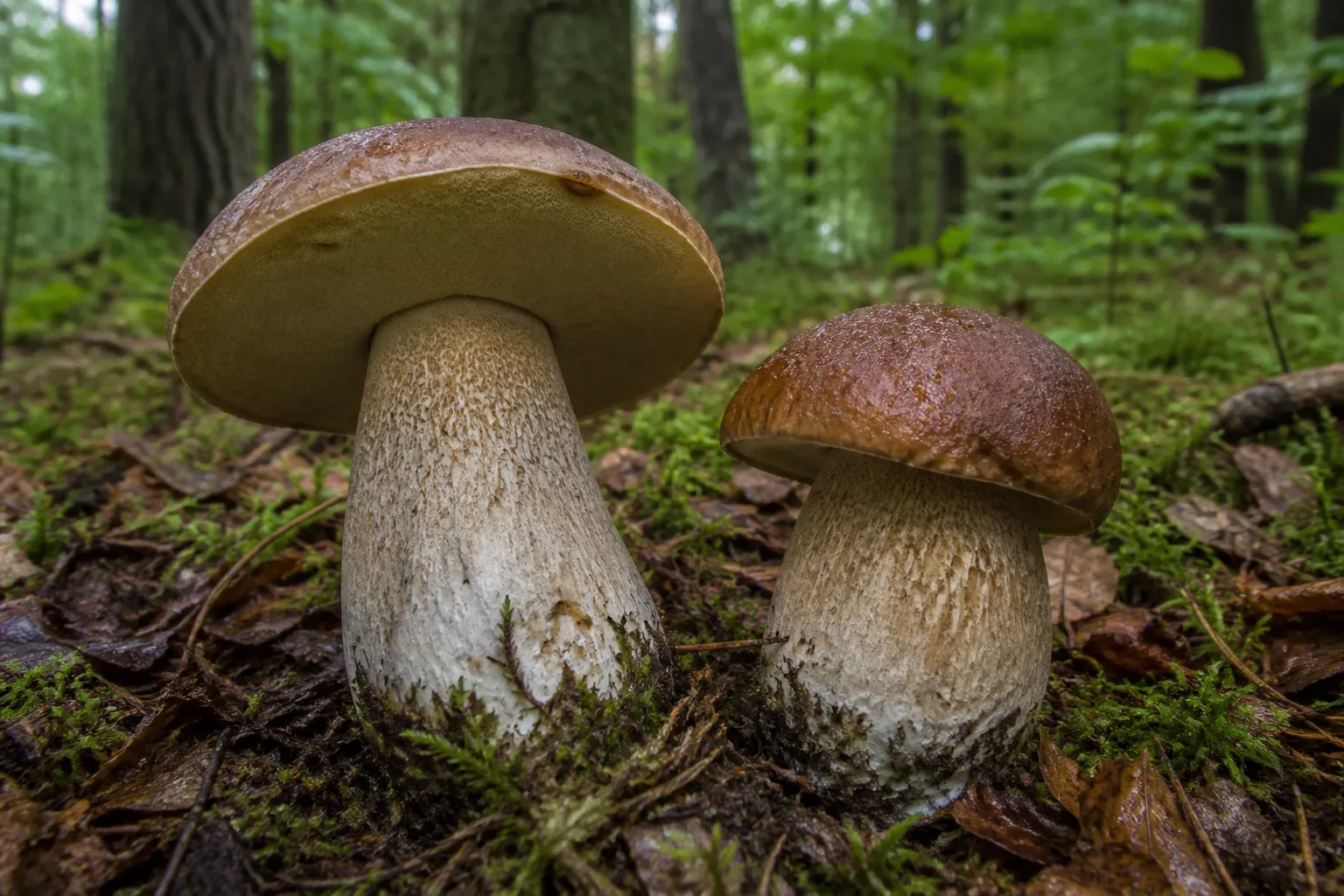
Quick facts
- Scientific name
- Boletus edulis
- Common names
- Porcini, Cep, Penny bun, King bolete
- Taxonomy
- Boletus · Boletaceae
- Edibility context
- Edible: Culinary reputation applies only after correct identification and assessment of freshness, site, preparation, allergy, and local guidance.
- Spore print
- Olive brown.
- Toxicity context
- None Known: Risks include regional bolete confusion, gastrointestinal reactions, spoilage, environmental contamination, and unsafe handling.
- Season
- June, July, August, September, October, November
- Growing difficulty
- Not Cultivated
- Regions
- Europe, Asia, introduced or related porcini concepts elsewhere
Safety limit: These labels summarize documented context; they never authenticate a wild specimen. Cooking does not make a poisonous species safe.
Porcini is both a mushroom name and a trade term. In a narrow taxonomic sense, this guide centers on Boletus edulis, the classic Eurasian cep or penny bun. In food markets, however, “porcini” may cover several closely related boletes sold fresh, frozen, or dried. A culinary label can describe an ingredient category without resolving the identity of a wild collection.
The field pattern begins with a brown convex cap, a pore surface rather than gills, a thick pale stem with raised netlike reticulation, and white flesh that usually does not develop a dramatic rapid blue stain. None works alone. Tree community, region, developmental stage, pore maturation, odor, and a current local key all contribute to a defensible record.
Start with pores, not the brown cap
Many unrelated mushrooms have brown caps. The first useful separation is underneath: porcini has vertical tubes ending in thousands of small round pores. Young surfaces are whitish and tightly packed; as spores mature, they pass through cream and yellow toward olive. True blade-like gills rule out B. edulis.
Photograph the underside before handling. Record whether pressure produces color change and time it rather than writing only “no stain.” Old pores can look bruised, waterlogged, insect-eaten, or olive without representing a diagnostic reaction. The bolete identification guide provides a broader pore, stem, bruising, and habitat workflow.
Read the cap as a changing structure
A typical cap begins rounded, expands while remaining substantial, and ranges from tan to chestnut or darker brown. Moisture can make it slightly tacky; dry weather produces a duller or finely cracked surface. A narrow pale line sometimes remains at the margin where flesh projects beyond the skin, but it is variable.
Record diameter, curvature, surface texture, margin, and damage. Slugs and larvae can remove important tissue. Sun can bleach a cap and rain can deepen color. “Penny bun” is a useful visual metaphor, not a measurable character.
Reticulation is raised tissue
The stout stem is often club-shaped when young and may become more cylindrical. A pale raised network—reticulation—is usually clearest near the apex. Side lighting distinguishes ridges from soil, cracks, handling scratches, or insect tracks.
Photograph the complete base before trimming. It shows overall shape and excludes structures such as a volva, even though porcini itself has none. The AI cover can simplify or exaggerate details; it demonstrates viewing angles, not a specimen match.
A cut section records flesh and tube depth
Slice one lawful representative lengthwise only after intact photographs. Show cap flesh, tube layer, stem interior, insect tunnels, and color over several minutes. Young flesh is typically firm and white. Tubes thicken with age, while larvae may hollow the stem before external collapse is obvious.
Failure to turn blue does not establish edibility. Several bolete groups have pale, slowly changing, or non-changing flesh. Blue staining is an oxidation response with different meanings across taxa, not a universal poison signal.
Tree partnership defines the habitat
Porcini is ectomycorrhizal. Underground mycelium exchanges nutrients with living roots, while the mushroom is a temporary reproductive structure. Depending on geography, records occur with conifers and broadleaved trees including beech, oak, and birch.
Photograph foliage, bark, cones, buds, and spacing of plausible hosts. The nearest trunk may not be the partner because roots overlap. Use the habitat identification guide to separate verified evidence from an uncertain association.
This biology explains why porcini is not a routine home block crop. Mycelium growing on laboratory medium does not recreate a stable root symbiosis or guarantee mushrooms. Claims that a bag will reliably yield porcini indoors need more evidence than white substrate growth.
Season is local evidence
In temperate regions, fruiting often occurs from summer into autumn after suitable moisture and temperature changes. Elevation, host, drought, and rainfall shift the window. A month copied across countries is less useful than a dated local record tied to weather.
Revisiting a site can reveal flush patterns, but avoid stripping every mushroom. Leave intact and overmature fruit bodies where appropriate, follow land rules, and protect exact locations when collecting pressure is a concern.
Porcini spans regional species concepts
The B. edulis complex contains related species whose boundaries have changed with molecular study. Pine-associated B. pinophilus has a distinct species intent; markets may still sell both as porcini. North American mushrooms historically called B. edulis may belong to regional taxa under current treatments.
For packaged food, retain the exact label, origin, lot, preservation method, and ingredients. For science, retain photographs, notes, a lawful voucher, and microscopy or sequences where required. Do not force every edible-looking king bolete into a European name.
Compare lookalikes by complete character sets
Tylopilus felleus, the bitter bolete, may resemble a king bolete but often develops pinkish pores and darker coarse reticulation. Culinary sources emphasize bitterness, yet tasting an unknown mushroom is not an identification method recommended here.
Other boletes may have red pores, rapid blue staining, different stem ornamentation, or different hosts. Toxicity does not map cleanly onto one color rule, and the comparison list changes by continent. Use a current regional key and local expertise, not “avoid red and blue, eat the rest.”
Food use begins after identity
Correctly sourced porcini are valued for savory aroma and textures that change with preservation. Fresh young caps and stems can be sliced and cooked; older tubes become soft. Dried porcini concentrate aroma and are commonly rehydrated, with soaking liquid strained to remove grit.
Cooking changes texture and reduces ordinary raw-produce risks but cannot repair misidentification. Inspect commercial mushrooms for insects, off odors, moisture damage, or mold. Keep dried material dry and follow package directions. Discard compromised product rather than trimming around uncertain growth.
The cooked-versus-raw guide separates preparation from identification. An edible status also does not predict individual allergy or tolerance; first portions of a correctly identified food should be conservative.
Nutrition requires a matched product
Fresh, dried, and rehydrated porcini cannot share one serving value. Drying removes water and concentrates nutrients per gram, while dishes add oil, salt, stock, dairy, or grain. Regional species sold under one trade name may differ.
Use a database entry or laboratory record matched to the actual form and serving. Do not transfer values from white mushrooms or supplements to wild porcini. This guide makes no disease-prevention or treatment claim.
Build a useful field record
Start with habitat and the intact mushroom. Photograph cap, margin, pore surface, full stem, and base. Record measurements across several ages, nearby trees, substrate, weather, odor without tasting, and a timed cut reaction. A mature olive-brown spore deposit supports the bolete record but will not resolve the complex alone.
Keep distinct caps, stems, habitat notes, and photographs linked. Do not combine similar brown boletes in one basket and reconstruct identities later. The identification safety checklist supplies stop conditions for incomplete records.
Spore deposits and microscopy answer different questions
A mature porcini can produce an olive-brown deposit, but deposit color mainly supports placement among brown-spored boletes. It does not separate every member of the B. edulis complex or exclude all unrelated lookalikes. Use a cap section that is mature but not waterlogged, protect the setup from drafts, and record the surface color and elapsed time. A missing deposit may reflect an immature, old, dry, refrigerated, or insect-damaged cap rather than a contradictory identity.
Microscopy can document spore dimensions and shape, tube tissue, cap cuticle, and other structures chosen by a regional key. Measurements need calibrated equipment, multiple mature spores, mounting-medium notes, and a link back to the voucher. One unusually large or small spore is not a dataset. When a key depends on average dimensions, record the number measured and the range rather than reporting a conveniently selected value.
Even good microscopy may not settle a closely related complex if the available key is geographic or if names have shifted through molecular work. DNA evidence also needs a traceable specimen and reference framework; a sequence label copied from an online match is not automatically an accepted identification. State the level actually supported—Boletus species, B. edulis group, or a named species—rather than presenting uncertainty as failure.
Market form changes how evidence should be recorded
Fresh market porcini may retain cap, pores, and stem characters, while sliced dried pieces usually lose the complete architecture required for field identification. A dried retail packet is best documented through supplier, ingredient name, origin, lot, date, condition, and preparation instructions. It should not be reverse-identified to species from a few brown slices.
Rehydration water can carry sand and broken tissue. Strain it through a fine filter if a recipe uses the liquid, and follow package preparation guidance. Any package with moisture intrusion, webbing, unexpected colored growth, or a strongly abnormal odor should be rejected. These are food-condition decisions, not taxonomic conclusions.
Rank tree evidence instead of naming the nearest trunk
Porcini fruit from soil connected to living ectomycorrhizal roots, but the closest visible tree is not automatically the partner. Photograph the wider stand and record each plausible host within the immediate area, including conifers and broadleaved trees. Note whether roots may extend beneath paths, litter, or neighboring crowns. A stump or fallen branch describes habitat history but does not prove the current living association.
Give host evidence a confidence level. A fruit body emerging among exposed fine roots beneath a single mature host is stronger context than a mixed woodland containing five possible partners. Repeated fruiting in the same mapped zone across seasons strengthens the ecological record without proving species identity by itself. The habitat identification guide provides a structured way to record substrate, vegetation, moisture, and disturbance.
Measure the pore layer and stem network by maturity
Record cap width, stem height and widest diameter, pore color, pore density in a measured area, tube-layer depth in section, flesh color before and after cutting, and the distribution of reticulation. Young porcini often have a pale pore surface that changes toward yellow-olive with maturity; age therefore belongs beside every color description. Photograph the same specimen in shade and neutral light rather than relying on an oversaturated image.
Reticulation is raised mesh-like tissue, not merely mottled pigment or cracks. State whether it is pale or dark relative to the stem and whether it covers the apex, upper half, or most of the stem. Combine this with bruising speed, taste only when a qualified identification protocol permits it, odor, and spore deposit. No single absent reaction proves Boletus edulis.
Treat the porcini complex as a regional identification boundary
The culinary name porcini may encompass related members of the Boletus edulis complex. North American, European, and Asian collections cannot be assigned safely from a global photo montage or a package name. Regional keys may use host, cap surface, reticulation color, microscopic structures, and sequence data differently as taxonomy changes.
Write the strongest defensible label. “A bolete consistent with the regional porcini group” is more accurate than a species-level declaration when microscopy, voucher comparison, or local expertise is missing. Record the key and geographic scope used. This makes later correction possible if a regional complex is revised without erasing the original field evidence.
Inspect dried, frozen, and commercial porcini differently
Drying collapses pores, darkens tissues, removes fresh bruising behavior, and may mix sliced species in one package. Frozen pieces likewise lose several field characters. For purchased products, identity evidence shifts toward supplier traceability, scientific-name labeling, origin, lot, intact diagnostic pieces, storage condition, and any applicable regulatory controls. A photograph of one recognizable slice cannot authenticate every fragment in a mixed bag.
Reject packages with moisture intrusion, insects, abnormal odor, damaged seals, or storage outside label directions. Prepare commercial porcini according to the package and normal food-safety practice. Market reputation does not transfer to a wild collection, and cooking does not make an unidentified toxic bolete safe.
Emergency and editorial boundaries
This page cannot confirm that a wild mushroom is edible. If illness follows consumption, contact local emergency services or a poison center promptly. Preserve uncooked pieces, trimmings, photographs, packaging, and meal timing. Do not wait for a webpage comparison.
The cover is an original AI editorial image, not a field observation or voucher. This draft received editorial review only; no named mycologist or clinician reviewed it.
References
- GBIF. Boletus edulis taxon record. Classification, synonyms, bibliography, and occurrence context.
- Species Fungorum Plus, Royal Botanic Gardens, Kew. B. edulis checklist. Nomenclatural context.
- NCBI. B. edulis taxonomy query. Independent lineage checkpoint.
- NAMA. Mushroom Poisoning Syndromes. Poison-response context.
- FDA. Selecting and Serving Produce Safely. General handling guidance.
Editorial status: reviewed by the MushroomScope editorial team on August 30, 2026; no named mycologist, clinician, or laboratory independently validated this guide.
Source quality notes
MushroomScope cites sources that match the page scope, such as taxonomic databases, extension guidance, food-safety agencies, food-composition databases, and peer-reviewed or institutional health references. Sources support context and uncertainty; they do not turn an online page into specimen identification, medical advice, or a tested recipe record.
Frequently asked questions
What does porcini mean on this page?
This guide centers on the Eurasian Boletus edulis concept while explaining that porcini and cep are culinary names also applied to related boletes. A package name is not a universal species determination.
Do porcini mushrooms have gills?
No. A typical porcini has a sponge-like layer of fine tubes ending in pores beneath the cap. Finding true blade-like gills rules out Boletus edulis.
Which trees grow with porcini?
Boletus edulis is ectomycorrhizal and associates with living conifers and broadleaved hosts depending on region. Record actual nearby trees rather than assuming the closest trunk is the partner.
Does white flesh that does not turn blue prove a bolete is porcini?
No. Slow or absent bluing is shared by multiple boletes. Cap, pores, stem reticulation, host, geography and a regional key must agree.
Can a webpage confirm that a wild porcini is edible?
No. This page cannot inspect the complete specimen, local lookalikes, mixed collections, spoilage or contamination. Obtain qualified local in-person confirmation before any food decision.
Related guides
identification
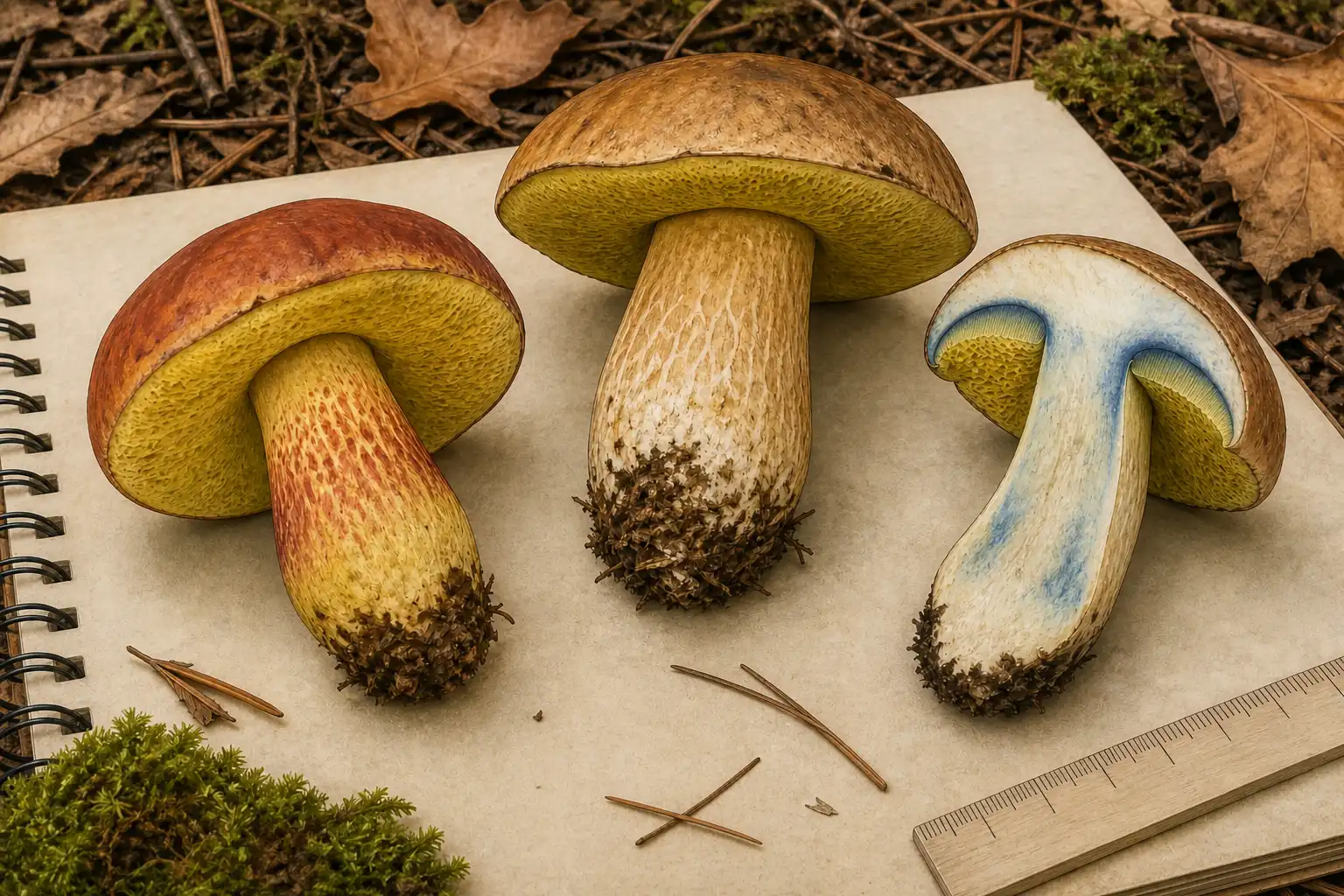
Bolete Identification: Pores, Staining, and Lookalikes
Learn how to document a bolete's pores, flesh staining, stem, habitat, and lookalikes without treating any one feature as an edibility test.
identification
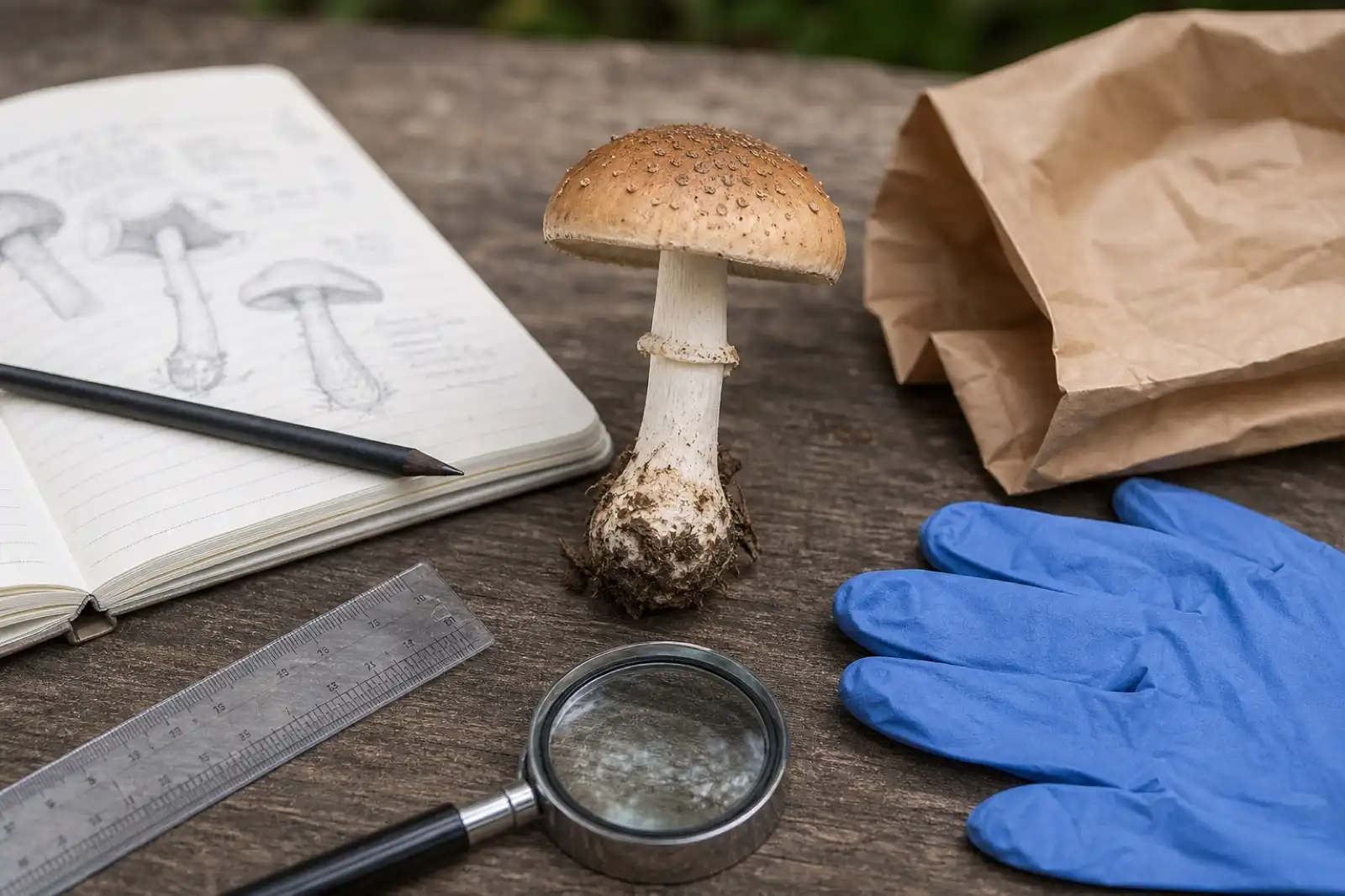
Mushroom Identification Safety Checklist
Use a conservative checklist before handling, documenting, or discussing any wild mushroom, especially when edibility is being considered.
identification
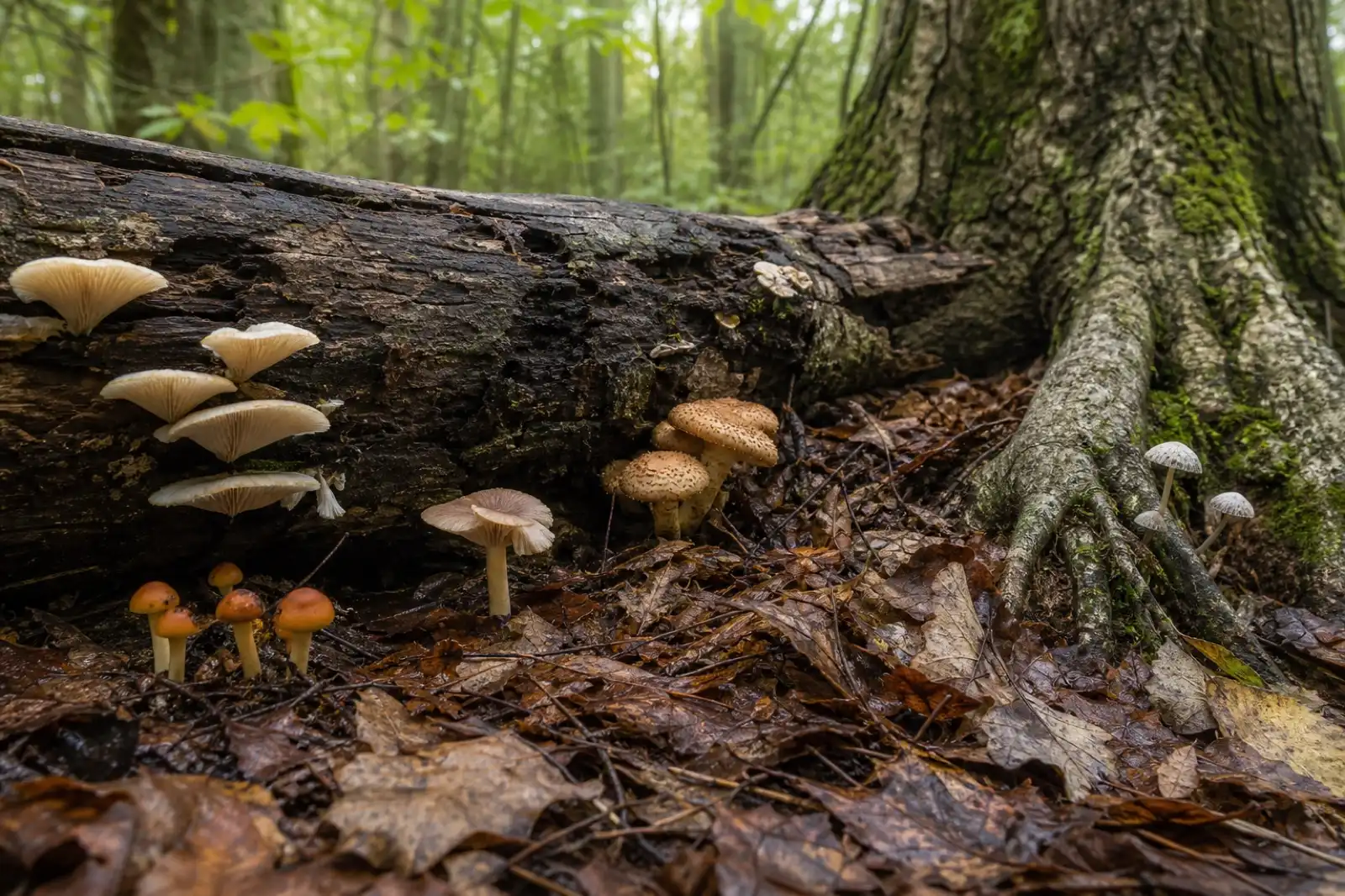
Using Habitat to Identify Mushrooms
Record substrate, associated plants, soil, wood type, moisture, elevation, and fruiting pattern as identification evidence.
Continue exploring
Browse more practical guides in Mushroom Encyclopedia or visit the mushroom encyclopedia.