Mushroom Encyclopedia
Rufous Milkcap: Lactarius rufus Field Guide
Document rufous milkcaps by dry red-brown caps, central umbo, white latex, acrid taste, conifer habitat, pale spores, and lookalike separation.
Species context
Treat profiles as reference material
Species profiles summarize documented traits, taxonomy, and lookalikes, but natural variation can be substantial.
Use the safety checklist →Decision limit
A profile cannot authenticate a specimen
Do not eat a wild mushroom from an online match, single feature, or generated image.
Read the safety disclaimer →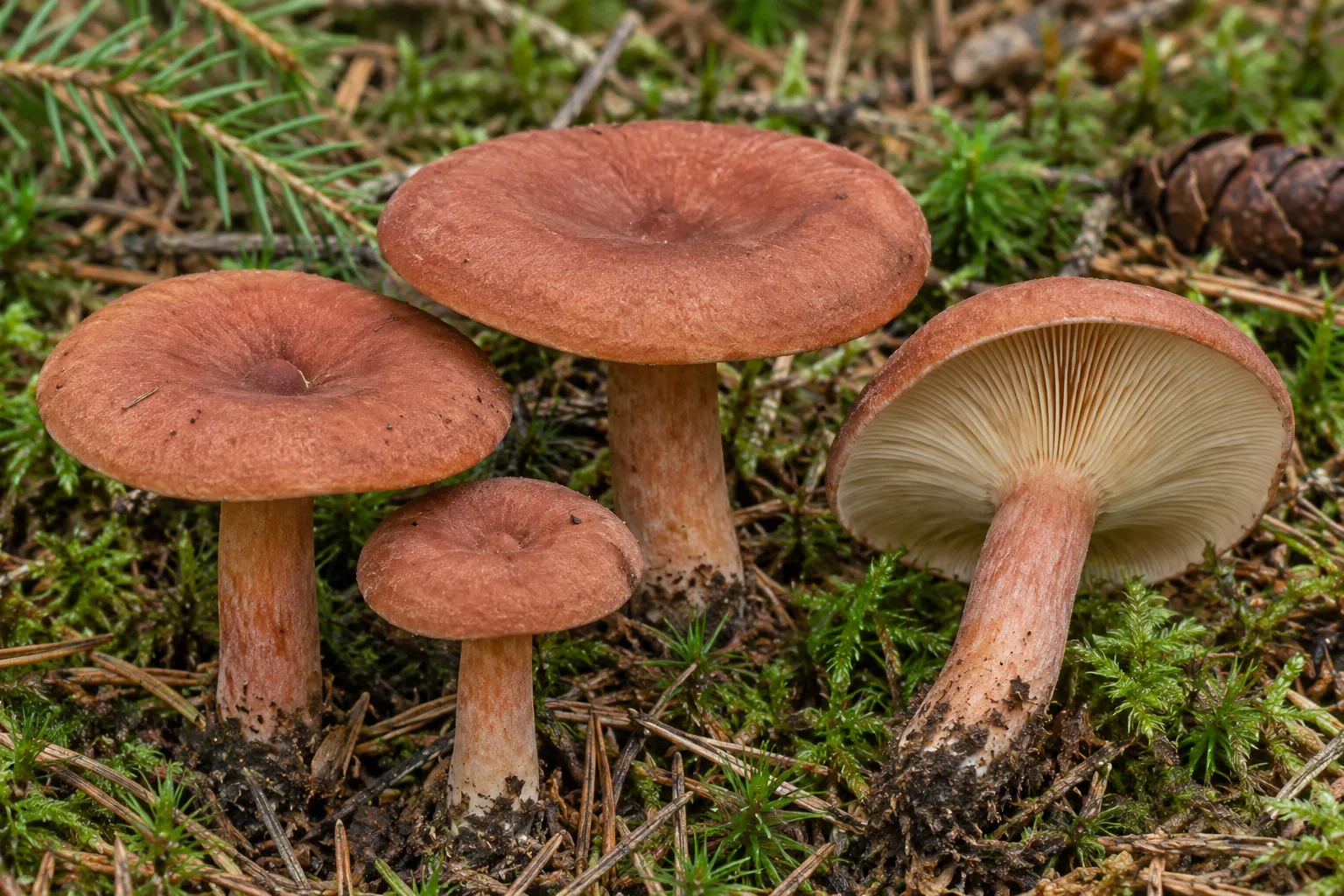
Quick facts
- Scientific name
- Lactarius rufus
- Common names
- Rufous milkcap, Red hot milk cap
- Taxonomy
- Lactarius · Russulaceae
- Edibility context
- Inedible: Strong acridity, preparation-dependent traditions, and identification uncertainty make it unsuitable for casual use; no consumption advice is provided.
- Spore print
- Cream to pale buff, with ornamented spores requiring calibrated microscopy.
- Toxicity context
- Low: Acrid milkcaps can cause gastrointestinal distress, particularly raw or inadequately prepared. Seek medical or poison-control advice for symptoms.
- Season
- July, August, September, October, November
- Growing difficulty
- Expert
- Regions
- Europe, North America, northern temperate and boreal regions with verified records
Safety limit: These labels summarize documented context; they never authenticate a wild specimen. Cooking does not make a poisonous species safe.
Rufous milkcap, Lactarius rufus, is a red-brown woodland milkcap whose apparently simple color hides a demanding identification problem. A useful record connects a dry cap and persistent umbo to fresh white latex, crowded pale gills, brittle tissues, an acidic conifer site, a cream deposit, ornamented spores, and current regional literature. A red cap beneath spruce is only a starting hypothesis.
This page owns the species-level rufous-milkcap intent. The woolly milkcap guide covers a pink, zoned, hairy-margined birch associate. The gill-types guide explains how to document attachment and spacing without turning one underside photograph into a species claim.
Map the trees and acidic ground before collection
Photograph the fruit bodies in place with the canopy, litter, moss, slope, and drainage visible. Record every plausible ectomycorrhizal tree within a measured radius rather than assigning the nearest trunk automatically. Roots cross paths, planted stands mix species, and small conifers can be hidden behind mature broadleaves. Note pine or spruce needles, cones, bark, buds, and forestry history as separate observations.
Describe the ground as evidence rather than scenery. Moss depth, raw humus, exposed mineral soil, waterlogging, compaction, and recent disturbance can separate an acidic conifer setting from a generic woodland floor. If several caps form an arc, map each point; do not call it a fairy ring without repeated observations.
Build a cap profile from young to mature
Number at least three fruit bodies before handling. Measure cap width, umbo height, depression depth, and margin curvature from a true side view. Young caps are generally convex with a small central point. Mature caps flatten or become shallowly depressed while often keeping that point, producing the characteristic umbo-within-a-depression profile.
Record surface condition before rain or cleaning. The expected cap is dry and matte rather than viscid, with cinnamon, rufous, or brick-red tones that may fade. Diffuse daylight and a neutral color reference are more useful than saturated phone enhancement. Zoning should be documented when present, but strong concentric bands should trigger a wider comparison rather than being forced into the diagnosis.
Test latex behavior without staging the result
Slice one fresh gill and one cap edge with a clean blade, then time the appearance of latex. Record initial color, abundance, color change on the tissue, change on white material, and the result after several minutes. L. rufus normally produces white latex that does not provide a dramatic color transformation, but dry or old specimens may yield very little.
Keep the cut specimen linked to its photographs. A white droplet can be transferred accidentally between milkcaps in a mixed basket. Never add liquid for a better image, and do not infer latex absence from a weathered cap. The observation is strongest when several fresh specimens agree.
Record gills, stem, and brittle fracture
Photograph the underside before making a print. Count gills and short gills across a defined sector, record whether they fork, and show the attachment at the stem. The gills are crowded and pale cream to buff, sometimes developing rufous spotting with age or damage. Lighting through a warm cap can make them look more orange than their surface color.
Measure the stem at apex, middle, and base. It is ringless, dry, and colored pale rufous to flesh tones. Section it lengthwise to record internal cavities, insect damage, and color changes. Russulaceae tissues tend to snap rather than bend fibrously, but brittleness is a family-level clue, not a species result.
Treat acridity as controlled evidence, not a dare
Older keys use a tiny taste-and-spit test to describe the intense acridity. That procedure is not suitable for children, beginners, mixed collections, damaged specimens, or any mushroom suspected of containing a dangerous species. Never swallow tissue. Where an experienced local mycologist uses taste under an established protocol, record the amount, delay, intensity, duration, and complete rinsing.
Strong peppery burning supports an acrid milkcap group but does not identify L. rufus. Chemical intensity varies with specimen condition and the observer. Odor should also be recorded before cutting and after drying; an obvious coconut or fenugreek-like odor redirects the comparison.
Obtain a deposit and measure ornamented spores
Make the spore deposit on white and clear nonabsorbent surfaces under a covered setup. Record duration and deposit thickness. The expected mass color is cream to pale buff. The spore-color guide explains why a thin print can appear white and why colored paper distorts pale deposits.
In calibrated microscopy, record spore length, width, ornament height, wart and ridge connections, and whether a reticulum is complete or partial. Mount medium and measurement conventions matter. Basidia, cystidia, cap surface, and latex-bearing tissues may be required by the key. Report a measured range and sample size, not one representative spore.
Separate the red-brown milkcaps by character sets
Coconut milkcap may share a dry muted cap but is commonly smaller, grayer or pinker, and coconut-scented. Woolly milkcap has a hairy inrolled margin and stronger zoning, often with birch. Fenugreek milkcap is usually larger and paler with a persistent spicy odor. Additional regional Lactarius species can overlap in color and conifer association.
Use a comparison table in field notes: host evidence, cap texture, zoning, umbo, gill spacing, latex color and change, odor fresh and dry, taste protocol, deposit, spore ornament, cystidia, and geography. A match on “red and acrid” is weak; a linked suite tied to a voucher is reviewable.
Keep food traditions separate from identification
Some regional traditions process acrid milkcaps by boiling, soaking, salting, or fermenting. Those practices depend on correct identity, local knowledge, controlled preparation, and individual tolerance. They are not evidence that a photographed mushroom is safe, and this guide does not translate them into a home recipe.
Raw or inadequately prepared acrid mushrooms may cause gastrointestinal symptoms. If someone has eaten an uncertain mushroom, preserve remnants and photographs, record the timing and amount, and contact local poison control or medical services when symptoms or uncertainty warrant it. Do not wait for a social-media consensus.
Audit the editorial image against field-photo baselines
The 1536 × 1024 cover is an original AI-assisted editorial image. It was opened beside MushroomScope’s Smoky Bracket and Hairy Bracket natural-light baselines. It retains diffuse forest light, subdued cinnamon color, realistic moss and needle texture, complete bases, dry matte caps, and one readable pale-gilled underside. It contains no text, watermark, logo, collage seam, stretching, or obvious fused anatomy.
The image is illustrative, not a specimen record. Latex, spore ornament, exact host connection, taste, and microscopic structures cannot be verified from it. Those omissions are why the page emphasizes a reproducible field and laboratory record.
Build a reviewable rufous-milkcap voucher
Link each photograph, measurement, latex test, print, slide, and dried fragment to one specimen code. Retain raw images and note camera processing. Dry a representative cap and complete stem promptly with airflow, then store it with locality, date, habitat, tree evidence, collector, and tentative determination if lawful and useful to a local herbarium.
Revisit the site after different weather. A second fruiting can reveal whether the cap surface is consistently dry, whether the same conifer association persists, and whether apparent zoning was just uneven drying. Record uncertainty openly when host roots are unresolved, latex is absent from old specimens, or microscopy is incomplete. A well-supported genus-level record is better than a forced species label.
Compare moisture response across one fruiting patch
Mark a small plot without damaging the moss and photograph the same numbered caps before rain, within a few hours after rain, and after the surface dries. Record cap mass only for collected voucher material, plus cap diameter, margin position, surface sheen, latex yield, and gill spotting. The aim is not to manufacture a universal threshold; it is to learn which features remain stable in that collection.
A dry matte surface should be judged after free water has evaporated. Wet needles can make any cap look viscid, while a phone flash creates highlights that imitate slime. Latex abundance may decline as a cap ages even when the soil remains wet. Keeping these variables separate prevents “dry cap” and “little latex” from being treated as contradictory evidence when they were recorded at different stages.
Document host confidence in a mixed stand
Draw a scaled plan showing each fruit body, trunk, sapling, stump, and exposed root within the plot. Assign each possible host an evidence grade: confirmed living root connection is rarely visible, strong proximity plus repeated fruiting is suggestive, and canopy presence alone is weak. Record whether conifers are planted, naturally regenerated, or mixed with birch, oak, or other ectomycorrhizal trees.
Return in a later season and compare the fruiting center with root directions and new trees. This longitudinal evidence cannot prove a single mycorrhizal partner without root-tip or molecular work, but it makes the ecology claim transparent. It also helps separate a conifer-associated rufous-milkcap hypothesis from red-brown milkcaps that favor birch, wet fen margins, or different soil chemistry.
Preserve negative observations
A complete record includes what was sought but not found. Note no ring, no volva, no woolly margin, no obvious cap zoning, no latex color change during the timed window, and no coconut or fenugreek odor when those observations were made under suitable conditions. Each negative needs a method and specimen condition; “no latex” in a desiccated cap is not equivalent to a fresh negative.
Keep failed prints, ambiguous odor notes, and contradictory specimens in the ledger. Mixed milkcap fruitings occur, and an outlier may represent a second species rather than variation. Separating it instead of averaging its characters protects both the main determination and future review.
References
- NCBI Taxonomy Browser: Lactarius rufus — current name and sequence-linked taxonomy.
- GBIF species search: Lactarius rufus — occurrence and voucher leads requiring record-level review.
- First Nature: Lactarius rufus — morphology, ecology, season, and comparison characters.
- North American Mycological Association: mushroom poisoning syndromes — conservative exposure-response context.
Editorial status: reviewed by the MushroomScope editorial team on November 21, 2026; no named mycologist, toxicologist, clinician, or food-safety expert reviewed this page.
Source quality notes
MushroomScope cites sources that match the page scope, such as taxonomic databases, extension guidance, food-safety agencies, food-composition databases, and peer-reviewed or institutional health references. Sources support context and uncertainty; they do not turn an online page into specimen identification, medical advice, or a tested recipe record.
Frequently asked questions
What makes a rufous milkcap look distinctive?
A dry cinnamon- to brick-red cap, persistent small central umbo, pale crowded gills, pale stem, white latex, and acidic conifer habitat form a useful character set, but none is decisive alone.
Does white latex prove Lactarius rufus?
No. Many milkcaps exude white latex. Record whether it changes color, stains the gills, remains abundant, or dries unchanged, then combine that evidence with cap texture, taste only under expert protocol, spores, trees, and microscopy.
Can rufous milkcap be identified from a photograph?
No. Photographs cannot reliably establish latex behavior, taste, spore ornamentation, tissue reactions, complete habitat evidence, or regional alternatives.
Is rufous milkcap edible?
This guide gives no food clearance. It is strongly acrid and is widely treated as unsuitable without specialized preparation; misidentification and individual reactions add risk.
Which lookalikes need the closest comparison?
Other red-brown milkcaps, especially coconut-scented, fen-associated, and woolly species, require comparison of odor, cap surface, latex, gill spacing, host, spores, and microscopic structures.
Related guides
mushrooms
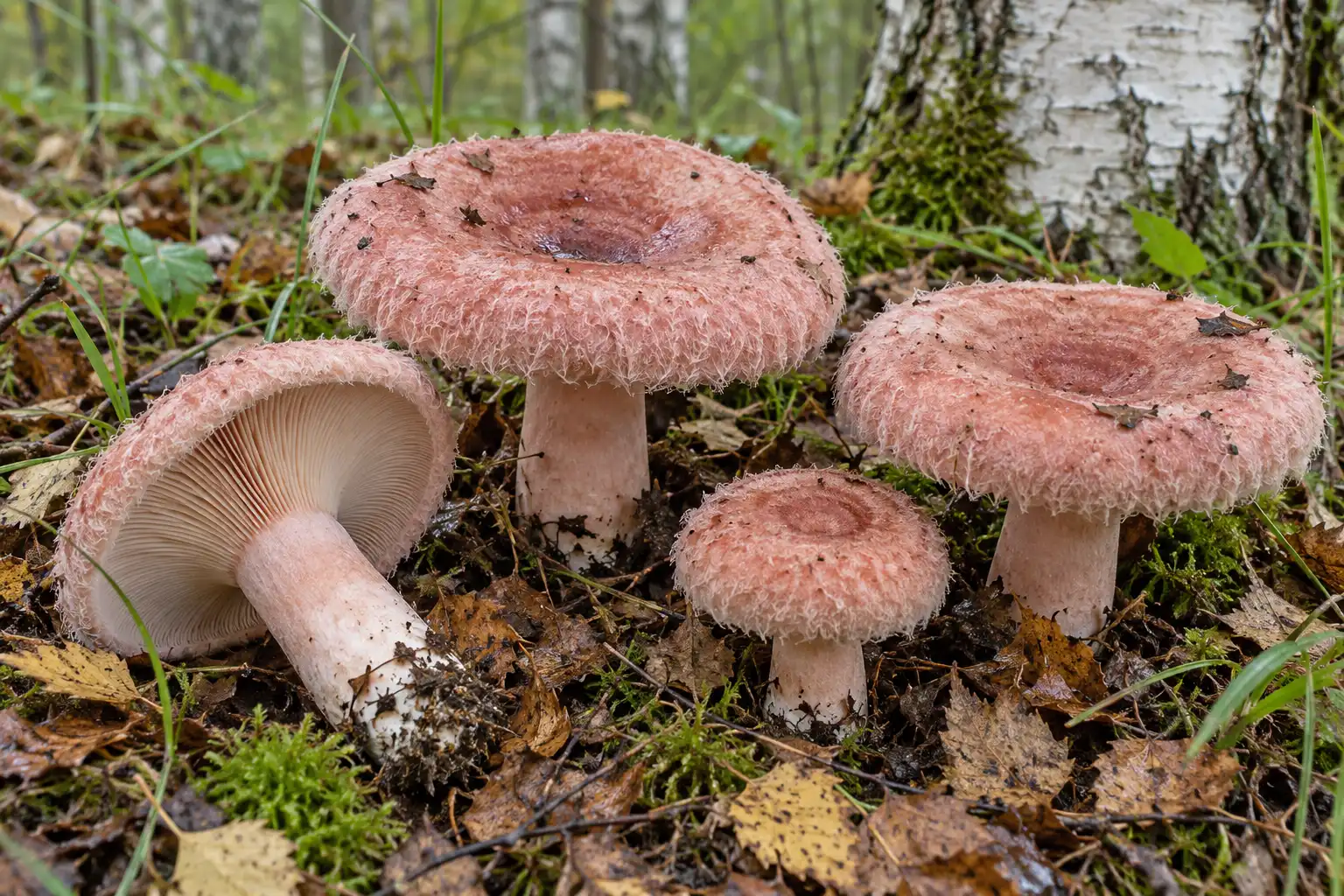
Woolly Milkcap: Birch Habitat, Latex, and Lookalikes
Study woolly milkcap through its zoned pink cap, shaggy margin, white latex, birch association, spore ornament, lookalikes, and conservative safety limits.
identification
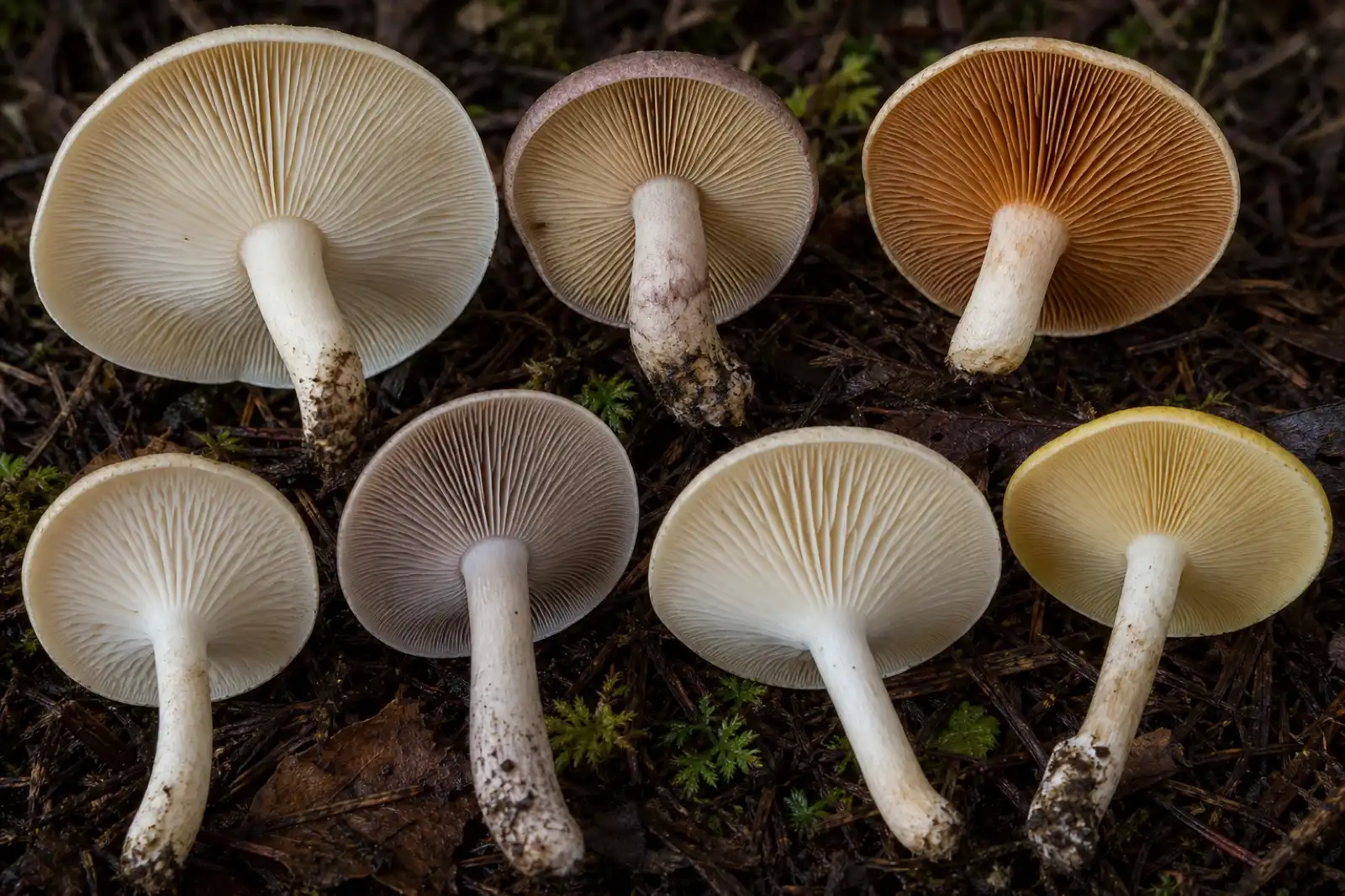
Mushroom Gill Types: Attachment, Spacing, and Color
Compare free, attached, notched, adnate, and decurrent mushroom gills while recording spacing, short gills, edge details, bruising, and color changes.
identification
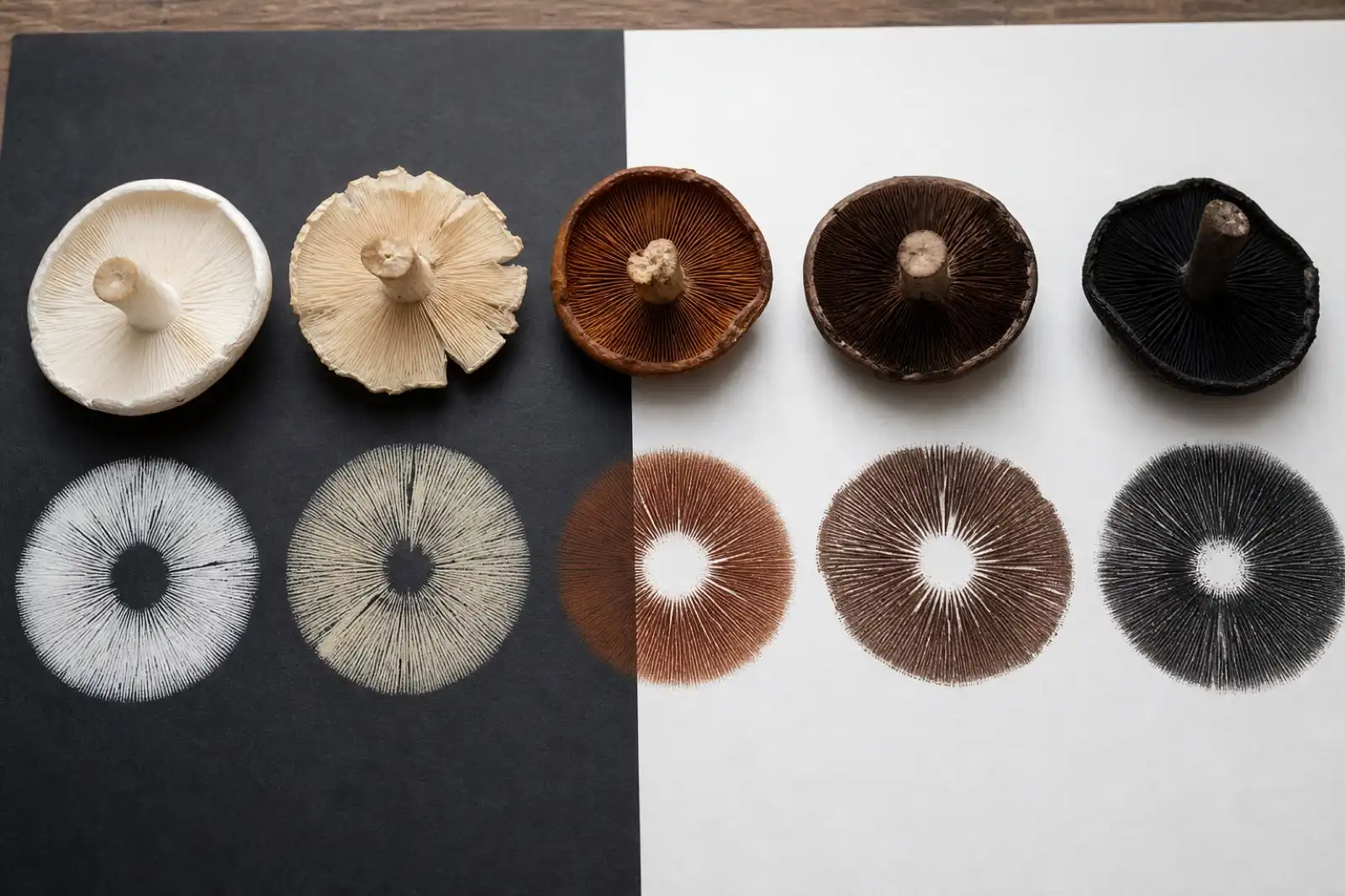
Mushroom Spore Print Colors and How to Record Them
Use a controlled spore deposit to distinguish broad color groups while recognizing that print color alone never identifies a species.
Continue exploring
Browse more practical guides in Mushroom Encyclopedia or visit the mushroom encyclopedia.