Mushroom Encyclopedia
Trametes versicolor: Turkey Tail Mushroom Species Guide
Learn Trametes versicolor identification, pore features, hardwood habitat, cultivation, extract evidence, lookalikes, supplement safety, and FAQs.
By MushroomScope Editorial Team · · Updated
Species context
Treat profiles as reference material
Species profiles summarize documented traits, taxonomy, and lookalikes, but natural variation can be substantial.
Use the safety checklist →Decision limit
A profile cannot authenticate a specimen
Do not eat a wild mushroom from an online match, single feature, or generated image.
Read the safety disclaimer →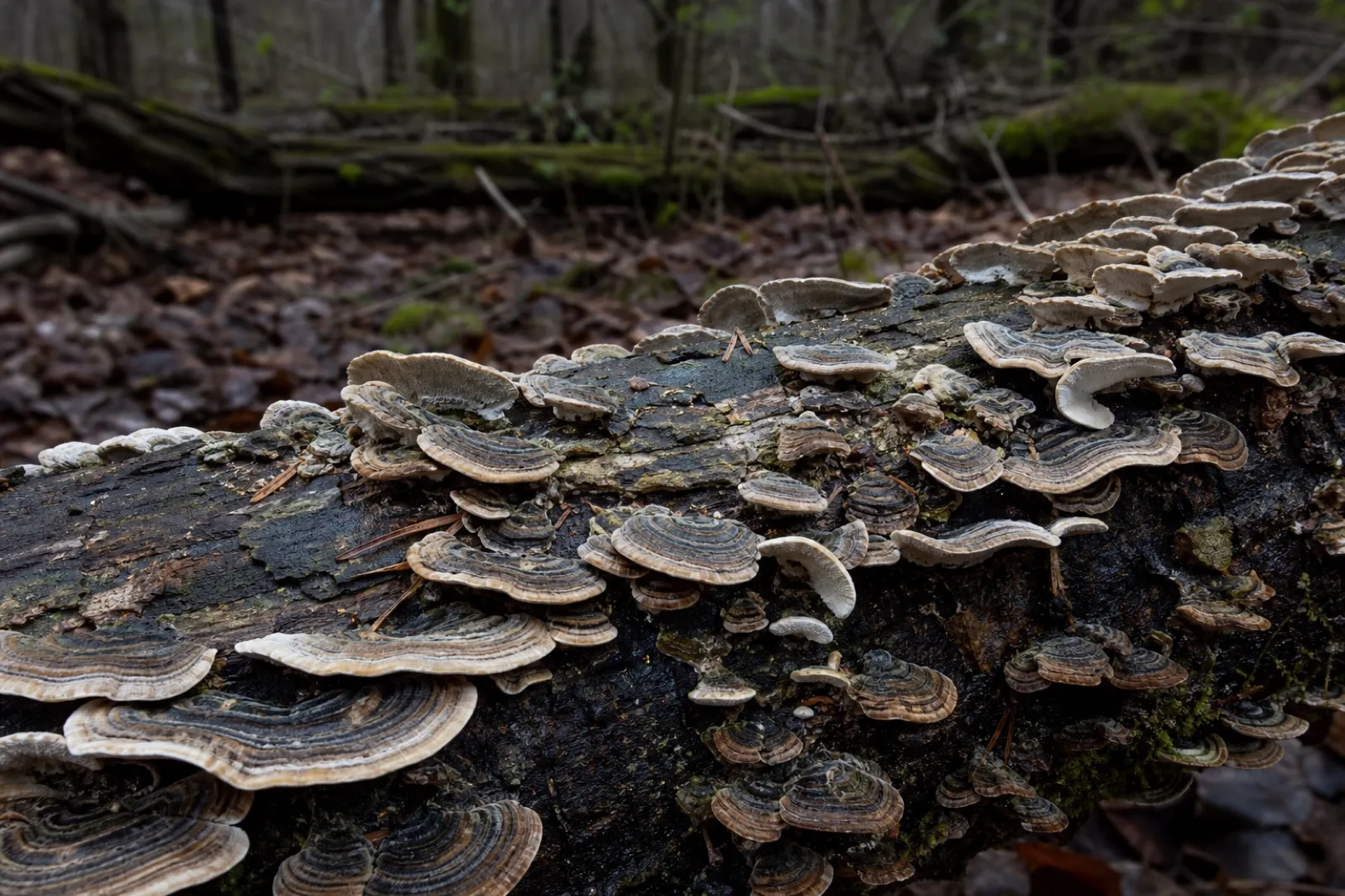
Quick facts
- Scientific name
- Trametes versicolor
- Common names
- turkey tail, multicolored polypore
- Taxonomy
- Trametes · Polyporaceae
- Edibility context
- Inedible: Leathery and not used as an ordinary edible mushroom; commercial extracts and teas are separate products.
- Spore print
- White.
- Toxicity context
- Low: Not known as an acute poisonous conk, but lookalike identity, contamination, allergy, extract interactions, and treatment claims require caution.
- Season
- January, February, March, April, May, June, July, August, September, October, November, December
- Growing difficulty
- Moderate
- Regions
- cosmopolitan in temperate and many subtropical regions
Safety limit: These labels summarize documented context; they never authenticate a wild specimen. Cooking does not make a poisonous species safe.
Introduction
Trametes versicolor earns its common name from thin, concentrically banded caps that resemble a turkey’s tail. It is widespread on dead hardwood and important in decomposition. The species is also marketed in extracts, especially products described as PSK or PSP. Those defined preparations, whole dried conks, mycelial powders, and unverified online products are not equivalent.
This species account treats “turkey tail” as a name that must be earned by underside pores, cap-hair texture, thin context, and a regional key. It does not use colorful zoning alone, and it keeps a wild bracket, an authenticated culture, a dried conk, PSK, PSP, and a retail extract as separate materials. That separation is essential because neither a photograph nor a product label can answer all of those identity questions.
A defensible turkey-tail record starts with the entire colonized stick or log section, not a detached photogenic fan. Photograph the cap zones, attachment, and pore surface at the same collection code; count pores across a measured millimeter; note whether the cap hairs remain visible under magnification; and preserve several ages from one connected patch when collection is permitted. Do not taste an unidentified bracket, and do not expose a sensitive site merely to document it online.
Identification
True turkey tail combines a strongly zoned, finely hairy upper surface with a distinctly porous white underside. The caps are thin and leathery, often forming shelves or rosettes. The pore surface separates it from smooth-bottomed Stereum species commonly called false turkey tail. Even so, pore size, cap texture, thickness, bruising, substrate, spores, and microscopy should be checked for a defensible identification.
Macroscopic characters
- Cap or upper surface: Thin, leathery fans with sharply contrasting concentric zones in brown, gray, cream, blue-gray, or black.
- Fertile surface: White to cream underside covered with tiny round to angular pores.
- Stem or attachment: Absent; caps attach laterally in shelves or rosettes.
- Flesh: Thin, flexible to leathery, and too tough for normal culinary use.
- Spore print: White.
Fresh expanding turkey-tail margins may be pale and sharply zoned while old shelves bleach, host algae, lose hairs, or acquire insect holes. Measure cap projection, thickness at the base and margin, and pore density on several shelves. A vertical section should show the thin context and distinct tube layer; a white deposit supports the record but does not distinguish T. versicolor from every other pale-spored polypore.
Similar species
- Stereum ostrea: False turkey tail has a smooth underside without true pores.
- Trametes ochracea: Can share zoned caps; pore, color, thickness, and microscopic features help separate it.
- Other Trametes species: Many thin polypores require close pore and microscopic examination.
The first comparison question is structural: a smooth or wrinkled fertile surface points away from Trametes toward Stereum, regardless of how convincing the bands look. The second is within porous brackets, where T. ochracea and regional Trametes require cap texture, thickness, pore measurements, spores, and sometimes hyphal or sequence evidence. A phone image can route a specimen to that comparison; it cannot inspect the pore layer or authenticate material for ingestion.
Scientific Classification
| Rank | Name |
|---|---|
| Kingdom | Fungi |
| Phylum | Basidiomycota |
| Class | Agaricomycetes |
| Order | Polyporales |
| Family | Polyporaceae |
| Genus | Trametes |
| Species | Trametes versicolor |
Older literature and products may use Coriolus versicolor or Polyporus versicolor. Preserve that reported name beside the accepted name and record how the material was authenticated. A clinical paper using a defined preparation under an historical name cannot automatically validate a modern capsule labeled only “turkey tail,” and a sequence record cannot repair missing voucher or manufacturing provenance after the fact.
Habitat
This white-rot fungus breaks down lignin and cellulose in dead wood and occurs across a wide geographic range. It may fruit repeatedly on logs and stumps. Its ecological abundance does not make every striped bracket T. versicolor. Avoid harvesting from treated timber, contaminated land, or ecologically sensitive sites, and leave enough material and woody habitat for decomposer communities.
Known range represented here: cosmopolitan in temperate and many subtropical regions. Typical substrates: dead hardwood, hardwood logs, sterilized hardwood sawdust. Persistent fruit bodies may be seen much of the year, with fresh growth favored by moist mild conditions.
Turkey tail is primarily a white-rot decomposer of dead hardwood. Record whether the substrate is a stump, fallen branch, slash, stored log, or worked timber; whether bark and leaves support a host identification; and whether shelves occur along one decay column or in several separated patches. Fresh growth after moist weather is more informative than a calendar label because persistent annual brackets can remain visible long after active expansion.
Because one colonized log can carry many overlapping shelves, abundance in a photograph is not a reason to strip the substrate. With permission, take only enough connected material to show cap, tubes, context, and attachment, then leave fresh margins and woody habitat in place. A voucher should include collection code, date, coordinates held at an appropriate privacy level, host resolution, photographs, and the dried tissue actually examined.
Growing Guide
Turkey tail can be grown on hardwood logs or prepared sawdust, but a wellness product demands more than successful fruiting. Culture authentication, substrate records, contamination controls, drying conditions, extraction method, and batch testing determine whether material is reproducible. Home growers should use a verified culture and treat colorful molds, sour odors, or unexpected structures as contamination rather than evidence of a “strong” culture.
A safe cultivation workflow
- Choose verified material. Buy spawn or a fruiting block from a specialist supplier that identifies the culture and provides strain-specific parameters.
- Match the substrate. Use dead hardwood or hardwood logs only through a proven recipe. Moisture and heat treatment must suit the method.
- Separate clean and dirty work. Clean tools and surfaces, wash hands, label every batch, and keep finished fruiting areas away from substrate preparation waste.
- Monitor colonization. Healthy appearance depends on the species and culture. Do not assume every white growth is the intended fungus; odor and unexpected pigments are warning signs.
- Initiate fruiting deliberately. Temperature, humidity, light, oxygen, and carbon dioxide interact. Follow the culture supplier rather than copying one universal number.
- Harvest and cool promptly. Use clean tools, avoid saturating fruit bodies, refrigerate culinary crops, and document yield and abnormalities.
Cultivated turkey tail should begin with an authenticated culture and a documented hardwood recipe. Record wood species, particle distribution, supplementation, dry and added-water mass, container filter, heat cycle, inoculum lot, colonization temperature, fruiting exposure, and drying endpoint. Reject unexpected pigments, odors, insects, or unplanned fruit bodies; a later hot-water extraction is not a validated correction for contaminated substrate or misidentified culture.
Separate the species guide from the benefits evidence page
This page answers what Trametes versicolor is, how its pores and cap texture are documented, where it decomposes wood, and what records a cultivated batch should retain. The separate turkey tail benefits evidence review addresses human studies and product claims. Keeping those intents apart prevents a field character such as “white pores” from being presented as proof that a powder contains the studied preparation, and prevents a clinical paper about PSK from being generalized to a wild conk or retail tea.
The National Cancer Institute describes PSK as a defined protein-bound polysaccharide preparation associated with turkey tail and notes its clinical history in Japan. That does not make PSK interchangeable with PSP, whole dried fruiting bodies, mycelial biomass, hot-water tea, tincture, or a capsule that merely uses the common name. Each material differs in strain provenance, fungal part, substrate carryover, extraction, concentration, dose, and contaminant controls. A responsible claim must match the exact intervention studied.
A 2022 Cochrane review evaluated seven trials of PSK used alongside conventional colorectal-cancer treatment. It judged evidence about treatment adverse effects very uncertain and the five-year survival result low certainty; the regimens studied also did not necessarily reflect current preferred care. That boundary is more useful than a generic “immune support” statement. It means the evidence cannot establish that an over-the-counter turkey-tail product prevents cancer, treats cancer on its own, or is appropriate for a particular patient.
Readers comparing products should start with identity and traceability: scientific name, fungal material, culture or strain when available, extraction solvent and ratio, serving mass, batch or lot number, and independent tests for identity and contaminants. The mushroom supplements guide explains how those fields change the meaning of a label. People receiving cancer treatment, transplant drugs, anticoagulants, or other immune-modifying medicines should discuss any product with their clinical team before use and should never delay established care.
Read the wood-decay context, not just the cap bands
The USDA Forest Service describes turkey tail as an annual, thin, tough, leathery bracket with a hairy multicolored upper surface and a white lower surface bearing small pores. It produces white rot in dead hardwood, slash, stored logs, and occasionally other woody material. White rot reflects enzymatic breakdown of lignin along with changes to cellulose and does not mean the fruit body is pale, clean, edible, or harmless to a living tree.
For a useful field record, distinguish standing dead wood from a fallen log or cut lumber. Photograph the entire colonized section and the point of attachment, note whether the substrate is hardwood or conifer when that can be established, and record whether caps form shelves, rosettes, or scattered fans. Different fungal individuals meeting within wood may contribute dark zone lines to spalting, but a decorative wood pattern does not identify the fungus that caused it. Host, decay pattern, and cap form remain supporting context.
Cap bands also change with age and weather. Fresh zones may appear sharply brown, tan, gray, blue-gray, or nearly black, while older shelves fade, grow algae, lose hairs, crack, or develop insect damage. Turn the bracket over: true pores are the decisive first separation from smooth or wrinkled Stereum fruit bodies commonly called false turkey tail. Then examine pore size, thickness, texture, and microscopic characters with a current regional key. The mushroom identification safety checklist provides the documentation workflow; it does not clear a collected specimen for ingestion.
Build a measured specimen record before choosing a name
The useful unit is a collection, not the most colorful cap in a photograph. Select several fresh shelves from the same connected patch when collecting is permitted. Record cap width, projection from the wood, tissue thickness at the attachment and margin, and the number of pores across a measured millimeter. Note whether the upper surface is genuinely hairy under magnification or merely roughened by algae and weathering. A ruler placed in the frame is more valuable than an unsupported adjective such as “small.”
Next, make a thin vertical section through cap and pore layer. The section shows whether the context is uniformly thin, whether the pore tubes form a distinct layer, and whether the attachment has become unusually thick or crust-like. Photograph the section while fresh because dry tissue can curl and compress. A white spore deposit supports the polypore record but cannot separate T. versicolor from every pale-spored bracket.
Microscopy becomes important when a specimen sits near the boundary between Trametes species. A regional key may call for spore dimensions, hyphal construction, clamp connections, or skeletal-hypha reactions. Record the key, geographic scope, magnification, mounting medium, and measured range rather than copying a diagnostic number from a page written for another continent. If the result remains ambiguous, preserve a dried voucher and retain its collection code so later sequencing or expert review can refer to the same material.
Separate a hardwood generalist from a host-specific conclusion
“On wood” is not an adequate habitat record. Photograph bark, end grain, branching pattern, and the entire log before removing a sample. Record whether the wood is standing or fallen, attached to a living tree or fully dead, intact or heavily decayed, shaded or exposed, and naturally fallen or stacked after cutting. Those observations help explain moisture and fruit-body form even when the tree cannot be named.
Turkey tail is widely reported from dead hardwood, but that broad association does not justify guessing a host species from bark alone. Forestry work, landscaping, flood transport, and firewood piles can move branches away from the tree that produced them. Use a host name only when leaves, buds, fruit, wood anatomy, or a qualified identification support it; otherwise retain “dead hardwood” as the honest resolution. This distinction also keeps a cosmopolitan range statement from becoming a claim that every regional observation has been molecularly confirmed.
The fungus causes white rot, a functional description of wood decomposition rather than a field test for species. Pale fibrous decay, zone lines, or softened wood can be produced by interacting fungi and environmental conditions. A decay pattern can support an ecological account, but it cannot replace examination of the fruit body. For broader bracket comparisons, the how-to-identify mushrooms guide explains how to keep substrate evidence separate from the final taxonomic conclusion.
Preserve a reproducible cultivation and processing record
Growing recognizable brackets is only one stage of producing traceable material. Begin with authenticated culture rather than tissue cloned from a wild shelf. Record supplier, culture identifier, substrate species and dry weights, moisture addition, heat-treatment cycle, inoculation date, incubation conditions, fruiting conditions, contamination observations, harvest date, drying time and temperature, and final lot mass. Without those records, two batches bearing the same species name cannot be meaningfully compared.
Hardwood logs and hardwood-based sawdust are biologically appropriate starting points, but “hardwood” is not a complete recipe. Particle size affects aeration and water distribution; supplementation changes nutrition and contamination pressure; container geometry changes gas exchange and heat; and strain-specific temperature response can alter form and timing. Change one recorded variable at a time. Reject units with unexplained pigment, foul odor, unplanned fruit bodies, or insects instead of assuming extraction will correct a contaminated crop.
Drying and extraction create new identities. A dried whole conk is not a standardized extract, and an extraction ratio alone does not report the amount or composition of the starting fungal material. Home processing cannot establish pharmaceutical equivalence or remove all contaminants. Material intended for sale or clinical research needs applicable food or manufacturing controls, validated identity methods, contaminant specifications, stable packaging, and lot-linked records.
Safety
The conk is too leathery for normal eating. Supplements can cause digestive symptoms or allergy, and quality varies. People who are pregnant, breastfeeding, immunocompromised, awaiting transplantation, receiving chemotherapy, or taking immune-modifying drugs should seek clinical advice before use. Never stop or delay prescribed treatment. Confirm the fungus itself and the manufacturer’s testing; a common name and a photograph do not establish identity or purity.
General food practice still applies: source cultivated mushrooms from reputable producers, transport them cool, wash hands and utensils, prevent contact with raw animal foods, and cook with clean equipment. Cooking can reduce microbial risk and improve digestibility, but it cannot make a poisonous species safe and may not destroy every toxin or environmental contaminant.
Children, older adults, pregnant people, and immunocompromised individuals can face greater consequences from foodborne infection. Follow national and local recall advice. For severe vomiting, persistent diarrhea, confusion, jaundice, breathing difficulty, or symptoms after eating an unidentified wild mushroom, contact emergency services or a poison center immediately; do not wait for an online identification.
References
- National Center for Biotechnology Information. NCBI Taxonomy Browser. Used for a current lineage check; NCBI notes that nomenclature should also be assessed against specialist literature.
- U.S. Department of Agriculture. FoodData Central. Food-composition reference; values vary by sample and preparation.
- Penn State Extension. Mushroom Food Safety. Production hygiene and preventive-control context.
- Schoch CL, et al. NCBI Taxonomy: a comprehensive update on curation, resources and tools. Database (Oxford). 2020.
- U.S. Food and Drug Administration. Selecting and Serving Produce Safely. General produce handling guidance.
- U.S. Department of Agriculture Forest Service. Field Guide to Common Macrofungi in Eastern Forests and Their Ecosystem Functions. Species morphology, hardwood white-rot ecology, and inedibility context.
- National Cancer Institute. Medicinal Mushrooms (PDQ): Turkey Tail and PSK. Preparation-specific clinical and regulatory context.
- Pilkington K, et al. Coriolus (Trametes) versicolor during colorectal cancer treatment. Cochrane Database of Systematic Reviews. 2022. Certainty and intervention-boundary evidence.
Last editorial review: August 30, 2026. This page has editorial review only and no named clinical or mycological expert review. Scientific names and public-health recommendations should be rechecked at every substantive update.
Source quality notes
MushroomScope cites sources that match the page scope, such as taxonomic databases, extension guidance, food-safety agencies, food-composition databases, and peer-reviewed or institutional health references. Sources support context and uncertainty; they do not turn an online page into specimen identification, medical advice, or a tested recipe record.
Frequently asked questions
Can this mushroom be identified from a photograph?
No. A photograph can support documentation, but a defensible identification of Trametes versicolor also considers substrate, location, developmental stage, underside, spore deposit, odor, texture, and sometimes microscopy or DNA. Never make an edibility decision from an image alone.
Is it safe to eat?
This species is not treated here as an ordinary edible mushroom. Commercial teas or extracts are processed products with different risks, and their availability does not prove therapeutic benefit or suitability for every person.
Can beginners grow it?
The database rates cultivation as moderate. Beginners should use authenticated spawn or a reputable ready-to-fruit block, follow the supplier's temperature and hygiene instructions, and discard cultures showing unexplained mold colors or foul odors.
Does it have proven health benefits?
It has nutritional or research interest, but that wording must not be converted into a treatment claim. Laboratory findings do not prove clinical benefit, and human evidence must match the exact species, preparation, dose, and outcome.
How should it be stored?
Refrigerate fresh cultivated mushrooms promptly in breathable food-safe packaging and use them while sound. Keep dried material sealed, dry, and away from heat. Follow local recall notices and discard spoiled or contaminated products.
Related guides
identification
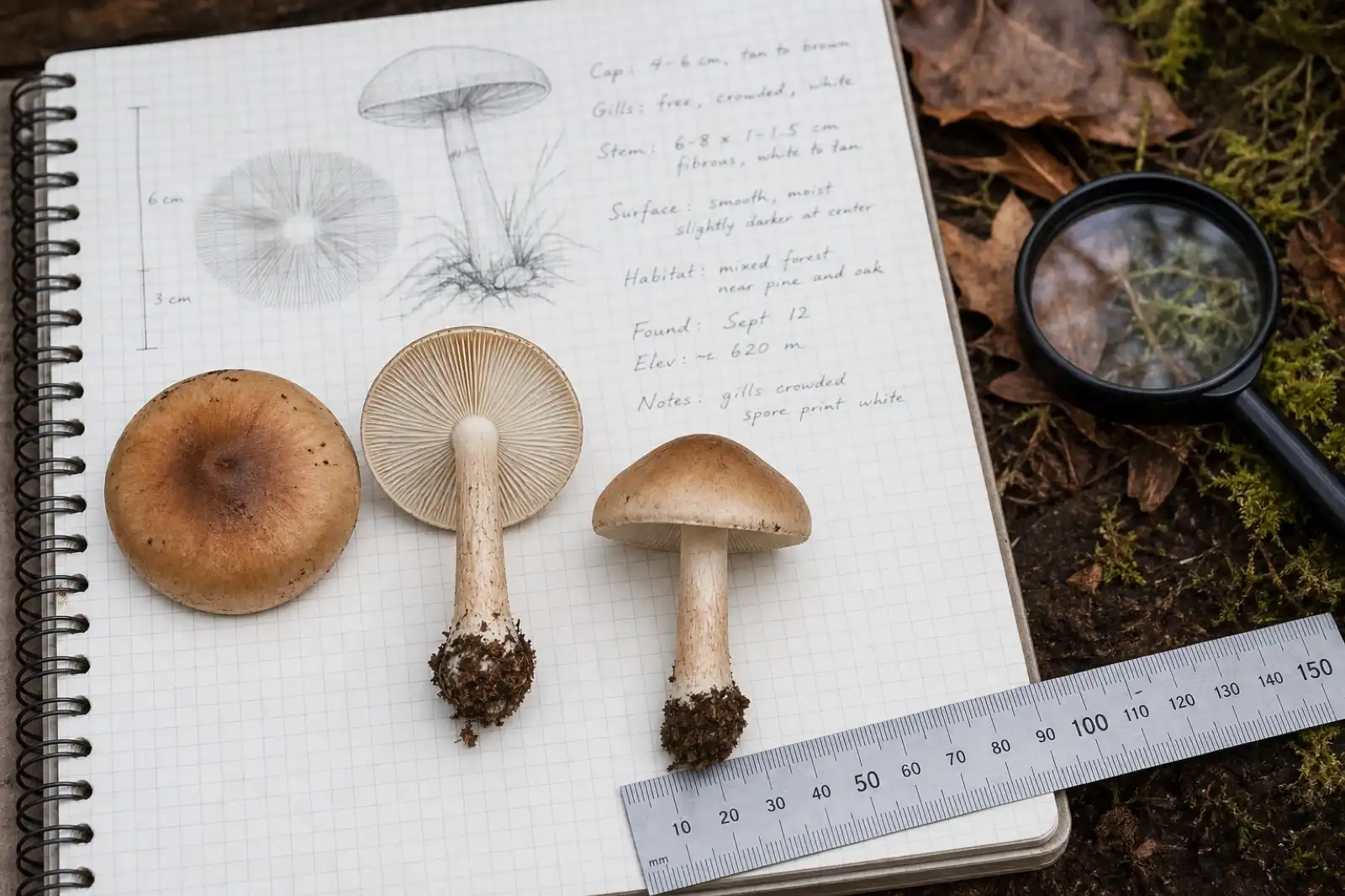
How to Identify Mushrooms: A Beginner's Field Guide
Build an identification from the whole specimen, substrate, habitat, spore deposit, and location—not from a single photograph.
health
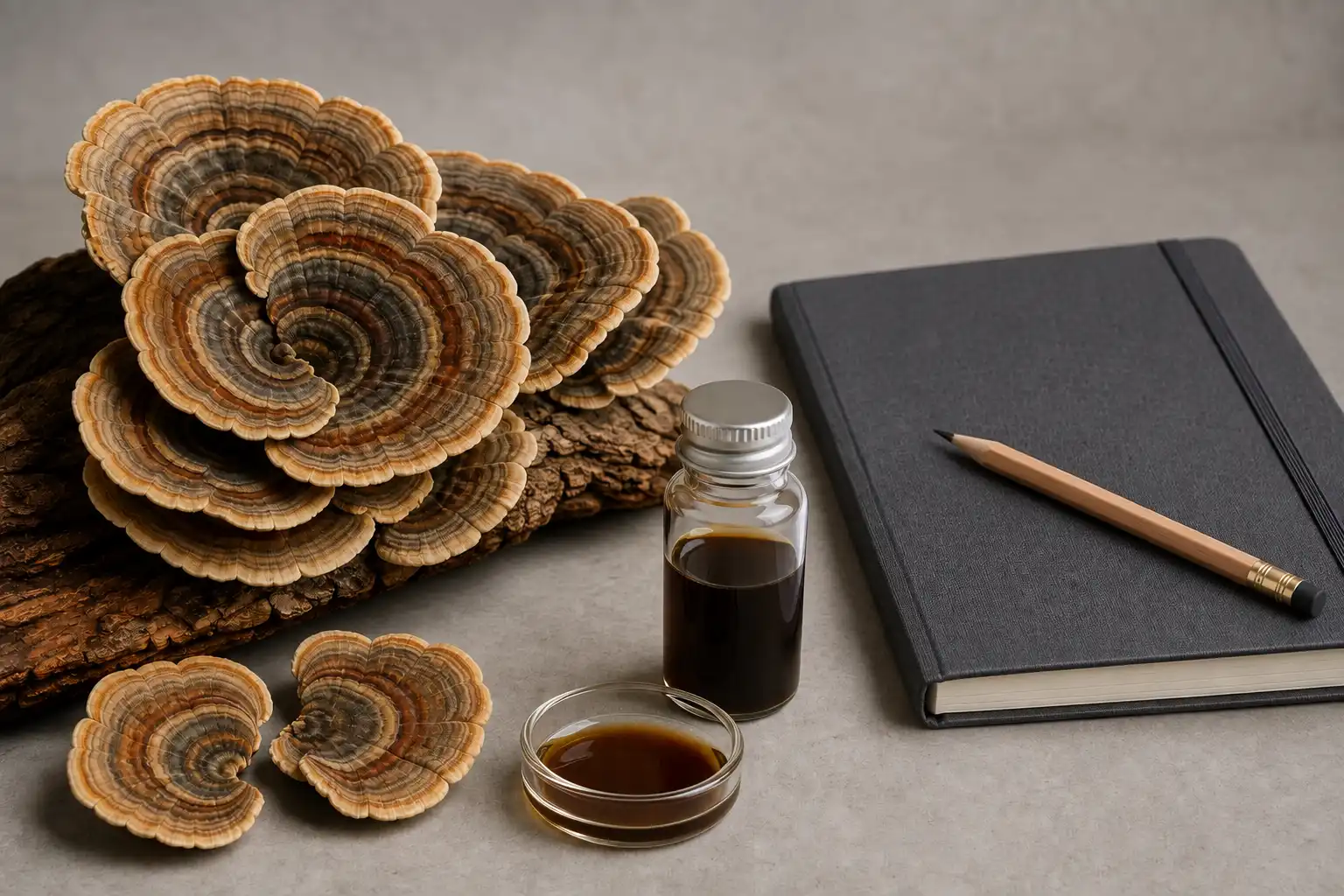
Turkey Tail Mushroom Research: PSK, Products, and Safety
Turkey tail research on PSK and other extracts is product- and setting-specific; it does not validate self-treatment, foraged material, or every supplement.

health
Mushroom Supplements: Labels, Testing, and Safety
Learn how to check mushroom supplement identity, fungal part, extraction, dose, lot testing, claims, interactions, and regulatory limits.
Continue exploring
Browse more practical guides in Mushroom Encyclopedia or visit the mushroom encyclopedia.