Recipes
Crispy Air Fryer Mushrooms
Make crispy air fryer mushrooms with cultivated mushrooms, a light coating, timing cues, storage advice, and food-safety guidance.
By MushroomScope Editorial Team · · Updated
Food source
Cook identified edible mushrooms
Recipes assume mushrooms sold as food by a reputable supplier, not foraged specimens needing identification.
Open the recipe hub →Kitchen safety
Handle leftovers promptly
Cool leftovers in shallow containers, refrigerate promptly, and discard food held unsafely or showing spoilage.
Review preparation safety →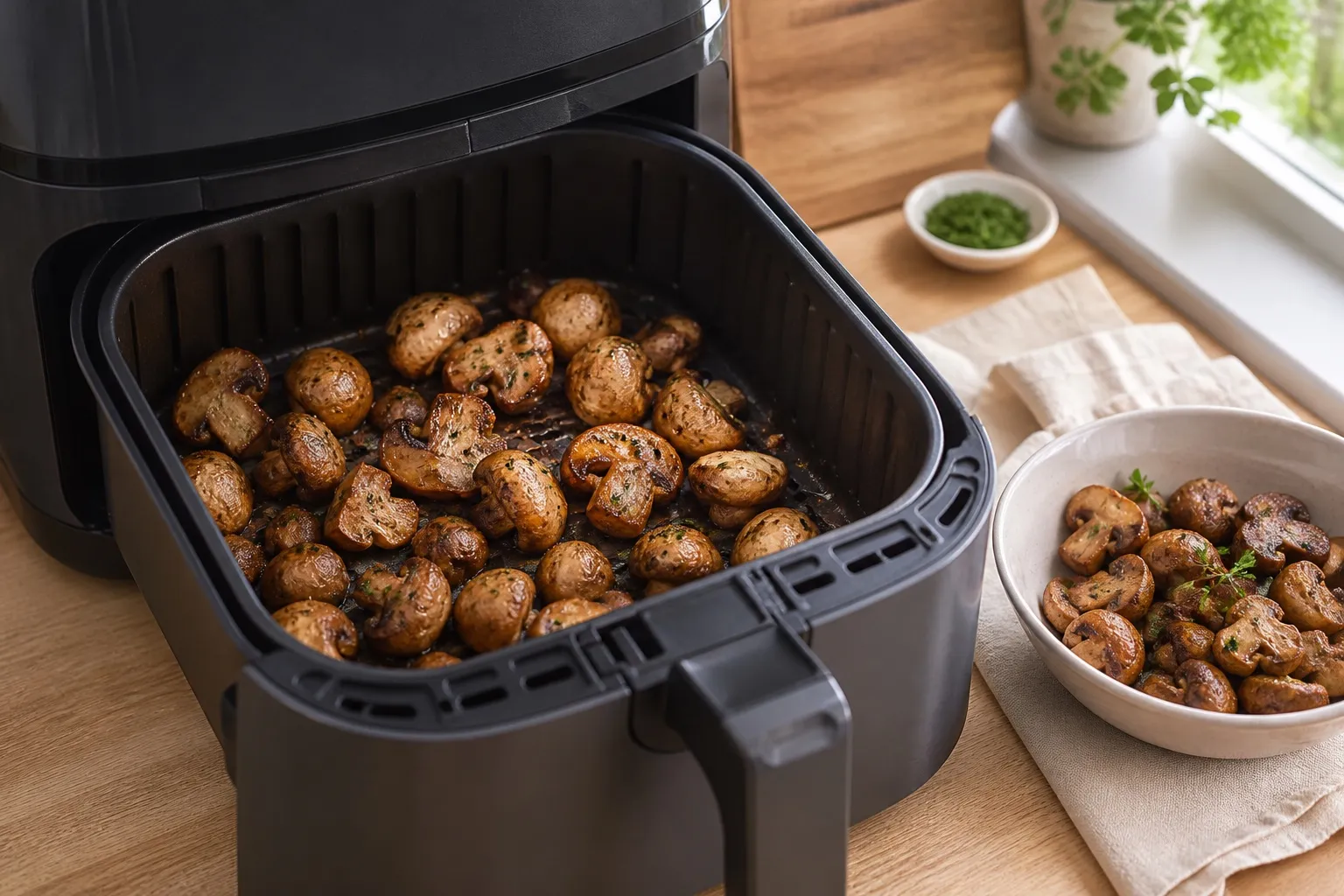
Recipe details
- Prep time
- PT12M
- Cook time
- PT12M
- Yield
- 3 servings
Ingredients
- 12 ounces (340 g) cultivated mushrooms, halved or torn
- 1 tablespoon olive oil
- 1/2 cup panko breadcrumbs
- 2 tablespoons finely grated Parmesan, optional
- 1 teaspoon cornstarch
- 1/2 teaspoon garlic powder
- 1/2 teaspoon smoked paprika
- Salt and black pepper, to taste
Instructions
- Clean, trim, and dry the cultivated mushrooms thoroughly.
- Toss mushrooms with oil, then coat with panko, optional Parmesan, cornstarch, and seasonings.
- Arrange in one loose layer in the air fryer basket.
- Air fry at 390°F (199°C) until browned and crisp at the edges, shaking once.
- Serve immediately while the coating is crisp.
Why this recipe works
Air fryer mushrooms need dry surfaces, space, and a coating that can crisp before the mushroom interior turns watery. A small amount of cornstarch helps the crumb coating cling, while panko gives more crunch than fine breadcrumbs.
Use only identified cultivated mushrooms sold as food. A recipe cannot authenticate a wild mushroom.
The air fryer is essentially a compact convection oven. It can brown the outside of mushrooms quickly, but it cannot overcome excess moisture or crowding. Mushrooms release steam as they cook. If that steam cannot escape, the coating softens and the basket behaves more like a steamer than a fryer.
This recipe uses three controls: dry mushrooms, a light coating, and a single loose layer. The oil helps conduct heat and carry flavor. The panko creates texture. The cornstarch helps the coating grip and absorb a little surface moisture. None of these steps is complicated, but skipping one changes the result.
Air-fry in a loose layer and check the center
Clean mushrooms with a soft brush or brief rinse, then dry them well. Cut large mushrooms into even pieces so they cook at the same rate. Toss with oil first, then add the crumb mixture and press lightly so it adheres.
Cook in one loose layer. If the basket is crowded, the mushrooms steam. Shake once halfway through and stop when the edges are browned and the coating feels dry. Serve right away; crisp coatings soften as mushrooms release steam.
Choosing and cutting mushrooms
Cremini and button mushrooms are dependable because they are dense, widely available, and easy to cut into even halves or quarters. Oyster mushrooms crisp well along their thin edges, especially when torn into strips. Small portobello pieces can work, but very large chunks may release more moisture and need extra time.
Avoid mushrooms that are slimy, sour-smelling, moldy, or sitting in excessive liquid. Air frying will not turn spoiled produce into safe food. If a package contains a few damaged pieces, discard those pieces and use only firm, fresh mushrooms.
Cut size matters. Pieces that are too small can dry out before browning. Pieces that are too large may stay wet inside and shed the coating. Aim for bite-size pieces with enough surface area to hold crumbs. If mixing species, keep the pieces visually similar in thickness so one type does not overcook while another stays pale.
Coating logic
The coating should be light, not heavy. Mushrooms shrink and release steam, so a thick breading can slide off. Tossing with oil first gives the crumbs something to cling to. Press the panko mixture onto the mushroom surfaces, then move the pieces gently into the basket.
Parmesan adds salt and browning, but it is optional. If using it, add less salt at the beginning and correct seasoning after cooking. For a dairy-free version, nutritional yeast, garlic powder, smoked paprika, and black pepper can provide savory flavor without cheese.
Cornstarch is included for texture rather than flavor. It helps absorb some moisture and supports crisp edges. If you skip it, the recipe still works, but the coating may be a little less dry.
Troubleshooting
Coating falls off: The mushrooms were too wet or the pieces were handled roughly. Dry them well and press the coating on after oiling.
Mushrooms are dry: Pieces were too small or cooked too long. Use larger halves or torn strips and check early.
Flavor is bland: Add salt after cooking and finish with lemon, herbs, or a small dipping sauce.
Pair with garlic butter oyster mushrooms or learn the stovetop approach in sauteed mushrooms.
The coating browned but the mushrooms taste watery: The air fryer may be running hot on the surface while the pieces remain crowded. Lower the basket load and cook in batches. Do not cover the finished mushrooms while waiting.
The crumbs burn: The pieces may be too small, the basket may be too close to the heating element, or the cheese content may be high. Lower the temperature slightly or shorten the first interval.
The mushrooms stick: Lightly oil the basket if your model allows it, and avoid moving the mushrooms too early. Once the coating sets, they release more easily.
Texture cues and serving ideas
The finished mushrooms should look dry on the surface, with browned edges and a coating that feels crisp when tapped with tongs. If the coating still looks pale after the listed time, continue in short intervals rather than raising the temperature sharply. High heat can darken the crumbs before the mushroom interior is hot.
Serve them as a side dish, a salad topper, or a snack with yogurt-herb sauce, lemon aioli, or a simple marinara. For a lighter plate, pair them with a crunchy vegetable salad so the mushrooms do not have to carry the whole meal.
For a full meal, use the crispy mushrooms as a topping for rice bowls, polenta, pasta, or roasted vegetables. They also work in wraps when combined with slaw and a bright sauce. If serving children or guests, keep sauces on the side so people can control spice, dairy, and salt.
Because the mushrooms are best immediately after cooking, plan the rest of the meal first. Set the table, prepare sauces, and finish salads before the mushrooms go into the air fryer. That timing makes the crisp texture easier to enjoy.
Common variations
For a dairy-free version, skip Parmesan and add nutritional yeast or extra garlic powder. For a spicier version, add cayenne or chili flakes to the panko. For oyster mushrooms, tear large clusters into strips and press the coating into the frilled edges; they crisp well but can cook faster than dense button mushrooms.
For an herb version, add dried oregano or thyme to the coating and finish with fresh parsley. For a smoky version, use smoked paprika and a small pinch of cumin. For a lemon-pepper version, keep the coating simple and finish with lemon zest after cooking.
Gluten-free versions depend on the breadcrumb. Use certified gluten-free crumbs and confirm that spices, cheese, and sauces meet your needs. Almond flour can brown quickly and may not behave like panko, so test a small batch before serving.
Avoid wet marinades before air frying. Mushrooms absorb liquid and then release it in the basket. If you want a sauce, serve it as a dip or toss the mushrooms very lightly after they are cooked.
Batch size and timing
Air fryers vary a lot in basket shape and heat pattern. A shallow basket may brown quickly; a deeper drawer may need a shake or two. The first batch should be treated as the test batch. Once you know the timing for your machine, repeat the same cut size and basket load for predictable results.
Avoid stacking coated mushrooms. The pieces need moving air around them, and contact points stay damp. If you are cooking for a group, cook multiple small batches and keep finished mushrooms on a rack in a low oven for a short time. Do not cover them tightly while hot, because trapped steam softens the coating.
Food-safety notes
Start with mushrooms sold as food and discard slimy, moldy, or sour-smelling pieces. Wash hands and keep raw produce away from dirty sink surfaces or raw meat juices. If you serve a dipping sauce with dairy, eggs, or mayonnaise, keep it refrigerated until serving and discard food left out too long.
Because mushrooms shrink as they cook, a serving can feel smaller than expected. Pair the crispy pieces with a salad, grains, or a protein source if this is meant to be more than a snack.
Make-ahead reality
This recipe is not ideal for fully cooking ahead because the coating softens in the refrigerator. The better make-ahead strategy is to clean and cut the mushrooms, mix the dry coating, and prepare the dipping sauce in advance. Coat and cook just before serving.
If you do have leftovers, cool and refrigerate them promptly. Reheat in the air fryer in a single layer until hot and drier, but expect less crunch than the first serving. Do not reheat repeatedly; warm only the amount you plan to eat.
Practical bottom line
Crispy air fryer mushrooms are reliable when the process respects moisture. Dry the mushrooms, coat lightly, cook loosely, and serve quickly. Treat the first batch as a timing test for your machine, then repeat the cut size and basket load that worked.
Storage
Air fryer mushrooms are best fresh. Refrigerate leftovers promptly in a shallow covered container and re-crisp briefly in the air fryer. Discard food held unsafely or showing spoilage.
Frequently asked questions
Can I use whole button mushrooms?
Yes, if they are small and evenly sized. Larger mushrooms crisp better when halved.
Do I need to preheat the air fryer?
Preheating helps the coating set quickly. If your model does not require preheating, check the first batch early and adjust timing.
Can I make them gluten-free?
Use certified gluten-free breadcrumbs and confirm all seasoning labels meet your needs.
Verify the appliance batch rather than copying oven time
Basket shape, fan power, mushroom size, and load change cooking speed. Record weight and arrange one loose layer, then inspect and turn at defined intervals. A browned exterior should accompany a hot tender center. Follow the appliance’s clearance, liner, and cleaning instructions and never block required airflow.
Measure coating pickup and airflow loss
Mix the dry coating in a wide shallow bowl and weigh or visually divide it before tossing. After the oiled mushrooms are coated, a heavy layer of crumbs left in the bowl means the surface was too dry to bind them or the mixture was excessive; a paste on the mushrooms means water or oil was overapplied. The goal is a thin irregular crust with visible mushroom surface, not a breaded shell. Shake away loose crumbs before they enter the basket because free crumbs can scorch near the heating element.
Use basket area, not the appliance’s advertised quart capacity, to set the batch. Pieces should sit with small air gaps and no second layer. Mark the weight that fits this way, then reuse it. If the top browns while contact faces stay damp, turn earlier or use a rack-safe arrangement approved for the model. If edges dry before the center heats, enlarge the pieces or reduce temperature slightly on the next batch rather than spraying on more oil mid-cycle.
Check three endpoints together: crisp dry coating, a tender hot center, and no puddled liquid beneath the pieces. Remove finished small pieces while larger ones continue, because mixed sizes cannot share one exact time. Rest on a rack for two minutes so steam escapes from all sides; a bowl or flat plate traps it under the crust.
References
- U.S. Food and Drug Administration. Selecting and Serving Produce Safely. Handling boundary for cultivated mushrooms before oil and crumb coating.
- U.S. Food and Drug Administration. Are You Storing Food Safely?. Refrigerator-temperature and prompt-storage context for the short-lived leftovers.
- USDA. FoodData Central. Ingredient-composition reference; actual coating pickup and optional Parmesan change the serving estimate.
Source quality notes
MushroomScope cites sources that match the page scope, such as taxonomic databases, extension guidance, food-safety agencies, food-composition databases, and peer-reviewed or institutional health references. Sources support context and uncertainty; they do not turn an online page into specimen identification, medical advice, or a tested recipe record.
Frequently asked questions
Why are my air fryer mushrooms soggy?
They were likely crowded, too wet, or undercooked. Dry them well, cook in one loose layer, and give the coating enough time to crisp.
Can I air fry mushrooms without breadcrumbs?
Yes. Toss dry mushrooms with oil, salt, pepper, and spices for a browned version, though it will be less crunchy than a coated version.
What mushrooms work best in the air fryer?
Use cultivated cremini, button, oyster, or small portobello pieces from a reputable food supplier. Avoid unidentified wild mushrooms.
Related guides
recipes
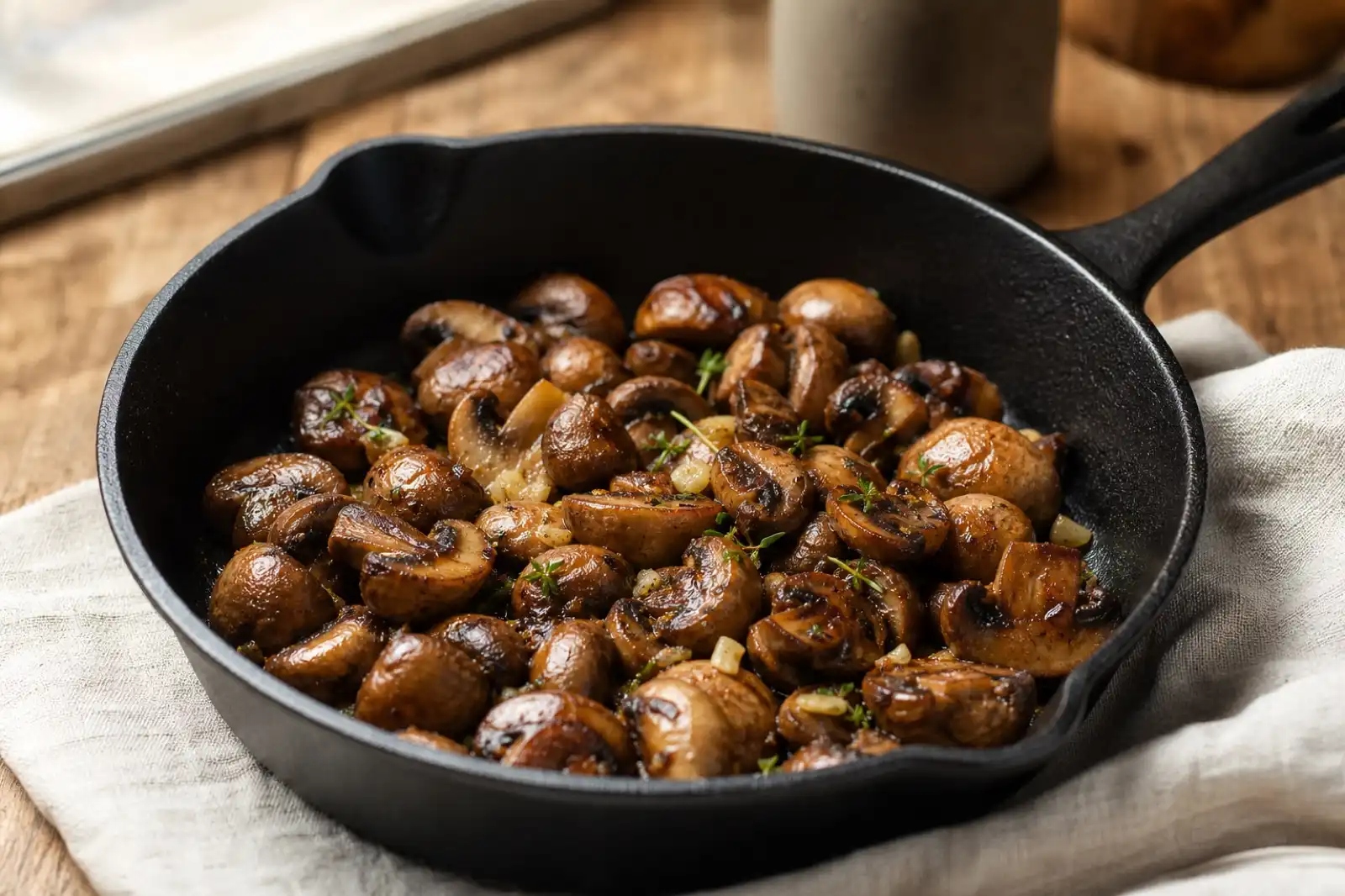
Easy Sautéed Mushrooms with Garlic and Herbs
Sauté cremini mushrooms with garlic and herbs using a wide-pan method, clear batch sizes, realistic timing, and safe storage advice.
recipes
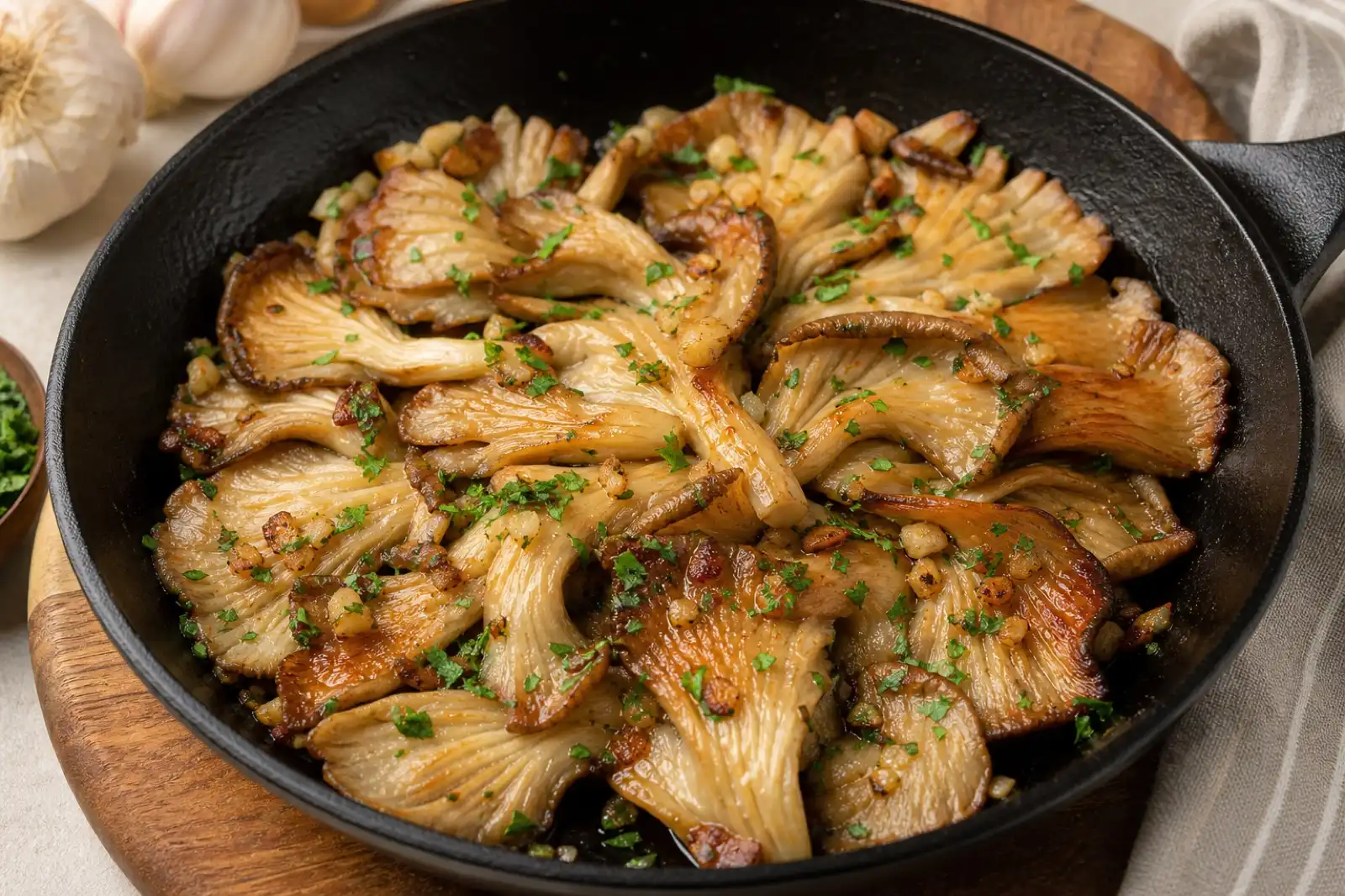
Garlic Butter Oyster Mushrooms
Make garlic butter oyster mushrooms with cultivated oyster mushrooms, clear steps, practical substitutions, and conservative food-safety guidance.
mushrooms
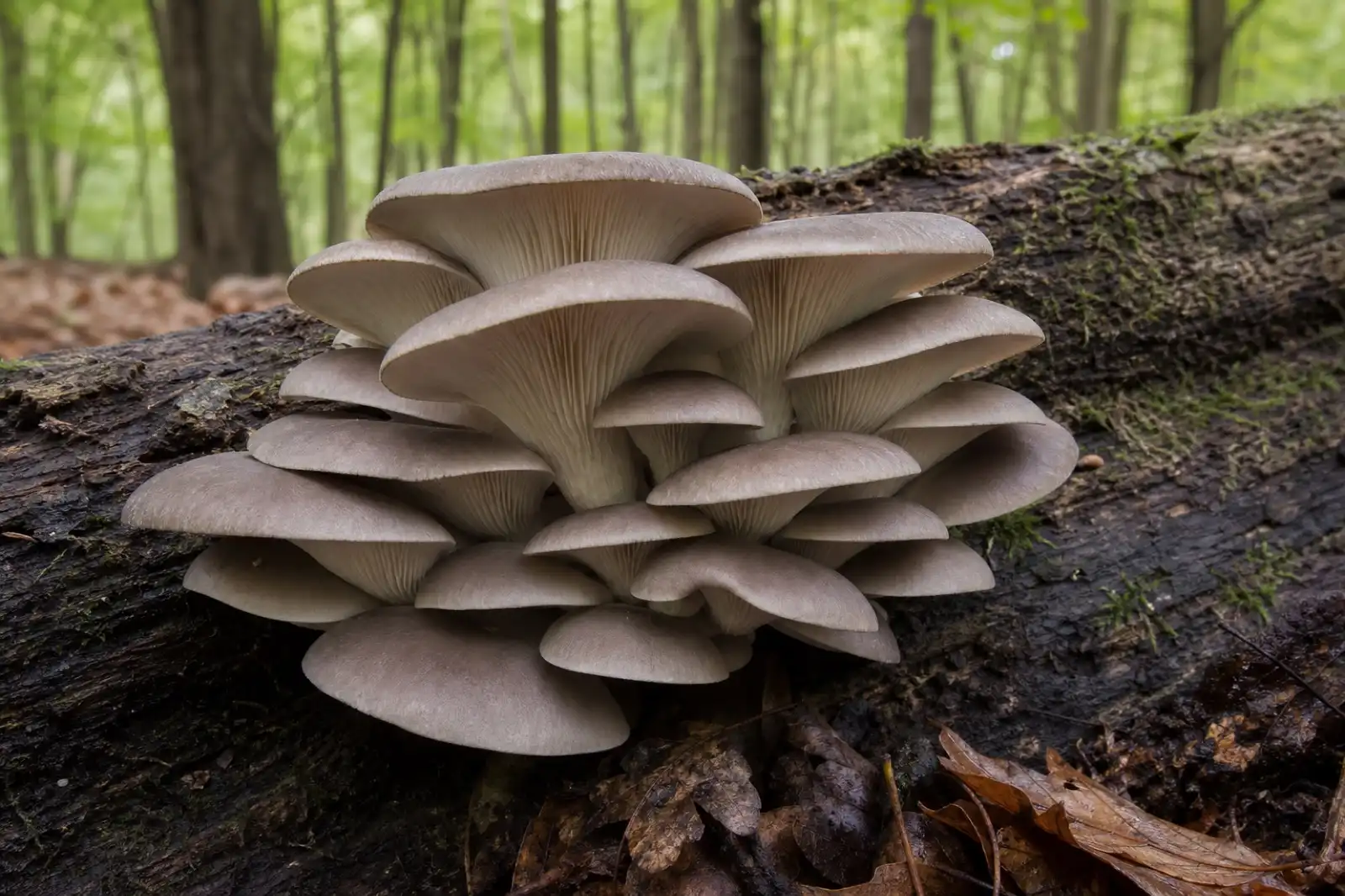
Pleurotus ostreatus: Oyster Mushroom Identification and Growing Guide
A careful guide to Pleurotus ostreatus identification, habitat, home cultivation, nutrition, lookalikes, food safety, and research limitations.
Continue exploring
Browse more practical guides in Recipes or visit the mushroom encyclopedia.