Recipes
Enoki Mushroom and Tofu Soup
Make a clear enoki mushroom and tofu soup with clean broth, separated bundles, safe handling, staged cooking, and practical leftover guidance.
Food source
Cook identified edible mushrooms
Recipes assume mushrooms sold as food by a reputable supplier, not foraged specimens needing identification.
Open the recipe hub →Kitchen safety
Handle leftovers promptly
Cool leftovers in shallow containers, refrigerate promptly, and discard food held unsafely or showing spoilage.
Review preparation safety →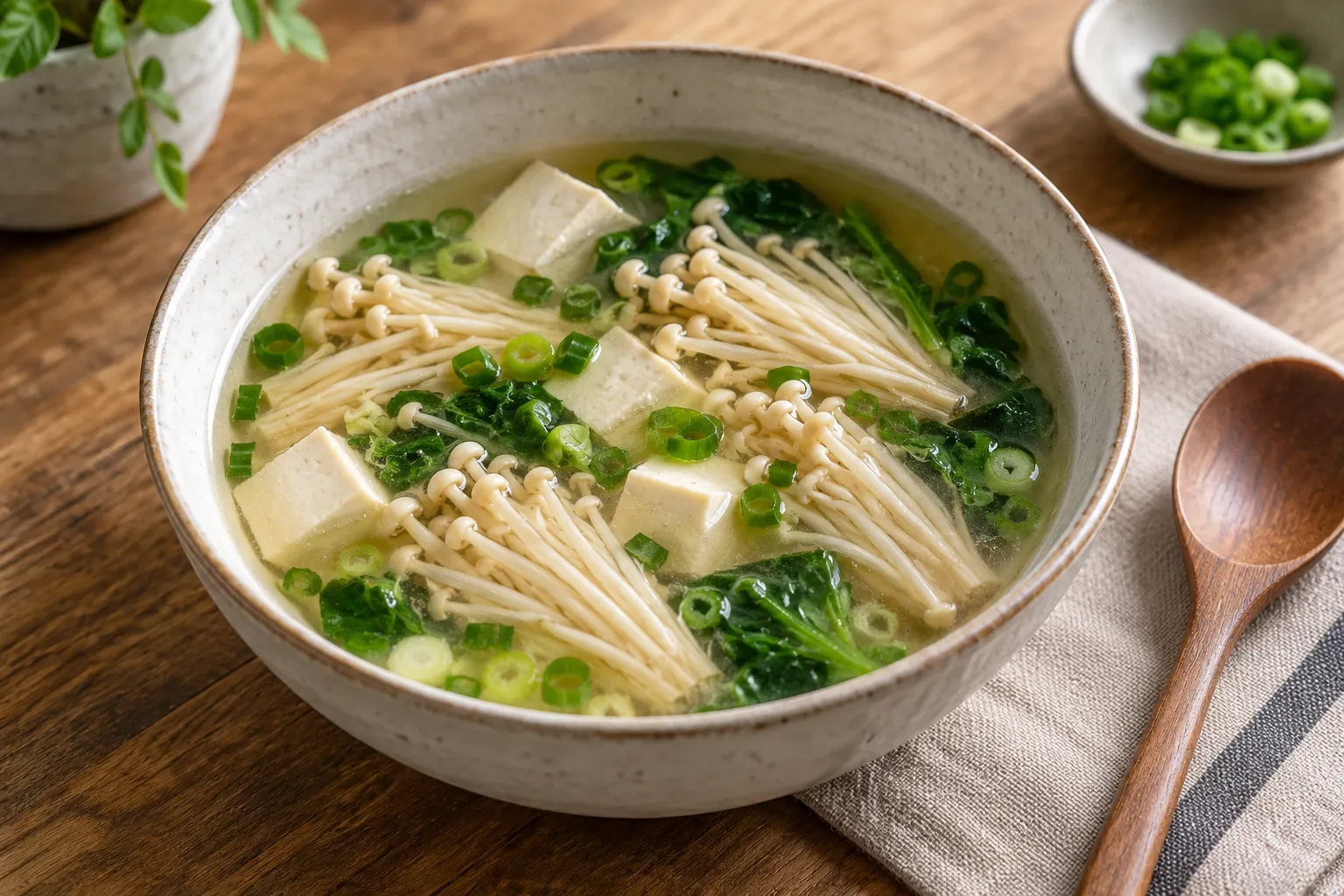
Recipe details
- Prep time
- PT15M
- Cook time
- PT20M
- Yield
- 4 bowls
- Calories
- 145 calories per serving
Ingredients
- 200 g packaged cultivated enoki mushrooms
- 300 g firm tofu, drained and cut into 2 cm cubes
- 1 litre low-sodium vegetable broth
- 100 g tender leafy greens
- 2 teaspoons grated fresh ginger
- 1 garlic clove, finely grated
- 2 teaspoons tamari or soy sauce
- 1 teaspoon toasted sesame oil
- 3 scallions, thinly sliced
Instructions
- Check the packaged enoki label and current recall information. Refrigerate until use and keep it separate from ready-to-eat foods.
- Keep the cluster together while slicing off and discarding the compact substrate base. Separate into small bundles, rinse briefly under running water, and drain.
- Bring broth, ginger, and garlic to a steady simmer in a covered pot. Add tofu and simmer gently for 5 minutes.
- Add greens and the separated enoki bundles. Return to a steady simmer and cook through for 3 to 5 minutes, separating bundles gently.
- Remove from heat. Stir in tamari and sesame oil, taste, and add only as much additional salt as needed.
- Divide among bowls and garnish with scallion. Cool leftovers promptly in shallow covered containers.
The short answer
Trim the compact base from packaged cultivated enoki, separate the stems into small bundles, and add them after the broth and tofu are hot. Return the pot to a steady simmer and cook the mushrooms through for three to five minutes. This order preserves their fine structure while avoiding a raw garnish or an unnecessarily long boil.
Enoki deserves more explicit handling advice than a generic soup mushroom. Food-safety agencies have investigated Listeria outbreaks associated with enoki products, and recall status can change. Check the package, supplier, and current government recall notices; keep raw enoki away from ready-to-eat foods; wash hands, knife, board, and sink-contact surfaces; and cook the product rather than tasting it raw. People who are pregnant, aged 65 or older, or immunocompromised face higher risk from Listeria and should follow current CDC advice.
What this soup is designed to do
The recipe keeps a light broth rather than using starch or dairy to create body. Firm tofu provides soft cubes that survive stirring, while a small amount of greens brings color without burying the mushroom. Ginger and garlic infuse the broth before the enoki enters. Tamari and sesame oil are finishing ingredients, so their salt and aroma stay controllable.
This is “East Asian-inspired,” not a claim to reproduce one national or regional canonical soup. Broths, seasoning systems, tofu types, and mushroom preparations differ across households and cuisines. The method focuses on ingredient behavior: heating a clear broth, warming dense tofu, then cooking a delicate cultivated mushroom near the end.
Buy, store, and check the package
Choose refrigerated enoki sold as food in intact packaging. The stems should look ivory to pale cream rather than waterlogged, and the small caps should remain attached. Do not use a package that is slimy, moldy, leaking, strongly odorous, past its use date, or covered by a recall. A normal appearance cannot rule out a pathogen, which is why provenance, recall checking, separation, and cooking all matter.
Refrigerate the sealed package promptly. Store it where liquid cannot drip onto ready-to-eat foods. When opening, treat the wrapper and compact root end as raw-produce contact surfaces. Discard the base and packaging directly, then clean the board and knife before using them for scallions or another garnish.
This recipe is not for wild Flammulina collections. Cultivated enoki morphology is shaped by production conditions and looks very different from many wild fruit bodies. A market name, photograph, or recipe cannot establish a wild mushroom’s identity or edibility. The enoki mushroom species guide explains that distinction separately.
Trim and separate without making a tangle
Keep the cluster intact while trimming. Lay it on its side and slice just above the dense, compacted base where stems join substrate. Cutting first is easier than trying to pull individual threads from an anchored block. Discard the base; do not crumble it into the soup.
With dry hands, divide the trimmed cluster into bundles about two fingers wide. Very large clumps stay cool at the center and are awkward to portion, while individual stems are tedious and can knot. Briefly rinse the bundles under running water and drain in a colander. FDA advises washing produce with running water rather than soap or detergent.
If long stems are inconvenient for diners, cut the separated bundles once across the middle. Do not mince them. Short bundles retain the recognizable cap-and-stem structure and distribute through four bowls more evenly than one intact raft.
Build the broth in stages
Bring one litre of low-sodium vegetable broth to a steady simmer with ginger and garlic. Covering the pot during this phase reduces evaporation and gives the aromatics five minutes to infuse. Low-sodium broth leaves room for tamari later; starting with a highly salted base makes correction difficult after the liquid reduces.
Add firm tofu in 2 cm cubes and reduce to a gentle simmer. A violent rolling boil knocks corners from the tofu and clouds the broth with fragments. Five minutes is enough to warm the centers and let them take on broth flavor without demanding constant stirring.
Add sturdy greens before tender greens. Bok choy stems or chopped kale need a short head start; spinach leaves can enter with the enoki. The goal is for both vegetable and mushroom to finish together. This sequencing is more reliable than adding every ingredient to cold liquid and hoping their textures converge.
Add and cook the enoki
Lower the separated bundles into moving broth, distribute them around the tofu, and return the pot to a steady simmer. Use chopsticks or tongs to loosen only the densest clumps. Repeated vigorous stirring winds stems together and breaks tofu.
Cook for three to five minutes after the simmer returns. The stems should soften and bend easily, and the bundles should be hot throughout, while the tiny caps remain visible. The exact time depends on bundle width, starting temperature, pot diameter, and how much the broth cooled when ingredients entered.
This recipe does not use a raw enoki garnish. Cooking advice does not replace recall checks or good hygiene, but it is an important barrier in a soup intended for immediate service. Follow the specific product instructions and current public-health guidance when they are more restrictive.
Remove the pot from heat before stirring in tamari and toasted sesame oil. Taste first: broth brands differ sharply in sodium. Add scallion to individual bowls so leftover soup does not acquire an overly strong raw-onion flavor.
Keep the broth clear
A cloudy broth is usually a process clue rather than a disaster. Tofu fragments, a hard boil, excess starch from an added noodle, or finely minced solids can all scatter through the liquid. Use firm tofu, maintain a gentle simmer, and move ingredients with deliberate lifts rather than fast circles.
If the broth tastes flat, do not automatically add more soy sauce. A small amount of rice vinegar, lime, or fresh ginger can improve contrast without making the soup saltier. If it tastes harshly garlicky, it probably did not simmer long enough before the enoki entered. Give the aromatic broth its own five-minute phase.
Enoki releases less visual brown flavor than a skillet mushroom. Do not expect roasted notes from a clear soup. If deeper flavor is wanted, brown a separate batch of tofu or use a well-made mushroom stock; frying the enoki first changes the clean, fine-stem texture this recipe is built around.
Substitutions and variations
Use firm rather than silken tofu when intact cubes matter. Silken tofu is suitable for a softer soup but should be spooned in large pieces and barely moved. A light chicken broth can replace vegetable broth for diners who use it, but check sodium before seasoning.
Spinach, baby bok choy, napa cabbage, or tender mustard greens work in different ways. Add dense white stems earlier and leafy portions later. Frozen greens cool the pot and release more water, so restore a simmer before beginning the enoki cooking interval.
For noodles, cook them separately when possible and portion them into bowls. Starchy noodles cooked in the same pot make storage less predictable and may absorb most of the broth overnight. Rice noodles can also be confused visually with enoki, so keeping the mushroom in small capped bundles makes the ingredient clear.
For a heartier mushroom soup with grain and longer simmering, use the mushroom barley soup. For a blended, rich format, see creamy mushroom soup. Those pages answer different intents and should not be treated as interchangeable versions of this quick clear broth.
Troubleshooting by symptom
Enoki forms one dense mat: the base was not fully removed or the cluster was not divided before rinsing. Lift the mat with tongs, separate gently, and use smaller dry bundles next time.
Stems are stringy: they simmered much longer than the rest of the soup needed. Prepare tofu and dense greens first, then add enoki near the end.
The soup is too salty: broth and tamari were both fully seasoned. Start with low-sodium broth and add tamari off heat in measured teaspoons. Dilution can reduce salt intensity, but it also weakens every other flavor.
Tofu has disintegrated: the boil was too hard or stirring was too vigorous. Use firm tofu and a gentle simmer; lift rather than whip the ingredients.
Broth cooled after adding mushrooms: the bundles were very cold or the pot was overloaded. Cover briefly and wait for a steady simmer to return before counting the cooking interval.
Serve and cool safely
Serve the soup hot in prewarmed bowls. Divide tofu and enoki with a ladle before topping up each bowl with broth; otherwise the first servings may take all the solids. Keep optional chile oil, vinegar, and extra tamari at the table rather than seasoning the entire pot beyond recovery.
For leftovers, divide soup into shallow covered containers instead of leaving a deep pot to cool on the counter. USDA FSIS advises refrigerating perishable leftovers within two hours, or within one hour when ambient temperature is above 90°F / 32°C, and using refrigerated leftovers within three to four days. Keep the refrigerator at or below 40°F / 4°C.
Reheat only the portion needed until steaming hot throughout, stirring gently so cold pockets do not remain among tofu cubes. Enoki softens further on reheating; that texture change is expected. Discard leftovers with unsafe time-temperature history, mold, slime, or off odors. Smell alone cannot prove food is safe.
Frequently asked questions
When should enoki mushrooms be added to soup?
Add them after the broth and tofu are hot. Return the pot to a steady simmer and cook the separated bundles through for three to five minutes.
Should the root base of packaged enoki be removed?
Yes. Trim off the compact substrate block while the cluster is intact, discard it, then separate and rinse the clean bundles.
Can enoki mushrooms be eaten raw?
This recipe does not serve them raw. It calls for packaged product, recall checking, clean separation, and thorough cooking.
How do I keep enoki from clumping?
Divide the trimmed dry cluster into small bundles before rinsing, then loosen them gently in moving broth.
How long can leftover enoki soup be refrigerated?
Follow USDA guidance: cool promptly at 40°F / 4°C or below and use within three to four days.
References
- U.S. Food and Drug Administration. Selecting and Serving Produce Safely. Washing and separation practices.
- U.S. Food and Drug Administration. Outbreak Investigation of Listeria: Enoki Mushrooms (November 2022). Product-specific outbreak and handling context.
- Centers for Disease Control and Prevention. Preventing Listeria Infection. Higher-risk groups and prevention guidance.
- USDA Food Safety and Inspection Service. Leftovers and Food Safety. Cooling and storage windows.
Source quality notes
MushroomScope cites sources that match the page scope, such as taxonomic databases, extension guidance, food-safety agencies, food-composition databases, and peer-reviewed or institutional health references. Sources support context and uncertainty; they do not turn an online page into specimen identification, medical advice, or a tested recipe record.
Frequently asked questions
When should enoki mushrooms be added to soup?
Add separated enoki near the end, after the broth and dense ingredients are hot, then cook them through without leaving them raw or simmering them until stringy.
Should the root base of packaged enoki be removed?
Yes. Keep the bundle intact while trimming off the compact substrate base, then separate the clean stems into small bundles and rinse briefly under running water.
Can enoki mushrooms be eaten raw?
This recipe does not serve them raw. Use packaged mushrooms sold as food, check recall notices, prevent cross-contamination, and cook them thoroughly.
How do I keep enoki from clumping?
Trim the base first, pull the cluster into small bundles while dry, then lower those bundles into moving broth and separate gently with chopsticks or tongs.
How long can leftover enoki soup be refrigerated?
Cool it promptly in shallow containers at 40°F (4°C) or below and follow USDA guidance to use refrigerated leftovers within 3 to 4 days.
Related guides
mushrooms
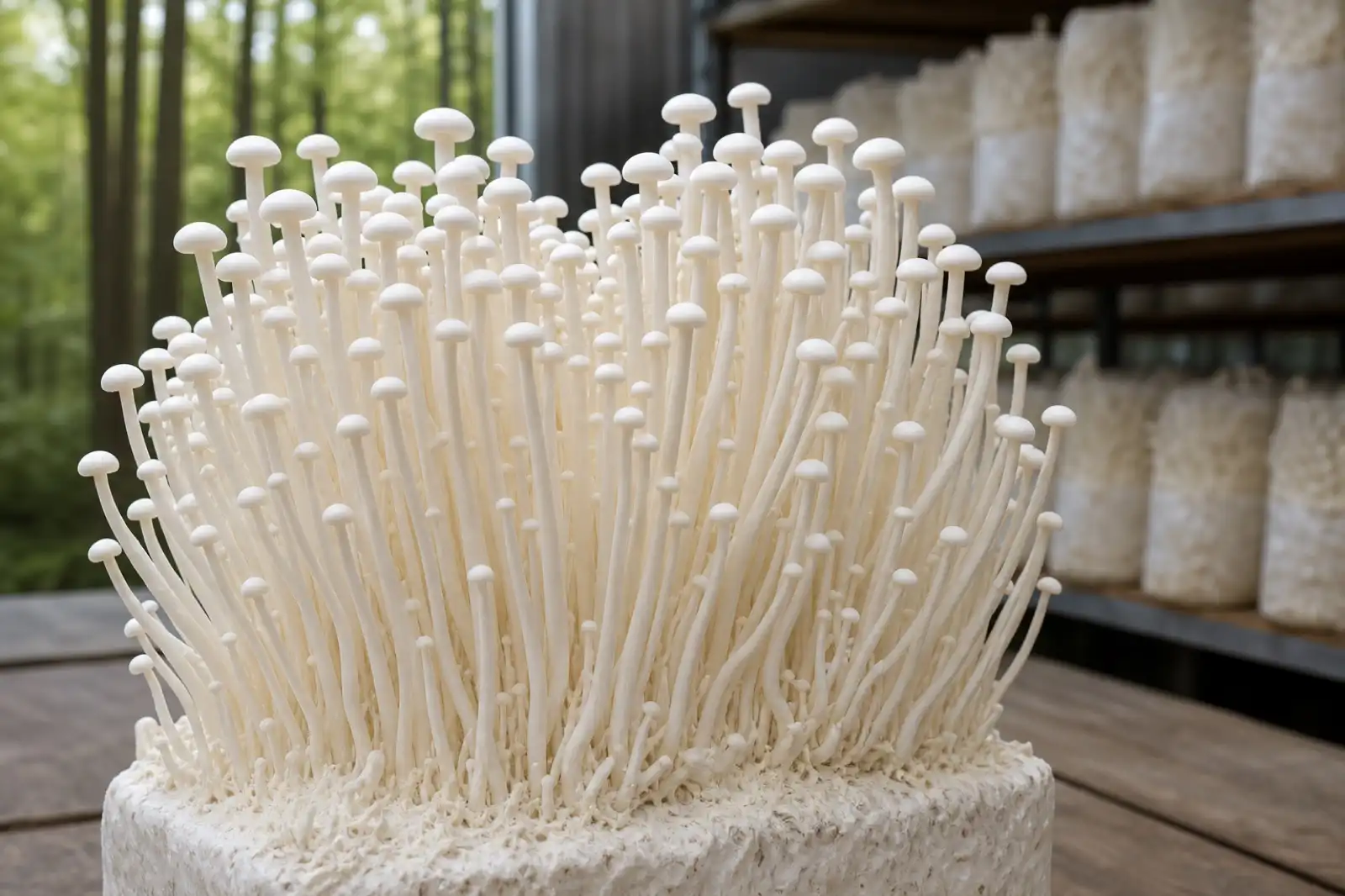
Flammulina filiformis: Cultivated Enoki Mushroom Guide
Understand cultivated enoki taxonomy, identification, growing conditions, nutrition, Listeria food-safety precautions, lookalikes, and FAQs.
recipes
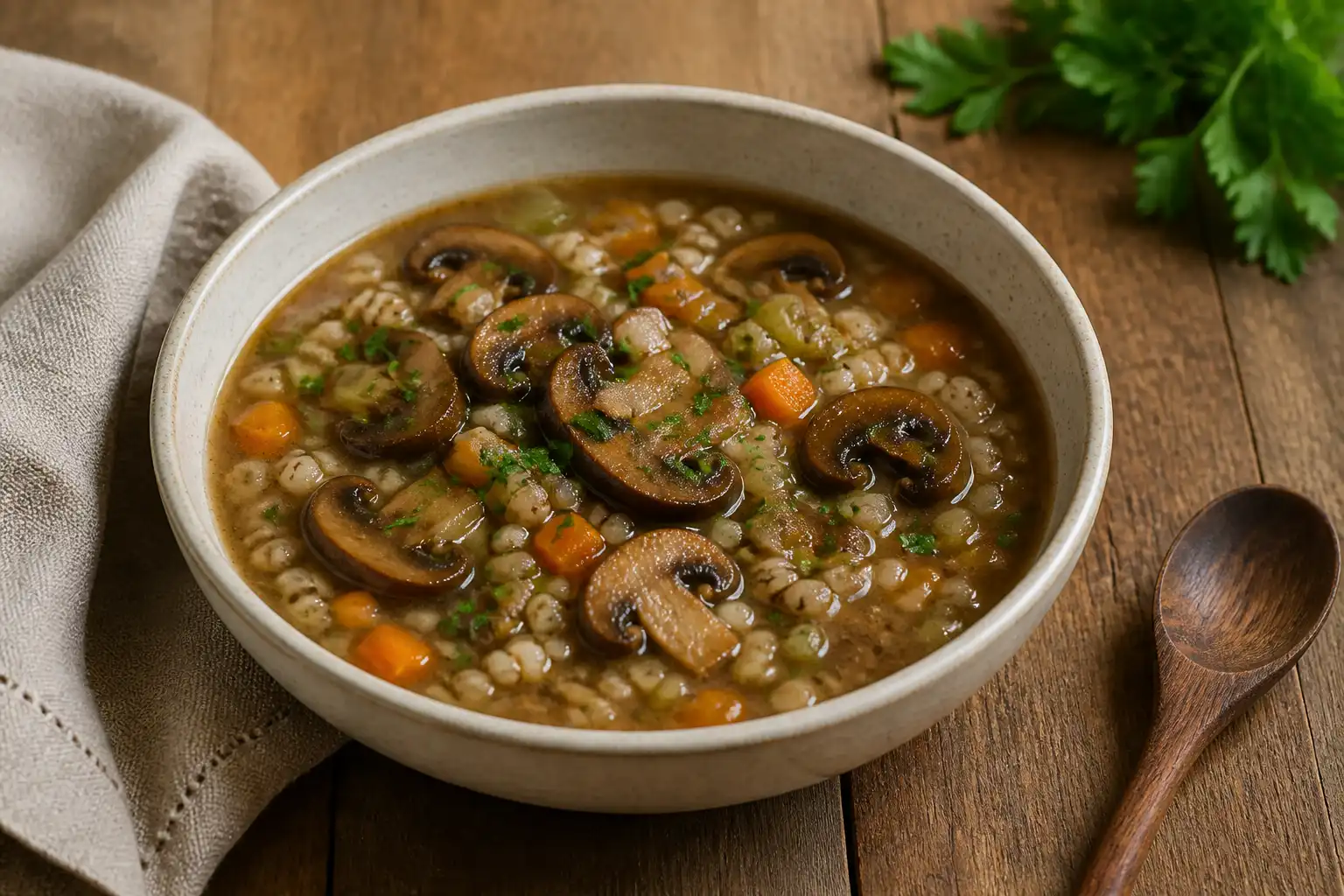
Mushroom Barley Soup with Pearl Barley
Make mushroom barley soup with pearl barley, browned cremini mushrooms, vegetables, and a clear make-ahead and food-safety plan.
recipes
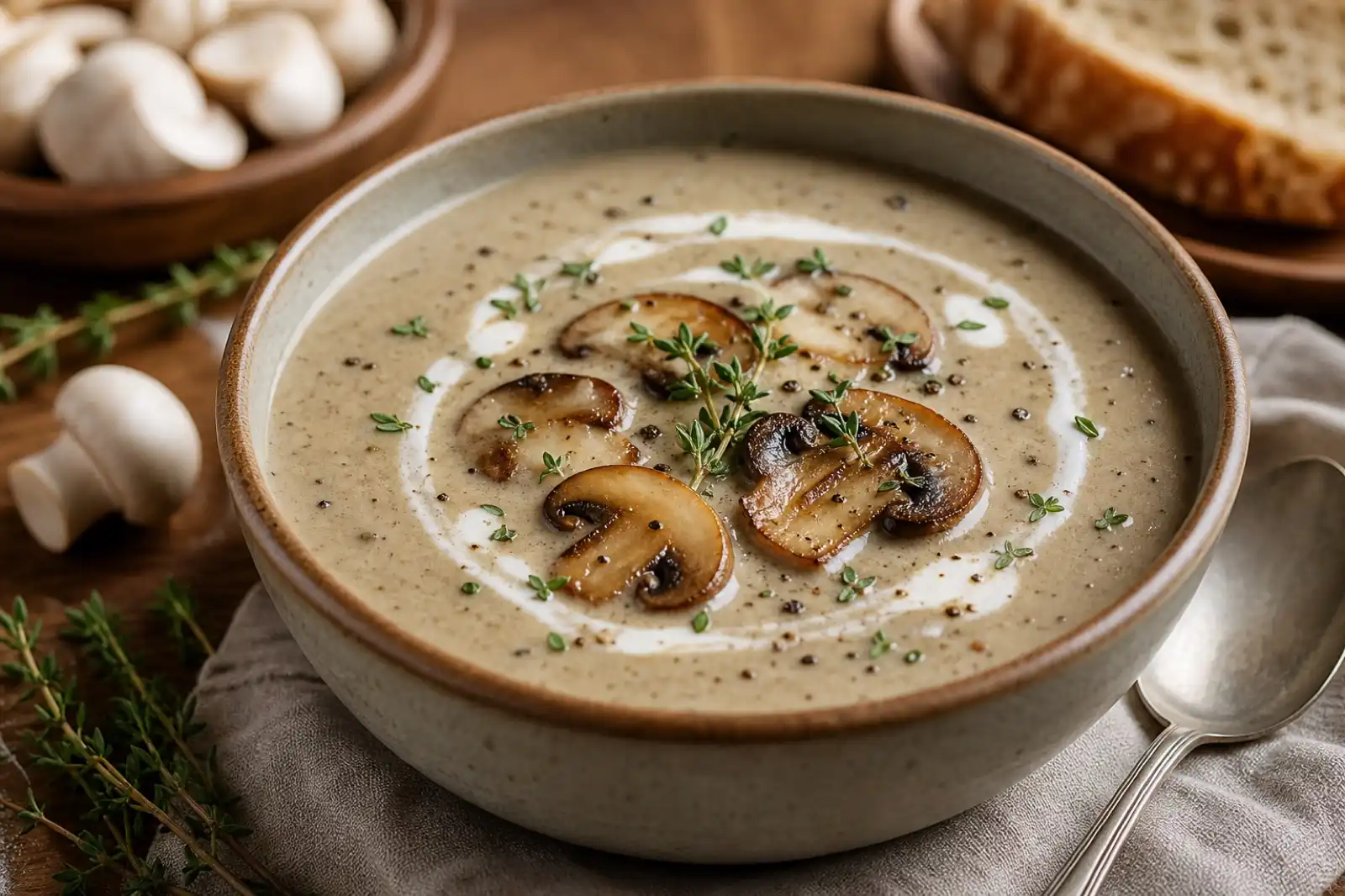
Creamy Mushroom Soup from Scratch
Make creamy mushroom soup from scratch with cultivated cremini mushrooms, clear steps, practical substitutions, and conservative food-safety guidance.
Continue exploring
Browse more practical guides in Recipes or visit the mushroom encyclopedia.