Mushroom Encyclopedia
Flammulina filiformis: Cultivated Enoki Mushroom Guide
Understand cultivated enoki taxonomy, identification, growing conditions, nutrition, Listeria food-safety precautions, lookalikes, and FAQs.
By MushroomScope Editorial Team · · Updated
Species context
Treat profiles as reference material
Species profiles summarize documented traits, taxonomy, and lookalikes, but natural variation can be substantial.
Use the safety checklist →Decision limit
A profile cannot authenticate a specimen
Do not eat a wild mushroom from an online match, single feature, or generated image.
Read the safety disclaimer →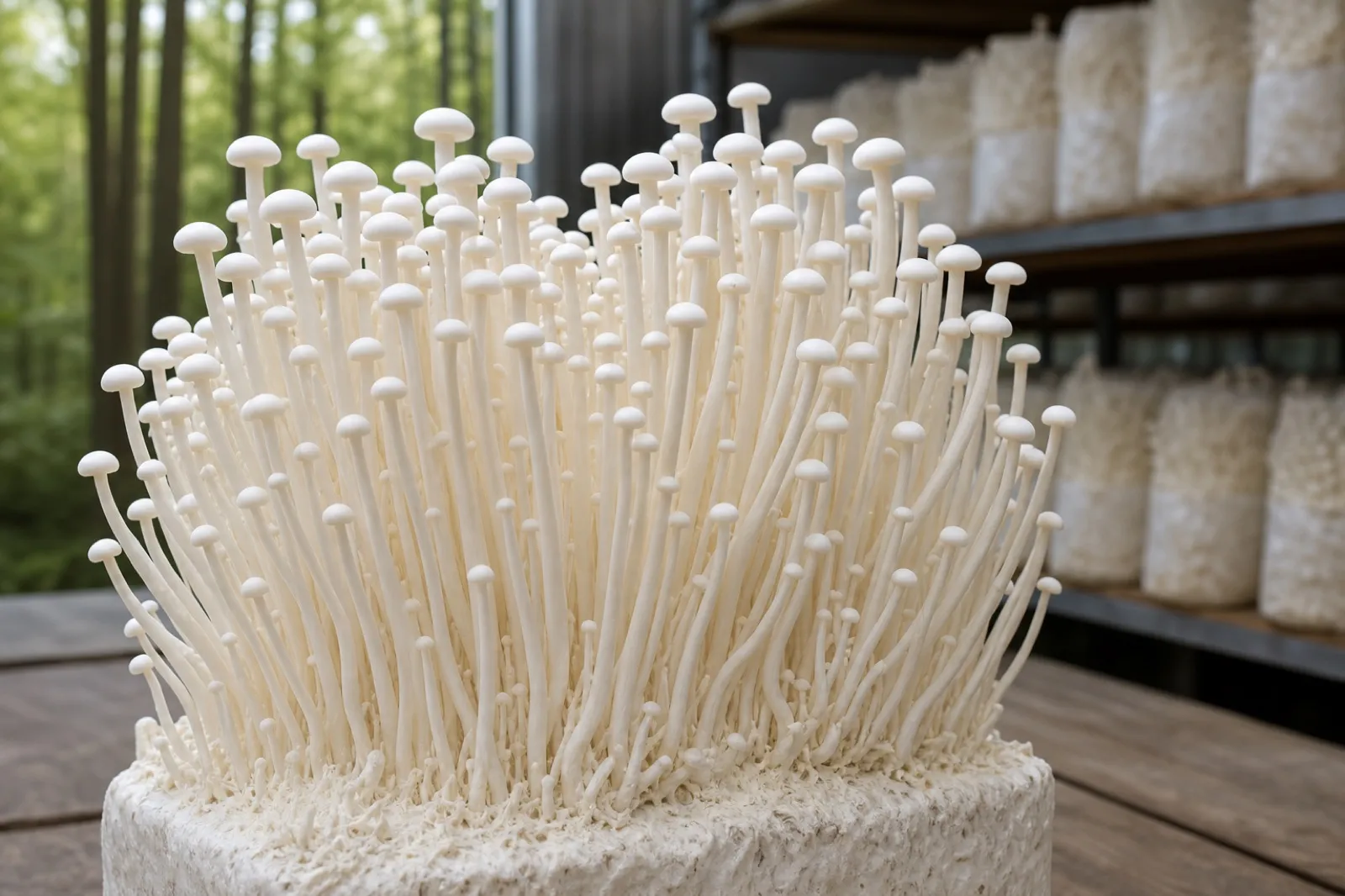
Quick facts
- Scientific name
- Flammulina filiformis
- Common names
- enoki, enokitake, golden needle mushroom
- Taxonomy
- Flammulina · Physalacriaceae
- Edibility context
- Edible: Commercial enoki is edible when handled hygienically and cooked thoroughly.
- Spore print
- White.
- Toxicity context
- Low: The mushroom itself is an established food, but enoki has been involved in serious Listeria outbreaks; raw consumption is not recommended.
- Season
- October, November, December, January, February, March
- Growing difficulty
- Moderate
- Regions
- East Asia, cultivated worldwide, Flammulina relatives occur broadly in temperate regions
Safety limit: These labels summarize documented context; they never authenticate a wild specimen. Cooking does not make a poisonous species safe.
Introduction
Flammulina filiformis is the species most commonly associated with the slender white clusters sold as enoki in East Asian cultivation. Older resources often use F. velutipes, and commercial labels may not reflect modern species boundaries. Cultivation creates an appearance dramatically different from wild-type Flammulina: low light and elevated carbon dioxide produce long white stems and very small caps.
This guide is designed as a species account, not a remote identification or medical consultation. Mushroom form changes with age, weather, strain, substrate, and cultivation conditions. Common names also cross borders and species boundaries. For those reasons, the scientific name, the source of a specimen, and the evidence behind a claim are kept explicit throughout the page.
A high-confidence record starts with provenance. For a cultivated mushroom, note the producer, strain or culture name if available, substrate, harvest date, and storage history. For a wild observation, record precise habitat without publicly exposing a sensitive population, photograph the attachment and underside, note nearby trees, and make a spore print when appropriate. Do not taste an unidentified mushroom.
Identification
Packaged cultivated enoki forms a dense cluster of narrow pale stems topped by tiny cream caps. Wild-type fruit bodies can be shorter, darker, and orange-brown, often with a velvety dark stem base. This contrast makes enoki a poor visual template for foraging. A white spore print, tissue characters, substrate, microscopy, and sometimes DNA are needed to distinguish Flammulina from dangerous brown-spored wood inhabitants.
Macroscopic characters
- Cap or upper surface: In cultivation, tiny and white to cream; wild-type fruit bodies may have broader yellow-brown to orange-brown caps.
- Fertile surface: Pale, crowded gills attached to or slightly notched at the stem.
- Stem or attachment: Very long, thin, and white in high-carbon-dioxide cultivation; darker and velvety toward the base in wild-type forms.
- Flesh: Thin, pale, and elastic in cultivated clusters.
- Spore print: White.
Observe multiple fruit bodies at different stages. Immature specimens may conceal the fertile surface, while old specimens can fade, crack, host insects, or develop misleading stains. Measure rather than guessing size, photograph colors in natural light, and cut one specimen lengthwise when collection is legal and ecologically appropriate. A spore print is useful, but print color alone never proves an identification.
Similar species
- Flammulina velutipes: Historically used broadly for enoki; modern studies distinguish lineages, and market names may remain imprecise.
- Galerina marginata: A deadly poisonous wood-growing mushroom with rusty-brown spores; never use cultivated enoki appearance to assess a wild specimen.
- Other small wood-growing mushrooms: Many overlap in cap color and season and require full expert identification.
The comparison list is not exhaustive. Geographic checklists and local keys matter because the set of possible lookalikes changes by continent and habitat. Apps can organize observations, but their suggestions should be treated as hypotheses. If consumption is contemplated, obtain in-person confirmation from a qualified local expert who can inspect the whole specimen.
Scientific Classification
| Rank | Name |
|---|---|
| Kingdom | Fungi |
| Phylum | Basidiomycota |
| Class | Agaricomycetes |
| Order | Agaricales |
| Family | Physalacriaceae |
| Genus | Flammulina |
| Species | Flammulina filiformis |
Taxonomy is a working scientific framework, not a permanent label. DNA studies can reveal that an old name covered several lineages or that market material was identified under a name used in a broad historical sense. Database records should therefore preserve the scientific name used by a cited paper and its date, rather than silently updating a study organism to a newer name.
Market enoki and wild velvet shank are not visual equivalents
The tall white market phenotype is created by a production environment. A narrow collar or sleeve can constrain the cluster, low light limits pigmentation, and elevated carbon dioxide promotes stem extension while suppressing cap expansion. Wild Flammulina fruit bodies experience fresh air and light, so they may develop broader amber caps and a darker velvety stem base. Neither form alone settles the species name.
This distinction prevents two opposite errors: rejecting a correctly labeled cultivated product because it does not resemble a field guide, or treating any cool-season mushroom on wood as edible because it resembles “natural enoki.” Wild identification is a separate, high-consequence task. Rust-brown spores, a ring, or other disagreement with Flammulina requires stopping, not explaining the character away.
Habitat
Flammulina species decompose wood and tolerate cool fruiting conditions. Commercial farms use prepared substrate in bottles or bags, a clean culture, controlled incubation, and environmental manipulation. The long-stemmed market form is a production phenotype, not the only natural shape of the organism. Outdoor observations should note wood identity and whether it is buried, because mushrooms may appear terrestrial while attached below ground.
Known range represented here: East Asia, cultivated worldwide, Flammulina relatives occur broadly in temperate regions. Typical substrates: sterilized sawdust-based mixtures, hardwood and buried wood in nature. Indoor crops are year-round; wild-type Flammulina often fruits in cool weather.
Habitat is part of the identification, not decorative background. Record whether wood is hardwood or conifer, alive or dead, standing or fallen, and visibly exposed or buried. Note whether fruit bodies grow singly, in shelves, or from a common base. Weather, latitude, elevation, and local tree communities can shift the fruiting window, so calendar months are orientation rather than a guarantee.
Responsible observation means requesting permission, following collection limits, avoiding rare populations, and minimizing damage to wood and soil. Mushrooms are reproductive structures of a larger mycelial organism. Removing every young fruit body prevents other people from studying it and reduces spore dispersal, even though careful collection of a few specimens does not necessarily remove the underlying mycelium.
Growing Guide
Home production is possible with a verified kit, but reproducing uniform commercial clusters is demanding. Sterile substrate preparation, bottle geometry, cooling, humidity, light restriction, and carbon-dioxide control all influence form. Do not seal an improvised container without filtered gas exchange. Harvest cleanly and cool the crop promptly. If green, black, pink, or foul-smelling contamination appears, isolate and discard the block according to supplier advice.
A safe cultivation workflow
- Choose verified material. Buy spawn or a fruiting block from a specialist supplier that identifies the culture and provides strain-specific parameters.
- Match the substrate. Use sterilized sawdust-based mixtures or hardwood and buried wood in nature only through a proven recipe. Moisture and heat treatment must suit the method.
- Separate clean and dirty work. Clean tools and surfaces, wash hands, label every batch, and keep finished fruiting areas away from substrate preparation waste.
- Monitor colonization. Healthy appearance depends on the species and culture. Do not assume every white growth is the intended fungus; odor and unexpected pigments are warning signs.
- Initiate fruiting deliberately. Temperature, humidity, light, oxygen, and carbon dioxide interact. Follow the culture supplier rather than copying one universal number.
- Harvest and cool promptly. Use clean tools, avoid saturating fruit bodies, refrigerate culinary crops, and document yield and abnormalities.
Home cultivation is not a substitute for food-safety controls. Heat treatment reduces competing organisms but does not make poor handling harmless. Never use chemically treated wood, unknown agricultural waste, or visibly contaminated substrate for food production. If a block produces an unexpected mushroom, do not eat it based on resemblance to the intended crop.
Record variables instead of copying one universal recipe
Commercial-looking enoki depends on the interaction of strain, substrate formula, container geometry, temperature, light, fresh-air exchange, humidity, and timing. Record each batch rather than changing several controls at once. During colonization, note inoculation date, substrate mass and moisture basis, room temperature, and the date growth reaches the container edge. During fruiting, log air temperature, relative humidity, fresh-air schedule, light exposure, cluster height, cap expansion, and harvest mass.
Long stems are not proof that conditions are healthy. Excess carbon dioxide can also accompany weak air movement and uneven surfaces, while excessive humidity can leave water on caps. Follow an authenticated culture supplier’s range and use observations to make one measured adjustment. The fruiting-conditions guide explains how humidity and fresh air interact; the contamination guide covers isolation and discard decisions when color, odor, or texture changes unexpectedly.
After harvest, clean equipment between batches and cool mushrooms promptly. A home grow does not have the environmental monitoring or validated sanitation program of a regulated food facility, so do not make shelf-life claims from appearance alone.
Cooking cultivated enoki by texture, not by trend
Trim away the compact substrate base while keeping sound stems together, then separate clusters enough for water and heat to reach them. The stems release moisture and soften, while the small caps cook quickly. In soup or hot pot, add them early enough to cook throughout without boiling until stringy. For a skillet dish, spread them in a thin layer so released water can evaporate before seasoning.
Raw enoki has appeared in salads and online recipes, but its outbreak history makes “traditional” or “fresh” an inadequate safety argument. Check the package and current recall notices, prevent its juices from contacting ready-to-eat foods, wash hands and utensils, and cook thoroughly according to local public-health advice. Discard packages that are recalled, leaking, slimy, abnormally discolored, or foul-smelling; rinsing does not correct a recalled product.
This culinary intent is separate from the shiitake noodle stir-fry, where enoki could be a texture variation but cannot simply replace shiitake’s broader caps and stronger browning behavior. Ingredient substitutions should account for moisture release and cooking time rather than treating every cultivated mushroom as mechanically identical.
Health Benefits
Enoki contributes texture, fiber, and micronutrients to meals. Cell, animal, and extract studies investigate polysaccharides and other compounds, but they do not show that cooked enoki prevents tumors or treats chronic disease in people. Food safety is the better-established health issue. Nutritional benefits cannot compensate for contamination, and washing alone is not a validated substitute for thorough cooking.
The phrase “health benefits” should begin with what can be supported. Mushrooms can contribute variety, fiber, micronutrients, and flavor to a balanced diet. Nutrient values vary by strain, substrate, water content, maturity, ultraviolet exposure, processing, and cooking. USDA FoodData Central is useful for representative values, but a database average is not a laboratory analysis of a particular package.
Research articles often test cultured cells, animals, purified molecules, or concentrated extracts. Those designs answer different questions from a human trial of a food. They may identify mechanisms worth studying, but they cannot establish that eating the mushroom prevents or treats disease. Even randomized trials can be too small, short, biased, or product-specific to support broad advice.
Supplements introduce additional uncertainty. “Fruiting body,” “mycelium,” and “extract” describe different materials; extraction ratios do not by themselves demonstrate potency; and common names may conceal taxonomic ambiguity. Look for independent identity and contaminant testing, a complete ingredient list, lot number, and realistic claims. A supplement should never replace diagnosis, vaccination, surgery, prescribed medicine, or evidence-based cancer care.
Safety
Public-health agencies have investigated multistate Listeria outbreaks linked to enoki mushrooms. Keep packages refrigerated, observe recalls, avoid cross-contamination, and cook enoki thoroughly rather than serving it raw. Pregnant people, older adults, newborns, and immunocompromised people face higher risk from invasive listeriosis and should follow local public-health advice. Never forage “wild enoki” without expert verification because deadly Galerina can share wood habitat and cool-season timing.
General food practice still applies: source cultivated mushrooms from reputable producers, transport them cool, wash hands and utensils, prevent contact with raw animal foods, and cook with clean equipment. Cooking can reduce microbial risk and improve digestibility, but it cannot make a poisonous species safe and may not destroy every toxin or environmental contaminant.
Children, older adults, pregnant people, and immunocompromised individuals can face greater consequences from foodborne infection. Follow national and local recall advice. For severe vomiting, persistent diarrhea, confusion, jaundice, breathing difficulty, or symptoms after eating an unidentified wild mushroom, contact emergency services or a poison center immediately; do not wait for an online identification.
Keep cultivated enoki separate from wild velvet shank
Commercial enoki appearance reflects production conditions and does not provide a field-identification shortcut. The velvet shank guide documents the dark lower stem, cool-season hardwood setting, spore evidence, regional name limits, and the safety boundary with brown-spored wood-growing mushrooms.
Follow the cold-chain history, not just the use-by date
Cultivated enoki is sold as a dense, moist cluster with extensive cut surface area. That form makes lot identity and temperature history operationally important. At purchase, keep the original package long enough to retain the producer, country, lot, and date information. Refrigerate promptly, prevent juices from contacting ready-to-eat foods, and clean hands, utensils, and surfaces after preparation. Discard mushrooms covered by a relevant recall rather than trying to wash or cook away the recall decision.
Temperature abuse and time cannot be reconstructed from appearance. A white cluster without visible spoilage can still carry microbial risk, while browning or drying does not diagnose a specific pathogen. People who are pregnant, aged 65 or older, or immunocompromised face higher consequences from listeriosis and should follow current public-health advice about higher-risk foods. This is a product-handling boundary, not a reason to treat wild Flammulina identification as a grocery question.
Separate morphology created by the farm from species characters
The familiar long white stem and tiny pale cap are production phenotypes shaped by strain, light, carbon dioxide, temperature, humidity, and crowding. Wild fruit bodies exposed to normal light and ventilation can develop darker, broader caps and short, velvety stems. Therefore a market cluster should not be used as the sole visual template for identifying a woodland specimen. Conversely, a brown velvet-stemmed mushroom on wood cannot be assumed to be an escaped grocery enoki.
For a cultivation comparison, change one recorded variable at a time. Photograph the same strain at pinning, early elongation, and harvest; record substrate dry mass, inoculation date, incubation temperature, fruiting temperature, relative humidity, carbon-dioxide reading at canopy height, light schedule, fresh yield, and abnormalities. A dense stem is not automatically a success if caps abort, bases become waterlogged, or airflow and hygiene controls are compromised. The mushroom batch records guide provides a traceable format for separating strain effects from room effects.
References
- National Center for Biotechnology Information. NCBI Taxonomy Browser. Used for a current lineage check; NCBI notes that nomenclature should also be assessed against specialist literature.
- U.S. Department of Agriculture. FoodData Central. Food-composition reference; values vary by sample and preparation.
- Penn State Extension. Mushroom Food Safety. Production hygiene and preventive-control context.
- Schoch CL, et al. NCBI Taxonomy: a comprehensive update on curation, resources and tools. Database (Oxford). 2020.
- U.S. Centers for Disease Control and Prevention. Listeria Outbreak Linked to Enoki Mushrooms. Archived outbreak investigation.
Last editorial review: August 28, 2026. Scientific names, recall advice, and public-health recommendations should be rechecked at every substantive update. No named clinician or mycologist reviewed this article; review status is editorial.
Source quality notes
MushroomScope cites sources that match the page scope, such as taxonomic databases, extension guidance, food-safety agencies, food-composition databases, and peer-reviewed or institutional health references. Sources support context and uncertainty; they do not turn an online page into specimen identification, medical advice, or a tested recipe record.
Frequently asked questions
Can this mushroom be identified from a photograph?
No. A photograph can support documentation, but a defensible identification of Flammulina filiformis also considers substrate, location, developmental stage, underside, spore deposit, odor, texture, and sometimes microscopy or DNA. Never make an edibility decision from an image alone.
Is it safe to eat?
enoki is an established food when it comes from a reputable cultivated source and is stored and cooked properly. Individual allergy or intolerance is still possible. A wild specimen needs independent expert confirmation.
Can beginners grow it?
The database rates cultivation as moderate. Beginners should use authenticated spawn or a reputable ready-to-fruit block, follow the supplier's temperature and hygiene instructions, and discard cultures showing unexplained mold colors or foul odors.
Does it have proven health benefits?
It has nutritional or research interest, but that wording must not be converted into a treatment claim. Laboratory findings do not prove clinical benefit, and human evidence must match the exact species, preparation, dose, and outcome.
How should it be stored?
Refrigerate fresh cultivated mushrooms promptly in breathable food-safe packaging and use them while sound. Keep dried material sealed, dry, and away from heat. Follow local recall notices and discard spoiled or contaminated products.
Related guides
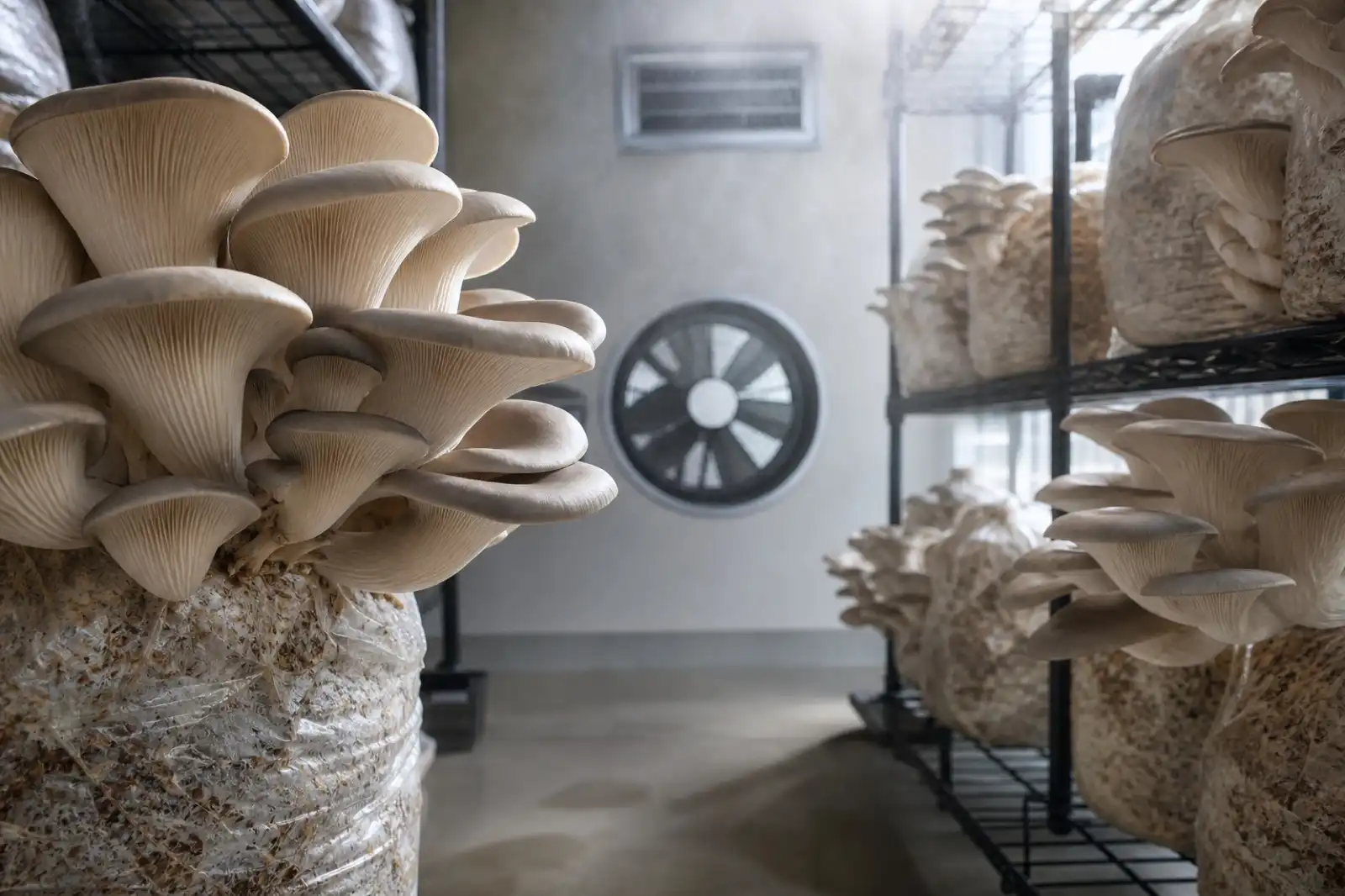
growing
Mushroom Fruiting Conditions: Humidity, Air, Light, and Temperature
Use humidity, fresh air, light, and temperature as a linked observation system for authenticated cultivated mushroom blocks—not a universal settings chart.
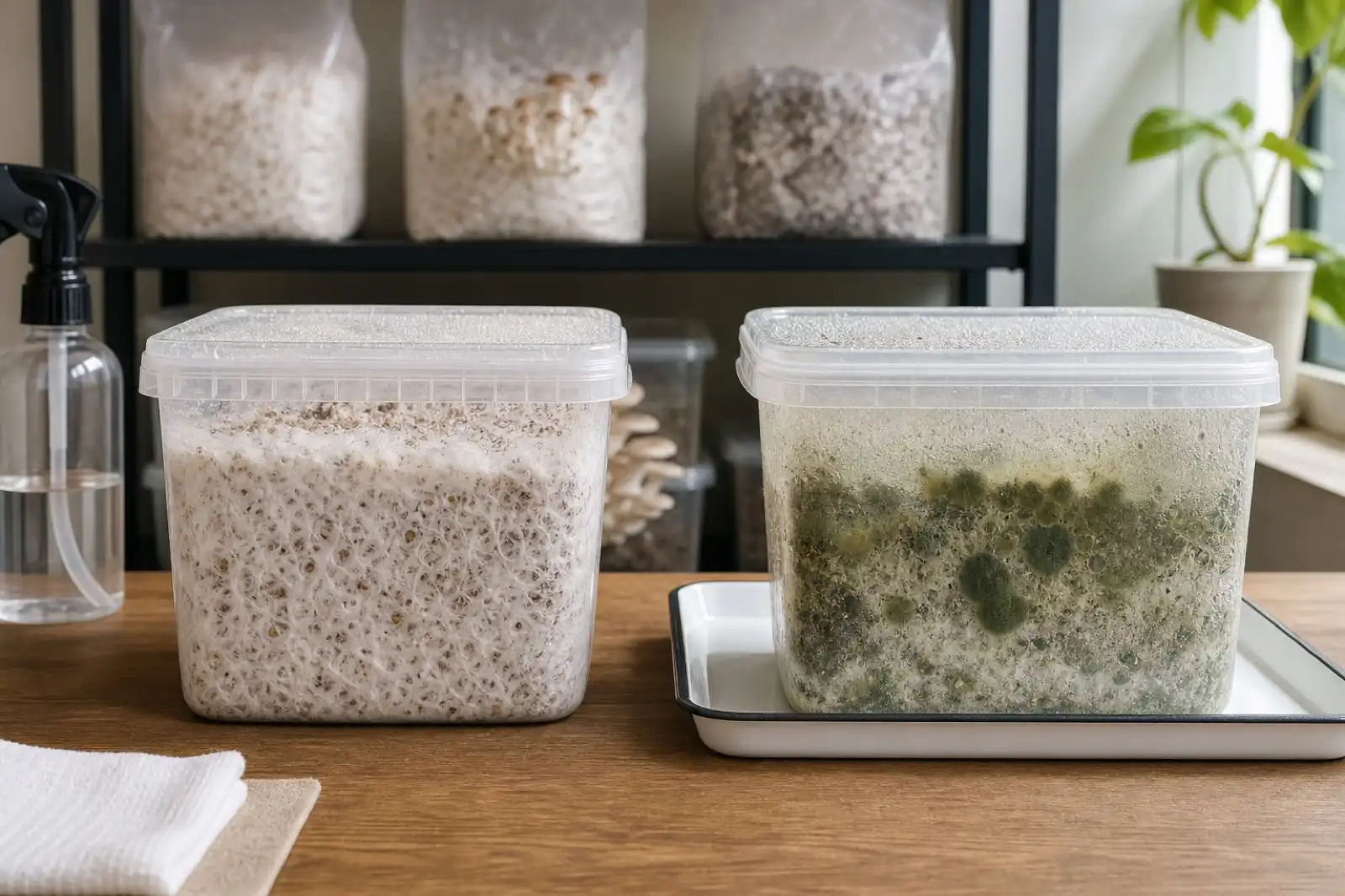
growing
Mushroom Contamination: Isolate, Record, and Prevent Repeat Problems
Recognize mushroom contamination without relying on color alone; isolate suspect batches, avoid food salvage, document the workflow, and prevent repeat issues.
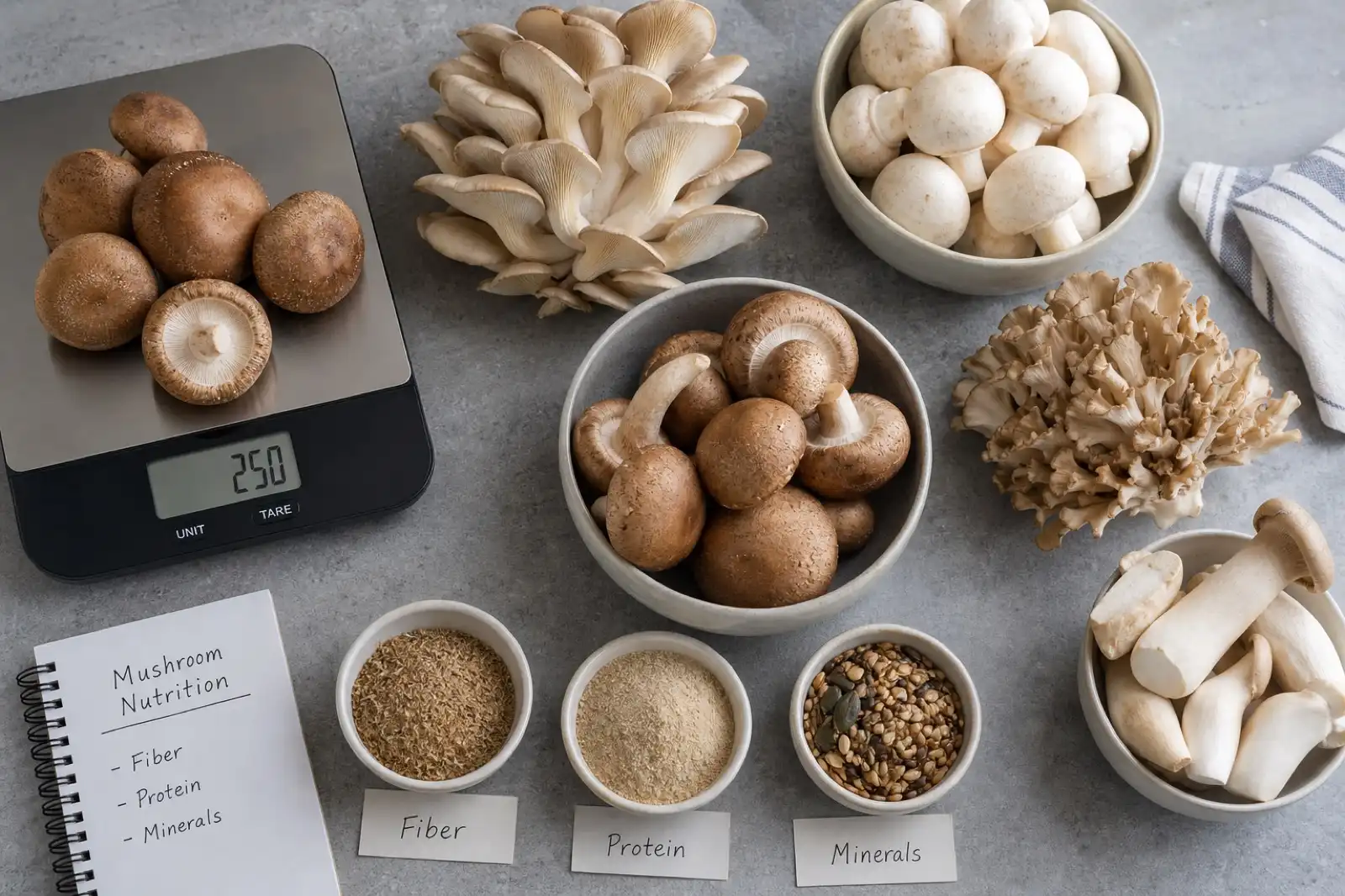
health
Mushroom Nutrition: Fiber, Protein, Calories, and Vitamins
Are mushrooms a source of fiber or protein? Compare calories, fiber, protein, vitamins, food forms, serving sizes, and preparation without overstating benefits.
Continue exploring
Browse more practical guides in Mushroom Encyclopedia or visit the mushroom encyclopedia.