Recipes
Mushroom Barley Soup with Pearl Barley
Make mushroom barley soup with pearl barley, browned cremini mushrooms, vegetables, and a clear make-ahead and food-safety plan.
By MushroomScope Editorial Team · · Updated
Food source
Cook identified edible mushrooms
Recipes assume mushrooms sold as food by a reputable supplier, not foraged specimens needing identification.
Open the recipe hub →Kitchen safety
Handle leftovers promptly
Cool leftovers in shallow containers, refrigerate promptly, and discard food held unsafely or showing spoilage.
Review preparation safety →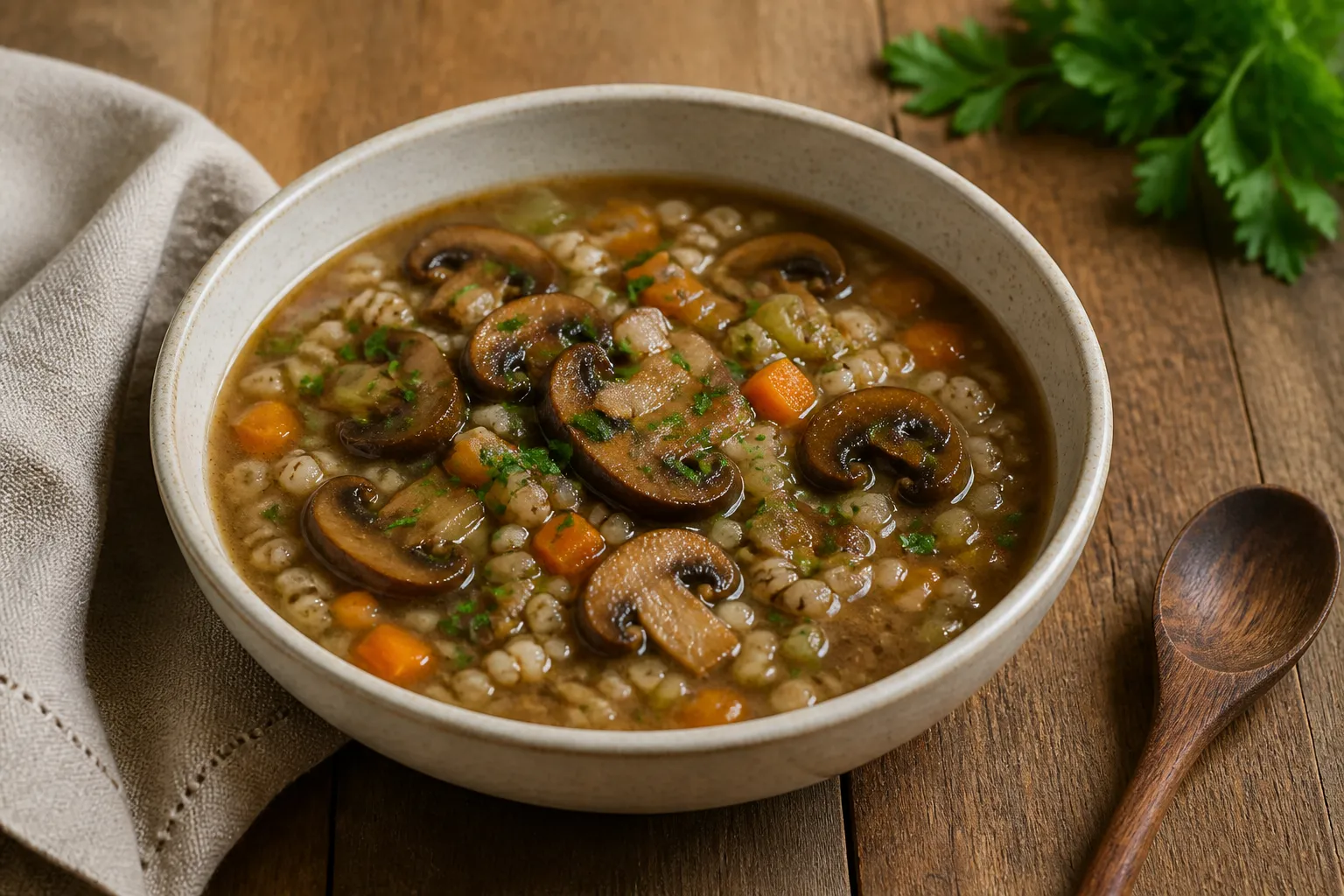
Recipe details
- Prep time
- PT20M
- Cook time
- PT50M
- Yield
- 6 servings
Ingredients
- 2 tablespoons olive oil
- 450 g cultivated cremini mushrooms, sliced
- 1 medium yellow onion, diced
- 2 carrots, diced
- 2 celery stalks, diced
- 3 garlic cloves, minced
- 1 tablespoon tomato paste
- 150 g pearl barley, rinsed
- 1.5 litres low-sodium vegetable broth, plus more for reheating
- 2 teaspoons fresh thyme leaves or 3/4 teaspoon dried thyme
- 1 bay leaf
- 1 tablespoon soy sauce or tamari
- 2 tablespoons chopped parsley
- salt and black pepper to taste
Instructions
- Buy labeled cultivated mushrooms from a reputable food seller; refrigerate them and keep them separate from raw animal foods.
- Heat 1 tablespoon oil in a wide soup pot over medium-high heat. Brown half the mushrooms in one layer, transfer to a bowl, and repeat with the remaining oil and mushrooms.
- Reduce to medium. Cook onion, carrots, celery, and a pinch of salt until softened, 7 to 9 minutes. Add garlic and tomato paste for 1 minute.
- Add barley, broth, thyme, bay, soy sauce, and most browned mushrooms. Bring to a boil, lower to a gentle simmer, and partially cover.
- Simmer, stirring occasionally, until the barley is tender, about 35 to 45 minutes. Remove the bay leaf, return reserved mushrooms, and season to taste.
- Stir in parsley and serve. Divide leftovers into shallow containers and refrigerate promptly; add broth when reheating because barley thickens the soup as it stands.
What makes this mushroom barley soup work
This recipe gives mushrooms and barley separate jobs. Browning the mushrooms first creates a deeper savory base, while pearl barley slowly thickens the broth without needing flour or cream. The finished soup should be brothy but substantial, with tender grains and mushrooms that still have some shape.
Use pearl barley, not quick-cooking barley, for the stated timing. It does not need soaking; rinse it to remove dust, then simmer it in the pot. Check the package if you have hulled or quick barley, because those forms need different cooking times. Keep extra broth nearby: barley continues to absorb liquid after cooking.
Use only mushrooms labeled and sold as food. A soup recipe cannot identify a wild mushroom, and heat does not make an unidentified or poisonous mushroom safe. The cremini mushroom guide is useful ingredient background, not foraging identification advice.
Ingredients and smart substitutions
- Cremini mushrooms: Their firm texture works especially well. White button mushrooms are a direct substitute. Use a small amount of shiitake for a stronger aroma, but keep cremini or buttons as the bulk of the mushrooms.
- Pearl barley: It gives the soup its characteristic chew. Do not use quick barley without reducing the simmering time according to its package.
- Low-sodium vegetable broth: This makes the final seasoning easier to control. Mushroom broth is optional, not required.
- Soy sauce or tamari: A small amount adds seasoning depth. Choose tamari only when its label and all other packaged ingredients meet a needed gluten-free standard.
- Thyme, bay, and parsley: Thyme and bay support the long simmer; parsley is a fresh finish, not an early cooking herb.
FDA advises keeping mushrooms and other perishable produce at 40°F / 4°C or below, separating produce from raw meat, poultry, and seafood, and starting with clean hands and equipment. Rinse mushrooms briefly under running water or wipe away debris; do not use soap or produce wash. FDA’s produce-safety guidance explains those food-handling boundaries.
Barley contains gluten, so this recipe is not gluten-free even if tamari and certified broth are used. Replacing barley with rice or another grain changes liquid needs, cooking time, texture, and the recipe’s defining character; use a recipe developed for that grain rather than making a direct volume substitution.
If using dried mushrooms, buy a food product with clear identity and storage directions. Strain rehydration liquid carefully because grit can settle at the bottom, and include that liquid within the total broth volume. Dried wild mushrooms from an uncertain source do not become authenticated merely because they are packaged or simmered.
Prepare the ingredients before heating the pot
Slice mushrooms to a reasonably consistent thickness so a batch browns at a similar rate. Dice the onion, carrots, and celery before starting, rinse the pearl barley, measure broth, and set aside a clean bowl for the browned mushrooms. This sequence prevents the first batch from overcooking while vegetables are still being cut.
Choose a heavy soup pot with enough surface area to brown mushrooms and enough headroom for simmering without splashing. If the pot is narrow, use a separate wide skillet for browning and transfer the mushrooms afterward. Do not crowd a small pot merely to avoid washing a second pan.
Keep raw animal foods and their boards, knives, and containers outside this produce-focused workflow. Wash hands and clean surfaces before preparing vegetables. If you add meat or another perishable ingredient, follow an appropriate recipe and food-safety method for that ingredient; the timing here was tested conceptually around a vegan soup.
Build the flavor in stages
Brown, then reserve, the mushrooms
Heat a wide soup pot with half the oil over medium-high heat. Add half the mushrooms in a loose layer and leave them undisturbed until the contact surfaces begin to brown. Stir occasionally until the released moisture has mostly cooked away, then transfer the batch to a bowl. Repeat with the remaining mushrooms. Reserve a small handful for the last few minutes so the final soup has a clear mushroom texture.
Crowding the pot is the most common reason mushrooms look pale and watery. They naturally release moisture when heated; a wide pot and smaller batches give that moisture room to evaporate. If dark, acrid bits form, lower the heat and remove them rather than scraping them into the soup.
Soften the vegetables and simmer the barley
Lower the heat to medium and cook the onion, carrots, and celery with a pinch of salt until softened, about 7 to 9 minutes. Stir in garlic and tomato paste for one minute. Add the rinsed barley, broth, thyme, bay leaf, soy sauce or tamari, and all but the reserved mushrooms.
Bring the pot to a boil, then lower it to a gentle simmer and partially cover. A hard boil can reduce the broth before the barley is tender. Stir from the bottom occasionally and begin checking at 35 minutes. The grains should be chewy but no longer hard in their centers. Add hot broth in small amounts if the pot looks dry before that point.
Check several grains from different parts of the pot. One soft grain does not prove the whole batch is ready, especially if the simmer was uneven or barley settled in a corner. Pearl barley should retain a pleasant chew but not a hard, chalky center. Package age, brand, pot width, elevation, and burner behavior can shift the stated range.
If the vegetables are tender before the barley, continue at a gentle simmer and protect the liquid level with small additions of hot broth. Do not add cold liquid in a large amount, because it interrupts the simmer and makes the next timing check harder to interpret. Stir enough to prevent sticking without crushing the softened vegetables.
If the barley remains hard well beyond its package guidance, confirm that the pot is actually simmering and that an acidic ingredient was not increased substantially. Continue only while the food has remained under a safe, controlled cooking workflow; do not leave the pot lukewarm for an extended pause and then resume later.
Finish, then adjust the texture
Remove the bay leaf and return the reserved mushrooms. Stir in parsley, taste, and season with pepper and salt only at the end; broth brands and soy sauce differ greatly in salt. If the soup is too thick, add broth. If it is too thin once the barley is tender, simmer uncovered for a few minutes instead of adding more grain.
For a silkier mushroom meal, make the creamy mushroom soup. For a skillet-first side dish, use the sautéed mushrooms with garlic and herbs.
Adjust seasoning without hiding the mushrooms
Taste the broth, barley, and a mushroom piece together. Soy sauce, broth, and added salt contribute in different ways, so delay the final salt decision until the barley is tender and the liquid has reduced. Black pepper, thyme, and parsley should support the browned mushrooms rather than cover a scorched or overly salty base.
A small amount of lemon juice can brighten a flat soup, but add it at the end and taste after each addition. Acidity cannot repair burnt fond, spoiled ingredients, or a soup with unsafe handling. If the soup is too salty, dilution may help flavor but does not reverse an allergen, contamination, or time-temperature problem.
For more mushroom intensity, brown a portion a little deeper or include a modest amount of properly prepared dried culinary mushroom. Do not solve blandness by crowding a larger mushroom batch into the pot, where it will steam, or by using an unidentified wild ingredient.
Scale the recipe while preserving the method
A half batch may evaporate faster in the same wide pot, so begin checking liquid and barley earlier. A double batch needs a larger vessel and mushrooms browned in several rounds; doubling the ingredient list does not double the available pan surface. Keep some extra hot broth ready but stop adding when the grains and serving texture are correct.
When serving a crowd, cool leftovers immediately after the meal rather than leaving the full stockpot on a counter for repeated helpings. Divide the remaining soup among shallow containers in quantities that will cool and reheat efficiently. Label each with the preparation date instead of mixing a later batch into an older container.
For meal preparation, consider freezing part of the freshly cooled batch rather than waiting until the end of the refrigerated storage window. Package in meal-sized portions and add broth during reheating. Discard containers with failed seals, unknown dates, or uncertain temperature history.
Make-ahead, storage, and reheating
Mushroom barley soup is well suited to making ahead, but it will thicken overnight. Reheat over medium-low heat and stir in broth or water a little at a time until the grains move freely in the bowl. Taste before adding salt, since concentrated broth may already be seasoned enough.
USDA FSIS advises refrigerating perishable leftovers within two hours of cooking, or within one hour when the ambient temperature is above 90°F / 32°C. Divide soup into shallow covered containers so it cools rapidly, keep the refrigerator at 40°F / 4°C or below, and use refrigerated leftovers within 3 to 4 days. Freeze portions you will not use in that window. USDA’s leftovers guidance is the source for these cooling and storage limits.
Reheat only the portion you plan to eat until steaming hot. Do not rely on smell or appearance to judge soup that was left at room temperature beyond the recommended window; discard it rather than trying to make it safe by boiling.
Frequently asked questions
Can I use dried mushrooms?
Yes, as an accent. Rehydrate a small amount of dried shiitake or porcini in hot water, strain the soaking liquid through a fine filter to remove grit, and replace part of the broth with it. Keep fresh cultivated mushrooms in the recipe for the browned texture.
Why is my mushroom barley soup so thick the next day?
Pearl barley absorbs broth as it cools. Reheat the soup gently and add broth a little at a time until it reaches your preferred texture. Do not add dry barley late to correct a thin soup; it needs additional cooking time and liquid.
Can I freeze this soup?
Yes. Cool it promptly in shallow containers, refrigerate or freeze it within the safe time window, and leave headspace in freezer-safe containers. The barley softens somewhat after freezing; adding broth while reheating restores a soup-like texture.
Track barley tenderness and free broth separately
Barley doneness and soup thickness are related but not identical. Beginning around 30 minutes, lift out several grains and check the center: pearl barley should be tender with a resilient chew, not hard and chalky. At the same time, drag a spoon across the bottom and observe how quickly broth closes the path. If the grain is still firm but the pot is already tight, add measured hot broth before continuing; adding cold liquid repeatedly interrupts the simmer and makes timing harder to interpret.
Reserve roughly one quarter of the browned mushrooms until the barley is tender. The mushrooms simmered in the broth contribute flavor but soften, while the reserved portion restores browned edges and a clearer mushroom identity at service. Add that portion for only the final few minutes. This two-texture approach is especially helpful after reheating, when barley has absorbed more liquid overnight.
For make-ahead cooking, record the finished volume and keep a separate labeled broth reserve. Reheat one portion with a measured amount, then use that ratio for the remaining containers rather than flooding the whole batch. A shallow container cools faster than a deep stockpot because it exposes more surface and shortens the distance from the center to the cold boundary; divide the soup before refrigeration instead of waiting for the entire pot to cool on the counter.
References
- U.S. Food and Drug Administration. Selecting and Serving Produce Safely. Produce washing and separation principles for mushrooms and soup vegetables.
- USDA Food Safety and Inspection Service. Leftovers and Food Safety. Basis for dividing, cooling, and dating the finished soup.
- USDA Food Safety and Inspection Service. Refrigeration and Food Safety. Cold-storage boundary applied to broth-rich leftovers.
Source quality notes
MushroomScope cites sources that match the page scope, such as taxonomic databases, extension guidance, food-safety agencies, food-composition databases, and peer-reviewed or institutional health references. Sources support context and uncertainty; they do not turn an online page into specimen identification, medical advice, or a tested recipe record.
Frequently asked questions
Do I need to soak pearl barley for mushroom barley soup?
No soaking is needed for standard pearl barley in this recipe. Rinse it, then simmer it until tender. Check the package because quick barley and hulled barley do not cook on the same schedule.
Can mushroom barley soup be made ahead?
Yes. The barley absorbs broth as it sits, so cool and refrigerate the soup safely, then add broth while reheating until it reaches the texture you prefer.
What mushrooms work best in mushroom barley soup?
Use labeled cultivated mushrooms sold for food, such as cremini, white button, or a mix with shiitake. A recipe cannot identify a wild mushroom or make an unidentified mushroom safe to eat.
Related guides
recipes
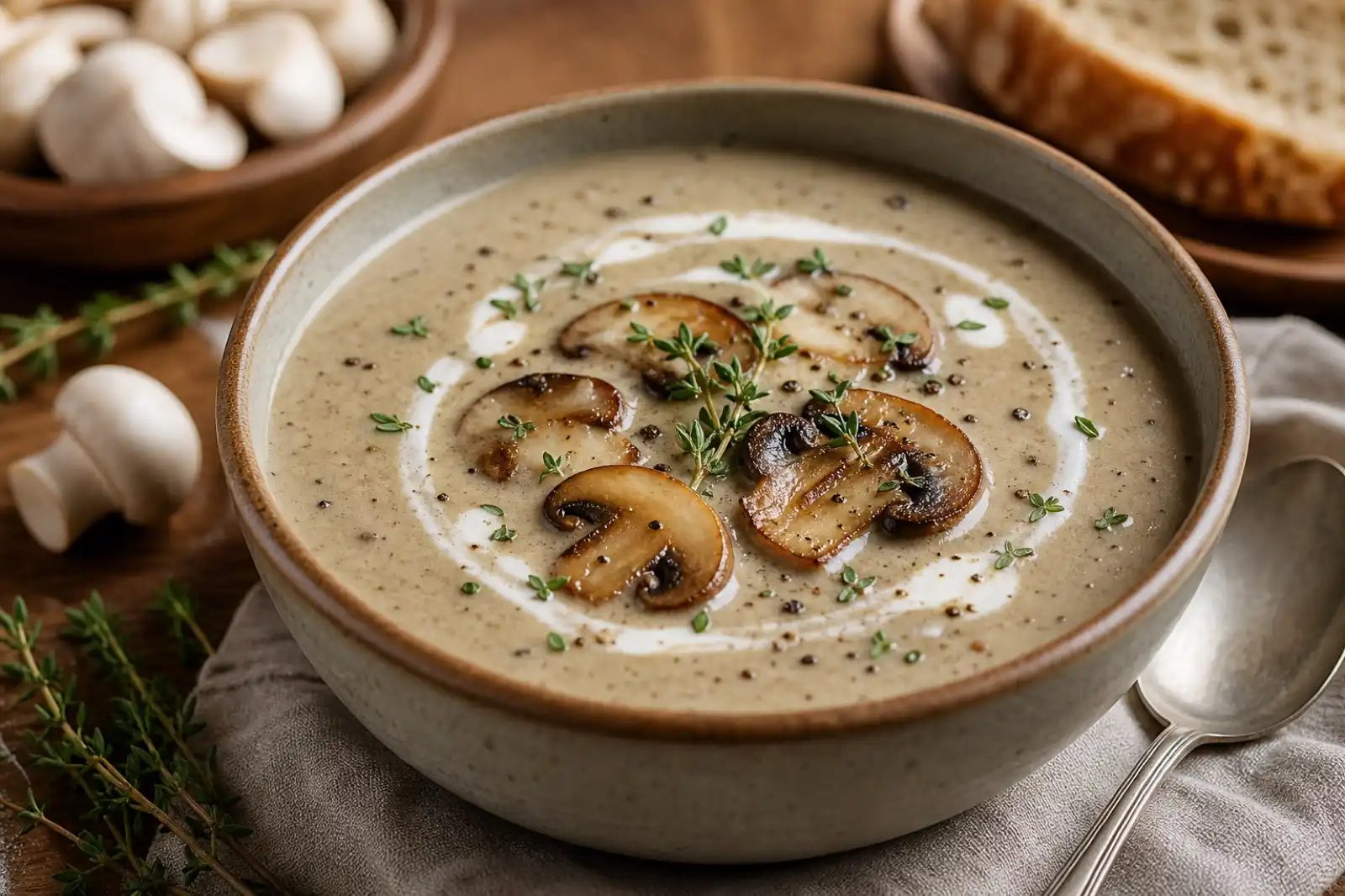
Creamy Mushroom Soup from Scratch
Make creamy mushroom soup from scratch with cultivated cremini mushrooms, clear steps, practical substitutions, and conservative food-safety guidance.
recipes
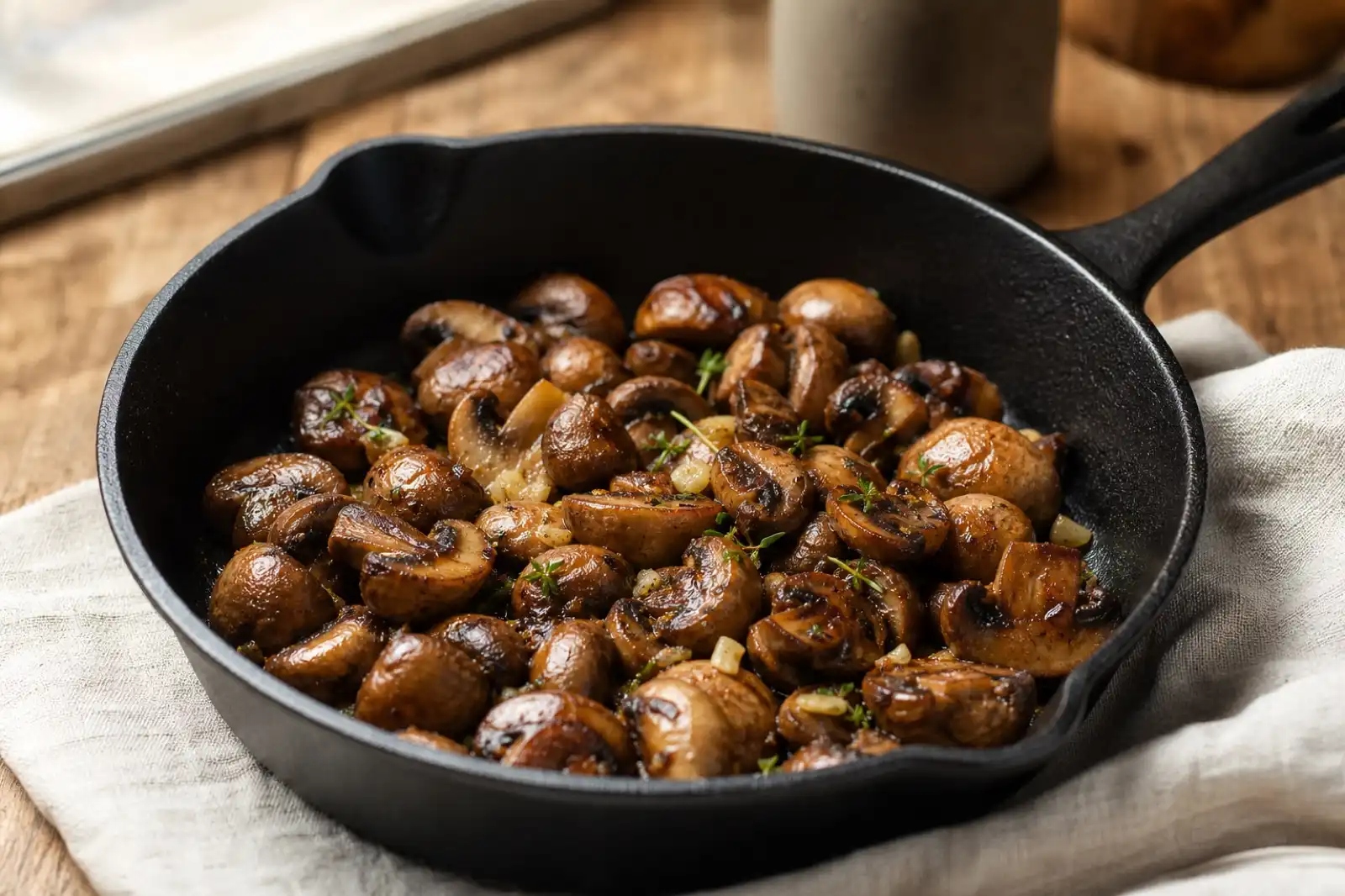
Easy Sautéed Mushrooms with Garlic and Herbs
Sauté cremini mushrooms with garlic and herbs using a wide-pan method, clear batch sizes, realistic timing, and safe storage advice.
mushrooms
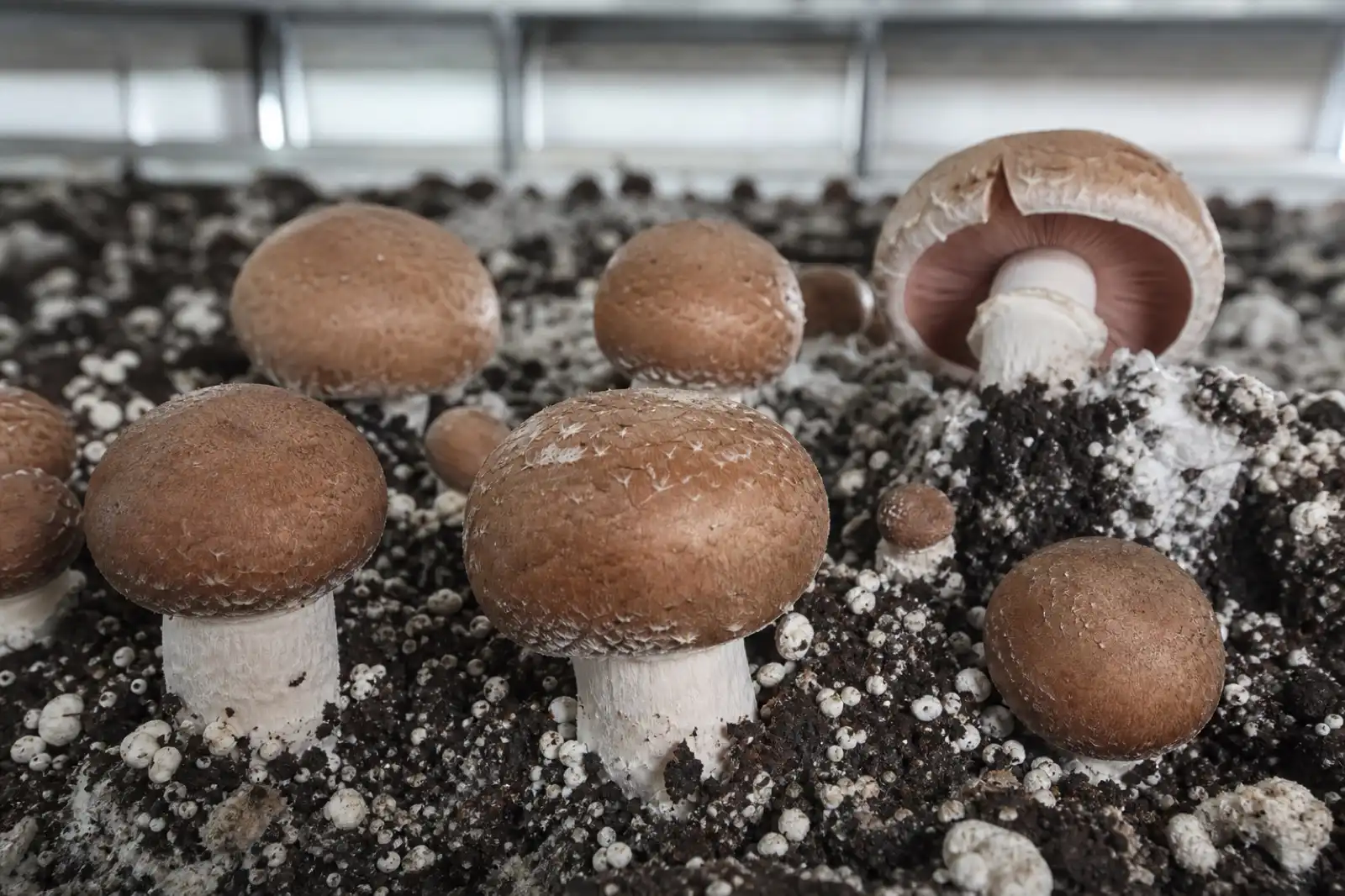
Cremini Mushrooms: Button vs. Portobello, Nutrition, and Uses
Cremini, baby bella, button, and portobello mushrooms are Agaricus bisporus market forms. Compare maturity, cooking uses, nutrition, cultivation, and safety.
Continue exploring
Browse more practical guides in Recipes or visit the mushroom encyclopedia.