Mushroom Encyclopedia
Chicken of the Woods (Laetiporus sulphureus): Identification and Safety
Learn chicken of the woods identification, hardwood habitat, pore features, lookalikes, food-safety limits, and responsible field documentation.
By MushroomScope Editorial Team · · Updated
Species context
Treat profiles as reference material
Species profiles summarize documented traits, taxonomy, and lookalikes, but natural variation can be substantial.
Use the safety checklist →Decision limit
A profile cannot authenticate a specimen
Do not eat a wild mushroom from an online match, single feature, or generated image.
Read the safety disclaimer →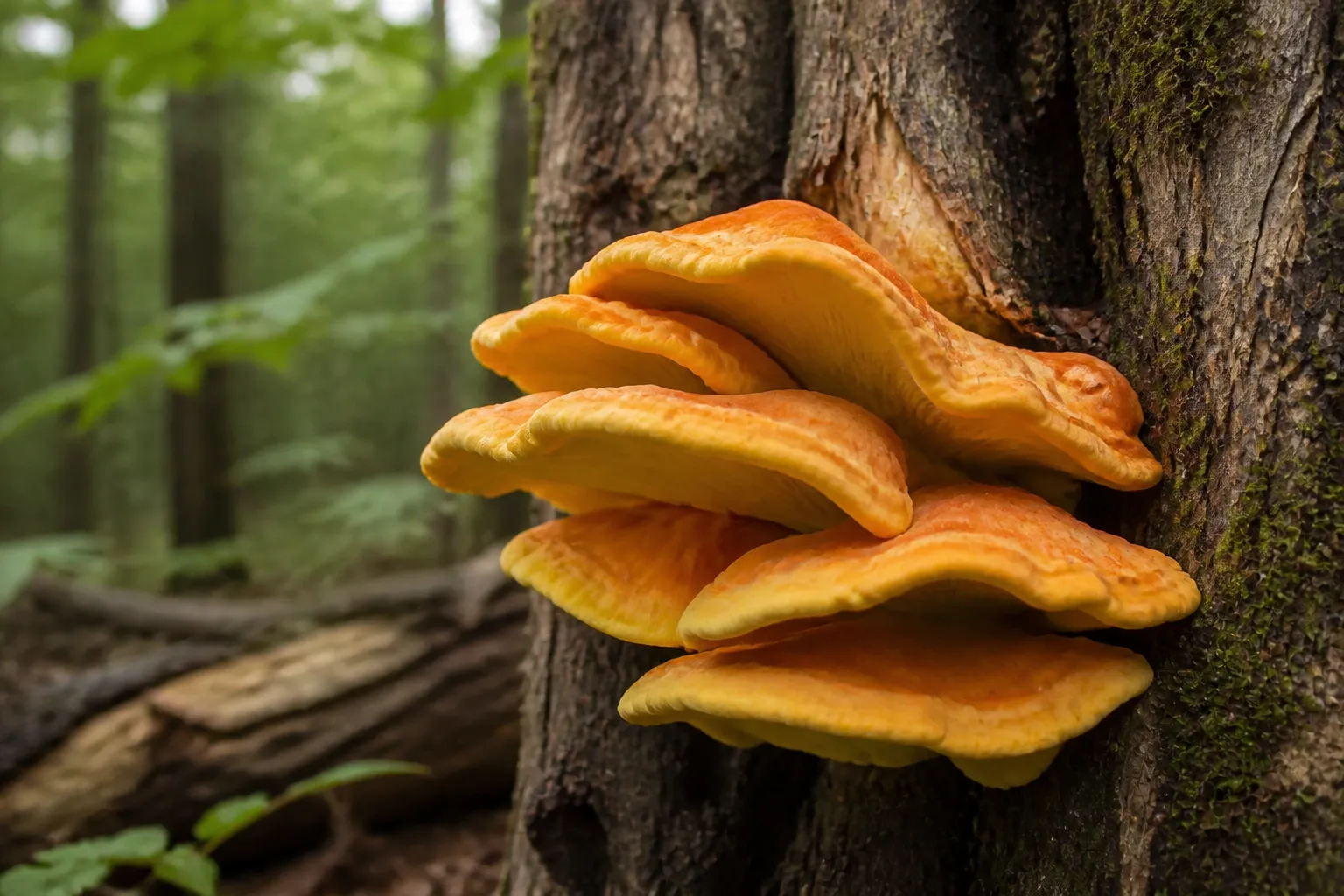
Quick facts
- Scientific name
- Laetiporus sulphureus
- Common names
- chicken of the woods, sulfur shelf, chicken mushroom
- Taxonomy
- Laetiporus · Laetiporaceae
- Edibility context
- Conditional: Culinary reputation applies only to correctly identified, fresh, tender material and does not remove reaction, contamination, or host-association concerns.
- Spore print
- White.
- Toxicity context
- Moderate: Risk includes misidentification, gastrointestinal or allergic-type reaction, old material, and contaminated collecting sites. Cooking cannot make a toxic lookalike safe.
- Season
- May, June, July, August, September, October, November
- Growing difficulty
- Difficult
- Regions
- Europe, North America in the strict or related species concept, temperate regions
Safety limit: These labels summarize documented context; they never authenticate a wild specimen. Cooking does not make a poisonous species safe.
Identify the complete shelf-and-pore pattern
Chicken of the woods is a common name used for several Laetiporus fungi. This page focuses on Laetiporus sulphureus, the sulfur-colored species concept represented by overlapping orange-to-yellow shelves and a sulfur-yellow pore surface. The name is useful for organizing a field record, but it is not permission to eat a mushroom and should not be transferred automatically to every bright bracket fungus on every continent.
Start with growth habit. Fresh fruit bodies form thick, fan-shaped shelves attached directly to wood, often in a layered cluster. The upper surface is usually orange-red to orange-yellow, while the underside carries minute pores rather than gills. Shelves may be tender and rounded at the margins when young, then fade, dry, crack, or become woody with age. Photograph the entire cluster before removing anything so the attachment and host remain visible.
The pore surface is one of the most important checks. Turn or photograph a shelf without destroying the attachment and look for a continuous sulfur-yellow underside dotted with tiny pores. Ordinary blade-like gills contradict this profile. A smooth-looking underside in a distant photograph is not enough, because small pores may disappear at low resolution. The site’s mushroom identification guide explains why cap color, underside, attachment, substrate, and age should be recorded together.
White spores can support a Laetiporus discussion, but spore color alone cannot identify the species. Regional keys may also require microscopic characters, host information, or DNA. Record what the specimen actually shows and use language such as “consistent with a Laetiporus shelf” until qualified local review resolves the name.
Record the host and attachment
The Missouri Department of Conservation describes L. sulphureus on dead or dying decididuous trees, stumps, buried roots, and sometimes living trees. That ecological context matters because related orange polypores can differ in host preference and form. Write down the tree species if it can be identified reliably, whether the wood is living or dead, whether the fruit body is on an exposed trunk or appears from buried roots, and whether the same site has fruited before.
A cluster that seems to grow from soil may actually be attached to a buried root. Photograph the ground-level connection and avoid trimming it before documentation. Laetiporus cincinnatus, a related chicken-of-the-woods species in eastern North America, often forms a rosette near buried roots and typically has a white underside. That comparison shows why “orange shelf” is not a final identification.
The host record also has safety and land-management implications. Fungi on roadside trees, treated landscapes, industrial timber, or contaminated sites should not be treated as equivalent to clean food material. Fruiting on a living tree can indicate internal decay even when the canopy appears healthy; do not climb, cut structural wood, or make tree-risk claims from a mushroom alone. Property owners should consult a qualified arborist for tree assessment.
Use the habitat identification guide to separate direct observations—wood type, attachment, surrounding trees—from assumptions. A named host based only on bark color can be wrong, and an incorrect host note may steer the identification toward the wrong regional species.
Compare similar polypores without shortcuts
Chicken of the woods is visually distinctive when fresh, but a comparison still needs structure, not resemblance. L. cincinnatus can share orange upper colors while differing in growth form and pore color. Older Laetiporus may fade toward cream or buff and lose the vivid contrast that attracts attention. A dry, bleached cluster is harder to assess and is not improved as food by cutting away the weathered surface.
Other polypores can be yellow, orange, or layered. Dyer’s polypore, Phaeolus schweinitzii, is associated especially with conifer roots and develops brownish, velvety, or zoned surfaces unlike a fresh sulfur shelf. Some Ganoderma and Inonotus relatives also form shelves but differ in pore color, texture, host, and aging. A field guide should be used to expand the comparison set, not to find the first matching photograph.
Check for contradictions. Gills, a central stem, thin leathery fans, black bruising, a varnished surface, or a different host may point away from L. sulphureus. Mixed clusters are possible on a large log, so every differently shaped fruit body should be photographed and kept separate. The mushroom identification safety checklist provides a useful final review before any food discussion.
Keep food use conditional on expert confirmation
Chicken of the woods has a documented food-use reputation, particularly when young and tender, but reactions occur and not every orange shelf is the same organism. This page cannot evaluate a real collection. Obtain in-person confirmation from a qualified local identifier and follow regional guidance. Do not rely on taste, cooking aroma, an app result, or the fact that another person has eaten mushrooms from the same tree.
Freshness is separate from identity. A correctly named fruit body may still be old, insect-damaged, waterlogged, contaminated, or spoiled. Young margins should be resilient and clean rather than chalky, sour-smelling, slimy, or riddled with larvae. Avoid roadside, chemically treated, and polluted sites. Keep different collections separate so that uncertain pieces do not enter a verified batch.
Cook authenticated material thoroughly according to trusted local food guidance, and try only a small portion when individual tolerance is unknown. Stop if there is uncertainty about the host, species, freshness, or handling. Cooking cannot neutralize a toxic lookalike or repair spoiled material. The FDA’s general produce guidance supports clean hands, utensils, refrigeration, and separation from contamination, but it does not authenticate a wild mushroom.
If symptoms follow mushroom consumption, contact local emergency services, a poison center, or a healthcare professional promptly. Preserve uncooked material, leftovers, photographs, collection location, preparation details, and timing. NAMA’s poisoning-syndrome resource explains why onset time and retained samples can help responders. Severe vomiting, persistent diarrhea, confusion, breathing difficulty, jaundice, seizure, or collapse requires urgent care.
Document age, condition, and season
Regional fruiting dates vary, but warm-season through autumn records are common. The Missouri account gives May through November for its area; that range should not be exported as a worldwide calendar. Rain, temperature, drought, tree condition, latitude, elevation, and the local Laetiporus species all affect timing. A mushroom found in the “right month” is not therefore identified.
Photograph several ages when possible. Young shelves can be rounded, wet-looking, and intensely colored; mature shelves spread and flatten; old material becomes pale, dry, crumbly, or tough. These changes explain many poor image comparisons. Record whether the cluster was fresh after rain or weathered through heat and insects, and avoid presenting an old specimen as the standard appearance.
For a useful observation, note cap width, shelf thickness, upper color, pore color, texture, host, attachment height, cluster size, and condition. A scale placed beside—not on—the mushroom improves the record. Do not remove the entire fruiting body from a public site, and check collecting rules before handling or harvesting.
Use a repeatable field checklist
- Photograph the whole cluster and host before touching it.
- Record living or dead wood, tree identity if known, exposed or buried attachment, date, region, and recent weather.
- Photograph the upper surface, thick margin, sulfur-yellow pores, and a clean cross-section.
- Note age, odor without close inhalation, insects, decay, and every contradictory feature.
- Compare the record with a current regional key and qualified local expertise.
This checklist is for documentation, not edible clearance. It keeps evidence categories separate and makes uncertainty visible. The related dryad’s saddle guide is a useful comparison because another wood-growing polypore can have a very different cap pattern and pore structure even when both are broad shelves.
Chicken of the woods questions
Why is the underside important?
The sulfur-yellow pore surface distinguishes the L. sulphureus profile from gilled mushrooms and helps separate it from related pale-pored species. Pore color must be observed directly because shadows and camera white balance can shift yellow toward white or orange.
Can it grow from the ground?
A cluster may appear terrestrial when it is attached to a buried hardwood root. Document the base and surrounding tree context before deciding that the fungus grows from soil.
Is an old pale cluster still chicken of the woods?
It may be an aged Laetiporus, but fading makes identification harder and the material tougher. Do not use age as an excuse to ignore missing pore, host, or attachment evidence, and do not treat weathered material as food.
Does it harm trees?
Laetiporus can decay wood and may fruit on living trees, but a photograph cannot measure structural risk. A qualified arborist should assess a tree near buildings, paths, or other targets.
Separate substrate identity from food reputation
Record whether the shelves grow from a living tree, stump, log, or buried wood and verify the host when possible. Condition, region, and host influence the lookalike and food discussion, while age changes tenderness dramatically. Even a plausible sulfur shelf needs complete local confirmation; cooking cannot correct a mistaken species or contaminated collection.
Compare a red, soft annual bracket
The beefsteak fungus guide provides a contrasting polypore record built around pale pores, separable tubes, reddish context and oak or sweet-chestnut attachment rather than sulfur-yellow shelves.
References
- Global Biodiversity Information Facility. Laetiporus sulphureus species record. Taxonomic placement and nomenclature.
- Missouri Department of Conservation. Sulfur-Colored Chicken of the Woods. Regional morphology, habitat, season, and comparison with L. cincinnatus.
- North American Mycological Association. Mushroom Poisoning Syndromes. Poison-response context.
- U.S. Food and Drug Administration. Selecting and Serving Produce Safely. General clean handling and storage guidance.
Editorial review: August 23, 2026. Regional taxonomy, host records, food guidance, and poison-response contacts should be rechecked at each substantive update.
Source quality notes
MushroomScope cites sources that match the page scope, such as taxonomic databases, extension guidance, food-safety agencies, food-composition databases, and peer-reviewed or institutional health references. Sources support context and uncertainty; they do not turn an online page into specimen identification, medical advice, or a tested recipe record.
Frequently asked questions
Can chicken of the woods be identified from its orange color alone?
No. Record the layered shelf shape, pore surface, lack of gills, hardwood attachment, age, region, and complete growth habit. Color by itself cannot establish a species or food decision.
Does chicken of the woods have gills?
No. Laetiporus sulphureus is a polypore with a sulfur-yellow pore surface underneath. A gilled orange mushroom does not match this species profile.
Is chicken of the woods always safe to eat?
No wild mushroom is cleared for food by this page. Correct identity, host, freshness, cooking, contamination, and individual tolerance all matter, and some people report gastrointestinal or allergic-type reactions.
Where does Laetiporus sulphureus grow?
It fruits from dead, dying, or sometimes living deciduous trees, stumps, logs, and buried hardwood roots. Regional Laetiporus species and host patterns must be checked locally.
Can chicken of the woods be cultivated at home?
Cultivation is possible only with authenticated material and a species-specific method, but it is not a dependable beginner substitute for common oyster or shiitake projects.
Related guides
identification
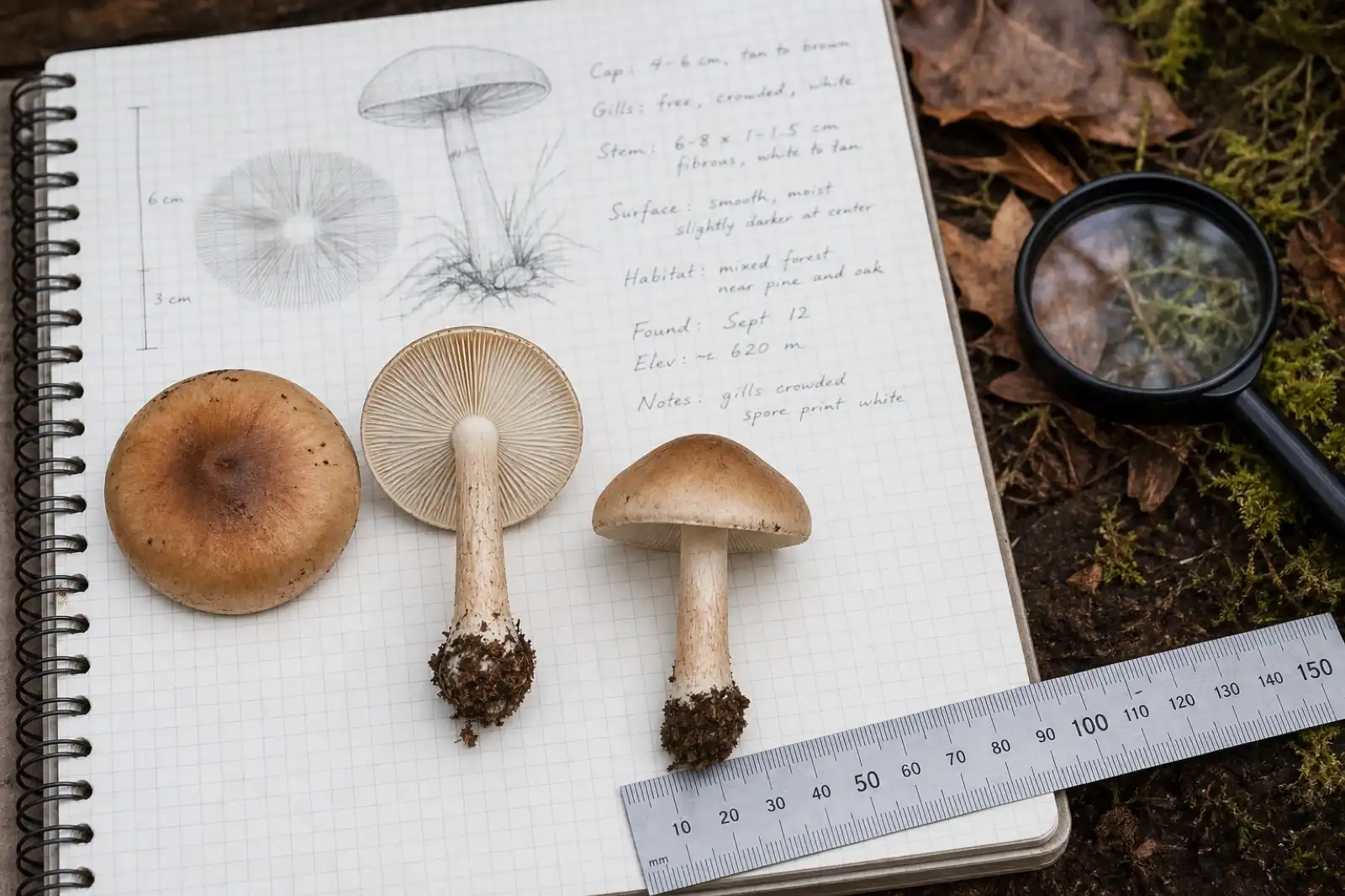
How to Identify Mushrooms: A Beginner's Field Guide
Build an identification from the whole specimen, substrate, habitat, spore deposit, and location—not from a single photograph.
identification
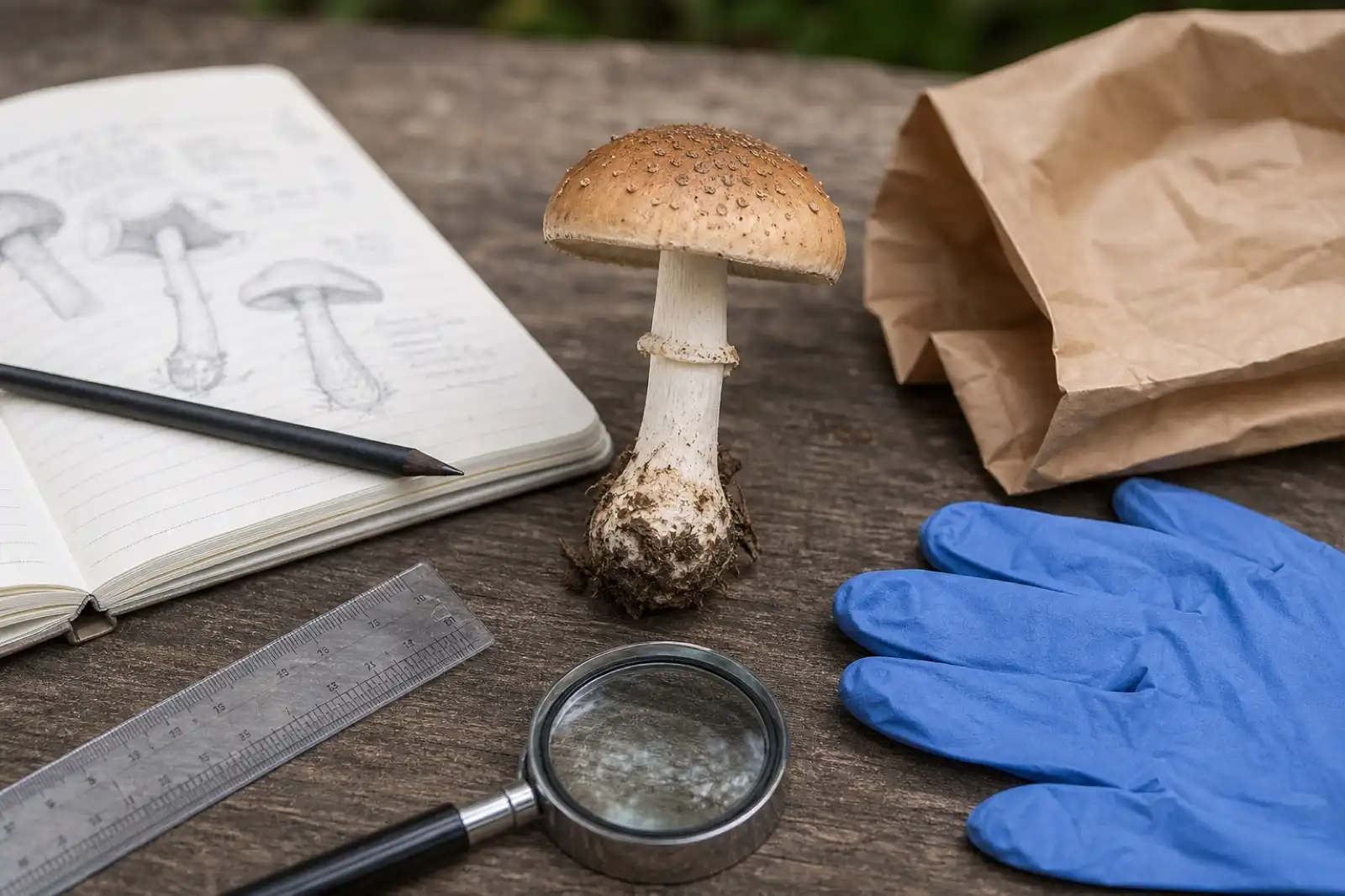
Mushroom Identification Safety Checklist
Use a conservative checklist before handling, documenting, or discussing any wild mushroom, especially when edibility is being considered.
identification
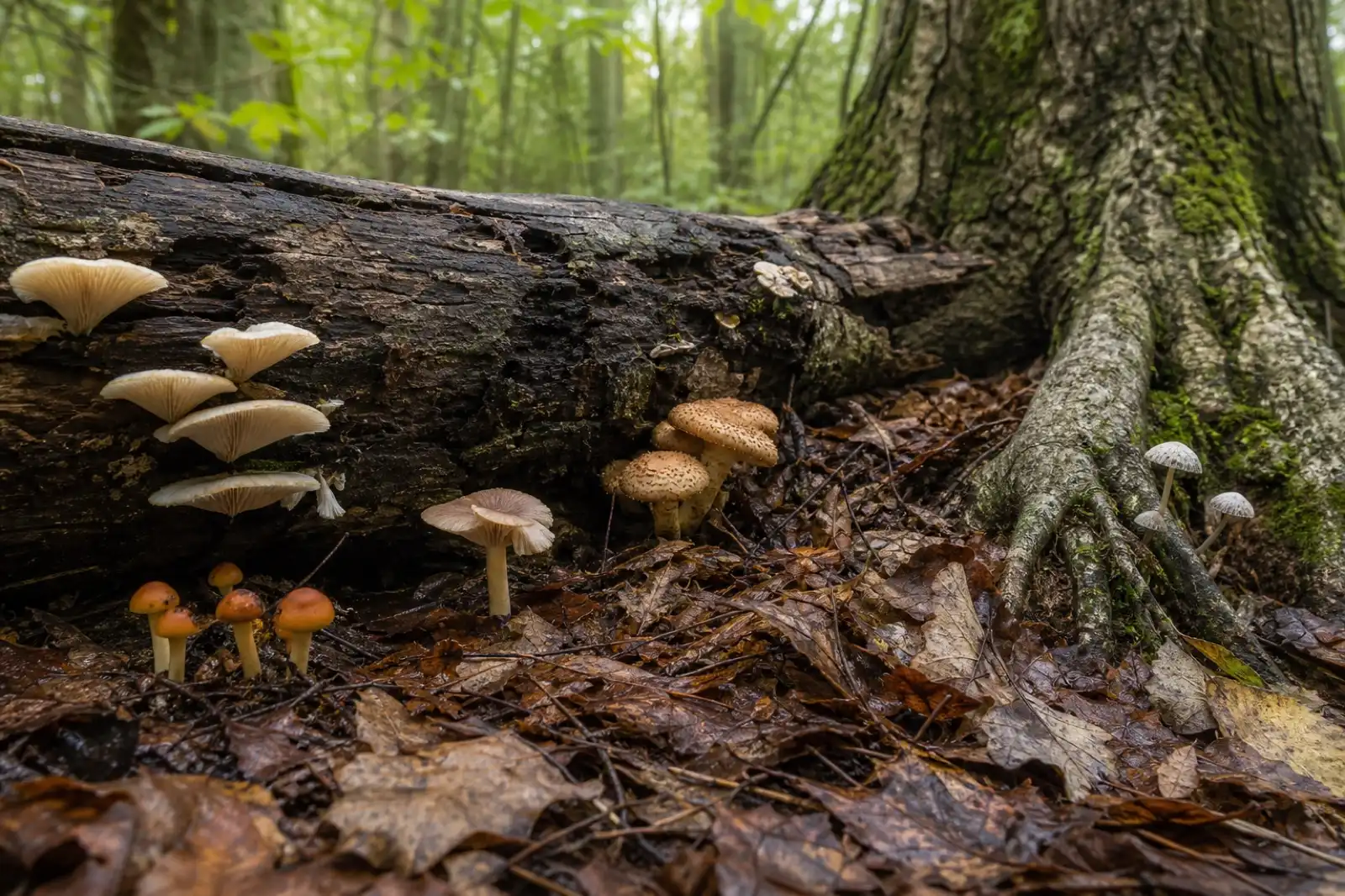
Using Habitat to Identify Mushrooms
Record substrate, associated plants, soil, wood type, moisture, elevation, and fruiting pattern as identification evidence.
Continue exploring
Browse more practical guides in Mushroom Encyclopedia or visit the mushroom encyclopedia.