Mushroom Encyclopedia
Dog Stinkhorn: Egg Stage, Gleba, Insects, and Lookalikes
Document Mutinus caninus from white egg to pink-orange column, dark gleba, insect dispersal, buried wood habitat, collapse, and stinkhorn lookalikes.
By MushroomScope Editorial Team · · Updated
Species context
Treat profiles as reference material
Species profiles summarize documented traits, taxonomy, and lookalikes, but natural variation can be substantial.
Use the safety checklist →Decision limit
A profile cannot authenticate a specimen
Do not eat a wild mushroom from an online match, single feature, or generated image.
Read the safety disclaimer →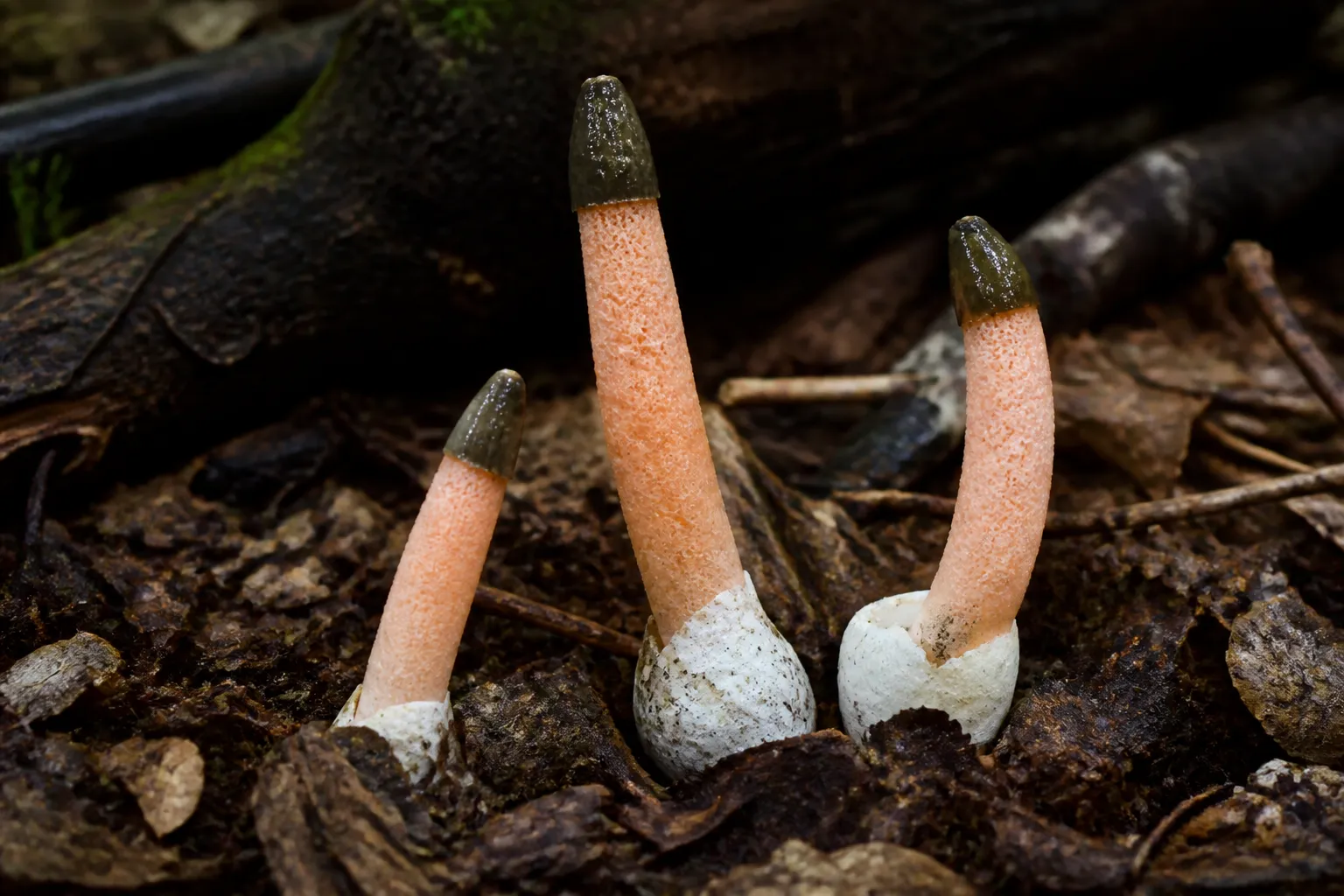
Quick facts
- Scientific name
- Mutinus caninus
- Common names
- Dog stinkhorn, Devil's dipstick
- Taxonomy
- Mutinus · Phallaceae
- Edibility context
- Inedible: Not recommended as food; unresolved egg stages and unknown substrate conditions require a conservative boundary.
- Spore print
- No conventional print; spores are dispersed from gleba by insects and contact.
- Toxicity context
- Unknown: Odor and appearance do not determine toxicity, and an unidentified egg should never be treated as a puffball or food product.
- Season
- June, July, August, September, October
- Growing difficulty
- Difficult
- Regions
- Europe and other verified temperate occurrence regions, introduced status requires local evidence
Safety limit: These labels summarize documented context; they never authenticate a wild specimen. Cooking does not make a poisonous species safe.
Dog stinkhorn is easy to overlook as a small white “egg” and difficult to miss once a pink-orange column expands and carries dark odorous gleba. That rapid transformation links two forms that can look like unrelated organisms. A useful record documents the egg, the complete expanded base, the gleba, insects, substrate, and collapse.
This guide treats Mutinus caninus as a decomposer and dispersal system, not as a food recommendation or a universal explanation for every slender stinkhorn.
Photograph the egg before excavation
Eggs sit partly buried in litter, mulch, or soil over wood. Photograph their natural depth, grouping, and nearby debris. Measure diameter and note color, surface texture, and any rhizomorphic cords.
Do not pull every egg merely to see what is inside. Mark one and revisit it. A natural emergence sequence provides stronger evidence than a tray of detached balls.
Section only a permitted representative egg
A longitudinal section reveals gelatinous layers and the folded developing column. That organized interior distinguishes a stinkhorn egg from the uniform immature interior expected in a true edible puffball, but it does not establish the exact stinkhorn species.
The puffball guide explains why any internal structure, discoloration, or outline contradicts a puffball food hypothesis. This comparison is a safety stop, not permission to eat an unresolved white ball.
Follow the column as it expands
The mature structure can extend quickly because the column is preformed and expands from the egg. Record time, temperature, recent rain, height, diameter, curvature, and whether the volva remains intact.
The tissue is hollow, spongy, and fragile. Handling can collapse it, making later proportions unreliable. Use a scale beside the specimen and photograph from more than one angle.
Separate the tip from a true cap
In Mutinus, gleba coats the tapered upper part of the column rather than sitting on a sharply separate cap. Once insects remove slime, the tip may appear cleaner and brighter, obscuring the original distribution.
Photograph early and late stages. A washed or insect-cleaned tip should not be compared only with a freshly slimy field guide image.
Record color with developmental context
The lower column is often pale, while the upper part becomes pinkish, salmon, or orange. Saturation varies with age, moisture, exposure, and camera processing. A strong red may prompt comparison with another Mutinus species.
Use diffuse daylight and include the volva. Color without size, gleba placement, and regional context is weak evidence.
Observe insect dispersal without interfering
Odor attracts flies and other insects that contact or consume gleba, moving spores on bodies and through digestive systems. Record visitor type, duration, and which portion of the gleba is removed.
Avoid spraying insects or baiting the fungus. The visitor interaction is part of the reproductive biology, and pesticide use would alter both observation and habitat.
Describe odor without close inhalation
Odor can be carrion-like or otherwise unpleasant, but sensitivity differs and wind changes perception. Record intensity at a normal working distance and use a neutral vocabulary. Do not place the tip near the face.
The odor guide provides a safe recording framework. Smell does not diagnose edibility or species.
Trace the decomposer substrate
Dog stinkhorns use decaying organic material. In gardens, document bark mulch age, buried roots, stumps, irrigation, compost, and recent landscaping. In woodland, note wood fragments, leaf litter, canopy, and drainage.
Apparent soil growth may connect to buried wood. Avoid excavating a broad area; a small exposed edge or contextual photograph can document the relationship.
Explain why garden plants are usually not the target
The fungus is generally saprotrophic, using dead organic matter rather than parasitizing healthy ornamentals. Its appearance can alarm gardeners because the fruit body is conspicuous, not because it has suddenly killed a plant.
If plant decline is present, assess roots, irrigation, pathogens, and soil separately. Removing stinkhorns does not solve unrelated horticultural problems.
Compare M. ravenelii carefully
Mutinus ravenelii can be more robust and vividly colored, with a more differentiated gleba-bearing region. However, size and color overlap, especially across ages and photographs. Region, spores, tissue, and current keys are important.
Do not assign a species based solely on which internet gallery looks closer. Preserve measurements and developmental stages for expert review.
Compare cap-headed stinkhorns
Species of Phallus typically carry gleba on a distinct head with a differentiated surface. They may be taller and more robust, though young or damaged specimens confuse the distinction.
Egg sections can reveal developing architecture, but a section alone is not a species name. Photograph the mature form whenever possible.
Compare lattices, arms, and columns
Other Phallales emerge from eggs into cages, multiple arms, star shapes, or grouped columns. A collapsed structure can lose that architecture. Search the same patch for intact examples rather than reconstructing fragments.
Gleba position on inner arms or specialized surfaces helps route the comparison. Regional genera differ, so a global three-photo chart is incomplete.
Use microscopy as supporting evidence
Stinkhorn spores are small and carried in slime rather than deposited beneath a cap. Microscopy can assess size and shape, but close species may still need mature architecture and DNA. Sample without contaminating the microscope area with decomposing gleba.
Link slides, photographs, and dried or preserved material to one collection number. Record which stage supplied the sample.
Build a time-series field record
- Photograph eggs in place and mark one discreetly.
- Record rain, soil temperature, mulch, and buried wood.
- Photograph the opening volva and expanding column.
- Measure the mature structure without touching it.
- Document gleba position, color, odor, and insects.
- Return after cleaning and collapse.
- Compare the full sequence with a regional key.
The photo checklist helps keep a sensational close-up connected to useful field data.
Manage a garden occurrence with moisture and debris controls
Fruit bodies are temporary. Removing them before gleba develops may reduce odor locally but does not remove underground mycelium. Reduce excess irrigation, improve drainage, remove buried construction wood where practical, and allow fresh mulch to weather.
Do not apply household chemicals or broad fungicides merely to eliminate an unusual appearance. Products can harm plants, soil organisms, pets, and water quality.
Keep children and pets from mouthing specimens
The shape, odor, and insects attract attention. Remove accessible fruit bodies with gloves where ingestion is possible, bag them, wash hands, and supervise the area. This is exposure prevention, not a claim that the species has a particular poison.
If ingestion occurs, contact a veterinarian, poison center, or medical service as appropriate and retain material and photographs.
Do not promote egg-stage eating
Some stinkhorn eggs are discussed as food in particular traditions, but this guide does not recommend dog stinkhorn or any unresolved egg. Puffballs, stinkhorns, Amanita buttons, and other enclosed fungi can overlap externally.
Cooking cannot repair a dangerous identification error. Supply-chain verification and region-specific expertise are separate from a web article.
Avoid unnecessary cultivation and release
An outdoor mulch colony already demonstrates that substrate, moisture, temperature, and local microbes can support fruiting. That does not justify moving it to a new garden or inoculating public land. Distribution and native status may differ by region.
Research culture should use authenticated material, containment, controls, and responsible disposal. It has no clear role as a beginner food project.
Record disappearance without assuming predation
A missing column may have collapsed into litter, been consumed by slugs, broken in rain, removed by a person, or dried beyond recognition. Search the marked base for volva remains and photograph disturbance before assigning a cause. Insect cleaning of gleba is different from removal of the entire fruit body.
For a garden log, record the number of eggs, newly emerged columns, gleba-bearing specimens, cleaned tips, collapsed remains, and removed fruit bodies separately. Those categories reveal turnover and odor duration more accurately than a single daily count labeled “mushrooms.”
Evidence and image boundaries
GBIF and NCBI support taxonomic checkpoints. Penn State Extension supports practical stinkhorn and landscape context, while NAMA supports poisoning communication. None can identify an egg photographed without development.
The cover is an original AI editorial image checked for slender porous columns, pink-orange upper tissue, modest olive gleba, white volvas, realistic litter scale, clarity, and no text or watermark. It is not an egg-section key. No named mycologist, toxicologist, veterinarian, or horticulturist reviewed this draft.
Frequently asked field questions
Why did the fungus vanish by afternoon?
Expanded stinkhorn tissue is fragile and short-lived. Heat, insects, rain, slugs, and drying can collapse it rapidly.
Can the egg move upward through mulch?
The expanding column lifts from a stationary egg; mulch can shift around it, creating the impression that the whole fungus traveled.
Does odor remain after gleba is removed?
It usually declines as insects and weather remove gleba and the structure dries, though nearby new fruit bodies may continue the smell.
Are flies necessary for identification?
No. They support the dispersal interpretation but are not exclusive to one species. Architecture and microscopy matter more.
Can I compost removed stinkhorns?
Bagging is preferable where preventing spread or pet access is the goal. Composting may redistribute colonized material and peridioles are not involved in this species.
Trace the egg-to-column sequence without guessing
For a red phalloid fungus that opens into multiple free arms instead of one slender column, use the devil’s fingers field guide. The decisive comparison is the mature receptacle architecture and location of gleba, not the shared pale egg stage.
Dog stinkhorn observations are most informative when several developmental stages can be connected to the same patch. Place unobtrusive numbered markers beside, not through, unopened eggs and photograph from a fixed bearing with a scale. Record egg diameter, exposed or buried proportion, substrate moisture, and nearby woody debris. Revisit at short intervals during mild wet weather, noting the time at which the column ruptures the outer tissue, reaches full height, begins to lean, and collapses.
Do not cut every egg open. A single lawful section can document the gelatinous layer, folded receptacle, and developing fertile head, while intact eggs provide the emergence sequence. This matters because unrelated puffballs and immature agarics can be damaged by casual “stinkhorn egg” assumptions. Link every close-up to its field marker so that a later column is not accidentally assigned to the wrong egg.
Measure gleba loss and insect traffic
The dark olive gleba is temporary, and a washed or fly-visited mature column may look unlike a fresh individual. For three specimens, divide the fertile head into photographed quadrants and estimate visible gleba coverage at fixed intervals. At the same time, count insect visits for equal observation periods and record rain or direct splash. The goal is not to infer a universal dispersal rate; it is to distinguish an originally sparse coating from removal after emergence.
Keep odor descriptions controlled. Record distance and wind direction before using terms such as carrion-like or sewage-like, and never taste the material. A low odor reading on an old, rain-washed specimen does not contradict a stronger fresh-stage description. The combination of developmental timing, quadrant coverage, insect activity, and weather produces a checkable account of why field appearance changes.
References
For the larger white-stemmed comparison with a separate pitted cap, follow the common stinkhorn guide through egg section, gleba removal, volva, and insect-mediated dispersal rather than using odor alone.
- Global Biodiversity Information Facility. Mutinus caninus species record. Accepted-name and occurrence context.
- National Center for Biotechnology Information. Mutinus caninus taxonomy record. Lineage and nomenclature checkpoint.
- Penn State Extension. Stinkhorn Mushrooms. Egg development, gleba, insect dispersal, and landscape context.
- North American Mycological Association. Mushroom Poisoning Syndromes. Exposure-response context.
Editorial review: October 3, 2026. No named mycologist, toxicologist, veterinarian, or horticulturist reviewed this page; recheck regional lookalikes and poison-response contacts before acting on a specimen.
Source quality notes
MushroomScope cites sources that match the page scope, such as taxonomic databases, extension guidance, food-safety agencies, food-composition databases, and peer-reviewed or institutional health references. Sources support context and uncertainty; they do not turn an online page into specimen identification, medical advice, or a tested recipe record.
Frequently asked questions
What does a dog stinkhorn look like before it emerges?
It begins inside a small whitish egg-like structure with a gelatinous layer; sectioning shows organized internal tissue rather than the uniform white interior expected of an edible puffball.
Why does the tip have dark slime?
The olive-brown gleba contains spores and odor-producing material that attracts insects, which carry spores away as they visit and feed.
How fast can Mutinus caninus appear?
A mature column can expand rapidly from the egg and may collapse within a short period, so a marked time series is more informative than one photograph.
Does dog stinkhorn harm garden plants?
It usually decomposes buried wood, mulch, and organic debris rather than attacking healthy plants; its appearance often indicates moisture and decaying material.
Is the dog stinkhorn edible?
This guide makes no food recommendation. Egg stages can be confused with other fungi, mature material is short-lived, and substrate contamination is often unknown.
Related guides
mushrooms
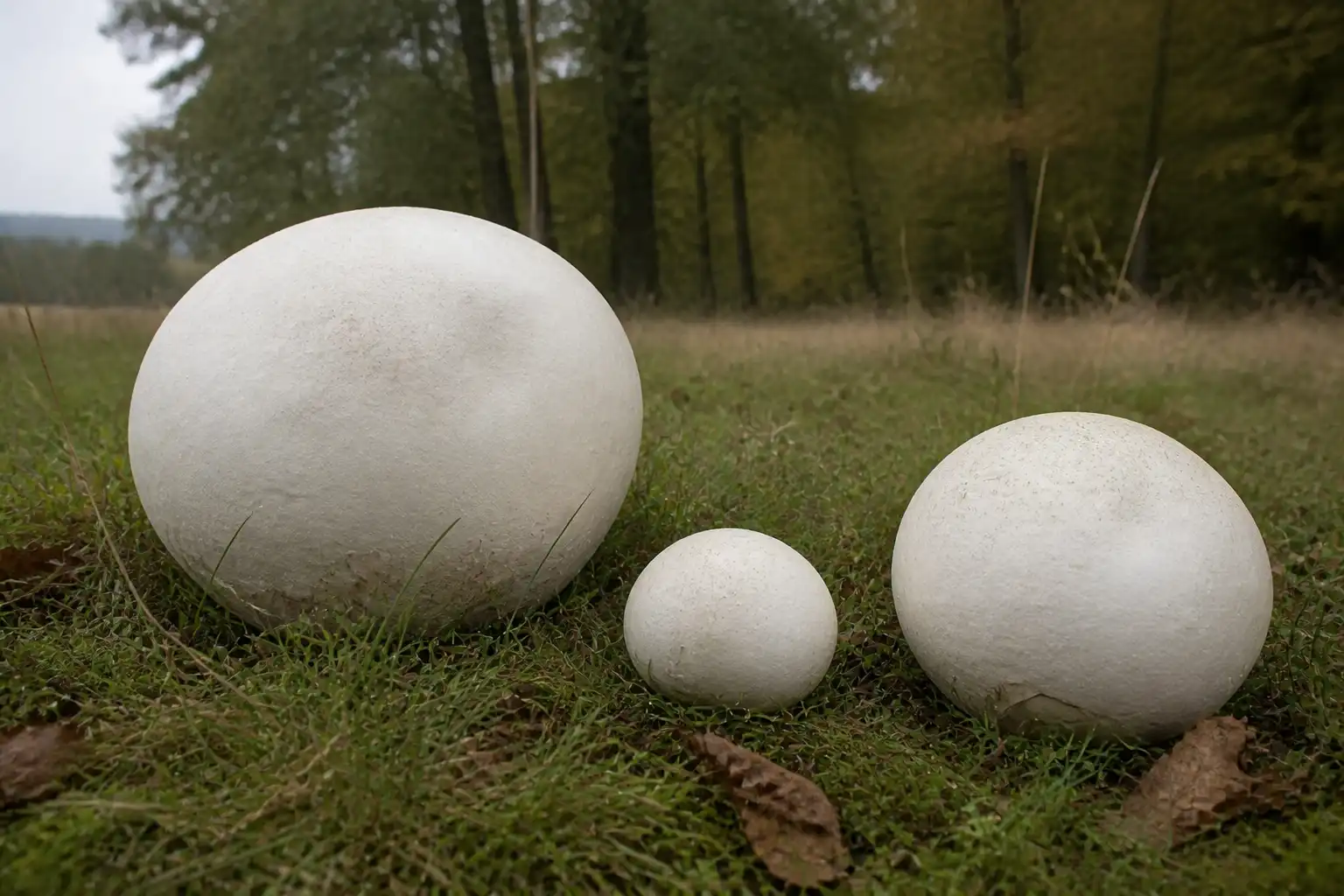
Giant Puffball (Calvatia gigantea): Identification and Safety
Learn giant puffball identification, white interior checks, dangerous lookalikes, habitat, maturity, and conservative food-safety limits.

identification
Mushroom Odor in Identification: How to Record It Safely
Learn to record mushroom odor safely, compare fresh and cut tissue, control for handling, and never treat smell as an identification or edibility test.
identification
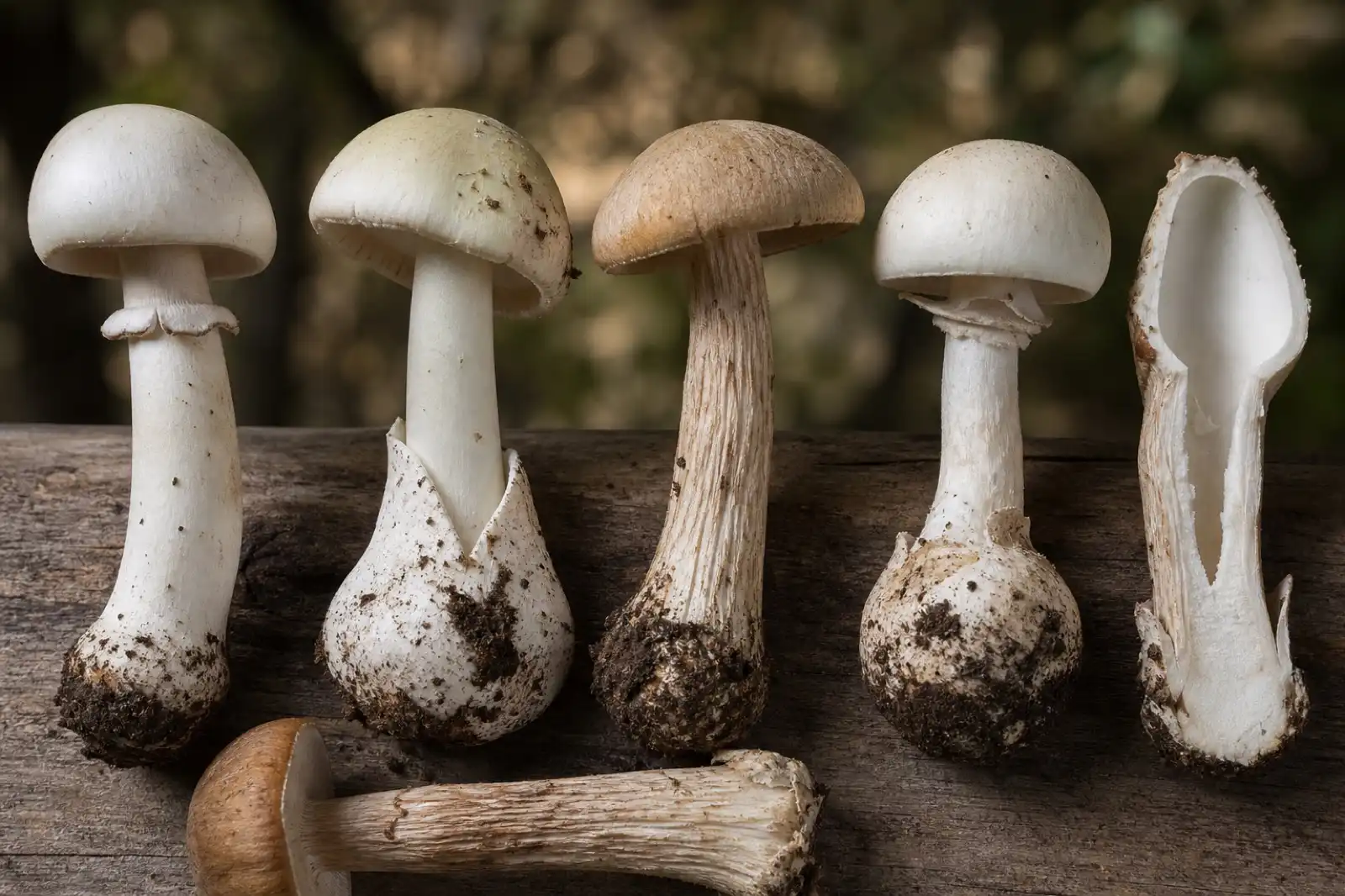
Mushroom Stem Features: Rings, Volvas, Texture, and Base
Document mushroom stem shape, attachment, rings, volvas, buried bases, internal structure, bruising, and texture without using one feature to decide edibility.
Continue exploring
Browse more practical guides in Mushroom Encyclopedia or visit the mushroom encyclopedia.