Mushroom Encyclopedia
Fluted Bird's Nest Fungus: Cups, Peridioles, and Rain Dispersal
Document Cyathus striatus by its shaggy closed cups, fluted inner walls, disk-like peridioles, decaying-wood habitat, rain-splash dispersal, and lookalikes.
Species context
Treat profiles as reference material
Species profiles summarize documented traits, taxonomy, and lookalikes, but natural variation can be substantial.
Use the safety checklist →Decision limit
A profile cannot authenticate a specimen
Do not eat a wild mushroom from an online match, single feature, or generated image.
Read the safety disclaimer →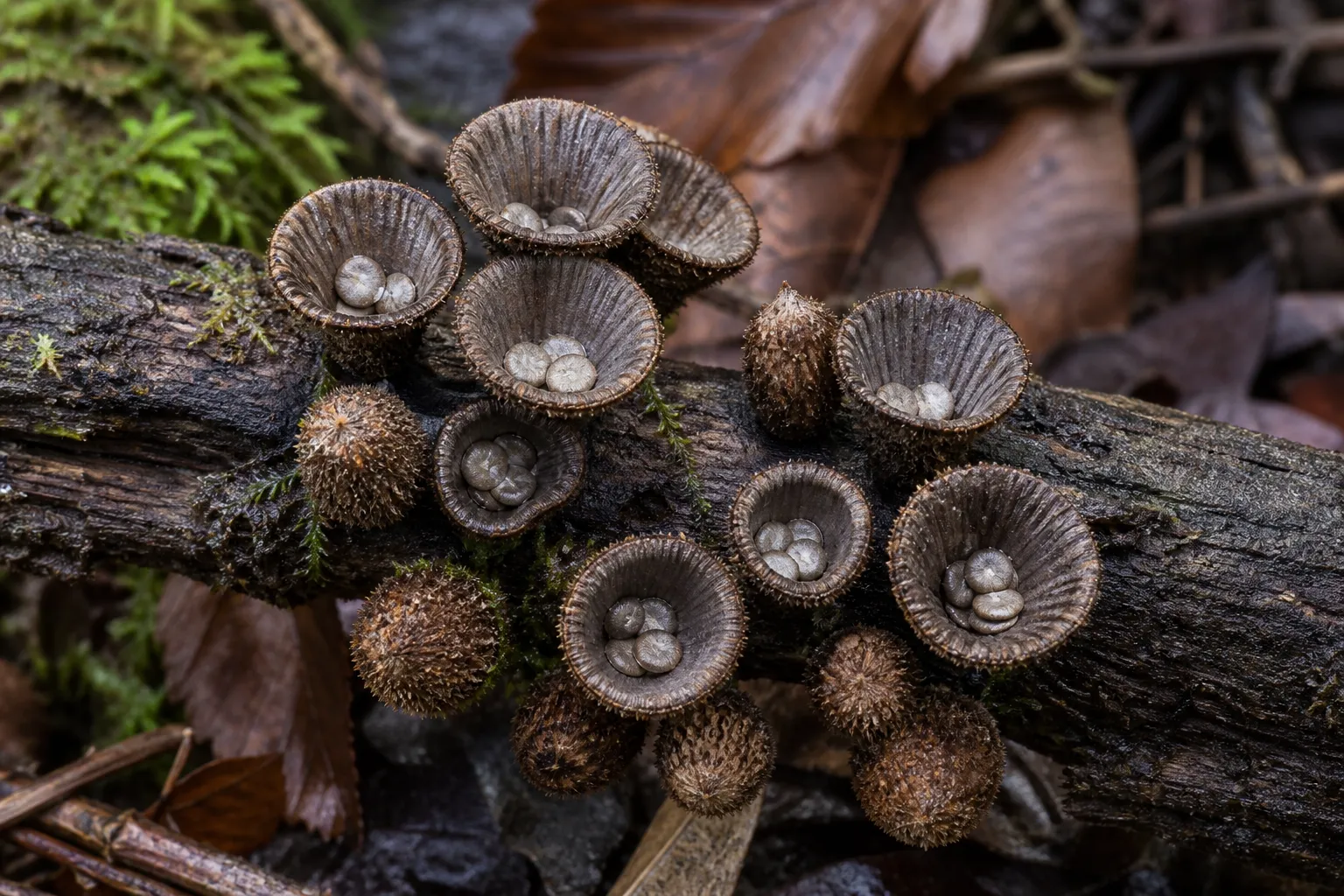
Quick facts
- Scientific name
- Cyathus striatus
- Common names
- Fluted bird's nest fungus, Ribbed splashcup, Striped bird's nest
- Taxonomy
- Cyathus · Nidulariaceae
- Edibility context
- Inedible: Not recommended as food; tiny tough fruit bodies and uncertain substrate history provide no useful culinary case.
- Spore print
- No conventional print; spores mature within peridioles that must be examined with the appropriate method.
- Toxicity context
- Unknown: Do not infer ingestion safety from small size or lack of a famous poisoning syndrome.
- Season
- July, August, September, October, November
- Growing difficulty
- Difficult
- Regions
- widespread temperate occurrence records, local occurrence requires verification
Safety limit: These labels summarize documented context; they never authenticate a wild specimen. Cooking does not make a poisonous species safe.
Fluted bird’s nest fungus turns a reproductive structure into a miniature splash apparatus. The “eggs” are not eggs at all but peridioles—packets that contain spore-producing tissue. A raindrop striking the cup can throw those packets outward, allowing the fungus to use weather and nearby vegetation in dispersal.
The mechanism makes the organism memorable, but correct identification still requires scale, cup development, inner-wall texture, exterior hairs, peridioles, substrate, and microscopic evidence. This guide focuses on Cyathus striatus without treating every nest-shaped fungus as that species.
Establish the real scale
Include a millimeter scale beside, not inside, the group. Individual cups are usually only a few millimeters across and roughly a centimeter tall. Macro photographs can make them look like bowls large enough to hold stones, which distorts both public understanding and automated image matching.
Photograph the entire patch first. Then add close views of closed, opening, mature, and empty cups. A mixed sequence carries more information than a single cup arranged for symmetry.
Follow development from shaggy cone to open cup
Young fruit bodies are brown, conical, and densely shaggy. A pale membrane called an epiphragm covers the top. As the cup matures, the membrane thins and tears, exposing the peridioles.
Record the lid color, exterior hair pattern, rim, and cup proportions. Rain and age can wear away hairs, so an old smooth-looking cup should not be compared only with ideal young specimens.
Confirm the fluted inner wall
The mature inner surface of C. striatus has pronounced vertical grooves. Use oblique side lighting to reveal the ribs without filling the cup with debris. A bright overhead flash can flatten the texture and make the diagnostic surface appear smooth.
Count neither ribs nor peridioles as a single-character test. Damage, mud, developmental stage, and photographic angle change what is visible. Combine fluting with the shaggy exterior and other evidence.
Understand each peridiole as a packet
Peridioles are flattened disks rather than loose seeds. Their color and surface change with maturity and wetness. In Cyathus, each mature peridiole has a specialized cord system that can uncoil during ejection and help the packet wrap around nearby plant material.
Do not pry every disk from a cup. A legal sample can preserve intact fruit bodies for sectioning and microscopy, while the rest of the colony remains functional.
Read the splash mechanism without staging it
The cup’s shape guides raindrop energy toward the contents. A peridiole can be thrown beyond the parent cup, its cord may catch vegetation, and spores are later released from the packet. This is not equivalent to a gilled mushroom dropping a patterned print beneath a cap.
Natural rainfall video can document the event. Pouring water from a bottle at close range changes impact energy, destroys cups, and produces a demonstration that should not be mistaken for a field measurement.
Trace cups to the exact substrate
Fluted bird’s nest fungi commonly occur on decaying wood and woody plant debris. Record whether the material is a twig, log fragment, bark chip, commercial mulch, dead herbaceous stem, or buried wood. Photograph bark, cut surfaces, and the surrounding litter.
The habitat identification guide helps separate “on soil” from “on wood chips over soil.” That distinction affects both ecology and the comparison set.
Distinguish a forest record from landscape mulch
A cluster in a managed bed may arrive with transported bark or wood chips. Record mulch age, irrigation, recent installation, pesticide use, and nearby plantings. Do not claim a native population from one landscaped occurrence.
In woodland, note canopy, moisture pocket, wood decay, slope, and whether cups repeat on the same log after rain. These observations can support phenology without disturbing the colony.
Compare smooth-walled bird’s nests
Cyathus olla and Crucibulum laeve can share the nest-and-disk pattern. Inner-wall fluting is a useful first split, but weathered cups complicate it. The common bird’s nest fungus guide follows the smooth tan cup, pale peridioles, and shaggy lidded juvenile through a separate specimen record. Cup shape, exterior covering, lid, peridiole color, cord details, spores, and region complete the comparison.
Avoid making a two-species key from color. Mud and water alter pale and dark surfaces, while camera white balance compresses differences.
Separate Cyathus from Nidula
Species placed in Nidula have different peridiole attachment biology. That difference may not be obvious in an intact photograph. A careful examination of mature packets and microscopy is more reliable than assuming any clustered cup with gray disks is Cyathus.
Retain the genus-level uncertainty if the cord system and microscopic characters have not been assessed.
Use microscopy for a species-level claim
Spores mature within the peridioles. A useful preparation records whether packets were mature, how they were opened, the mounting medium, calibration, and number of spores measured. Hyphal structures and peridiole anatomy may also matter in a key.
Dry whole mature cups gently with collection numbers linked to habitat images. A loose bag of detached disks loses the developmental and substrate context needed for later review.
Separate active cups from old empty remains
Fresh mature cups contain peridioles and retain clear interior texture. Empty cups can persist after rainfall has ejected or washed away the contents. Their dark worn walls may remain visible after the season of active reproduction.
Record whether cups are closed, full, partly emptied, or completely empty. Presence data without condition can give a misleading fruiting calendar.
Build a repeatable macro record
- Photograph the patch and substrate at normal scale.
- Add a millimeter scale beside representative cups.
- Show closed epiphragms and naturally open cups.
- Use side light for exterior hairs and inner fluting.
- Count visible peridioles only in intact examples.
- Record rain, irrigation, mulch or wood type, and decay stage.
- Preserve a minimal legal voucher when microscopy is planned.
The photo checklist prevents magnification from erasing ecological context.
Treat building sightings as moisture information
Bird’s nest fungi may appear in wet mulch near foundations, decaying planters, or persistently damp wood debris. The fungus does not by itself diagnose structural timber decay. It does indicate that small lignocellulosic material has remained moist enough to support a decomposer.
Correct drainage, leaks, soil contact, and ventilation rather than applying fungicide to visible cups alone. Suspected structural damage belongs with a qualified building professional, not a species-guide conclusion.
Keep food use outside the intent
The cups are tiny, tough, and ecologically valuable, with no meaningful culinary yield. Landscape substrate may also have unknown pesticide, animal-waste, or treated-wood history. This page does not recommend eating or brewing them.
If someone consumes an unidentified fungus and develops symptoms, contact local emergency services or a poison center. Preserve photographs and material rather than guessing from the nest metaphor.
Cultivation is an observation system, not a recipe
A research culture might colonize defined woody substrate, but fruiting depends on identity, moisture, temperature, light, air, surface conditions, and developmental cues. Producing cups for study does not create a food crop.
Maintain culture provenance, controls, substrate dry mass, water, sterilization or pasteurization process, and contamination records. Verify fruit bodies microscopically before attaching the species name to a culture.
Protect the dispersal structure
Leave most cups and surrounding vegetation undisturbed. Nearby stems may carry attached peridioles and reveal how the splash system functions. Clearing every leaf for a cleaner photograph removes part of the natural apparatus.
Collecting one small substrate fragment can be adequate for documentation. Large colonies in public gardens are better monitored through photography and moisture records.
Measure splash opportunity rather than assuming it
Cup orientation, surrounding stems, canopy interception, rain intensity, and mulch geometry affect where a peridiole can travel. Record whether cups face upward, tilt from a vertical twig, or sit beneath leaves that block direct drops. Photograph nearby grasses and stems before searching them for attached packets.
A controlled ecological observation can place clean collection cards at measured distances without touching the cups, then retrieve them after natural rain. Label direction, distance, exposure time, and rainfall source. Finding a loose disk is not enough to claim a launch distance unless its starting colony and intervening disturbance are defensible. This measurement turns an appealing textbook mechanism into a transparent local observation.
Evidence and image boundaries
GBIF name search and NCBI support taxonomic checkpoints; neither confirms a photographed cup. The USDA wood reference supports general wood-and-moisture context, not a structural diagnosis. NAMA supports conservative poisoning communication.
The cover is an original AI editorial image checked for realistic millimeter-scale cups, fluted walls, shaggy closed stages, disk-like peridioles, wood attachment, clarity, restrained color, and no text or watermark. It is not a field voucher. No named mycologist or building professional reviewed this draft.
Frequently asked field questions
Are the peridioles individual spores?
No. Each is a multicellular packet containing spore-producing tissue and many spores.
Can empty cups refill?
No. Once peridioles have dispersed, an old cup does not manufacture a new set. New fruit bodies develop from the underlying mycelium.
Does fluting remain visible when dry?
Often, but mud, wear, collapse, and lighting can obscure it. Photograph fresh and dry states when possible.
Why do closed cups look hairy?
The outer wall carries shaggy hairs that protect and camouflage developing fruit bodies. Weather gradually erodes them.
Can rain spread the fungus into a house?
Splash dispersal moves peridioles locally; indoor growth still requires suitable moist organic material. Moisture control is the practical priority.
References
- GBIF species search — Cyathus striatus. Taxonomic and occurrence-record discovery; records vary in verification quality.
- NCBI Taxonomy Browser — Cyathus striatus. Independent nomenclature checkpoint.
- USDA Forest Service — Wood Handbook. Wood, decay, and moisture context; it does not diagnose a building from a fungus sighting.
- NAMA — Mushroom Poisoning Syndromes. Conservative poisoning-response guidance, not a food recommendation.
Editorial review completed October 5, 2026. Taxonomy, source URLs, image disclosure, and poison-response language were rechecked; no named mycologist, clinician, or building professional independently reviewed the page.
Source quality notes
MushroomScope cites sources that match the page scope, such as taxonomic databases, extension guidance, food-safety agencies, food-composition databases, and peer-reviewed or institutional health references. Sources support context and uncertainty; they do not turn an online page into specimen identification, medical advice, or a tested recipe record.
Frequently asked questions
What are the small disks inside a bird's nest fungus?
They are peridioles, compact packets containing spore-producing tissue. Rain splash ejects them from the cup, and a cord can help them attach to nearby vegetation.
How does Cyathus striatus differ from smooth bird's nest fungi?
Mature cups have conspicuous vertical fluting on the inner wall and a shaggy exterior, but cup size, lid, peridiole color, cord structure, and microscopy also matter.
Why are some cups closed?
Young fruit bodies retain a pale membrane over the opening. The lid ruptures as the cup matures and exposes the peridioles to raindrop impact.
Can bird's nest fungi damage structural timber?
They decompose small damp woody debris, mulch, and plant material; a sighting does not diagnose structural damage, but persistent building moisture still needs correction.
Are bird's nest fungi edible?
This guide makes no food recommendation. They are tiny, tough, easily confused, and often grow in debris where contamination and pesticide history are unknown.
Related guides
mushrooms
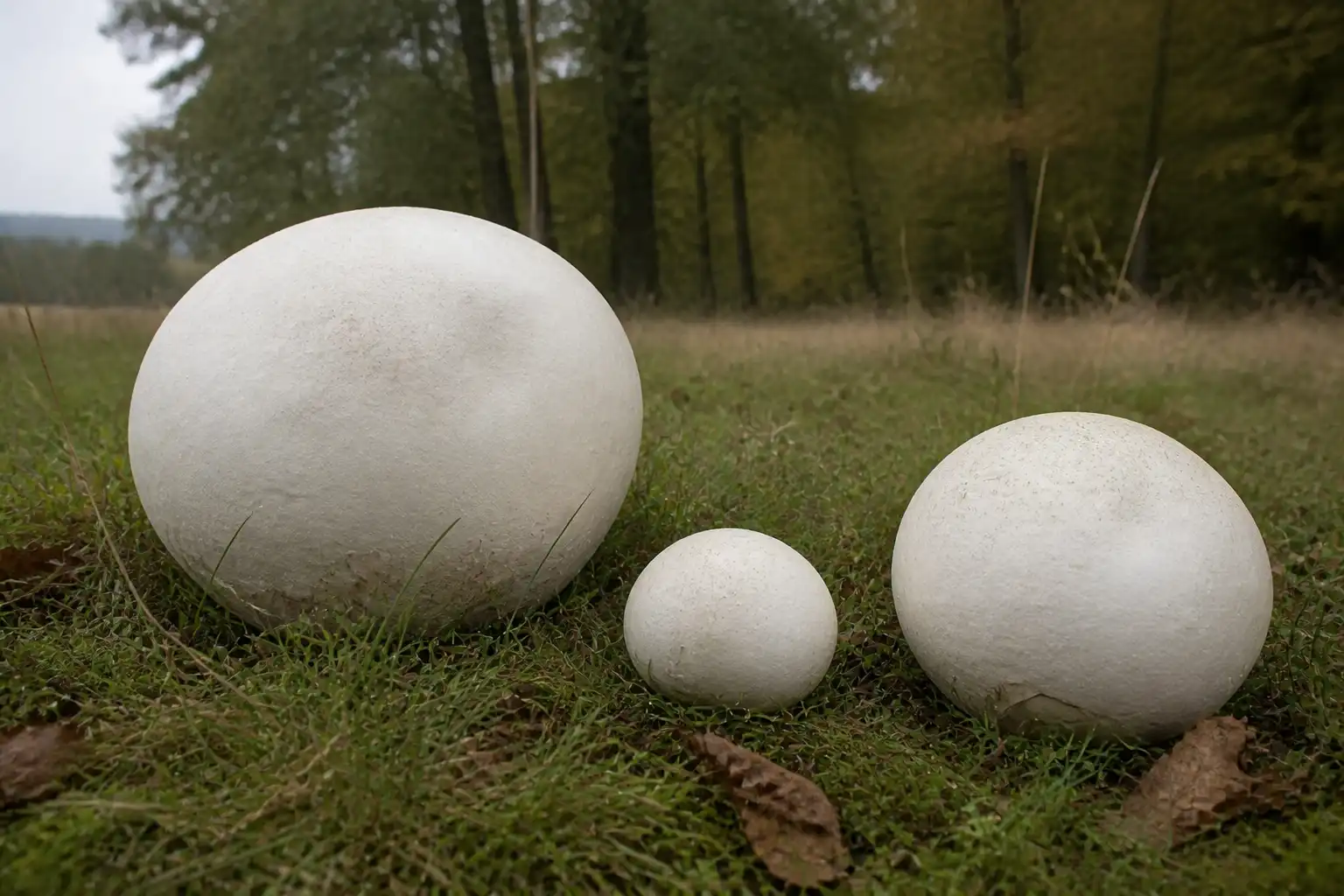
Giant Puffball (Calvatia gigantea): Identification and Safety
Learn giant puffball identification, white interior checks, dangerous lookalikes, habitat, maturity, and conservative food-safety limits.
identification
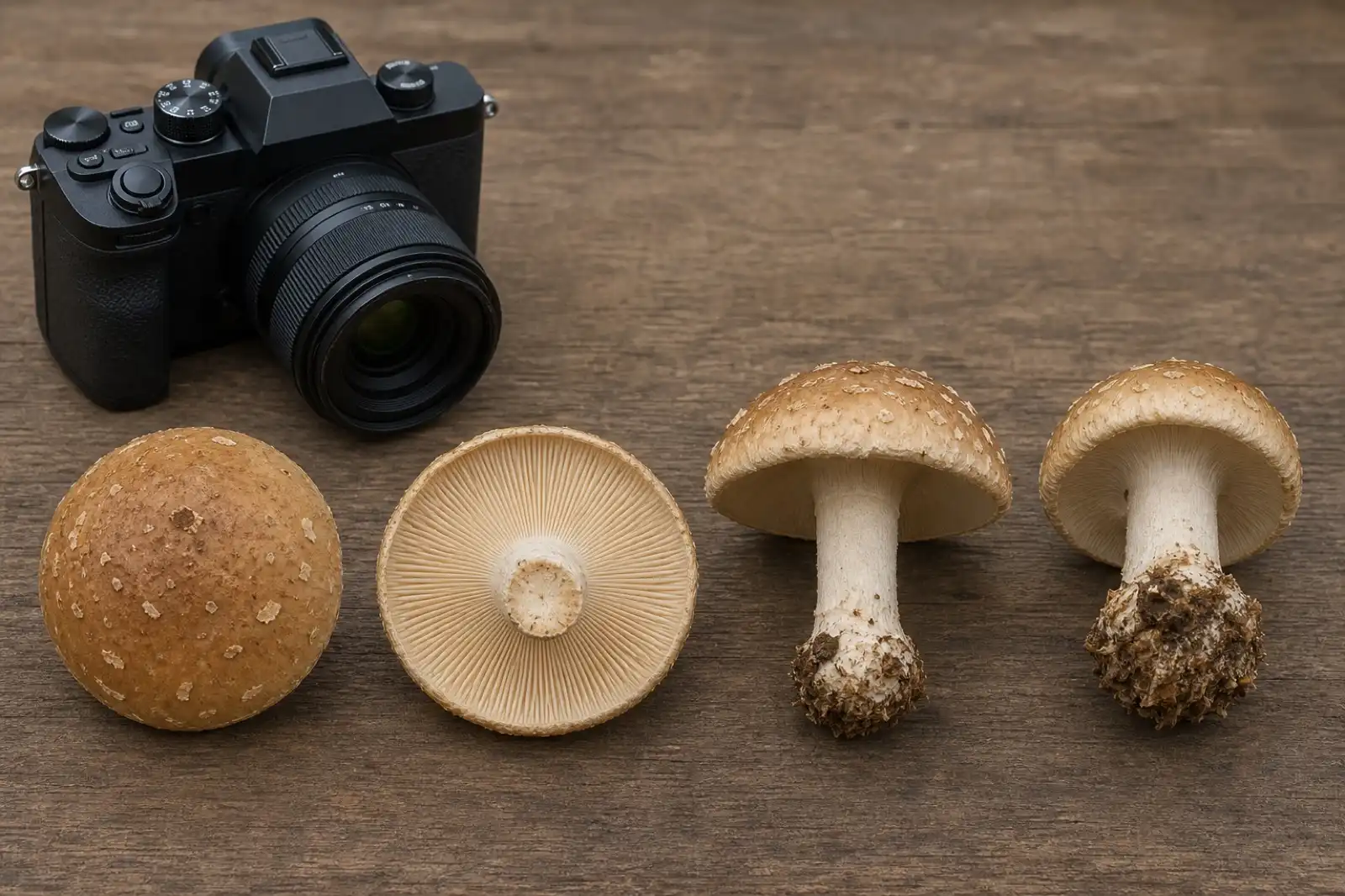
Mushroom Photography Checklist for Identification
Capture the cap, underside, complete stem base, habitat, scale, and specimens at different ages before asking for identification help.
identification
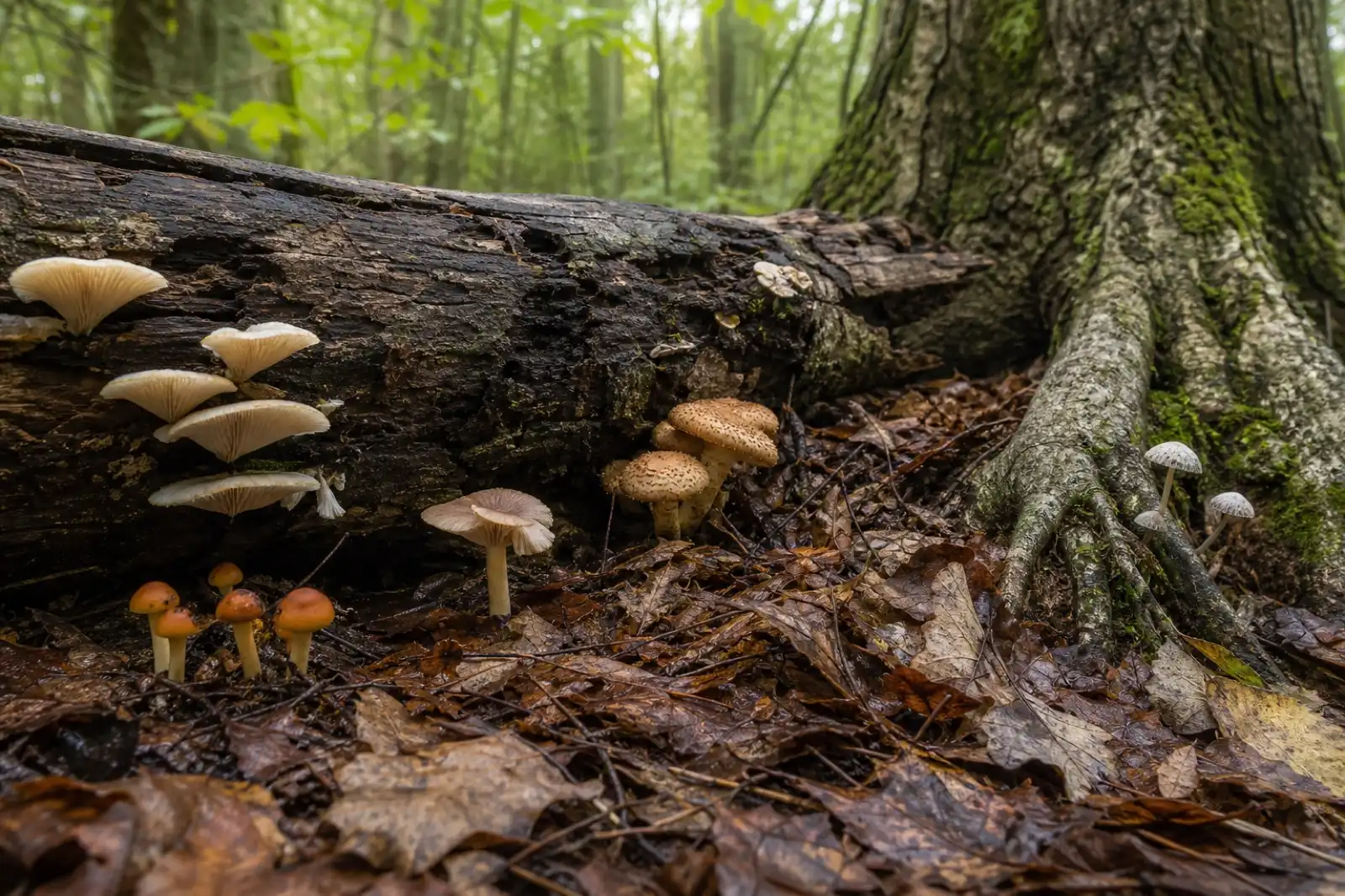
Using Habitat to Identify Mushrooms
Record substrate, associated plants, soil, wood type, moisture, elevation, and fruiting pattern as identification evidence.
Continue exploring
Browse more practical guides in Mushroom Encyclopedia or visit the mushroom encyclopedia.