Mushroom Encyclopedia
Golden Oyster Mushroom (Pleurotus citrinopileatus): Ecology and Growing Guide
Learn golden oyster mushroom traits, hardwood ecology, North American spread, cultivation variables, harvest quality, lookalikes, and identification limits.
By MushroomScope Editorial Team · · Updated
Species context
Treat profiles as reference material
Species profiles summarize documented traits, taxonomy, and lookalikes, but natural variation can be substantial.
Use the safety checklist →Decision limit
A profile cannot authenticate a specimen
Do not eat a wild mushroom from an online match, single feature, or generated image.
Read the safety disclaimer →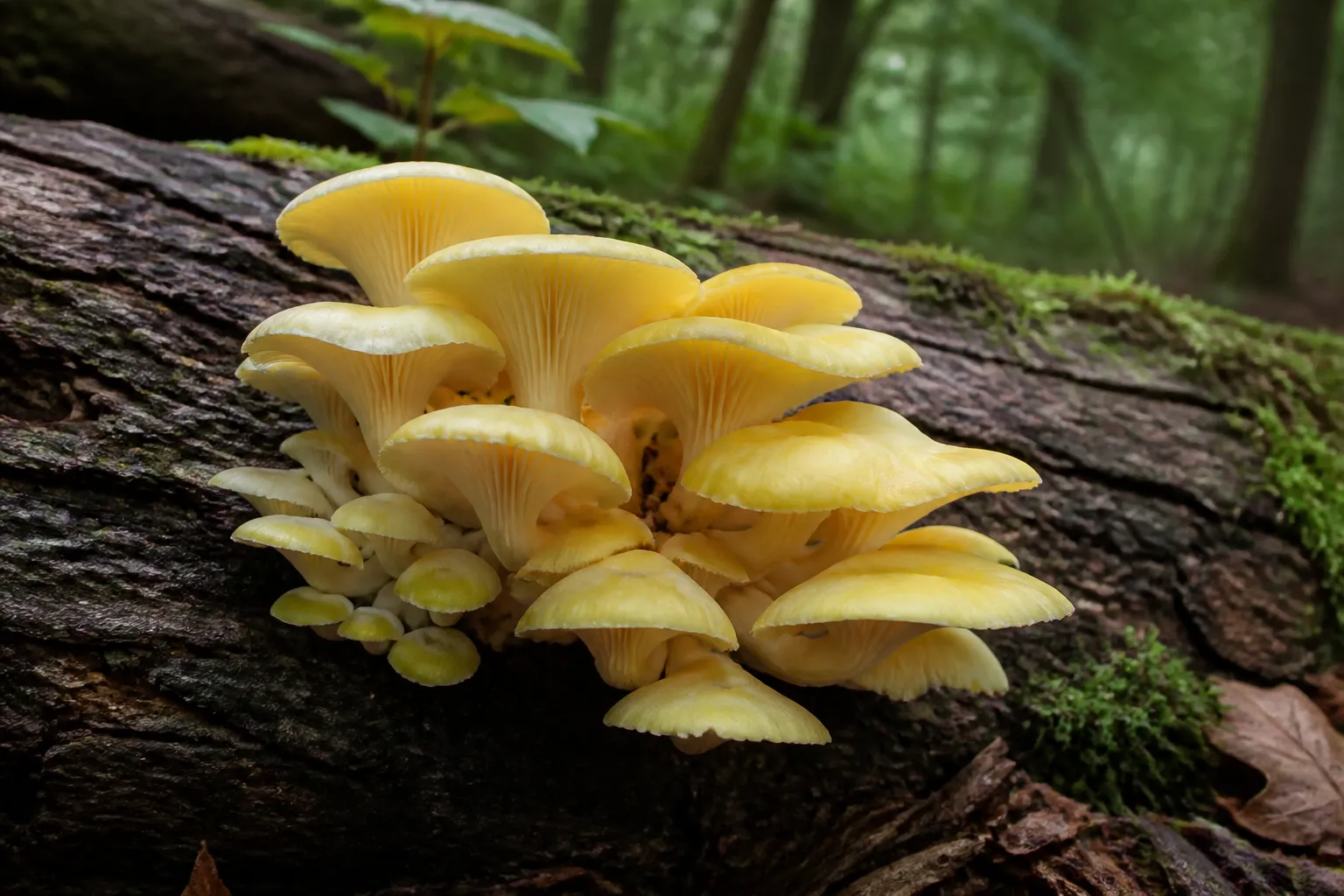
Quick facts
- Scientific name
- Pleurotus citrinopileatus
- Common names
- Golden oyster mushroom
- Taxonomy
- Pleurotus · Pleurotaceae
- Edibility context
- Edible: This database label is context, not remote clearance of a wild specimen; identity, preparation, spoilage, contamination, and individual reaction matter.
- Spore print
- White.
- Toxicity context
- None Known: Risk includes misidentification and individual reaction. Consult current local toxicology guidance before any food decision.
- Season
- May, June, July, August, September
- Growing difficulty
- Easy
- Regions
- East Asia, cultivated worldwide, naturalized North America
Safety limit: These labels summarize documented context; they never authenticate a wild specimen. Cooking does not make a poisonous species safe.
Identify the golden oyster form without relying on color
Bright yellow clustered caps, white decurrent gills, and slender pale stems describe the familiar golden oyster form. Young caps can be strongly convex; expanding caps become fan-shaped and may develop a shallow central depression or wavy margin. The yellow is often strongest on fresh caps and becomes paler with age, sun, rain, refrigeration, or cooking. Crowded gills run visibly down the stem, and many stems converge into one dense base attached to wood.
Color is useful for noticing the mushroom, but it is weak evidence by itself. Photograph the whole cluster in place, the cap surface, several undersides, the shared attachment, and the host log. Record cap width, odor without tasting, whether the wood is standing or fallen, and nearby tree species. A white spore deposit supports a Pleurotus hypothesis but overlaps with unrelated wood fungi. A defensible record combines the complete form, hardwood substrate, region, season, microscopy when needed, and an expert or voucher-backed comparison.
Cultivated clusters are easier to document because the supplier and culture label provide provenance. That label still describes the supplied culture, not a visually similar wild cluster. The broader oyster mushroom species guide explains the genus-level form; this page focuses on the yellow-capped species, its cultivation response, and its unusual ecological story in North America.
Hardwood ecology and a changing North American range
Pleurotus citrinopileatus is an East Asian white-rot fungus that decomposes hardwood. Cultivation moved it far beyond its native range on straw, sawdust, and commercial fruiting blocks. In a forest record, document the host rather than writing only “on wood”: hardwood versus conifer, tree genus if known, dead versus living tissue, diameter, decay stage, and whether several logs in the same stand are colonized.
North American records require an additional ecological boundary. A 2025 study archived by the USDA Forest Service describes introduction through cultivation, escape into forests around 2010, rapid expansion across the middle and northeastern continent, and altered fungal communities in sampled dead elm wood. In that study, wood with golden oysters had different fungal community composition and lower species richness. Those findings come from a defined Wisconsin field comparison and range model; they should not be inflated into a claim that every fruiting kills a tree or that the same effect has been measured everywhere.
The practical consequence is clear: do not move wild-collected tissue, colonized logs, or spent grow-kit substrate into woodland. A home grow belongs indoors or in a contained production system, and spent material should follow local invasive-species and waste guidance. Photographing an escaped cluster may contribute a useful record, but collection for food or culture can spread contaminated wood and does not substitute for regional reporting advice.
Fruiting timing varies with latitude, elevation, rainfall, host condition, and local establishment. May through September is orientation for many temperate records, not a universal calendar. Warm, wet periods can shift emergence, and cultivated fruiting can occur outside the local wild season.
For golden oysters, record the whole colonized wood unit rather than only the brightest cluster. Note standing snag, stump, log, or buried woody root; host identity if defensible; wood diameter and decay class; number of fruiting clusters; and whether clusters continue along the same trunk. At a possible North American expansion front, precise dated records and voucher-quality photographs may be more useful than collecting every fruit body. Follow land-manager rules and do not move colonized wood or spawn between sites.
Separate golden oysters from regional wood fungi
- Pleurotus cornucopiae — closely related pale forms and taxonomy may overlap.
- Omphalotus species — poisonous orange wood mushrooms with different structure.
Pale or faded golden oysters can approach cream-colored Pleurotus, while strongly colored specimens may be confused with orange wood fungi. Omphalotus species are poisonous and vary by region; cap color alone is not a safe separator. Compare the way the gills meet and descend the attachment, surface texture, cluster architecture, host, spore deposit, and microscopic characters. Phyllotopsis nidulans may be orange-yellow but typically has a conspicuously hairy cap and a different odor and spore character.
The list is not exhaustive. The oyster lookalikes guide provides a structured comparison, but neither that page nor a photograph can clear a wild mushroom for eating. Use a current regional key and in-person expertise that can inspect the complete material.
Harvest quality and cooking behavior
Golden oyster mushroom has a documented food-use context when the organism is correctly identified and the material is fresh, clean, and cooked. That reputation does not transfer to a wild specimen identified online. Individual allergy, gastrointestinal intolerance, spoilage, environmental contamination, and cross-contamination remain possible. Cooking does not make a poisonous lookalike safe.
Fresh clusters are delicate. Choose firm caps with dry-to-slightly-moist surfaces and clean aroma. Extensive slime, leaking tissue, sour odor, colored mold, or insect collapse are discard signs. Separate the dense base, brush away substrate, and avoid soaking thin caps. Refrigerate promptly in breathable packaging and follow the FDA’s produce-handling principles for clean hands, utensils, and separation from raw animal foods.
Wide pan contact matters more than preserving the raw yellow color. Cook in batches so released water can evaporate; add fat and aromatics after the first moisture release if browning is the goal. Thin cap margins crisp before the shared base becomes tender, so split thick junctions into similar sizes. The pigment commonly fades with heat. That change is normal cooking chemistry, not proof of misidentification.
Illness after a presumed golden-oyster meal requires prompt poison-service or medical advice, especially with repeated vomiting, breathing difficulty, confusion, or persistent diarrhea. Keep uncooked cluster material showing the shared attachment, cooked leftovers, site images, and meal timing. A yellow cap is not a medical identification, and cooking cannot correct a mistaken species or contaminated collection site.
Cultivation variables that change cap form and yield
Commercial cultivation is practical with authenticated spawn and species-appropriate lignocellulosic material. A reputable ready-to-fruit block is the lowest-complexity starting point. Growers making substrate must choose a documented straw or hardwood-sawdust method, bring moisture into the recipe’s tested range, apply the specified pasteurization or sterilization step, and inoculate in a clean workflow. The substrate guide explains why one heat treatment does not fit every formulation.
A controlled cultivation experiment found that carbon-dioxide concentration and illumination wavelength affected yield, biological efficiency, cap color, and composition in its tested culture. The useful lesson is not to copy a single laboratory number into every grow room. It is to treat fresh-air exchange and light as measured variables, record where the sensor sits, and change one factor at a time. Strain, block size, substrate density, supplementation, room geometry, and measurement method can all change the result.
After full colonization, follow the culture supplier’s fruiting trigger. Dense, stem-heavy clusters with undersized caps can indicate that carbon dioxide near the block remains too high. Cracked margins suggest the fruiting surface is drying faster than a distant room sensor reports. Water pooling on caps can damage tissue and favor bacteria; humidity should protect the surface without keeping it wet. The home oyster growing guide covers airflow and hygiene decisions common to oyster crops.
Inspect daily once pins appear. Harvest while caps remain firm and before broad margins become brittle, using the supplier’s maturity cue. Record inoculation date, first pin date, harvest date, fresh mass, room readings, and abnormalities. Those observations make a second batch comparable instead of turning every outcome into guesswork.
Isolate a bag with green, black, orange, or spreading wet patches, persistent foul odor, insect infestation, or unexpected fruit bodies. Do not open it in the clean inoculation area, taste it, or assume yellow pigmentation makes another colored growth normal. When provenance or contamination status is uncertain, discard the crop according to local rules.
Why outdoor cultivation needs an ecological boundary
The usual oyster-growing advice to bury or place a spent block outdoors is inappropriate where golden oysters may escape or are already treated as invasive. Fruiting bodies release spores; colonized substrate and wood can also move living fungal material. Containment therefore belongs in the cultivation plan, not as an afterthought after the first flush.
Before growing, check current state, provincial, or national guidance. Keep culture labels and receipts, do not clone wild North American specimens, and do not share colonized material across regions. If a suspected escape appears outside cultivation, photograph its location and host and ask the relevant local invasive-species or mycological authority how to report it. Do not promise eradication by removing only visible mushrooms: the mycelium is inside the wood.
How to document a find
- Photograph the entire yellow cluster on its wood, then the length of trunk or log carrying additional clusters.
- Record coordinates privately, date, host or wood evidence, decay stage, cluster count, and whether cultivated golden oysters occur nearby.
- Photograph lemon-yellow young caps, fading mature caps, crowded decurrent gills, short off-center stems, and the fused base in diffuse daylight.
- Measure cap width across young and mature tiers and retain a pale lilac-white spore deposit only when it will help the regional comparison.
- Check a current regional Pleurotus key and report a suspected escaped population to the appropriate local biodiversity program rather than moving material.
For a cultivated batch, replace the location entry with culture supplier, lot, substrate recipe, treatment method, inoculation date, fruiting-room readings, and photographs from pinning through harvest. For a suspected North American escape, add the distance to any known grow site, number and diameter of colonized logs, and whether the host appears to be elm or another hardwood. These records serve different questions and should not be merged.
Evidence boundaries for nutrition and health claims
Golden oyster fruit bodies are food, but nutrient composition changes with strain, substrate, maturity, water content, storage, and cooking. A 2024 cultivation study found differences among tested substrates in yield and measured composition. That supports a substrate-effect hypothesis within that experiment; it does not supply a universal nutrient label for every retail cluster.
Cell, enzyme, extract, or animal studies do not establish that eating golden oysters prevents or treats disease. This page makes no therapeutic claim. Product marketing that cites an isolated compound should identify the tested material, dose, model, and outcome before implying relevance to a cooked serving. People with mushroom allergy or a prior reaction should seek individual medical advice rather than testing tolerance from a web guide.
References
- Global Biodiversity Information Facility. Pleurotus citrinopileatus species record. Taxonomic backbone and occurrence context.
- National Center for Biotechnology Information. NCBI Taxonomy Browser. Independent lineage and nomenclature checkpoint.
- North American Mycological Association. Mushroom Poisoning Syndromes. Poisoning response and syndrome context.
- U.S. Food and Drug Administration. Selecting and Serving Produce Safely. General handling guidance for mushrooms used as food.
- Veerabahu A, Banik M, Lindner D, Pringle A, Jusino M. Invasive golden oyster mushrooms are disrupting native fungal communities as they spread throughout North America. Current Biology. 2025;35(16):3994–4002. Range history, dead-elm community comparison, and modeled spread.
- Hu S-H, et al. Effect of light and atmosphere on the cultivation of the golden oyster mushroom. International Journal of Medicinal Mushrooms. 2013;15(1):101–111. Controlled culture-specific light and carbon-dioxide results.
- Siwulski M, et al. Spent mushroom substrate and hydroponic roots as substrates for Pleurotus citrinopileatus. Molecules. 2024. Substrate-specific yield and composition measurements.
Editorial review: August 29, 2026. This page received editorial review only; no named mycologist or clinical expert reviewed it. Taxonomy, invasive-range guidance, and poison-response contacts should be rechecked at every substantive update.
Source quality notes
MushroomScope cites sources that match the page scope, such as taxonomic databases, extension guidance, food-safety agencies, food-composition databases, and peer-reviewed or institutional health references. Sources support context and uncertainty; they do not turn an online page into specimen identification, medical advice, or a tested recipe record.
Frequently asked questions
Can Golden oyster mushroom be identified from one photograph?
No. Identification requires the complete specimen, fertile surface, attachment, substrate, habitat, region, developmental stage, and sometimes microscopy or DNA.
Is wild Golden oyster mushroom safe to eat?
This page cannot clear a wild specimen for food. Obtain in-person confirmation from a qualified local identifier and follow local guidance; cooking cannot make a poisonous lookalike safe.
Where does Golden oyster mushroom grow?
An East Asian hardwood decomposer now cultivated and naturalized in parts of North America. Regional records and host associations should be checked before applying this summary to a local collection.
What is the spore print of Golden oyster mushroom?
The expected deposit is white, but print color overlaps among fungi and cannot confirm this species by itself.
Can Golden oyster mushroom be cultivated at home?
Authenticated commercial culture can be cultivated with a proven supplier method; keep clean batch records and discard suspect material.
Related guides
mushrooms
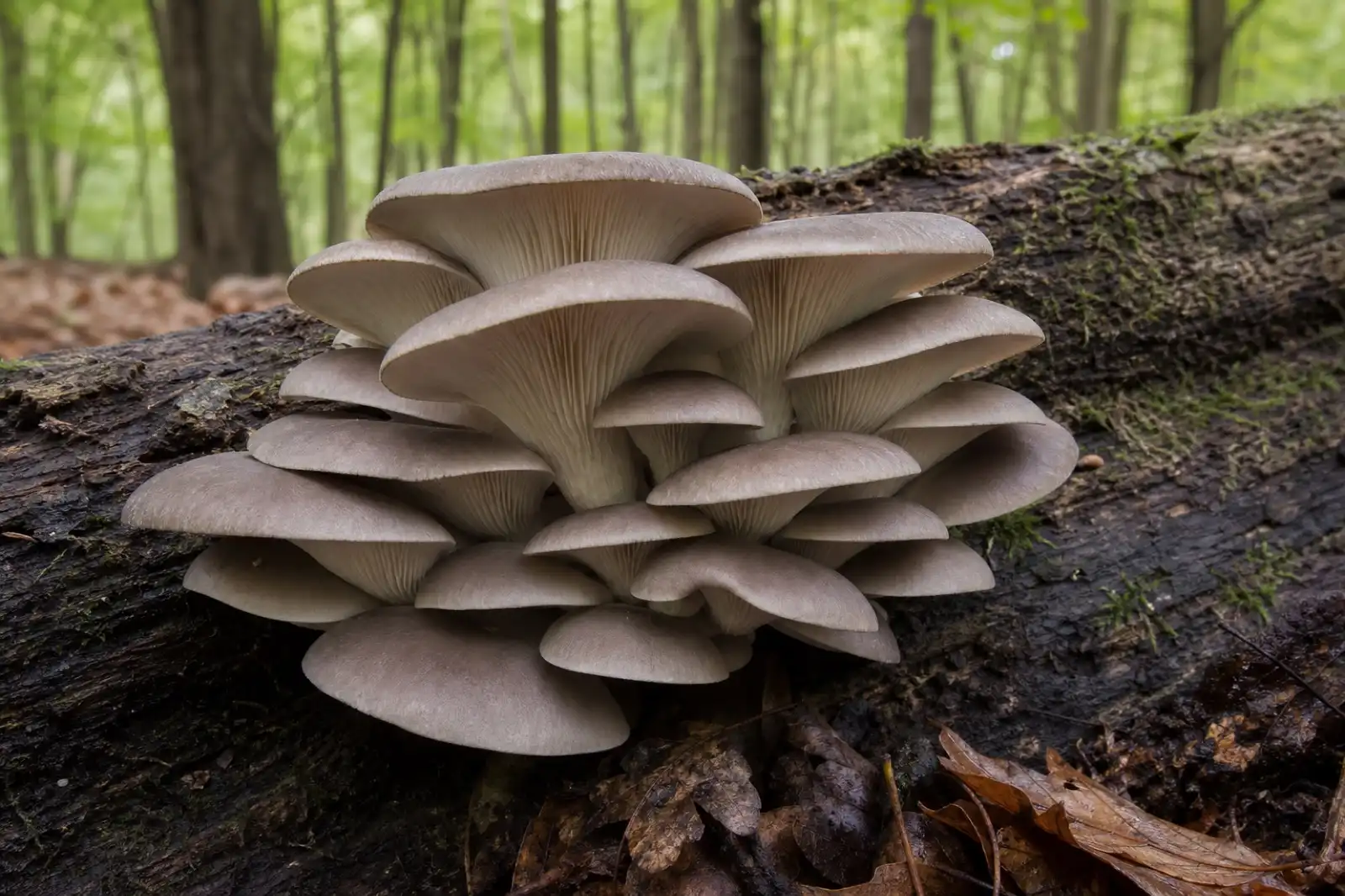
Pleurotus ostreatus: Oyster Mushroom Identification and Growing Guide
A careful guide to Pleurotus ostreatus identification, habitat, home cultivation, nutrition, lookalikes, food safety, and research limitations.
growing
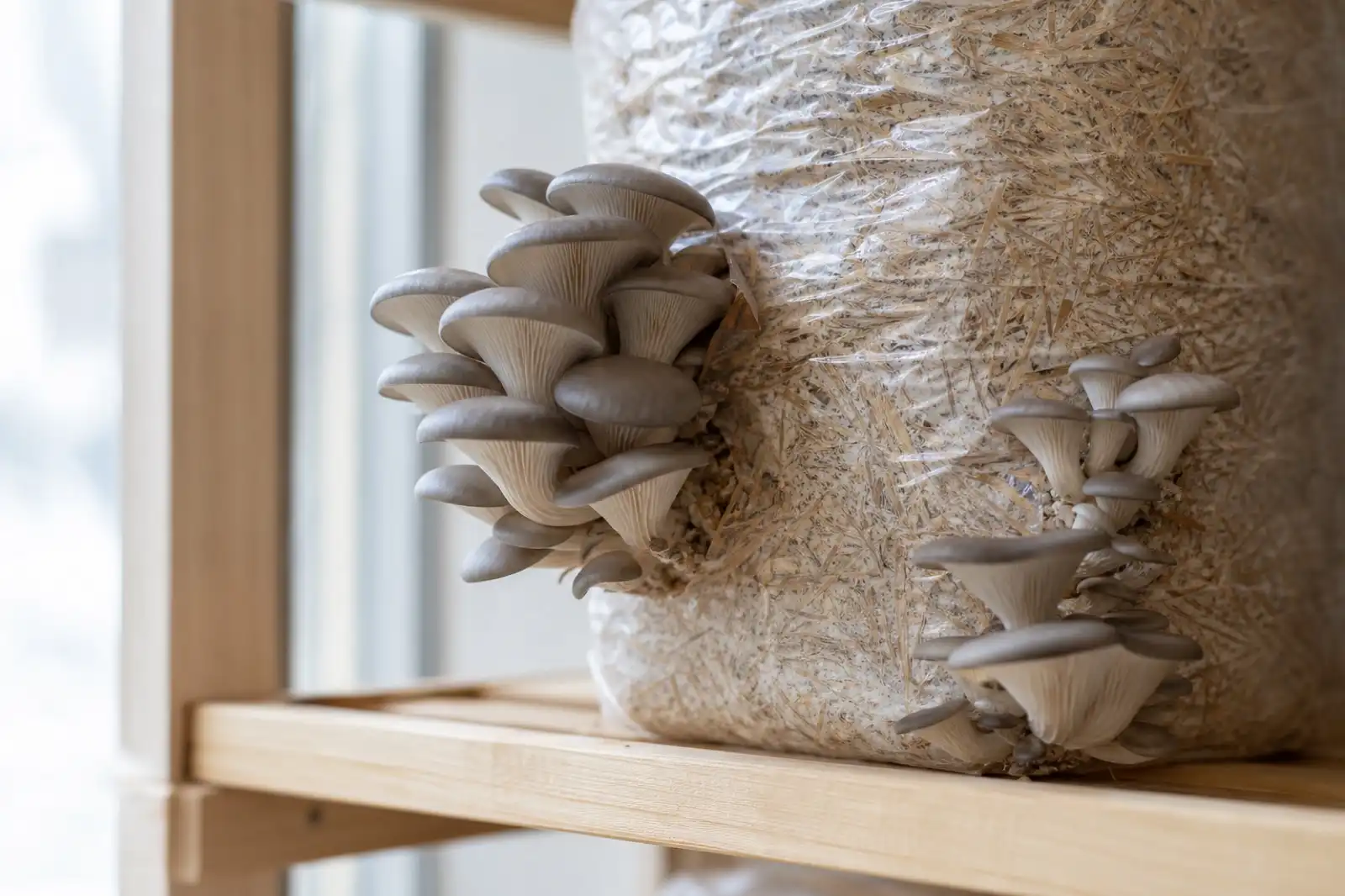
How to Grow Oyster Mushrooms at Home
Grow oyster mushrooms at home with a supplier-provided fruiting block: set up a clean observation routine, follow the culture label, and handle harvests safely.
identification
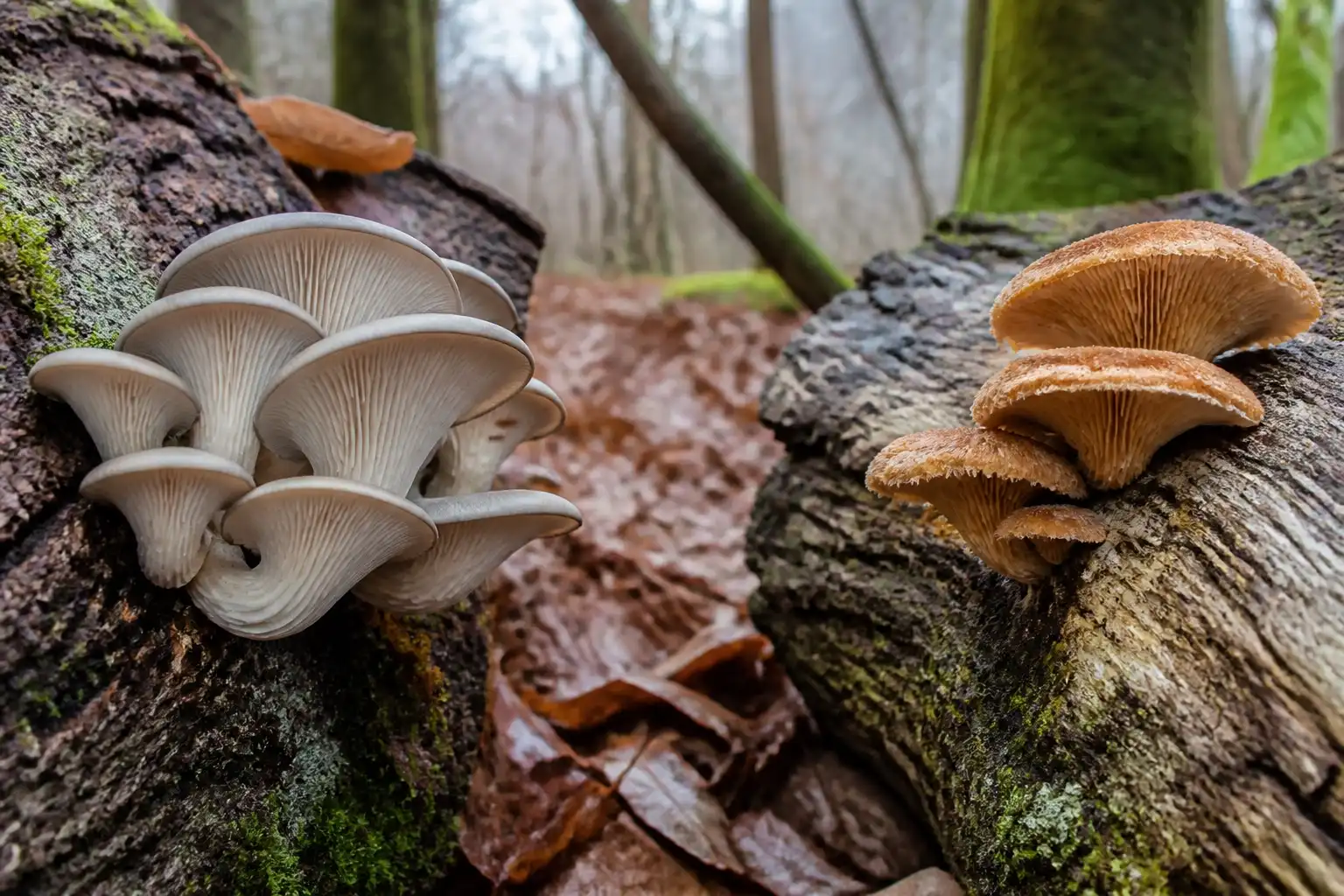
Oyster Mushroom Lookalikes and Identification Tips
Compare oyster mushroom lookalikes with conservative field observations, documentation steps, safety limits, and reasons to seek local expert help.
Continue exploring
Browse more practical guides in Mushroom Encyclopedia or visit the mushroom encyclopedia.