Mushroom Encyclopedia
Hedgehog Mushroom: Teeth, Woodland Ecology, and Lookalikes
Identify hedgehog mushrooms by soft downward teeth, irregular buff caps, woodland ecology, white spores, and separation from other toothed fungi.
By MushroomScope Editorial Team · · Updated
Species context
Treat profiles as reference material
Species profiles summarize documented traits, taxonomy, and lookalikes, but natural variation can be substantial.
Use the safety checklist →Decision limit
A profile cannot authenticate a specimen
Do not eat a wild mushroom from an online match, single feature, or generated image.
Read the safety disclaimer →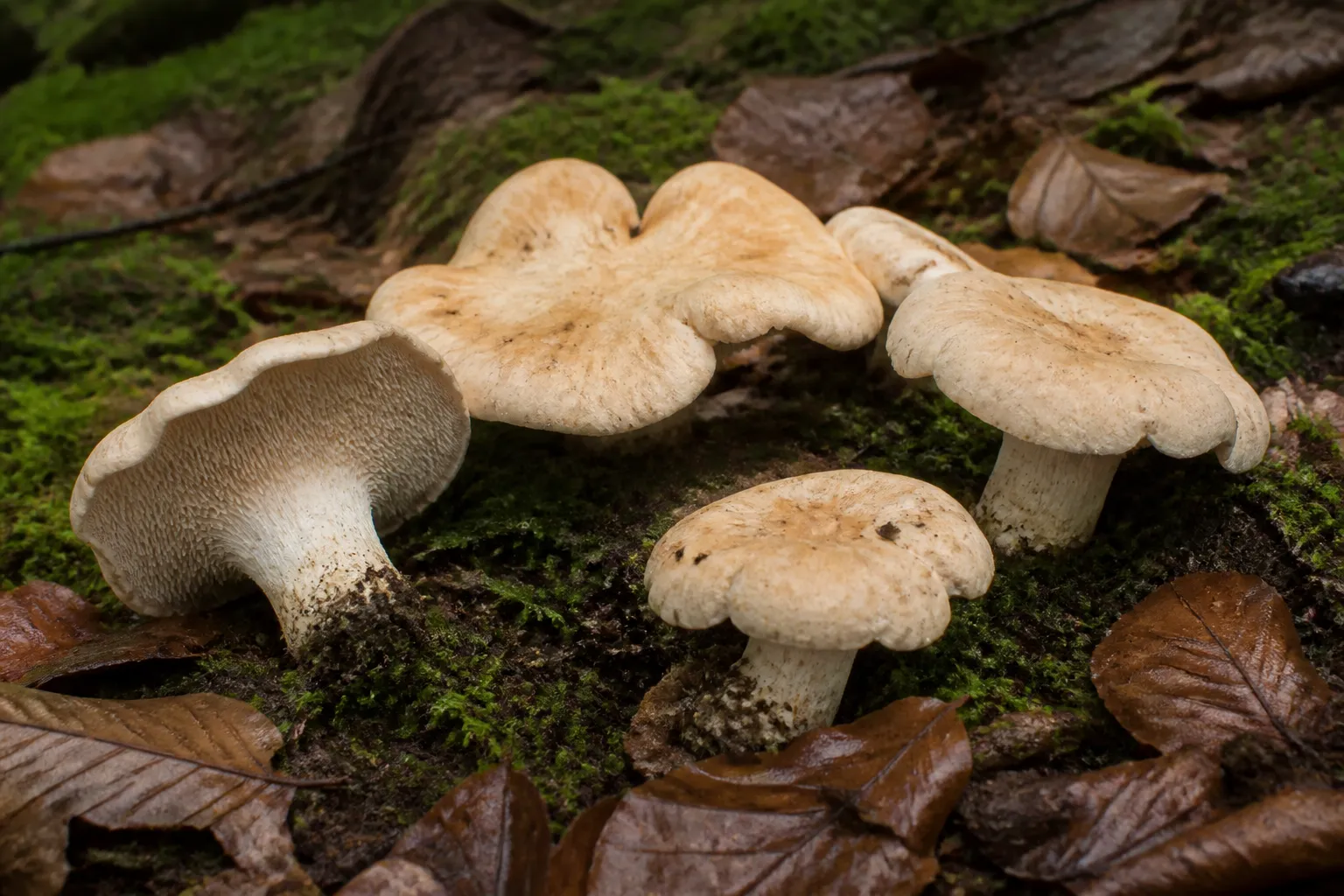
Quick facts
- Scientific name
- Hydnum repandum
- Common names
- Hedgehog mushroom, Wood hedgehog, Hedgehog fungus
- Taxonomy
- Hydnum · Hydnaceae
- Edibility context
- Conditional: Has a culinary history after correct identification and cooking, but this page does not clear wild material for consumption.
- Spore print
- White to cream.
- Toxicity context
- Low: No general toxicity claim substitutes for identification; lookalikes, spoilage, contamination, allergy, and intolerance remain relevant.
- Season
- August, September, October, November
- Growing difficulty
- Expert
- Regions
- Europe, temperate regions represented by verified records
Safety limit: These labels summarize documented context; they never authenticate a wild specimen. Cooking does not make a poisonous species safe.
Hedgehog mushrooms are often introduced as “the mushroom with teeth,” an excellent first observation but an incomplete identification. The tooth-bearing underside separates them from gilled and pored mushrooms, yet several Hydnum species and unrelated toothed genera share that architecture. A responsible record combines the teeth with cap form, stem position, flesh, spore color, tree community, region, and developmental stage.
This guide uses Hydnum repandum for the traditional European hedgehog concept recognized by GBIF. Names applied in older books or across continents may cover multiple lineages. Use current regional literature before transferring the species name to a local collection.
The quick field profile
A typical fruit body has a thick irregular cream-to-buff cap, a pale solid stem, and hundreds of soft downward teeth beneath the cap. The stem may be central or noticeably off-center, and the teeth can extend partway down it. Flesh is pale and firm. A white-to-cream spore deposit supports the group.
The mushroom fruits from soil in woodland rather than directly from visible wood. It is mycorrhizal, living in association with tree roots. Start with the complete identification workflow instead of matching only the unusual underside.
Confirm teeth rather than folds or pores
Turn the cap far enough to see the fertile surface without breaking the stem. True teeth are individual narrow projections hanging downward. They can be several millimeters long on mature specimens and may detach when rubbed. Each remains physically separate from its neighbors.
Chanterelle false gills are blunt ridges continuous with the cap flesh; they fork and cross-connect rather than hanging as many fine points. Pores are openings in a tube layer. A close side-lit photograph makes these differences clearer than a bright overhead flash.
Cap shape is deliberately irregular
Young caps are broadly convex and may have a tucked margin. With expansion they become uneven, lobed, shallowly depressed, or warped by neighboring fruit bodies and roots. The surface is usually dry to slightly velvety, not strongly slimy or covered with coarse dark scales.
Color ranges from cream through pale ocher to apricot-buff. Soil, rain, age, and camera white balance change the apparent shade. A tidy round cap is not required, and a vivid orange cap should trigger comparison with other taxa rather than being forced into the common name.
Stem position and attachment matter
The pale stem is usually stout and solid. It may sit under the center or closer to one side because the cap expands around obstacles. Teeth often descend slightly onto the upper stem, while a ring and volva are absent.
Excavate the base rather than cutting it. Record whether it joins soil, roots, buried wood, or visible timber. A mushroom apparently “on the ground” can arise from buried wood, which would change the ecological comparison set.
Flesh, bruising, and condition
Slice one permitted specimen lengthwise. The flesh should be pale and comparatively firm. Some collections yellow or orange where handled, especially in the teeth or damaged tissue. Rate the speed and location of change rather than recording only “stains.”
Older hedgehog mushrooms can become brittle, bitter, dirty between the teeth, or heavily tunneled by larvae. Those condition changes are not diagnostic characters and make culinary discussion irrelevant even if the name is correct.
Spore deposit as a supporting test
Use a mature cap over contrasting nonabsorbent surfaces and cover it against drafts. A white-to-cream deposit is expected. It helps distinguish darker-spored toothed genera but does not separate all pale-spored Hydnum species.
If a cap fails to print, try another developmental stage. Tooth damage, dryness, immaturity, and age can all prevent a useful deposit. Do not infer white spores from the pale underside without actually making the observation.
Woodland ecology and tree partners
Hedgehog mushrooms form mycorrhizae with trees. They may occur with beech, oak, conifers, or mixed tree communities depending on region and species. Fruit bodies emerge from soil, moss, or litter over mineral ground, often in scattered groups, arcs, or repeated patches.
Photograph the canopy and record nearby tree species rather than labeling every site “forest.” Note whether the stand is broadleaf, conifer, or mixed; whether soil is calcareous, acidic, sandy, or compacted where that can be assessed responsibly; and whether mushrooms repeat along a path or bank.
Season is regional evidence
Late summer and autumn are common fruiting periods in temperate records, especially after sustained moisture. Elevation, latitude, maritime climate, and rainfall shift the window. A local occurrence database is more useful than a universal month list.
An off-season observation is not automatically wrong, but it deserves stronger documentation. Record recent weather and specimen condition; old fruit bodies can persist after the conditions that initiated them.
Other Hydnum species are the closest problem
Modern work has split traditional hedgehog concepts into multiple species. Some differ in average cap size, hue, tooth length, bruising, spore measurements, host, and distribution, but field overlap can be substantial. A photograph may support Hydnum without resolving H. repandum.
Do not conceal that gap by calling every small specimen a juvenile or every reddish one weathered. Preserve measurements and habitat notes so microscopy or DNA can be added later. Species-level uncertainty is compatible with a useful genus-level record.
Measure a collection, not a single photogenic cap
Modern Hydnum identification often depends on overlapping characters rather than one dramatic feature. Sample the developmental range in one patch without stripping it. For each permitted fruit body, record cap width, stem length and maximum width, tooth length at a defined position, stem offset, fresh color, and any handling change. The bruising protocol helps keep the location and timing of yellowing or orange staining explicit.
Keep measurements attached to individual specimen codes. A 70 mm cap and 5 mm teeth should not be combined with the stem and habitat of a different fruit body to create an imaginary “average mushroom.” Photograph the ruler in the same plane as the feature and retain the original image.
Spore dimensions can matter among close species, but useful measurements require a mature deposit, correctly mounted spores, calibrated optics, a stated number measured, and length-by-width values rather than an unsupported adjective such as “small.” Ornamentation and basidia may require additional preparation. If that evidence is unavailable, stop at the best defensible aggregate or genus name.
Distribution is also evidence with a failure mode. A database point may be old, misidentified, cultivated, georeferenced broadly, or published under a former species concept. Filter occurrence records by geography and date, then read the underlying record before claiming that a lineage occurs locally. A regional monograph or verified herbarium collection generally carries more identification weight than an unreviewed photograph pin.
Sarcodon and other darker toothed fungi
Many Sarcodon species have coarse scaly caps, darker fibrous flesh, stronger odors or bitterness, and brown spores. Their build can be more rugged than a pale hedgehog. Those general differences guide comparison but are not a complete regional key.
Other toothed fungi include Hydnellum, Phellodon, and wood-growing tooth crusts. Growth directly on wood, zoned or corky caps, tough fused fruit bodies, striking exudates, or a dark spore deposit should redirect the identification.
Chanterelle is a structural comparison
Both mushrooms may have irregular yellowish caps and woodland habitat. The decisive first question is underside architecture. Chanterelles carry blunt folds that are part of the cap tissue, while hedgehog teeth are separate projections.
The chanterelle guide illustrates its false-gill intent, but neither page should be used to approve a meal. Mixed collections are possible when different mushrooms fruit near each other.
A complete field documentation sequence
- Photograph the undisturbed group and surrounding trees.
- Record date, location, rainfall, soil or moss setting, and tree community.
- Photograph the cap surface at young and mature stages.
- Use side light to show individual teeth and where they meet the stem.
- Preserve the full base and section one specimen.
- Record measurements, bruising, odor without tasting, and spore deposit.
- Compare against a current regional key and qualified local expertise.
The identification safety checklist is useful when a memorable single feature creates false confidence.
Culinary history and a firm safety boundary
Hedgehog mushrooms have a culinary history in regions where the relevant species are recognized. That statement does not make a collected toothed mushroom edible. Correct identity, local species boundaries, legal collection, environmental contamination, spoilage, allergy, and individual tolerance all remain separate questions.
Cooking cannot detoxify every poisonous lookalike. Do not use taste as a casual field test. If symptoms follow wild mushroom consumption, contact local emergency services or a poison center promptly and retain uncooked material, trimmings, photographs, and meal timing.
Handling a verified food product
For commercially sourced or expertly verified product, refrigerate promptly in a breathable container. Debris can lodge among the teeth; use a soft brush and brief running water only where needed, then dry thoroughly. FDA guidance advises against soap or detergent on produce.
Older teeth may contribute bitterness or crumble into a pan. Trim damaged portions and cook thoroughly in an uncrowded skillet so released water evaporates. Those culinary cues apply only after identity and supply chain are established.
Why home block cultivation is not a beginner method
Unlike saprotrophic oyster or shiitake mushrooms, Hydnum depends on living tree-root partnerships. A bag of sterilized sawdust alone does not reproduce that ecological system. Reports of research or nursery association should not be converted into a household block recipe.
For a controlled first project, use a species covered by the beginner growing guide and authenticated commercial spawn. Digging forest soil or transplanting an unknown mycorrhizal collection can damage habitat and does not establish a verified culture.
Responsible observation and collection
Obtain permission and follow protected-area rules. Take the minimum material required for a defensible record, leaving young and mature fruit bodies for spore production and other organisms. Avoid raking moss or excavating wide root areas merely to find more mushrooms.
Location sharing also deserves care when populations are sensitive. A regional description may support science without broadcasting a precise vulnerable patch.
Evidence and image limits
The strongest field conclusion may be “consistent with Hydnum” rather than H. repandum. Species-level naming should track the resolution of the evidence. This page cannot assess a specimen’s identity, freshness, contaminants, or suitability for a particular person.
The cover is an original AI editorial illustration checked for separate soft teeth, pale irregular caps, woodland setting, clarity, and absence of text or watermarks. It is not a voucher image and should not be treated as a visual key. Review is editorial; no named clinical expert reviewed this draft.
Frequently asked questions
Are the teeth sharp?
No. On fresh specimens they are soft and fragile. “Teeth” describes their hanging shape, not a hard cutting structure.
Can the teeth run down the stem?
Yes, they may descend slightly, but attachment extent varies and is not sufficient for a species name.
Does a bitter taste identify an old hedgehog mushroom?
No. Taste is subjective and unsafe as a casual test. Age and species can both affect reported flavor.
Can I identify Hydnum from an underside photo?
You may recognize a tooth-bearing group, but region, cap, stem, base, ecology, spores, and close species still matter.
Are hedgehog mushrooms related to lion’s mane?
Both have tooth-like fertile structures, but they belong to different ecological and taxonomic groups. Lion’s mane grows on wood in branching masses; Hydnum forms cap-and-stem fruit bodies from soil with tree partners.
References
GBIF and NCBI support the accepted-name and lineage framework. NAMA supports conservative poisoning response, while FDA supports handling of verified food products. Claims about close species are deliberately bounded where regional keys, microscopy, or DNA are required.
- GBIF — Hydnum repandum. Used for the accepted-name concept and occurrence-record framework; individual records still require their own quality review.
- NCBI Taxonomy Browser — Hydnum repandum. Used to cross-check the taxonomic lineage, not as a field-identification key.
- North American Mycological Association — Mushroom Poisoning Syndromes. Used for the conservative poisoning-response boundary.
- U.S. Food and Drug Administration — Selecting and Serving Produce Safely. Used only for handling verified food products, not wild-specimen identification.
Editorial review: September 6, 2026. No named mycologist, toxicologist, dietitian, or clinician reviewed this page. Recheck taxonomy, regional distribution, and local poison-response contacts at every substantive update.
Source quality notes
MushroomScope cites sources that match the page scope, such as taxonomic databases, extension guidance, food-safety agencies, food-composition databases, and peer-reviewed or institutional health references. Sources support context and uncertainty; they do not turn an online page into specimen identification, medical advice, or a tested recipe record.
Frequently asked questions
What is the defining feature of a hedgehog mushroom?
The underside has many soft, separate, downward-pointing teeth rather than gills, ridges, or pores, but that trait identifies a broader toothed group and does not prove the species alone.
Can hedgehog mushrooms be confused with chanterelles?
Both can have irregular pale caps in woodland, but chanterelles have blunt folds or false gills while Hydnum has distinct hanging teeth that can be brushed away.
Do all pale toothed mushrooms belong to Hydnum repandum?
No. Several Hydnum species and unrelated toothed fungi overlap in color and form; region, size, bruising, ecology, microscopy, and sometimes DNA are needed.
Are wild hedgehog mushrooms safe to eat?
This guide cannot approve a collected specimen. Obtain in-person confirmation from qualified local expertise and consider freshness, contamination, local rules, and individual reactions.
Where do hedgehog mushrooms grow?
They fruit from soil in woodland and form mycorrhizal partnerships with trees. Host community, region, rainfall, elevation, and season all affect occurrence.
Related guides
identification
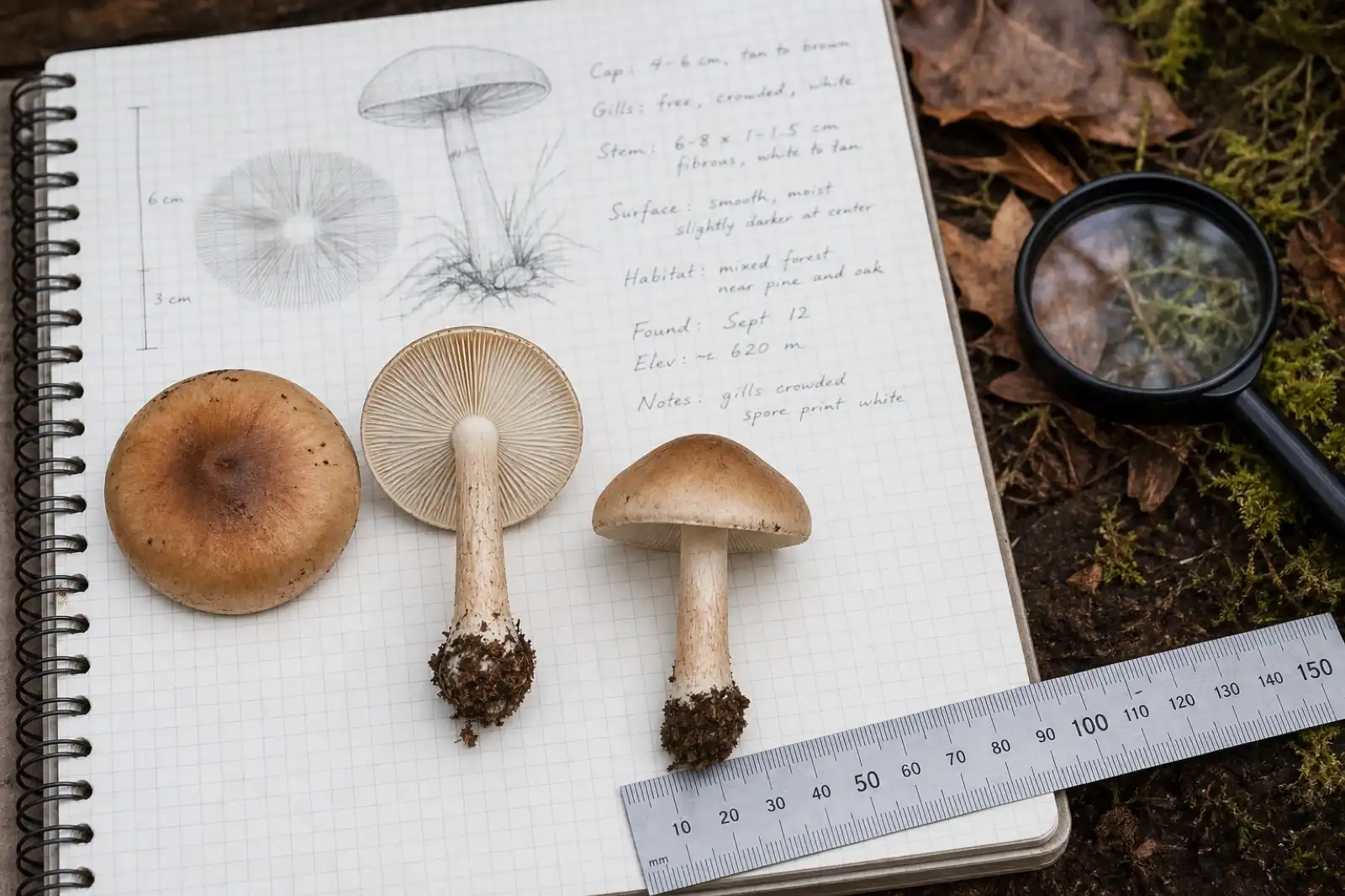
How to Identify Mushrooms: A Beginner's Field Guide
Build an identification from the whole specimen, substrate, habitat, spore deposit, and location—not from a single photograph.
identification
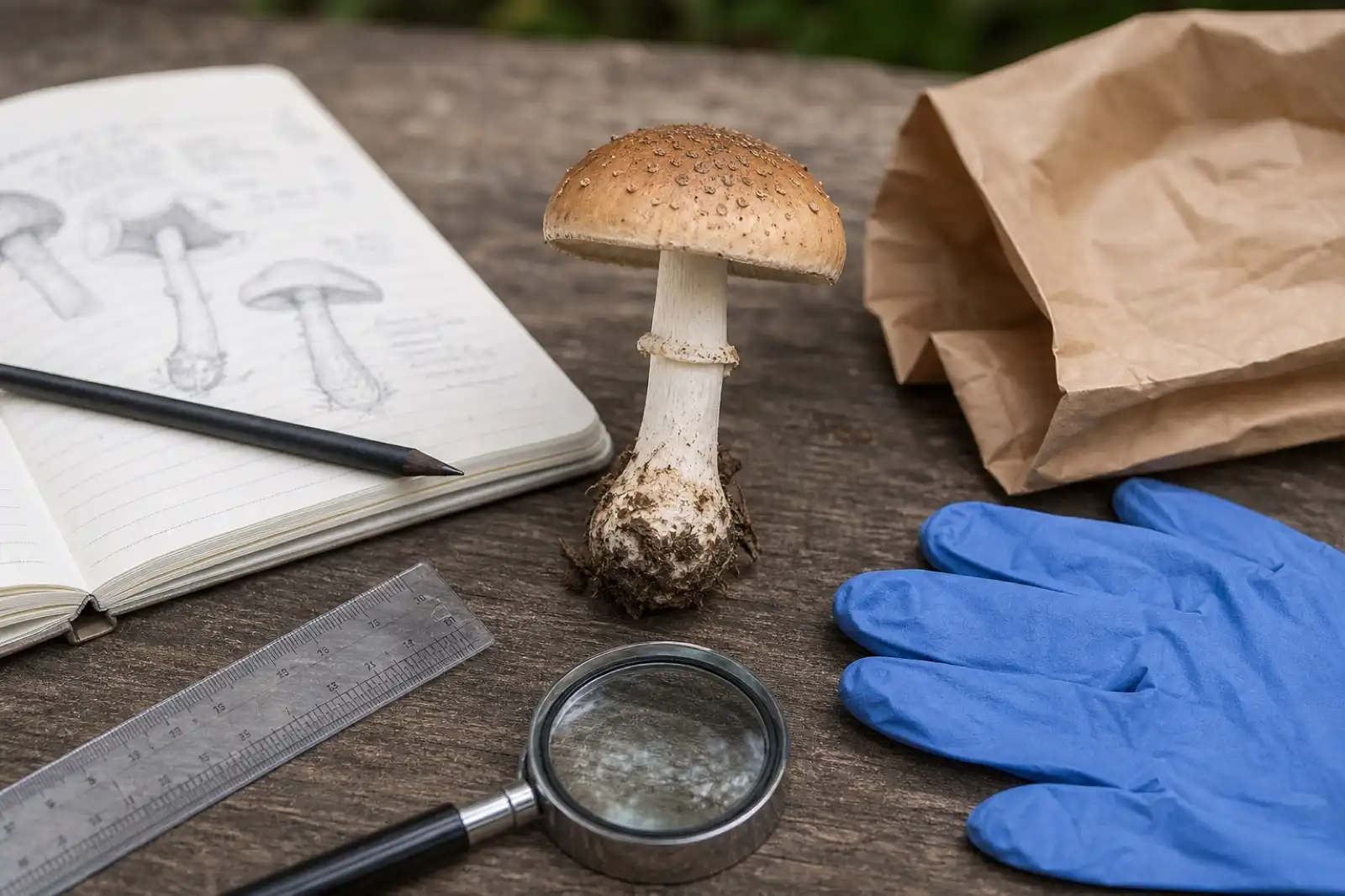
Mushroom Identification Safety Checklist
Use a conservative checklist before handling, documenting, or discussing any wild mushroom, especially when edibility is being considered.
mushrooms
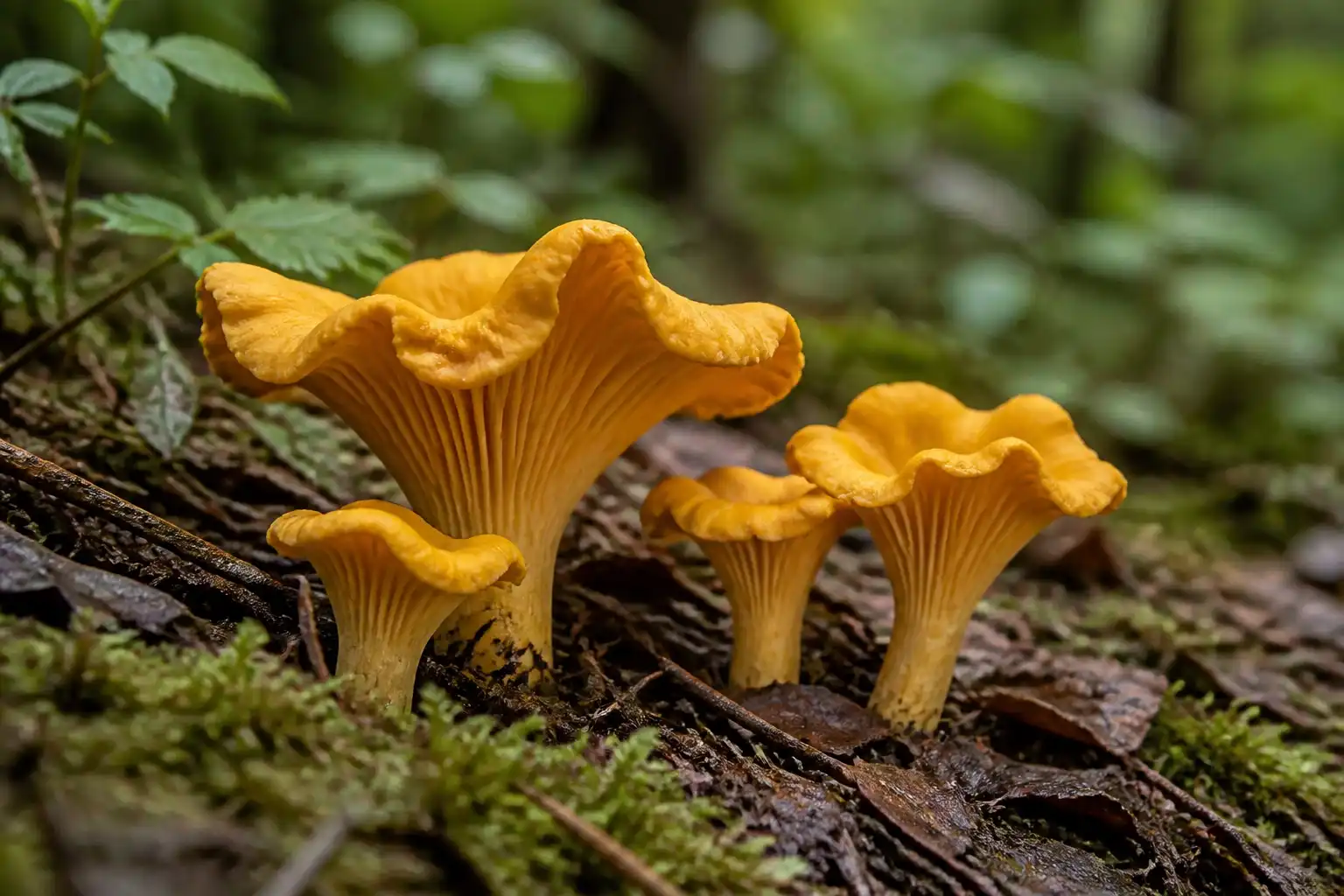
Cantharellus cibarius: Chanterelle Identification Guide
Learn chanterelle identification, false gills, habitat, season, poisonous lookalikes, edibility, nutrition, and why wild finds need local verification.
Continue exploring
Browse more practical guides in Mushroom Encyclopedia or visit the mushroom encyclopedia.