Mushroom Encyclopedia
Jelly Tooth Fungus: Gelatinous Texture, Teeth, and Conifer Wood
Document jelly tooth fungus by its translucent lobes, toothed underside and decayed conifer substrate, with lookalikes, microscopy limits, and safety.
Species context
Treat profiles as reference material
Species profiles summarize documented traits, taxonomy, and lookalikes, but natural variation can be substantial.
Use the safety checklist →Decision limit
A profile cannot authenticate a specimen
Do not eat a wild mushroom from an online match, single feature, or generated image.
Read the safety disclaimer →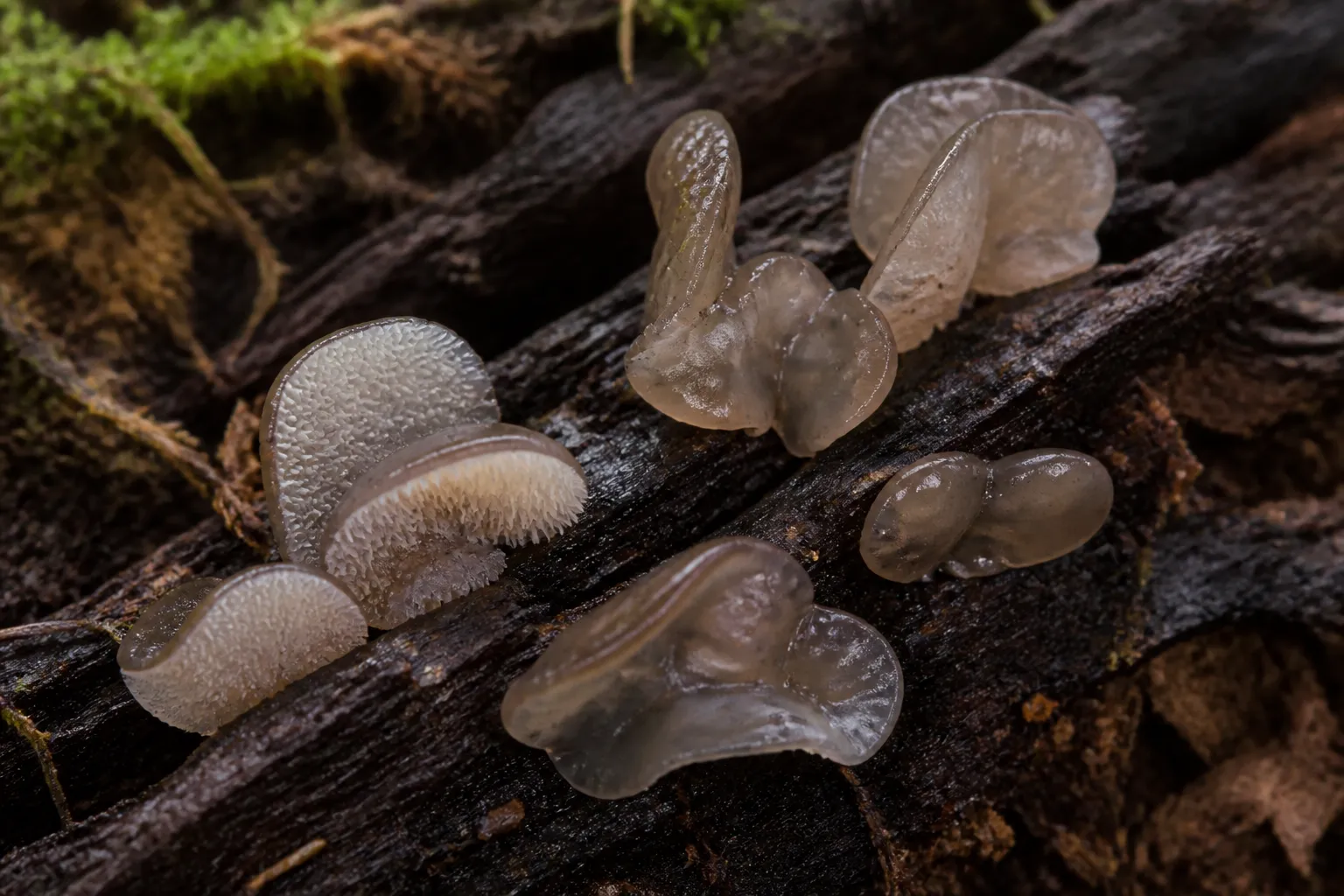
Quick facts
- Scientific name
- Pseudohydnum gelatinosum
- Common names
- Jelly tooth fungus
- Taxonomy
- Pseudohydnum
- Edibility context
- Edible: This database label is context, not remote clearance of a wild specimen; identity, preparation, spoilage, contamination, and individual reaction matter.
- Spore print
- White.
- Toxicity context
- None Known: Risk includes misidentification and individual reaction. Consult current local toxicology guidance before any food decision.
- Season
- August, September, October, November
- Growing difficulty
- Not Cultivated
- Regions
- Europe, Asia, North America
Safety limit: These labels summarize documented context; they never authenticate a wild specimen. Cooking does not make a poisonous species safe.
Identification overview
The diagnostic starting combination is a translucent gray to brownish gelatinous lobe with a dense lower surface of short white teeth. Lobes may be fan-shaped, tongue-shaped or irregular and attach laterally to wood. Photograph naturally overturned specimens when possible; flipping every lobe can damage the colony. A white deposit is difficult to observe on ordinary paper and is supporting evidence rather than a one-step identification.
Habitat and season
Jelly tooth is documented chiefly from well-rotted conifer logs and stumps across northern temperate regions. Advanced decay can erase bark and make the host uncertain, so distinguish a confirmed conifer from a nearby-tree guess. Moist autumn weather often makes fruit bodies conspicuous, but rainfall, elevation and local climate are more informative than a fixed month list.
The attachment and decay stage are central evidence. Show the lobe emerging from wood, any remaining bark and enough of the log to evaluate whether it is coniferous. If the substrate is too decomposed to identify, record it as uncertain rather than assigning the nearest standing tree as host.
Similar species
- Tremella species — gelatinous lobes without a toothed fertile surface.
- Hydnum species — firm fleshy tooth fungi growing from soil rather than gelatinous wood dwellers.
Jelly fungi must be compared by surface anatomy as well as shape. A smooth Tremella-like lobe lacks the dense soft teeth; a Hydnum tooth surface belongs to firm flesh and a terrestrial fruit body. Weathered material can erase both distinctions, which is a reason to leave it unnamed rather than rely on an image match.
Food and safety context
Jelly tooth fungus has a documented food-use context when the organism is correctly identified and the material is fresh, clean, and cooked. That reputation does not transfer to a wild specimen identified online. Individual allergy, gastrointestinal intolerance, spoilage, environmental contamination, and cross-contamination remain possible. Cooking does not make a poisonous species safe.
For severe vomiting, persistent diarrhea, confusion, jaundice, breathing difficulty, or any symptoms after an unidentified wild mushroom, contact emergency services or a poison center promptly. Keep uncooked material, trimmings, photographs, and meal details for professional identification.
Cultivation context
Jelly tooth is not supported by the predictable home-block methods used for commercial oysters. A culture experiment would need authenticated material, documented conifer wood, moisture control and a research purpose; a bag of colonized sawdust does not prove identity or food suitability. Do not transfer wild tissue into a food-growing area.
Confirm the unusual texture-and-teeth combination
Jelly tooth combines translucent gray-white gelatinous flesh with a lower surface covered in short soft teeth. Either feature alone is broad; together with lateral attachment to well-rotted wood they create a useful starting pattern. Photograph the upper lobes, naturally exposed teeth, attachment, and several ages before touching them. Compression, drying, frost, and rain can transform the shape and translucency.
Use side lighting to show texture without changing color in editing. Measure lobes and teeth where practical. A white deposit is difficult to see and is only supporting evidence. Microscopy and a regional key may be needed when morphology is degraded or geographic species limits are uncertain. The AI cover is editorial context, not a documented specimen.
Record conifer wood rather than generic forest floor
The fungus is associated with well-decayed conifer logs and stumps. Buried wood can make it appear to grow from soil, while moss can conceal the attachment. Photograph exposed wood, bark remnants, growth position, and nearby conifers, but do not name a host from proximity alone. State whether wood is standing or fallen and how advanced the decay appears.
Moist weather favors visible gelatinous fruit bodies; dry periods can shrink them beyond easy recognition. A month list is therefore an observation window, not a promise. Revisit a known log after rainfall when local rules allow and compare photographs without stripping the colony.
Separate jelly fungi from tooth fungi
Many Tremella and related jelly fungi form translucent lobes but lack a true toothed fertile surface. Hydnum and other tooth fungi have spines but are firm, fleshy, and usually soil-associated rather than gelatinous wood dwellers. Coral fungi branch differently, and decayed or frozen specimens can blur these distinctions. Compare underside structure, consistency, attachment, substrate, and microscopy rather than color alone.
The set of similar species changes by continent. Image search results frequently omit the underside, so they are poor evidence for this organism. Do not assign edibility to an online photograph.
Keep handling and food claims narrow
Some references describe jelly tooth as edible, but that database status is not remote clearance. The small fruit body can trap grit and decayed wood, and its quality changes quickly. Any food decision requires local expert confirmation, lawful collection, fresh sound tissue, clean handling, and thorough cooking. Avoid contaminated sites and discard foul-smelling, collapsing, or discolored material.
Texture rather than nutrition is the main culinary distinction addressed here. Blanching or simmering changes the gelatinous body differently from dry sautéing, but no preparation makes a misidentified fungus safe. First servings, if locally accepted and expertly verified, should be modest because individual reactions remain possible.
Explain why cultivation is not a beginner promise
Its wood-decay ecology does not mean that any conifer sawdust bag will fruit it. Culture authentication, wood species, decay stage, microbial community, moisture, temperature, and fruiting triggers may all matter. Do not clone unknown wild tissue for food. A laboratory culture record should include accession, substrate, treatment, dates, conditions, and contamination observations.
Build a useful voucher record
Record site, date, weather, wood position, probable host evidence, dimensions, upper and lower surfaces, attachment, texture, and odor without tasting. Photograph scale and natural color, then dry a lawful voucher promptly if scientific confirmation is intended. Keep sensitive locations private where collection pressure is a concern.
The habitat identification guide provides a substrate-recording framework, and the mushroom photo checklist helps capture the toothed underside, attachment, and scale without treating photographs as edible clearance.
Editorial and evidence limits
This stored draft has editorial review only and no named mycologist or clinician. It makes no therapeutic claim and treats edibility conservatively. Before publication, recheck taxonomy, range, sources, related-page status, image metadata, and poison-response guidance while retaining draft: true.
Publication-ready questions to answer from the record
Are all translucent wood fungi jelly tooth? No. The short toothed underside is essential supporting structure, and it must be interpreted with gelatinous texture, attachment, decayed conifer wood, geography, and microscopy.
Can dry weather hide the species? Yes. Gelatinous bodies shrink and change translucency. A revisit after rain may provide better morphology, but calendar and weather never prove identity.
Is every tooth fungus closely related? No. A toothed fertile surface occurs across unrelated fungal lineages. Firm soil-growing Hydnum and gelatinous wood-growing Pseudohydnum differ ecologically and structurally.
Does an edible database label authorize tasting? No. The label assumes correct identity and does not assess a particular specimen’s condition, site contamination, legality, or the eater’s sensitivity.
What must happen before publication? Verify conifer-substrate and range claims, ensure every related link targets a public page, inspect source and responsive production images, confirm FAQ Schema matches the frontmatter, set a deliberate non-future publish date, and run the entire build plus broken-link and duplicate-image checks.
Example wet-weather documentation sequence
Begin with a habitat frame showing the log’s position and surrounding forest, then record bark remnants, exposed wood, moss, and the point where each lobe emerges. A macro frame should show teeth without crushing or flipping the fruit body. Place a scale beside, not on, the fungus and capture color under neutral natural light.
Describe texture with a gentle observation only when collection is lawful: gelatinous, resilient, watery, or partly dried. Do not repeatedly handle the colony for photographs. If a small voucher is justified, link it to the image series, substrate notes, date, weather, and location. Drying can make the specimen nearly unrecognizable, so pre-drying images are essential.
A revisit after rain can document rehydration or new fruiting, but it should not be narrated as a controlled experiment unless moisture and timing were measured. The finished page should teach readers why underside teeth plus conifer wood matter, while clearly stating that neither the generated cover nor a remote image provides edible clearance.
Before release, verify that “jelly,” “tooth,” and “conifer wood” appear as connected evidence rather than three independent shortcuts. Review captions for accurate orientation: teeth belong to the lower fertile surface, not decorative growth on the cap. Confirm that the page does not imply every Tremella is toothless without exception or every Hydnum is edible. Regional keys and specimen condition remain decisive.
The final editor should also test the page at mobile width so the translucent subject is not lost to an overly dark crop. Alt text must describe visible structure without asserting identity certainty, while the image note retains the AI and non-identification disclosure.
A jelly tooth voucher sequence
- Begin with the whole decayed log and any host-identification evidence.
- Capture upper lobes and naturally visible lower teeth before handling.
- Record dimensions, translucency, resilience, recent rainfall and drying state.
- Link any lawful voucher to pre-drying photographs because the form changes markedly when dry.
- Use a regional jelly-fungus key and microscopy when teeth or substrate are ambiguous.
Use a hydration sequence as morphological evidence
Gelatinous fungi can change more dramatically with weather than firm mushrooms. Photograph the same colony after rain, during surface drying, and—without manipulating it—after rewetting in the field. Record lobe thickness, translucency, margin curl, tooth visibility, attachment, and color. This sequence can explain why a dry dark scrap and a fresh translucent fan belong to one colony without treating rehydration as proof of species.
The teeth deserve a true underside view. They should be soft, short projections covering the fertile surface rather than gills, pores, folds, or crystals on decaying wood. Use side lighting and a scale, and photograph where the teeth stop near the attachment. Moss, water droplets, and shallow depth of field can imitate texture, so retain several frames at different focus distances instead of one dramatic macro.
Substrate identification can remain uncertain on advanced rot. Conifer bark, branching pattern, resin traces, adjacent trees, forestry records, and wood anatomy may each help, but a moss-covered log should not be labeled confidently from color. State “decayed conifer wood suspected” when that is the evidence level. A correct uncertainty label is more useful than forcing the habitat to match the expected species.
References
- Global Biodiversity Information Facility. Pseudohydnum gelatinosum species record. Nomenclature and geographic occurrence context for the species complex.
- National Center for Biotechnology Information. Pseudohydnum gelatinosum taxonomy record. Placement within Auriculariales, separate from fleshy Hydnum tooth fungi.
- North American Mycological Association. Mushroom Poisoning Syndromes. Poisoning response and syndrome context.
- U.S. Food and Drug Administration. Selecting and Serving Produce Safely. General handling guidance for mushrooms used as food.
Editorial status: no named mycologist reviewed this draft. Recheck regional Pseudohydnum limits, conifer-host evidence and emergency contacts before release.
Source quality notes
MushroomScope cites sources that match the page scope, such as taxonomic databases, extension guidance, food-safety agencies, food-composition databases, and peer-reviewed or institutional health references. Sources support context and uncertainty; they do not turn an online page into specimen identification, medical advice, or a tested recipe record.
Frequently asked questions
What feature gives jelly tooth fungus its name?
Its fruit body is gelatinous and translucent, while the lower fertile surface bears dense, short, soft teeth. The combination matters because many jelly fungi lack teeth and many toothed fungi are firm rather than gelatinous.
Where should the attachment of Pseudohydnum gelatinosum be photographed?
Photograph the point where each lobe joins the wood, plus bark remnants and a wider view of the log. Moss or deeply decayed buried wood can otherwise hide its conifer-wood ecology.
Can jelly tooth shrink until it is difficult to recognize?
Yes. Dry weather can collapse and darken gelatinous fruit bodies; rain can restore a more translucent form. Photographs before drying are especially important for a voucher record.
Is jelly tooth the same kind of tooth fungus as hedgehog mushrooms?
No. A toothed fertile surface evolved in multiple fungal lineages. Jelly tooth is a gelatinous wood dweller in Auriculariales, whereas Hydnum species are firm, fleshy, soil-fruiting mycorrhizal mushrooms.
Does an edible label make a photographed jelly tooth safe to eat?
No. The label assumes correct identity and does not assess locality, substrate contamination, specimen condition or individual sensitivity. This page cannot provide edible clearance.
Related guides
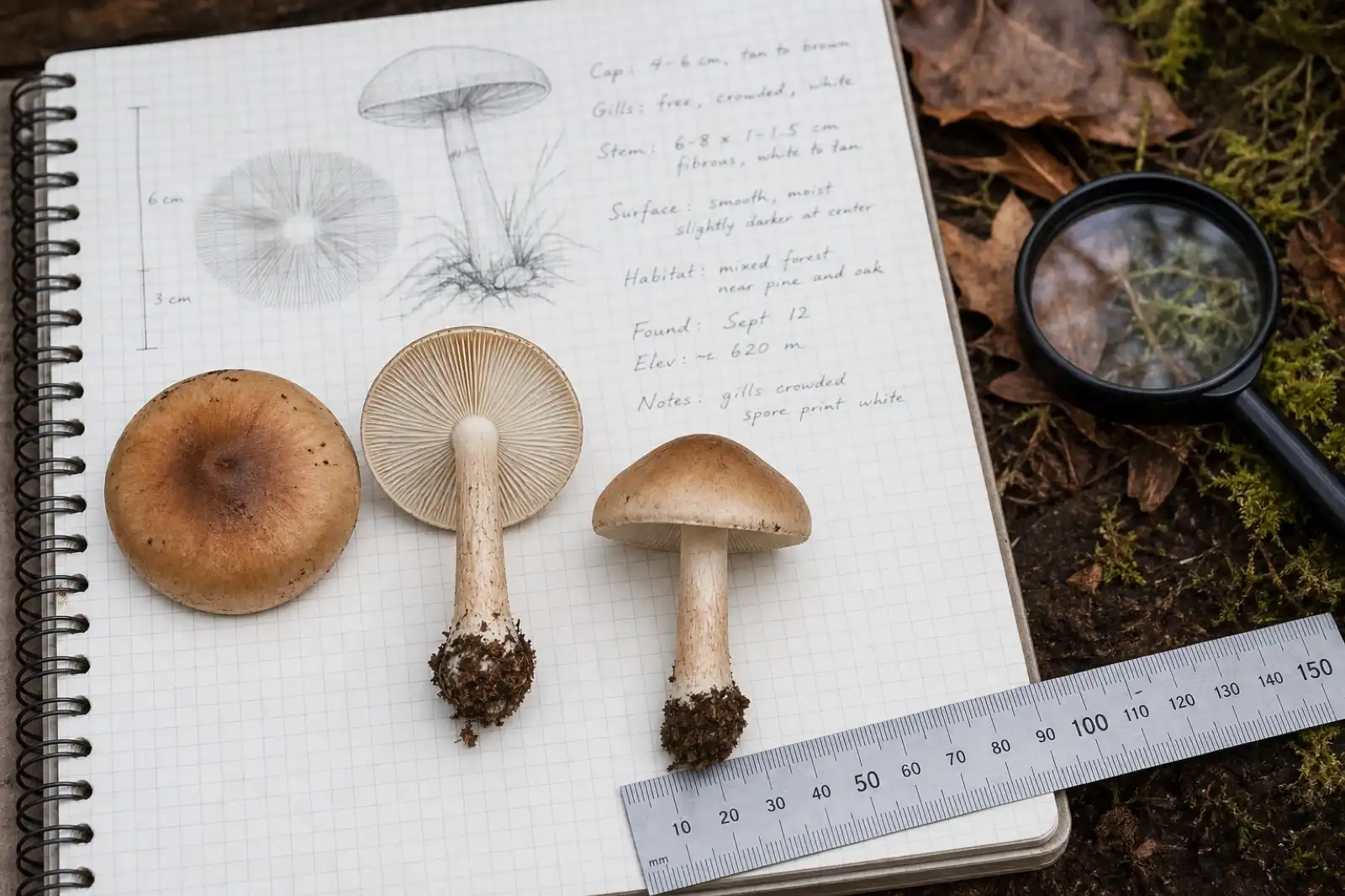
identification
How to Identify Mushrooms: A Beginner's Field Guide
Build an identification from the whole specimen, substrate, habitat, spore deposit, and location—not from a single photograph.
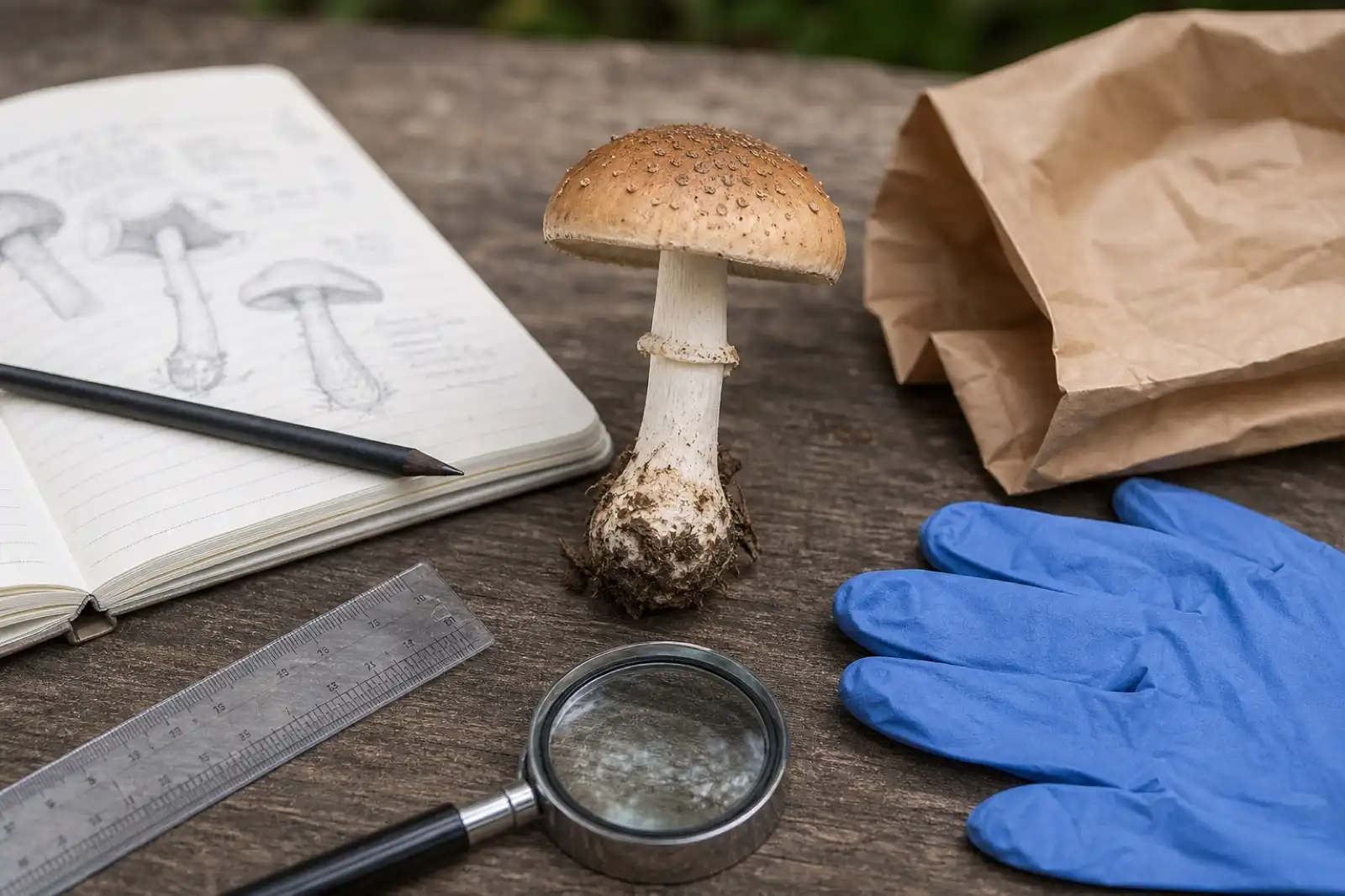
identification
Mushroom Identification Safety Checklist
Use a conservative checklist before handling, documenting, or discussing any wild mushroom, especially when edibility is being considered.
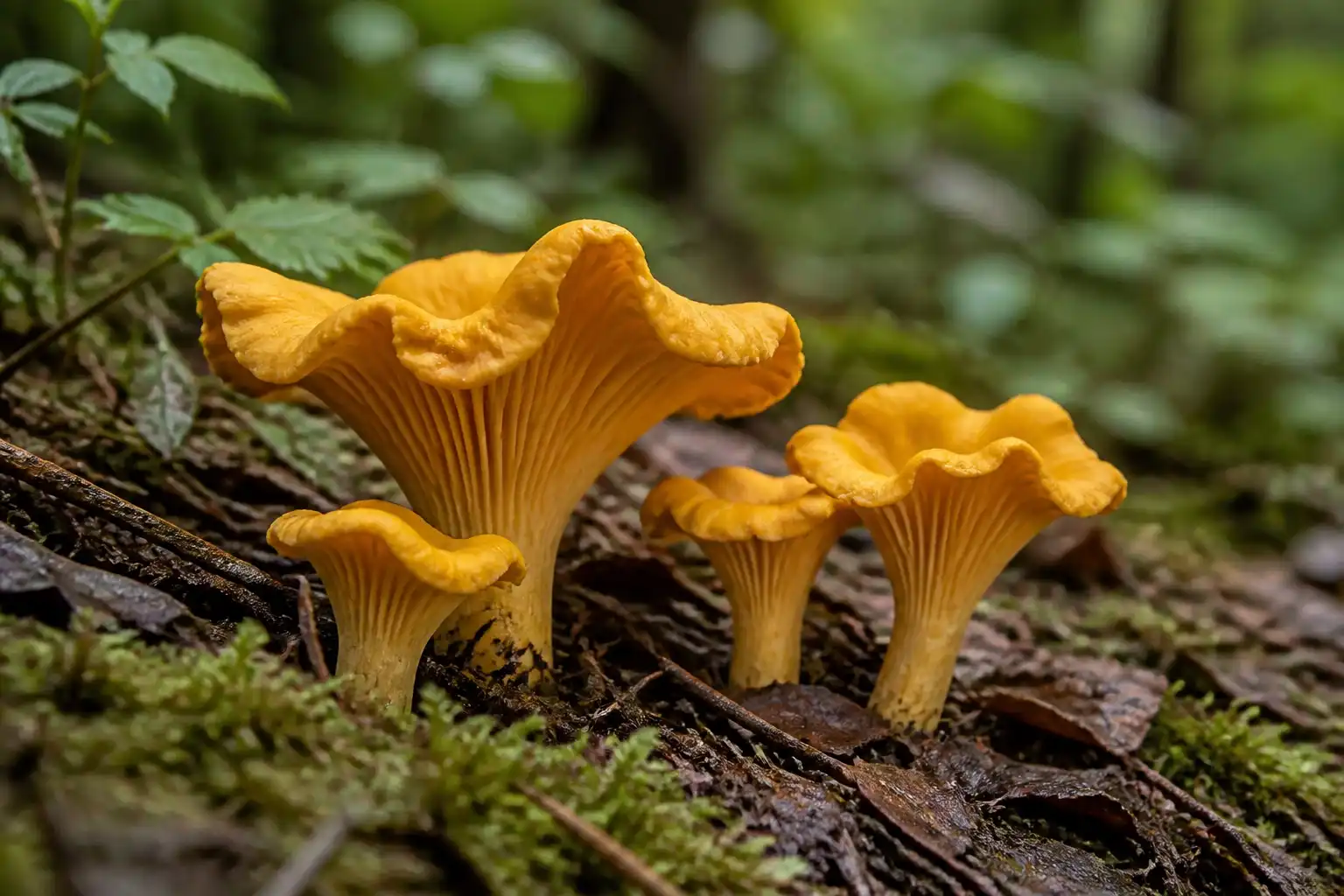
mushrooms
Cantharellus cibarius: Chanterelle Identification Guide
Learn chanterelle identification, false gills, habitat, season, poisonous lookalikes, edibility, nutrition, and why wild finds need local verification.
Continue exploring
Browse more practical guides in Mushroom Encyclopedia or visit the mushroom encyclopedia.