Mushroom Encyclopedia
Morels (Morchella species): Identification and Safety Guide
Learn how to document true morels, distinguish false-morel warning signs, understand spring habitat, and keep food decisions conservative.
Species context
Treat profiles as reference material
Species profiles summarize documented traits, taxonomy, and lookalikes, but natural variation can be substantial.
Use the safety checklist →Decision limit
A profile cannot authenticate a specimen
Do not eat a wild mushroom from an online match, single feature, or generated image.
Read the safety disclaimer →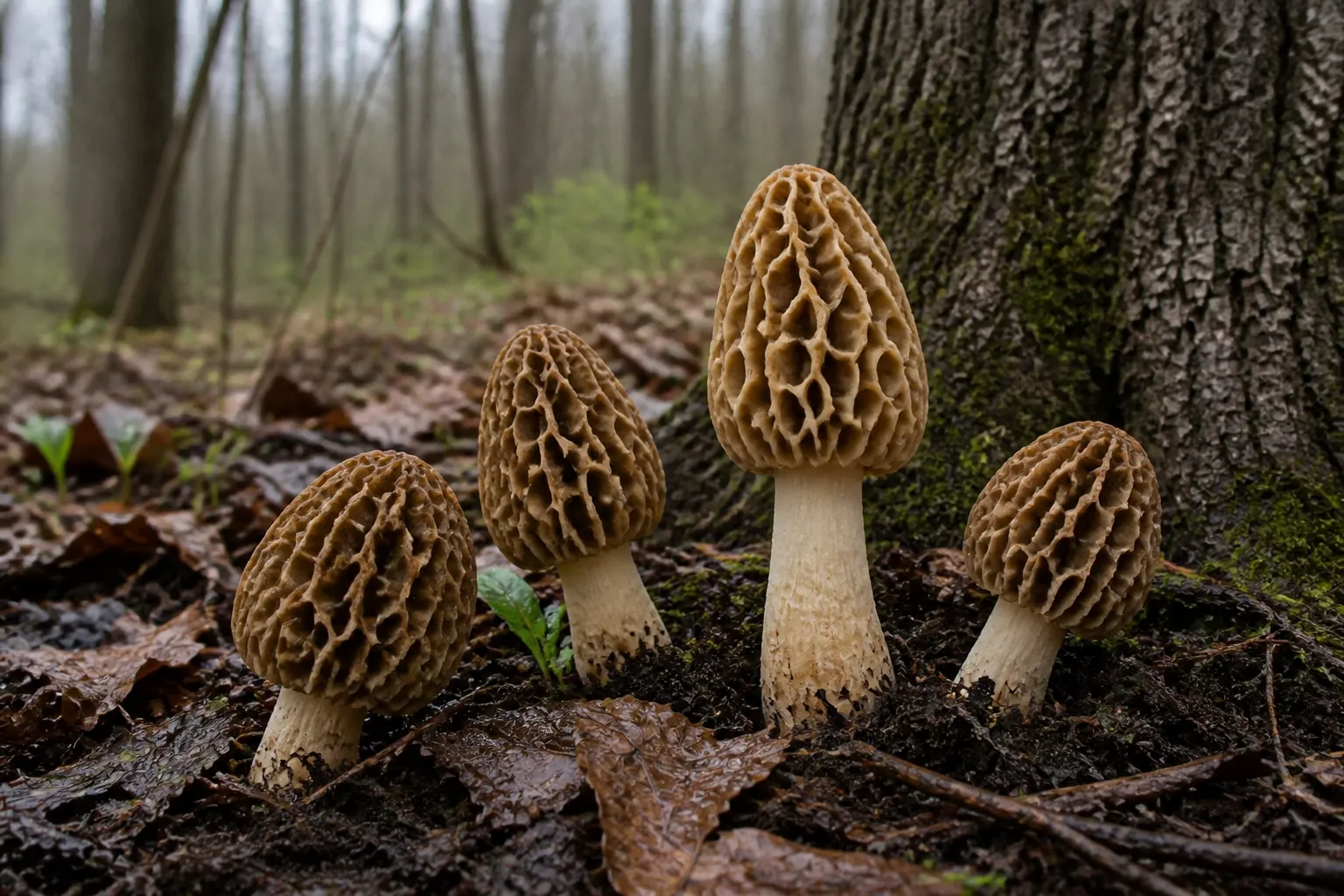
Quick facts
- Scientific name
- Morchella species
- Common names
- morels, true morels
- Taxonomy
- Morchella · Morchellaceae
- Edibility context
- Conditional: Food reputation applies only after qualified identification, appropriate handling, and adequate cooking. This page does not approve a wild mushroom for eating.
- Spore print
- Pale cream to yellowish, used only as one supporting record detail.
- Toxicity context
- High: Morel-like collections can include toxic false morels. Even true morels have been associated with gastrointestinal illness when raw or lightly cooked; individual response and handling matter.
- Season
- March, April, May, June
- Growing difficulty
- Expert
- Regions
- temperate regions worldwide, regional species complexes vary
Safety limit: These labels summarize documented context; they never authenticate a wild specimen. Cooking does not make a poisonous species safe.
What this guide can and cannot do
Morel is a useful common name, but it does not settle a species name or a food decision. This guide covers the broad true-morel group, Morchella species, and the observations that make a suspected morel worth discussing with a qualified local identifier. It does not identify a mushroom from a photograph, tell a reader that a collection is edible, or turn a spring calendar into a field key.
True morels are known for a cap surface made of deep pits separated by raised ridges. In the usual field pattern, the cap is attached to the stem and a careful lengthwise section reveals one hollow interior. The Michigan Department of Natural Resources uses these broad characters to distinguish Morchella from morel-like fungi, while also emphasizing that false morels can occur at the same time and in similar places. Those characters are a starting point, not a complete species diagnosis.
If the mushroom has already been eaten and anyone becomes unwell, stop treating this as an identification exercise. Keep leftovers, uncooked pieces, photographs, and a note of the time and amount consumed, then contact local emergency services, a poison center, or a healthcare professional promptly. The U.S. FDA advises that wild-mushroom poisonings range from mild illness to life-threatening outcomes and that false morels should not be eaten.
Record the true-morel pattern before naming a species
Begin with the intact specimen and its setting. Photograph the group in place before lifting anything, then capture the cap surface, the point where cap and stem meet, the entire stem, and the surrounding soil, litter, and nearby plants. Use natural light when possible. A top-down image can make a folded cap look pitted, and a close crop can hide the attachment that matters most.
For a learning record, make a clean lengthwise section through one representative specimen. A true morel has a hollow space running through the cap and stem. This is a useful check because many morel-like fungi have folded, chambered, or cottony internal tissue. It is still not enough on its own: weathered morels can be damaged or occupied by insects, and a single structural feature cannot rule out every regional lookalike.
Describe the cap surface precisely. Pits are recessed hollows with ridges forming their borders; they do not look like loose flaps, rounded brain lobes, or random wrinkles. Note whether the lower cap margin is attached to the stem, where it is attached, and whether the specimen is mature, dried, rain-soaked, or broken. Morel colors range from pale cream and yellow-brown to dark brown or black, so color should never be the lead evidence.
Species-level names are especially difficult in Morchella. Taxonomy has changed as molecular work has clarified regional lineages, and the same market or field-guide name may be used differently in different places. GBIF treats Morchella as a genus in Morchellaceae; use that taxonomic starting point alongside a current local treatment rather than assuming that a name from another continent applies to a collection in hand.
Use habitat and season as supporting evidence
Morels are often discussed as spring mushrooms, but “spring” is not a diagnostic character. Fruiting timing moves with latitude, elevation, soil temperature, moisture, local weather, and the species involved. In some regions morels fruit in hardwood woods; in others, particular burn histories, disturbed ground, orchards, or conifer associations change the likely species and timing. Record the date and weather rather than converting a calendar into certainty.
The habitat note should be more detailed than “in the woods.” Write down whether fruit bodies emerge from mineral soil, leaf litter, mulch, a burn site, or ground near old orchard trees; record nearby tree species when you can identify them reliably. Do not pull up every mushroom to search a spot. A few well-documented specimens are more useful than a mixed bag with no habitat notes, and collecting rules, private-property permission, and protected-area restrictions still apply.
This is also why a web image has limited value. A photo that looks like a morel may not reveal whether the cap joins the stem, whether the interior is hollow, whether several species were growing together, or whether the claimed habitat was genuine. The site’s mushroom habitat identification guide and photo checklist offer a repeatable way to record those missing details.
Treat false-morel features as stop signs
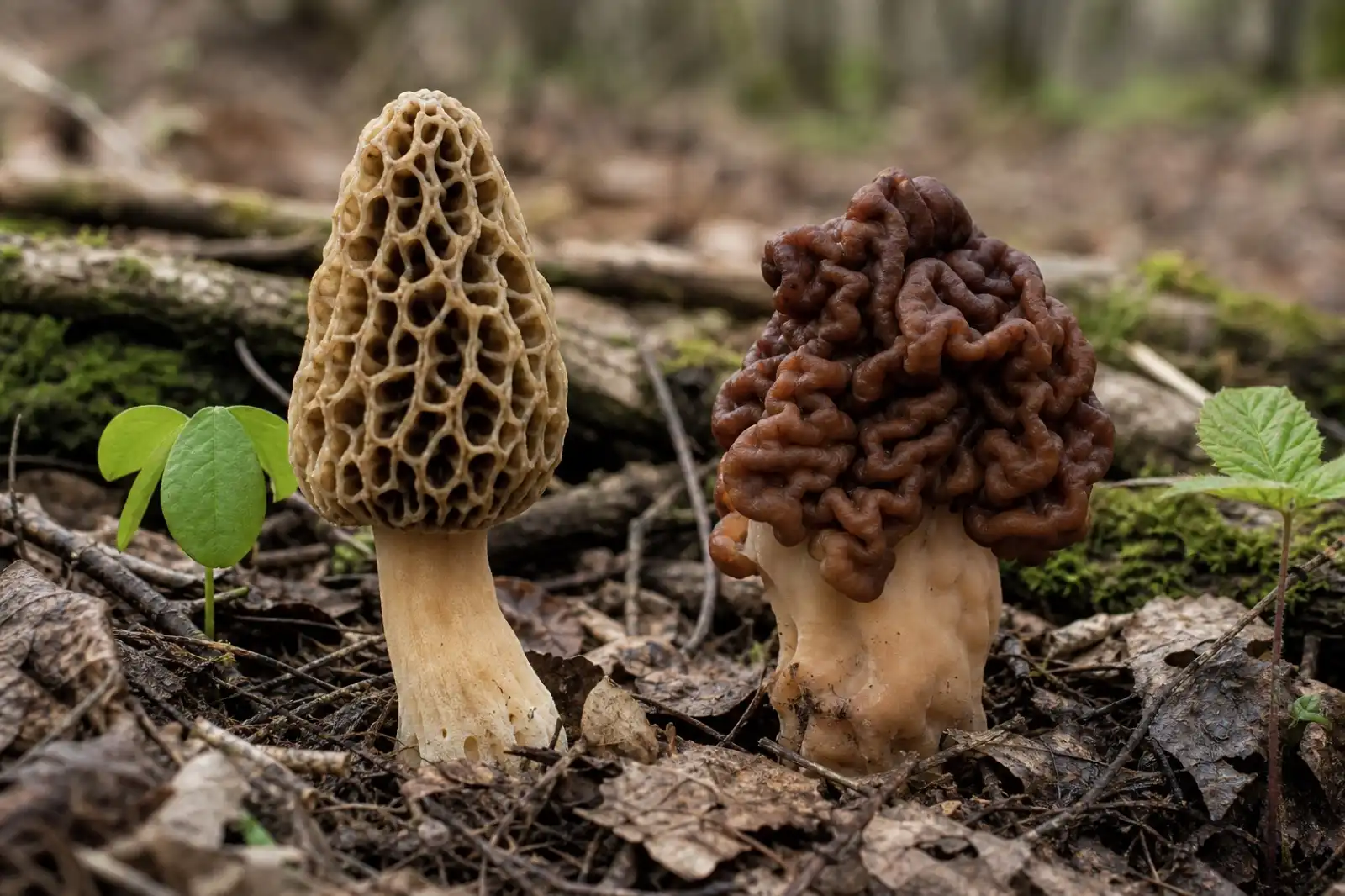
The term “false morel” covers several morel-like fungi rather than one tidy species. Two groups deserve particular caution: Gyromitra species can have irregular, folded, lobed, or brain-like caps, while Verpa species may have a cap that hangs free from the stem like a skirt. Some features overlap with young, damaged, or unfamiliar mushrooms, which is exactly why uncertainty should halt a food decision rather than be argued away.
Do not reduce the comparison to “hollow equals safe.” A lengthwise section is valuable, but cap structure, attachment, habitat, regional species, and expert review all belong in the same record. The Michigan DNR specifically warns that Gyromitra may contain gyromitrin, which is converted in the body to a toxic compound; the FDA likewise states that false morels are toxic and should not be consumed cooked or uncooked. Cooking is not an identification method and does not make a toxic lookalike safe.
The site’s dedicated false morel vs. morel comparison explains the visual boundaries in more detail. Use it to formulate questions, not to overrule a contradiction in a real specimen. If the cap looks folded rather than pitted, if the cap hangs freely, if the cut surface is not plainly hollow, or if the habitat record is missing, keep the collection separate and seek local expertise.
Keep food context conservative
True morels have a long culinary reputation, but that reputation belongs to correctly identified, properly handled material; it does not transfer to a mushroom merely because it resembles a morel online. The FDA’s 2023 investigation of illnesses associated with morels describes gastrointestinal illness after raw or lightly cooked morels in a restaurant setting. The investigation does not justify a universal rule about every morel meal, but it is a practical reminder that identity, portion, preparation, storage, and individual tolerance all matter.
For readers who have an authenticated edible mushroom and appropriate local guidance, use food-grade containers, keep it cool and clean, and do not eat raw or lightly cooked material. The University of Alaska Fairbanks Cooperative Extension notes both the importance of proper identification and the possibility of allergic or gastrointestinal reactions. Never sample a wild mushroom to test identity, and do not serve an uncertain collection to another person.
The safest choice for someone who cannot obtain qualified local confirmation is to leave the mushroom unconsumed. Symptoms such as vomiting, diarrhea, dizziness, confusion, seizure, jaundice, breathing difficulty, or severe abdominal pain after an unidentified mushroom need urgent professional advice. Preserve evidence for responders; do not wait for a web discussion to reach a conclusion.
Build a complete observation record
Use the following sequence for learning and for a productive conversation with a local club, extension contact, or experienced identifier:
- Photograph the undisturbed group, habitat, cap surface, cap-to-stem attachment, and complete stem before handling it.
- Record date, approximate location without exposing sensitive sites, weather, substrate, nearby trees, and whether the area was disturbed or burned.
- Make one careful lengthwise section and photograph the interior; record what is present rather than what you hope to see.
- Keep morel-like specimens separated from each other. A mixed container can erase the evidence needed to evaluate a lookalike.
- Compare the complete record with current regional resources and in-person expertise before any edible, commercial, or cultivation decision.
This process is deliberately slower than matching a cap to an image. It helps a reader distinguish observation from inference and makes it easier for an expert to point out what is missing. Our mushroom identification guide and identification safety checklist can help structure the same record across other species.
Morel questions readers ask
Are black and yellow morels separate species?
They can be, but color labels are broad field shorthand rather than a worldwide species key. Morel taxonomy and regional species concepts are complex, so a dark or pale cap alone cannot deliver a dependable scientific name. Document the entire specimen and use current local resources.
Do morels have gills?
No. In true morels, the fertile surface is the pitted cap rather than a set of gills. If a specimen has ordinary blade-like gills, it does not match the basic Morchella pattern and should not be treated as a morel.
Can morels grow after a fire?
Some morel species or regional lineages are associated with burn settings, but a fire does not create a universal morel identity or season. Record the burn history as habitat evidence and use local guidance, especially because burned landscapes can have access and safety restrictions.
Can I grow a morel from a wild mushroom?
Do not use an unverified wild collection as food or cultivation material. Morel cultivation is specialized, and a successful method depends on an authenticated organism and a species- or strain-specific protocol. This guide does not offer a home-growing recipe.
References
- Global Biodiversity Information Facility. Morchella taxon record. Taxonomic placement and current catalogue context.
- Michigan Department of Natural Resources. Morel Mushroom Identification Tips. True-morel structure and false-morel warning signs.
- University of Alaska Fairbanks Cooperative Extension Service. Collecting, Preserving & Using Morel Mushrooms. Handling, food-grade storage, and food-safety context.
- U.S. Food and Drug Administration. Investigation of Illnesses: Morel Mushrooms (May 2023). Illness investigation and conservative wild-mushroom safety guidance.
Editorial review: August 23, 2026. Regional taxonomy, seasonality, land access, and poison-response contacts should be rechecked at every substantive update.
Source quality notes
MushroomScope cites sources that match the page scope, such as taxonomic databases, extension guidance, food-safety agencies, food-composition databases, and peer-reviewed or institutional health references. Sources support context and uncertainty; they do not turn an online page into specimen identification, medical advice, or a tested recipe record.
Frequently asked questions
Can a morel be identified from one photograph?
No. A photo may suggest a morel-like mushroom, but a responsible assessment needs the intact cap-to-stem attachment, a lengthwise section, habitat, region, developmental stage, and comparison with local expertise.
What makes a true morel different from a false morel?
True morels in Morchella have a pitted cap and a hollow interior. False-morel names cover several other fungi; wrinkled or brain-like lobes, a cap that hangs free from the stem, or irregular chambered tissue are warning signs rather than food approval.
When do morels grow?
Morels are commonly spring-fruiting fungi, but timing shifts with latitude, elevation, weather, tree associations, burn history, and regional species. A calendar date alone cannot identify a mushroom.
Are wild morels safe to eat?
This page cannot clear a wild collection for food. False morels can be toxic, and even correctly identified morels can cause illness when raw, lightly cooked, spoiled, or poorly tolerated. Seek qualified local confirmation and follow current food-safety guidance.
Should I cut a suspected morel in half?
A careful lengthwise section is useful documentation because true morels are hollow, but that observation alone does not establish species or edibility. Keep the whole record and do not use a cut test as a substitute for local review.
Related guides
identification
False Morel vs. Morel: Identification and Safety
Compare cap attachment, internal structure, folds, habitat, and season while treating every uncertain specimen as unsafe.
identification
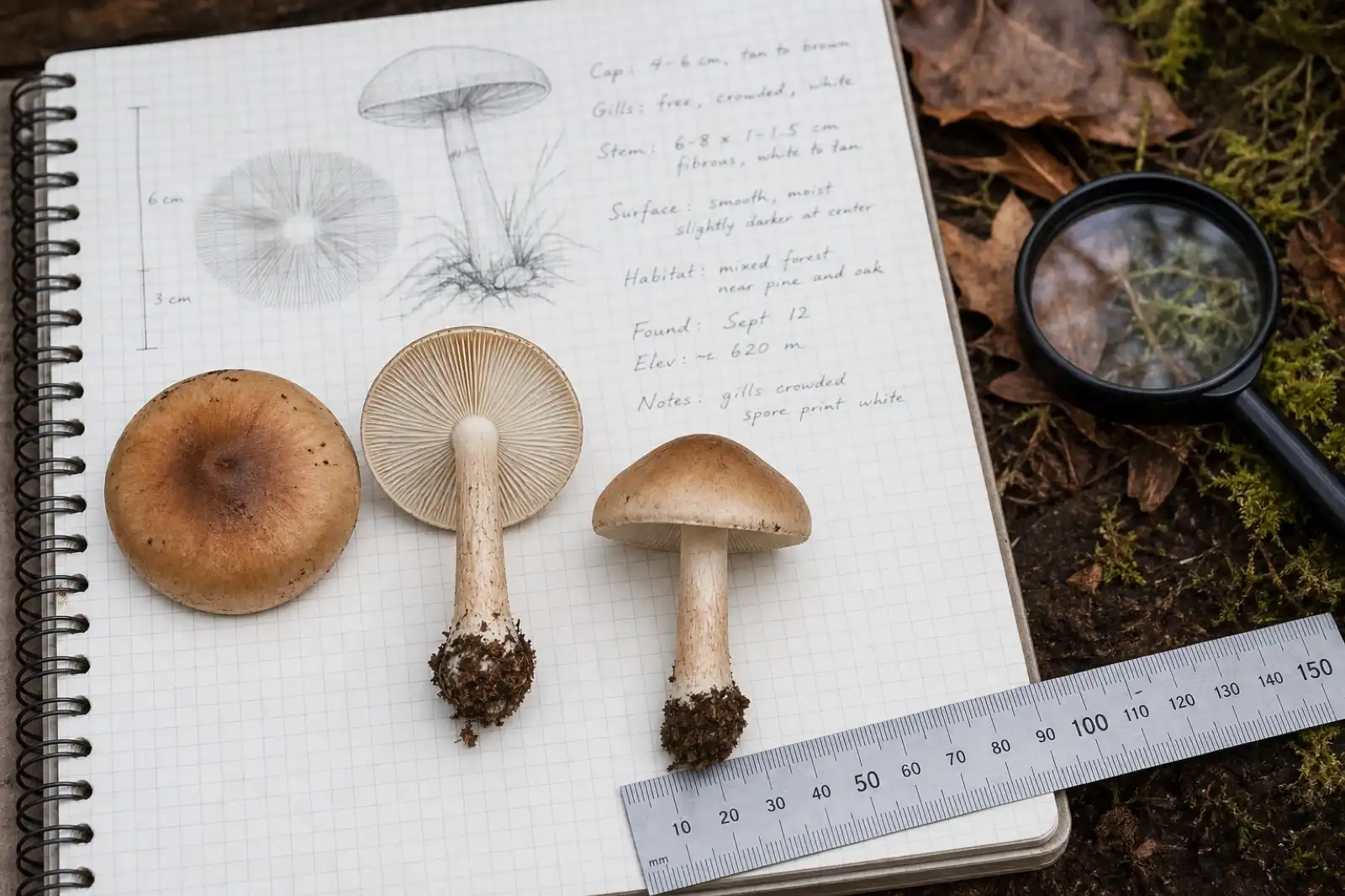
How to Identify Mushrooms: A Beginner's Field Guide
Build an identification from the whole specimen, substrate, habitat, spore deposit, and location—not from a single photograph.
identification
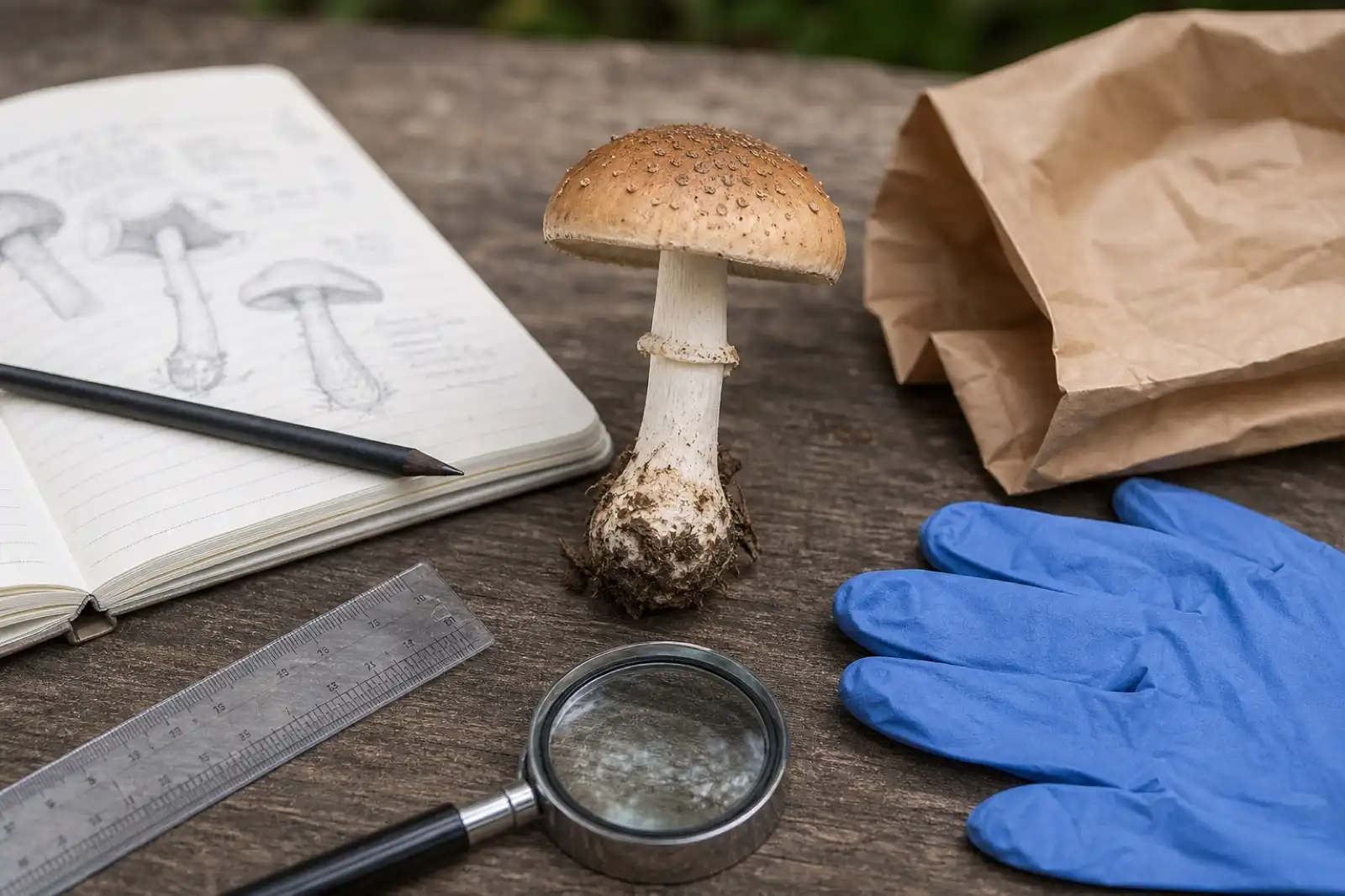
Mushroom Identification Safety Checklist
Use a conservative checklist before handling, documenting, or discussing any wild mushroom, especially when edibility is being considered.
Continue exploring
Browse more practical guides in Mushroom Encyclopedia or visit the mushroom encyclopedia.