Mushroom Encyclopedia
Volvariella volvacea: Paddy straw mushroom Species Guide
Learn Paddy straw mushroom identification, habitat, season, lookalikes, safety, food context, and cultivation limits with current taxonomy and sources.
Species context
Treat profiles as reference material
Species profiles summarize documented traits, taxonomy, and lookalikes, but natural variation can be substantial.
Use the safety checklist →Decision limit
A profile cannot authenticate a specimen
Do not eat a wild mushroom from an online match, single feature, or generated image.
Read the safety disclaimer →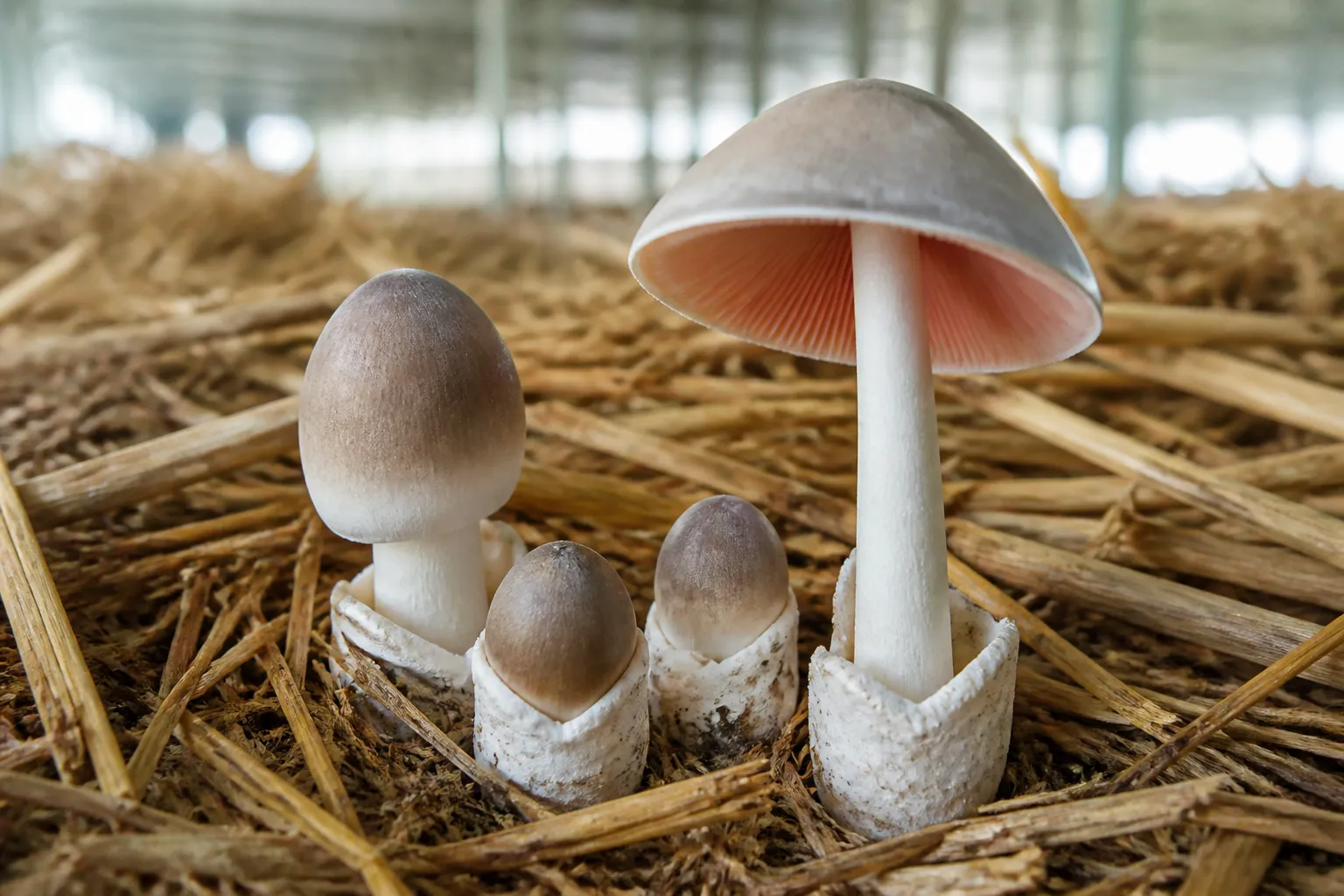
Quick facts
- Scientific name
- Volvariella volvacea
- Common names
- Paddy straw mushroom
- Taxonomy
- Volvariella · Pluteaceae
- Edibility context
- Edible: This database label is context, not remote clearance of a wild specimen; identity, preparation, spoilage, contamination, and individual reaction matter.
- Spore print
- Pink.
- Toxicity context
- None Known: Risk includes misidentification and individual reaction. Consult current local toxicology guidance before any food decision.
- Season
- May, June, July, August, September
- Growing difficulty
- Moderate
- Regions
- South Asia, Southeast Asia, cultivated in tropical regions
Safety limit: These labels summarize documented context; they never authenticate a wild specimen. Cooking does not make a poisonous species safe.
What a paddy straw mushroom guide can and cannot do
Paddy straw mushroom is the common English name used for Volvariella volvacea, a warm-climate mushroom widely discussed in connection with cultivation on rice straw and other plant-based materials. It has a distinct culinary and cultivation context, but that is not the same thing as a remote identification or a wild-food recommendation. This guide explains the characters that belong in a complete observation and the practical decisions that belong in a documented cultivation workflow. It cannot confirm a specimen from a photograph, a market label, or a single feature.
The name is best used alongside the scientific name, because regional common names and regional species concepts can vary. Check current occurrence and taxonomy records, then ask a qualified local identifier to evaluate any wild collection. For a crop, begin with authenticated commercial spawn and a supplier method for that strain. These are separate evidence paths: a field observation needs a complete specimen and local comparison; a crop needs traceable culture and batch records.
Record the whole fruiting body before considering a name
Young V. volvacea can appear as an egg-like button enclosed by a universal veil. As it expands, a smooth gray-brown to brownish cap and pale stem become visible. The veil remains as a sack-like volva at the base rather than a ring around the upper stem. Mature gills are free from the stem and can become salmon-pink as spores mature. Those words describe a pattern, not a checklist that a single image can prove: cap color shifts with age and moisture, gills may not yet show their mature color, and a base may be hidden by substrate or broken during harvesting.
For any specimen, photograph it in place before lifting it. Include the top of the cap, a clear view of the fertile surface, the entire stem, and the untrimmed base. Take a lengthwise section only after the intact specimen has been documented. Record whether it arose from a managed straw bed, compost, disturbed ground, or an unknown setting; note the country or broad region, date, weather, and nearby materials. Avoid tasting, and do not discard the base to make a photograph look tidy. The base is one of the characters that changes the comparison set.
Spore-deposit color can be useful supporting evidence when collected from a mature, well-documented specimen, but it is not an edible/not-edible test. Lighting, paper color, mixed material, and an immature cap can make a deposit hard to interpret. Use the complete record, current regional literature, and in-person expertise together rather than treating pink gills or a volva as a shortcut.
Separate paddy straw mushrooms from dangerous volva-bearing lookalikes
A volva is a safety signal, not a reassurance. Some Amanita species also retain a universal-veil structure at the base, and some are seriously poisonous. The comparison cannot stop at “there is a cup at the stem base.” A local expert may need to assess the cap surface, gill attachment and color, ring or lack of a ring, stem details, ecology, spores, and regional species. Never use this page to clear a white, gray, or brown mushroom for food.
The mature free, pinkish gills expected in the Volvariella pattern can help distinguish it from some white-spored groups, but they must be observed on a mature, intact specimen and interpreted in context. A related pink-spored mushroom such as Volvopluteus gloiocephalus adds another reason to record habitat and the entire base carefully. Rain, maturity, camera white balance, and damage can all obscure the details a key requires.
If a collection was made from an unfamiliar place, has an incomplete base, shows contradictory features, or resembles an Amanita, stop the food decision. Keep photographs and any unprepared material separate from other food, and seek local identification. For symptoms after eating an unidentified mushroom, contact local emergency services or a poison center promptly; retain leftovers, trimmings, and the timing of the exposure for professionals.
Understand the cultivation setting without inventing a recipe
Paddy straw mushroom is associated with warm-climate cultivation and lignocellulosic agricultural materials, especially rice straw. That makes it a useful species page for readers comparing mushroom-production systems, but it does not make every straw pile a suitable or safe substrate. Straw can carry soil, pesticides, competing fungi, bacteria, insects, and water-quality problems. A successful crop depends on a strain-specific method, clean handling, appropriate substrate preparation, and observation at each stage.
Start with a traceable commercial culture from a reputable supplier. Keep the supplier’s strain name, lot information, purchase date, substrate type, preparation method, inoculation date, and fruiting observations in a batch log. This record is more useful than trying to reverse-engineer a generic temperature or yield target from a web page: strains, substrate moisture, building design, and local climate change the process. Follow the supplier’s instructions for the strain you actually hold, rather than combining numbers from unrelated species or tutorials.
Use clean, food-appropriate inputs and containers. Label each batch so that an unexpected odor, color, slime, insect activity, or stalled growth can be isolated rather than blended into a harvest. Do not try to “save” suspect material for eating by extra washing or cooking. If the culture is not authenticated, contamination is persistent, or the crop no longer matches the supplier’s expected appearance, pause the batch and seek supplier or experienced grower advice. See the mushroom substrate guide for the broader distinction between substrate choice, conditioning, and contamination control.
Harvest and food handling require a separate decision
An authenticated cultivated crop and a wild mushroom share a name only after the identity evidence has been checked. For cultivated material, harvest only from a batch with documented culture and ordinary, healthy appearance. Keep harvested mushrooms cool and clean, avoid cross-contamination with raw meat or unwashed produce, and follow local food-safety guidance for storage and preparation. Discard material that is slimy, strongly off-smelling, badly damaged, or of uncertain origin.
For wild material, no general page can supply the missing local confirmation. A familiar culinary reputation does not transfer through a lookalike, a social-media photograph, or a restaurant menu. Individual allergy or intolerance is still possible even when identity is correct. Cooking does not make a poisonous lookalike safe, does not correct spoilage, and does not remove every environmental contaminant.
This boundary is especially important for readers who see paddy straw mushrooms sold in a market and then find a volva-bearing mushroom outside. The market product can be a valid food item when it comes through a regulated supply chain; the outdoor collection is a separate identification problem. Treat them as different decisions.
Build a field or crop record that another person can review
For a wild observation, write down the evidence before consulting a name: full specimen photographs, cap and gill details, base and volva, substrate, nearby vegetation or managed materials, location at an appropriate privacy level, and developmental stage. Add notes on what was not observed. “Base missing” is more valuable than silently assuming a missing structure. Link the record to the site’s photo checklist and mushroom identification safety checklist before asking for help.
For a cultivated batch, use the same discipline in a different form. Photograph the bed before harvest, record the source of spawn and substrate, keep cleaning and handling notes, and log unusual changes rather than relying on memory. A record allows a supplier or experienced cultivator to diagnose a batch without turning a web article into a prescription. It also makes it easier to stop a questionable crop early.
The most useful result from either record may be uncertainty. If essential features were not captured, the responsible conclusion is “not identified” or “do not harvest this batch yet,” not a confident species or food label. That restraint protects readers from exactly the kind of error that attractive mushroom photos can encourage.
Frequently asked questions
Can a paddy straw mushroom be identified from one photograph?
No. A complete identification can require intact mature and young material, the fertile surface, gill attachment, base and volva, habitat, region, spore evidence, and sometimes microscopy or DNA. A photograph is useful for documenting an observation, not for clearing a specimen to eat.
Are paddy straw mushrooms safe to eat when found outdoors?
This guide cannot approve a wild mushroom for food. Volva-bearing mushrooms can have dangerous lookalikes. Obtain in-person confirmation from a qualified local expert, and do not rely on cooking to make an unknown specimen safe.
Why do paddy straw mushrooms have pink gills?
In mature material, the gills can look salmon-pink as spores mature. Gill color changes with development and conditions, so it is only one part of a complete record and not a stand-alone identification test.
Can I grow paddy straw mushrooms on any rice straw?
No. Use traceable commercial culture, clean food-appropriate materials, and a supplier method for the exact strain. The source, handling history, moisture, competing organisms, and local environment all affect suitability and food safety.
What should I do if someone feels ill after eating an unknown mushroom?
Contact local emergency services or a poison center promptly. Preserve leftovers, uncooked material, trimmings, photographs, and the time and amount eaten. Do not wait for an online identification.
References
- Global Biodiversity Information Facility. Volvariella volvacea species record. Taxonomic backbone and occurrence context.
- National Center for Biotechnology Information. NCBI Taxonomy Browser. Independent nomenclature and lineage checkpoint.
- North American Mycological Association. Mushroom Poisoning Syndromes. Poisoning response and conservative safety context.
- U.S. Food and Drug Administration. Selecting and Serving Produce Safely. General handling guidance for mushrooms used as food.
Source quality notes
MushroomScope cites sources that match the page scope, such as taxonomic databases, extension guidance, food-safety agencies, food-composition databases, and peer-reviewed or institutional health references. Sources support context and uncertainty; they do not turn an online page into specimen identification, medical advice, or a tested recipe record.
Frequently asked questions
Can Paddy straw mushroom be identified from one photograph?
No. A complete identification can require intact mature and young material, the fertile surface, gill attachment, base and volva, habitat, region, spore evidence, and sometimes microscopy or DNA.
Is wild Paddy straw mushroom safe to eat?
This guide cannot approve a wild mushroom for food. Volva-bearing mushrooms can have dangerous lookalikes. Obtain in-person confirmation from a qualified local expert, and do not rely on cooking to make an unknown specimen safe.
Why do Paddy straw mushrooms have pink gills?
In mature material, the gills can look salmon-pink as spores mature. Gill color changes with development and conditions, so it is only one part of a complete record and not a stand-alone identification test.
Can I grow Paddy straw mushrooms on any rice straw?
No. Use traceable commercial culture, clean food-appropriate materials, and a supplier method for the exact strain. The source, handling history, moisture, competing organisms, and local environment all affect suitability and food safety.
What should I do if someone feels ill after eating an unknown mushroom?
Contact local emergency services or a poison center promptly. Preserve leftovers, uncooked material, trimmings, photographs, and the time and amount eaten. Do not wait for an online identification.
Related guides
identification
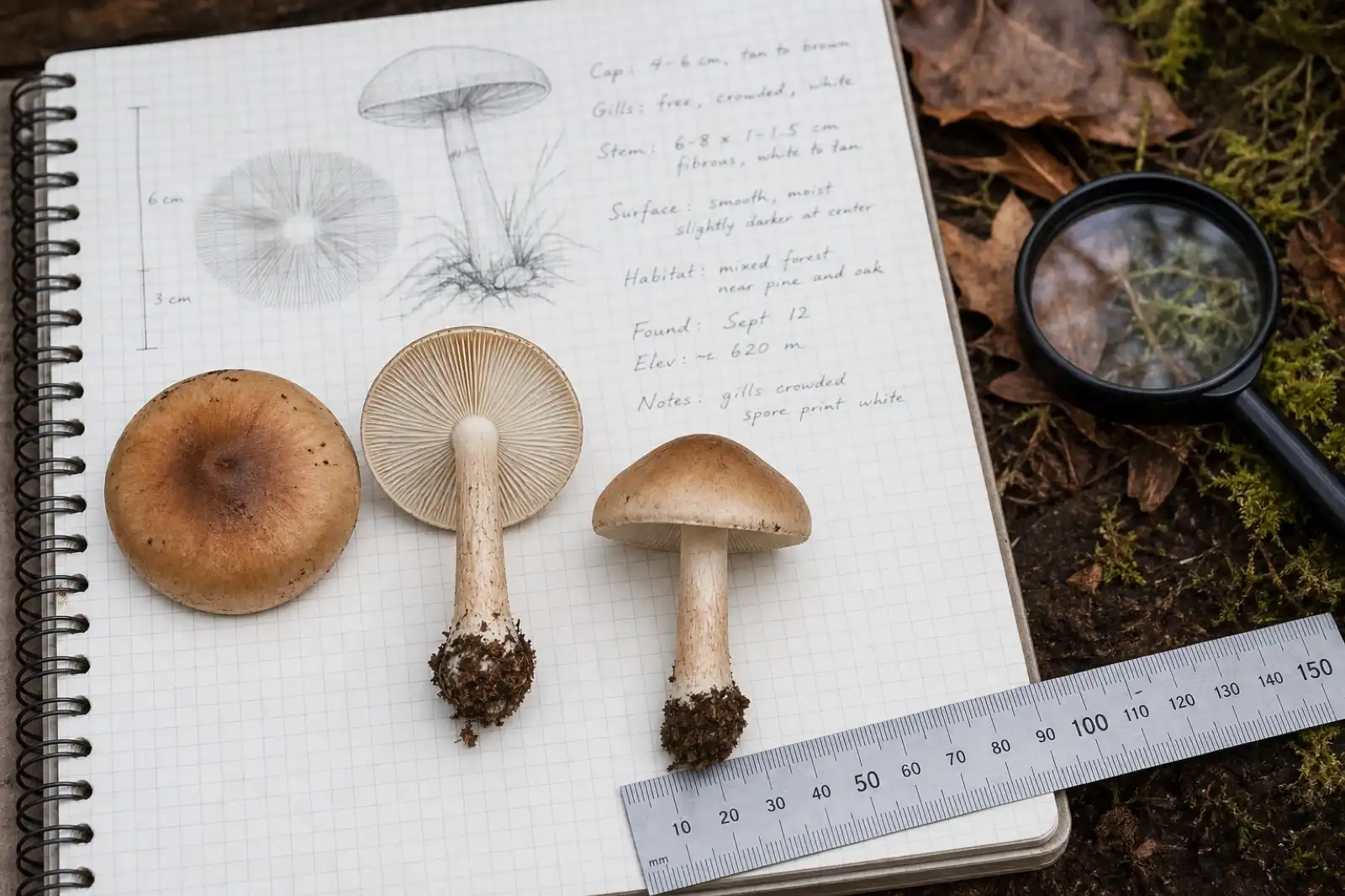
How to Identify Mushrooms: A Beginner's Field Guide
Build an identification from the whole specimen, substrate, habitat, spore deposit, and location—not from a single photograph.
identification
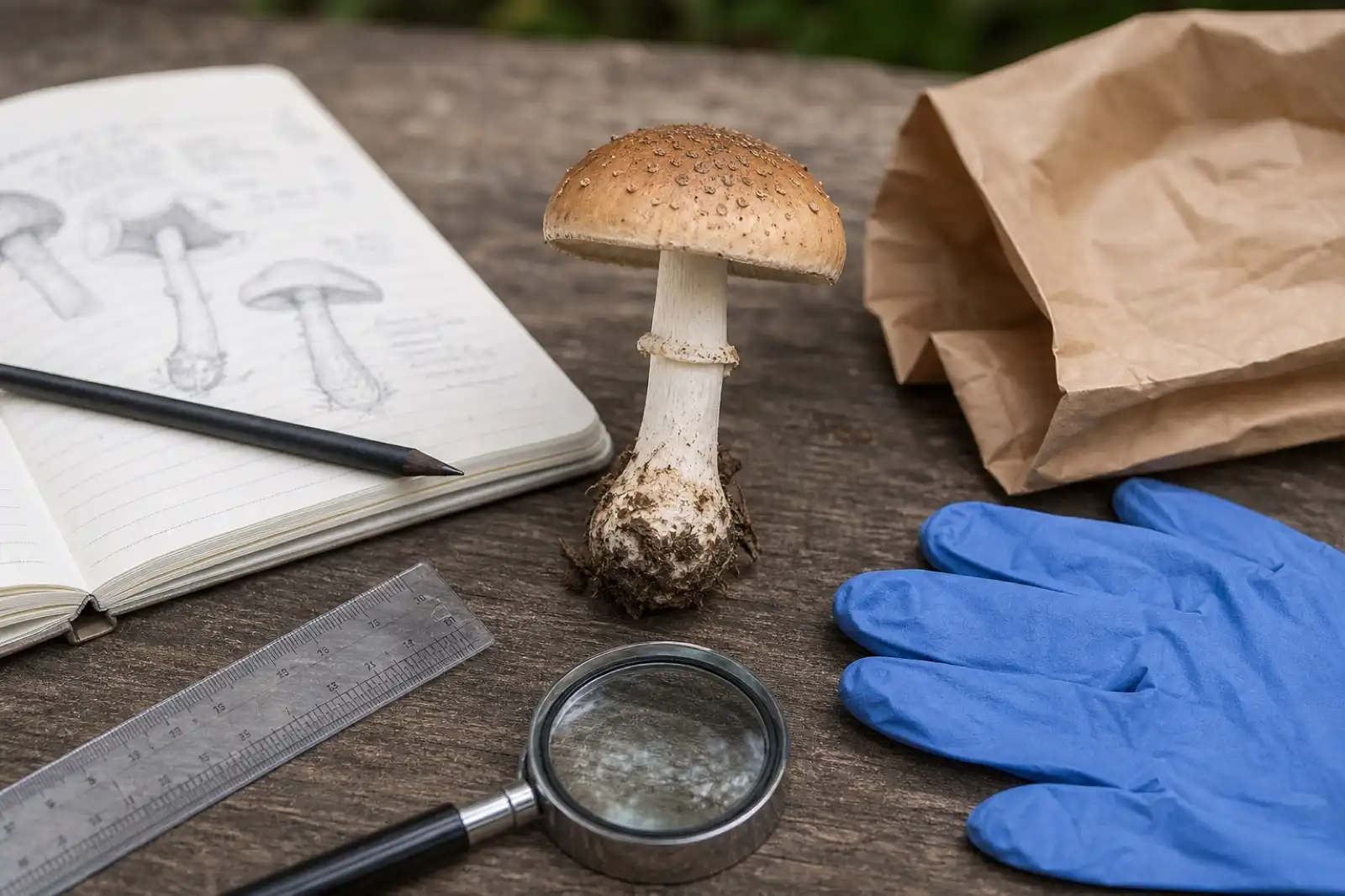
Mushroom Identification Safety Checklist
Use a conservative checklist before handling, documenting, or discussing any wild mushroom, especially when edibility is being considered.
identification
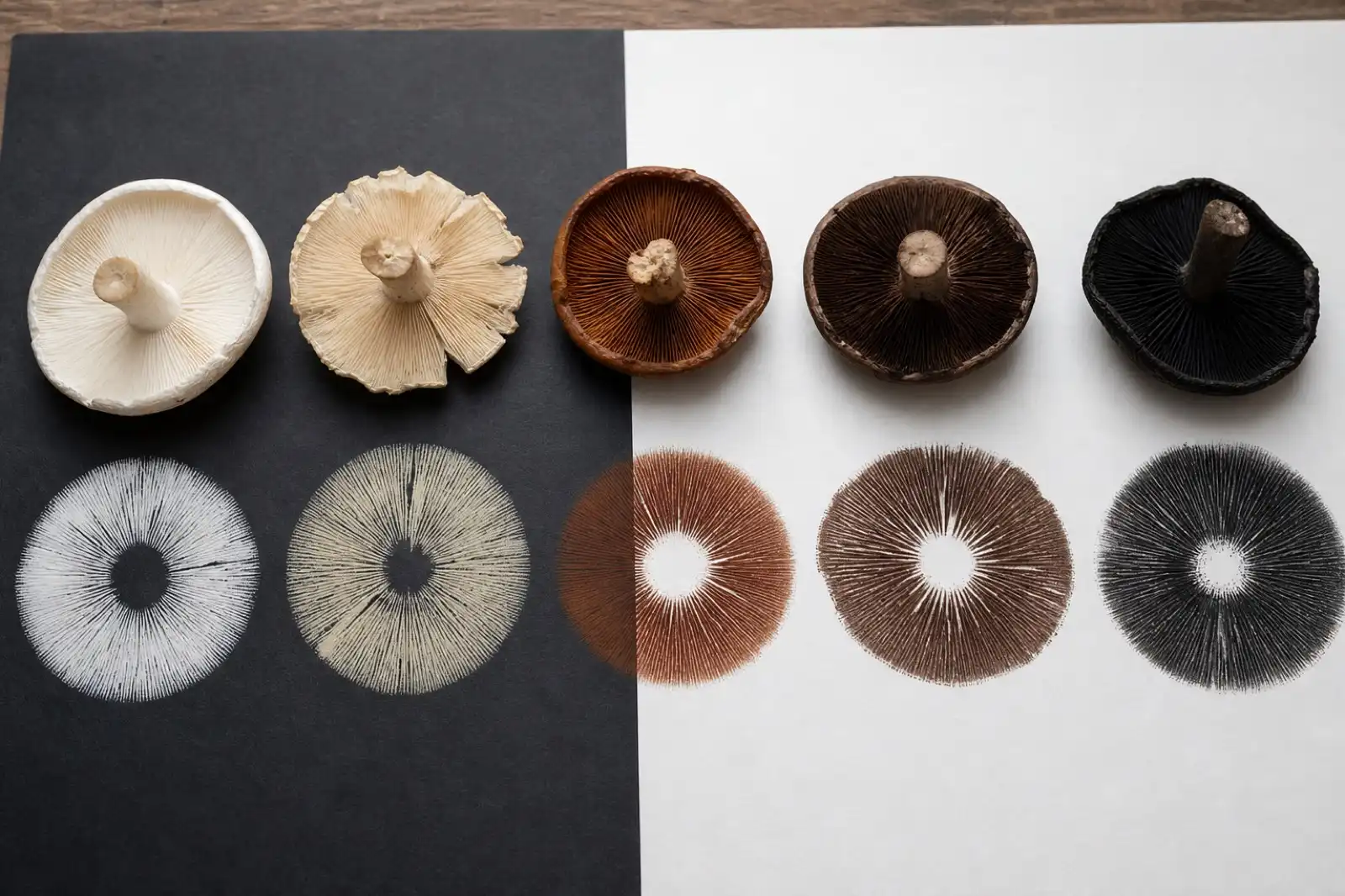
Mushroom Spore Print Colors and How to Record Them
Use a controlled spore deposit to distinguish broad color groups while recognizing that print color alone never identifies a species.
Continue exploring
Browse more practical guides in Mushroom Encyclopedia or visit the mushroom encyclopedia.