Mushroom Encyclopedia
Phoenix Oyster Mushroom: Warm-Season Ecology and Cultivation
Learn how Phoenix oyster differs from other Pleurotus, with warm-season hardwood ecology, cultivation variables, lookalikes, cooking, and safety limits.
By MushroomScope Editorial Team · · Updated
Species context
Treat profiles as reference material
Species profiles summarize documented traits, taxonomy, and lookalikes, but natural variation can be substantial.
Use the safety checklist →Decision limit
A profile cannot authenticate a specimen
Do not eat a wild mushroom from an online match, single feature, or generated image.
Read the safety disclaimer →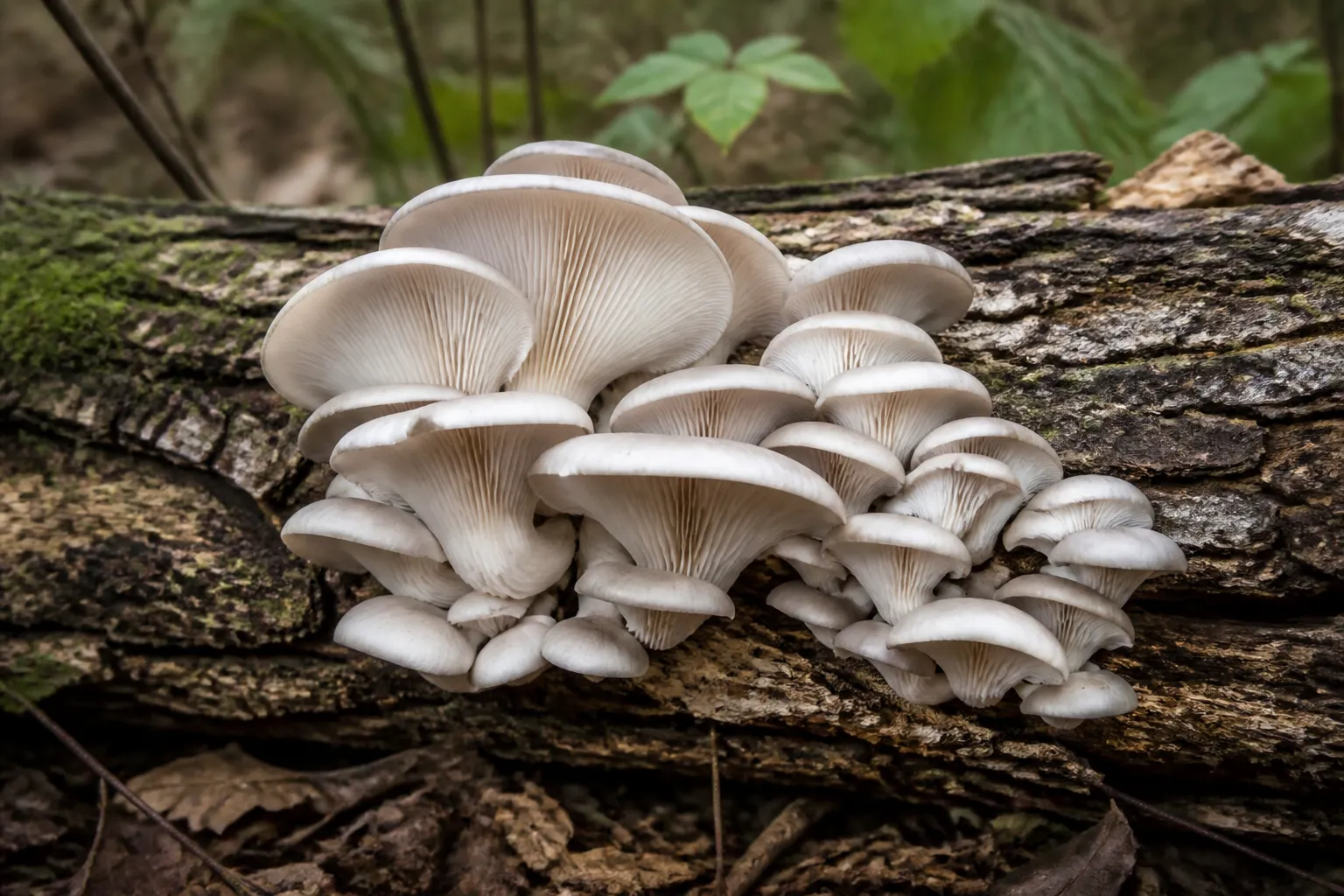
Quick facts
- Scientific name
- Pleurotus pulmonarius
- Common names
- Phoenix oyster mushroom
- Taxonomy
- Pleurotus · Pleurotaceae
- Edibility context
- Edible: This database label is context, not remote clearance of a wild specimen; identity, preparation, spoilage, contamination, and individual reaction matter.
- Spore print
- White to pale lilac.
- Toxicity context
- None Known: Risk includes misidentification and individual reaction. Consult current local toxicology guidance before any food decision.
- Season
- May, June, July, August, September, October
- Growing difficulty
- Easy
- Regions
- temperate and subtropical regions
Safety limit: These labels summarize documented context; they never authenticate a wild specimen. Cooking does not make a poisonous species safe.
Identification overview
Phoenix oyster forms overlapping fans with pale cream, buff or gray caps and crowded pale gills running down a short eccentric stem. Young margins are inrolled; expanded caps become flatter and the flesh loses tenderness with age. Record a whole cluster because attachment, crowding and the range of developmental stages carry more information than an isolated cap. A white to pale lilac spore deposit supports the record but does not separate every pale Pleurotus.
Habitat and season
In the wild, the species concept is associated with dead or declining hardwood and tends to fruit in warmer conditions than the familiar P. ostreatus concept. Cultivated strains occur far outside natural occurrence records, so a garden log or discarded block is not evidence of a native population. Record the tree, whether the wood is standing or fallen, and whether buried roots could explain an apparently terrestrial cluster.
For this oyster, ecology begins at the attachment. Show whether multiple fans share one buried base, grow from exposed hardwood, or emerge from a cultivation block. Photograph bark or end grain when present, note nearby host evidence, and distinguish a naturally fallen log from discarded inoculated material.
Similar species
- Pleurotus ostreatus — often a cooler-season, darker oyster; separation can require ecology or DNA.
- Pleurocybella porrigens — thin white conifer-associated shelves.
The practical comparison set includes other pale Pleurotus, conifer-associated angel wings, and locally occurring wood-fruiting gilled fungi. Warm weather narrows a hypothesis but does not close it. Closely related oyster collections may need microscopic measurements, a retained culture or sequence data when an exact name matters.
Food and safety context
Phoenix oyster mushroom has a documented food-use context when the organism is correctly identified and the material is fresh, clean, and cooked. That reputation does not transfer to a wild specimen identified online. Individual allergy, gastrointestinal intolerance, spoilage, environmental contamination, and cross-contamination remain possible. Cooking does not make a poisonous species safe.
For severe vomiting, persistent diarrhea, confusion, jaundice, breathing difficulty, or any symptoms after an unidentified wild mushroom, contact emergency services or a poison center promptly. Keep uncooked material, trimmings, photographs, and meal details for professional identification.
Cultivation context
Phoenix oyster is a practical crop when spawn identity and strain instructions are traceable. Record substrate dry mass, water addition, heat treatment and inoculation rate rather than copying a universal recipe. During fruiting, evaluate cluster form together with measured temperature and fresh-air exchange. Quarantine blocks with unplanned fruit bodies, sour odor, colored growth or insect damage.
Define the Phoenix oyster intent
Phoenix oyster refers here to authenticated Pleurotus pulmonarius, a warm-season member of the oyster group. The broader oyster species guide treats P. ostreatus, while the oyster hub routes among species, cultivation, recipes, and lookalike safety. Pale color and summer fruiting can suggest a direction, but neither proves the species. Preserve the culture-label name for cultivated material and the region, substrate, photographs, and voucher for a lawful wild collection.
Read attachment before cap color
Start where the cluster meets wood. Phoenix oysters usually attach laterally or through short eccentric stems, and pale gills descend those attachments. Photograph the intact cluster, its side profile, the lower gill surface, and several ages. Young caps are compact with inrolled margins; mature caps expand into fans and may flatten. Heat, light, humidity, crowding, and age alter color and stem length, so a detached cap removes critical context.
A white to pale lilac deposit supports placement but overlaps other oyster-like fungi. Record cap dimensions, flesh texture, odor, gill attachment, wood type, season, region, and microscopic characters. If separating closely related Pleurotus affects a scientific or commercial decision, sequence evidence may be required.
Use warm-season hardwood ecology carefully
Warm-season fruiting helps distinguish this page’s intent from cooler-fruiting oyster concepts, but it is not a one-feature rule. A shaded moist log can fruit during hot weather, and controlled production can fruit outside a natural calendar. Record whether wood is living, standing dead, or fallen, and identify hardwood only when bark, leaves, buds, or anatomy support it. Buried roots can make a wood decomposer appear soil-borne.
Set the lookalike boundary
Thin white Pleurocybella porrigens shelves occur on conifer wood and differ from the more substantial Phoenix-oyster form. Toxic Omphalotus species can cluster from wood or buried roots but have different pigmentation and tissue characters. Other Pleurotus species may remain inseparable from casual photographs. Use the oyster lookalikes guide to structure observations, never to clear a specimen for food.
Build a strain-specific grow record
Use authenticated spawn and record supplier, culture, substrate dry weights, water, treatment method, inoculation rate, container, temperatures, and dates. “Heat tolerant” does not replace complete strain instructions. Straw and supplemented hardwood sawdust differ in water capacity, aeration, nutrition, and contamination pressure; the substrate guide explains why changing several variables at once prevents useful diagnosis.
During fruiting, humidity, fresh air, temperature, light, and cluster density interact. Long stems, small caps, cracked margins, or lesions are observations rather than diagnoses. Isolate blocks with unexpected pigments, foul odor, insects, or unplanned mushrooms. Do not harvest around contamination or assume cooking repairs a failed batch.
Harvest and cook for tenderness
Harvest while margins remain sound and flesh is tender. Cut with a clean tool, trim substrate debris away from food, cool promptly, and use breathable packaging. In a crowded pan, water released by the caps causes steaming. Tear large caps along the grain, cook in batches in a broad preheated pan, and add delicate aromatics after excess moisture evaporates. Cooking improves texture and ordinary handling safety but cannot make a toxic lookalike safe.
Editorial and evidence limits
This guide has editorial review only and no named mycologist or food-safety reviewer. It makes no medical claim and does not treat the AI-generated cover as identification evidence. Scientific names were checked against the linked GBIF and NCBI records; those databases establish nomenclatural context, not the identity of a reader’s collection. Cultivation performance remains strain- and system-specific, and poison-response advice must be localized to the reader’s country.
Publication-ready questions to answer from the record
Is a pale oyster in summer automatically P. pulmonarius? No. Color fades and several Pleurotus taxa overlap. Season, hardwood attachment, gills, morphology, geography, microscopy, and sometimes DNA must converge.
Can a grower reuse the temperature from another oyster strain? Not as a controlled assumption. Record the supplier’s range and the actual block response. Temperature interacts with fresh air, humidity, light, water, and cluster density.
Why keep this page separate from the oyster hub? The hub organizes a topic family; this page documents one species concept and its warm-season production decisions. Specific anchors prevent either page from competing for the other’s job.
What makes a failed block unsafe to salvage? Unexpected fungi, persistent foul odor, insects, bacterial-looking decay, or broken traceability. Opening a suspect block near healthy production can spread contaminants. Photograph, isolate, and discard according to local waste practice.
What should be preserved when sharing a record? Keep the date, region, host evidence, cluster attachment, cap and gill views, measurements, spore-deposit notes and any culture label together. Do not reuse this page’s editorial image as if it documented a collected specimen.
Example cultivation decision log
A useful Phoenix-oyster log might state: authenticated culture received on a named date; straw dry mass and water addition recorded; pasteurization method and cooling endpoint documented; inoculation performed with a measured rate; colonization observed without unusual pigment or odor; fruiting moved under the supplier’s specified range; and the first harvest weighed before trimming. Photographs should show the closed container, colonization pattern, primordia, mature cluster, and any rejected unit.
The log should distinguish observation from interpretation. “Longer stems than the previous batch” is an observation; “carbon dioxide caused long stems” is a hypothesis until fresh-air exchange and other variables are measured. Humidity, temperature, density, light, genetics, and timing can produce overlapping symptoms. This discipline makes the draft useful to growers without promising a universal recipe.
Summarize only parameters supported by a cited method or the culture supplier. Do not present one home batch as a controlled trial, claim superior yield without comparable dry substrate, or describe an AI image as crop evidence. A useful log preserves failures and rejected blocks as well as successful harvests so later adjustments are based on the full production record.
A Phoenix oyster field record
- Frame the entire overlapping cluster and the exact hardwood attachment.
- Record date, recent temperature pattern, wood condition and evidence for the host.
- Photograph cap surfaces, decurrent gills and eccentric stems across several ages.
- Measure representative caps and document a pale spore deposit on contrasting surfaces.
- Compare the record with regional Pleurotus treatments; retain material when species-level resolution matters.
References
Compare warm-season records without erasing geography
A useful comparison keeps latitude, elevation, host, wood condition, recent temperature pattern, and collection source attached to each observation. “Summer oyster” can describe a seasonal impression, a cultivated trade name, or a tentative field identification; those are not equivalent records. A cluster from a labeled production block supports the supplied culture name only as far as the supplier’s traceability does, while a wild hardwood collection still requires regional comparison and may remain at Pleurotus species-group level.
For cultivation trials, report biological efficiency only when harvested fresh mass and initial dry substrate mass are both known. Also record discarded clusters and contaminated blocks rather than calculating yield from successful units alone. This separates a genuinely productive warm-season strain from a batch that looked impressive because its failed units disappeared from the denominator.
- Global Biodiversity Information Facility. Pleurotus pulmonarius species record. Accepted-name and mapped occurrence context for the warm-season species concept.
- National Center for Biotechnology Information. Pleurotus pulmonarius taxonomy record. Lineage records used to check its placement within Pleurotus.
- North American Mycological Association. Mushroom Poisoning Syndromes. Poisoning response and syndrome context.
- U.S. Food and Drug Administration. Selecting and Serving Produce Safely. General handling guidance for mushrooms used as food.
Editorial status: reviewed by the MushroomScope editorial team; no named mycologist, clinician or food-safety professional reviewed this page. Recheck the local Pleurotus concept, culture guidance and poison-response contacts before acting on a real collection.
Source quality notes
MushroomScope cites sources that match the page scope, such as taxonomic databases, extension guidance, food-safety agencies, food-composition databases, and peer-reviewed or institutional health references. Sources support context and uncertainty; they do not turn an online page into specimen identification, medical advice, or a tested recipe record.
Frequently asked questions
How does Phoenix oyster differ from the common oyster mushroom?
Phoenix oyster is a warm-fruiting Pleurotus pulmonarius concept, often pale and relatively thin-fleshed. Pleurotus ostreatus is commonly treated as a cooler-fruiting complex, but morphology overlaps and difficult records may require microscopy or DNA.
Does a white oyster mushroom found in summer have to be Pleurotus pulmonarius?
No. Cap color and season vary with weather, strain and geography. Confirm hardwood attachment, decurrent gills, flesh, spore deposit, regional range and the complete comparison set.
What substrate is used for cultivated Phoenix oysters?
Authenticated strains are commonly produced on prepared lignocellulosic materials such as straw or supplemented hardwood sawdust. Water, treatment, inoculation and fruiting conditions must follow the culture supplier's method.
Why can Phoenix oyster mushrooms develop long stems and small caps?
Fresh-air exchange is one possible factor, but temperature, humidity, light, crowding, genetics and harvest timing can produce overlapping symptoms. Change and document one variable at a time.
Can this guide confirm a wild Phoenix oyster is edible?
No. A webpage and AI editorial image cannot clear a wild collection. Use a qualified local identifier and reject specimens from uncertain substrates, contaminated sites, mixed clusters or poor condition.
Related guides
mushrooms
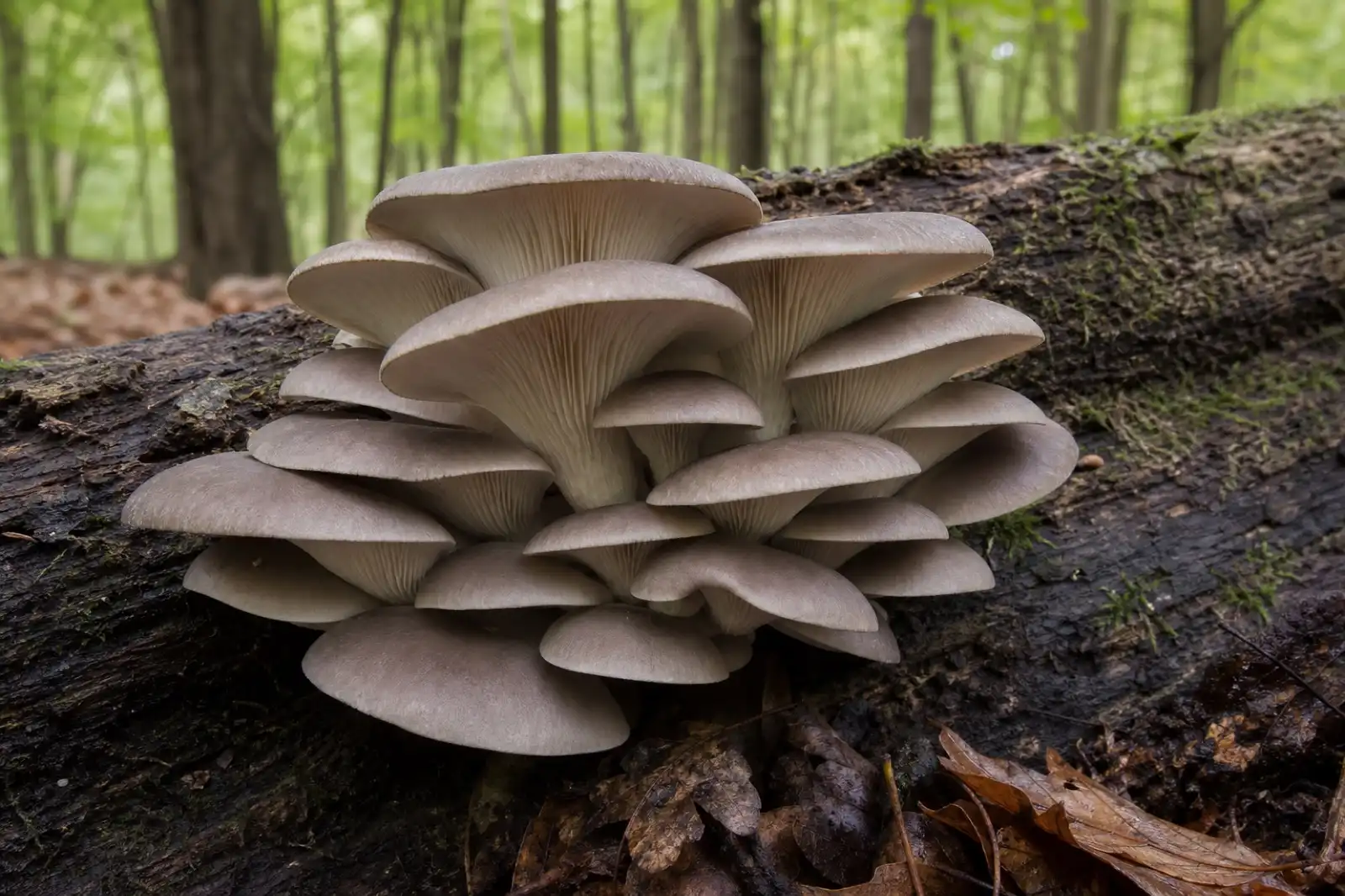
Pleurotus ostreatus: Oyster Mushroom Identification and Growing Guide
A careful guide to Pleurotus ostreatus identification, habitat, home cultivation, nutrition, lookalikes, food safety, and research limitations.
growing
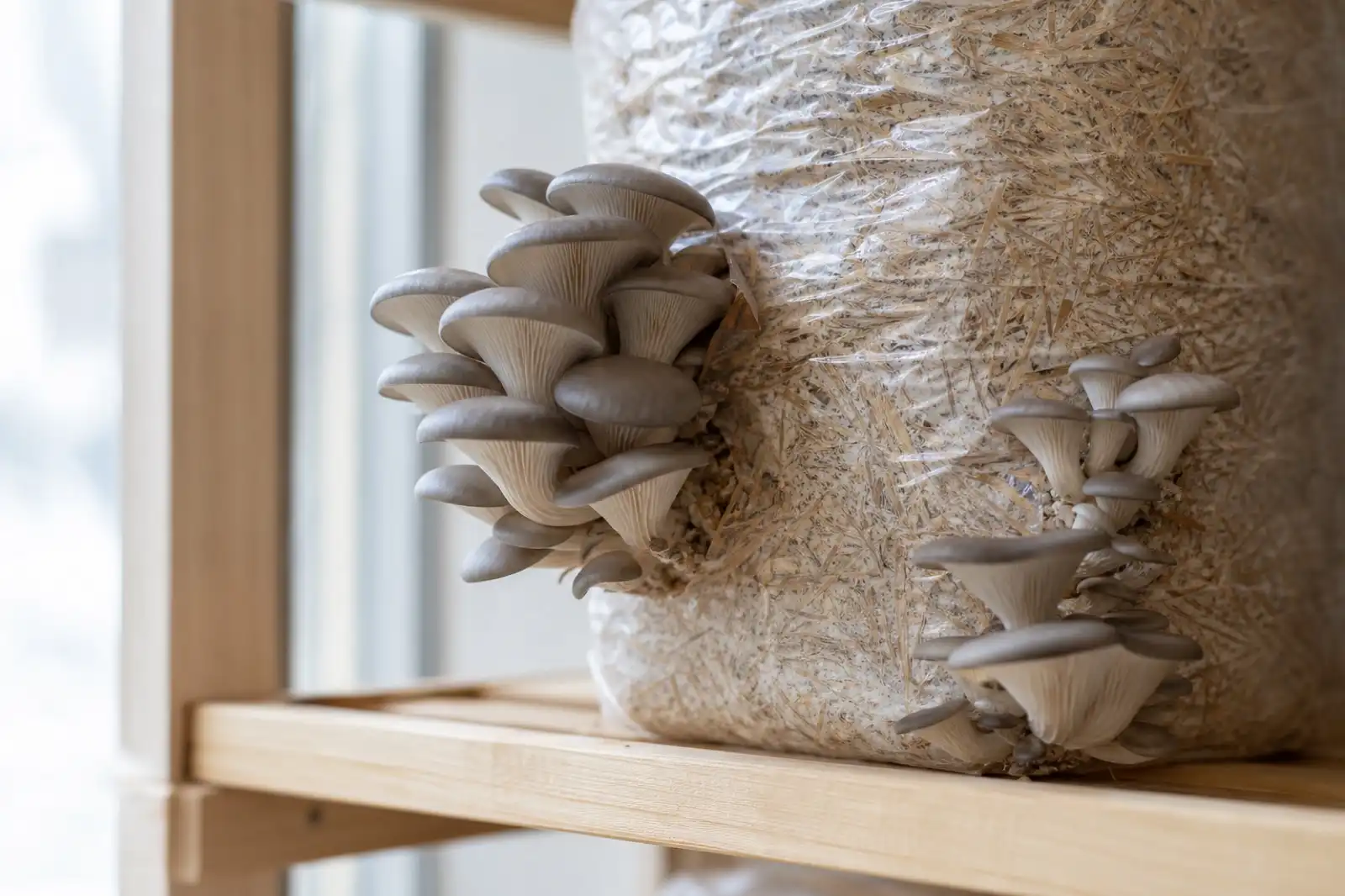
How to Grow Oyster Mushrooms at Home
Grow oyster mushrooms at home with a supplier-provided fruiting block: set up a clean observation routine, follow the culture label, and handle harvests safely.
identification
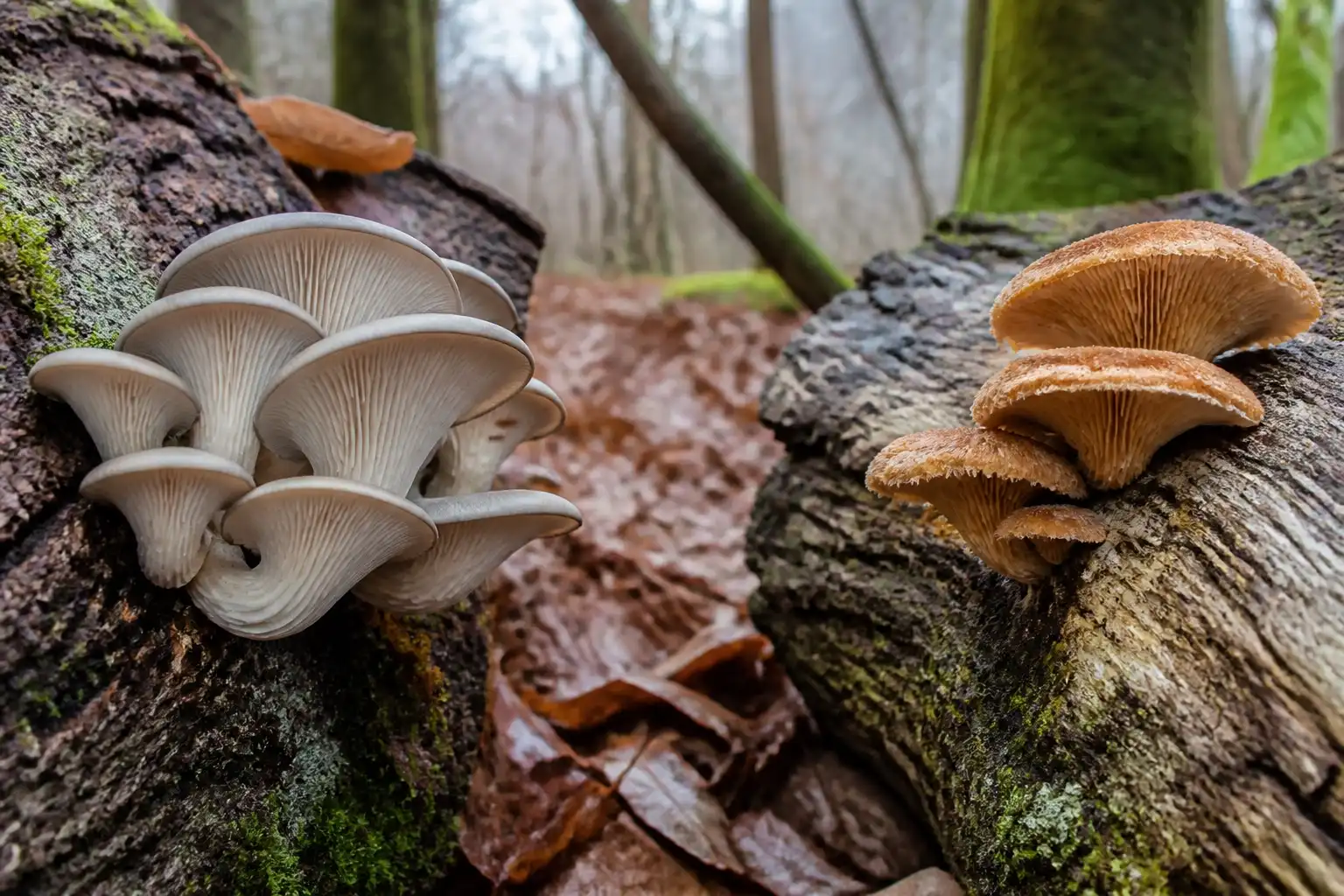
Oyster Mushroom Lookalikes and Identification Tips
Compare oyster mushroom lookalikes with conservative field observations, documentation steps, safety limits, and reasons to seek local expert help.
Continue exploring
Browse more practical guides in Mushroom Encyclopedia or visit the mushroom encyclopedia.