Mushroom Encyclopedia
Slippery Jack: Viscid Cap, Pine Partnership, and Safety
Recognize slippery jack by its viscid brown cap, yellow pores and ring, while documenting pine ecology, lookalikes, handling limits, and food safety.
Species context
Treat profiles as reference material
Species profiles summarize documented traits, taxonomy, and lookalikes, but natural variation can be substantial.
Use the safety checklist →Decision limit
A profile cannot authenticate a specimen
Do not eat a wild mushroom from an online match, single feature, or generated image.
Read the safety disclaimer →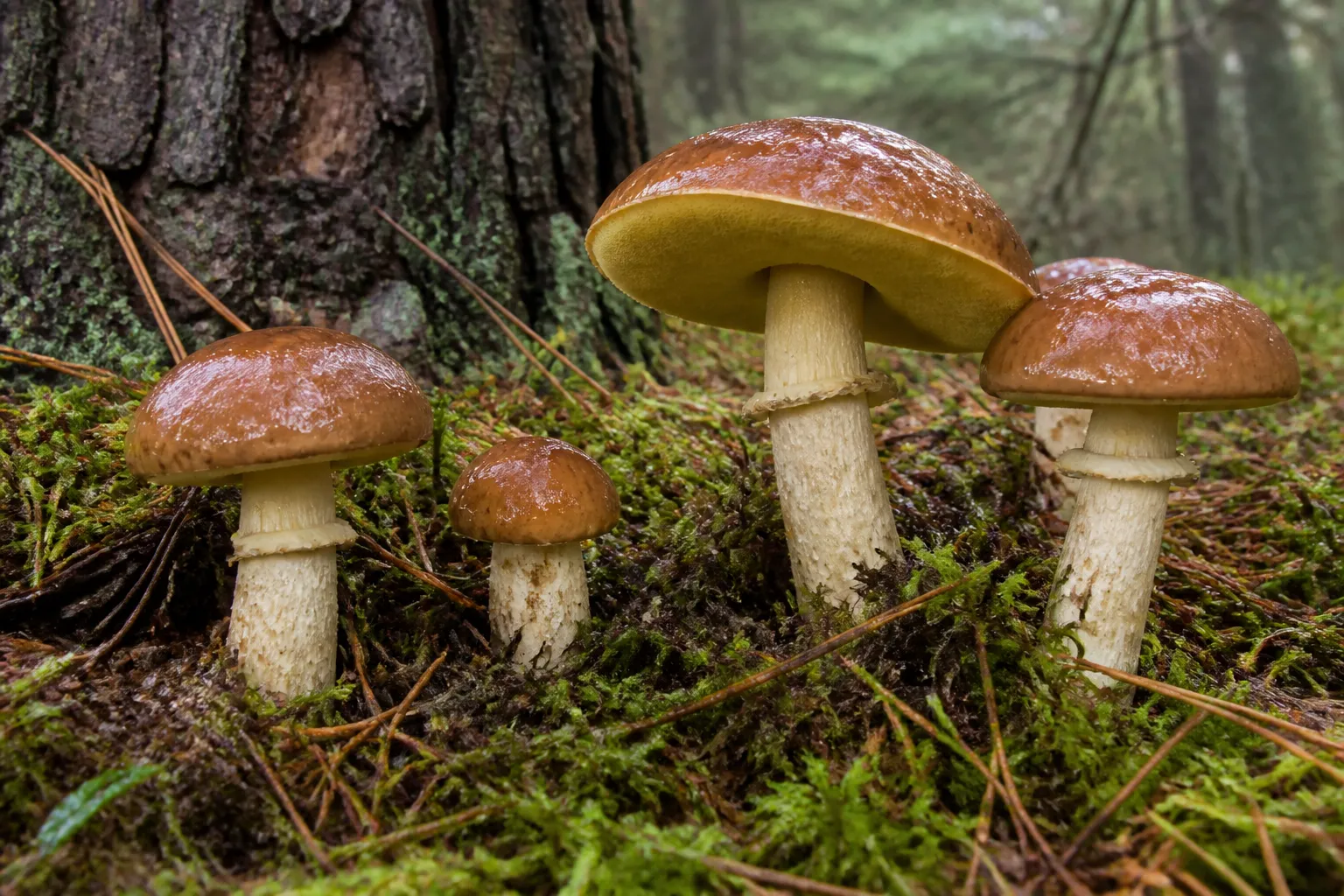
Quick facts
- Scientific name
- Suillus luteus
- Common names
- Slippery jack
- Taxonomy
- Suillus · Suillaceae
- Edibility context
- Conditional: This database label is context, not remote clearance of a wild specimen; identity, preparation, spoilage, contamination, and individual reaction matter.
- Spore print
- Olive brown.
- Toxicity context
- Low: Risk includes misidentification and individual reaction. Consult current local toxicology guidance before any food decision.
- Season
- August, September, October, November
- Growing difficulty
- Not Cultivated
- Regions
- Europe, Asia, introduced worldwide
Safety limit: These labels summarize documented context; they never authenticate a wild specimen. Cooking does not make a poisonous species safe.
Identification overview
Slippery jack is built around a combined field pattern: a brown cap with a peelable gelatinous skin, yellow pores rather than gills, a membranous ring left by the partial veil, glandular dots above the ring and a nearby compatible pine. Wet caps can look lacquered, whereas dry specimens may retain only a tacky surface. Photograph the ring from several angles before it tears, then record pores, full stem, cut flesh and an olive-brown spore deposit.
Habitat and season
The fungus is ectomycorrhizal with pines and has traveled widely with planted hosts. That history makes roadside shelterbelts, young plantations and landscaped pines relevant habitat, but the nearest tree still needs to be identified rather than assumed. Fruit bodies often follow cool wet periods; a calendar month without rainfall, host and locality context has little diagnostic value.
The relevant ecological question is which pine can support the mycorrhiza. Photograph needles in countable bundles, cones or bark where available and show the mushroom’s position within the root zone. In introduced areas, record whether the site is a plantation, shelterbelt or landscape planting.
Similar species
- Suillus granulatus — lacks a ring and has glandular droplets when young.
- Suillus grevillei — associated with larch and usually more yellow-orange.
Ring presence separates useful groups within Suillus only when the veil has been observed before it collapses. Compare S. granulatus and other local ringless taxa using pore droplets, glandular dots, cap fibers and host. Photographing young and mature specimens prevents a lost ring from becoming a false absence.
Food and safety context
Slippery jack has preparation-dependent or risk-sensitive use reports. Because reactions, confusing species, or special hazards matter, this page does not recommend experimenting with a wild collection. Individual allergy, gastrointestinal intolerance, spoilage, environmental contamination, and cross-contamination remain possible. Cooking does not make a poisonous species safe.
For severe vomiting, persistent diarrhea, confusion, jaundice, breathing difficulty, or any symptoms after an unidentified wild mushroom, contact emergency services or a poison center promptly. Keep uncooked material, trimmings, photographs, and meal details for professional identification.
Cultivation context
Slippery jack cannot be treated like an oyster mushroom grown on dead plant material. Its compatible pine partner, root colonization, soil community and outdoor establishment are integral to the life cycle. Inoculating an unknown wild bolete into a garden neither confirms the species nor creates a traceable food crop.
Combine cap, pores, ring, and pine
The useful identification pattern is a very viscid brown cap, yellow pores rather than gills, a persistent membranous ring, glandular dots on the stem, and association with compatible pines. None is sufficient alone. Rain can wash or exaggerate slime, age darkens pores, and a damaged ring may disappear. Photograph several ages and the intact stem before handling removes surface characters.
Make a clean section and record immediate and delayed color changes. An olive-brown spore deposit supports the bolete group but overlaps relatives. Measure pores, cap, and stem, and retain a lawful voucher if the distinction matters. The AI editorial image shows a plausible intact group but cannot replace these observations.
Verify the pine partnership
Suillus luteus is ectomycorrhizal with pine roots and has traveled beyond its native range with plantation forestry. Record the pine species when needles, cones, buds, or a local flora support it; “under a conifer” is not enough. Note whether the stand is planted or native, soil disturbance, elevation, rainfall, and repeated fruiting. Nearby trees may have overlapping roots.
This root partnership explains why a household sawdust block is not a normal cultivation method. Moving colonized soil or seedlings can spread organisms beyond intended ranges and may violate biosecurity rules. Do not inoculate public land or transplant wild material.
Separate ringed and ringless Suillus
Suillus granulatus generally lacks the membranous ring and may show glandular droplets when young. S. grevillei is associated with larch and is often more yellow-orange. Regional Suillus species add further combinations of veil, dots, cap fibers, and host. A missing ring on an old damaged specimen is not evidence for a ringless species, so compare populations and several ages.
Red pores, strong blue staining, gills, or absence of a pine context should trigger reassessment rather than a forced match. Use a current local bolete key and qualified expertise for any food decision.
Treat the slime as morphology, not a safety test
A naturally viscid cap can remain glossy when fresh; bacterial decay can also produce unpleasant wetness. Evaluate odor, tissue integrity, storage time, discoloration, and provenance together. Do not assume that peeling a cap removes all causes of intolerance or contamination. Food-use traditions and preparation practices vary, and gastrointestinal reactions are reported with many wild mushrooms.
Only expertly confirmed, fresh material should enter a kitchen. Avoid polluted sites, old specimens, unknown mixed collections, and vulnerable diners. Cook thoroughly, retain an uncooked sample, and stop if identity or condition becomes uncertain. Drying and cooking do not neutralize every toxin or correct a mistaken species.
Document before collecting
Photograph the group, cap sheen, pores, ring, glandular dots, bases, pine evidence, and surrounding vegetation. Note weather because recent rain affects the cap. Collect minimally and lawfully; ectomycorrhizal habitat is more important than filling a basket. For symptoms after a wild meal, contact emergency services or a poison center and retain samples and meal details.
Use the bolete identification guide for pore and staining records, the habitat guide for pine evidence, and the identification safety checklist before any wild-food discussion.
Editorial and evidence limits
This stored draft has editorial review only and no named mycologist or clinician. It does not promise edibility from a checklist or recommend transplantation. Before publication, recheck taxonomy, introduced-range records, sources, related links, image disclosure, and local poison guidance while keeping draft: true.
Publication-ready questions to answer from the record
Does every slimy brown bolete belong to S. luteus? No. Rain alters cap texture and multiple Suillus species are viscid. Confirm yellow pores, ring history, glandular dots, pine relationship, spores, and region.
Can an old specimen lose its ring? Yes. Damage and expansion can obscure a veil, which is why several ages in one population are more informative than a single mature cap.
Does peeling the cap make it universally tolerated? No. Preparation traditions do not eliminate misidentification, spoilage, contamination, allergy, or individual gastrointestinal reactions.
Why mention plantations? Pine-associated fungi can travel with planted hosts. That history helps explain occurrence but does not prove identity or authorize moving soil and seedlings.
What must happen before publication? Verify introduced-range statements, confirm all linked pages are public, check FAQ visibility and Schema, inspect the accepted second-generation cover rather than the rejected overturned-specimen image, set a deliberate current publish date, and run the complete production build and internal-link audit.
Example rain-to-dry observation sequence
Photograph a population soon after rain without touching the caps, recording sheen, adhering debris, margin, pore color, ring, and stem dots. If lawful and practical, return after a dry interval and photograph comparable fruit bodies. The purpose is not to prove identity from weather but to show which characters persist when the viscid layer changes.
Use a separate specimen for a section and spore deposit. Time every color observation, record the background used for the deposit, and avoid mixing several species in one packet. A collection label should connect photographs, host evidence, measurements, voucher, and any microscopy. Loose images and an unlabeled dried cap cannot support the same conclusion.
For introduced populations, add plantation age, pine species, nearby nursery or soil movement where known, and local biosecurity rules. Do not publicize sensitive sites or encourage transplantation. These records make the page relevant to ecology and invasion pathways while keeping food advice conservative and subordinate to verified identification.
The release editor should verify that “conditional” edibility is explained rather than used as a recommendation. Keep reaction, specimen condition, preparation tradition, and regional guidance visible together. Check that the ring is described as a character that can be damaged, not a perfect pass/fail test, and that cap slime is never equated with spoilage or safety. These distinctions are the page’s unique value beyond a generic bolete checklist.
Finally, confirm that no internal link points to a draft and that the page does not compete with the general bolete guide. The species page owns the S. luteus and pine-plantation intent; the guide owns general pore and staining technique.
A rain-to-dry slippery jack record
- Record rainfall and photograph the cap sheen without adding water.
- Identify the associated pine from needles, cones or bark rather than proximity alone.
- Document young veil, mature ring, yellow pores and glandular dots at close range.
- Compare the same cap after surface drying and note what texture remains.
- Retain an olive-brown spore record and use a regional Suillus key for resolution.
Interpret the partial veil across development
Young Suillus luteus has a partial veil spanning the cap margin and stem. As the cap expands, that membrane tears and leaves a ring that can collapse, adhere to the stem, or become difficult to see after rain and handling. Photograph unopened buttons beside mature fruit bodies and capture the ring from several angles. An absent-looking ring on one old mushroom is weaker evidence than the developmental sequence of the troop.
The stem above and below the ring can provide different information. Glandular dots are often most informative on the upper stem, while the lower surface may be obscured by soil, needles, or slime transferred from the cap. Clean only a small area for documentation and keep the base intact. Compare dot color, density, ring position, pore attachment, and any bruising under neutral light rather than relying on a glossy cap.
Introduced pine plantations complicate range assumptions. A record far outside the fungus’s presumed native distribution may still be plausible where compatible pines and nursery soil moved together. Note pine needle arrangement, plantation age, landscaping history, and whether fruit bodies follow individual root zones. This biogeographic context supports a hypothesis but does not replace regional keys or microscopy within difficult Suillus groups.
References
- Global Biodiversity Information Facility. Suillus luteus species record. Name and occurrence data supporting its broad introduced distribution with pines.
- National Center for Biotechnology Information. Suillus luteus taxonomy record. Lineage checkpoint for separating Suillus from superficially similar boletes.
- North American Mycological Association. Mushroom Poisoning Syndromes. Poisoning response and syndrome context.
- U.S. Food and Drug Administration. Selecting and Serving Produce Safely. General handling guidance for mushrooms used as food.
Editorial status: no named mycologist reviewed this draft. Recheck the local Suillus set, introduced range and food-safety guidance before release.
Source quality notes
MushroomScope cites sources that match the page scope, such as taxonomic databases, extension guidance, food-safety agencies, food-composition databases, and peer-reviewed or institutional health references. Sources support context and uncertainty; they do not turn an online page into specimen identification, medical advice, or a tested recipe record.
Frequently asked questions
Which features distinguish Suillus luteus from ringless Suillus species?
Look for the combined pattern of a very viscid brown cap, yellow pores, glandular dots on the upper stem, a membranous ring and association with compatible pines. No single feature is sufficient.
Does a slippery cap prove a mushroom is slippery jack?
No. Moisture makes many caps slick, while dry weather can make Suillus luteus look less viscid. Check the pore surface, veil-derived ring, stem dots, host and regional species set.
Why are slippery jacks common around introduced pine plantations?
The ectomycorrhizal fungus can move with compatible planted pines and establish where both partners and suitable conditions occur. A record outside its native range should therefore include plantation history.
Can peeling the cap make an unidentified slippery jack safe?
No. Removing the skin changes texture but does not correct a mistaken identification or eliminate every cause of gastrointestinal illness. Local identification and conservative food guidance remain necessary.
Can Suillus luteus be grown without a pine tree?
It is not an ordinary saprotrophic block crop. Its life cycle depends on a living pine-root partnership, so indoor substrate colonization alone is not a reliable cultivation method.
Related guides
identification
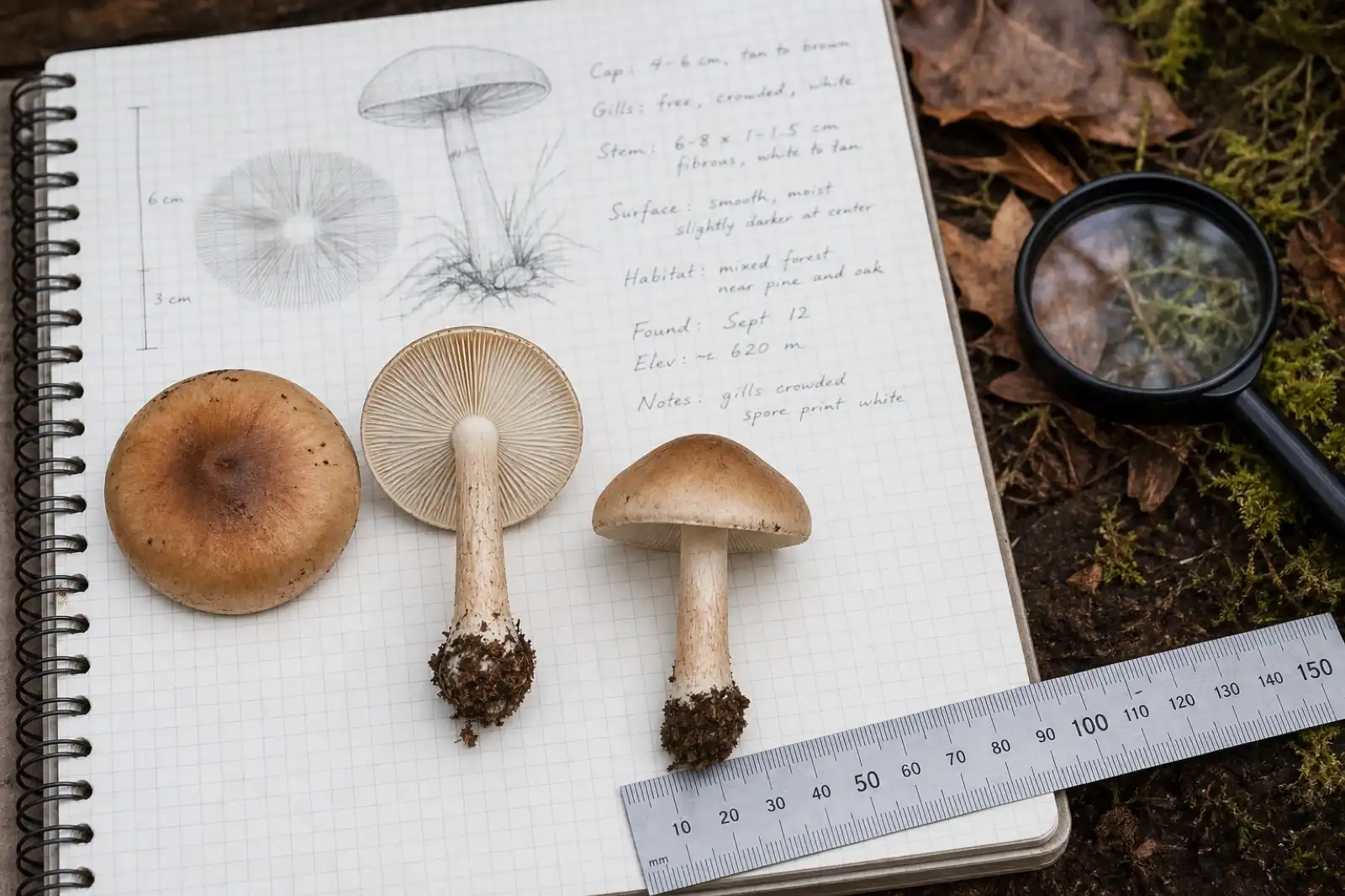
How to Identify Mushrooms: A Beginner's Field Guide
Build an identification from the whole specimen, substrate, habitat, spore deposit, and location—not from a single photograph.
identification
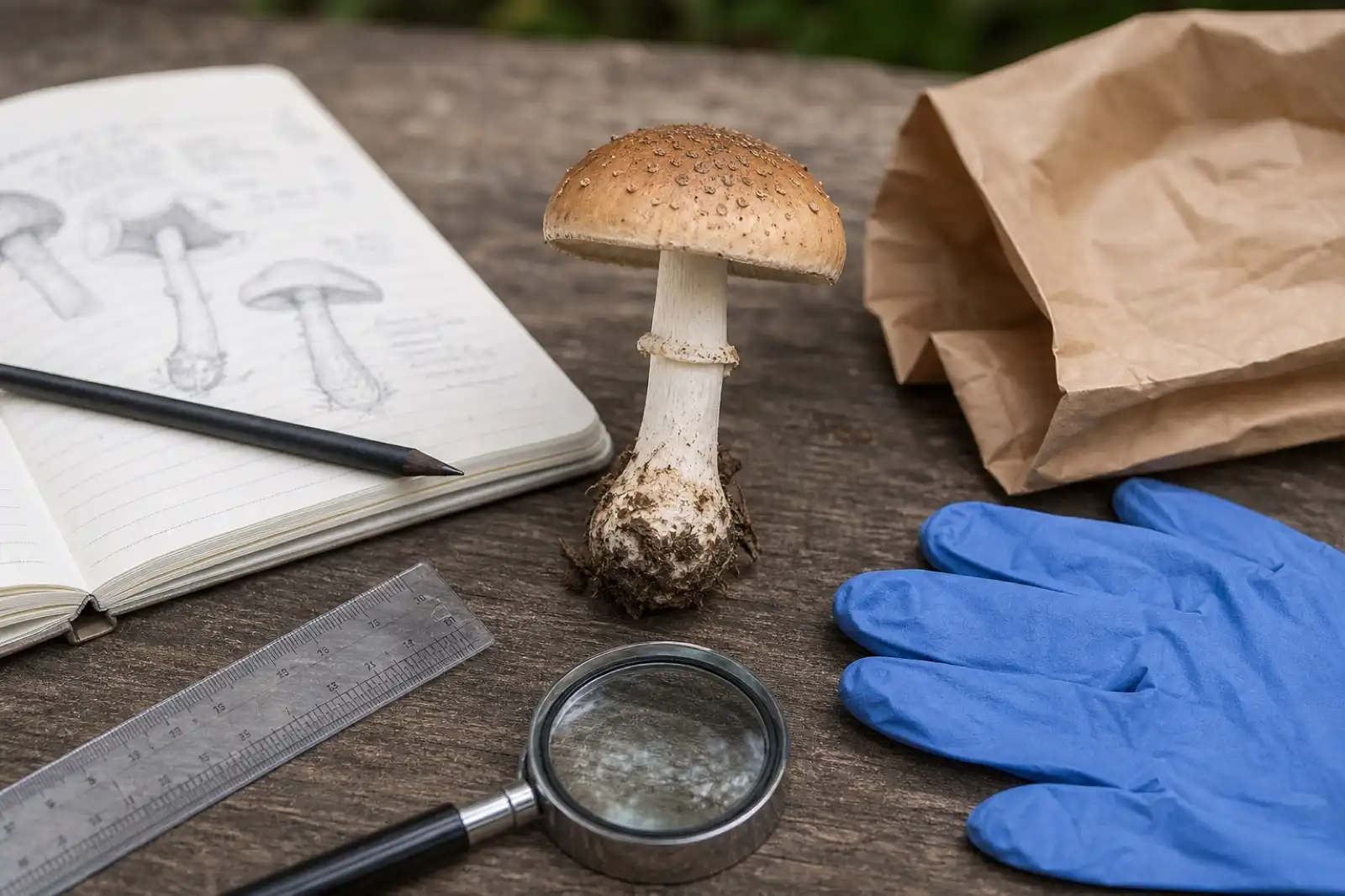
Mushroom Identification Safety Checklist
Use a conservative checklist before handling, documenting, or discussing any wild mushroom, especially when edibility is being considered.
mushrooms
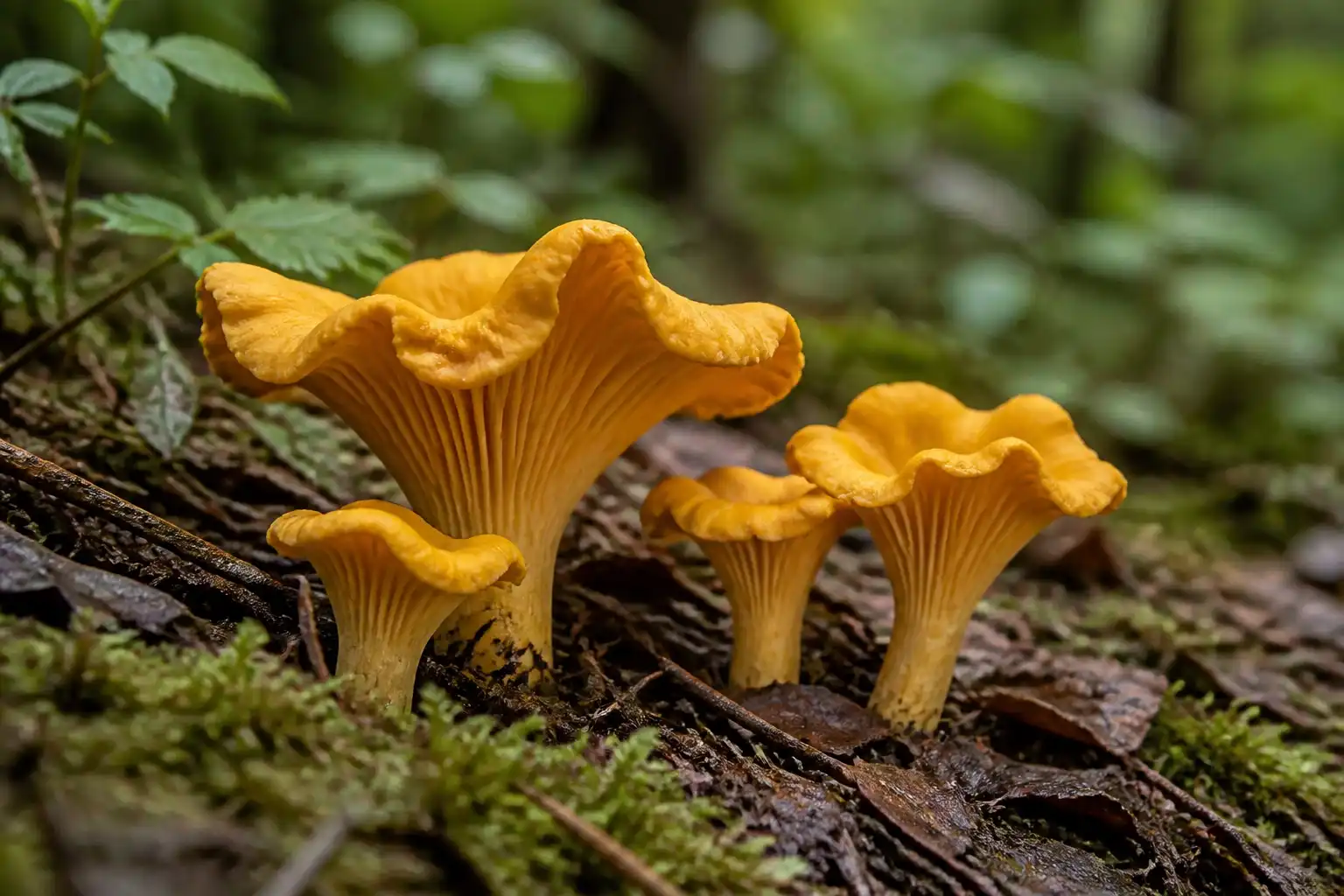
Cantharellus cibarius: Chanterelle Identification Guide
Learn chanterelle identification, false gills, habitat, season, poisonous lookalikes, edibility, nutrition, and why wild finds need local verification.
Continue exploring
Browse more practical guides in Mushroom Encyclopedia or visit the mushroom encyclopedia.