Mushroom Encyclopedia
St George's Mushroom: Spring Habitat and Identification
Study St George's mushroom through spring timing, crowded gills, mealy odor, grassland ecology, lookalikes, measurements, and conservative food boundaries.
By MushroomScope Editorial Team · · Updated
Species context
Treat profiles as reference material
Species profiles summarize documented traits, taxonomy, and lookalikes, but natural variation can be substantial.
Use the safety checklist →Decision limit
A profile cannot authenticate a specimen
Do not eat a wild mushroom from an online match, single feature, or generated image.
Read the safety disclaimer →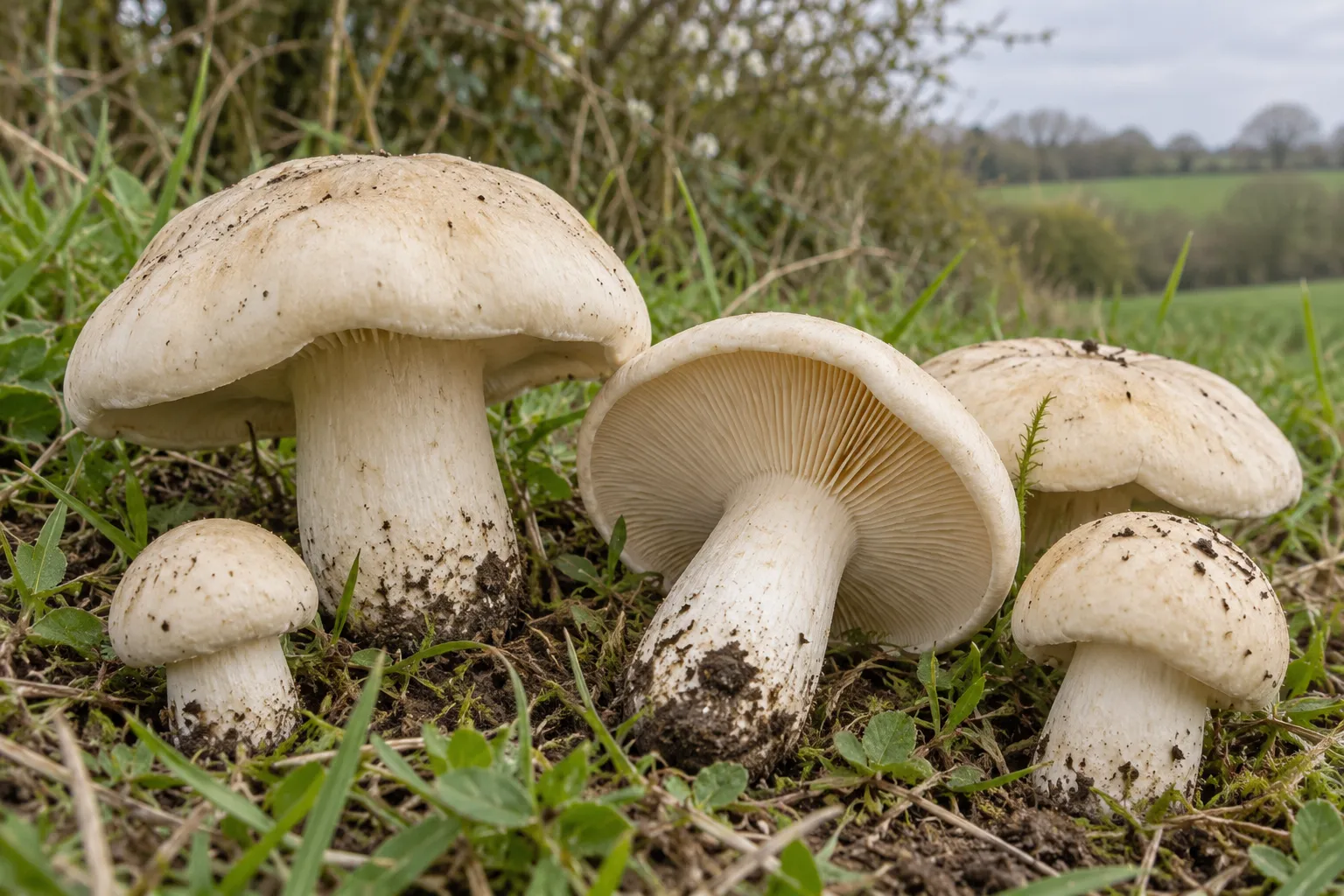
Quick facts
- Scientific name
- Calocybe gambosa
- (Fr.) Donk
- Common names
- St George's mushroom, St George's agaric
- Taxonomy
- Calocybe · Lyophyllaceae
- Edibility context
- Conditional: Historically eaten in parts of Europe, but remote identification cannot exclude hazardous pale-gilled lookalikes or assess site contamination and specimen condition.
- Spore print
- White; useful for excluding pink- and brown-spored comparisons but not unique to this species.
- Toxicity context
- Low: The principal practical hazard is misidentification; individual intolerance and contaminated or spoiled specimens remain possible.
- Season
- April, May, June
- Growing difficulty
- Expert
- Regions
- Europe, western Asia, regions with confirmed introduced records
Safety limit: These labels summarize documented context; they never authenticate a wild specimen. Cooking does not make a poisonous species safe.
Let spring timing open the inquiry, not close it
St George’s mushroom, Calocybe gambosa, is famous for appearing unusually early in the mushroom year. In parts of Europe, the traditional name connects it with St George’s Day in late April. That timing is memorable and genuinely useful, but it is not an identification test. A cool upland site may fruit weeks later than a sheltered lowland verge, while another pale mushroom can share the same month. Treat season as one coordinate in a record that also includes structure, spores, habitat, development, and region.
Begin with the whole fruiting pattern. Photograph the mushrooms before touching them, showing whether they form a compact troop, a broad arc, or an incomplete ring. Record the grass height, nearby shrubs or trees, slope, soil moisture, and recent weather. A clipped lawn, old pasture, hedgerow bank, and woodland edge are different ecological settings even when each looks simply “grassy” in a close photograph. Do not move a mushroom to a more picturesque background; the original attachment and surrounding vegetation are evidence.
The accepted GBIF record places the species in Calocybe. Older books and local lists can use names or family arrangements that differ from current databases, so retain the scientific name and source date in a serious observation. Geographic plausibility also matters. A familiar European photograph does not prove that a similar spring mushroom on another continent is the same taxon.
Measure a developmental series
Young caps are thick, convex, and cream to pale buff, often with the margin rolled inward. As they expand, they can become broadly convex or nearly plane. Caps pressed together in a dense troop may develop lobes, dents, or asymmetric outlines. Those growth marks are more informative when several ages are shown together. Measure cap width and stem dimensions for at least three fruit bodies rather than reporting the largest one.
Surface color varies with moisture and age. Damp caps may look smoother and slightly darker; dry caps can become chalky or develop shallow cracks. Soil splash and grass fragments can create false ornament. Photograph in open shade with a neutral color reference. Avoid using a phone’s saturation or automatic white balance as evidence for a precise cream, ochre, or gray tone.
The gills are a central character: narrow, very crowded, and pale, attached to the stem. Photograph the junction without tearing it. A young cap and a mature cap should be compared because gill spacing, thickness, and color development are easier to understand as a sequence. The persistence of pale gills matters when separating a candidate from pink-spored fungi, but reflected grass color or warm light can obscure subtle changes.
Keep the complete stem base
The stem is usually stout, pale, solid, and ringless. Extract one representative fruit body carefully enough to retain the entire base and surrounding soil structure. Document the absence of a volva or ring only when the relevant area is actually present; a trimmed market-style stem cannot support either conclusion. Record whether stems are central, curved by crowding, enlarged at the base, or connected only through densely packed soil.
Cut one documented specimen lengthwise if collecting is legal and justified. The section can show whether flesh is solid, whether insects have tunneled through it, and whether any color change occurs. Keep the section linked to the same field code as the habitat images. A photograph of an anonymous cut mushroom separated from the site loses most of its evidential value.
Odor is often described as mealy, like fresh flour or cucumber rind. Test only by smelling a fresh intact or gently cut specimen; never taste an uncertain mushroom. Ask two observers to write their impression independently before discussing it. Agreement strengthens the note, while disagreement should remain in the record. Farinaceous odor occurs in other genera and cannot override contradictory spores or anatomy.
Obtain a deposit before trusting mature gill color
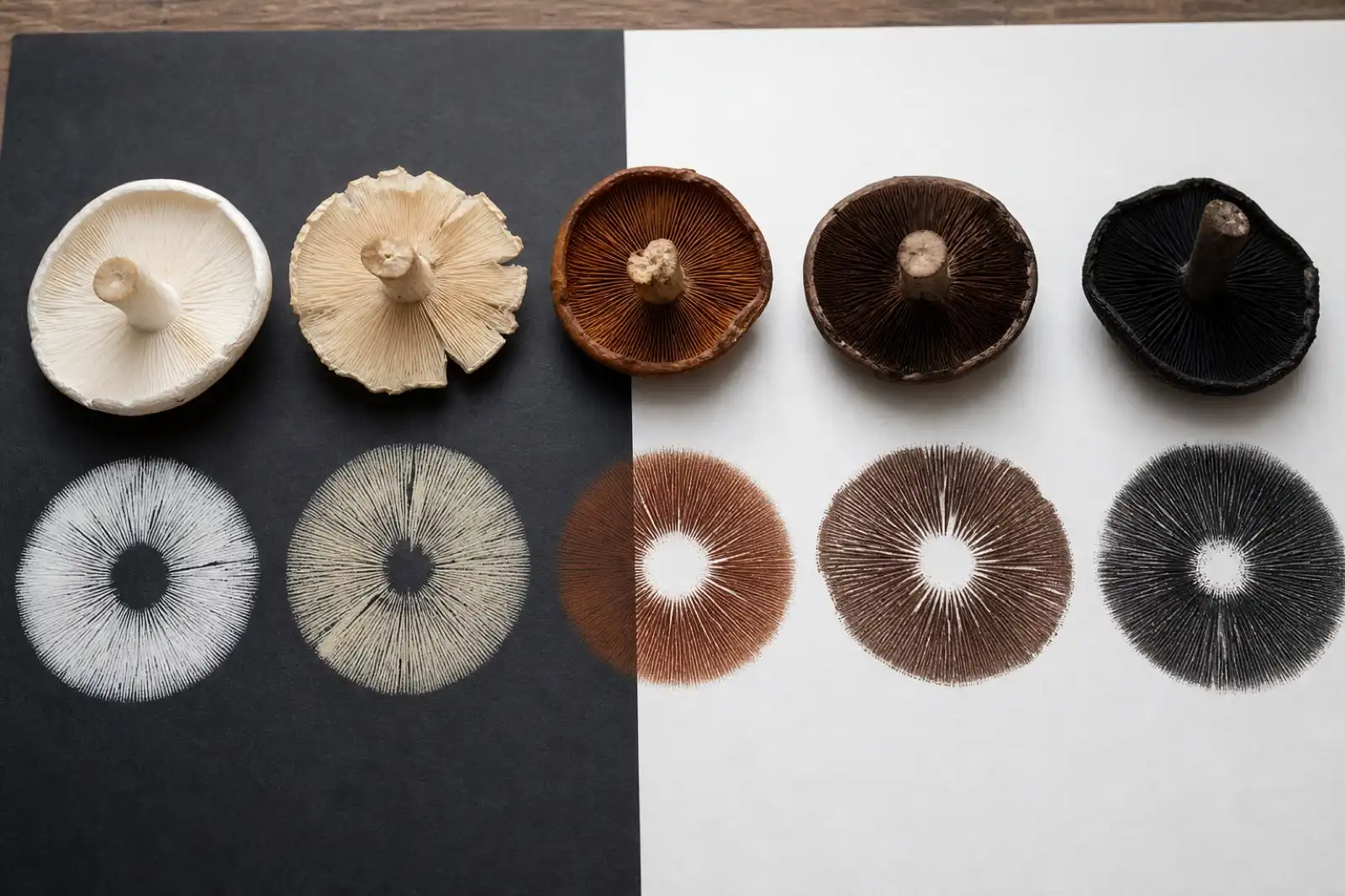
A white spore deposit supports Calocybe gambosa and helps exclude the pink deposit expected from mature Entoloma and the brown deposits of many Inocybe. Use a mature cap over half black and half white nonabsorbent surfaces, protect it from drafts, and record the elapsed time. A thin deposit can look cream because of cap moisture or paper; collect enough material to assess the mass color.
The spore-color guide explains a controlled setup. Deposit color still does not finish the identification because many pale-gilled spring mushrooms produce white spores. Where the field combination is incomplete, microscopic examination can assess spore dimensions, shape, basidia, cystidia, and cap-surface construction against a current regional key.
Measurements need calibration, sample size, and a range. One unusually large spore should not define a collection. Preserve representative dried material with the same code used for photographs, habitat notes, and the print. A voucher allows later review if the name or genus concept changes.
Read the grassland as habitat evidence
St George’s mushroom commonly appears in grassland, verges, old lawns, hedgerows, and open scrub or woodland edges. Repeated arcs can become visible across several seasons as the underground mycelium expands. Map the arc with approximate distances and fixed landmarks instead of assuming that every partial curve is a fairy ring. Mowing, trampling, drought, and uneven rainfall can erase parts of the pattern.
Site history matters to both ecology and safety. Record fertilizer, herbicide, roadside runoff, dog fouling, livestock concentration, and other contamination risks where known. A clean-looking cap does not reveal the site’s chemical history. Public verges may also be protected or treated, and landowner permission can be required for collecting.
Return visits are especially useful. Note soil temperature, rainfall since the previous visit, the number of new fruit bodies, and how older caps change. This converts a one-time name hunt into a phenology record. The habitat-identification guide provides a way to separate direct substrate evidence from nearby plants that may be incidental.
Separate pale spring lookalikes by evidence class
The most consequential comparison is not another cream cap in a gallery; it is a pale mushroom that shares the site and season but differs in spores or anatomy. Entoloma sinuatum is a toxic species whose mature spores are pinkish. It can be robust and pale. Compare gill attachment, development of pink tones, spore-deposit color, season, habitat, and microscopic angular spores. Do not wait for a single photograph to reveal every difference.
Pale Inocybe species introduce a different risk. Many have fibrous or splitting caps and brown spores, and some contain dangerous muscarine. Their odor, cap fibers, stem details, spores, and cystidia require close work. Several pale Clitocybe species can show more decurrent gills and include toxic taxa. White spores alone cannot clear that group.
Other robust spring mushrooms may enter a regional key. Build a specimen-specific table with rows for cap development, margin, gill spacing and attachment, stem base, ring or volva, odor, spore mass, habitat, date, and microscopy. Mark missing observations as unknown. This avoids converting an unobserved character into a presumed match.
The gill-types guide shows how to preserve the gill-stem junction. Compare the Fairy ring champignon guide for a grassland ring-former with a smaller, tougher body plan. The pages address distinct species intents; neither is a substitute for a local key.
Food history is not specimen clearance
St George’s mushroom has a culinary history, especially in parts of Europe, but this page cannot approve a reader’s collection. A hazardous lookalike, a missing stem base, an incomplete spore deposit, spoiled tissue, a polluted verge, or an individual reaction can change the practical decision. Cooking does not repair a wrong identification and does not remove every possible toxin.
If local experts confirm material for food use, keep collections separated by site and specimen group, reject old or damaged mushrooms, and try only a modest amount according to local guidance. Do not serve a first-time wild mushroom to other people without their informed choice, and do not generalize one person’s tolerance to everyone.
If illness follows mushroom ingestion, contact the relevant poison center or emergency medical service promptly. Preserve uncooked material, leftovers, photographs, location, and timing information. Do not wait for a social-media identification or induce vomiting unless a medical professional directs it.
A publication-ready observation
A useful record includes date, region at an appropriate privacy level, grassland type, management clues, recent weather, troop geometry, measurements from several ages, cap surface, intact gill attachment, full stem base, odor notes, spore deposit, and any microscopy. Explain which lookalikes were considered and what evidence separated them. If evidence remains incomplete, label the record Calocybe candidate or pale spring agaric rather than forcing a species name.
Before leaving, verify that the image set contains the undisturbed group, one mature and one young profile, one clear underside, one complete base, and the surrounding habitat. List the unresolved points. That discipline makes the record auditable and keeps a seasonal tradition from becoming an unsafe shortcut.
Pair fruiting dates with soil temperature
At each visit, measure soil temperature at a consistent depth beside—not beneath—the fruiting arc, then record air temperature, rainfall, mowing, and cap stage. Use the same instrument and time window. Three or more visits are more useful than attaching the traditional St George’s Day name to one photograph.
This series tests whether emergence at that site follows warming and moisture. It does not create a universal fruiting threshold, because exposure, elevation, soil, vegetation, and local climate differ. Preserve late and failed visits; excluding them would make the seasonal pattern look more exact than it is.
Quantify crowded gills and exclude pink-spored comparisons
On an intact mature cap, count full-length gills and short-gill tiers across a measured quarter of the circumference. Photograph the attachment at right angles and repeat on a young specimen. Then obtain a substantial deposit on adjoining black and white surfaces. A genuinely pink mature deposit conflicts with the Calocybe gambosa hypothesis and requires an Entoloma comparison, even if the cap is cream and the date seems perfect.
Gill counts overlap among species, so density is a linked observation, not a cutoff. Combine it with cap development, complete stem base, odor method, habitat, calibrated spores, microscopy, and a regional key. Never let a familiar spring date overrule contradictory reproductive evidence.
References
The sources in the page record support accepted taxonomy, a specialist species description, record-checking practice, and conservative poisoning response. They do not authenticate a reader’s specimen or provide permission to consume it.
Source quality notes
MushroomScope cites sources that match the page scope, such as taxonomic databases, extension guidance, food-safety agencies, food-composition databases, and peer-reviewed or institutional health references. Sources support context and uncertainty; they do not turn an online page into specimen identification, medical advice, or a tested recipe record.
Frequently asked questions
Does finding a cream mushroom in spring identify St George's mushroom?
No. Spring timing is supportive, but the full record needs cap and gill development, a complete stem base, odor recorded cautiously, a white spore deposit, habitat, region, and comparison with pale Entoloma, Inocybe, Clitocybe, and other lookalikes.
Why is the name St George's mushroom linked to a date?
The traditional name refers to fruiting near St George's Day in parts of Europe. Weather and latitude shift the actual season, so a calendar date cannot establish identity.
What does the mealy odor prove?
A strong flour-like or cucumber-rind odor can support the hypothesis, but odor perception varies and several fungi can smell farinaceous. Record it as one character, never as a verdict.
Can St George's mushroom grow in rings?
It can fruit in arcs, troops, or rings in grassland, verges, and scrub edges. Ring growth is shared by many fungi and must be combined with anatomy and spore evidence.
Can a photograph confirm that it is edible?
No. A photograph cannot exclude all toxic pale-gilled lookalikes or establish freshness, contamination, and individual tolerance. Food decisions require local expert confirmation.
Related guides
identification
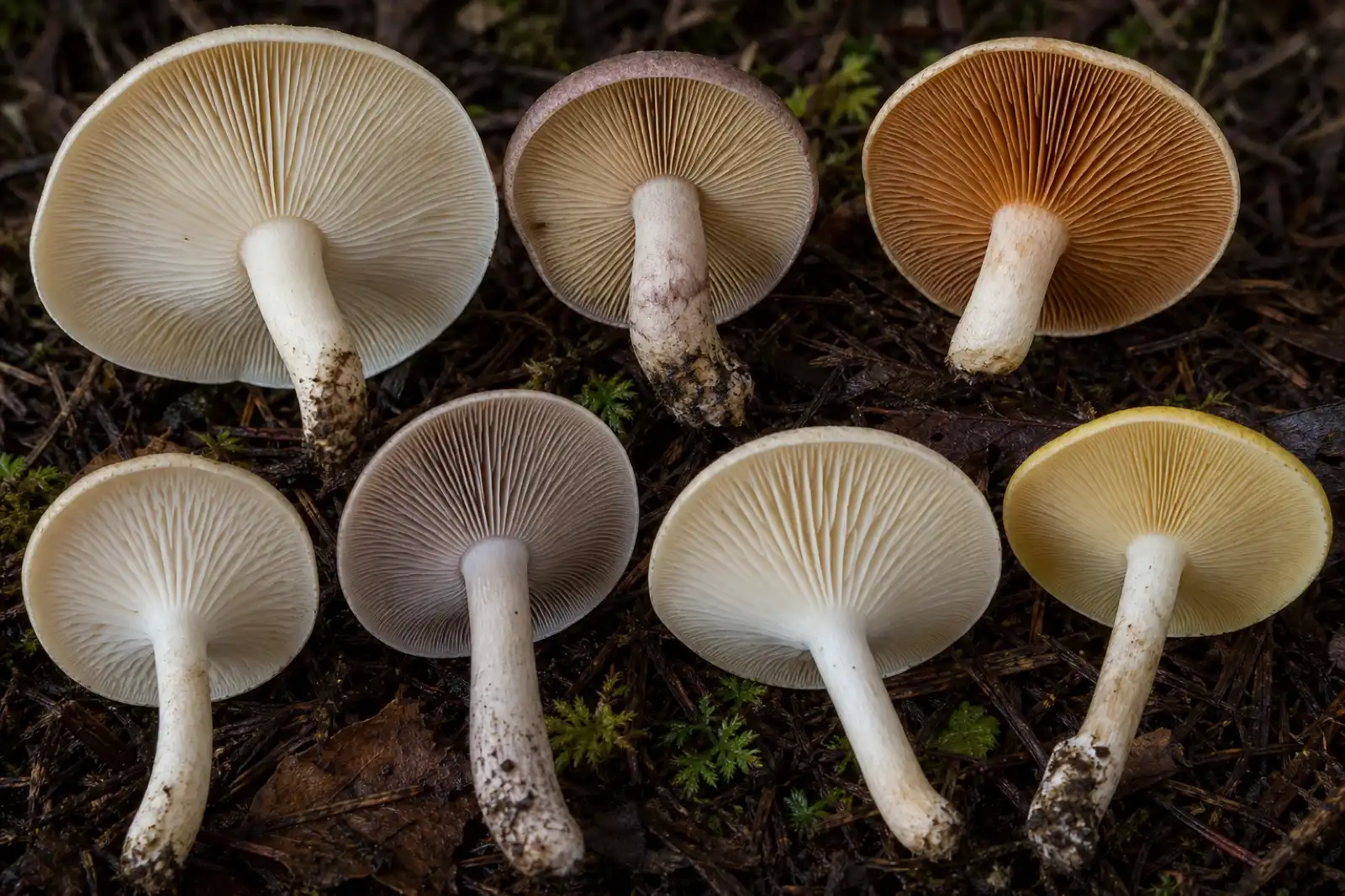
Mushroom Gill Types: Attachment, Spacing, and Color
Compare free, attached, notched, adnate, and decurrent mushroom gills while recording spacing, short gills, edge details, bruising, and color changes.
identification
Mushroom Spore Print Colors and How to Record Them
Use a controlled spore deposit to distinguish broad color groups while recognizing that print color alone never identifies a species.
identification
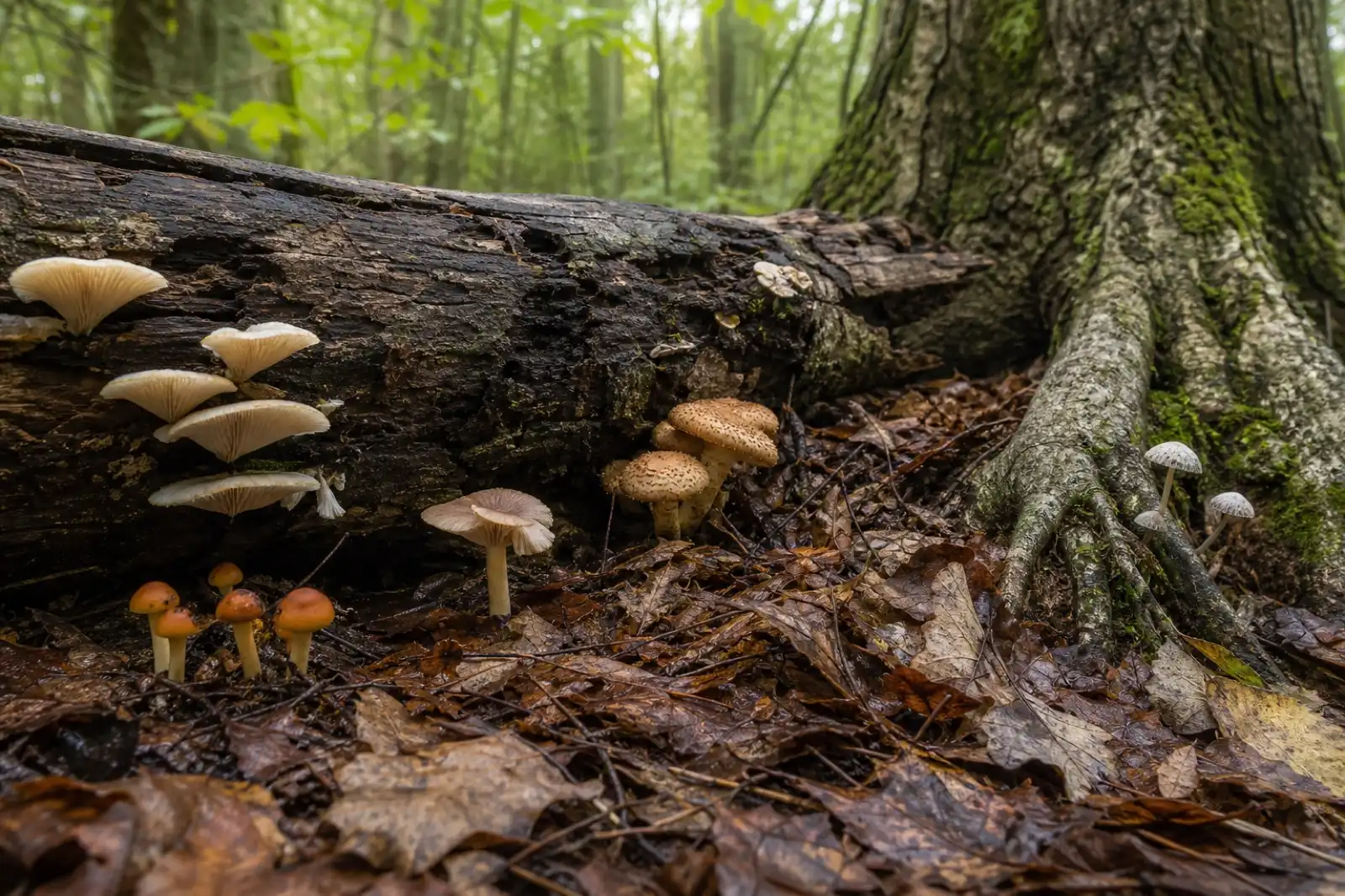
Using Habitat to Identify Mushrooms
Record substrate, associated plants, soil, wood type, moisture, elevation, and fruiting pattern as identification evidence.
Continue exploring
Browse more practical guides in Mushroom Encyclopedia or visit the mushroom encyclopedia.