Growing
Mushroom Pinning Conditions: Humidity, Air, Light, and Timing
Diagnose mushroom pinning through colonization readiness, fresh air, surface moisture, temperature, light, species-specific cuts, and observation logs.
By MushroomScope Editorial Team · · Updated
Growing method
Start with authenticated culture
Use supplier-identified spawn or blocks and record substrate, stage, temperature, humidity, and visible changes.
Open the beginner growing hub →Food safety
Discard suspect batches
Unusual colors, slime, insects, or abnormal odor should be treated as a safety concern, not a climate tweak.
Review contamination guidance →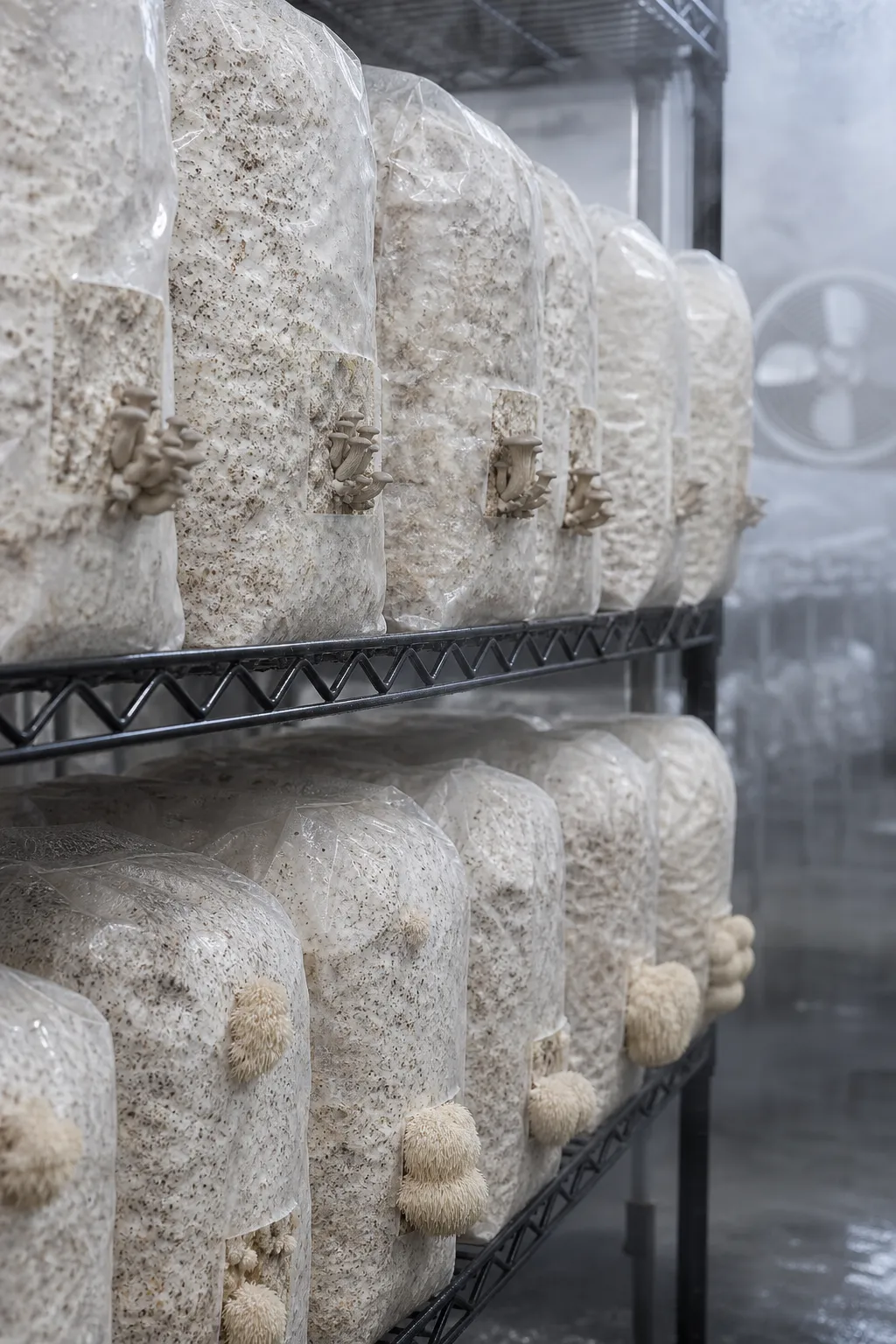
Pins begin with a ready culture
Pinning is the formation of primordia that develop into fruit bodies. It occurs when a competent, sufficiently colonized culture encounters an appropriate combination of air, moisture, temperature, light, and surface conditions. There is no universal pinning recipe. Oyster, shiitake, lion’s mane, king oyster, and Agaricus differ, and commercial strain instructions should outrank a generic chart.
Separate competence from the environmental trigger
An environmental change cannot rescue a weak, contaminated, or immature culture. Use the batch identity, inoculation date, visible growth pattern, consolidation history, and supplier instructions to decide whether the material is biologically competent first. Only then interpret air, moisture, temperature, and light as possible initiation signals.
Colonization must be complete enough
A block that looks white on the outside may still be consolidating internally. Premature exposure can dry uncolonized substrate or invite competitors; excessive delay can exhaust or overheat a block. Check inoculation date, growth uniformity, internal heat trend, species-specific browning or consolidation, and absence of suspect sectors before initiating. Do not fruit a bag with unresolved contamination.
Use species-specific readiness evidence
Shiitake blocks commonly require a maturation and browning phase that does not map directly onto an oyster block’s appearance. Lion’s mane may begin fruiting inside a delayed bag, while a white surface can hide an uncolonized core. Record the named culture and substrate, inspect several representative units, and treat internal heat or stalled sectors as evidence that elapsed days alone are insufficient.
Fresh air is species- and stage-specific
Fresh-air exchange lowers accumulated carbon dioxide and changes evaporation at the surface. For some species this helps signal formation and supports normal shape, but excessive airflow dries pins. Long oyster stems and small caps can suggest high carbon dioxide, yet crowding, light, strain, and temperature also matter. Measure where blocks sit rather than relying only on a room exhaust setting.
Measure at the breathing cluster
A wall controller may miss a stagnant pocket inside a rack. Place a checked instrument near representative openings without blocking airflow, then compare upper, middle, lower, edge, and center positions. Log fan cycles, door openings, and loaded-room state. The grow-room sensors guide explains why a precise number at the exhaust is not a crop-zone measurement.
Humidity protects surfaces, not puddles
High relative humidity reduces evaporation from tiny primordia, which have little reserve against drying. It does not mean spraying pins until water stands on them. Persistent wetness can encourage blotch and malformed surfaces, while direct fog can chill or bruise tissue. Watch the surface and condensation pattern; place sensors away from fog outlets and calibrate them.
Pair the sensor reading with a surface observation
At each reading, note whether the cut edge is matte, glistening, beaded, pooled, or visibly drying and whether room surfaces carry condensation. A saturated probe beside a fog outlet can report a reassuring value while the crop edge alternates between direct wetting and drying. Fixed-angle photographs taken under the same light make those transitions easier to compare.
Temperature shifts are tools, not rules
Some strains respond to a temperature change, but cold shock is not universal. Shiitake blocks may be chilled or soaked under a validated production method, while many oyster strains initiate within a suitable seasonal range without an extreme shock. Avoid copying a set point from another species. Substrate temperature can lag or exceed room air because living mycelium produces heat.
Compare room air with the block core
Metabolic heat can keep a dense block warmer than the surrounding room, especially before full maturation. Identify the measurement as air, surface, or core and use a clean method that does not create a contamination pathway. A sudden room-air change can also create condensation on a colder block; record that physical response rather than assuming the temperature shift acted only as a biological cue.
Light guides many cultivated species
Many cultivated mushrooms use light as a developmental cue and for orientation; they are not plants and do not photosynthesize. Dim, diffuse, scheduled light is usually easier to control than direct sun, which heats and dries blocks. Color and intensity effects can be species-dependent. Darkness during colonization is also not an absolute requirement for every workflow.
Record the schedule and the shadows
Document fixture type, on-off times, shelf orientation, and obvious shading rather than reporting “some light.” Compare primordia on the rack face and rear before increasing intensity. If a fixture warms nearby blocks, light and temperature have changed together; move or shield the fixture before drawing a conclusion about the developmental cue.
Bag cuts define the fruiting surface
The opening controls oxygen exposure and moisture loss. Oyster and chestnut blocks often fruit from a limited slit; lion’s mane benefits from small side cuts that prevent water collecting on the fruit; king oyster is often top-fruited under a retained bag collar. Too many openings scatter the crop and dry the block. Follow supplier instructions and leave most plastic intact.
Treat opening geometry as an experimental variable
Record slit length, number, height, orientation, exposed area, and whether plastic remains tight against the block. A lion’s-mane side slit, oyster X-cut, and king-oyster top opening create different gas and moisture boundaries. Comparing yield without recording the opening confounds the room settings with the fruiting interface itself.
Diagnose failed or uneven pinning
If pins do not form, verify culture age and identity, colonization, contamination, surface condition, carbon dioxide, humidity, temperature, light, and elapsed time. Change one variable at a time. If pins abort, examine drying, direct spray, heat, bacterial wetness, insects, and rapid environmental swings. The contamination guide helps separate infection signs from ordinary metabolites.
Read the spatial pattern before changing a set point
Failures on one shelf suggest a local airflow, fog, heat, light, or handling difference; failures across one batch suggest culture, substrate, processing, or timing. Random scattered failures may point to damaged units or contamination. Map affected blocks first, place suspect material on hold, and compare it with an adjacent healthy control before adjusting the whole room.
Use a pinning log instead of chasing numbers
Log the block lot, culture, substrate, inoculation and initiation dates, cut pattern, shelf position, air and substrate temperatures, humidity, carbon dioxide when available, light schedule, first pin date, aborts, harvest mass, and shape. Photographs from the same angle make surface change visible. A repeated local pattern is more actionable than an isolated internet target.
Build a comparable outcome record
Use stable units and timestamps, preserve failed blocks, and link every photo to the batch and shelf. The batch records guide provides the lineage fields; the pinning log adds initiation-specific evidence. Compare days to first pins, percentage of units pinning, abort rate, cluster form, harvest mass, and grade only among batches of the same culture and substrate method.
Frequently asked questions
What triggers mushroom pinning?
A species-specific combination of culture readiness, air, moisture, temperature, light, and surface conditions.
Should I mist mushroom pins directly?
Avoid persistent droplets and forceful direct spray; manage room humidity and surface condition carefully.
Do mushrooms need light to pin?
Many cultivated species use diffuse light as a developmental cue, but intensity and schedule vary.
Does every block need a cold shock?
No. Chilling is species-, strain-, and workflow-specific.
Why do pins abort?
Drying, wetness, temperature stress, poor air exchange, contamination, pests, or weak substrate can contribute.
Compare initiation signatures instead of copying one climate recipe
Pinning is a developmental transition, not a switch controlled by one humidity number. An oyster block exposed through a side slit presents a small vertical evaporation front; a top-fruiting king oyster bottle presents a broad collared surface; a shiitake block may require maturation and browning before its outer bag is removed; lion’s mane commonly forms through a deliberately limited opening. The same room reading therefore acts on four different boundary layers. A useful record names the culture, block format, opening shape and initiation event before it records room conditions.
For oyster mushrooms, note whether primordia form evenly along the cut, only at its upper edge, or under intact plastic elsewhere. Pins escaping beneath the bag suggest that light, oxygen or evaporation is stronger at an unintended seam. For lion’s mane, coral-like branching at the opening can be a fresh-air clue, while multiple hidden fruits under the bag often point to excess openings or delayed fruiting setup. King oyster morphology is deliberately managed toward a different cap-to-stem balance, so an oyster rule such as “more air always means better caps” cannot simply be transferred.
Shiitake requires another record altogether. Mark the end of visible colonization, the start and extent of surface browning, any rest period specified for the strain, bag removal, soaking or temperature cue, and the date of first primordia. If a block was initiated before its documented maturation stage, changing the fogger does not correct the missing biological readiness. The shiitake log guide describes the separate cadence of outdoor logs; log shocking and indoor sawdust-block initiation should not be merged into one schedule.
Read surface moisture with temperature and airflow
Relative humidity describes air at the sensor, not the amount of water on a primordium. Warm humid air that meets a cooler block can approach its dew point and condense even while a wall-mounted sensor looks acceptable. Conversely, a high room reading does not prevent a fast local air jet from drying the cut face. Record room temperature, block-surface or near-surface temperature where practical, sensor location, fan cycle, fog cycle and visible surface state at the same timestamp.
Use a small descriptive scale that can be repeated: dry/matte, faintly hydrated, glistening without droplets, discrete droplets, or pooling. Add a photograph from the same angle. The purpose is not to declare one category universally correct; it is to connect a change in the crop-zone water film with subsequent pin formation, bacterial blotch risk, drying or abortion for that culture. The grow-room sensor guide explains placement and calibration, while the substrate hydration guide covers water held inside the block rather than on its fruiting surface.
Diagnose a failed pinset in a fixed order
First verify identity, batch history and healthy colonization. Second check whether the species-specific maturation event was completed. Third inspect the opening geometry and crop surface. Fourth review synchronized temperature, humidity, air-exchange and light records. Fifth compare shelf position and neighboring blocks from the same lot. This order prevents a room-wide adjustment from hiding a single under-colonized block, sealed slit or failed culture.
When only one block fails, compare its mass loss, bag seal, substrate appearance and inoculation history with its siblings. When one shelf fails, inspect airflow shadowing, fog impingement, heat stratification and light obstruction. When the entire room fails, verify instruments and schedules before changing set points. Make one bounded correction, define what improvement should appear and by when, and preserve an unchanged comparison when the crop and food-safety plan allow it. Record the result in the batch-record workflow so a plausible story becomes a testable production observation.
References
Source quality notes
MushroomScope cites sources that match the page scope, such as taxonomic databases, extension guidance, food-safety agencies, food-composition databases, and peer-reviewed or institutional health references. Sources support context and uncertainty; they do not turn an online page into specimen identification, medical advice, or a tested recipe record.
Frequently asked questions
What triggers mushroom pinning?
A species-specific combination of culture readiness, air, moisture, temperature, light, and surface conditions.
Should I mist mushroom pins directly?
Avoid persistent droplets and forceful direct spray; manage room humidity and surface condition carefully.
Do mushrooms need light to pin?
Many cultivated species use diffuse light as a developmental cue, but intensity and schedule vary.
Does every block need a cold shock?
No. Chilling is species-, strain-, and workflow-specific.
Why do pins abort?
Drying, wetness, temperature stress, poor air exchange, contamination, pests, or weak substrate can contribute.
Related guides
growing
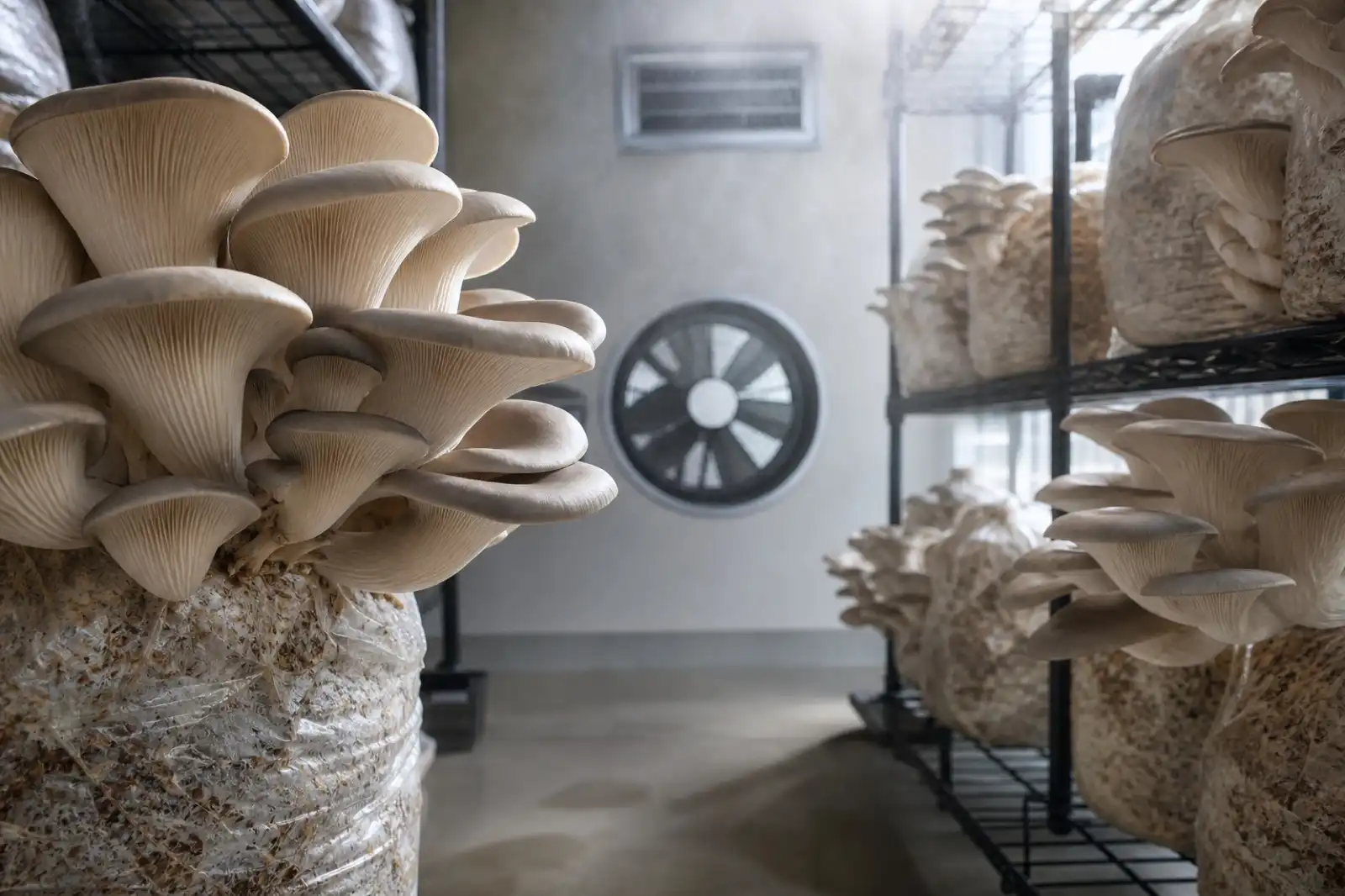
Mushroom Fruiting Conditions: Humidity, Air, Light, and Temperature
Use humidity, fresh air, light, and temperature as a linked observation system for authenticated cultivated mushroom blocks—not a universal settings chart.
growing
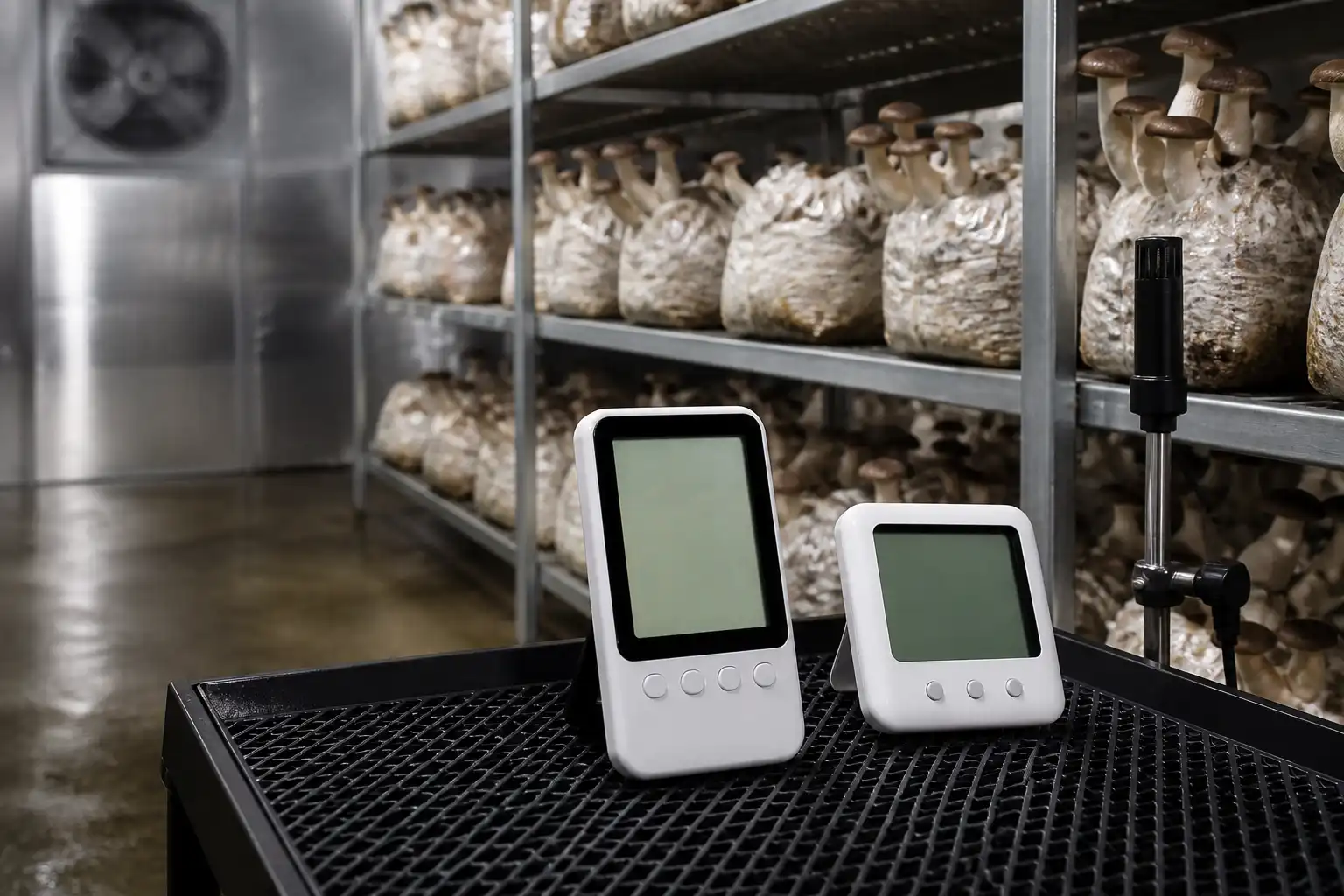
Mushroom Grow-Room Sensors: Placement, Calibration, and Logs
Place and verify temperature, humidity, and carbon-dioxide sensors in a mushroom grow room using reference checks, mapped locations, and useful logs.
growing
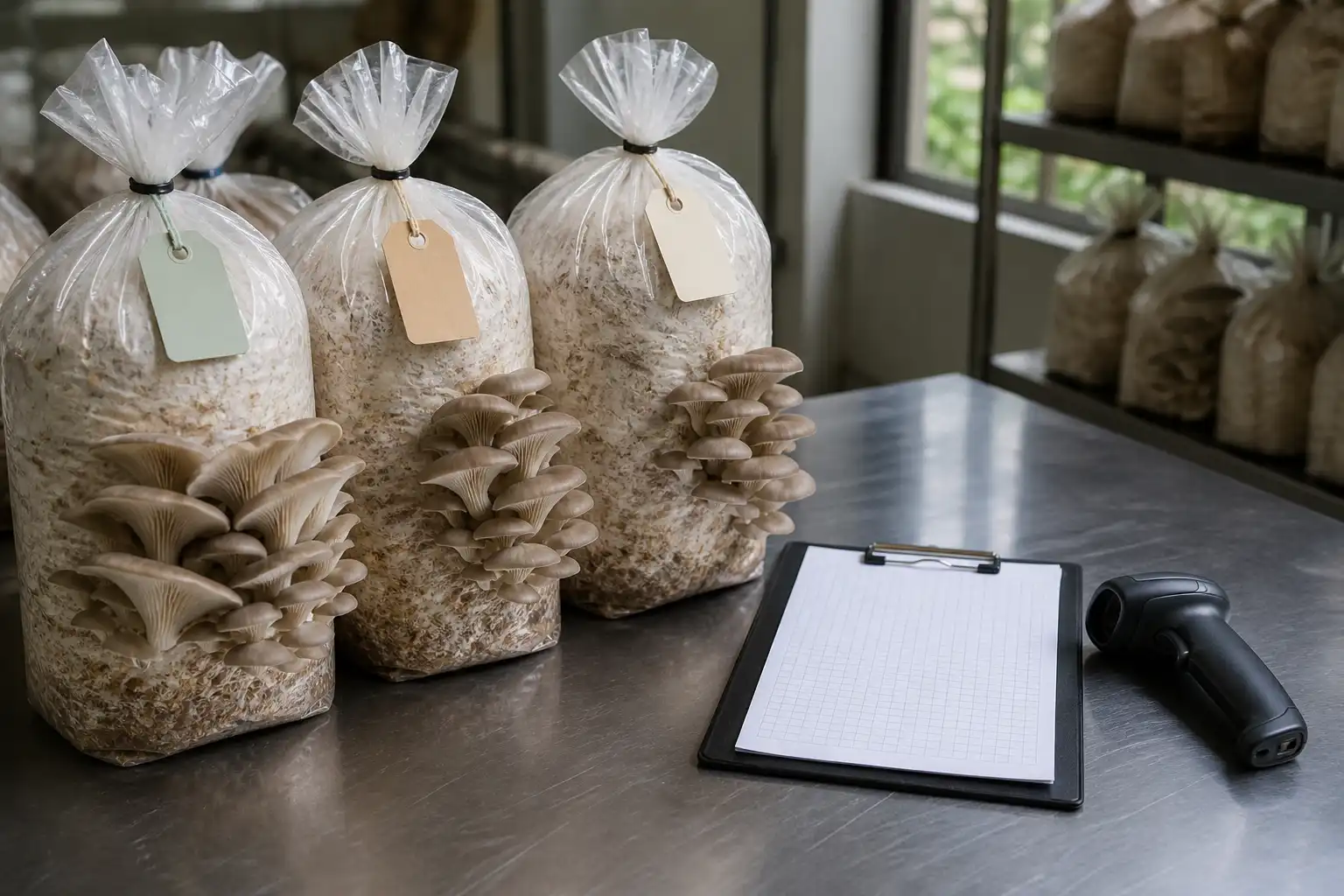
Mushroom Batch Records: Build Traceability From Culture to Harvest
Build mushroom batch records that connect culture, substrate, rooms, observations, harvests, deviations, and corrective actions without false precision.
Continue exploring
Browse more practical guides in Growing or visit the mushroom encyclopedia.