Mushroom Encyclopedia
Blewit Mushrooms: Identification and Lookalike Separation
Identify blewits by violet gills, fibrous stems, pale spores, litter ecology, and careful separation from rusty-spored Cortinarius lookalikes.
By MushroomScope Editorial Team · · Updated
Species context
Treat profiles as reference material
Species profiles summarize documented traits, taxonomy, and lookalikes, but natural variation can be substantial.
Use the safety checklist →Decision limit
A profile cannot authenticate a specimen
Do not eat a wild mushroom from an online match, single feature, or generated image.
Read the safety disclaimer →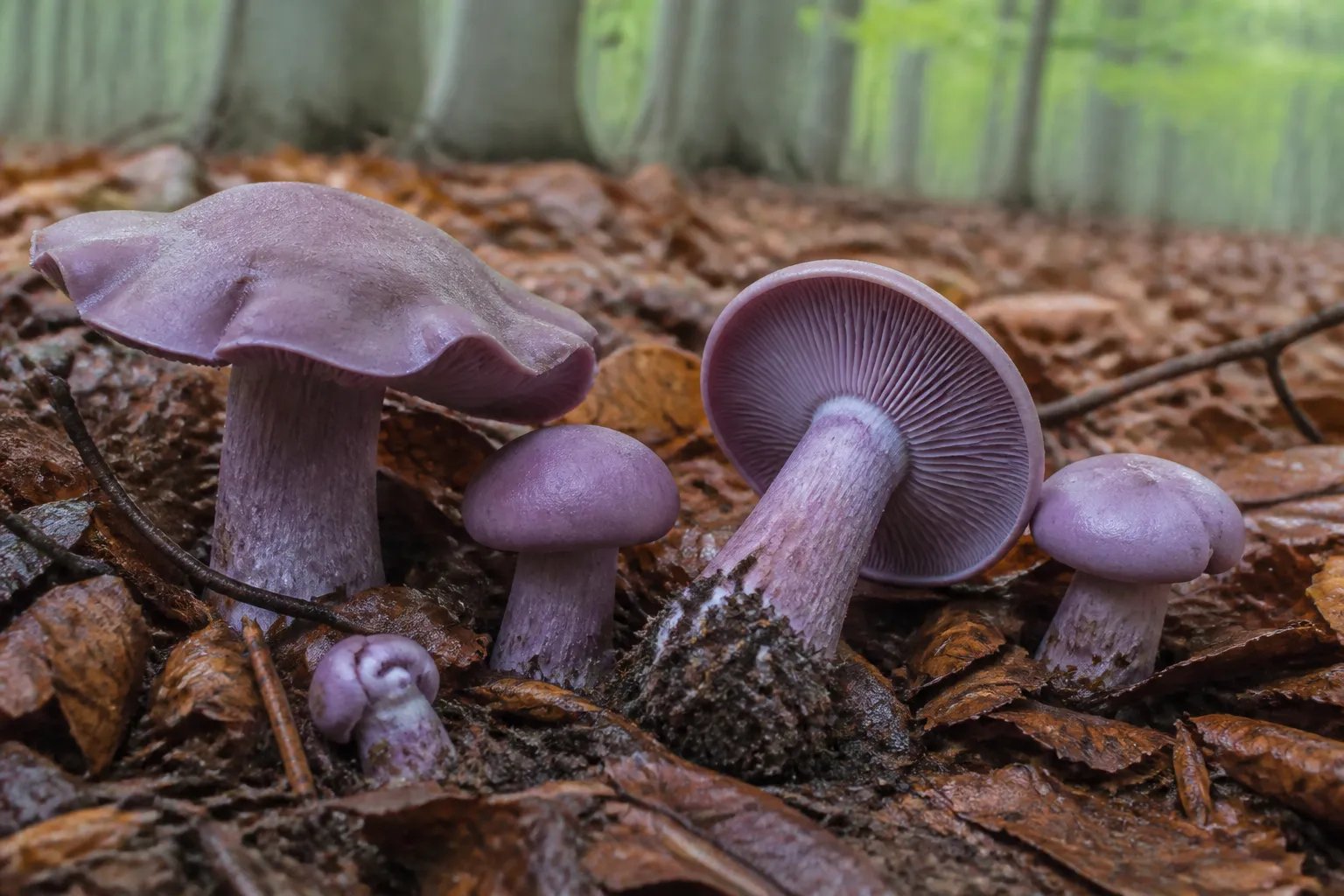
Quick facts
- Scientific name
- Collybia nuda
- Common names
- Wood blewit, Blewit
- Taxonomy
- Collybia · Tricholomataceae
- Edibility context
- Conditional: Reported as edible after correct identification and thorough cooking; this page does not clear wild material.
- Spore print
- Pale pinkish buff.
- Toxicity context
- Moderate: Confusion with other violet mushrooms and gastrointestinal reactions are the main practical hazards.
- Season
- September, October, November, December
- Growing difficulty
- Difficult
- Regions
- Europe, North America, temperate regions elsewhere
- Recorded synonyms
- Lepista nuda, Clitocybe nuda
Safety limit: These labels summarize documented context; they never authenticate a wild specimen. Cooking does not make a poisonous species safe.
Blewits are remembered as purple woodland mushrooms, but “purple” is not a safe identification. A useful determination must explain cap aging, gill attachment, stem fibers, spore color, substrate, and the absence of a veil. This guide treats those observations as a connected test and marks the point where regional expertise or microscopy is still needed.
The accepted name used here is Collybia nuda. Many current field guides use Lepista nuda, while older sources may use Clitocybe nuda. These names help locate literature; they do not make every violet Lepista-like collection one species.
Identification profile at a glance
A typical young blewit has a smooth lilac cap, crowded violet gills, and a stout fibrous stem colored much like the gills. Mature caps expand, develop wavy margins, and may fade almost completely to tan or gray-buff. There is no volva or durable ring. A pale pinkish-buff spore deposit supports the identification; a rusty-brown deposit contradicts it.
No item works alone. Begin with the complete mushroom-identification workflow and preserve several ages from the same troop where collecting is permitted.
Cap development and color loss
Young caps are convex with an incurved margin. The surface is smooth, sometimes slightly greasy in damp weather, rather than scaly. Expansion produces a broadly convex or nearly flat cap; old margins may lift or ripple. Violet often fades from the center after sun, rain, or frost, leaving buff adults beside purple buttons.
Photograph that sequence before moving anything. Phone white balance can intensify mauve, and soaked specimens can appear darker than they are. Color should be described under neutral daylight and supported by structure, never treated as a password.
Gills and their attachment
The gills are crowded and violet when fresh and young, then become dull lilac or pinkish buff. They attach to the stem or form a shallow notch; they do not run far down it. A close side view should show the junction without tearing the cap away.
Brown soil on a few gill edges differs from a uniform rusty maturation. Examine clean specimens at multiple ages. Rust spreading across mature gills is a warning that the collection may be a Cortinarius rather than a blewit.
Stem, base, and internal texture
The stem is fibrous and comparatively substantial, usually lilac to pale violet and sometimes enlarged near its base. Leaf litter can cling to pale mycelial material. It should lack a sac-like volva, and it does not carry a persistent skirt-like ring.
Lift one permitted specimen with the entire base. Cutting at soil level discards useful evidence. Slice it lengthwise to record internal color, insect tunnels, hollowing, and flesh texture. Blewit flesh is more fibrous than brittle; waterlogging and decay can erase that difference.
Making the spore deposit count
Place a mature cap over adjacent light and dark nonabsorbent surfaces, cover it against drafts, and allow enough time for a visible deposit. The expected pale pinkish-buff color may look nearly cream in poor light, so view it in neutral daylight.
A clearly rusty deposit redirects the identification. A failed print says little: the cap may be too young, old, dry, or damaged. The identification safety checklist explains why a print supports a complete record but cannot independently approve food use.
Odor is secondary evidence
Fresh blewits are often described as aromatic, fruity, or perfumed. People perceive odors differently, and temperature and condition change volatile compounds. A faint smell does not exclude blewit; an agreeable smell does not establish edibility.
Waft air toward the nose rather than tasting unknown material. Strong decay, sourness, chemical contamination, or visible mold describes specimen condition, not a diagnostic blewit character.
Leaf litter and compost ecology
Blewits decompose organic debris. They occur in deciduous litter, conifer duff, compost-rich gardens, hedgerows, park margins, and mulched beds. Troops, arcs, and rings reflect a mycelium extending through a suitable layer, not a connection among the visible stems.
Write “beech leaf litter over soil” or “aged wood-chip garden bed,” not merely “on ground.” Record nearby trees, litter depth, disturbance, and any buried wood. Ecology helps distinguish a litter decomposer from fungi tied to roots or recognizable timber.
Season and geographic limits
Cool wet autumn weather is typical through much of the temperate Northern Hemisphere. Fruiting can continue into early winter and occur outside that window in mild maritime climates. Season supports a hypothesis but cannot overrule anatomy.
Occurrence maps provide plausibility, not proof. Records vary in verification quality, and species concepts may differ among continents. Use a current regional key rather than applying a photograph and description from another region without qualification.
The violet Cortinarius problem
Purple Cortinarius species deserve first attention because the genus includes toxic fungi. Young fruit bodies may carry a cortina: fine cobweb-like threads between cap edge and stem. After rupture, rusty fibers or a dusty rusty band may remain on the stem. Mature gills and the spore deposit commonly turn rusty brown.
The violet webcap guide shows the dry velvety cap, swollen violet stem, developmental cortina, and rusty-spore workflow for one distinct comparison. Use it to test structure, not to choose between two purple photographs.
Weather can remove an obvious web, so its absence on one adult is weak evidence. Search young specimens and clean stems. An ambiguous rusty zone, uncertain deposit, or collection composed only of battered adults should remain unresolved.
Amethyst deceiver and close blewit relatives
The amethyst deceiver, Laccaria amethystina, is normally smaller and more delicate. Its gills are thick and widely spaced rather than crowded, and the stem is slender. Rain fades both species, making proportions and gill spacing more useful than purple intensity.
Lepista sordida is often smaller and thinner-fleshed but can overlap closely. Other violet taxa vary by region. When macroscopic characters fail to separate plausible names, microscopy or DNA is an honest requirement rather than a detail to improvise.
A reproducible field record
- Photograph the intact troop and surrounding litter.
- Record date, place, weather, trees, and exact substrate.
- Document young, middle-aged, and mature fruit bodies.
- Photograph cap, gill attachment, full stem base, and possible veil fibers.
- Section one specimen and note flesh color and texture.
- Make a spore deposit and assess it under neutral light.
- Test the whole record with a current regional key and qualified local knowledge.
This sequence keeps contradictory evidence visible. A name must account for the rusty fibers that should not be present just as clearly as it accounts for violet gills.
Food history without remote clearance
Blewits have a culinary history after cooking, but a reputation is not permission to eat a particular collection. Purple lookalikes, mixed collections, environmental contamination, spoilage, and individual gastrointestinal response all matter. Cooking cannot make a poisonous misidentification safe.
Avoid roadside, treated-landscape, and industrial-site specimens. If symptoms occur after a wild mushroom meal, contact local emergency services or a poison center promptly. Retain uncooked material, trimmings, photographs, and meal timing for professional assessment.
Handling a verified product
Only after identity and supply chain are established, refrigerate promptly in a breathable container, reject slimy or sour-smelling material, prevent cross-contamination, and cook thoroughly. A market label on cultivated product does not transfer to a similar mushroom found in a yard.
Blewits release water in the pan. Moderate batches and adequate evaporation allow browning; crowding steams them. That cooking mechanism does not answer identification or personal-suitability questions.
Cultivation context
Outdoor blewit beds may use aged compost, leaf litter, or related organic material, but performance depends on strain, climate, moisture, substrate maturity, and competitors. This is less standardized than a common commercial fruiting block. Authenticated culture is essential; cloning an unknown purple mushroom preserves the uncertainty.
The beginner growing guide provides a more predictable comparison. Oyster-mushroom temperature or airflow targets should not be copied into a blewit project without a species-specific method.
Evidence boundary and image disclosure
The strongest field case combines several ages, crowded violet gills, a fibrous ringless stem, pale spores, litter ecology, and no rusty cortina evidence. It still cannot replace microscopy where regional taxa overlap or assess contamination and individual food suitability.
The cover is an original AI editorial illustration, not a voucher photograph. It was visually checked for the intended cap, gill, stem, and habitat concept, but it must not be used to confirm a specimen. Review status is editorial; no named clinical expert reviewed this article.
Frequently asked questions
Build a daylight color-loss series
Violet pigment is most useful when its distribution and age are recorded. Select young, mid-aged, and expanded fruit bodies from the same patch and photograph them under diffuse daylight with one neutral reference. Record cap center, cap margin, gill face, gill edge, upper stem, lower stem, and cut flesh as separate color fields. Repeat after two hours indoors without changing white balance.
Blewits can fade from violet toward buff or brown, especially across the cap, while sheltered gills or inner stem tissue retain more color. That pattern is more informative than calling the whole mushroom “purple.” It also prevents a saturated phone image from carrying more weight than spore color, web-like veil evidence, or base anatomy.
Search for cortina residue with a fixed grid
Violet Cortinarius species are a critical comparison because some are toxic. Before handling, divide the stem visually into four quarters from cap to base. Under side light, inspect each quarter for rusty fibers, a ring zone, adhering brown spores, or fine cobwebby veil remnants. Photograph any residue with scale. Then inspect the cap margin and nearby litter for matching threads.
A blewit should not be accepted merely because no obvious web is visible; rain, age, or handling can erase it. Pair the veil grid with a genuine spore deposit. Pale pinkish-buff spores support the blewit comparison, whereas rusty brown spores redirect the specimen toward Cortinarius. The veil and ring guide explains how partial veils leave distributed evidence rather than a perfect ring.
Trace the litter-layer attachment
Blewits often fruit in rich leaf litter, compost, or other organic debris. Lift one peripheral specimen with its base and an intact block of surrounding material where lawful. Photograph the transition from stem base through litter layers and note whether the mycelial mat binds leaves, wood chips, or soil. Do not infer a living-tree host from the nearest trunk.
Record litter depth at three points, dominant leaf type, moisture, and whether the patch forms an arc or dense cluster. This context separates a litter decomposer from lookalikes whose ecology is tied more directly to tree roots. It also provides useful evidence when violet color has faded. Return the disturbed material after documentation and avoid excavating the center of the patch.
Can a blewit lose all purple color?
Yes. Mature, sun-exposed, rain-washed, or frosted caps may become buff. Younger companions, gills, stem fibers, spores, and substrate then carry more weight.
Is a pale print enough to exclude every dangerous lookalike?
No. It helps reject typical rusty-spored Cortinarius, but other comparisons and regional species may require microscopy.
Why preserve the stem base?
It shows attachment, swelling, mycelial material, and any volva-like structure. Trimming it removes evidence.
Are blewits linked to tree roots?
They are generally treated as saprotrophic litter decomposers. Trees still shape the litter, moisture, and local community.
Can an app confirm blewit?
No. It may suggest names but cannot reliably assess spores, disappearing veils, microscopy, contamination, or edibility.
References
- GBIF — Collybia nuda. Accepted-name and occurrence context; individual records still require verification.
- NCBI Taxonomy Browser — Collybia nuda. Independent nomenclature checkpoint.
- NAMA — Mushroom Poisoning Syndromes. Conservative poisoning-response context, not an edibility endorsement.
- FDA — Selecting and Serving Produce Safely. General handling principles for verified food products.
Taxonomy and distribution were checked against GBIF and NCBI. Safety limits follow NAMA poisoning guidance and FDA handling principles. Each source supports a defined conclusion; uncertainty is retained where regional taxonomy or specimen condition requires direct evidence. Editorial review completed October 5, 2026; no named clinical expert or field mycologist independently reviewed the page.
Source quality notes
MushroomScope cites sources that match the page scope, such as taxonomic databases, extension guidance, food-safety agencies, food-composition databases, and peer-reviewed or institutional health references. Sources support context and uncertainty; they do not turn an online page into specimen identification, medical advice, or a tested recipe record.
Frequently asked questions
What features support a blewit identification?
Look for violet young gills and stem, a smooth fading cap, fibrous flesh, pale pinkish-buff spores, litter habitat, and no cortina or rusty spore deposit.
How can a blewit be separated from violet Cortinarius?
Rusty mature gills or spores and cobweb-like veil remnants argue against blewit, but ambiguous collections still require a regional key and expert examination.
Do blewits always remain purple?
No. Sun, rain, frost, and age can fade violet caps toward buff or gray-brown, so several developmental stages should be documented together.
Are wild blewits safe to eat?
This page cannot clear a collection for food. Lookalikes, individual intolerance, contamination, and handling matter, so obtain qualified local confirmation.
Where do blewits usually fruit?
They often fruit in decomposing leaf litter, compost-rich ground, gardens, and woodland edges after cool wet weather, with local seasonal variation.
Related guides
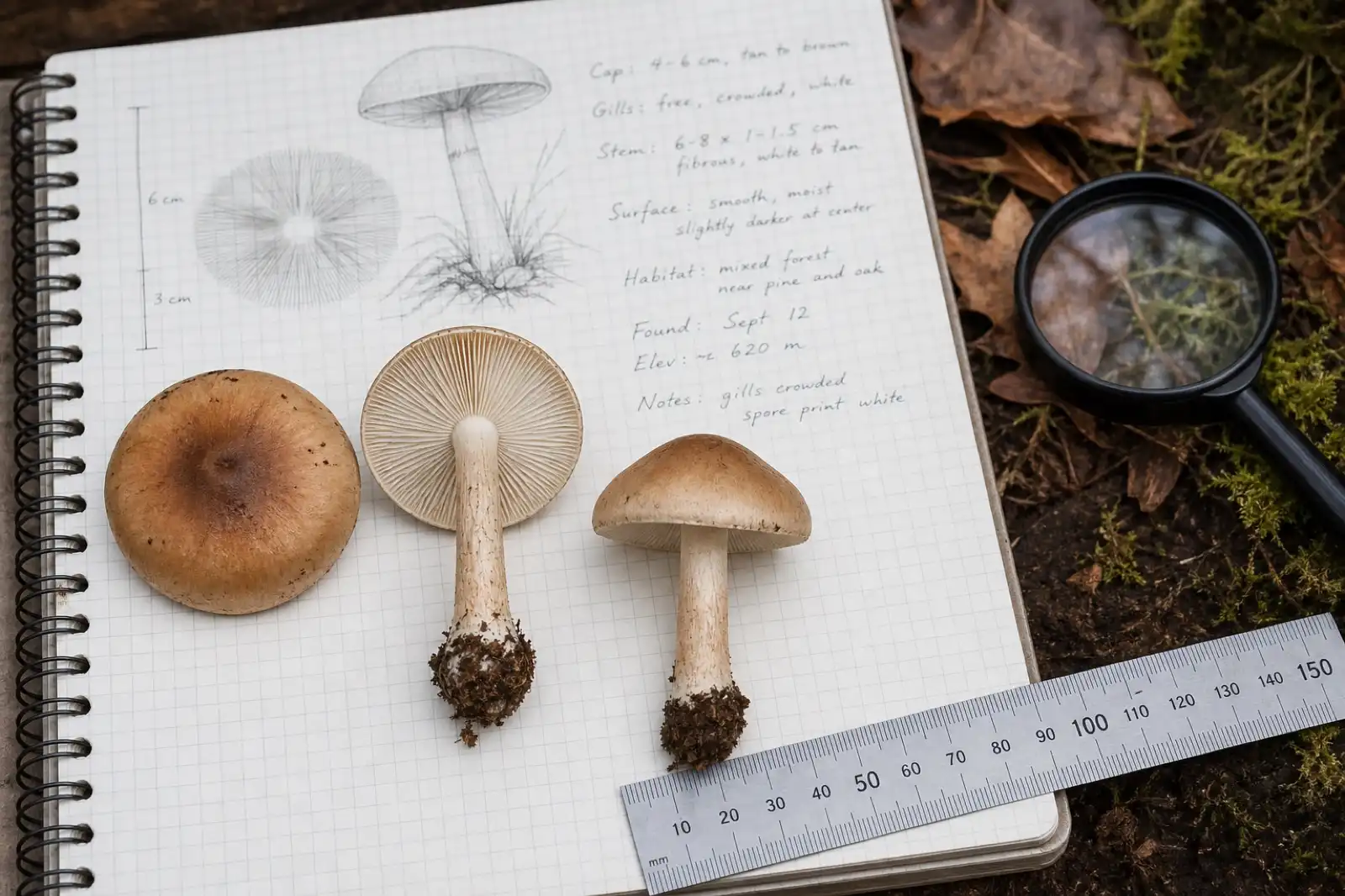
identification
How to Identify Mushrooms: A Beginner's Field Guide
Build an identification from the whole specimen, substrate, habitat, spore deposit, and location—not from a single photograph.
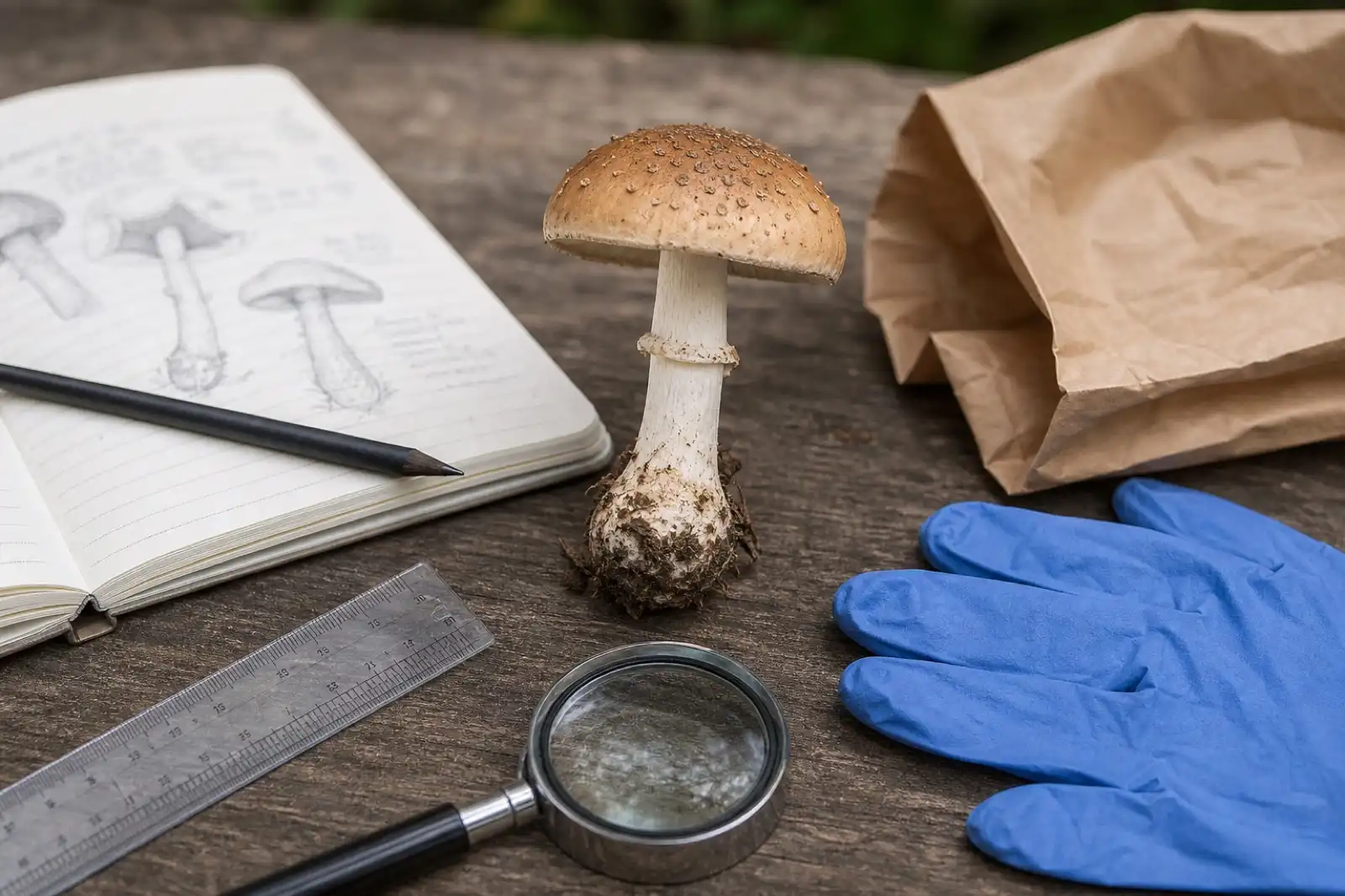
identification
Mushroom Identification Safety Checklist
Use a conservative checklist before handling, documenting, or discussing any wild mushroom, especially when edibility is being considered.
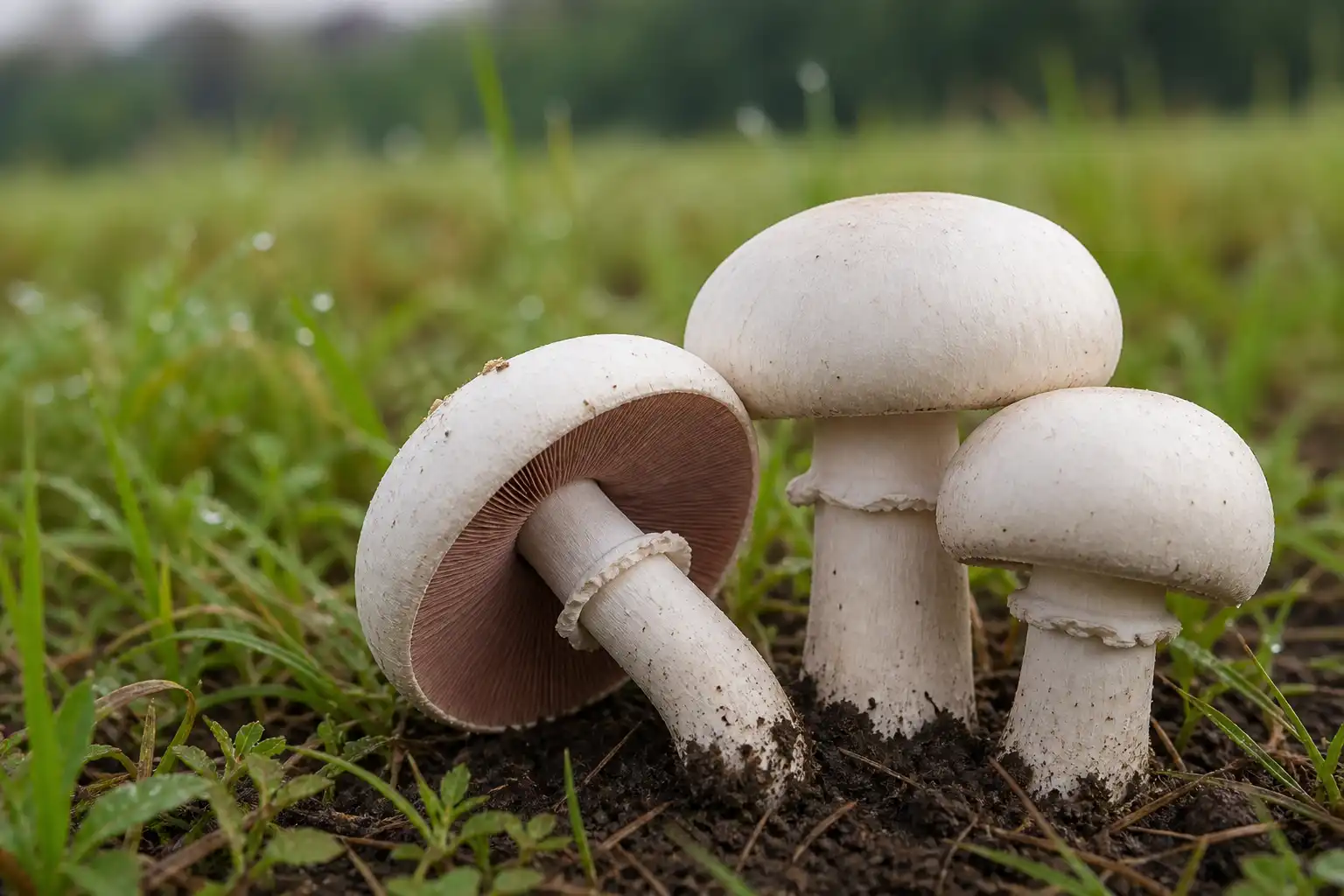
mushrooms
Field Mushroom (Agaricus campestris): Identification and Safety Guide
Learn how to document field mushroom features, distinguish key lookalikes, and use local expert confirmation before any wild-food decision.
Continue exploring
Browse more practical guides in Mushroom Encyclopedia or visit the mushroom encyclopedia.