Mushroom Encyclopedia
False Chanterelle (Hygrophoropsis aurantiaca): Identification Guide
Identify false chanterelle by its forked true gills, orange cap, conifer litter habitat, spore print, lookalikes, and conservative food-safety limits.
By MushroomScope Editorial Team · · Updated
Species context
Treat profiles as reference material
Species profiles summarize documented traits, taxonomy, and lookalikes, but natural variation can be substantial.
Use the safety checklist →Decision limit
A profile cannot authenticate a specimen
Do not eat a wild mushroom from an online match, single feature, or generated image.
Read the safety disclaimer →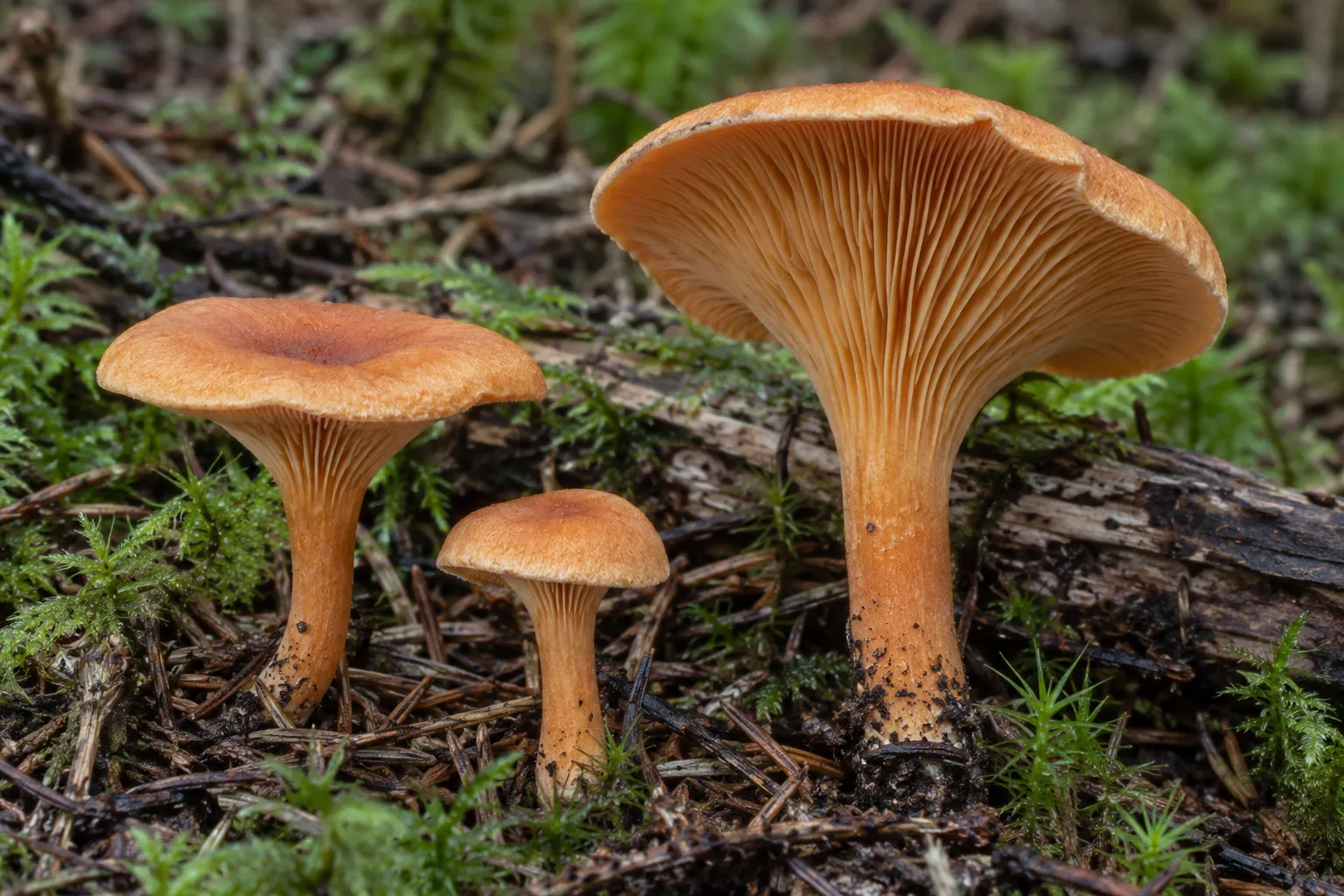
Quick facts
- Scientific name
- Hygrophoropsis aurantiaca
- Common names
- False chanterelle
- Taxonomy
- Hygrophoropsis · Hygrophoropsidaceae
- Edibility context
- Inedible: Food reports are inconsistent and gastrointestinal reactions are documented; this page does not clear wild mushrooms for consumption.
- Spore print
- White to pale cream.
- Toxicity context
- Low: Potential gastrointestinal upset and misidentification risk justify a conservative no-consumption boundary.
- Season
- July, August, September, October, November
- Growing difficulty
- Expert
- Regions
- Europe, North America, temperate Northern Hemisphere
Safety limit: These labels summarize documented context; they never authenticate a wild specimen. Cooking does not make a poisonous species safe.
What makes a false chanterelle identification defensible
False chanterelle is an orange, often funnel-shaped woodland mushroom whose name invites a dangerous shortcut: deciding that anything resembling a chanterelle must be either the prized edible or this one alternative. Real identification is a comparison among several regional orange fungi. Begin with the fertile surface, then test the cap texture, stem, flesh, actual substrate, growth pattern, season, and geography. A phone photograph that hides the underside cannot settle the question.
The most useful first observation is that Hygrophoropsis aurantiaca has true gills. They are thin blades with sharp edges, closely spaced, and commonly branch two or more times as they run toward the cap margin. They descend the stem, a condition called decurrent. True chanterelles instead have blunt folds: low, rounded ridges that are continuous with the cap flesh. Learn this difference with intact specimens and side lighting rather than judging a flat overhead photograph.
This page is an educational record, not food clearance. False chanterelle has conflicting culinary reports, including gastrointestinal reactions, while confusion with other orange mushrooms adds a larger uncertainty. If food is the intended use, unresolved anatomy means do not consume. Use the broader chanterelle species guide and chanterelle versus jack-o’-lantern comparison to build the appropriate comparison set.
Cap development, color, and surface texture
Young caps are typically convex with an inrolled margin. As they expand, the center flattens and then becomes depressed, sometimes producing a shallow funnel. Color ranges from yellow-orange through apricot to deeper orange-brown; the center may be darker than the margin. Rain can wash pigment, dry weather can dull it, and camera processing can exaggerate saturation. Record color beside a neutral reference and photograph both wet and dry individuals when possible.
Under magnification or strong side light, the cap surface can appear finely velvety, felted, or fibrillose rather than smoothly waxy. This texture matters because the common name alone does not. Measure several caps and note whether the margin stays regular or becomes wavy with age. Do not make size a verdict: small true chanterelles and large false chanterelles overlap, while drought and crowding alter proportions.
Cut one mature cap vertically through the center. False chanterelle flesh is usually relatively thin and may feel soft or cottony. Photograph the section immediately and again after ten minutes, noting any color change rather than assuming none. Keep the section paired with its intact specimen; mixed collections can contain more than one orange species within a few meters.
Map the forked true gills
Use the gill-types guide to distinguish a blade from a fold. A true gill projects from the underside as a thin plate with two faces and a narrow edge. On false chanterelle, these plates are crowded and strongly decurrent. They often divide repeatedly, producing a conspicuous branching network toward the margin. Some cross-connections may occur, but repeated forking is more informative than one isolated junction.
Make a simple gill map on a mature cap. Select four primary gills near the stem, follow each toward the margin, and count branch points. Photograph the same tracks with raking light. Then gently test whether a small gill segment separates from the cap flesh; do not destroy the whole voucher. Chanterelle folds are thicker, blunter, and integral with the flesh, although damaged photographs can make either structure look ambiguous.
Gill color is commonly brighter orange than the cap but varies with age and moisture. Record bruising or handling changes at fixed intervals. The observation is most valuable when attached to measurements, substrate, and a complete underside image. “Orange forked gills” alone is not enough because regional Hygrophoropsis, Omphalotus, and other genera need consideration.
Stem, flesh, and spore deposit
The stem is usually slender, central or slightly off-center, and colored like the cap or somewhat darker toward the base. It lacks a ring and volva. Curvature is common where fruit bodies push through litter. Excavate the base carefully enough to show whether it joins buried wood, compacted needles, or soil; a cut stem loses that ecological evidence. Photograph the base before cleaning it.
The interior may be solid when young and softer with age. Record texture without tasting. Odor is often described as mild or indistinct and varies among observers, so it should never override contradictory structure. If a regional key requests a spore print, place a mature cap on both black and white nonabsorbent surfaces, protect it from drafts, and label it with specimen number and time.
A white to pale cream deposit is expected. That result supports the record but is not a confirmation because true chanterelles and many hazardous white-spored mushrooms overlap. Microscopic spore dimensions, hyphal features, and current regional keys may be needed for species-level confidence. Preserve a dried voucher when the observation is scientifically important.
Habitat, substrate, and fruiting pattern
False chanterelle is generally treated as a decomposer associated with acidic conifer litter, woody debris, and very decayed wood. It may appear to grow from soil when the food source is buried. Before lifting a specimen, move loose needles carefully and photograph the precise interface. Note dominant trees, decay class, moisture, slope, and whether the mycelium is associated with a log fragment or a broad litter layer.
Fruiting can be solitary, scattered, or in groups. Unlike a dense jack-o’-lantern cluster emerging from a stump or buried root, false chanterelles often occupy litter and fragmented debris, but growth pattern cannot stand alone. Record the whole patch and then one complete specimen. Late-summer and autumn records are common across temperate regions, yet rainfall and elevation shift the calendar.
Return visits add unusually useful evidence. Photograph the same marked patch after three to five days without trampling it. Record whether new caps arise from the same debris, how margins expand, and how gills deepen in color. A developmental sequence prevents a single weathered specimen from defining the page’s conclusion.
Separate true chanterelles and jack-o’-lanterns
True Cantharellus species usually have firm flesh and blunt, vein-like folds rather than thin gill blades. Many have a more uniform stem-to-cap transition, and some have a fruity odor, but odor is subjective. Regional chanterelles vary in color, stature, and staining, so identify the local species concept rather than importing a photograph from another continent. The underside structure remains the best opening comparison, not a guarantee.
Omphalotus species are a higher-consequence comparison because jack-o’-lantern mushrooms cause gastrointestinal poisoning. They often grow in substantial clusters from wood or buried roots and have sharp true gills. Color, cluster size, and reported luminescence are unreliable shortcuts; glow may be weak or absent to the observer. Preserve the complete attachment and use the jack-o’-lantern species guide for the regional, anatomy, and response record when the genus is plausible.
Other orange-gilled fungi can also intrude, including regional Hygrophoropsis relatives and small funnel-shaped litter mushrooms. Compare cap surface, gill branching, spore characters, substrate, and microscopy requested by the current key. A responsible record states the unresolved alternatives instead of choosing the closest image match.
Food safety and poisoning response
Sources disagree about whether false chanterelle has ever been eaten without effect, but scattered tolerance does not establish safety. Gastrointestinal symptoms have been reported, and the identification problem itself is material. MushroomScope classifies this guide conservatively as inedible. Cooking, soaking, or discarding water cannot transform a mistaken identification into a safe meal.
Do not use an editorial image, artificial-intelligence suggestion, cap color, or one gill photograph to approve a collection. Children, pets, pregnant people, and people with medical conditions add no margin for experiments. If anyone develops vomiting, diarrhea, abdominal pain, confusion, weakness, jaundice, or breathing difficulty after eating a wild mushroom, contact local emergency services or a poison center promptly.
Keep uncooked mushrooms, trimmings, photographs, packaging, and meal details. Note the time eaten, amount, preparation, number of diners, and onset of symptoms. Do not induce vomiting unless a medical professional directs it. Online discussion can help document morphology but must not delay care.
A repeatable field record
Assign one number to the patch and a suffix to each collected specimen. Photograph habitat, growth pattern, cap, underside, stem base, and a lengthwise section with a scale. Measure three representative caps and stems rather than the largest one. Record gill branch counts, substrate interface, nearby trees, recent rain, and exact observation time.
Keep uncertain material away from food. If collection is legal, dry one representative specimen with its notes and consult a regional mycological society, herbarium, or qualified identifier. Record what evidence changed the determination. A conclusion such as “Hygrophoropsis cf. aurantiaca, microscopy pending” is more informative than a confident name unsupported by the regional key.
The best evidence set explains both why false chanterelle fits and why the consequential alternatives do not. That means true blade-like gills with repeated forking, compatible cap and stem texture, a matching litter or woody-debris habitat, appropriate geography, and explicit comparison with local Cantharellus and Omphalotus. Any serious contradiction should reopen the identification.
Orange gilled mushrooms in broadleaved litter are not automatically false chanterelles. The tawny funnel guide separates a thin wavy litter funnel from this species’ stronger conifer-debris context and repeatedly forked gills.
References
- Global Biodiversity Information Facility. Hygrophoropsis aurantiaca species record. Taxonomic and occurrence context.
- First Nature. Hygrophoropsis aurantiaca. Macroscopic field characters and habitat summary.
- Kuo M. Hygrophoropsis aurantiaca. Character-based North American description and comparisons.
- North American Mycological Association. Mushroom Poisoning Syndromes. Syndrome and response context.
- Poison Control. Wild mushroom warning. Immediate poison-response guidance.
Editorial review dated October 17, 2026. No named mycologist or clinician reviewed this page; taxonomy, regional lookalikes, and poison-response contacts should be rechecked at each substantive revision.
Source quality notes
MushroomScope cites sources that match the page scope, such as taxonomic databases, extension guidance, food-safety agencies, food-composition databases, and peer-reviewed or institutional health references. Sources support context and uncertainty; they do not turn an online page into specimen identification, medical advice, or a tested recipe record.
Frequently asked questions
How is false chanterelle different from a true chanterelle?
False chanterelle has thin, crowded, blade-like gills that fork repeatedly; true chanterelles have blunt folds or ridges. Habitat, texture, color, and regional characters must also agree.
Is false chanterelle poisonous?
Reports are inconsistent and gastrointestinal reactions have been associated with it. MushroomScope does not recommend using this page to approve a collection for food.
Where does false chanterelle grow?
It commonly fruits on acidic conifer litter, woody debris, and very decayed wood in temperate forests, often in groups.
What color is its spore print?
A white to pale cream deposit is expected, but many unrelated mushrooms share that color, so it cannot confirm identity.
Can a photograph confirm false chanterelle?
No. A defensible record needs the underside, complete stem, actual substrate, several developmental stages, region, and sometimes microscopy or expert review.
Related guides
mushrooms
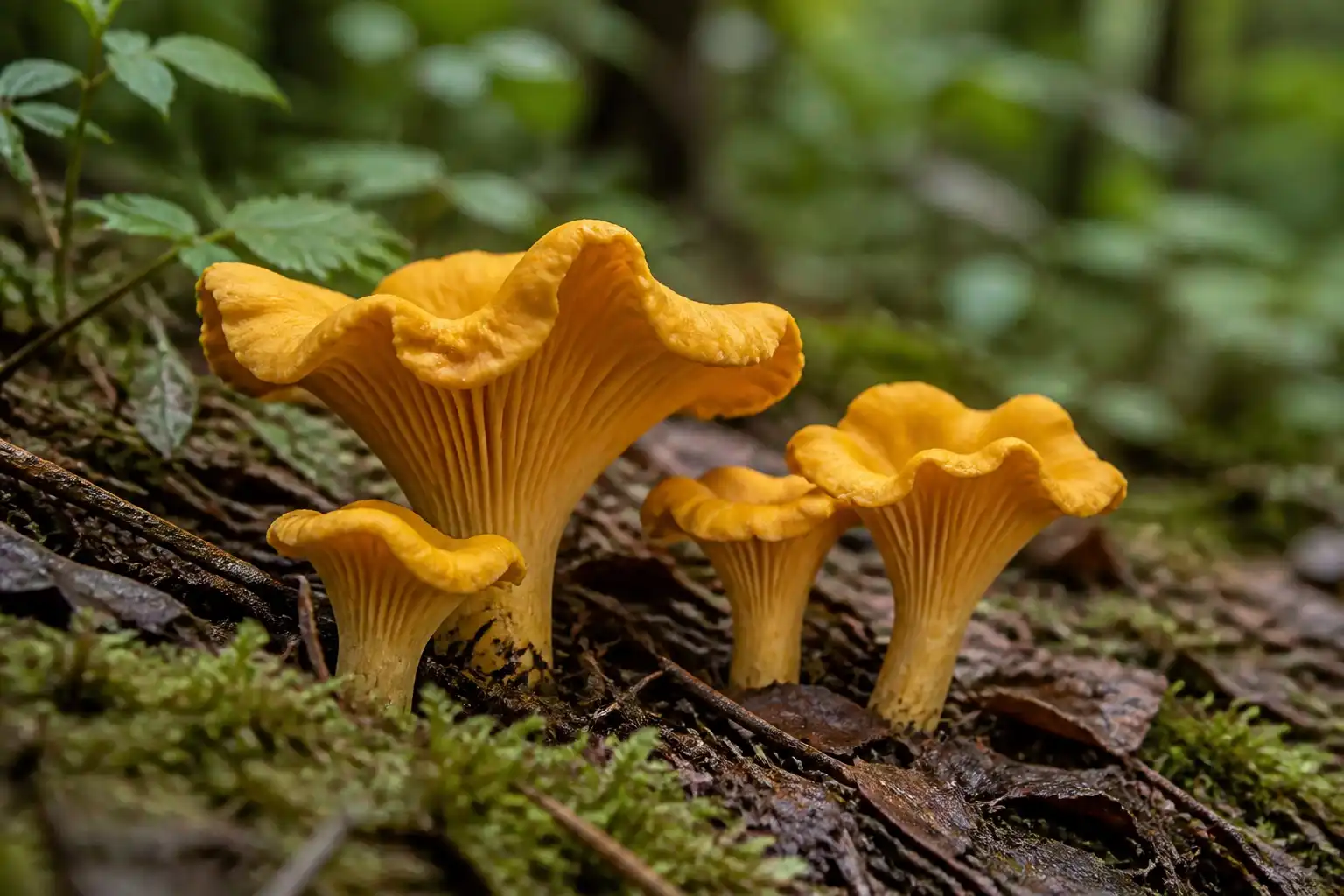
Cantharellus cibarius: Chanterelle Identification Guide
Learn chanterelle identification, false gills, habitat, season, poisonous lookalikes, edibility, nutrition, and why wild finds need local verification.
identification
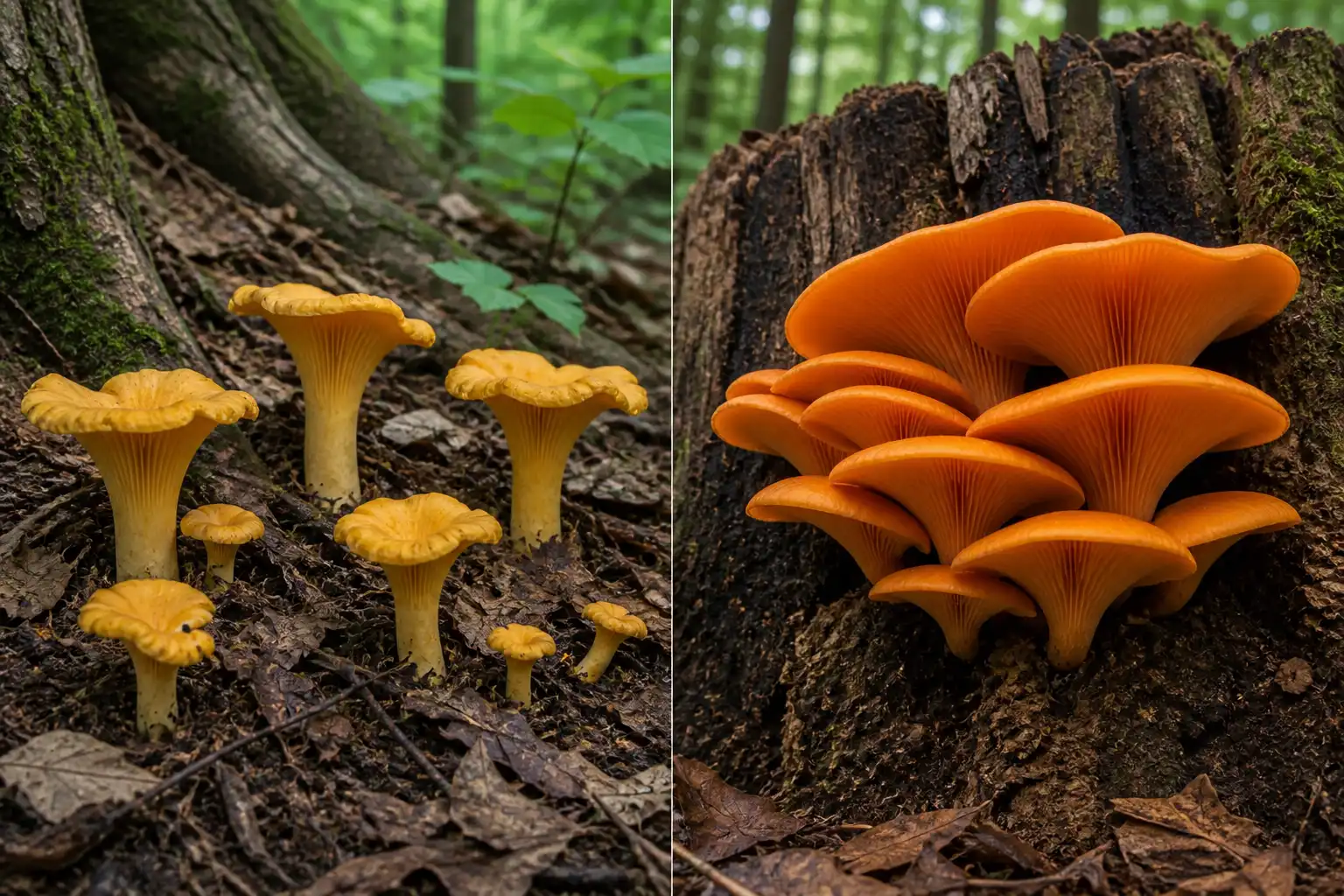
Chanterelle vs. Jack-o-Lantern Mushrooms: Key Differences
Compare ridge-like folds, growth pattern, color, interior tissue, and habitat without treating an online comparison as an edibility verdict.
identification
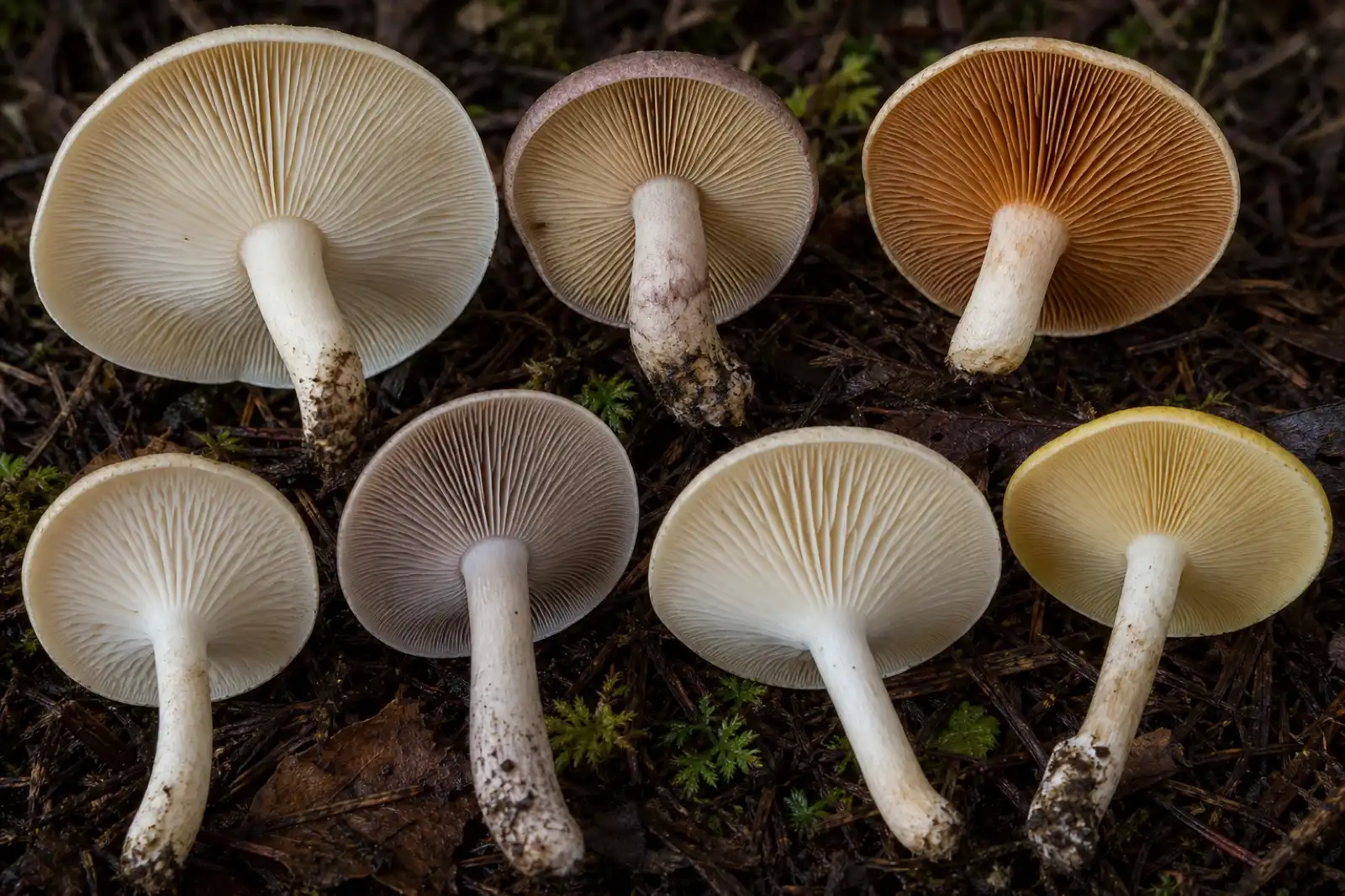
Mushroom Gill Types: Attachment, Spacing, and Color
Compare free, attached, notched, adnate, and decurrent mushroom gills while recording spacing, short gills, edge details, bruising, and color changes.
Continue exploring
Browse more practical guides in Mushroom Encyclopedia or visit the mushroom encyclopedia.