Mushroom Encyclopedia
Snow Fungus: Tremella fuciformis Cultivation and Market Guide
Understand snow fungus identity, gelatinous folds, fungal-host cultivation, dried-product handling, nutrition limits, and separation from wood and cloud ears.
By MushroomScope Editorial Team · · Updated
Species context
Treat profiles as reference material
Species profiles summarize documented traits, taxonomy, and lookalikes, but natural variation can be substantial.
Use the safety checklist →Decision limit
A profile cannot authenticate a specimen
Do not eat a wild mushroom from an online match, single feature, or generated image.
Read the safety disclaimer →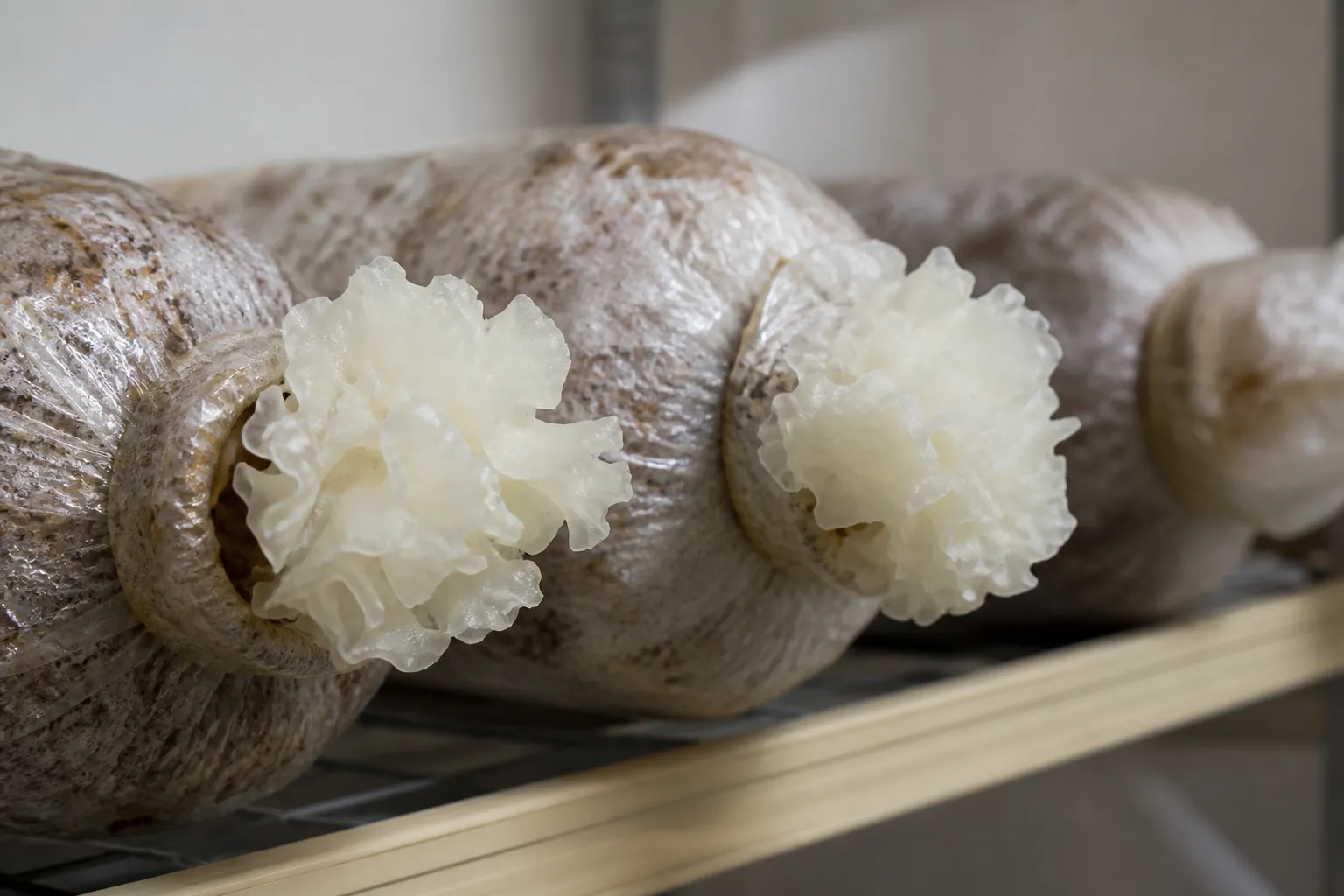
Quick facts
- Scientific name
- Tremella fuciformis
- Common names
- Snow fungus, Silver ear fungus, White jelly mushroom, White fungus
- Taxonomy
- Tremella · Tremellaceae
- Edibility context
- Conditional: Established commercial food use applies to correctly identified, traceable product handled and cooked safely, not to an unknown white jelly fungus.
- Spore print
- White to pale; microscopy and culture provenance are more informative than a conventional print.
- Toxicity context
- Low: Food status does not remove allergy, contamination, spoilage, adulteration, medication, or supplement-quality concerns.
- Season
- May, June, July, August
- Growing difficulty
- Expert
- Regions
- tropical and subtropical occurrence regions, cultivated internationally
Safety limit: These labels summarize documented context; they never authenticate a wild specimen. Cooking does not make a poisonous species safe.
Snow fungus is simultaneously a species, a cultivation system, a dried ingredient, and a marketing term. Confusion begins when evidence from one of those categories is silently applied to another. A white frilly fruit body does not prove a retail product’s identity, and a study of purified polysaccharides does not establish that dessert prevents disease.
This guide separates those layers. It covers Tremella fuciformis morphology and biology, the fungal associate used in production, dry-versus-rehydrated handling, matched nutrition comparisons, and the limits of supplement claims.
Recognize the cultivated fruit-body form
A market-quality fresh fruit body forms a compact rosette of thin, wavy, branching lobes. Tissue is white to translucent rather than opaque chalk white. The lobes are gelatinous and elastic, with crisp irregular edges rather than the broad brown ear shape of Auricularia.
Record rosette diameter, lobe thickness, translucency, basal attachment, and whether browning, sour odor, slime, or collapse suggests deterioration. Size and whiteness alone are production grades, not species tests.
Understand the dried product transformation
Drying shrinks the rosette into a lightweight, hard, yellow-white mass. Rehydration expands the lobes dramatically as water returns. Compare products by dry mass and prepared serving, not by the impressive increase in volume.
Natural color ranges from cream to pale yellow depending on strain, maturity, drying, and storage. Extreme whiteness is not automatic evidence of quality, while modest yellowing is not automatic evidence of unsafe processing. Use supplier documentation and sensory rejection cues together.
Keep wild identity separate from a package label
Wild pale jelly fungi require wood attachment, region, fungal-host context, microscopy, and sometimes molecular evidence. A field photograph cannot borrow confidence from a bag labeled “snow fungus.” Conversely, a market label is a traceability claim that should be evaluated through supplier, lot, origin, ingredient statement, and regulatory context.
Do not forage white gelatinous growths for a recipe. The commercial supply chain is the appropriate starting point for culinary use.
Explain the hidden fungal partner
T. fuciformis is mycoparasitic. Commercial fruiting commonly relies on a compatible wood-decaying fungal associate, historically discussed under names connected with Annulohypoxylon or related production cultures. The partner helps create conditions and nutrition that the Tremella culture uses.
This means a productive inoculum is not merely a pure white-mushroom culture expanded like oyster spawn. Producers must know the identity, vigor, ratio, and sequence of both biological components. Taxonomic names in older production papers should be retained with their date rather than silently modernized.
Treat culture provenance as a critical control
Maintain accession or supplier identifiers for both cultures. Record receipt date, transfer history, media, incubation temperature, morphology, contamination checks, and which working plates entered each batch. A mixed production culture still needs a defined provenance.
Unexpected color, odor, sectors, bacteria, mites, or molds require isolation and investigation. Do not assume every pale gelatinous fruit body proves that the intended Tremella survived the process.
Build the substrate on a dry-mass basis
Commercial formulas vary, but woody lignocellulosic material, water, container geometry, supplements, and heat treatment interact. Record each dry ingredient by mass, water added, final wet mass, bag dimensions, filter specification, and treatment cycle.
Generic “field capacity” language is not enough. Water held in a substrate competes with airspace; an overly wet mix can compress, cool unevenly, and favor bacteria. The substrate guide explains why formulas should be tied to species, process, and equipment.
Validate heat treatment rather than copying a time
Treatment depends on bag size, load arrangement, initial temperature, equipment, altitude, and target process. A timer started when the vessel is switched on does not document the coldest bag. Follow equipment manufacturer guidance and validated production procedures.
Pressure equipment can cause severe burns and mechanical injury. Do not improvise sealed vessels, defeat interlocks, or open a unit before pressure has safely returned to ambient.
Control inoculation as a clean operation
Separate dirty substrate preparation from cooled-bag inoculation. Clean surfaces, minimize traffic and drafts, sanitize gloved hands appropriately, and expose bags only as long as needed. Label every unit with batch, culture, substrate, and date using codes that remain legible after incubation.
The host and Tremella inoculation sequence can be strain- and method-specific. This guide does not invent a universal ratio. A grower should follow authenticated supplier instructions or a validated protocol and change one documented variable at a time.
Record colonization as observations, not color confidence
Track temperature at the bag, time to visible growth, distribution through substrate, metabolite accumulation, gas exchange, and abnormal sectors. White growth is not automatically healthy target mycelium. Compare against uninoculated controls and known-good batches.
Remove suspect units from shared airspace. Opening contamination indoors can distribute spores and allergens. The contamination guide provides an isolate-record-dispose workflow without encouraging home diagnosis by appearance alone.
Define fruiting endpoints per strain
Temperature, humidity, fresh air, light, opening geometry, and surface moisture interact. High ambient relative humidity does not guarantee an adequately hydrated substrate, and free water on delicate lobes can support quality defects. Record actual sensor placement and fruit-body response.
Harvest criteria should include rosette expansion, lobe thickness, color, firmness, damage, and planned market form. “Largest possible” is not a quality endpoint if tissue has begun to soften or discolor.
Separate fresh yield from biological efficiency
Fresh snow fungus contains substantial water. Report fresh harvest mass alongside starting dry substrate mass and moisture method. Compare batches only when trimming rules and harvest stage match. Dry product yield requires a documented drying endpoint and final water activity or moisture target appropriate to the process.
A high wet weight can reflect water rather than greater dry matter. Use the published yield and biological-efficiency workflow to define dry inputs, trim, saleable grade, flush window, and companion-culture convention before comparing batches.
Dry and package with traceability
Dry evenly using food-contact equipment and a validated endpoint. Thick rosette centers and crowded trays can retain moisture after edges feel brittle. Cool product in a protected low-humidity area before sealing so condensation does not return to the package.
Record dryer load, temperature profile, time, final mass, packaging lot, seal check, and storage conditions. Reject packages with moisture ingress, insects, mold, sour odor, or unexplained discoloration.
Rehydrate a verified product safely
Follow package instructions where available. Use potable cool water in a clean container, allow enough time for the center to soften, then inspect every fold. Discard the soaking water, trim hard substrate remnants, rinse as needed, and cook promptly.
Do not hold rehydrated fungus at room temperature for extended periods. Refrigerate if preparation is delayed. FDA produce guidance supports clean water, hands, tools, and refrigeration, but a manufacturer may set more specific instructions.
Audit a dried retail product before comparing expansion
Expansion ratios are meaningful only when the starting and ending conditions are fixed. Record package identity, lot, country of origin, scientific name as sold, initial dry mass, water volume and temperature, soak duration, drained interval, and final mass. A sample weighed while water is still trapped between folds will appear to “outperform” one drained longer.
Photograph the complete dry sample before soaking. Broken fragments and dense hard centers change apparent volume even when mass is identical. After hydration, separate retained hard substrate, damaged pieces, and foreign material rather than silently including them in edible yield. Report both rehydrated mass and the mass accepted for the recipe.
Color alone does not authenticate a product. Sulfur-like odor, unexpected bleaching, moisture inside the package, insects, mold, or a broken seal warrants rejection or supplier follow-up, not a home experiment to make the material usable. Keep the label and lot if a regulator, retailer, or manufacturer needs a traceable complaint.
For brand comparisons, test more than one package or lot and follow the same water, vessel, temperature, timing, agitation, drain, and scale procedure. Expansion can describe kitchen handling; it does not establish purity, nutrient density, polysaccharide concentration, medicinal potency, or species identity.
Use texture intentionally in cooking
Snow fungus is valued for springy, slippery, and lightly crisp texture rather than an intense mushroom aroma. Simmering changes the balance between crispness and softness. Recipe time should be tied to cut size, rehydration, dish, and observable texture, not a medicinal promise about released compounds.
Sweet soups, savory soups, and cold preparations have different food-safety workflows. A no-cook soak is not equivalent to a cooked recipe.
Compare nutrition on the same basis
Dry product numbers look concentrated because water has been removed. Rehydrated values are diluted by absorbed water. Compare per 100 grams dry with dry, or compare prepared serving with prepared serving. Keep label values attached to the specific brand and serving.
USDA FoodData Central can provide representative entries where available, but a database mean is not a laboratory analysis of every product. The nutrition guide explains fiber, protein, and serving-basis comparisons without making snow fungus a treatment.
Keep polysaccharide research in its evidence lane
Laboratory studies may characterize Tremella polysaccharides or test them in cells and animals. Those designs can investigate chemistry and mechanisms, but they do not establish that a food serving prevents disease in humans. Extraction, purification, dose, identity, comparator, and outcome all matter.
Human evidence must match the exact product and claim. “Contains a studied polysaccharide” is not equivalent to clinically effective, and a traditional-food history is not a randomized trial.
Audit supplement claims separately
A capsule or extract adds identity, concentration, contaminants, adulteration, dose, interactions, and manufacturing questions. Look for a complete ingredient list, scientific name, part or culture material, extraction details, lot number, and independent identity and contaminant testing.
FDA explains that supplements are regulated differently from drugs. A snow-fungus supplement should not replace diagnosis, prescribed treatment, vaccination, surgery, or evidence-based care. This article has editorial review only and no named clinician.
Distinguish snow fungus from cloud and wood ears
Commercial cloud and wood ears are generally Auricularia species with brown ear-, cup-, or sheet-like fruit bodies. Snow fungus is pale and frilly, and its production biology differs. Shared gelatinous texture does not make labels or nutrition values interchangeable.
Cloud-ear terminology varies across markets, while the published wood ear guide covers the separate Auricularia species and market-name boundary. Cross-links should describe comparison, not imply synonymy.
Build a publication-ready production record
- Verify both culture identities and archive provenance.
- Record substrate on a dry-mass and water basis.
- Validate heat treatment for the actual load.
- Track inoculation sequence, ratio, and clean-work conditions.
- Log colonization observations and rejected units.
- Record fruiting environment at sensor locations.
- Define harvest, trimming, yield, drying, and packaging endpoints.
- Retain batch samples and correction records where appropriate.
This system makes the guide useful without presenting a false universal recipe.
Evidence and image boundaries
GBIF and NCBI support taxonomic checkpoints. USDA supports food-composition method discipline, while FDA sources support produce handling and supplement-regulation boundaries. A 2020 transformation study documents the established dependence of fruit-body formation on the companion fungus Annulohypoxylon stygium in natural and conventional artificial cultivation. A 2026 study reports an important narrower exception: isolated primordia were maintained and differentiated without that companion under the study’s tissue-culture conditions. That result does not turn ordinary spawn or home cultivation into a partner-free universal method.
The cover is original AI editorial cultivation context, checked for white translucent frilly rosettes, separate bag openings, plausible substrate, clean but non-clinical setting, clarity, and no readable text or watermark. It is not a tested batch photograph. No named mycologist, grower, food scientist, dietitian, or clinician reviewed this draft.
Frequently asked production questions
Is a pure Tremella plate enough to fruit?
Not ordinarily in established commercial biology. A compatible fungal associate and validated production system are central to reliable fruiting.
Why does dried product turn yellowish?
Strain, maturity, drying heat, oxidation, light, and storage can influence color. Extreme change plus odor, moisture, or mold warrants rejection.
Can soaking water be used as a health drink?
This draft does not recommend it. Soaking water can contain debris and microbes; discard it unless a validated recipe and product instruction explicitly state otherwise.
Is more expansion evidence of higher quality?
Expansion reflects structure and water uptake but does not alone establish identity, cleanliness, nutrient content, or sensory quality.
Can snow fungus treat dry skin or chronic disease?
No such conclusion follows from this guide. Food, cosmetic ingredients, purified compounds, and clinical treatments require separate product-specific evidence.
References
- Global Biodiversity Information Facility. Tremella fuciformis species record. Taxonomic backbone and occurrence context.
- National Center for Biotechnology Information. NCBI Taxonomy Browser: Tremella fuciformis. Independent lineage and nomenclature checkpoint.
- U.S. Department of Agriculture. FoodData Central. Food-composition reference used with dry-versus-rehydrated and serving-basis limits.
- U.S. Food and Drug Administration. Selecting and Serving Produce Safely. General washing, handling, and refrigeration guidance.
- U.S. Food and Drug Administration. Dietary Supplements. Regulatory boundary between supplement products and approved drugs.
- Ma X, et al. Efficient Transformation of the White Jelly Mushroom Tremella fuciformis and Its Companion Fungus Annulohypoxylon stygium. International Journal of Medicinal Mushrooms. 2020. Companion-fungus dependence in natural and conventional artificial fruiting, plus authenticated-strain research context.
- Sun Y, Pan S, Zhou J. Tissue cultivation conditions and transcriptome analysis of Tremella fuciformis primordia for industrial production purposes. World Journal of Microbiology and Biotechnology. 2026. Primordium tissue-culture exception and its defined experimental conditions.
Publication-readiness review: September 3, 2026. Keep draft: true until the actual publication run updates publishDate and repeats live-source, image, duplicate, build, and production checks. No named mycologist, grower, food scientist, dietitian, or clinician reviewed this article.
Source quality notes
MushroomScope cites sources that match the page scope, such as taxonomic databases, extension guidance, food-safety agencies, food-composition databases, and peer-reviewed or institutional health references. Sources support context and uncertainty; they do not turn an online page into specimen identification, medical advice, or a tested recipe record.
Frequently asked questions
Is snow fungus the same as wood ear fungus?
No. Snow fungus forms pale frilly gelatinous rosettes and has a distinct biology, while commercial wood and cloud ears are usually brown Auricularia species.
Why does snow fungus cultivation involve another fungus?
Tremella fuciformis is mycoparasitic and commercial fruiting commonly depends on an appropriate fungal associate, so culture identity and inoculation sequence matter.
How should dried snow fungus be rehydrated?
Use potable cool water, discard dirty soaking water, trim hard substrate remnants, cook promptly, and refrigerate rather than holding rehydrated product at room temperature.
Does snow fungus have proven medical benefits?
Food use and laboratory research do not establish that a serving or supplement prevents or treats disease; product identity, extraction, dose, and human evidence must match the claim.
Can a white jelly fungus be identified as Tremella fuciformis from a photo?
No. Field material requires substrate, host-fungus context, region, microscopic characters, developmental stage, and comparison with other pale gelatinous fungi.
Related guides
mushrooms
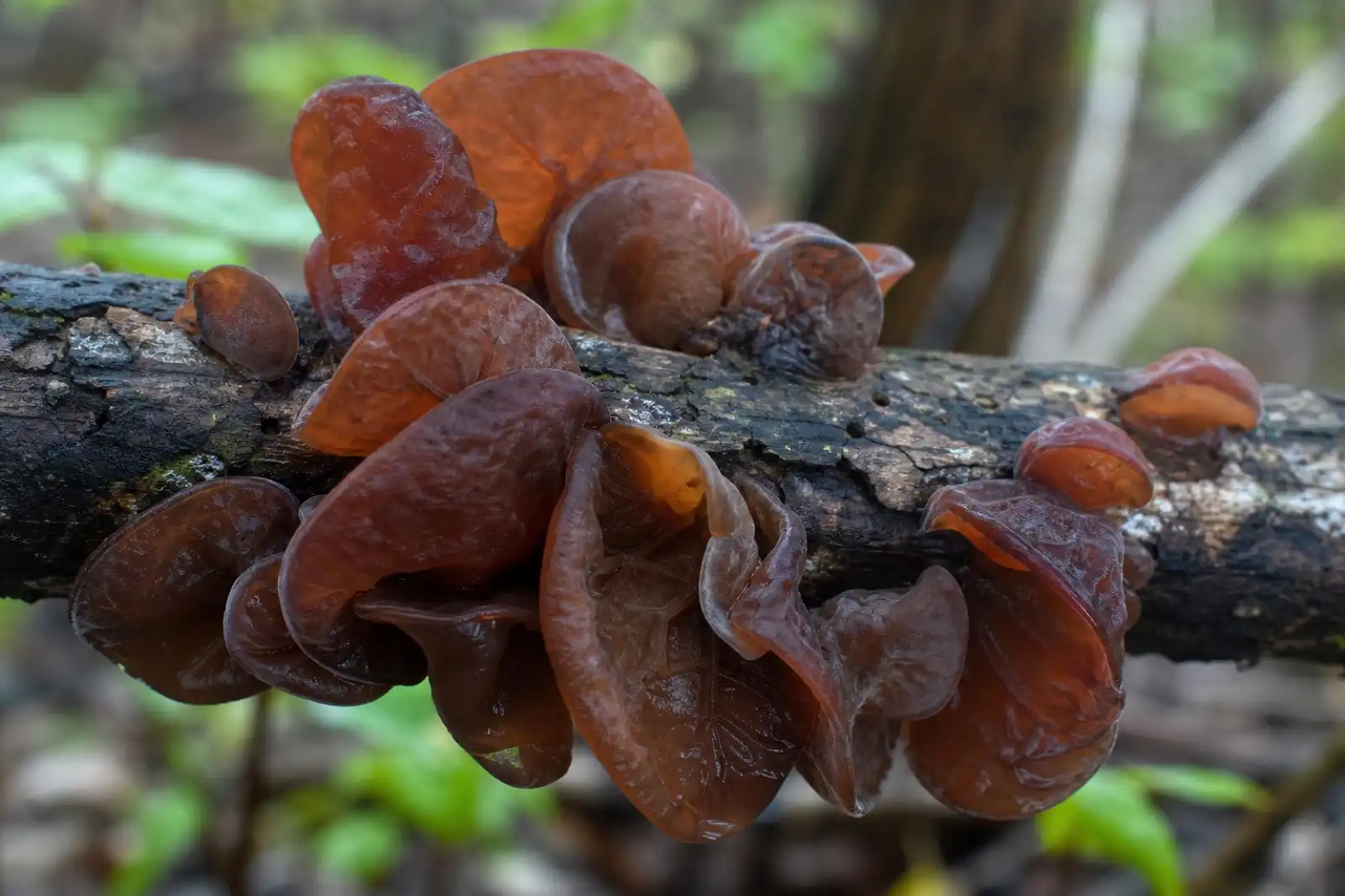
Auricularia heimuer: Wood Ear Mushroom Species Guide
A practical guide to Auricularia heimuer identification, wood-decay ecology, log and bag cultivation, nutrition, rehydration safety, and FAQs.
growing
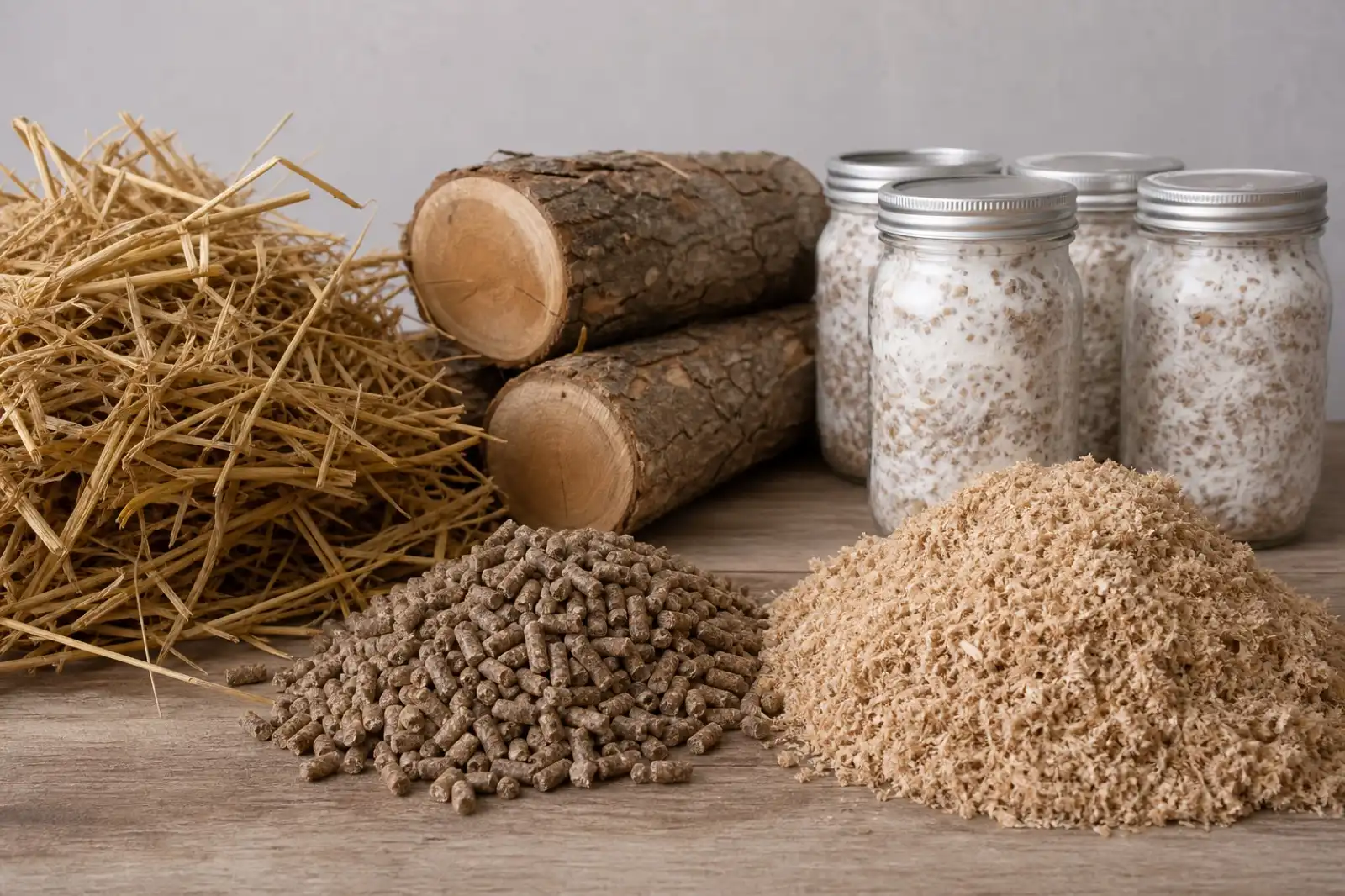
Mushroom Substrate Guide: Match Species to Method
Choose a mushroom-growing substrate by matching a labeled culture to a documented production method, site, and food-safety boundary.
growing
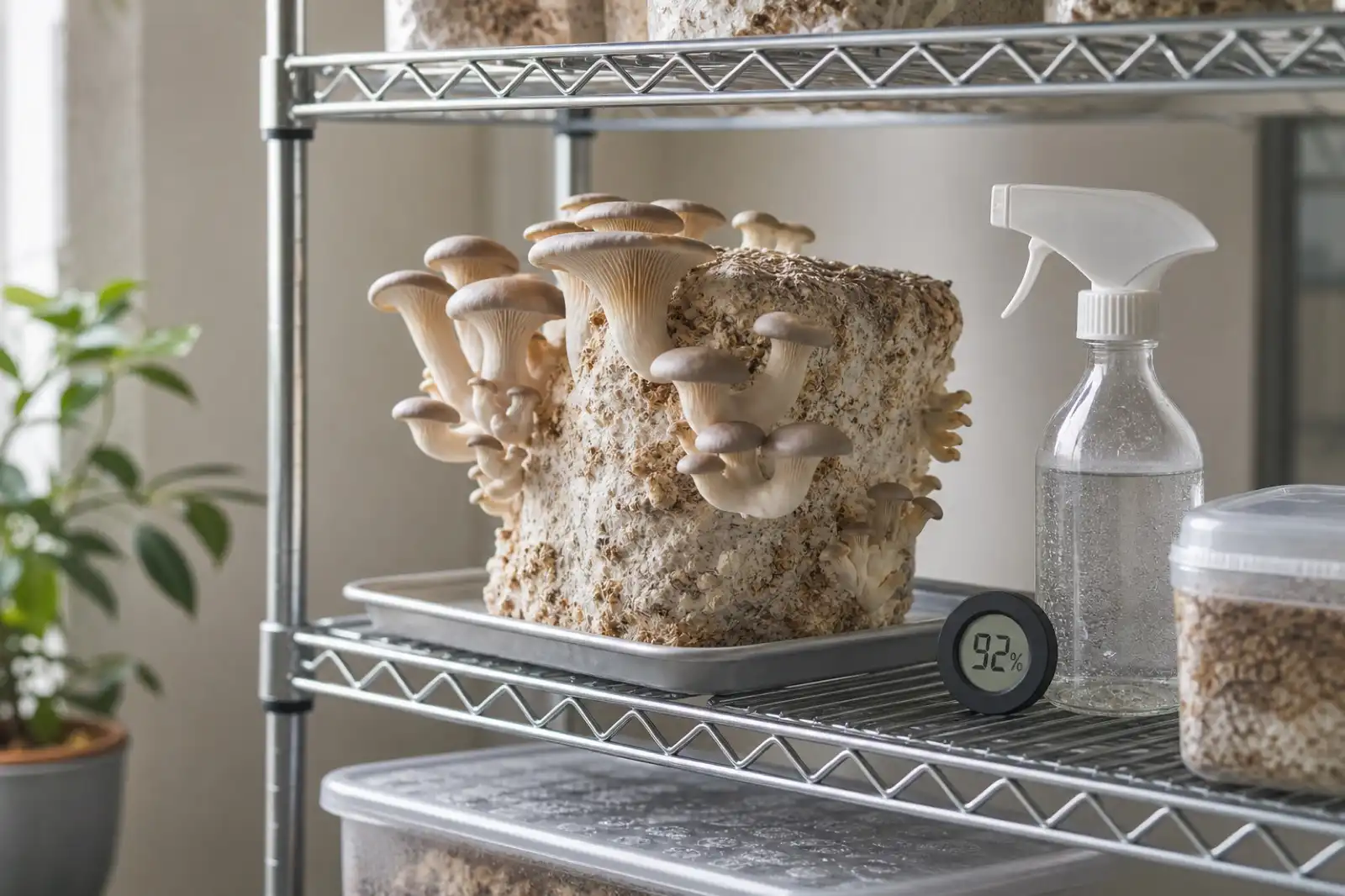
Beginner's Guide to Growing Mushrooms at Home
Choose a low-complexity first mushroom grow, set a written decision boundary, and keep food safety separate from yield troubleshooting.
Continue exploring
Browse more practical guides in Mushroom Encyclopedia or visit the mushroom encyclopedia.