Mushroom Encyclopedia
Common Bonnet Mushroom: Wood, Form, and Identification Limits
Identify the Common bonnet by its wood attachment, cap striations, gill development, clustered habit, microscopy limits, ecology, and close lookalikes.
By MushroomScope Editorial Team · · Updated
Species context
Treat profiles as reference material
Species profiles summarize documented traits, taxonomy, and lookalikes, but natural variation can be substantial.
Use the safety checklist →Decision limit
A profile cannot authenticate a specimen
Do not eat a wild mushroom from an online match, single feature, or generated image.
Read the safety disclaimer →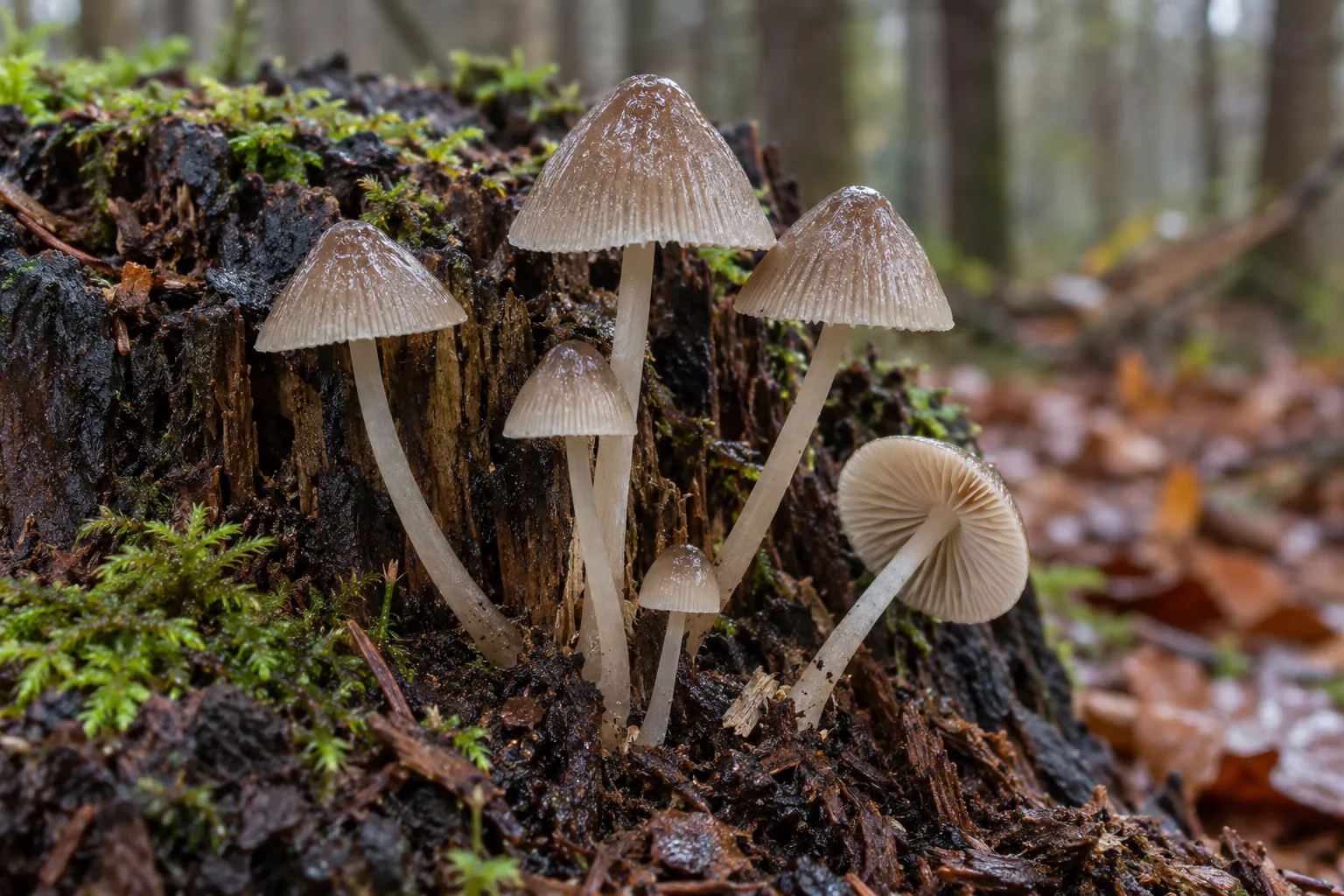
Quick facts
- Scientific name
- Mycena galericulata
- (Scop.) Gray
- Common names
- Common bonnet, Bonnet mycena, Common mycena
- Taxonomy
- Mycena · Mycenaceae
- Edibility context
- Inedible: Not recommended for food: separation from similar small mushrooms can require microscopy, and remote identification cannot establish safety.
- Spore print
- White; deposit color overlaps broadly among bonnet mushrooms.
- Toxicity context
- Unknown: Do not infer safety from the absence of a famous poisoning record. Small Mycena are not appropriate targets for photo-based food decisions.
- Season
- August, September, October, November
- Growing difficulty
- Expert
- Regions
- Europe, North America, temperate regions with confirmed records
Safety limit: These labels summarize documented context; they never authenticate a wild specimen. Cooking does not make a poisonous species safe.
Start with the wood, not the cap color
The Common bonnet, Mycena galericulata, is a small wood-decomposing mushroom whose ordinary gray-brown palette hides a useful ecological story. Its caps are often bell-shaped when young, later becoming broadly conical or convex, and damp margins can be lined by the gills showing through the thin cap. Those traits make a sensible starting hypothesis. They do not make a secure identification. Many bonnet mushrooms occupy the same color range, change markedly as they dry, and fruit from wood that may be buried beneath leaf litter.
A good record begins before a fruit body is removed. Photograph the entire group and its attachment. Show whether stems share a crevice in one stump, emerge from separate points on a log, or appear terrestrial above buried roots. Include a scale, then photograph one intact cap, the gills, the full stem and its base. The ecological evidence should remain connected to the specimen evidence; a loose mushroom placed on a nearby log proves nothing about its substrate.
The current GBIF record accepts Mycena galericulata in Mycenaceae. Specialist Mycena resources also emphasize that species separation can depend on microscopic structures. This page therefore explains a field documentation process, not a shortcut around a regional key or expert examination.
Read a developmental series instead of one mushroom
Young caps are commonly tall and bell-like, with a surface ranging from gray-brown to brown. As they expand, the profile becomes broader and may retain a low central umbo. Water content matters: a wet cap can appear darker and more translucent, while a drying cap becomes paler and may lose obvious marginal lines. Record color in open shade with a neutral reference rather than under warm artificial light.
Choose three fruit bodies at different stages and measure cap width, cap height and stem length. Note how far the radial striations extend from the margin toward the center. A pattern repeated across several fresh caps is more useful than an isolated weathered specimen. Do not treat surface gloss after rain as a permanent character, and do not confuse adhered wood fibers or soil with cap ornament.
The gills begin pale and are attached to the stem; some descriptions use an attached profile with a short descending tooth. Mature gills can acquire a pinkish or flesh-toned cast. That change is easy to overstate in photographs because brown leaf litter and warm white balance reflect into pale tissue. Compare a young and mature cap in the same light, and obtain a spore deposit if the collection is being studied. A white deposit supports placement among several pale-spored possibilities but does not name the species.
Document the stem and attachment precisely
The stem is proportionally long, slender and tougher than the thin cap. Its color may run from pale gray to brownish, often darkening toward the base. Record whether it is hollow, whether the surface is smooth or fibrous, and whether fine basal hairs or attached wood particles are present. Avoid trimming the base: the point of attachment can distinguish a mushroom truly growing from exposed wood from one merely leaning against it.
For a stump cluster, sketch a simple plan. Mark each stem base and the visible grain or bark. For apparently terrestrial fruit bodies, gently trace only enough litter to establish whether a buried branch lies below; do not excavate living roots unnecessarily. This small map is more reproducible than a general note such as “in woods.” It also prevents a common error in which nearby standing trees are named as the substrate even though the fungus is decomposing an unrelated fallen branch.
Odor is sometimes recorded in bonnet identification, but it is subjective and must never be tasted as a substitute for analysis. If an odor is documented, use a fresh, uncrushed specimen, state the observer and conditions, and use comparisons such as farinaceous only as notes for a key. Absence of a perceived odor is weak evidence.
Ecology: a decomposer operating inside coarse wood
Mycena galericulata is associated with decaying wood, particularly broadleaf stumps, logs and buried woody material. The visible mushrooms are short-lived reproductive structures. Most of the organism persists as mycelium within the substrate, contributing to the breakdown and recycling of woody material. A flush therefore records a moisture and temperature opportunity at one moment, not the full extent of the colony.
Host identification should be evidence-based. Bark pattern, cut end grain, attached leaves and a known standing trunk can support a host note. A leaf resting on an old stump cannot. Record the decay stage as well: intact hard wood, softened sapwood, loose fibers and heavily decomposed material represent different microhabitats. A sequence of observations after rainfall can show whether fruiting recurs from the same cracks and whether cap expansion tracks wood moisture.
Range labels require similar restraint. Database points can include old names, uncertain coordinates and records made under different species concepts. Use a local checklist or herbarium resource to determine whether the name is established in the region. A photograph from another continent should not be forced into a familiar European name without taxonomic support.
Separate the closest gray-brown bonnet candidates
The lilac bonnet guide covers a pink-lilac litter species with translucent cap striations and an often radish-like odor. Compare substrate, measured proportions, gill attachment, and microscopy rather than transferring a name from color alone.
The practical lookalike set is not every small gray mushroom. Begin with species sharing three conditions: bonnet-like form, pale spores and a wood substrate. Mycena inclinata can form conspicuous tufts on stumps and may have contrasting stem colors. Mycena maculata can develop reddish-brown spots or stains. Mycena polygramma is associated with a strongly lined or fibrous stem. None of these capsule summaries is a verdict; age, rain and regional variation can obscure the named feature.
Build a comparison table for the actual collection. Use rows for cluster density, precise substrate, cap profile at three ages, wet and dry color, gill attachment, gill color change, stem surface, base, odor, spore deposit and measured microscopic features. Leave cells unknown rather than filling them from expectation. This makes the missing evidence visible and reduces the temptation to choose the closest photograph.
Other small wood-inhabiting genera may also enter the comparison. A brown spore deposit, different gill attachment or a ring zone can redirect the key away from Mycena. The gill-types guide explains how to photograph attachment without tearing it, while the stem-features guide provides a record format for the complete base.
When microscopy changes the answer
Microscopy is not an ornamental final step for difficult bonnets. It can test whether field observations fit the species concept. A documented examination records spore dimensions from multiple mature spores, shape, amyloid reaction when the key requires it, basidia, cheilocystidia, pleurocystidia and cap-surface structures. Measurements should include mounting medium, magnification, calibration and sample count.
Use a current regional key because the character combination matters more than any one measurement. A mean without the observed range hides variation, and a single unusually large spore can mislead. Link microscope slides and photographs to the same collection number used for the habitat and fruit-body series. If the microscopic result conflicts with the field name, preserve the conflict and revise the identification rather than discarding the inconvenient observation.
For observations intended for a public database or herbarium, dry representative material promptly and retain field notes. A voucher allows later workers to reassess the name when genus concepts change. Without preserved material, a confident species label may be impossible to audit.
Safety and food boundary
Common bonnet is not presented here as a food mushroom. Small Mycena provide little culinary value, species-level identification can be difficult, and chemistry is not sufficiently predictable to turn an image match into a safety judgment. Never use cap color, wood growth or a white spore print to authorize eating a collection.
If an unknown mushroom has been swallowed and symptoms occur, contact the relevant poison center or emergency medical service promptly. Preserve uncooked material, cooked leftovers, photographs and timing information. Do not wait for an internet identification, induce vomiting unless directed, or assume that cooking neutralized an unknown toxin. This necessary emergency boundary is intentionally repeated across safety-oriented field pages.
A reproducible field record
Use a specimen code and record date, coordinates at an appropriate privacy precision, habitat, substrate evidence, decay stage, weather and group pattern. Photograph the undisturbed cluster, cap profiles, gills, full stems and attachment. Measure at least three mature and immature specimens. If collecting is legal and justified, obtain a spore deposit and retain a voucher for microscopy.
The habitat-identification guide helps distinguish direct substrate evidence from nearby vegetation. For another wood-associated pale-gilled mushroom with a different body plan, compare the Deer mushroom guide. The useful outcome is not always a species name. “Gray-brown Mycena on decayed broadleaf wood, microscopy pending” can be a more accurate and valuable record than a forced label.
Before leaving the site, check that the photograph set shows one unquestioned point of wood attachment, one undamaged gill-to-stem junction, and at least two cap ages. Record what remains unknown. That final uncertainty list prevents a later observer from treating an omitted character as if it had been checked and found absent.
For a denser oak-stump fruiting pattern, compare the clustered bonnet guide, which separates shared-base architecture, stem color gradient, odor, and microscopy from this broader common-bonnet concept.
Compare stem flexure without turning fragility into a verdict
Photograph three intact stems beside a scale, then apply the same gentle lateral displacement at a marked midpoint and record whether each bends, splits, or snaps. Section only after exterior documentation. Note wall thickness, hollowing, surface polish, basal hairs, and the cap stage of the same specimen.
The small trial makes “tough” or “fragile” reviewable, but hydration and age strongly affect the result. It cannot identify a bonnet alone. Discard any measurement made after a stem dried in a container, and do not combine values from anonymous caps and stems.
Map gill-edge continuity across development
Use diffuse side light to photograph gill faces and edges on young, middle, and mature caps. Mark discoloration, tears, short-gill tiers, cross-veins, and the exact stem junction on duplicate images while preserving the originals. If a darker edge is proposed, follow it across several adjacent gills rather than selecting one shadowed plate.
Pair the series with moisture readings from the upper litter, the stem-base layer, and nearby bare soil. This can explain why a patch fruits in one microsite after rain without inventing a tree partnership. The result remains a local ecological observation requiring spores, microscopy, substrate evidence, and a current regional Mycena key.
For a reddish hardwood bonnet with a different diagnostic pathway, compare the bleeding fairy helmet guide, which records wine-red latex without treating the reaction as a stand-alone identification.
When a gray bonnet has conspicuous ribs running along the stem rather than merely translucent lines on the cap, compare the grooved bonnet field guide. Keep the wood, gills, and microscopic packet attached to the comparison; stem lines alone do not settle the name.
References
The sources listed in the page record support accepted taxonomy, specialist genus characters, regional comparison practice, and conservative poisoning response. They do not authenticate a reader’s specimen. A confident record should be checked against a current regional key and, when required, voucher-linked microscopy.
Source quality notes
MushroomScope cites sources that match the page scope, such as taxonomic databases, extension guidance, food-safety agencies, food-composition databases, and peer-reviewed or institutional health references. Sources support context and uncertainty; they do not turn an online page into specimen identification, medical advice, or a tested recipe record.
Frequently asked questions
Does a gray-brown mushroom on a stump identify the Common bonnet?
No. Record several developmental stages, cap striations, gill attachment and color change, stem base, exact wood attachment, spore deposit, region, and microscopic characters where needed. Many small wood-inhabiting mushrooms overlap.
Why can Common bonnet gills look pinkish?
The pale gills may acquire a pinkish cast as they mature, but lighting, reflected color, age, and spore development can alter appearance. Pinkish gills are supporting context, not a stand-alone test.
What wood supports Mycena galericulata?
Records commonly associate it with decaying broadleaf wood, including stumps, logs, buried wood, and coarse woody debris. Host and decay stage should be documented rather than inferred from nearby trees.
Is the Common bonnet edible?
This guide does not recommend it as food. Small Mycena can be difficult to separate, are insubstantial, and may have uncertain chemistry; a webpage cannot clear a wild specimen for consumption.
When is microscopy useful for a bonnet mushroom?
Microscopy becomes important when similar gray-brown Mycena share the same wood habitat and field proportions. Spores, basidia, cystidia, and cap-surface structures should be examined with an appropriate regional key.
Related guides
identification
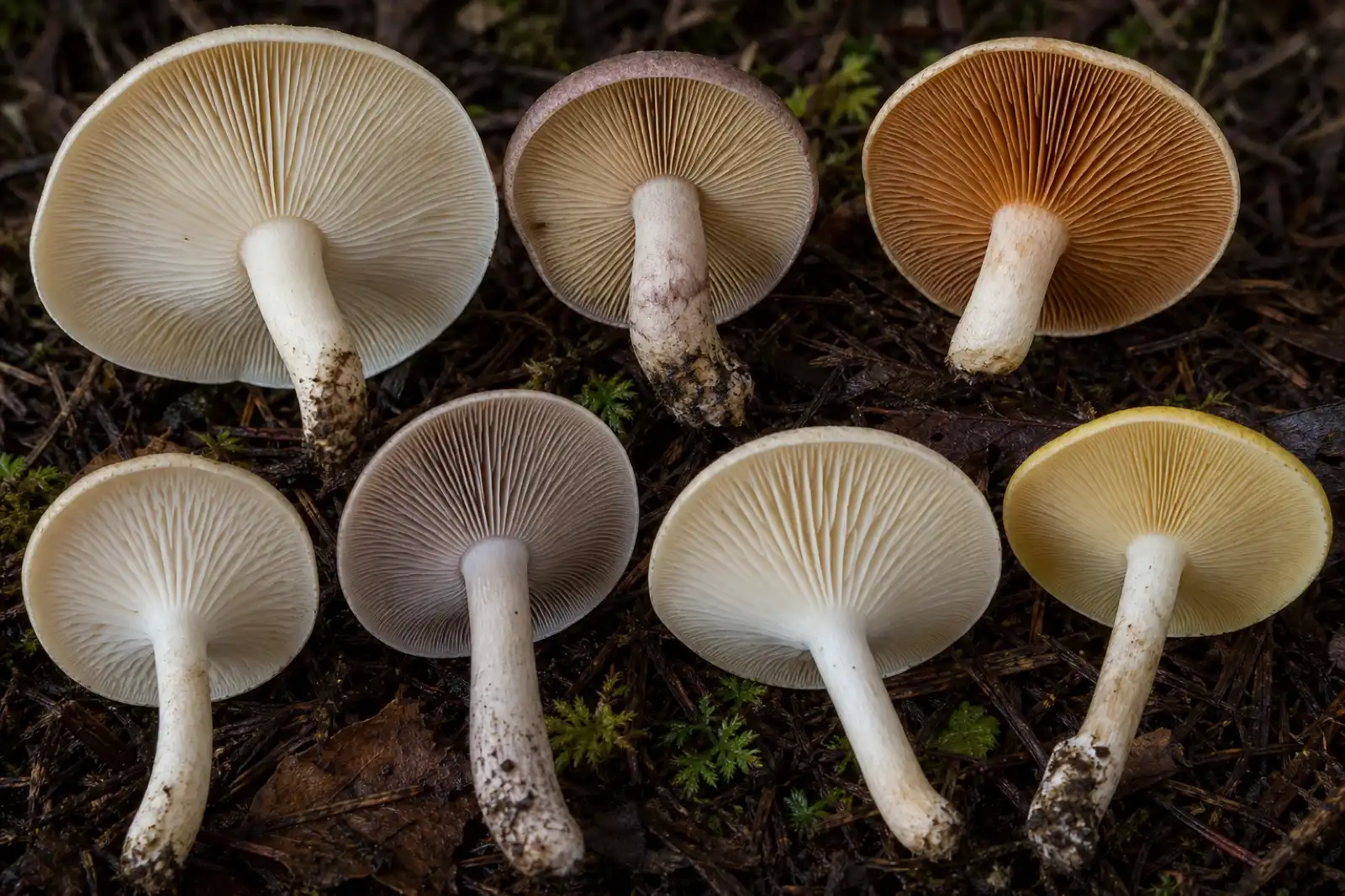
Mushroom Gill Types: Attachment, Spacing, and Color
Compare free, attached, notched, adnate, and decurrent mushroom gills while recording spacing, short gills, edge details, bruising, and color changes.
identification
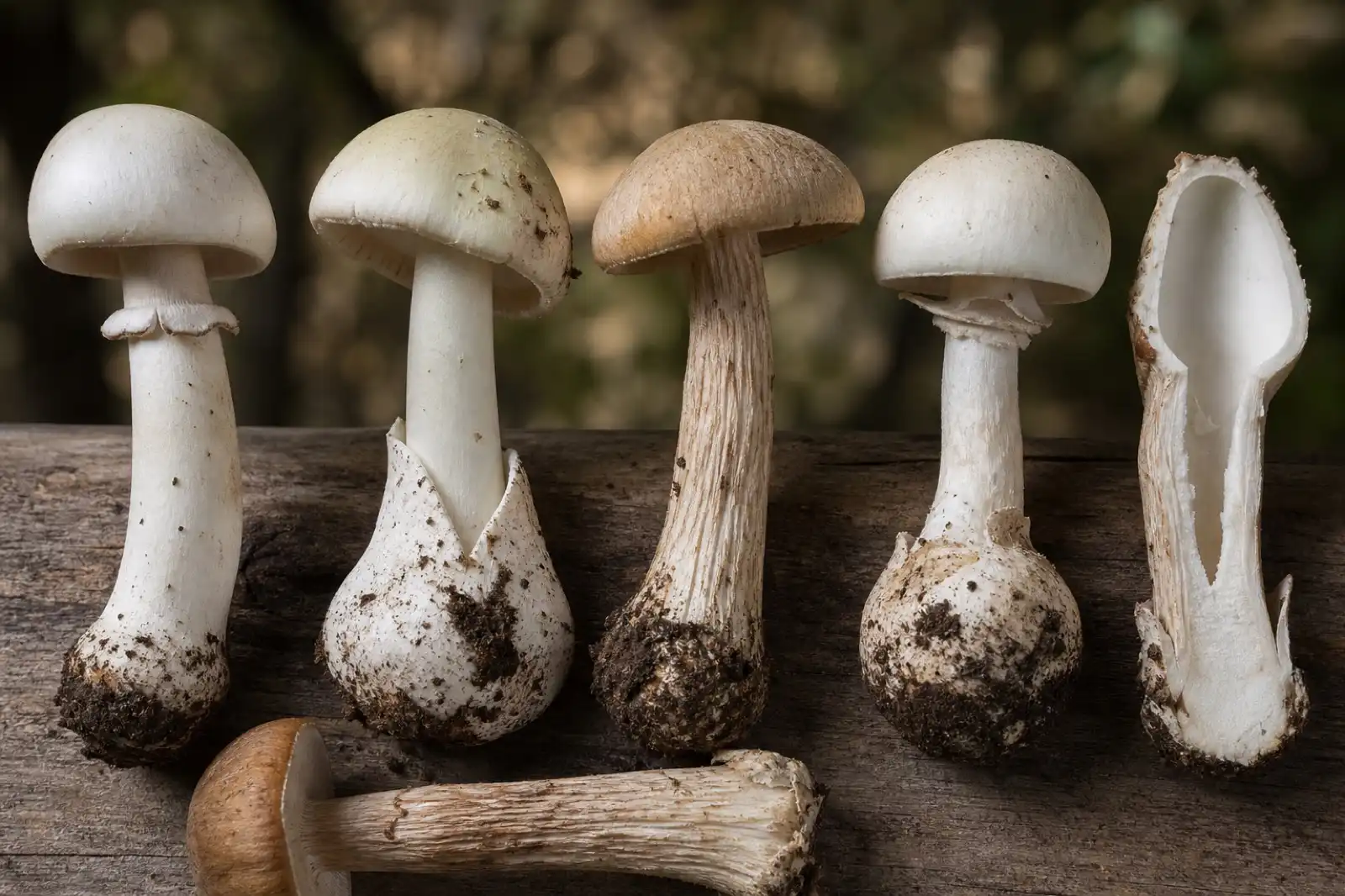
Mushroom Stem Features: Rings, Volvas, Texture, and Base
Document mushroom stem shape, attachment, rings, volvas, buried bases, internal structure, bruising, and texture without using one feature to decide edibility.
identification
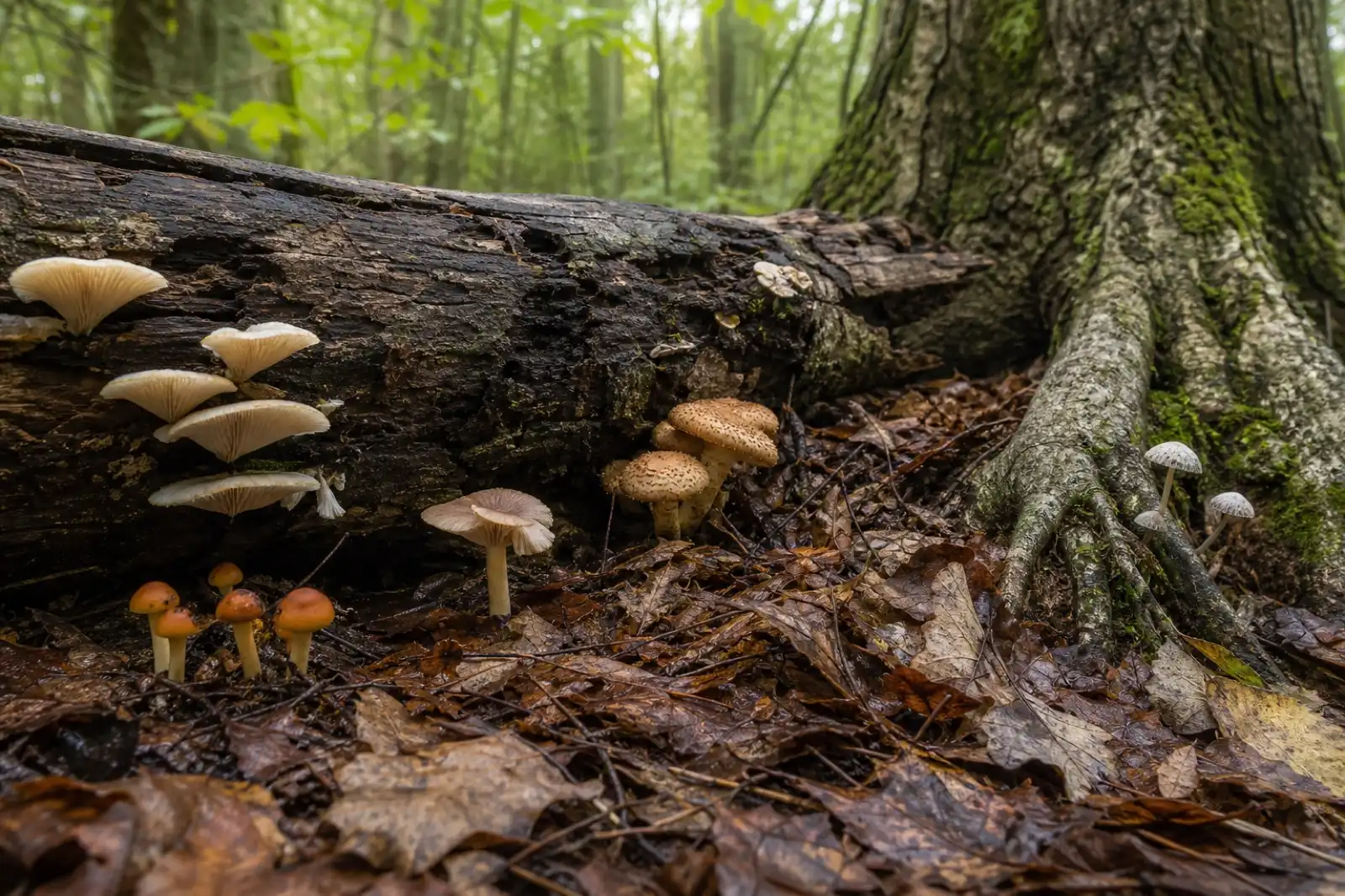
Using Habitat to Identify Mushrooms
Record substrate, associated plants, soil, wood type, moisture, elevation, and fruiting pattern as identification evidence.
Continue exploring
Browse more practical guides in Mushroom Encyclopedia or visit the mushroom encyclopedia.