Mushroom Encyclopedia
Purple Brittlegill: Color Variation, Hosts, and Identification
Study Purple brittlegill through cap color zones, brittle gills and stem, host evidence, spore characters, lookalikes, safety limits, and regional taxonomy.
By MushroomScope Editorial Team · · Updated
Species context
Treat profiles as reference material
Species profiles summarize documented traits, taxonomy, and lookalikes, but natural variation can be substantial.
Use the safety checklist →Decision limit
A profile cannot authenticate a specimen
Do not eat a wild mushroom from an online match, single feature, or generated image.
Read the safety disclaimer →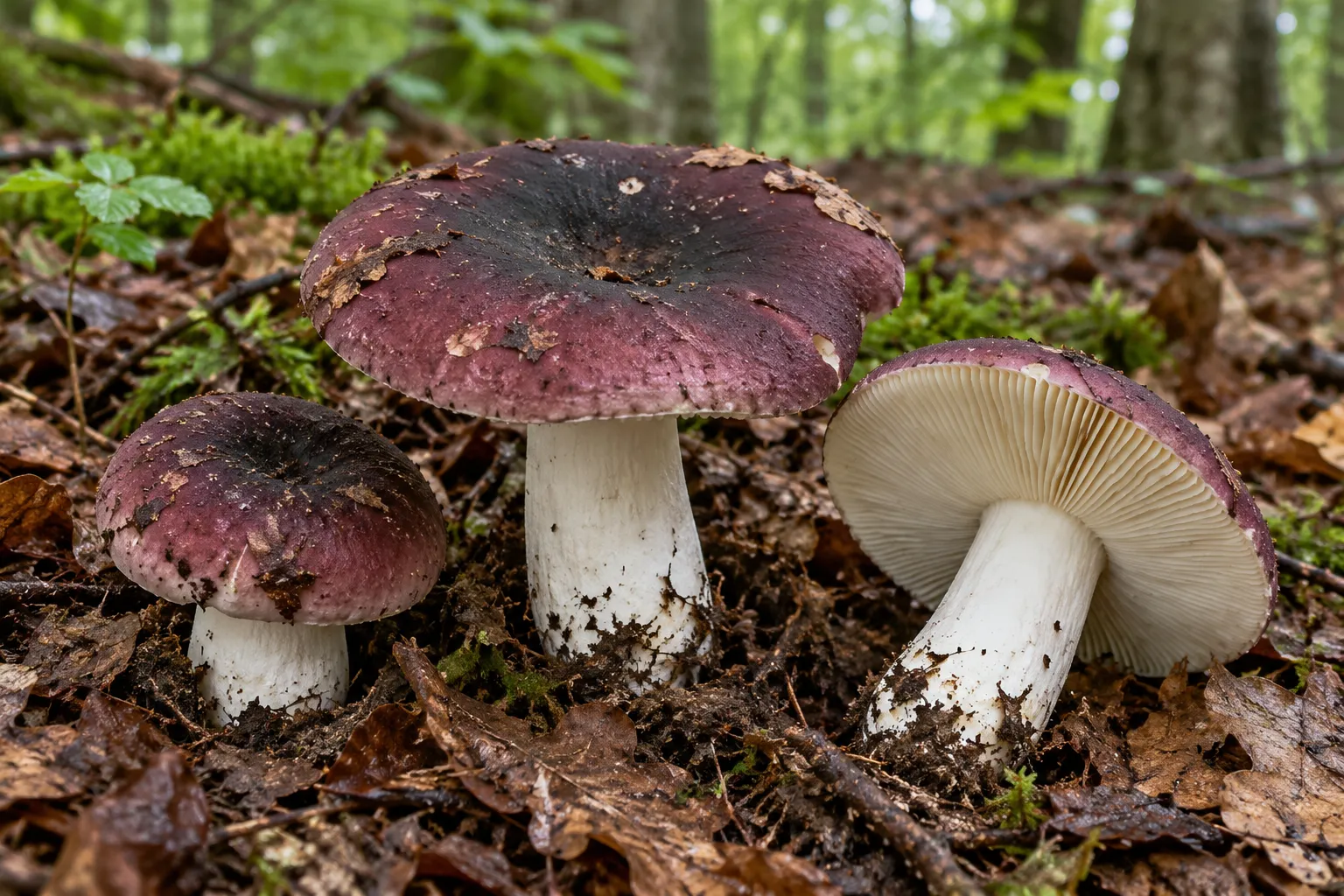
Quick facts
- Scientific name
- Russula atropurpurea
- (Krombh.) Britzelm.
- Common names
- Purple brittlegill, Blackish-purple russula
- Taxonomy
- Russula · Russulaceae
- Edibility context
- Inedible: Food assessments vary among sources and do not solve identification. This site does not recommend consuming wild Russula based on remote information.
- Spore print
- White to pale cream; precise shade and microscopic ornament are more useful than a casual paper impression.
- Toxicity context
- Unknown: Misidentification and gastrointestinal reactions remain possible; no photo, color pattern, or informal taste shortcut establishes safety.
- Season
- July, August, September, October
- Growing difficulty
- Expert
- Regions
- Europe, temperate regions where confirmed by current records
Safety limit: These labels summarize documented context; they never authenticate a wild specimen. Cooking does not make a poisonous species safe.
Purple is a variable pattern, not a barcode
The Purple brittlegill, Russula atropurpurea, is usually introduced through its cap: a wine-purple or reddish-purple outer zone surrounding a much darker brown-purple to nearly black center. That pattern is memorable, but mushroom color is a moving measurement. Rain deepens it, sun and age bleach it, leaf contact obscures it, and cameras redistribute violet and red. Identification should begin with a series of fruit bodies in known habitat, not a color-picked photograph.
The GBIF taxonomic record accepts Russula atropurpurea in Russulaceae. The name is primarily used in a European context, and broad geographic applications require caution. Russula contains many superficially similar species, while older reports may reflect different concepts. A regional key, host evidence and microscopic characters are often necessary before assigning a durable name.
Photograph an undisturbed group in diffuse daylight. Include the soil surface and surrounding trees, then record the cap, gills, complete stem and a clean lengthwise section. A single cap removed from its host context loses much of its ecological information.
Measure the cap across age and moisture
Young caps are convex and can be evenly dark. Expanded caps flatten and may develop a shallow central depression. Record cap width, margin shape and the radius of the darkest central zone on several specimens. Expressing the dark zone as a proportion of cap radius is more comparable than calling it “large.” Note whether the outer color is wine, violet, red-purple or faded olive-brown, but keep the original photograph because words compress continuous color.
Cap skin can become slightly sticky in wet weather and may peel partway from the margin. Peeling distance depends on freshness and handling, so it belongs in a character set rather than acting as a pass-fail test. Photograph the surface before touching it. Then, if collection is legal, test a small marked sector and record how far the skin separates without forcing it.
Fading is diagnostically troublesome. An older cap may lose the purple margin while retaining a dark center; another may show irregular pale patches caused by weather or abrasion. Compare sheltered and exposed fruit bodies from the same patch. If the color pattern changes with position or age, preserve that variation instead of selecting only the most textbook-looking mushroom.
Confirm a brittle Russula body plan
The common name “brittlegill” refers to the crumbly structure of many Russula fruit bodies. Their tissues contain clusters of rounded cells that make the gills and flesh snap more readily than the fibrous tissues of many agarics. Test brittleness only on a collected specimen, not by damaging every mushroom in a patch. Record whether a gill fractures cleanly under light lateral pressure and whether the stem snaps with a chalk-like break.
The gills are white to cream and can chip at the edge. Photograph their attachment to the stem from a radial section; pulling the cap away can tear the junction and create a false impression. The stem is white and lacks both a ring and a volva. Absence of those structures supports the comparison, but a missing ring on a damaged mushroom proves little. Excavate one complete base carefully and show that no universal-veil cup is present.
Cut a fresh specimen lengthwise and record flesh color immediately, then after several minutes. Browning from age, insects or waterlogging should be separated from a repeatable chemical change in fresh tissue. Odor is also condition-dependent and subjective. If used, record it blind between observers rather than allowing the expected name to shape the description.
Host mapping is part of identification
Purple brittlegill is ectomycorrhizal: its mycelium forms a nutrient-exchange association with living tree roots. European field accounts commonly place it with oak and beech. The mushroom is therefore terrestrial, but “on soil” is incomplete habitat documentation. Map the canopy and trunks within a practical radius, note which roots plausibly reach the fruiting point, and distinguish living trees from decaying stumps.
A leaf beside the cap is not proof of partnership; wind moves leaves, and mixed woodland can contain several compatible hosts. Photograph bark and canopy characters and record the whole stand composition. When fruit bodies form a line, consider whether they trace a root zone or soil edge. Repeated records across seasons are stronger than a single encounter.
Soil context can also explain local patterns. Note slope, drainage, litter depth, compaction and recent disturbance. Do not infer a soil pH from vegetation alone. If pH is measured, state the method, depth and calibration. The objective is not to manufacture ecological precision but to produce observations another person could interpret.
The habitat-identification guide gives a structured way to separate direct substrate evidence, probable host context and coincidental nearby vegetation.
Build a real lookalike comparison
Purple and red Russula species are numerous. The useful comparison set is regional and host-specific. Russula fragilis and related taxa may be smaller, fragile and variably purple-red. The R. xerampelina complex can include purple caps but brings its own odor, browning and microscopic characters. Russula cyanoxantha can overlap strongly in color, yet its gills are often unusually flexible and greasy-feeling rather than sharply brittle.
Small violet woodland mushrooms with tough fibrous stems and thick, widely spaced gills belong on a different path; the amethyst deceiver guide shows how fading and construction separate that comparison from brittle Russula tissue.
Create a matrix with the actual candidates named by a current local key. Include cap dimensions and color-zone ratios, cap-skin peeling, gill flexibility, gill and spore-deposit shade, stem dimensions, flesh changes, odor, host trees, region and microscopic data. Do not fill unknown cells from a website. The matrix should reveal which observation would genuinely discriminate the leading candidates.
Cap color alone is especially vulnerable to confirmation bias. Compare raw files under the same white balance and include a neutral gray card when possible. Avoid smartphone “vivid” modes and social-media filters. The spore-print guide explains how to collect a deposit without mistaking paper color or a few scattered spores for a stable shade.
Microscopy tests the species concept
A serious Russula determination may require spore dimensions, ornament height and pattern, reactions in appropriate mounting media, cystidia, and cap-surface anatomy. The ornament is three-dimensional; a single focal plane can hide whether warts are isolated, linked by fine lines or form a partial network. Record images at several focal depths and calibrate the measurement system.
Measure a reasonable sample of mature spores from a deposit rather than only crushed gill tissue. Report the observed range and central tendency, excluding malformed spores only with a stated rule. Document the reagent, microscope, objective and calibration. For cap-surface work, take material from a defined zone because the center and margin may differ.
Tie slides, photographs and notes to one specimen code. If the microscopy does not fit the initial field name, revise the name or retain it at genus level. A voucher deposited with a recognized herbarium or local recording group permits later re-examination as species boundaries change.
Why cultivation is not a practical shortcut
Unlike block-grown saprotrophic mushrooms, Purple brittlegill depends on a living ectomycorrhizal partnership. Producing mycelium on a laboratory medium is not equivalent to establishing a functional tree-root association or reliably inducing fruit bodies. Host genotype, soil community, moisture, temperature and years of root development can all matter.
For that reason, collecting wild tissue for a casual indoor kit is unlikely to reproduce its ecology and can spread contaminants. Conservation-minded study should prioritize non-destructive photography, limited legal sampling, host records and vouchers where justified. Fruiting patches can be revisited without raking litter or removing every specimen.
Food and poisoning boundary
Sources differ in how they describe the food value of some purple brittlegills, and regional names are easy to misapply. This guide does not recommend eating R. atropurpurea. Neither a purple cap, brittle gills, a pale print nor an informal taste shortcut can establish identity and safety. Condition, contamination and individual reaction remain separate issues even after a name is confirmed.
Do not taste unknown mushrooms as an identification experiment. If someone has swallowed an unidentified wild mushroom and develops symptoms, contact the relevant poison center or emergency service promptly. Save specimens, trimmings, cooked leftovers, photographs and timing details. Do not wait for a crowd-sourced name or assume that cooking removed risk. This emergency advice is an allowed necessary safety statement, not a substitute for species-specific content.
A field workflow that can be audited
Assign a collection code and record locality, habitat, probable hosts, soil context, weather and fruit-body count. Photograph the patch before collection, then capture cap, gills, full stem, base and a longitudinal section. Measure several developmental stages and record cap color with a neutral reference. Obtain a spore deposit and microscopy only when legal, safe and relevant.
Compare the record with the gill-types guide and the visually overlapping but structurally distinctive Charcoal burner guide. A defensible conclusion may remain “purple-capped Russula, species unresolved.” That label preserves the evidence and is more scientifically useful than certainty built from color alone.
Close the record with an explicit evidence grade: field characters only, field plus spore deposit, or voucher with microscopy. State the regional key and date consulted. This makes later review possible and prevents a dark-centered cap photograph from carrying more confidence than the underlying observations justify.
For a green-capped Russula with a quilted or areolate surface, use the green-cracked brittlegill guide to map cap patches, test fresh gill fracture, preserve the complete base, and compare the pale spore deposit without relying on color alone.
References
The sources listed in the page record support the accepted taxon, occurrence context, European conservation context, field methodology, and conservative poisoning response. They do not resolve a specimen from color alone. Use a current regional Russula key and retain voucher-linked microscopy for records that require species-level confidence.
Source quality notes
MushroomScope cites sources that match the page scope, such as taxonomic databases, extension guidance, food-safety agencies, food-composition databases, and peer-reviewed or institutional health references. Sources support context and uncertainty; they do not turn an online page into specimen identification, medical advice, or a tested recipe record.
Frequently asked questions
Does a purple cap identify Russula atropurpurea?
No. Purple, red and blackish tones vary within several Russula species. Check brittle flesh, gills, stem, cap-skin behavior, odor, spore deposit, host trees, region, microscopy and current local keys.
Why is the cap center often darker?
The species concept commonly includes wine-purple to reddish margins with a very dark center, but moisture, age, fading and genetics can change that pattern. It is a useful series character, not a single-specimen test.
Which trees are associated with Purple brittlegill?
European accounts often associate it with broadleaf woodland, especially oak and beech. Confirm local records and map the root-zone context because a nearby leaf alone does not establish the fungal partner.
Can a taste test confirm this brittlegill?
No. Tasting unknown wild mushrooms is not recommended here and cannot establish species identity or safety. Use documented morphology, ecology, microscopy and qualified local expertise.
Can this page clear Purple brittlegill for eating?
No. Russula identification can be difficult, regional species concepts differ, and individual condition matters. Do not eat a wild collection based on this guide or an image.
Related guides
identification
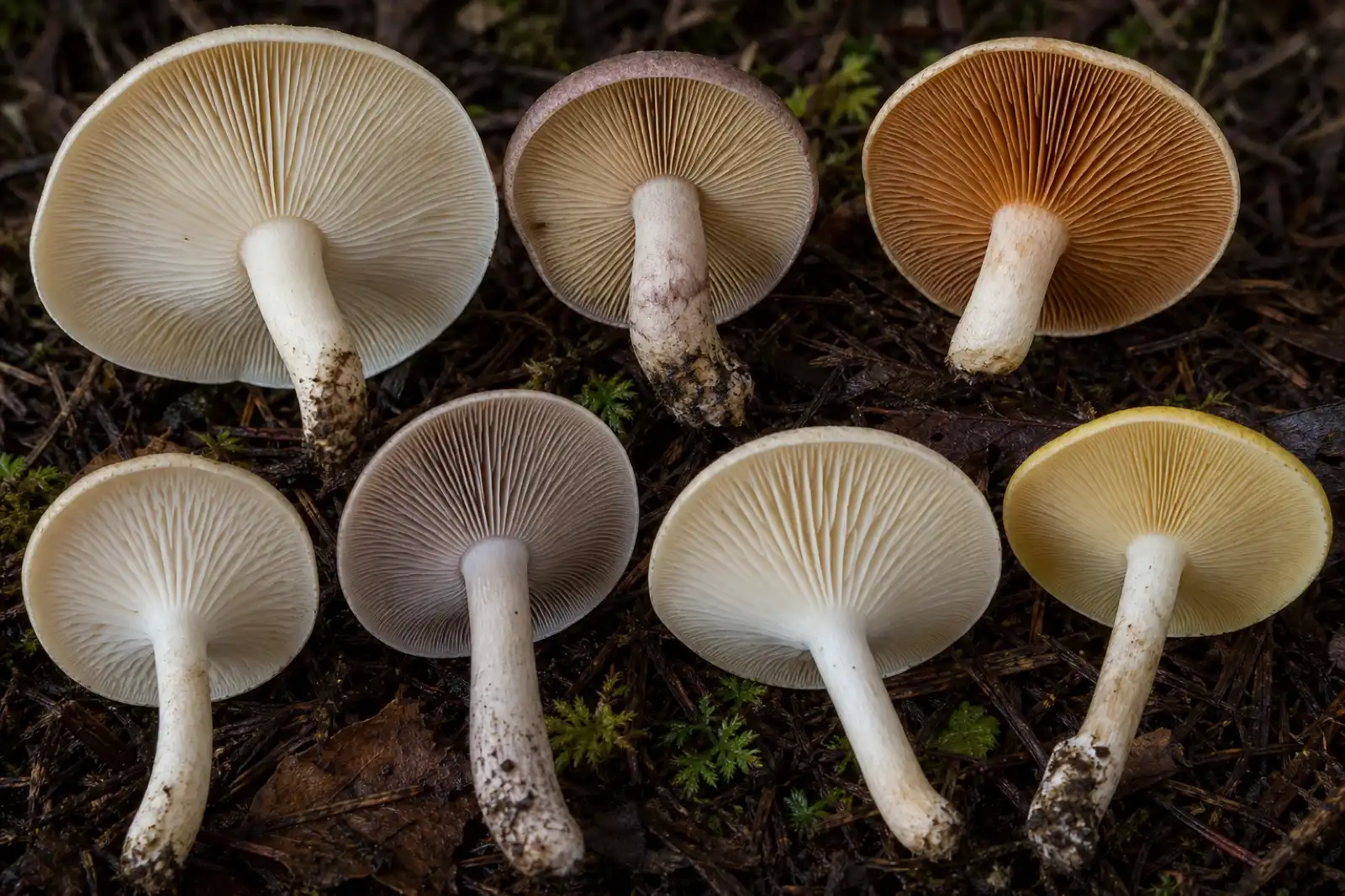
Mushroom Gill Types: Attachment, Spacing, and Color
Compare free, attached, notched, adnate, and decurrent mushroom gills while recording spacing, short gills, edge details, bruising, and color changes.
identification
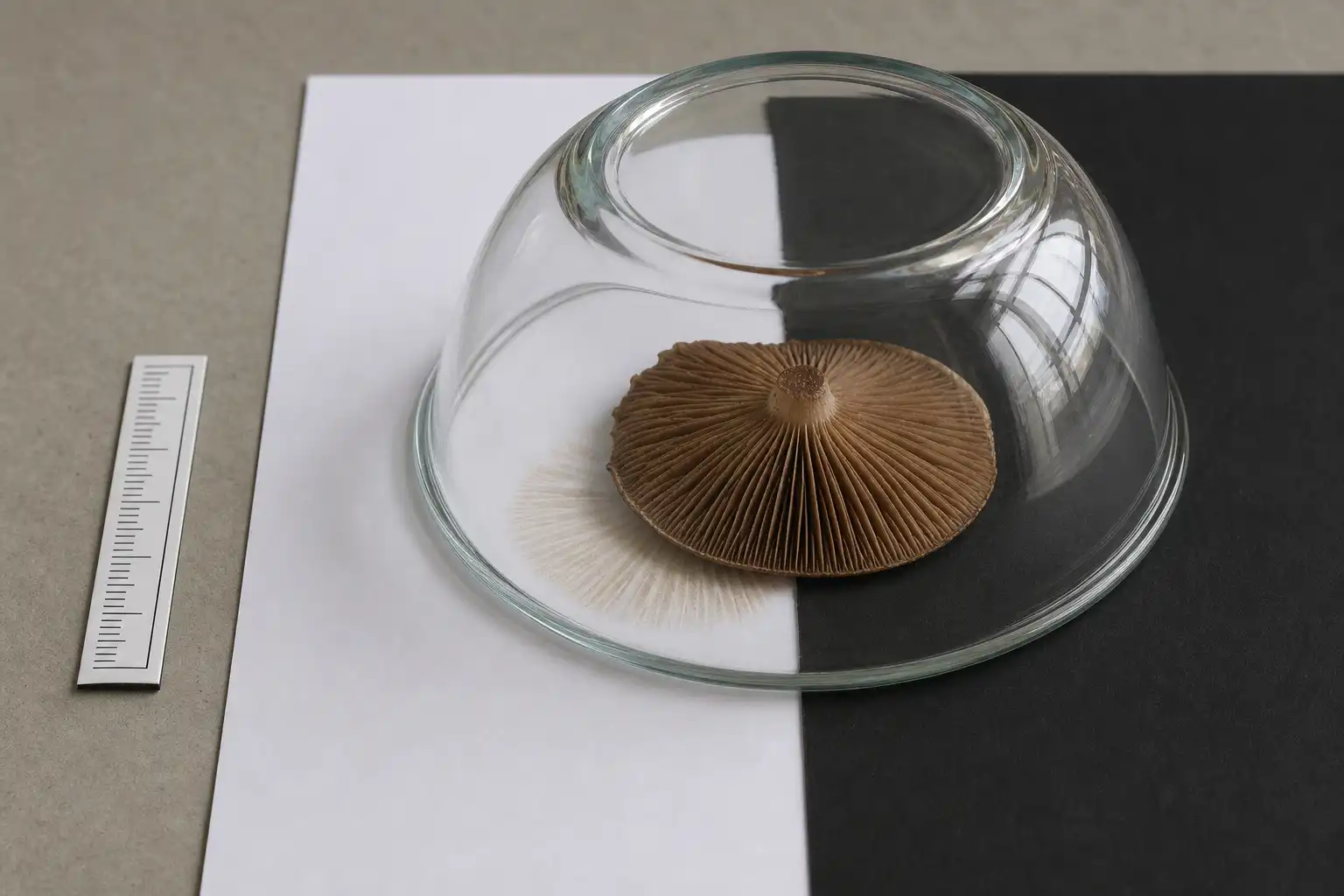
How to Make and Read a Mushroom Spore Print
Make a controlled mushroom spore print, record the result clearly, and understand why a print supports—but never proves—an identification.
identification
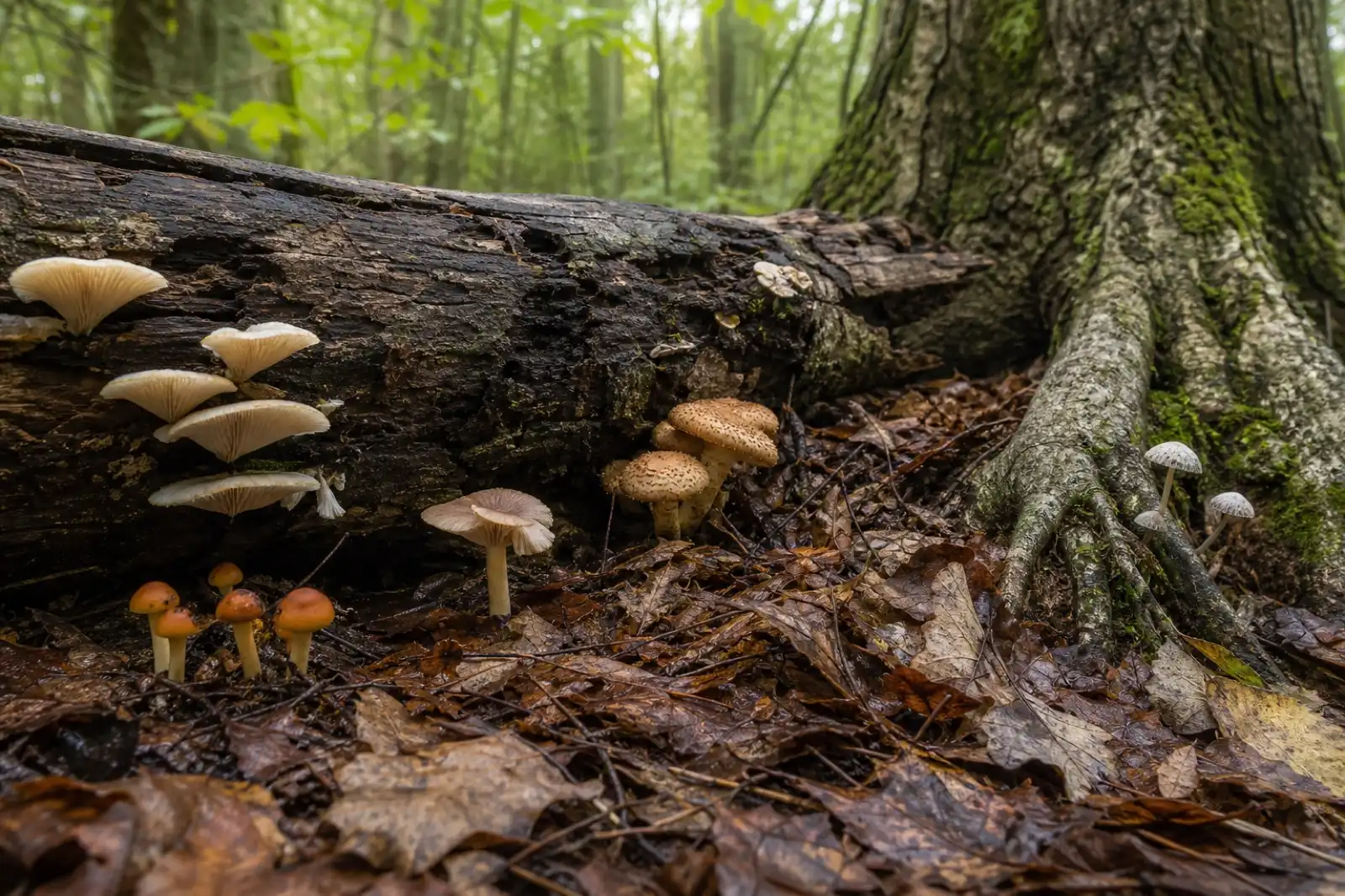
Using Habitat to Identify Mushrooms
Record substrate, associated plants, soil, wood type, moisture, elevation, and fruiting pattern as identification evidence.
Continue exploring
Browse more practical guides in Mushroom Encyclopedia or visit the mushroom encyclopedia.